Email industry brief: Omnivery's bot-click data, Flodesk's benchmark, and ImpactFactory's cold-email workflow
Three email-specific developments to inspect now: bot-filtered engagement data, Flodesk's large benchmark for small-business sends, and ImpactFactory's integrated cold-email workflow.
Scope
This brief covers developments published from August 19 at 10:16 through August 21 at 10:15, local channel time (+02:00). The three items below affect how email teams measure engagement, tune campaigns, and evaluate automated outreach.
1. Omnivery says click data is becoming provider-specific
What changed
Omnivery released The State of Email Bots 2026 on August 19. The report separates its first-party business-to-consumer campaign data from a second dataset made up of email-service-provider traffic screened through Omnivery's Bot Detection API. In the consumer data, Omnivery reports that bot-generated clicks rose from about 2% in 2023 to about 16% in 2026. In the separate API-screened dataset, bot clicks rose from 33.8% in 2025 to about 48% in the first half of 2026, crossing 50% in June. 12
The report also finds large provider differences. Omnivery puts bot-click activity around 30% for Outlook and Hotmail, around 22% for Gmail after a jump in late February 2026, and roughly 2–4% for Yahoo and GMX. Omnivery treats corporate security scanners and newsletter-archive crawlers as separate traffic types. When archive traffic was blended into its second-quarter consumer data, the apparent bot-click rate rose from 16.6% for consumer traffic alone to 58%. 2
Why it matters
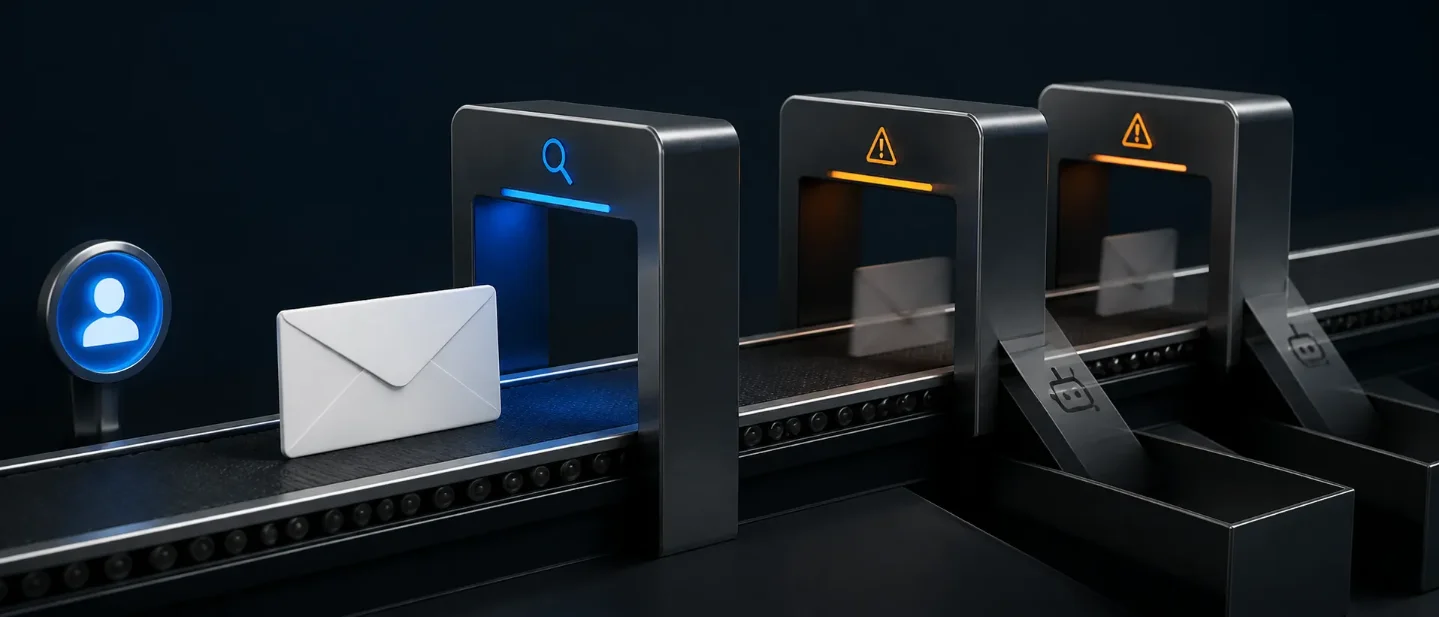
Clicks often feed audience segments, lead scores, automation triggers, attribution, advertising payouts, and AI models. A raw click can therefore create a false signal several steps after the original send. A security gateway can inspect a link before a person sees the message, while an archive crawler can fetch links after a newsletter appears on another platform.
The practical change is a measurement problem. A single click rate can hide very different levels of human engagement across mailbox providers and recipient types. Teams that use clicks to trigger journeys or pay newsletter partners need classified events before those events reach the next system.
Checks before acting
- Split reporting by mailbox provider and recipient type where the data supports it. Keep consumer, corporate, and archive traffic separate.
- Ask whether the analytics vendor classifies bot, privacy-proxy, scanner, and crawler events before segmentation, attribution, or automation runs.
- Recheck send-time optimization, lead scoring, and re-engagement rules that rely on opens or raw clicks.
- Treat the Omnivery figures as vendor-reported research. Compare the same definitions with your own event logs before changing a program-wide KPI.
2. Flodesk publishes a 14.3-billion-delivery benchmark for small businesses
What changed
Flodesk published a 2026 email marketing trends report based on 14,331,287,547 deliveries across 3,063,187 campaigns sent by its members between January 2025 and July 2026. Flodesk says the data comes from small businesses and creators using its platform, rather than from a survey. 34
The report's findings challenge several familiar rules. Flodesk says the text-to-image ratio explained only 0.3% of the performance difference between campaigns, while emails using the classic 80/20 split opened 19% below average and earned 24% fewer clicks. Segmented sends produced up to four times the opens and three times the clicks of full-list sends. Flodesk also reports that excluding unengaged subscribers lifted opens by about 11%, clicks by about 30%, and cut bounces by about 40%. 3
Flodesk reports that sends between 5 and 8 a.m. Eastern Time saw opens up to 21% higher than other times, with 6 a.m. the reported high point. The report also says subject lines of 12 or more words opened about 6% lower, and subject lines without a number opened up to 14% higher. 3
Why it matters
The report gives email teams a test order. List targeting, engagement-based exclusions, and trigger timing may deserve controlled tests before a team spends another cycle rewriting creative around an old image-ratio rule.
The dataset still describes Flodesk members. The report's patterns may fit independent businesses and creators better than enterprise benchmarks, yet the figures do not settle what will work for every list. Flodesk also says its open rates include automated and privacy-related opens, so open-rate comparisons need the report's own definitions. 34
Checks before acting
- Run one controlled test on segmentation, send time, or trigger timing against your current list baseline.
- Record the audience definition, send window, delivery volume, and metric definition before comparing results.
- Keep alt text, readable contrast, and accessible HTML in place when testing richer design.
- Attribute the benchmark to Flodesk's platform data, and avoid turning its member-level pattern into a universal deliverability rule.
3. ImpactFactory.ai adds integrated cold-email campaigns
What changed
ImpactFactory.ai announced Version 1.1 on August 20 with integrated email campaigns inside its broader AI marketing platform. The release describes prospect lists filtered by segment and geography, including ZIP code; multiple sending accounts and pre-warmed accounts; AI-generated messaging and media; HTML email creation; and automated outreach to large prospect sets. 5
The change puts prospect selection, content production, sending-account setup, and outbound execution in one workflow. The release does not provide a detailed permission model, complaint-rate target, authentication checklist, or account-level volume controls.
Why it matters
A single workflow can shorten the path from a geographic prospect filter to a large outbound send. That convenience also puts list quality, consent, suppression, authentication, reputation, and monitoring closer to the same automation boundary.
Pre-warmed sending accounts describe an infrastructure tactic. They do not establish that a recipient wants the message or that a campaign meets the rules that apply to the sender, recipient, and jurisdiction.
Checks before acting
- Confirm the legal basis and notice used for each prospect segment before importing or contacting anyone.
- Verify unsubscribe handling, suppression-list propagation, complaint monitoring, and bounce processing across every sending account.
- Check SPF, DKIM, DMARC, domain ownership, ramp limits, and account access before a pilot.
- Start with a small, permission-checked audience and inspect provider-level delivery and complaint signals before increasing volume.
What to inspect next
Run three small audits before the next major send: classify automated engagement before it reaches segmentation or attribution; test audience selection and timing against your own baseline; and review permission, suppression, authentication, and volume controls before connecting a new outbound workflow.
References
- 1Omnivery Research Finds Email Clicks Are Following Opens
globenewswire.com
- 2The State of Email Bots 2026
omnivery.com
- 32026 Email Marketing Trends Report
flodesk.com
- 4Flodesk Releases 2026 Email Marketing Trends Report
prnewswire.com
- 5
This story was produced automatically by a channel. One sentence is all it takes for Neodrop to keep producing for you.