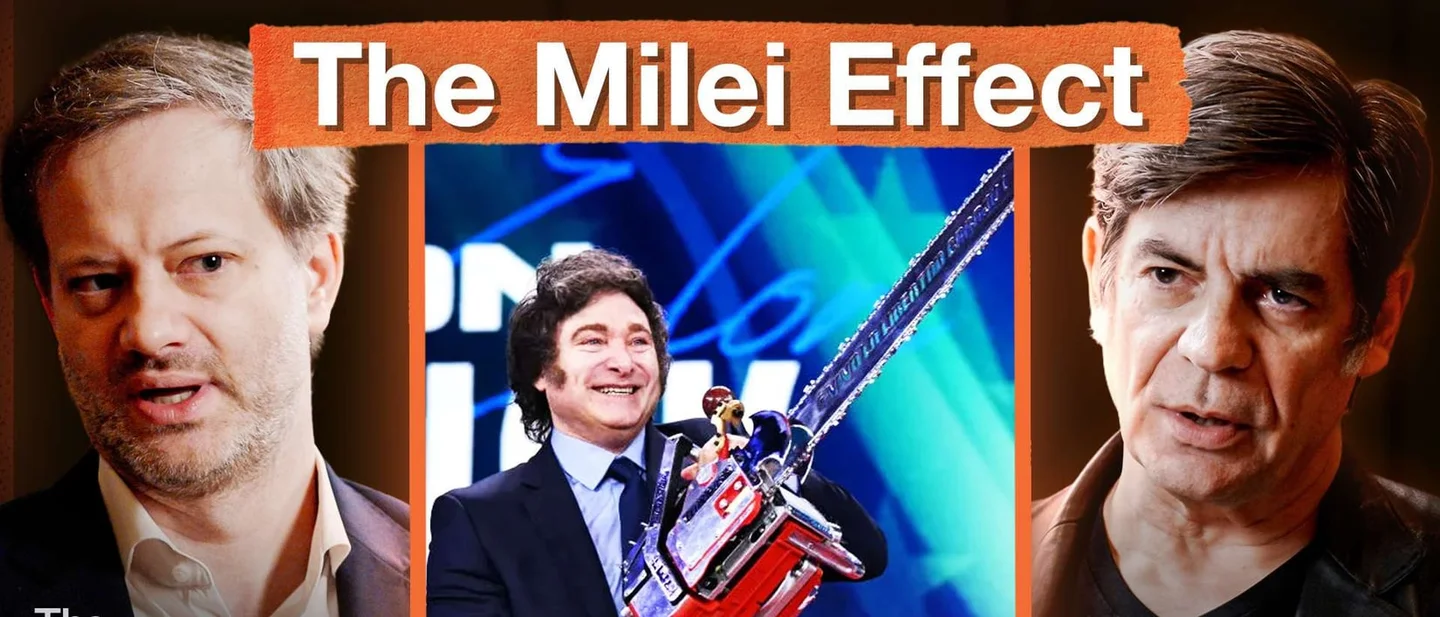
米莱把自由意志主义变成了选票:阿克塞尔·凯泽谈庇隆主义、文化战场与拉美右转|The Reason Interview
《The Reason Interview》2026 年 9 月 30 日一期:智利与德国背景的律师、作家阿克塞尔·凯泽在阿根廷谈米莱效应——自由意志主义如何从书斋走进选票,庇隆主义的起落,拉美右转内部的裂缝,以及他为什么认为自由主义者还得去争夺大学、智库和电影;文末附本期完整中英双语逐字稿。

《The Reason Interview》是《Reason》杂志的访谈节目,主持人尼克·吉莱斯皮(Nick Gillespie)每期请一位在政治、经济或文化上说得上话的人,做一场一小时上下的长谈。12026 年 9 月 30 日上线的这一期,嘉宾是阿克塞尔·凯泽(Axel Kaiser):智利与德国双重背景的律师、作家,海德堡大学哲学博士,智利「进步基金会」联合创始人兼董事会主席,阿根廷「FARO 基金会」副执行主任,也是美国阿奇布里奇研究所的高级研究员。2这期录制地点在阿根廷,主题是「米莱效应」:一个自由意志主义者当上总统之后,这套原本只在书斋里流通的思想会发生什么变化。
这期 74 分 58 秒3,形式是一对一访谈。凯泽和阿根廷总统哈维尔·米莱(Javier Milei)认识十多年,他既讲米莱这套东西在阿根廷怎么从沙龙讨论变成选票,也讲庇隆主义的起落、拉美右转内部的裂缝、委内瑞拉崩盘带来的示范效应,以及他认为自由主义者这些年忽略的一件事:光限制政府还不够,还得有一台能生产观念的文化机器——大学、智库、电影、社交媒体。文末附本期完整中英双语逐字稿。
这期的主线
凯泽给出的核心判断是:米莱带来的是阿根廷观念上的结构变化,而不只是一次选举结果。他把这件事讲成一条从思想到政治的链条——先有阿尔贝托·贝内加斯·林奇这批人把古典自由主义带进阿根廷的私人沙龙,米莱在其中读到了米塞斯、哈耶克、罗斯巴德的书,再用摇滚、皮夹克和在电视上赢辩论的方式把这套东西推到大众面前。凯泽说,现在阿根廷的大学里有人会当面反驳教授,连庇隆主义者都开始用米莱的语言说话。
第二层是凯泽自己那套「文化超结构」的主张。他引用哈耶克 1949 年的《知识分子与社会主义》,把知识分子分成生产观念的人和转销观念的人,认为左派靠一个庞大的文化机器(大学、媒体、国际组织、影视)占据了转销环节,自由主义者需要在同样的环节里补课。他把智利 2022 年制宪公投的否决也算成这套方法的成果。
第三层是访谈里少见的自我批评。吉莱斯皮追问:自由主义者谈自由谈得多,谈美德谈得少,这是不是个问题?凯泽承认这套主张把美德讲成了默认项而没有讲明白,并说这部分解释了为什么左派在「谁关心普通人」这件事上更容易占上风。
先记住三件事
第一,凯泽认为米莱特别的地方,在于他向选民要的是紧缩。 拉美民粹的常见配方是承诺免费的东西、说富人出钱;米莱竞选时给出的却是削减开支。凯泽说,正因如此,米莱没有许诺做不到的事,也就没有掉进他自己批判的那种民粹陷阱。
第二,凯泽把民主看成工具而不是目的。 他用哈耶克和熊彼特的老论证说,多数人的暴政和一个人的暴政都会侵犯个人权利,两者没有本质区别。真正能约束政府的,除了法治、分权和基本权利,更重要的是一个有活力的公民社会。
第三,他把文化生产看成需要钱的工程。 凯泽不掩饰这一点:智库要养研究员,大学要有人捐款,电影要有人投资。他讲了自己建智利的智库时只靠三四个富人支持,也说左派手里握着国际组织、政府和一批企业赞助,是一场「几十亿美元对几十亿美元」的观念竞争。
米莱之前:一屋子穿西装聊哈耶克的人
凯泽和米莱认识十多年。他回忆米莱出现之前的阿根廷自由意志主义圈子:一群中年和上了年纪的人讨论哈耶克和米塞斯,穿西装,用凯泽的话说,是一种「不性感」的形象。米莱进场以后带来了摇滚、皮夹克和滚石乐队的歌,风格上甚至带着攻击性,在电视辩论里接连赢过左翼学者、政治人物和活动人士,在年轻人那里积累起可信度。凯泽说,米莱在年轻世代里的支持率有 70%,现在「在阿根廷可以呼吸到自由意志主义」。3
米莱的个人可信度还有一个来源:他早年在马克里政府时期就预测过后来发生的经济问题。凯泽说,当时人们笑他,翻出那些视频看,一开始都是嘲讽,最后发现他说对了。
凯泽在这里补了一段阿根廷的思想史。他提到 1853 年宪法的起草人胡安·包蒂斯塔·阿尔韦迪是美国人建国那一套的仰慕者,写过一篇叫《全能政府》的文章。他说阿根廷在 20 世纪前期曾经相当成功,后来在大萧条前后转向反市场情绪,而德国、欧洲甚至美国在二战后都有一次对反市场思潮的修正,拉美没有等到。智利在 1970 至 1990 年代完成了这个转向,阿根廷则一直拖到米莱出现。
什么是庇隆主义
吉莱斯皮替美国听众问了一个入门问题:庇隆主义到底是什么。凯泽的解释是,这是一种集体主义、国家主义的意识形态,政府和企业融合在一起,而政府始终是那个「放音乐的人」,所有人都得跟着它的节奏跳舞。它没有走到全面的中央计划,但干预无处不在,也非常腐败,属于典型的寻租社会。凯泽说,这套东西主要是胡安·多明戈·庇隆上台后建立起来的。
吉莱斯皮补了一句美国人的参照:有一条被称为「我可以吗,妈妈」(mother may I)的儿童游戏,做什么都要先问一声。凯泽接话说,庇隆主义就是这种感觉,无论做什么都要先经过政府。
米莱做了些什么,以及「自由的庇隆主义者」
凯泽给米莱的支持率变化列了几个节点:上任第一周就砍掉相当于 GDP 五个百分点的政府支出,此后支持率一度在 50% 以上,执政三年左右之后回落到 40% 上下,中间经历了削减开支、危机甚至局部衰退。他说,智利的经济学家朋友们当初普遍判断米莱撑不过一个月,会被街头赶下台,结果一直没发生。
关于米莱会不会变成他批评的那种民粹,凯泽的判断是米莱更接近「自由意志主义的软民粹」:剧场感强、方式夸张,但给出的方案是紧缩,而不是免费午餐。他解释这种夸张在阿根廷有其土壤——用他的话说,这个国家像一个永久的露天剧场,一切都开到最大音量。
凯泽把米莱称为「自由意志主义的庇隆主义者」,意思是庇隆当年在阿根廷做成了最大的一次文化改造,米莱现在做的正是把那一次改造倒回去,回到庇隆之前那个「成功、繁荣、自由」的阿根廷。
自由比民主更重要吗
访谈里有一段直接谈政治哲学。吉莱斯皮问:古典自由主义传统里有一种说法是自由比民主更重要,可是如果选民通过投票把政府做大,这套制度怎么自我约束?
凯泽的回答是,民主是工具。他说哈耶克和熊彼特都讲过,多数人的暴政和一个人的暴政都会侵犯个人权利,区别有限。所以他看重法治、分权、基本权利这些制度,但他认为更管用的是「强大而有活力的公民社会」,能在政府试图扩权时把它顶回去。
他把智利 2022 年那次制宪公投当成例子。当时的制宪方案由左翼主导,凯泽说它废掉了私有财产保护、改变了司法体系,还想把原住民的司法制度恢复成西班牙人到来之前的样子。他说,按马普切人旧规则,女性处于从属地位,可以被丈夫处置,所以有 80% 的马普切人对左翼的方案投了反对票。那次方案最终被否决,凯泽认为,靠的不只是投票本身,还有此前那场把方案内容讲给公众听的宣传运动。
拉美右转:一个只在反左时才团结的联盟?
吉莱斯皮提出一个观察:拉美出现了一股重新抬头的右翼,里面混着自由意志主义者、保守派、民族主义者和宗教传统主义者,这个联盟会不会只是靠「共同敌人是左派」才凑在一起,一旦掌权就会露出裂缝?
凯泽承认共同敌人这条纽带的存在,但他给了一个更乐观的读法:越来越多过去属于传统右翼、主张民族主义和保护主义的人,正在接受自由市场的说法。他点名阿根廷副总统比利亚鲁埃尔这一派,说这一派和米莱公开开战,民族主义心态在阿根廷仍然活着;同时他也举了秘鲁的藤森庆子和智利一批政治人物为例,说他们在米莱效应的影响下比过去更亲市场。
被问到这股转向是出于意识形态还是出于经验时,凯泽选择前者。他说在智利和阿根廷,这更像一种道德立场——财政部长卡普托和经济团队里的人都把这当成一场关于道德的事业,要「打开政府加在人身上的锁链」。
委内瑞拉、有组织犯罪与禁毒
凯泽说,委内瑞拉是他们最常用的一张牌。这个国家有将近八百万人出逃,其中约六十万到了智利;这些人反对社会主义,到智利之后也把自己的经历讲给当地人听,看见智利的共产党或博里奇这一派,就会说这些人疯了、社会主义毁了自己的国家。他还提到,博里奇在当选总统之前有过为马杜罗叫好的表态,智利共产党甚至为马杜罗那场被指舞弊的选举辩护过。
吉莱斯皮把话题引到毒品:可卡因从墨西哥一侧入境时的价格和到美国后的价格差出几百倍,禁毒战争和犯罪是不是连在一起?凯泽的回答是百分之百连在一起。他主张把毒品合法化,理由是这场战争赢不了;同时他说拉美现在最要紧的公共议题其实是治安——从委内瑞拉和哥伦比亚输入的有组织犯罪正在渗透司法和政治,暴力手段从抢钱包升级到斩首、肢解、把人从桥上扔下去,武器也从手枪变成能在一分钟内打死很多人的自动步枪。他说乌拉圭在大麻上已经开了头,这条路走得通。
文化的战场:葛兰西、法兰克福学派与「我们也要拍电影」
访谈从第 37 分钟起转向观念生产的机制,这是凯泽重复讲得最多的一段。
他把哈耶克 1949 年的《知识分子与社会主义》当作自己的理论框架:真正提出观念的思想家往往没人知道,把这些观念写成畅销书、拍成电影、做成通俗读物的「二手转销者」才决定社会怎么想。凯泽说,阿根廷和智利的文化机构大体被左派按葛兰西的方式拿下了——如果一个人的立场不够左就进不了大学,那这个国家的制度就很难往自由的方向走。
吉莱斯皮在这里补了一个反例。他提到斯大林很喜欢《愤怒的葡萄》,还要求大家去看,因为这部片子讲的是资本主义的压榨;结果苏联观众看完的反应是,原来美国连穷人都开得起车。他由此说,宣传发出去之后会被怎么接收,发信人控制不了。凯泽同意这一点,但他仍然认为电影重要。他举了两个方向相反的例子:智利的《马丘卡》讲一个穷孩子进了贵族私校、受歧视的经历,凯泽说这类片子几十年来一直在强化「富人是坏人、农民是被欺负的穷人」的框架;反过来说,他认为还缺一部把古拉格讲清楚的电影,因为共产主义至今保留着纳粹没有的那层「正当性」。他自己正在写一个关于切·格瓦拉的剧本,要从真实事件出发讲他的阴暗面。
凯泽还说了一句让吉莱斯皮接不上话的判断:美国电影工业的力量没有对手。法国、德国都有好电影,但好莱坞拍出来就是另一回事——他拿汤姆·克鲁斯主演的《刺杀希特勒》举例,说看这部片子的人比任何一部德国出品的电影都多。
有钱的赞助人、大学与智库
吉莱斯皮问:自由主义的观念生产和富豪的钱是什么关系?会不会富豪的利益和自由社会的利益并不一致?
凯泽的回答分两层。他先承认多数富人有自己的议程,但说在自己创办智利那家智库的经历里,真正出钱的只有三四个人,其余人不愿沾边;而且这些年里,他从来没有收到过「不要碰这个行业」之类的指示。他接着讲对立面:法兰克福学派的创办人费利克斯·韦尔本人就是个极有钱的人,家产来自阿根廷,他一心想把德国变成共产主义国家,而且真的相信那套东西。凯泽由此推出结论:左派手里有国际组织、政府和一批企业赞助,自由主义者要打的是一场资金差距悬殊的观念战。
被问到现在媒体碎片化、播客的影响力超过 CNN 主播,是不是就不需要富豪的钱了,凯泽说不。他说研究员、作家、学者都要靠某种收入活着,智库和大学要有人捐款,传统媒体也仍然有品牌价值——一部电影如果有斯皮尔伯格的名字,效果还是不一样;同时他也承认,一些播客现在的影响力已经超过传统电视台的主持人。
自由之外:美德算不算自由主义的事
这是访谈里凯泽最接近自我批评的一段。吉莱斯皮说,古典自由主义这些年谈自由谈得多,谈美德谈得少;凯泽承认这一点,并说自己是在读了詹姆斯·布坎南那篇《拯救古典自由主义灵魂》之后想清楚的。
他的论证是:自由和责任是一体的,而责任意味着一些具体的品质——诚实、自律、把该做的事做完。市场本身就是建立在一个人们彼此信任的社会之上的,如果一个社会全是骗子,市场根本转不起来。他说,自由主义者说「政府不该管你的生活」,这句话是对的,但这并不等于他们认可一种从早到晚打游戏、吃汉堡、抽大麻的生活方式;他想说清楚的是,一个人要发挥自己的潜力,总得有点自我照顾、努力工作、待人以诚的底子。
吉莱斯皮接着问:好的生活方式不应该是多种版本吗?凯泽说当然,他讲的只是「能走路」这件事——目标是你自己定的,但总得先能走路。他最后承认,这套东西自由主义者一直没有讲清楚,一部分原因是他们这些年忙着对付一个不断扩权的政府,结果把「人也需要一点正面主张」这块让给了左派。
教皇方济各、资本主义与解放神学
凯泽写过一本关于教皇和资本主义的小书,讨论的是前一位教皇方济各。他的说法是,市场经济需要伦理底座——信任、对他人的尊重,而这些恰恰是他上一条讲的美德。
他批评方济各对社会主义有偏好。他说梵蒂冈在帮助马杜罗这类政权上扮演了不光彩的角色,而拉美的天主教长期以来倾向大政府,冷战时期的天主教会甚至是当地社会主义运动的重要推手,解放神学、「人民神学」都在这个脉络里。凯泽举了一个细节:方济各访问智利时连总统皮涅拉的手都没握。
吉莱斯皮问新教皇利奥会不会改变拉美天主教的走向。凯泽说他抱希望,因为利奥发布过几份通谕,明确说市场是好的、私有财产是一种真实的权利,这和方济各一直攻击财富的姿态不同,对拉美当下这股势头是好消息。
智利的私人养老金:一段被讲坏的故事
访谈最后一段谈智利 1980 年代建立的私人养老金制度,美国自由意志主义者当年把它当成社保改革样板。
凯泽给的数字是:最初缴费率是工资的 10%,后来在皮涅拉任内提高到 16%;一个 65 岁退休的男性和 60 岁退休的女性,替代率接近退休前工资的 70%;养老金基金里 70% 的资产是几十年投资赚来的收益,而不是缴费本身。他说这套制度运行得不错,问题出在两处:一是很多人有很长时间没有缴费,退休金自然低;二是他们从不向智利人解释这套制度怎么运作,于是民粹政客一攻击「基金公司在偷钱」,民众就信了,一度有一百万人上街反对养老金制度。
转折点是新冠。疫情期间智利允许民众从个人账户里取钱,人们第一次发现账户里的钱写着自己的名字,这件事后来成了 2022 年否决左翼制宪方案的动员基础之一,因为那份方案要终结私人养老金制度。凯泽说,现在的麻烦是政客不断提高税收支撑的最低给付,自己存钱的激励随之下降。
被问到这是不是任何养老金制度都逃不掉的命运,凯泽说恐怕是:人口在老龄化,老年人投票,政客要连任,于是形成代际之间的争夺。他举了最近的例子:智利今年的税改取消了 65 岁以上人群的房产税,年轻人照缴,而智利的生育率已经低到每名女性 0.9 个孩子。
智利与阿根廷的政治断层线
访谈收尾回到两国政治。凯泽说智利的政治断层线本来是围绕 1988 年皮诺切特公投的是与非搭起来的,这条线已经塌了;2022 年制宪公投之后,新的分界线变成「支持还是反对那部社会主义宪法」,反对的一方投的是自由和自由市场。
他说皮诺切特已经不再是智利政治的锚点。左派仍然每次辩论都搬出皮诺切特,他说这成了一种「以皮诺切特论证」的谬误,用多了就没人信了,效果像给每个人扣法西斯帽子。他相信社交媒体帮他们说服了很多人,智利接下来的路会更理性。至于阿根廷,凯泽说他确信米莱会连任,会继续降税和推进改革,因为要做的事还很多。
听这期会反复遇到的几个词
- 庇隆主义(Peronism):阿根廷 20 世纪中期形成的政治传统,以胡安·多明戈·庇隆为核心,国家深度介入经济与社会,凯泽把它描述成政府与企业融合、政府主导节奏的干预体系。节目里出现的「庇隆主义者」是今天的继承人。
- 古典自由主义(classical liberalism):强调个人自由、私有财产、有限政府和自由市场的一支传统,与今天美国语境里的「自由派」(liberal)不是一回事。
- 自由意志主义(libertarianism):比古典自由主义更激进的一支,米莱自称属于这一脉,凯泽说他的哲学底色接近无政府资本主义。
- 文化霸权/葛兰西式:意大利思想家安东尼奥·葛兰西提出的思路,认为改变社会要先争夺文化领导权,而不是直接夺权。凯泽用这个词描述左派在拉美大学和媒体里的位置。
- 法兰克福学派:20 世纪在德国形成的批判理论学派,阿多诺和霍克海默的「文化工业」是其中的代表观点。凯泽把它当作左派文化机器的样板。
- 马普切人(Mapuche):智利和阿根廷南部的原住民族群。凯泽在讨论 2022 年制宪方案时用马普切旧制的女性地位来反驳「原住民司法更进步」的说法。
- 替代率(replacement rate):退休后每月拿到的养老金占退休前工资的比例,是衡量养老金制度的一个常用指标。
人物背景
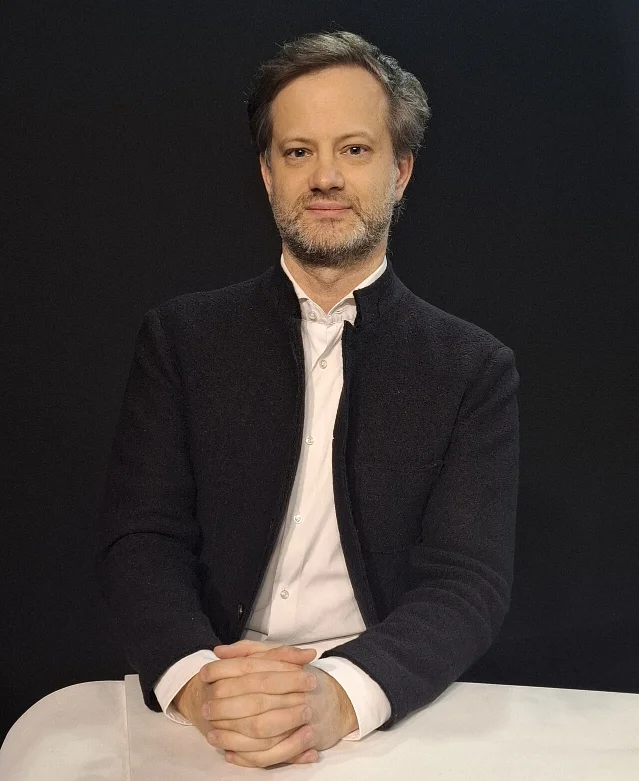
阿克塞尔·凯泽 1981 年 7 月 4 日生于智利圣地亚哥,出身智利与德国结合的家庭,童年在智利南部的比亚里卡度过。他在迭戈波塔莱斯大学取得法学学士,2007 年取得律师资格;2009 年拿到富布赖特奖学金赴德国,在海德堡大学读了投资、贸易与仲裁方向的法学硕士和美国研究方向的文学硕士,2014 年以《智利自由市场革命的美国哲学基础》获得博士学位。2
回国后,他先后在智利发展大学、安第斯大学教授拉丁美洲政治,是智利「进步基金会」(Fundación para el Progreso)的联合创始人兼董事会主席,同时担任阿根廷「FARO 基金会」副执行主任,也是美国阿奇布里奇研究所的高级研究员、登山协会(Mont Pelerin Society)成员。2
他写过多本西语著作,包括《平等的暴政》《民粹主义的骗局》《教皇与资本主义》《街头的经济学家》和与赖纳·齐特尔曼合著的《对富人的仇恨》。其中《街头的经济学家》被译成英文,副标题是「每个公民都该知道的十五堂经济课」,也是本期节目用来介绍他的一本书。3
他的弟弟约翰内斯·凯泽是智利政坛人物,创立过自由意志主义的民族自由党。2
把节目里的数字和公开数据放在一起看
凯泽在节目里给了一串关于阿根廷和智利的数字,其中一部分能和公开数据对上,一部分是他本人的估算。分开看更清楚。
| 节目里的说法 | 公开数据 | 说明 |
|---|---|---|
| 米莱上任第一周砍掉相当于 GDP 五个百分点的政府支出 | 未见同期官方口径的直接对应数字 | 这是凯泽自己的记忆与概括,节目里没有给出处 |
| 米莱支持率从 50% 以上回落到 40% 上下 | 2026 年 9 月 AtlasIntel 民调:全国 58% 不认可、38.1% 认可;低收入受访者不认可接近 70% | 凯泽说 40% 上下,与全国认可度 38.1% 接近 5 |
| 米莱在年轻世代的支持率有 70% | 未找到对应的分年龄民调 | 凯泽在节目里的表述,没有给出处 |
| 委内瑞拉有近八百万人出逃,其中约六十万在智利 | 节目未给出处;凯泽自述为大致数量级 | 作为他观点的背景,按原话保留 |
| 智利养老金缴费率从 10% 提高到 16% | 节目未给出处;凯泽说改革发生在皮涅拉任内 | 按原话保留 |
| 智利养老金替代率接近 70% | 节目未给出处 | OECD 口径通常低于此数,此处按凯泽原话保留 |
| 智利生育率每名女性 0.9 个孩子 | 与近年公开估计同一数量级 | 作为他谈论代际争夺的背景 |
节目之外更值得放在一起的,是同期官方公布的另一组数字。阿根廷国家统计与人口普查研究所(INDEC)公布,2026 年上半年贫困率为 32.3%,高于上一期的 28.2%;2024 年上半年这一数字曾接近 53%。6天主教阿根廷大学(UCA)的估算通常被看作官方数据的先行指标,它给出的年末预测是 35%,意味着 2025 年降到 28% 的那段改善被部分回吐。凯泽在节目里说米莱支持率「回落到 40% 上下」,他没提的是,同期失业率升到 7.9%,私营部门就业连续 13 个月下降。5
另一个需要并列看的数字是通胀。米莱上任当月的月度通胀是 25.5%,到他执政第三年时月度通胀已经降到个位数。7这解释了凯泽说的「为什么米莱撑得住」:把恶性通胀压下去,是他在低收入选民里最初拿到支持的原因,也是这段支持正在被侵蚀的原因——通胀降下来之后,日子有没有变好成了新的评判标准。
完整逐字稿(中英对照)
逐字稿由本期官方完整音频(74 分 58 秒)的机器识别结果整理而成,措辞与语序未作改动,仅对少量人名做了同音订正(如 Axel Kaiser、Nick Gillespie、Elon Musk 等);识别器在无语音间隙处生成的重复片段(多为节目固定片头「Nick Gillespie, September 30, 2026」之类)已按本频道既有做法删除。逐字稿按讲话人分段署名,每段先列英文原文、再附中文译文,时间轴每 10 分钟标注一次。本期只有主持人尼克·吉莱斯皮与嘉宾阿克塞尔·凯泽两个声纹,机器声纹分离在节目开场白与两人快速接话处存在归属偏差,开篇的介绍旁白一并归到主持人名下,少量一两句的现场应答也可能标错,特此披露。节目自带的赞助口播(Cato Institute 与《Escaping Venezuela》纪录片)属于录音内容,按原样保留。
00:00 - 10:00
Nick Gillespie(尼克·吉莱斯皮):
This is the recent interview with Nick Gillespie and I'm down here in Argentina today talking with Axel Kaiser, a Chilean-German lawyer, author, classical liberal, public intellectual. He holds a doctorate in philosophy from Heidelberg University and is the co-founder and board president of Chile's Foundation for Progress. Also serves as a deputy executive director of Argentina's Foundation Faro. And he's a senior fellow at the Archbridge Institute in Washington, D.C. His work examines free markets, populism, political culture, and ideological conflict shaping Latin America. Axel Kaiser, thanks for talking to us.
这是最近对尼克·吉莱斯皮的采访,我今天在阿根廷,与阿克塞尔·凯泽交谈,他是一名智利-德国律师、作家、古典自由主义者、公共知识分子。他拥有海德堡大学的哲学博士学位,是智利进步基金会的联合创始人兼董事会主席,并且担任阿根廷法罗基金会的副执行董事。他还是华盛顿特区阿奇布里奇研究所的高级研究员。他的工作研究自由市场、民粹主义、政治文化以及塑造拉丁美洲的意识形态冲突。阿克塞尔·凯泽,感谢您与我们交谈。
Axel Kaiser(阿克塞尔·凯泽):
Thank you very much for having me.
非常感谢你邀请我。
Nick Gillespie(尼克·吉莱斯皮):
Throughout the world, without really developing a mass constituency, now with somebody like Javier Milei in Argentina, there is a president who is expressly libertarian. What changes when libertarianism goes from this kind of abstract set of intellectual ideas that may inform some elites to actually becoming a popular political force?
在全世界,没有真正发展出大众选民基础的情况下,现在在阿根廷有像哈维尔·米莱这样的人,成为了一位明确奉行自由意志主义的总统。当自由意志主义从这一类可能影响一些精英的抽象知识体系,真正变成一种受欢迎的政治力量时,会发生什么变化?
Axel Kaiser(阿克塞尔·凯泽):
Well, the country changes for the better, but the interesting case of Milei is, I mean, I've been friends with him for 10 years or more. And we were fighting this fight together at the beginning. And so I could see his evolution. And before Milei showed up in the scene, it is exactly what you say. It was libertarianism, classical libertarianism, where a bunch of, you know, I would say middle-aged, older people discussing about Hayek and Mises and wearing suits, you know, very... It was an image that you wouldn't find sexy, you know, in a sense. And then Milei came along and then suddenly he had the rock. And he had the leather jacket, Rolling Stones songs. And so he, in his style, he's very, I would say even aggressive. Yep. And he started winning all the debates on television and everywhere against, you know, left-wing scholars and politicians and activists and so on. And so he gained a lot of credibility among the young people who want to see someone who has this epic and this... And so the form, the way he presented things was extremely important in order to make all this mainstream. And his force he has among the younger generations with 70% of support. You can breathe libertarianism now in Argentina. There are so many people in schools, universities now who are simply challenging the professors, the teachers and saying, you know, this is wrong. And even the peronists are speaking in Milean terms now. It's all fiscal deficit is a problem. We shouldn't go back to that. We shouldn't use the printing press, you know, in order to fund the expenditures and so on. So... We have won, for now, the battles of ideas in Argentina, and I think there is a structural change that happened because all these young people used to be Peronists. The European Peronism was very much out here.
嗯,国家在向好的方向变化,但米雷伊的有趣案例是,我的意思是,我和他已经是朋友十多年了。我们在一开始就是一起在进行这场斗争的。所以我可以看到他的成长。在米雷伊出现在公众视野之前,正如你所说的,那正是自由意志主义,古典自由意志主义,一群中年、年长的人讨论哈耶克和米塞斯,穿着西装,你知道,非常……这是一个你不会觉得有吸引力的形象。从某种意义上说。然后米雷伊出现了,突然之间他有了摇滚元素。他穿着皮夹克,唱滚石乐队的歌曲。所以他的风格,我会说,非常直接甚至有攻击性。是的。他开始在电视上和各处的辩论中击败左翼学者、政治家和活动家等等。因此,他在那些希望看到有人展现这种史诗感和……的年轻人中获得了很多可信度。因此,形式,他展示事物的方式极其重要,以便让这一切成为主流。而他在年轻一代中拥有的影响力支持率达到 70%。现在在阿根廷,你可以感受到自由意志主义。现在学校、大学里有很多人只是挑战教授、老师,并说,你知道,这是错的。即使是庇隆主义者现在也在用米兰的术语讲话。一切都是财政赤字的问题。我们不应该回到过去。我们不应该使用印钞机来资助开支,等等。所以……目前,我们已经在阿根廷赢得了思想上的战斗,我认为发生了一种结构性变化,因为这些年轻人曾经都是庇隆主义者。欧洲的庇隆主义在这里曾经非常盛行。
Nick Gillespie(尼克·吉莱斯皮):
For an American audience, explain Peronism. In America, people know the, you know, they might know Juan Perón, they know Evita Perón because of the Broadway musical, but just briefly, what is Paramus?
为了美国观众,解释一下庇隆主义。在美国,人们知道的,你知道的,他们可能知道胡安·庇隆,他们因为百老汇音乐剧而知道伊娃·庇隆,但简而言之,什么是 Paramus?
Axel Kaiser(阿克塞尔·凯泽):
Well, it's a very collectivist, statist, sort of fascist ideology that is very antithetical to free markets and individualism. The whole state has to be involved everywhere and there is this fusion between government and the corporations, but also the government in the end. He's the one playing the music that everyone has to dance around. And so it's a very interventionist system. It's not full-fledged central planning, but it's a very interventionist system.
嗯,这是一种非常集体主义、国家主义的、某种法西斯式的意识形态,与自由市场和个人主义非常对立。整个国家必须无处不在地介入,而且政府与企业之间存在这种融合,但最终政府才是主导。他是那个演奏音乐的人,每个人都必须围着他的节奏起舞。所以这是一个非常干预主义的体系。它不是完全的中央计划,但确实是一个非常干预主义的体系。
Nick Gillespie(尼克·吉莱斯皮):
It's what we would call like a mother may I.
这就是我们所说的像母亲一般的我可以。
Axel Kaiser(阿克塞尔·凯泽):
It's like anything you're doing, you got to go to the government. Everything. And it's very corrupt, extremely corrupt, rent-seeking society. And this was introduced by, mostly by Juan Domingo Perón when he came to pow
就像你做的任何事情,你都得去找政府。所有事情都是如此。而且这里非常腐败,极度腐败,是一个寻租社会。这主要是由胡安·多明戈·庇隆在他上台时引入的。
Nick Gillespie(尼克·吉莱斯皮):
Now I have an Italian grandfather who had to make that decision and he went to the US and people were like, you're stupid. You forgot Argentina in 1950.
现在我有一个意大利的祖父,他不得不做出那个决定,然后他去了美国,人们都说,你太蠢了。你忘了 1950 年的阿根廷。
Axel Kaiser(阿克塞尔·凯泽):
Yeah, and it's the reason why also Argentina looks also very European compared to other countries. So this country was extremely successful and it was also the Germany of classical liberalism. They had... Sort of a genius intellectual called Juan Bautista Alverde. And he was the one who was the architect of the 1853 constitution in Argentina. And he was an admirer of the founding fathers in the United States. He has a very nice article that people should read. It's called, Omnipotent Government, like the Mises book, more or less. And he says that we should learn from the Americans Well, this idea started growing gradually, but then they became fashionable during the Great Depression. Not only here, but in many other countries, but I think Argentina, Chile, Latin America never recovered from the anti-market sentiment. Like if you look at Germany post-war, Europe post-war, and even the United States after the Second World War and so on, you have a reaction to correct the attacks on the trade and all of these things, but that never happened here. It happened much later. Really in Argentina it's happening now. In Chile it happened during the 70s and 80s, and then the 90s. But in Argentina it's really only happening now, which is incredible.
是的,这就是为什么与其他国家相比,阿根廷看起来也非常欧洲化。 所以这个国家非常成功,也是古典自由主义的德国。 他们有......一位天才知识分子,名叫胡安·巴蒂斯塔·阿尔韦德。 他是 1853 年阿根廷宪法的起草者。 他是美国开国元勋的崇拜者。 他有一篇非常好的文章,人们应该阅读。 它或多或少被称为“全能政府”,就像米塞斯的书一样。 他说我们应该向美国人学习,这个想法开始逐渐增长,但后来在大萧条期间变得流行。 不仅在这里,在许多其他国家,但我认为阿根廷、智利、拉丁美洲从未从反市场情绪中恢复过来。 就像如果你看看战后的德国、战后的欧洲,甚至二战后的美国等等,你都会做出反应来纠正对贸易和所有这些事情的攻击,但这种情况在这里从未发生过。 事情发生得很晚了。实际上在阿根廷现在正在发生。在智利,它发生在 70 年代和 80 年代,然后是 90 年代。但在阿根廷,真的只是现在才发生,这令人难以置信。
Nick Gillespie(尼克·吉莱斯皮):
So when Milei attacks, or when he kind of makes classical liberalism cool, or libertarianism cool, is it that you as an individual are being held back by this You know, this negative system that is ultimately is the state because the state, it doesn't control everything, but it's controlling most things.
所以当米莱进行抨击,或者当他让古典自由主义变得酷,或者让自由意志主义变得酷时,是否是你作为一个个体被这个负面的体系所束缚,而这个体系最终就是国家,因为国家并不控制一切,但它控制了大部分事情。
Axel Kaiser(阿克塞尔·凯泽):
It is. And he actually says things like social justice is a fraud, like taxation is theft, and that the government, the state is evil, it should disappear because it's more like anarcho-capitalist philosophically. And people are very happy listening to this. Many people are. And they know because there is not a single Argentinian that doesn't know that the system is extremely corrupt. And that Cristina Kirchner, who is sitting now in prison, I mean, she's at home, but still she's basically serving a prison sentence. They know the billions of dollars that they were stealing using this government apparatus with the excuse of benefiting the poor and doing things for the people and so on. So everyone knows here it was complete runaway corruption. And then the quality of life collapsed during the Kirchner administration. I mean, Cristina and then later Fernandez administration, you had all of the problems we know with hyperinflation almost and so on. And so, Milei was the right guy at the right time in the right place, but it has to be here stressed the fact that he also learned from previous thinkers, like Alberto Venegas Lynch, for instance, and that had been discussing these classical liberal ideas in this setting. And Milei was part of the setting, more conservative, more in the private salons and so on. And he came across these books and across these people. And then he learned a lot from them. He was like a neoclassical economist before that, like very status and Keynesian even. And then he discovered Mises and Hayek and Rothbard and Huerta de Soto and all of these people. And then, because I don't want to say that he is the only one who did anything. It's, it was a, there was an ecosystem. And it is interesting because this had been going on for a couple of decades. And the way I met Milei actually was because, this is funny enough, he was one of my followers originally. Because I really started before him with debating on television, even here in Argentina. And then he asked me to sign one of the books that he had written, that he had read. So that gives him credibility. Yeah, that gave him a lot of... I've diagnosed the problem. Exactly. Even during the Macri administration before Fernandez and Kirchner came back to power, he predicted everything. And that gave him a lot of credibility. And people were laughing at him.
确实如此。实际上他说的一些话比如社会正义是骗局,税收是盗窃,政府、国家是邪恶的,应该消失,因为从哲学上讲更像是无政府资本主义。人们听到这些都非常高兴。很多人都这样。他们知道,因为没有一个阿根廷人不知道这个制度极其腐败。而克里斯蒂娜·基什内尔现在虽然在家,但实际上她还是在服刑。他们知道通过这个政府机构以造福穷人和为人民办事为借口偷取的数十亿美元。所以这里的每个人都知道,这完全是失控的腐败。然后在基什内尔政府时期,生活质量崩溃了。我是说克里斯蒂娜,然后是费尔南德斯政府时期,你会遇到我们都知道的几乎是恶性通货膨胀等各种问题。因此,米雷是在正确的时间、正确的地点出现的正确的人,但这里必须强调这样一个事实,即他也向以前的思想家学习,例如阿尔贝托·韦内加斯·林奇,他们一直在这种背景下讨论这些古典自由主义思想。 而 Milei 也是环境的一部分,比较保守,更多的是在私人沙龙等等。 他遇到了这些书和这些人。 然后他从他们身上学到了很多东西。 在此之前,他就像一位新古典经济学家,非常有地位,甚至凯恩斯主义。 然后他发现了米塞斯、哈耶克、罗斯巴德和韦尔塔·德索托以及所有这些人。 然后,因为我不想说他是唯一一个做了任何事情的人。 这是,这是一个,有一个生态系统。 这很有趣,因为这种情况已经持续了几十年。 我认识 Milei 的方式实际上是因为,这很有趣,他本来就是我的追随者之一。 因为我确实比他先开始在电视上辩论,即使是在阿根廷。然后他让我在他写过、读过的一本书上签名。所以这给了他可信度。是的,这给了他很多……我已经诊断出问题。确切地说。甚至在费尔南德斯和基什内尔重新掌权之前的马克里政府期间,他预测了一切。这给了他很大的可信度。而且人们还在嘲笑他。
10:00 - 20:00
Nick Gillespie(尼克·吉莱斯皮):
You can see the videos at first. They were like making fun of him. And in the end, he was right. So you've written a lot about populism, whether it's right wing or left wing, populism, And he seems to traffic in a lot of populism. Like when you have a presidential candidate for wielding a chainsaw and cutting through regulations and things like that, that's like a populist gesture. How does Milei, what is different about him that you don't think he will succumb to a populist delusion of power?
你一开始可以看到这些视频。他们好像在取笑他。最后,他是对的。所以你写了很多关于民粹主义的文章,无论是右翼还是左翼民粹主义。他似乎在很多时候都在利用民粹主义。比如当你有一个总统候选人拿着电锯削减法规之类的时候,那就是一种民粹主义的姿态。Milei 有什么不同之处,让你觉得他不会沉溺于民粹主义的权力幻觉?
Axel Kaiser(阿克塞尔·凯泽):
Well, there are certainly populist tones to Milei and to his performance, if you want. But, you know, the difference is that he never promised something that was impossible to achieve. Actually, what he offered was austerity. Yea That he cannot deliver, at least in part. What we are used to in Latin America is populists promising you free stuff, right? All the time and saying, all the rich are going to pay for it. Right. What you have now in the US, right? With this democratic socialist and these people. And this is usually the populist here in Latin America. But Milei, if you want, you could even make the case as he can be like sort of a libertarian, soft populist in a sense. And I think this theatrical nature of his campaign and his public appearance for Argentina was necessary because this is a type of culture here. I mean, if you live long enough in this country, you realize everything is like extreme, extreme. It's like a permanent open-air theater. Everything is like completely delusional. It's a lot of fun to be here. Everything's turned up to 11. Yeah, yeah, yeah. It's unbelievable. And it's even for us Chileans, it's unconceivable. The things that are set here. Well, you guys are much more proper. We are, we are more like, we are much more like proper and sober. And it's so, for us, it's crazy.
好吧,如果你愿意的话,米莱和他的表演肯定带有民粹主义色彩。 但是,你知道,不同的是,他从来没有承诺过不可能实现的事情。 事实上,他提出的是紧缩政策。 是的,他无法兑现,至少部分兑现。 我们在拉丁美洲习惯的是民粹主义者向你承诺免费的东西,对吗? 一直有人说,所有的富人都会为此付出代价。 正确的。 你现在在美国有什么,对吗? 有了这个民主社会主义者和这些人民。 这通常是拉丁美洲的民粹主义者。 但是米雷,如果你愿意,你甚至可以提出这个理由,因为从某种意义上说,他可以像一个自由主义者、温和的民粹主义者。 我认为他的竞选活动和他在阿根廷的公开露面的戏剧性是必要的,因为这是这里的一种文化。 我的意思是,如果你在这个国家生活得足够长,你就会意识到一切都是极端的。 它就像一个永久性的露天剧院。 一切都像是完全的幻觉。 来到这里很有趣。 一切都变成了 11。是啊,是啊,是啊。这简直难以置信。即使对我们智利人来说,这也令人难以想象。这里设定的事情。嗯,你们要规范得多。我们,我们更像是,我们更像是正派和严肃的。对于我们来说,这太疯狂了。
Nick Gillespie(尼克·吉莱斯皮):
How do you know, or how will the world know that, The Milei moment is not just a reaction to recent economic and kind of political failures and that it's part of an enduring realignment.
你怎么知道,或者世界将如何知道,米莱时刻不仅仅是对最近经济和某种政治失败的反应,而是长期重组的一部分。
Axel Kaiser(阿克塞尔·凯泽):
Well, you see, I think that it will be confirmed next year when he's reelected. But also, I've been winning this bet from the beginning because I could see that he has a very strong support of, I would say, he has a third of the electorate that is a solid base for him. Yeah. Especially in younger generations. And they believe in the idea that he incarnates. They really truly believe in that. Like ideologically motivated people. This is the younger generations. Yeah. And this is what, in my opinion, makes Milei something different. I have argued before that he's sort of a libertarian Peronist. A libertarian Peron, not Peronist. I mean by that, that Peron achieved the greatest change in culture in Argentina, and he's rolling that change back. to what Argentina was before Perón, which is also his argument. He also states this very clearly, that we want to go back to the time when we were a successful nation in terms of economic prosperity and freedom and all these things. That was ruined by the collectivists. And so...
嗯,你看,我认为明年他连任时就会证实这一点。 而且,我从一开始就赢得了这个赌注,因为我可以看到他拥有非常强大的支持,我想说,他拥有三分之一的选民,这是他的坚实基础。 是的。 尤其是在年轻一代中。 他们相信他化身的想法。 他们真的相信这一点。 就像有意识形态动机的人一样。 这就是年轻一代。 是的。 在我看来,这就是 Milei 与众不同的原因。 我之前曾说过,他是一位自由意志庇隆主义者。 一个自由主义者庇隆,而不是庇隆主义者。 我的意思是,庇隆在阿根廷文化方面实现了最大的变革,而他正在扭转这种变革。 与庇隆之前的阿根廷相比,这也是他的论点。 他还非常明确地指出,我们希望回到一个在经济繁荣和自由等方面取得成功的国家的时代。 那是被集体主义者毁掉的。 所以...
Nick Gillespie(尼克·吉莱斯皮):
But you kind of need a cult of personality to do that, right? In Argentina...
但是你有点需要个人崇拜才能做到这一点,对吧?在阿根廷……
Axel Kaiser(阿克塞尔·凯泽):
I mean, you need a strong figure who people will follow. Yeah, I mean, mediatically you need that, especially here. Probably everywhere, I'm not sure, but especially here. This is a very personalistic society. Like, they like their heroes, like the soccer players are like, you know, almost a religious cult to soccer and soccer players here. And with politicians, it's similar with some of them. So he's starting a new era, I think, in Argentina. I hope I'm not wrong, but so far I've been right.
我的意思是,你需要一个人们会追随的强有力人物。是的,我的意思是,从媒体角度来看,你需要这样的人,尤其是在这里。可能在其他地方也是,我不确定,但尤其是在这里。这是一个非常个人主义的社会。比如说,他们喜欢英雄,比如足球运动员在这里几乎就像对足球和足球运动员的宗教崇拜。政治家也是类似,有些政治家是这样的。所以我认为他正在阿根廷开创新的时代。我希望我没有错,但到目前为止,我是对的。
Nick Gillespie(尼克·吉莱斯皮):
And the main moment we'll know that is if he gets reelected. I think, yeah.
我们什么时候就能知道呢?主要时刻就是他是否连任。我觉得,是的。
Axel Kaiser(阿克塞尔·凯泽):
And also, people have to take into consideration Milei. He slashed five points of GDP government spending the first week. Yeah. Yeah. And he had over 50% approval ratings after that. And now he's at 40% after three years, more or less, of a very strict government in terms of spending, cutting spending, and crisis, and sort of even partially a recession at some point. People are seeing, of course, how inflation is going down. This is really important for his also approval rating. But it's very unusual. And my friends in Chile, economists, very famous economists, and everyone, they were telling me he's going to last one month. He's going to be geeked out by the streets. This is impossible. We have never seen something like that. And there, of course, now everyone is surprised that he's getting away with this. So his support levels are very high for having been in office, you know, for years.
而且,人们还必须考虑到米莱。他在上任的第一周就削减了 5 个百分点的国内生产总值的政府开支。是的。是的。之后,他的支持率超过了 50%。现在,经过大约三年的非常严格的政府开支管理、削减开支、危机处理,甚至在某些时候出现部分经济衰退后,他的支持率降到了 40%左右。当然,人们可以看到通货膨胀在下降。这对他的支持率也非常重要。但这非常不寻常。我的智利朋友们,经济学家,非常有名的经济学家,大家都告诉我,他只能撑一个月。他会被街头逼得崩溃。这是不可能的。我们从未见过这样的情况。当然,现在每个人都很惊讶,他居然能够逃过这一切。因此,考虑到他已经在位多年,他的支持率仍然非常高。
Nick Gillespie(尼克·吉莱斯皮):
And cutting spending, bringing inflation down, obviously wages are an issue. But can you talk a little bit about, you know, his rent control policies? Because this is something, you know, I live in New York City where we just elected a mayor who's saying, you know, wha It didn't work. Milei got rid of those. And then you had more places available at lower prices. So the complete opposite of what some economists and the had predicted happened, which is you got rid of rent controls, and you suddenly had a drop in pri The best way to destroy a city is rain controls after bombardment. Yeah, exactly. You, in your work, you talk a lot, and you know, this is very much in a kind of classical liberal tradition, that liberty is more important than democracy. Yeah. So, and that means that the government, you know, the government has to stay restrained on a certain level. It can, you know, it can do certain things within a certain field of operation. But what happens when, you know, if the people using their votes and whatnot vote to maximize the government? How, in your kind of political philosophy, how do you restrain that in a way that is consistent with representative government?
削减支出、降低通胀,工资显然是一个问题。 但你能谈谈他的租金管制政策吗? 因为这件事,你知道,我住在纽约市,我们刚刚选出了一位市长,他说,你知道,这没有用。 米莱摆脱了那些。 然后你就可以以更低的价格获得更多的位置。 因此,与一些经济学家和预测完全相反的事情发生了,那就是你取消了租金管制,你的房价突然下降了。摧毁一座城市的最好方法是轰炸后的降雨管制。 是的,完全正确。 你在工作中说了很多话,你知道,这在很大程度上符合一种古典自由主义传统,即自由比民主更重要。 是的。 所以,这意味着政府必须在一定程度上保持克制。 你知道,它可以在某个操作领域内做某些事情。 但是,如果人民利用他们的选票或诸如此类的东西投票来最大化政府,会发生什么?在你们这种政治哲学中,你如何以与代议制政府相一致的方式约束这一点?
Axel Kaiser(阿克塞尔·凯泽):
Well, we have to remember that democracy is like an instrument, it's not an end in itself. And this is a case that was made by Hayek and by Joseph Schumpeter, for instance, and by all of the classical literary tradition, really. Because there is no difference between having a tyranny of the majority or a tyranny of one person is there crashing individual rights. What's really the difference? So you of course need to have the rule of law, which is several institutions that restrict government power and the separation of powers and the fundamental rights and all of that. But in the end, what I think is even more effective is a strong and vibrant civil society. That is able to push back on the government's attempt to increase its power. And they always say, in Latin America this is typical, every attemp Over, you know, the economy and the means of production and so on. So I think what we achieved in Chile recently in 2022, when we rejected the constitution that was proposed by the far left, was really, yes, it was democratic in the sense that the people voted against it. But it could have gone the other way if we had not engaged in that massive public campaign. Showing people what was this new constitution all about. And which was, by the way, this project was supported by Maduro at the time and by all the socialists.
好吧,我们必须记住,民主就像一种工具,它本身并不是目的。 这是哈耶克和约瑟夫·熊彼特以及所有古典文学传统所提出的一个例子。 因为多数人的暴政和一个人的暴政之间没有区别,都会破坏个人权利。 到底有什么区别? 所以你当然需要法治,法治是限制政府权力、权力分立和基本权利等等的几个机构。 但最终,我认为更有效的是一个强大而充满活力的公民社会。 这能够阻止政府扩大权力的尝试。 他们总是说,在拉丁美洲,这是典型的,每次尝试都在经济和生产资料等方面进行。 因此,我认为我们最近在 2022 年智利所取得的成就,当我们拒绝了极左派提出的宪法时,确实是民主的,因为人民投票反对它。但如果我们没有进行那场大规模的公众运动,情况可能会朝另一个方向发展。向人们展示这部新宪法到底是关于什么的。顺便说一下,这个项目当时得到了马杜罗和所有社会主义者的支持。
20:00 - 30:00
Nick Gillespie(尼克·吉莱斯皮):
Talk a bit about the expansiveness of the new constitution. Because, you know, in America, for all of the problems, like our constitution is relatively short.
谈谈新宪法的广泛性。因为,你知道,在美国,尽管有很多问题,我们的宪法相对来说是比较短的。
Axel Kaiser(阿克塞尔·凯泽):
It is short.
它很短。
Nick Gillespie(尼克·吉莱斯皮):
And then when you read about, you know, like the proposed Chilean constitution, which was, you know, going to specify like what colors could be used on the floor of schools.
然后当你阅读有关,比如说,提议中的智利宪法时,你知道,它将会规定学校地面可以使用什么颜色。
Axel Kaiser(阿克塞尔·凯泽):
It was insane, you know, but the worst part was that it got rid of private property protections. There was no effective protection of private property in the constitution. There was an end to the judiciary as we know it. They wanted to have parallel justice systems and the judiciary was being put also under the control of the government. It was an end to neoliberalism in all possible expressions. Insane stuff. And proposing insane stuff. And you know, the interesting part is that they claim to be representing the indigenous peoples of Chile, for instance. And they wanted to bring back their justice system that they had before the Spanish arrived in America. And you know what the status of women was? For instance, under the Mapuche rule in Chile, they were slaves. And they could be killed by their husbands. And they could be shared if their husbands wanted to. So 80%... of Mapuche's voted against the proposal of the left.
这很疯狂,但最糟糕的是它废除了私有财产保护。宪法中没有对私有财产的有效保护。司法系统也随之终结。他们想要建立平行的司法系统,司法系统也被置于政府控制之下。这是所有可能表达的新自由主义的终结。疯狂的事情。提出疯狂的观点。有趣的是,他们声称代表智利土著人民。他们想恢复西班牙人到美前的司法体系。你知道女性的地位如何吗?比如,在智利马普切统治下,她们是奴隶。她们可以被丈夫杀害。如果丈夫愿意,她们也可以被分享。所以 80%......马普切人投票反对左翼的提议。
Nick Gillespie(尼克·吉莱斯皮):
So that's an instance where, when you're talking about, you know, kind of using the marketplace of ideas to defeat bad ideas, like you, you helped, you know, there was a coalition of people who were against that. Throughout Latin America, there seems to be a resurgent right, which includes, you know, libertarians, conservatives, nationalists, religious traditionalists. Is it mostly, is that a coalition that is mostly people who are only in the same room because they hate the left, which has been dominant for a long time? And if so, how, you know, what happens as the right gains more power? What are the seams in that coalition that are problematic?
所以这是一个例子,当你谈论使用思想的市场来打败糟糕的想法时,你知道,你帮助了,有一群人反对那件事。在整个拉丁美洲,似乎出现了一个复兴的右翼,包括你知道的自由主义者、保守派、民族主义者、宗教传统主义者。这大多数是一个联盟,成员们只是因为讨厌长期主导的左派才聚在同一个房间里吗?如果是这样的话,你知道,随着右翼获得更多权力,会发生什么?在这个联盟中,有哪些问题性的裂缝?
Axel Kaiser(阿克塞尔·凯泽):
I think there is a lot of... Yes, we have this common enemy, let's put it that way. But also, more and more these ideas of the free market are being accepted by what used to be the traditional right in Latin America. That's very nationalistic and protectionist. In terms of, they were very skeptical of the free market and free trade and let's protect the national industries. And that is probably stronger in Argentina with the group of Villarreal, the vice president, who has an open war against Milei, by the way. And this sort of nationalistic mindset is still alive here. They don't like freedom so much and free trade and all of these things that Milei is doing. But I don't see them having any chance for now of, you know, coming back to power or anything like that. But if you go to Peru, Keiko Fukimori, for instance, now, I think she's more open. I don't know her personally, but I know many people who work with her, and they are more pro-market than they used to be. Because also the Milei effect, I think, plays an important role. José Antonio Casanova, very well in Chile, and all of his people are more pro-market
我认为有很多......是的,我们有这个共同的敌人,让我们这样说吧。 而且,这些自由市场理念也越来越多地被拉丁美洲的传统右翼所接受。 这是非常民族主义和保护主义的。 就而言,他们对自由市场和自由贸易非常怀疑,让我们保护民族工业。 顺便说一句,在阿根廷,副总统比利亚雷亚尔的球队可能更强大,他与米莱进行了公开的战争。 这种民族主义心态在这里仍然存在。 他们不太喜欢自由和自由贸易以及米莱正在做的所有这些事情。 但我认为他们目前没有任何机会重新掌权或类似的事情。 但如果你现在去秘鲁,比如吹森惠子,我认为她更加开放。 我个人并不认识她,但我认识很多与她一起工作的人,他们比以前更加亲市场。 我认为,因为米雷效应也发挥着重要作用。何塞·安东尼奥·卡萨诺瓦,在智利非常好,他的所有人都更加支持市场
Nick Gillespie(尼克·吉莱斯皮):
than any president. Becoming pro-market, is that because markets... Is it ideological if we have free markets, we'll become wealthier, or is it that where they've seen markets being applied, including in places like Chile, obviously, which has a very strong trade, you know, export trade industry? Is it that it's empirically like people are pragmatists, and that's why they like free markets?
比任何一任总统都多。变得支持市场,是因为市场……如果我们有自由市场,我们会变得更富裕,这是一种意识形态吗?还是因为他们看到市场被应用的地方,包括像智利这样明显拥有非常强大的贸易、你知道,出口贸易行业的地方?是因为从经验上看,人们是务实的,这就是他们喜欢自由市场的原因吗?
Axel Kaiser(阿克塞尔·凯泽):
I believe in the case of Chile and Argentina, it's more about ideology or philosophy. Also about the results, of course, but it's more about, you know, we truly believe in the intrinsic moral value of being free to choose. And the finance minister in Argentina, I know very well, Toto Caputo, and all the economic team, Federico Struzzaneri and others, I know very well, they strongly believe that the This is a moral cause you're fighting, which is not only all Argentinians are better off, of course, that's the aim. But they believe this is also, it gives you moral agency and you have to break the chains that the government put on all these people.
我相信在智利和阿根廷的情况更多是关于意识形态或哲学。当然也涉及结果,但更多的是,你知道,我们真正相信自由选择的内在道德价值。我非常了解阿根廷的财政部长托托·卡普托(Toto Caputo)以及整个经济团队,包括费德里科·斯特鲁扎内里(Federico Struzzaneri)等人,他们坚信这是一个道德事业的斗争,这不仅仅是为了让所有阿根廷人过得更好,当然,这也是目标。但他们相信,这也赋予了你道德能动性,你必须打破政府加在所有这些人身上的枷锁。
Nick Gillespie(尼克·吉莱斯皮):
You know, as... As economies free up, right, in Argentina and Chile and elsewhere, is there also an embrace of kind of liberal values in the social sphere and the cultural sphere where, you know, it's not just, okay, well, you should be free to run your business the way you want to and get wealthy, but also is there an increasing acceptance of the idea that you should be free to live your life the way you want to?
你知道,当……当经济自由化的时候,对吧,在阿根廷、智利以及其他地方,在社会领域和文化领域也是否有一种对自由价值的接纳呢?就是说,不仅仅是“好吧,你应该可以按照自己的方式经营你的生意并致富”,而且是否越来越接受这样一种观念:你应该可以按照自己的意愿生活?
Axel Kaiser(阿克塞尔·凯泽):
Yes, I don't think that's nowadays in the public debate a big issue because, for instance, you now have abortion laws almost everywhere. You have gay marriage or something like that, even in Chile, which was a very conservative country. I'm not sure if you have that in Peru, but in many countries it has been accepted. And the bigger issue is security. Organized crime and runaway criminality is something that is on the top of the agenda. In the case of Argentina, it's more the economy, but in the case of Chile, Colombia, Peru, even, well, Bolivia is also a huge economic mess, but it's Mexico. I mean, that is the thing tha
是的,我不认为这在当今的公众讨论中是一个大问题,因为,例如,现在几乎到处都有堕胎法。甚至在智利这样的非常保守的国家,你也有同性婚姻或类似的事情。我不确定秘鲁是否有,但在许多国家已经被接受了。而更大的问题是安全。有组织犯罪和失控的犯罪率是议程上的重中之重。以阿根廷为例,更关注的是经济问题,但在智利、哥伦比亚、秘鲁,甚至玻利维亚也是一个巨大的经济混乱,但重点是墨西哥。我的意思是,这是…
Nick Gillespie(尼克·吉莱斯皮):
A brick of cocaine might cost, you know, a dollar south, you know, on the Mexican side of the border. And then it's, you know, five hundred dollars when it comes to the U.S. That were the engine of the international drug trade. And we're also the country that wrote all of the treaties saying that you can't have any of this stuff illegal. Is, you know, crime and the drug war connected? A hundred percent.
一块可卡因砖可能在墨西哥边境那边只要一美元。然后到了美国,这块可卡因砖的价格就变成五百美元。这就是国际毒品交易的引擎。我们也是那个制定所有条约的国家,说你不能拥有任何这些非法物品。你知道吗,犯罪和毒品战争是紧密相连的?百分之百是的。
Axel Kaiser(阿克塞尔·凯泽):
A hundred percent. And the more problematic aspect of this in countries like Chile, which used to be very stable, for instance, is that organized crime that has been imported from Venezuela and Colombia and other parts is now penetrating the institutions, the judiciary, politicians, and so on. And I've always argued that we have to legalize everything. Because this is a nonsensical war against something that, you know, you cannot win this war. It's impossible. And people sadly believe we have to change this mindset that if you legalize everyone will become a zombie because they will be, you know, consuming drugs like Tracy. But this is, in the case of Chile, and Chile and Colombia and everywhere, it's... This is what has changed because the criminality associated with the cartels is much more impactful and much more cruel than anything we have seen before. It's not the guy that is robbing your car or comes with a gun, give me your wallet. This is beheadings, it's dismembering people, throwing them down from bridges. So it's shocking. It's really shocking. And the level of violence and the weapons that they have now, We have never seen that before in Chile. I mean, criminals had, you know, a pistol or something, but now they have really automatic rifles that are, you know, capable of killing lots of people in a few minutes. So yeah, this is a problem that no government, also in Latin America, wants to address. And I think it is because the United States has the wrong policy on this. Yeah, that's right.
百分之一百。 例如,在像智利这样曾经非常稳定的国家中,问题更大的是,从委内瑞拉和哥伦比亚等地输入的有组织犯罪现在正在渗透到机构、司法部门、政界等。 我一直认为我们必须使一切合法化。 因为这是一场毫无意义的战争,针对的是你无法赢得这场战争的东西。 这是不可能的。 人们悲伤地认为我们必须改变这种心态,即如果你将大麻合法化,每个人都会变成僵尸,因为他们会像特雷西一样吸食毒品。 但就智利、智利、哥伦比亚以及其他地方而言,情况已经发生了变化,因为与卡特尔相关的犯罪行为比我们以前见过的任何行为都更具影响力和残酷得多。 不是那个偷你车或带枪的人,把你的钱包给我。 这是斩首,肢解人,把他们从桥上扔下去。 所以这很令人震惊。 实在是太震撼了。而他们现在的暴力程度和所持武器,我们在智利以前从未见过。我的意思是,过去罪犯可能持有手枪或类似的东西,但现在他们拥有真正的自动步枪,可以在几分钟内杀死很多人。所以,是的,这是一个没有政府,甚至在拉丁美洲,也不想解决的问题。我认为这是因为美国在这方面的政策是错误的。是的,没错。
Nick Gillespie(尼克·吉莱斯皮):
I mean, I guess Uruguay has kind of-
我的意思是,我想乌拉圭有点——
Axel Kaiser(阿克塞尔·凯泽):
Well, they have done it with cannabis, yes. And I think we should do that and we could do it, legalizing marijuana, because everyone smokes anyways. And that way we would get rid of many problems and people who are sitting in prison for selling a little bit of marijuana.
好,他们确实已经对大麻这么做了,是的。我认为我们也应该这样做,我们可以这么做,合法化大麻,因为反正每个人都在吸。而通过这种方式,我们可以解决很多问题,那些因为卖一点大麻而坐在监狱里的人也可以被释放。
Nick Gillespie(尼克·吉莱斯皮):
Does the implosion of Venezuela, is that... You know, it's obviously, it's one of the biggest, you know, humanitarian crises. You know, certainly in the new world, it is the largest. But is that negative example kind of also empowering a classical liberal right? Because you have, you know, it used to be Cuba, kind of Cuba is not in the news the way that Venezuela is.
委内瑞拉的崩溃,是不是……你知道,这显然是最大的、你知道的人道主义危机之一。你知道,至少在新世界中,它是最大的。但这个负面例子是否也在某种程度上赋予了古典自由主义的右翼力量?因为你知道,以前是古巴,有点像古巴,但古巴并不像委内瑞拉那样成为新闻焦点。
30:00 - 40:00
Axel Kaiser(阿克塞尔·凯泽):
Yeah, we have used a lot the example of Venezuela and also, you know, with almost 8 million people who have left the country and we have in Chile, I think it's, I don't know, 600,000 or so. And these are all people who are against socialism and against, you know, so they are in our country and also they spread the word. And they say this is, you know, and they see our left-wing political parties like the Communist Party and the Boric left, and also not only here, but also in Argentina and Colombia. And they say these people are crazy. Socialism destroyed our country. And so we have used that a lot. And we have invited these people to TV shows. Rig You know, Cuba has this aura of romanticism. It's something very strange that we also would have to address at some point. But Venezuela was such a traumatic case of a destruction of an economy during these times that it was for the left impossible to ignore. And it really harmed them because you had all the leftists in Latin America were defending Chavez and then Maduro even. Yeah, yeah.
是的,我们用了很多委内瑞拉的例子,而且,你知道,有近 800 万人离开了这个国家,而我们在智利,我认为,我不知道,有 60 万左右。 这些人都是反对社会主义的人,你知道,他们在我们国家,而且他们传播这个消息。 他们说这是,你知道,他们看到我们的左翼政党,如共产党和博里克左翼,不仅在这里,而且在阿根廷和哥伦比亚。 他们说这些人疯了。 社会主义摧毁了我们的国家。 所以我们经常使用它。 我们邀请这些人参加电视节目。 瑞格 你知道,古巴有一种浪漫主义的光环。 这是一件非常奇怪的事情,我们也必须在某个时候解决这个问题。 但委内瑞拉在这段时期的经济遭到破坏,造成了如此严重的创伤,左派无法忽视这一点。 这确实伤害了他们,因为拉丁美洲所有的左翼分子都在捍卫查韦斯,甚至还有马杜罗。 是啊是啊。
Nick Gillespie(尼克·吉莱斯皮):
He's just Chavez without any charm or charisma.
他只是查韦斯,只是没有任何魅力或个人魅力。
Axel Kaiser(阿克塞尔·凯泽):
Yeah, exactly. But the interesting, for instance, Boric, whom everyone considers like, oh, he's an example of a Democrat within the left, but he has declarations before he became president celebrating Nicolas Maduro. And then, of course, he had to say, no, but I didn't mean it, in order to be eligible. But he was with the Communist Party in the government. They were working for the Maduro regime because the Communist Party, the Chilean government, even defended the elections that Maduro stole. At least part of it, which was the Communist Party. And the same happened in Argentina with the left. And in Colombia, Pedro as the president and other parts. So, yeah, I mean, this wasn't helpful for them, I think, in the end.
是的,正是如此。不过有趣的是,例如博里奇,每个人都认为他是左翼中的民主党人典型,但在他成为总统之前,他曾发表过称赞尼古拉斯·马杜罗的声明。当然,为了符合资格,他不得不说,不,我不是那个意思。但他曾与共产党的政府合作。他们为马杜罗政权工作,因为共产党、智利政府甚至为马杜罗窃取的选举辩护。至少在某种程度上是共产党在辩护。在阿根廷,左翼也是同样的情况。在哥伦比亚,佩德罗担任总统以及其他地方也是如此。所以,是的,我的意思是,我认为最终这对他们并没有帮助。
Nick Gillespie(尼克·吉莱斯皮):
How does, you know, the kind of liberal values of things like pluralism, you know, free speech, you know, a robust marketplace of ideas change? How does a lot of the energy, you know, right now on the right is being anti-leftist. As that takes power or moves into power, how do you avoid that from just becoming a new orthodoxy? Or, you know, what happens when you can no longer just complain about the left?
你知道,像多元主义、言论自由、充满活力的思想市场这样的自由价值观会如何变化?你知道,现在很多右派的精力都在反左派。当他们掌权或进入权力机构时,你如何避免这些精力只是变成一种新的正统?或者,你知道,当你不能只是抱怨左派时,会发生什么?
Axel Kaiser(阿克塞尔·凯泽):
Well, fortunately, I think the left gives us every time, everyday things to complain about. But, yeah. This is interesting because right now, in the case of Colombia, Peru, Argentina, Chile, and even Brazil, interestingly enough, there's a party of free speech. Because if you see what is going on in Brazil, like they are putting people in prison for comments or jokes or things like that, or political opponents, what was attempted in Chile, they wanted really to create a ministry for truth. Actually, I've been asked from Germany, for instance, why is it true that he's going after journalists? It's complete nonsense. He's not doing that. What he's doing, he's, of course, attacking them on Twitter and things like that because they have been also very unfair to him. Let's put it that way. But what he did was to cut the government-sponsored media. Basically. So, and they're very angry because there were tons of money flowing from the government to journalists all over the main media here in Argentina.
嗯,幸运的是,我认为左派给了我们每时每刻、每天可以抱怨的事情。 但是,是的。 这很有趣,因为现在,就哥伦比亚、秘鲁、阿根廷、智利,甚至巴西而言,有趣的是,有一个言论自由的政党。 因为如果你看到巴西正在发生的事情,比如他们因评论、笑话或类似的事情而将人们关进监狱,或者政治对手,智利的尝试,他们真的想建立一个真相部。 事实上,例如,有人从德国问我,为什么他真的要追捕记者? 这完全是无稽之谈。 他没有那样做。 当然,他正在做的事情是在推特和类似的事情上攻击他们,因为他们对他也非常不公平。 这么说吧。 但他所做的是削减政府赞助的媒体。 基本上。 所以,他们非常愤怒,因为大量资金从政府流向阿根廷各大媒体的记者。
Nick Gillespie(尼克·吉莱斯皮):
And he can't that. I mean, he is not threatening to put people
而他不能那样做。我的意思是,他并没有威胁要伤害别人
Axel Kaiser(阿克塞尔·凯泽):
who are anti-Argentine or whatever in jail or anything. No, never. It has never happened. He has been completely respectful of the rule of law. What he does is he goes into fight with journalists on Twitter, yes, that he does. And he gets very angry because he, you know, and to some extent he's right because they have been very unfair to him anyway. And they have been part of operations to destabilize his government. Many of these left-wing journalists or some of them are really being fed to attack the government. So but other than that, the guys who are really trying to censor the press and social media and so on are on the left. Even Bolsonaro didn't attend that. And he was, I would make, I would draw a distinction here because Milei is like an intellectual. That's not the case with Bolsonaro, clearly.
那些反阿根廷的或者在监狱里之类的人?没有,从来没有发生过。他一直完全尊重法治。他所做的是在推特上与记者争论,是的,他确实会这样做。他会非常生气,因为你知道,从某种程度上来说他是对的,因为他们对他一直非常不公。而且他们还参与了一些旨在破坏他政府的行动。这些左翼记者中的很多人,或者说其中的一些人,确实被指派去攻击政府。但除此之外,那些真正试图审查新闻和社交媒体的人是在左翼。甚至博索纳罗也没有参加那个活动。我会在这里做一个区分,因为米莱是个知识分子,而博索纳罗显然不是这样。
Nick Gillespie(尼克·吉莱斯皮):
Right. Or Donald Trump. Or Donald Trump.
对。或者唐纳德·特朗普。或者唐纳德·特朗普。
Axel Kaiser(阿克塞尔·凯泽):
No, not at all. I think this is the only, maybe Abelardo in Colombia is now also someone who has read a lot. You can see he's a lawyer. He has, he read a lot. He's very articula That people say things, he will not go after anyone. He knows that would hugely undermine his cause and that would be unacceptable.
不,一点也不。我认为这是唯一的,也许现在在哥伦比亚的阿贝拉多也是一个读了很多书的人。你可以看出他是个律师。他读了很多书。他非常有口才。人们说的事情,他不会去追究任何人。他知道那会极大地破坏他的事业,这是无法接受的。
Nick Gillespie(尼克·吉莱斯皮):
Hey Reason fans, if you live in the New York City area, I want to tell you about the world premiere on Tuesday, October 13th of a feature-length Reason documentary directed by Jim Epstein. It's called Escaping Venezuela, and it tells the horrifying story of that country's collapse through the experience of Carlos Mora, an entrepreneur whose thriving business was crushed by the state. Mora was even thrown in prison. At a time when democratic socialists here are singing the praises of authoritarians like Hugo Chavez, it's more important than ever to understand exactly how socialism destroyed one of the richest countries in Latin America. The premiere of Escaping Venezuela is on Tuesday, October 13th at the IFC Film Center in Greenwich Village. Tickets are just $15 and there'll be a panel discussion afterwards. Go to Reason.com slash events to watch the trailer and buy your tickets to Escaping Venezuela. So you've written about organizing the culture and, you know, including journalists and academics, intellectuals, you know, activists, think tanks, groups like that to create a kind of cultural superstructure that explains and supports and kind of, you know, advances liberal or libertarian ideas. What does that mean and how does, you know, how does that take place in a way that people aren't like, OK, there's some kind of weird conspiracy going on here?
嘿,Reason 的粉丝们,如果你住在纽约市地区,我想告诉你一个消息:由 Jim Epstein 执导的长篇 Reason 纪录片《逃离委内瑞拉》将于 10 月 13 日星期二全球首映。影片讲述了该国崩溃的恐怖故事,通过企业家 Carlos Mora 的经历展现,他的成功生意被国家压垮,Mora 甚至被投入监狱。在民主社会主义者在这里高歌赞扬像乌戈·查韦斯这样独裁者的时代,比以往任何时候都更重要的是要了解社会主义究竟如何摧毁了拉美最富有的国家之一。《逃离委内瑞拉》的首映式将于 10 月 13 日星期二在格林威治村的 IFC 电影中心举行。票价仅为 15 美元,并且之后会有一个座谈讨论。请访问 Reason.com/events 观看预告片并购买《逃离委内瑞拉》的门票。所以,你写过关于组织文化的事情,包括记者、学者、知识分子、活动家、智库、类似的团体,去创建一种文化上层建筑,用来解释、支持并在某种程度上推进自由主义或自由意志主义的思想。这是什么意思?它是如何运作的,以至于人们不会觉得,嗯,这里有某种奇怪的阴谋在进行呢?
Axel Kaiser(阿克塞尔·凯泽):
Yeah. Well, actually he was very influenced by Hayek's article, Intellectuals and Socialism. It's a 1949 really, I think, interesting and powerful argument that he makes there. And when he speaks about the secondhand dealers and ideas, Where he says, okay, well, you have these thinkers and these philosophers, socialists that no one knows about, but then you have the second hand dealers and ideas that write the popular books and do the movies and so on and so forth. And this is basically the theoretical framework I'm applying. I mean, I would love to have, and we are working in order to have the think tanks that, you know, have alternative classical liberal views to what is mainstream, to have journalists that ar So, and to professors at universities, it's not like I wouldn't enjoy having debates with Marxists or anything. I really enjoy that, actually. By the way, it's really something I have pleasure doing. But when you see that the whole cultural apparatus has been taken over, but by the left, in this Gramscian type of, you know, mechanics, Then you start thinking, okay, there is a reason why your country is doing so poorly in terms of, you know, in terms of institutional changes that favor liberty. And we saw this very clearly in Chile, but also here in Argentina. And so if we want to have flourishing societies, we need to have the right ideas.
是的。嗯,实际上他受哈耶克的文章《知识分子与社会主义》影响很大。这篇文章实际上是 1949 年的,我认为那里他提出的论点既有趣又有力。当他谈到“二手思想商人”时,他说,好吧,你有这些哲学家和思想家,是社会主义者,但几乎没人知道他们;然后你又有那些写畅销书、拍电影等的“二手思想商人”。这基本上就是我正在应用的理论框架。我的意思是,我很希望有这样的机构,我们也在努力建立这样的智库,拥有与主流不同的古典自由主义观点,拥有能够实现这一观点的记者,以及大学里的教授们。我并不是说我不想和马克思主义者辩论,实际上我非常喜欢那样的辩论。顺便提一下,这确实是我很享受的事情。但是,当你看到整个文化机构已经被左派接管时,通过这种格拉姆西式的机制,你就会开始思考,好吧,你的国家在促进有利于自由的制度变革方面表现如此糟糕,是有原因的。我们在智利看得非常清楚,但在阿根廷也是如此。因此,如果我们想要拥有繁荣的社会,我们需要有正确的理念。
Nick Gillespie(尼克·吉莱斯皮):
And circulated throughout every kind of medium of expression.
并在各种表达媒介中传播。
Axel Kaiser(阿克塞尔·凯泽):
Yeah, exactly. I mean, I'm not saying you shouldn't have like socialist influences or whatever. Of course, you have freedom, but we need to have our influencers. We need to have our professors and scholars. It is unacceptable that if you are not far left, you are not hired by a university. Why is that the case?
是的,没错。我的意思是,我并不是说你不可以有社会主义的影响或其他什么。当然,你是有自由的,但我们需要有我们的影响者。我们需要有我们的教授和学者。如果你不是极左派,你就不会被大学录用,这是不可接受的。为什么会这样呢?
40:00 - 50:00
Nick Gillespie(尼克·吉莱斯皮):
So then do you, I mean, either do you create new universities or you…
那么你是,也就是说,你是创建新的大学,还是你…
Axel Kaiser(阿克塞尔·凯泽):
Or you try to go into the university. You recapture. Yeah.
或者你试着进入大学。你重新夺回。是的。
Nick Gillespie(尼克·吉莱斯皮):
So, I mean, in a way, it's kind of a Gramscianism.
所以,我的意思是,在某种程度上,这有点像葛兰西主义。
Axel Kaiser(阿克塞尔·凯泽):
It's kind of Gramscianism, classical liberal Gramscianism.
这有点像葛兰西主义,古典自由主义的葛兰西主义。
Nick Gillespie(尼克·吉莱斯皮):
And you've also talked about how having wealthy patrons is really important. They're indispensable to this. You know, talk about that, because how do you know that the interests of the wealthy are identical with the interests of a liberal society,
你也谈到了拥有富有的赞助人是非常重要的。他们对此不可或缺。你知道,谈谈这个吧,因为你怎么知道富人的利益与自由社会的利益是一致的呢,
Axel Kaiser(阿克塞尔·凯泽):
as opposed to what a billionaire needs at a particular time? I think it's only a few wealthy individuals who truly believe in these values that will be supporting you. I think most of them might have a different agenda. But in my experience, creating the largest think tank in Chile and one of the most impactful in Latin America, maybe the most impactful one, it was only three, four wealthy individuals who supported it. The rest didn't want to do anything, you know, to have anything to do with it. But they were, I never, we defended the free market. I never got like from them any sort of, you know, order or directive. Let's defend.
与亿万富翁在特定时间所需的东西相反?我认为,只有少数真正相信这些价值观的富裕个人会支持你。我认为他们中的大多数可能有不同的议程。但根据我的经验,创建了智利最大的智库以及拉美最有影响力的智库之一,可能也是最有影响力的,只有三四位富裕个人支持它。其余的人并不想做任何事,你知道的,也不想与它有任何关系。但他们是,我从未,我们捍卫自由市场。我从他们那里从未得到过任何形式的指令或命令。让我们捍卫吧。
Nick Gillespie(尼克·吉莱斯皮):
Yeah, the free market said everything, but this happens to be a minor.
是的,自由市场说了一切,但这正好涉及未成年人。
Axel Kaiser(阿克塞尔·凯泽):
Yeah, let's don't touch this or, you know, don't go after this sector of the economy that is all, you know, regulated and it's benefiting us. Never, ever. It never happened. So I think that's a problem. It's a real problem. But there are people who truly believe also in this stuff among, you know, billionaires. If I became a billionaire, I hope I might become one one day. I don't know how, but I would be doing that. Not defending, you know, interest groups or anything. And so you only need a few. And that's what we have found in Latin America, in the case of Argentina and the case of Chile, even Mexico. So that's the hope, but you also have them from the other side. Like think about Felix Weil, for instance, the founder of the Frankfurt School in Germany, who was an immensely rich person who had inherited a fortune from Argentina, by the way, because his family was from Argentina and he wanted to turn Germany into a communist state. And he truly believed in this stuff. And so I think... If you don't have the people who support these initiatives and they have enough wealth, well, bad news. The left has a lot of wealth because they have all of the international organizations. They have the government. They have also business people supporting them. So we are fighting against a machinery that has billions and billions of dollars to spread their idea.
是的,我们不要碰这个,或者,你知道,不要追求这个受监管且对我们有利的经济部门。 从来没有,从来没有。 它从未发生过。 所以我认为这是一个问题。 这是一个真正的问题。 但在亿万富翁中,也有人真正相信这些东西。 如果我成为亿万富翁,我希望有一天我也能成为亿万富翁。 我不知道怎么做,但我会这么做。 你知道,不捍卫利益集团或任何东西。 所以你只需要一些。 这就是我们在拉丁美洲发现的情况,包括阿根廷、智利,甚至墨西哥。 这就是希望,但你也有来自另一边的希望。 例如,想想德国法兰克福学派的创始人费利克斯·韦尔(Felix Weil),他是一个非常富有的人,从阿根廷继承了一大笔财产,顺便说一句,因为他的家人来自阿根廷,他想把德国变成一个共产主义国家。 他真的相信这些东西。 所以我认为...如果你没有支持这些倡议的人,而他们又有足够的财富,那么,坏消息来了。左派拥有大量财富,因为他们掌握着所有国际组织。他们有政府支持,也有商界人士支持他们。所以我们正在与一个有数十亿甚至数百亿美元去传播他们理念的机制作斗争。
Nick Gillespie(尼克·吉莱斯皮):
So you mentioned the Frankfurt School, which is fascinating. And I'm thinking of Adorno and Horkheimer's sections in Dialectical Enlightenment about the culture industry. That, you know, they're, and this is somewhat true of Gramsci as well in a different context, but, you know, their theories developed in a world of mass media, right, where if you controlled the TV stations, which were probably state-owned, you controlled a huge amount of information. You know, radio and TV could only come from certain places. Even things like Hollywood, you know, you need Does the new world of kind of a dispersed, you know, kind of journalistic and intellectual world, does that mean maybe you don't need that, you know, that infusion of money from billionaires or these taking over these older institutions?
所以你提到了法兰克福学派,这很令人着迷。我在想阿多诺和霍克海默在《辩证启蒙》中关于文化工业的章节。你知道,他们的理论,在某种程度上,加尔西也在不同的背景下是如此,但,你知道,他们的理论是在大众传媒的世界中发展起来的,对吧?如果你控制了电视台,可能是国有的,你就控制了大量的信息。你知道,无线电和电视只能来自某些地方。甚至像好莱坞这样的东西,你知道,你需要。在这样一个分散的、新闻和知识分子并存的新世界,这是否意味着你可能不需要亿万富翁的资金注入,或者他们接管这些老旧机构?
Axel Kaiser(阿克塞尔·凯泽):
I do think that you need this inclusion of money because also if you want to have human capital working for the cause of freedom, people doing the research and the books and the things that you and I do, you know. Well, we need to make a living out of something. Otherwise, I would have become probably a corporate lawyer or something like that. So that's part one. But then we need universities, you know, and then they get lots of donations from individuals. We need also to be present in the traditional media because there is something still going on ther It gives you like sort of a status like, like, let's say you do a movie and the movie is being introduced by or directed by Steven Spielberg and Hollywood and it still has a very powerful brand. Nevertheless, it's not the control that they used to have, right? I mean, probably some podcasters have now more influence than any presenter at CNN or
我确实认为你需要金钱的投入,因为如果你想让人力资本为自由事业工作,让人们进行研究和写书,做你我所做的事情,你知道的。嗯,我们需要靠某种方式谋生。否则,我可能早就会成为一名企业律师或者类似的职业了。这是第一部分。不过我们也需要大学,你知道的,它们从个人那里获得大量捐赠。我们还需要出现在传统媒体上,因为那里还是发生一些事情。它会给你一种地位,比如说,你拍了一部电影,这部电影由史蒂文·斯皮尔伯格在好莱坞介绍或导演,它仍然有一个非常强大的品牌。尽管如此,它已经不再像以前那样掌控一切了,对吧?我的意思是,现在可能一些播客主持人的影响力比 CNN 的任何主持人都大。
Nick Gillespie(尼克·吉莱斯皮):
Fox. So let's say you have a portfolio of money to invest in libertarian, classical liberal ideas. Where would you be investing? Like, how would you be divvying up the...
狐狸。那么假设你有一个投资于自由意志主义、古典自由主义思想的资金组合。你会投资在哪里?你会如何分配这些…
Axel Kaiser(阿克塞尔·凯泽):
Well, I would be heavily investing on individuals and think tanks and individuals that are engaging as public intellectuals in the battle of ideas and probably also some scholars that are doing the good research. And on top of that, movies. I think the movie industry is so important, yeah, because you can reach out to millions of people.
嗯,我会大量投资于个人和智库,以及那些作为公共知识分子参与思想战斗的个人,也可能包括一些做出优秀研究的学者。在此基础上,还有电影。我认为电影产业非常重要,是的,因为你可以接触到数百万的人。
Nick Gillespie(尼克·吉莱斯皮):
I mean, that's a Frankfurt School argument, right? That Donald Duck in the cartoon takes his punishment, right? So that workers know how to behave under capitalism. What are movies, like what is, can you point to a movie that either turned the world, you know, or Chile or wherever, like left wing or right wing in a powerful way?
我是说,那是法兰克福学派的论点,对吧?卡通片里的唐老鸭会受到惩罚,对吧?这样工人们就知道在资本主义下该如何行为。电影是什么,比如说,你能指出一部电影,它要么改变了世界,要么改变了智利或其他地方,让其强烈地偏向左翼或右翼吗?
Axel Kaiser(阿克塞尔·凯泽):
Well, in Chile there is a case that was absolutely devastating for us, which was a movie called Machuca. It was about, like, You know, a poor guy who ended up going to like a very fancy private school and the way that he was treated and discriminated against and so on, like stirring up all this class resentment. And most of the movies that Chile produced were, you know, along these lines, even soap operas, which are very influential because here in Latin America, many people watch them. And they were all the time the rich is the bad guy and the peasant is the poor person being abused and so on and so forth for decades. And so in the case of Chile, we have that. And it's kind of sad. Actually, I'm working on a script that I finished about a Che Guevara movie where I show, it's based on real events and it's a true story, where I show his dark side, the criminal that he was. Which, you know, Hollywood doesn't show you. In order to destroy this false idol that is very influential in Latin America and probably beyond Latin America. So I think there are some movies that became part of the collective imaginary, if you want. Yeah, yeah. And that's why in America it's so important. Tom Gunn movies from Tom Cruise, for instance, are so celebrated by the patriotic people and so on.
嗯,在智利有一个案例对我们来说绝对是毁灭性的,那就是一部叫《马丘卡》的电影。 这是关于,你知道,一个穷人最终喜欢了一所非常高档的私立学校,以及他受到的对待和歧视的方式等等,就像煽动所有这些阶级怨恨一样。 你知道,智利制作的大多数电影都是这样的,甚至是肥皂剧,这些电影非常有影响力,因为在拉丁美洲,很多人都观看它们。 几十年来,他们一直认为富人是坏人,农民是被虐待的穷人,等等。 就智利而言,我们已经做到了这一点。 这有点悲伤。 事实上,我正在编写一个关于切·格瓦拉电影的剧本,我在其中展示了它是基于真实事件的,这是一个真实的故事,我在其中展示了他的阴暗面,他是一个罪犯。 你知道,好莱坞不会向你展示这一点。 为了摧毁这个在拉丁美洲乃至拉丁美洲以外地区非常有影响力的虚假偶像。所以我认为有一些电影成为了集体想象的一部分,如果你愿意这么说的话。是的,是的。这就是为什么在美国这很重要。例如,汤姆·克鲁斯的《汤姆·冈》电影,就被爱国人士等人如此推崇。
Nick Gillespie(尼克·吉莱斯皮):
Yeah, I disagree with you in the sense of you never know what message, you know what message you're sending, but you never know how it's going to be received. And there's a great apocryphal story about Stalin. You know, Stalin loved Hollywood movies and he loved The Grapes of Wrath when it came out.
是的,我不同意你的观点,你永远不知道你发送的信息是什么,你知道你发送的信息是什么,但你永远不知道它将如何被接收。有一个关于斯大林的著名轶事。你知道,斯大林喜欢好莱坞电影,他也很喜欢《愤怒的葡萄》在上映时的表现。
Axel Kaiser(阿克塞尔·凯泽):
Yeah, Hitler also loved Hollywood movies.
是的,希特勒也喜欢好莱坞电影。
Nick Gillespie(尼克·吉莱斯皮):
Yes, that's right. But well... So Stalin ordered that everybody watch The Grapes of Wrath because it showed the depredations of capitalism, etc. Yeah, yeah, yeah. The Okies get wiped out and they have to migrate to California at the end. And supposedly when regular Russian people saw that, they were like, wow, in America, even poor people have cars. Yeah. So it's complicated how things get consumed.
是的,没错。不过嘛……所以斯大林下令大家都去看《愤怒的葡萄》,因为它展示了资本主义的掠夺等等。是的,是的,是的。奥克人被消灭了,最后不得不迁移到加利福尼亚。据说,当普通的俄罗斯人看到这个时,他们会想,哇,在美国,即使是穷人也有汽车。是的。所以事情是如何被消费的,这很复杂。
Axel Kaiser(阿克塞尔·凯泽):
Yeah, it's true. And an author like Ayn Rand in the United S
是的,这是真的。像艾茵·兰德这样的作家在美国
Nick Gillespie(尼克·吉莱斯皮):
It's not necessarily, I don't believe that propaganda works as successful.
不一定,我不相信宣传能如此成功地起作用。
Axel Kaiser(阿克塞尔·凯泽):
But let's say for instance Schindler's List. Yeah. Of course it was an excellent movie and it also I think taught the world a lot about the horrors of the Holocaust. But we don't have an equivalent of the Gulag, let's say. So if we did a movie like that showing the horrors of the Gulag, I think it would contribute a lot to this great communism more than, because it has some of this sort of this legitimacy that communism, you know, that Nazism doesn't have. And there is no reason why communism should be viewed, you know, in better terms than the Nazis.
但是比方说《辛德勒的名单》。是的,当然那是一部很棒的电影,我也认为它向世界展示了很多关于大屠杀的恐怖。但我们没有类似古拉格的东西。假设我们拍一部类似的电影,展示古拉格的恐怖,我认为这对揭示共产主义的真相会有很大的贡献,因为它具有某种方式上的合法性,而纳粹主义没有。而且没有理由让共产主义比纳粹主义被更好地看待。
50:00 - 60:00
Nick Gillespie(尼克·吉莱斯皮):
Well, it's also not to get too far off. You know, particularly Hollywood movies, and there are precedents of this in, you know, in 19th century drama as well, but it's always the individual versus the group. And it can be a business, it can be the state, it can be a family, you know, but that is almost infinitely adaptable ideologically, because then you can be Spartacus, right? And you are, Spartacus is fighting, you know, he's fighting the Romans. He's fighting, you know, is he fighting big businesses? Is he fighting big government? And, you know, it turns out people will use that structure to send whatever message they want.
好吧,这也不是要偏得太远。你知道,特别是好莱坞电影,在 19 世纪的戏剧中也有先例,但它总是个体与群体的对抗。它可以是一个企业,可以是国家,也可以是一个家庭,但在意识形态上几乎是无限可适应的,因为那样你可以成为斯巴达克斯,对吧?而你是,斯巴达克斯在战斗,你知道,他在与罗马人战斗。他是在与大企业战斗吗?他是在与大政府战斗吗?你知道,事实证明人们会利用这个结构来传达他们想要的任何信息。
Axel Kaiser(阿克塞尔·凯泽):
But, for instance, Mr. Jones, did you see that one? Yeah, yeah, which is a nice movie. Unfortunately, not many people saw that one.
但是,比如说,琼斯先生,你看过那部吗?是的,是的,那是一部不错的电影。不幸的是,没多少人看过那部。
Nick Gillespie(尼克·吉莱斯皮):
Yeah, yea Powerful condemnations of collectivism and sometimes they hit and sometimes they not. But certainly that, you know, the crimes of communism have not been repeated again and again in the way that, you know, certainly Nazism, well deserved.
是的,是的,对集体主义的强烈谴责,有时奏效,有时不奏效。但可以肯定的是,你知道,共产主义的罪行没有像纳粹主义那样一次又一次地重演,这是理所当然的。
Axel Kaiser(阿克塞尔·凯泽):
Yeah, and also I think that the power of the American movie industry is unparalleled. I mean, if the French do a movie, it's one thing. Even the Germans, yeah, they have good movies, let's say. But if Hollywood does it, it's like, for instance, the Valkyrie operation from Tom Cruise. I think many more people watch that one than any movie, you know, produced in Germany ever. So, I mean, it's still the cultural powerhouse.
是的,而且我也认为美国电影产业的影响力无与伦比。我的意思是,如果法国拍一部电影,那是另一回事。甚至德国的电影,也可以说不错。但如果是好莱坞拍的话,比如汤姆·克鲁斯主演的《勇敢的心行动》(Valkyrie),我认为观看的人远比德国制作的任何电影都多。所以,我的意思是,它仍然是文化强国。
Nick Gillespie(尼克·吉莱斯皮):
Well, you know, his first big movie was Risky Business, where he ran a whorehouse out of his parents' home. Yeah, I didn't watch that one. And it had no effect on, you know, legalization of prostitution in America, so... Attention, reason, interview listeners. I've got a big word from a big sponsor. If you're interested in making the world more free, pay attention. Nobody is going to hand you the job you actually want, so you have to build it yourself. The Cato Institute, the country's leading independent libertarian think tank, is paying people to design their dream job for what they call the Innovation Project. This is a full-time role advancing individual liberty, limited government, free markets, and peace. It pays at least $100,000 a year with full benefits and no committee watering down your idea. Give it a shot for two years, and if it's a success, you join Cato permanently. If not, you gave it your all, and you'll have a hell of a story. The Innovation Project isn't just for policy warrants or scholars either. It's for people of every background, business, journalism, tech, law, communications, you name it. If you've got a good idea and a plan, that's all that matters. But they're closing this round of applications on November 1st. So send in your proposal and start building a freer society. Apply at Cato.org slash innovation. That's Cato.org slash innovation and do it before November 1st. It's interesting to talk about the different places where libertarians should be investing their capital, you know, in order to create cultural capital, right, and social capital. You argue in a short book that you wrote about the pope and capitalism, and this was the previous pope, Pope Francis, not Pope Leo, that a market economy requires an ethical foundation, trust, respect for others. How do libertarians push those kinds of attitudes and temperaments without ending up having the state enforcing everything? And I guess there's another way of saying it, and I apologize to the viewers for kind of running at this question twice, but in the panel that we were on the other day, You talked about how classical liberals, libertarians have stressed liberty more to the exclusion of virtue.
嗯,你知道,他的第一部大片是《冒险生意》,片中他在父母家中经营一家妓院。 是的,我没看过那一部。 它对美国卖淫合法化没有任何影响,所以……注意,理性,采访听众。 我得到了一位大赞助商的大力支持。 如果您有兴趣让世界变得更加自由,请注意。 没有人会给你真正想要的工作,所以你必须自己构建它。 卡托研究所是该国领先的独立自由主义智库,它正在资助人们为他们所谓的创新项目设计他们梦想的工作。 这是一个致力于促进个人自由、有限政府、自由市场和和平的全职角色。 它每年至少支付 100,000 美元,并提供全额福利,并且没有委员会会淡化您的想法。 尝试两年,如果成功,你就永久加入卡托。 如果没有,你就全力以赴,你就会有一个精彩的故事。 创新项目不仅仅针对政策授权或学者。这是面向各种背景的人,无论是商业、新闻、科技、法律、传播,等等。如果你有一个好主意和一个计划,这就是最重要的。但他们将在 11 月 1 日结束这一轮申请。所以提交你的提案,并开始建设一个更自由的社会。在 Cato.org/innovation 申请。是 Cato.org/innovation,并且在 11 月 1 日之前完成。这很有趣,可以讨论自由主义者应该将资本投资到哪些不同领域,你知道,为了创造文化资本,对吧,以及社会资本。你在写的一本关于教皇和资本主义的小书中论证,前任教皇弗朗西斯,而不是教皇利奥,认为市场经济需要一个道德基础、信任和对他人的尊重。自由主义者如何推动这些态度和性情,同时又不会最终让国家去强制执行一切呢?我想还有另一种说法,我为有点重复回答这个问题向观众道歉,但在我们前几天参加的小组讨论中,你谈到古典自由主义者、自由意志主义者更强调自由,而忽视了美德。
Axel Kaiser(阿克塞尔·凯泽):
Yeah, I think…
是的,我想…
Nick Gillespie(尼克·吉莱斯皮):
So what's going on there?
那边发生了什么事?
Axel Kaiser(阿克塞尔·凯泽):
I don't think that libertarians really don't believe in virtue. I think it's too implicit in the doctrine and not explicit enough. And I've thought about this a lot after I read this essay by James Buchanan, Saving the Soul of Classical Liberalism. What does it mean to be free, really, in terms of we know that freedom and responsibility go hand in hand? What does it mean to be responsible? And it really entails several virtues. You have to be honest. We want to live in a society where people are honest. We believe in the market. The market is a good mechanism because it's people trusting each other. If you are completely dishonest, I mean, no market could function only with dishonest people. So you need to be honest. You need to have some discipline in your life. Right? To take care of you and, you know, to do your, like Adam Smith would explain in the theory of moral sentiments, you have to put some effort into things and that requires some discipline. So there is all sorts of values that come as part of being a responsible individual. And I have argued this before, that it's for us classical liberals, libertarians, right? Yeah, we say, okay, the state should not get involved in your life. And that's very, very well. But it's not the case that we really don't care about people in the sense that, let's say you decide to PlayStation your whole life and, you know, eat burgers and smoke dope or whatever. I don't For you to become a person who is developing his full potential.
我不认为自由主义者真的不相信美德。 我认为它在学说中过于隐含,不够明确。 在读完詹姆斯·布坎南的这篇文章《拯救古典自由主义的灵魂》后,我对此进行了很多思考。 就我们知道自由和责任齐头并进而言,自由到底意味着什么? 负责任是什么意思? 它确实需要一些美德。 你必须诚实。 我们希望生活在一个人们诚实的社会中。 我们相信市场。 市场是一个很好的机制,因为它让人们相互信任。 如果你完全不诚实,我的意思是,没有市场只能与不诚实的人一起运作。 所以你需要诚实。 你的生活需要有一些纪律。 正确的? 为了照顾你,你知道,为了做你的事情,就像亚当·斯密在道德情感理论中所解释的那样,你必须在事情上付出一些努力,这需要一些纪律。 因此,作为一个负责任的个人,有各种各样的价值观。我以前也争论过这个问题,那就是对于我们这些古典自由主义者、自由意志主义者,对吧?是的,我们会说,好吧,国家不应该干涉你的生活。这很好,非常好。但是并不是说我们真的不关心人们,比如说,你决定整天玩 PlayStation,吃汉堡,吸大麻或其他什么。我不希望你成为一个充分发展自己潜力的人。
Nick Gillespie(尼克·吉莱斯皮):
Self-directed, intentional. Self-reliant.
自我引导,有目的。自力更生。
Axel Kaiser(阿克塞尔·凯泽):
In the end, you cannot be self-reliant if you don't have certain values.
最终,如果你没有某些价值观,你就无法自力更生。
Nick Gillespie(尼克·吉莱斯皮):
Do you really feel like that? You know, it's not like nobody, nobody looks at a slacker who's just living in the basement, playing video games all day high, you know, and getting fat. Nobody's like, oh, yeah, that's, you know, that's a positive life choice. And we're going to celebrate that.
你真的有那种感觉吗?你知道的,不会有人,没有人会看一个整天待在地下室、玩电子游戏、吸毒、变胖的懒汉,你知道的。没人会说,哦,是的,那是一个积极的生活选择。我们会为此庆祝。
Axel Kaiser(阿克塞尔·凯泽):
No, no one does that, I think. But I think we should offer an idea of the good life, which is a problem, which sounds like very conservative, but in the sense is like part of what we classical liberals and libertarians believe because... Otherwise, being in the basement, doing that would be okay.
不,我想没有人会那样做。但我认为我们应该提供关于美好生活的理念,这是一个问题,这听起来很保守,但从某种意义上来说,这也是我们古典自由主义者和自由意志主义者所信奉的一部分,因为……否则,呆在地下室里,那样做也是可以的。
Nick Gillespie(尼克·吉莱斯皮):
But is it multiple versions of the good life, right? Of course. This is where we're saying like, you know, when you are free, you are responsible for yourself and for, you know, kind of activating your potential. And liberal institutions will help, right? Charitable institutions of civil society. But there'll be a lot of different models of what is a good life.
但这是关于好生活的多种版本,对吗?当然。这就是我们所说的,当你自由时,你对自己负责,也对激发自己的潜力负责。自由制度会有所帮助,对吧?民间社会的慈善机构也会有所帮助。但会有很多不同的好生活模式。
Axel Kaiser(阿克塞尔·凯泽):
Yes, but I think there is a basic structure that we should all share in terms of values that allow you to pursue your goals. And it's, of course, if you cannot walk, you cannot go to point A to point B. So, yeah, where are you going to go? It's your thing. But you have to be able to walk. And that's what I'm saying. It's not like you can only do that in life, which would be, of course, inadmissible from a classical liberal perspective. And it would be like a horror type of society if someone would tell you should live like this and there is no other way. And then the government has to get involved. Of course not. But what we know is that you need, in order to be able to pursue your goals, whatever they are, you have to be able Take care of yourself, work hard, be honest, treat people nicely, things like that. That's all I'm saying, not more than that.
是的,但我认为在价值观方面,我们都有一个基本的结构,这种价值观可以让你追求自己的目标。当然,如果你无法行走,你就无法从 A 点到 B 点。是的,你要去哪里是你的事,但你必须能够行走。这就是我的意思。我并不是说人生中只能做某些事情,从古典自由主义的角度来看,这当然是不可接受的。如果有人告诉你应该这样生活且别无选择,那就会像恐怖社会一样,而且政府必须介入。当然不是。但我们知道的是,为了能够追求你的目标,无论什么目标,你必须能够照顾自己,努力工作,诚实待人,好好对待别人,就这些。我只是这么说,仅此而已,并没有更多。
Nick Gillespie(尼克·吉莱斯皮):
But this is a lot, actually.
但这实际上很多。
Axel Kaiser(阿克塞尔·凯泽):
And I think we haven't articulated that so much from the classical liberal perspective because, of course, we have other problems.
我认为我们之所以没有从古典自由主义的角度详细阐述这一点,是因为我们当然还有其他问题。
Nick Gillespie(尼克·吉莱斯皮):
Because the emphasis is on carrying down the state rather than creating a positive...
因为重点是延续国家而不是创造积极...
Axel Kaiser(阿克塞尔·凯泽):
Exactly. And because we are all at the time facing the threat of a state that is running away, the public debt, this and that, the regulations... And so, but at some point I feel like we are leaving people on their own. Like, and this is, I think, partly why the left wins the argument, because people feel, ah, the left, they care about us. And they convey this message.
没错。而且因为我们当时都面临着一个正在失控的国家的威胁,公共债务,这个那个,法规……所以,但是,在某种程度上,我觉得我们把人们抛在一边。就像,我认为,这也是部分原因为什么左派在争论中占上风,因为人们觉得,啊,左派,他们关心我们。他们传达了这个信息。
60:00 - 70:00
Nick Gillespie(尼克·吉莱斯皮):
Well, this is part of your critique of Pope Francis, right? Was that when he talked about capitalism, it was he, You know, and it's interesting because he's Argentine. He's not a he was not a member of a Peronist party, but he had absorbed the critique of capitalism.
嗯,这是你对教皇方济各的批评的一部分,对吧?是他谈论资本主义的时候吗,他是,你知道,有趣的是他是阿根廷人。他不是佩隆党成员,但他已经吸收了对资本主义的批评。
Axel Kaiser(阿克塞尔·凯泽):
That was like capitalism doesn't care about the poor. Capitalism leaves people behind, et cetera.
那就像资本主义不关心穷人。资本主义把人们落在后面,诸如此类。
Nick Gillespie(尼克·吉莱斯皮):
And what you're kind of arguing in a conversation with him is that, no, actually, capitalism creates the ability for people to, you know, first off, to be wealthier in general, but also then to define themselves and create themselves.
而你在与他的对话中所争辩的是,不,实际上,资本主义创造了人们有能力,首先,总体上变得更富有,其次,还能够定义自己并创造自己。
Axel Kaiser(阿克塞尔·凯泽):
Yeah, this is, this exactly was my point. And this is poorly understood within the Catholic church. Actually, the book was presented in Chile before the Pope arrived, because the Pope came to Chile by a friend of his, who is now a Cardinal. And he was very upset with me because I had criticized the Pope so heavily. And Pope Francis had unfortunately this weakness for socialism and for people like, like Chavez and Maduro and all of these people. And the Vatican played a miserable role in that sense, helping out the Maduro dictatorship and so on. I felt it was important to clarify some terms because Catholics and the Catholic Church still has a lot of influence.
是的,这正是我的观点。这在天主教会内部被理解得很不透彻。实际上,这本书是在教皇到达智利之前在智利发布的,因为教皇是通过他的一位朋友来到智利的,这位朋友现在是红衣主教。他对我非常不满,因为我严重批评了教皇。而可惜的是,教皇方济各对社会主义以及像查韦斯和马杜罗这样的人有一种弱点。在这方面,梵蒂冈扮演了可怜的角色,帮助了马杜罗的独裁统治等等。我觉得有必要澄清一些术语,因为天主教徒和天主教会仍然有很大的影响力。
Nick Gillespie(尼克·吉莱斯皮):
Yeah, I was going to ask, what is the, you know, what's the, and I said this, I was raised Roman Catholic in America, which is radically different than, you know, in Europe or parts of Latin America. And then in Latin America, it functions diff
是的,我本来想问,那个是,您知道的,是什么的,我是这样说的,我是在美国长大的罗马天主教徒,这和在欧洲或拉丁美洲的某些地方完全不同。然后在拉丁美洲,它的运作方式也不同。
Axel Kaiser(阿克塞尔·凯泽):
It's mostly in favor of big government, Catholicism here in Latin America, and we created more or less liberation theology and all of this theologia del pueblo, people's theology, which is that, you know, Pope Francis embraced, and all of this very statist, collectivist, idealizing the four type of doctrines. During the Cold War, the Catholic Church was a major driver of socialist movements here in Latin America. There were exceptions within the Catholic Church, of course.
它主要支持大政府、拉丁美洲的天主教,我们或多或少创造了解放神学,以及所有这些“人民神学”,教义是教皇方济各所接受的,而且这一切都非常国家主义、集体主义,理想化四种类型的教义。在冷战期间,天主教会是拉丁美洲社会主义运动的主要推动力。当然,天主教会内部也有例外。
Nick Gillespie(尼克·吉莱斯皮):
I know, and it's fascinating that Pope John Paul II in Poland was a very effective enemy of socialism.
我知道,而且令人着迷的是,约翰·保罗二世在波兰是社会主义的一个非常有效的敌人。
Axel Kaiser(阿克塞尔·凯泽):
But here it was, you know, all the poor and they still have this view, although they have lost a lot of influence in Latin America as well, but they still have a view that is very much the idea that the market system promotes selfishness. And you don't care about the others and you don't have a common experience if you're very rich and so on and so forth.
但是这里就是这样,你知道,所有穷人,他们仍然有这种看法,尽管他们在拉丁美洲已经失去了很多影响力,但他们仍然有一种观点,非常认同市场体系促进自私的想法。而且如果你非常富有,你就不会关心别人,也不会有共同的体验,诸如此类。
Nick Gillespie(尼克·吉莱斯皮):
Do you think Pope Leo will, you know, who's issued a couple of encyclicals where he emphatically says that markets are good, you know, private property is a genuine right. And obviously he wants it bounded much more than probably either you or I. He's from Chicago, but spent a lot, most of his time in Peru. Is he going to have an effect on the way Catholicism kind of operates in Latin America?
你觉得列奥教皇会有影响吗,你知道,他曾发布过几封通谕,在里面他强调市场是好的,你知道,私有财产是一种真正的权利。显然,他希望它受到的限制比你我可能更严格。他来自芝加哥,但大部分时间都在秘鲁度过。他会对天主教在拉丁美洲的运作方式产生影响吗?
Axel Kaiser(阿克塞尔·凯泽):
I think so. I think... I hope that he comes at some point. But some of these ideas are very important. And he will not be like Francis, who was very partisan also. He came to Chile. He barely... He didn't even shook the hand of President Piñera. So because he thought Piñera is a billionaire and he's like, you know, right wing and I hate these people. He was very, very political. And I don't think that Leo looks like that. Even though I don't agree with many things that he says. Yeah, I mean, it's good for the momentum that we are experiencing in Latin America, that he's not so against capitalism as Pope Francis was, because he was extremely, extremely... I mean, he never said a good word about it, really. Like, I read many of his documents and it was all bad and evil and money is the devil's circle. I don't know how you say that in English, but it's like... And so he was attacking wealth all the time. And he was saying things that were completely false. Like the problem in Latin America, he said this actually, was that we had too much economic freedom. And that's why people left Latin America to the United States. It doesn't make any sense. It's like the opposite is the case. So he was really writing from the feelings, not very rational. Right. And I don't see Leo doing that. So it's good news for us.
我想是的。 我想……我希望他能在某个时候到来。 但其中一些想法非常重要。 他不会像弗朗西斯那样,也非常有党派倾向。 他来到了智利。 他几乎……他甚至没有与皮涅拉总统握手。 因为他认为皮涅拉是亿万富翁,而他就像是右翼分子,我讨厌这些人。 他非常非常政治化。 我不认为狮子座看起来像那样。 尽管他说的很多话我并不认同。 是的,我的意思是,这对我们在拉丁美洲所经历的势头有好处,他不像弗朗西斯教皇那样反对资本主义,因为他非常非常……我的意思是,他从来没有说过一句好话,真的。 就像,我读过他的许多文件,这些文件都是坏的和邪恶的,金钱是魔鬼的圈子。 我不知道你用英语怎么说,但这就像……所以他一直在攻击财富。 他所说的话完全是错误的。 他实际上说,就像拉丁美洲的问题一样,我们有太多的经济自由。这就是为什么人们从拉丁美洲移居到美国。这没有任何道理。情况恰恰相反。所以他写作时更多的是出于感情,并不太理性。对吧。我没有看到里奥会那样做。这对我们来说是个好消息。
Nick Gillespie(尼克·吉莱斯皮):
Let's talk briefly about Chile's private pension system, which I guess started in the 80s. And this was something that the people in the United States, particularly libertarians, got very excited about because this was a way of getting out. We were seeing it as a way of getting out of our... Social Security system, George W. Bush, when he got reelected in 2004, had talked about privatizing part of Social Security. What happened to the Chilean private pension system since its inception?
让我们简要谈谈智利的私人养老金制度,我想它始于八十年代。这件事让美国人民,尤其是自由意志主义者,非常兴奋,因为这是一种脱身的方式。我们把它看作是摆脱我们……社会保障制度的一种方式。乔治·W·布什在 2004 年连任时,曾谈到过将社会保障的一部分私有化。自成立以来,智利的私人养老金制度发生了什么变化?
Axel Kaiser(阿克塞尔·凯泽):
Well, it worked very well actually. We only paid 10% of our salary into the system. Now it has been updated and it increased to 16% under Piñera. And we had a replacement rate of almost 70% of the last salaries you got once you retired at 65 as a man and at 60 as a woman. 70% of all the funds that have been accumulated over the decades are profits generated by the pension funds administrators and not contributions from the people. So, it has worked fantastically, but of course, we have problems because you had many people that didn't pay into the system for many years. And so what happened was that once they retire, they get a low pension, which is obvious. But the populists started attacking the pension funds as if they were stealing the money or anything. And they were saying, oh, the emotional argument, how can someone live on, let's say, $300 per month or $500 per month? But when you took a look at how much he had paid into the system, it was almost nothing. And there were many cases like that, which was a huge problem of the…
嗯,实际上效果很好。 我们只向系统支付了工资的 10%。 现在已经更新,在皮涅拉的领导下增加到了 16%。 当男性 65 岁和女性 60 岁退休时,我们的替代率几乎达到了您最后一份工资的 70%。 几十年来积累的所有资金中,70%是养老基金管理者的利润,而不是人民的缴款。 所以,它的效果非常好,但当然,我们也遇到了问题,因为有很多人多年来没有向系统付款。 所以发生的情况是,一旦他们退休,他们的养老金就很低,这是显而易见的。 但民粹主义者开始攻击养老基金,就好像他们在偷钱或什么东西一样。 他们说,哦,情感争论,一个人怎么能靠每月 300 美元或 500 美元生活? 但当你看一下他在系统中支付了多少钱时,几乎什么都没有。 类似的情况还有很多,这是……的一个大问题。
Nick Gillespie(尼克·吉莱斯皮):
And was it that 10% in most countries, you're told you should be putting away 20% of your annual income or something. I mean, so part of it was that it was effective, but it just was not big enough to cover the
而在大多数国家,那 10%,你被告知应该把你年收入的 20%或类似的存起来。我的意思是,部分原因是它有效,但只是规模不足以覆盖
Axel Kaiser(阿克塞尔·凯泽):
That's part of the problem. That's why they changed the percentage that you're paying to the system because we're also an aging population. But this was not really the problem in this sense. It was what we call the lagunas previsionales, which is these gaps in the time that you are paying into your own account. The problem is that the labor market was undermined by several regulations that increased unemployment also, and that made it much harder to find a new job. So you see, you can have a good pension system. But then, if you have people not finding jobs because the politicians do crazy labor laws, and then they blame the pension system because the pensions are low.
这是问题的一部分。这就是为什么他们改变了你向系统支付的比例,因为我们的人口也在老龄化。但从这个意义上说,这并不是真正的问题。真正的问题是我们所谓的养老金缺口,也就是你向自己的账户缴纳养老金的时间中存在的空档。问题在于劳动市场受到了一些法规的破坏,这些法规也增加了失业率,使得找新工作变得更加困难。你看,你可以有一个好的养老金体系。但如果人们因为政治家制定疯狂的劳动法而找不到工作,然后又因为养老金低而责怪养老金系统,那也是无济于事的。
Nick Gillespie(尼克·吉莱斯皮):
There were also a few times where people were allowed to withdraw money.
也有几次人们被允许取钱。
Axel Kaiser(阿克塞尔·凯泽):
Yeah, this is really interesting because, and I remember I gave a talk to all the board of directors of the pension funds in Chile many years ago, like 15 years ago or something. And I told them, I warned them that they were going to come after the pension system because they wanted to destroy it. It was for the leftists like, oh, we have like over $200 billion here. We want to take over this, like Cristina did in Argentina. And it's the heart of the capital markets in Chile and so on. So they wanted to destroy that. And they were doing nothing in terms of explaining how the system worked and how good it was to the Chileans. So I always thought that it was a big mistake. And in the end, you are like one million people marching on the streets of Santiago and Chile against the pension system because they thought, and the polls, the surveys showed you this, that the money was not theirs. That it was from the pension, that they were paying into the pension system so that the owners of the funds, of the administrators of the funds, would become wealthier, insane, or it would belong to the government. And then COVID happened. During COVID, there were some politicians, populist politicians saying, oh, this is such a crisis. And Chile introduced very harsh measures, which I completely opposed at the time, lockdowns and things like that. And then people were allowed to withdraw money from their accounts. You never know for whom you work and that in the end changed the whole view of the pensions because people realized, oh my God, I have money and it's my own money. Right. On my name here in this account. And then this was a crucial also element to fight against the new constitution that was proposed by the left in 2022 because that would have been the end of the private pension system. And people thought, no, I don't want politicians stealing my money that I have accumulated here. So in the end, it really worked. But the problem we have now is that they have introduced more and more and more. They have increased the distribution of the pillar of the system. We always had that. Since its inception, we had, you know, it was called like solidarity pillar or something, which is tax-based. And so it's part of the structure of the architecture of the pension system.
是的,这真的很有趣,因为,我记得很多年前,我向智利养老基金的所有董事会成员做过一次演讲,大约是 15 年前。我告诉他们,我警告他们,他们会对养老系统采取行动,因为他们想要摧毁它。这是为了左派,例如,他们会说,‘我们这里有超过 2000 亿美元,我们想要接管它,就像克里斯蒂娜在阿根廷所做的那样。’它是智利资本市场的核心等等。所以他们想要摧毁它。而他们在解释系统是如何运作以及对智利人有多好方面什么也没做。所以我一直认为这是一个很大的错误。最终,你会看到一百万人在圣地亚哥街头抗议智利的养老系统,因为他们认为,并且民意调查、调查结果也显示,他们认为这些钱不是他们的。正是从养老金中,他们向养老金体系缴费,这样基金的所有者、基金的管理者就会变得更富有、更疯狂,或者它会属于政府。 然后新冠疫情发生了。 在新冠疫情期间,有一些政客、民粹主义政客说,哦,这真是一场危机。 智利采取了非常严厉的措施,我当时完全反对,封锁之类的。 然后人们就可以从他们的账户中提取资金。 你永远不知道你为谁工作,这最终改变了人们对养老金的整体看法,因为人们意识到,天哪,我有钱,而且是我自己的钱。 正确的。 在此帐户中以我的名字命名。 这也是反对左翼在 2022 年提出的新宪法的一个关键因素,因为这将导致私人养老金制度的终结。 人们认为,不,我不想让政客偷走我在这里积累的钱。 所以最后,它确实奏效了。但我们现在面临的问题是,他们引入的越来越多。他们增加了系统支柱的分布。我们一直都有这个。从一开始,我们就有,你知道,它被称为团结支柱之类的,是基于税收的。所以它是养老金系统结构的一部分。
70:00 - 74:58
Nick Gillespie(尼克·吉莱斯皮):
So that's like a minimum payout?
所以那就像是最低付款吗?
Axel Kaiser(阿克塞尔·凯泽):
Yeah, it's a minimum payout for everyone, but they have increased it, the politicians. So the incentives to save your own money are decreasing now. And they say, oh, I don't save the money.
是的,这是给每个人的最低支付,但政客们已经提高了它。所以现在储蓄自己钱的动力在下降。他们说,哦,我不存钱。
Nick Gillespie(尼克·吉莱斯皮):
I mean, this isn't a criticism of the pension system per se, but is that just inherent in any kind of pension system that the politics are going to overwhelm any kind of economic...
我的意思是,这并不是对养老金制度本身的批评,但在任何类型的养老金制度中,政治势必会压过任何经济方面的考虑,这是否是本质上的问题……
Axel Kaiser(阿克塞尔·凯泽):
I think it's unfortunately yes, because we have an aging population. Older people vote. Politicians want to get elected and reelected. And then you have this generational war going on now between people retiring and the younger generations, which are shrinking in size. And you see that in the last tax reform that Caspas. You know, this year, a few weeks ago, that they eliminated the property tax for everyone above 65. Right. But if you are younger than that, you have to pay the property taxes. I would eliminate it for everyone, you know? But yeah, because you have this segment of the population that is growing so much, then you go for them. And it's, yeah, there were problems because many of these elderly people couldn't pay their property taxes. But what about the young people who want to start a family and we don't have any children in Chile with 0.9 kids per woman? They have to pay. So you see this is a problem and this is the same logic that that led the politicians to pass during borage pension reform that increases substantially in
我认为不幸的是,是的,因为我们人口老龄化。 老年人投票。 政治家希望当选并连任。 然后,退休人员和年轻一代之间正在发生代际战争,而年轻一代的规模正在缩小。 你可以在卡斯帕斯上次的税收改革中看到这一点。 你知道,今年,几周前,他们取消了 65 岁以上所有人的财产税。对。 但如果你比这个年龄小,你就必须缴纳财产税。 我会为大家消除它,你知道吗? 但是,是的,因为这部分人口增长如此之快,所以你就去找他们。 是的,存在问题,因为许多老年人无法缴纳财产税。 但是对于想要组建家庭的年轻人又如何呢?智利没有孩子(每名女性生育 0.9 个孩子)? 他们必须付钱。 所以你看,这是一个问题,这与政客们在琉璃苣养老金改革期间通过的逻辑相同,该改革大幅增加了
Nick Gillespie(尼克·吉莱斯皮):
Do you know that this shift is actually going to keep going?
你知道这个转变实际上会继续下去吗?
Axel Kaiser(阿克塞尔·凯泽):
I think we have, again, I think we have a massive change in ideas. And the political cleavage that we used to have in Chile has completely collapsed. It was basically built around the yes and no referendum of Pinochet in 1988. And so people who would vote against Pinochet would be all together and people who voted in favor. And that collapsed now. After the constitution that we rejected, the new logic is people voting in favor of the socialist constitution, people voting against it. And people who voted against it really voted in favor of freedom and free markets and things like that.
我认为,我们再次经历了,我认为我们在观念上发生了巨大的变化。曾经在智利存在的政治分裂已经完全瓦解。它基本上是围绕 1988 年皮诺切特的公投建立的。因此,那些投票反对皮诺切特的人会站在一起,而支持投票的人也是如此。而这一切现在已经瓦解。在我们否决的宪法之后,新的逻辑是人们投票支持社会主义宪法,或者投票反对它。而那些投票反对的人实际上是在支持自由、自由市场之类的东西。
Nick Gillespie(尼克·吉莱斯皮):
So in a way that has detached Pinochet as the anchor of Chilean politics.
所以在某种程度上,皮诺切特已经不再是智利政治的基石。
Axel Kaiser(阿克塞尔·凯泽):
Yeah, he's not really relevant anymore. I mean, of course, the left speaks about him all the time. People are tired of hearing the left saying, oh, and then Pinochet. For every argument you make in favor of lowering taxes, oh, Pinochet, whatever. They bring Pinochet. It's a fallacia, a Pinochetum fallacy. They try to neutralize your argument, invoking Pinochet, but no one is buying into that anymore. It's like calling everyone a fascist. In the end, it loses the meaning, and so no one believes that anymore. So, and I think that with social media, the things that you were saying, we have managed to convince a lot of people. So I think the path forward will be more reasonable in Chile, that these crazy things that we just experienced. And the same in Argentina. I truly believe that Milei is going to be reelected and he will continue, you know, doing these reforms and lowering taxes and things like that, because there is a lot to do still here. Axel Kaiser, thanks for talking to Reza. Thanks so much, Nick.
是的,他已经不再重要了。 当然,我的意思是,左派一直在谈论他。 人们厌倦了听到左派说,哦,然后是皮诺切特。 对于你提出的每一个支持减税的论点,哦,皮诺切特,无论如何。 他们带来了皮诺切特。 这是一个谬论,一个皮诺切图姆谬论。 他们试图援引皮诺切特的说法来中和你的论点,但没有人再相信这一点。 这就像称每个人都是法西斯分子一样。 到最后就失去了意义,也就没有人相信了。 所以,我认为通过社交媒体,你所说的事情,我们已经成功说服了很多人。 所以我认为智利的前进道路将比我们刚刚经历的这些疯狂的事情更加合理。 阿根廷也是如此。 我坚信米莱将再次当选,他将继续进行这些改革、降低税收等,因为这里还有很多事情要做。 阿克塞尔·凯泽,感谢您与雷扎交谈。 非常感谢,尼克。
References
- 1The Reason Interview With Nick Gillespie
reason.com
- 2Axel Kaiser - Wikipedia
en.wikipedia.org
- 3
- 4Wikimedia Commons:Axel Kaiser, 2026
en.wikipedia.org
- 5
- 6
- 7Economic reforms of Javier Milei - Wikipedia
en.wikipedia.org
This story was produced automatically by a channel. One sentence is all it takes for Neodrop to keep producing for you.