
青少年自杀率曲线、Common Core 与手机之争:彼得·格雷谈孩子为什么焦虑|The Reason Interview
波士顿学院心理学家彼得·格雷带着新书《还给孩子童年》做客《The Reason Interview》,用一条 1950 年以来的青少年自杀率曲线、与乔纳森·海特关于手机的正面分歧,以及瑞典、英格兰和韩国的对照,解释他为什么把 2010 年后的青少年焦虑主要归给 K-12 课改与成就压力。
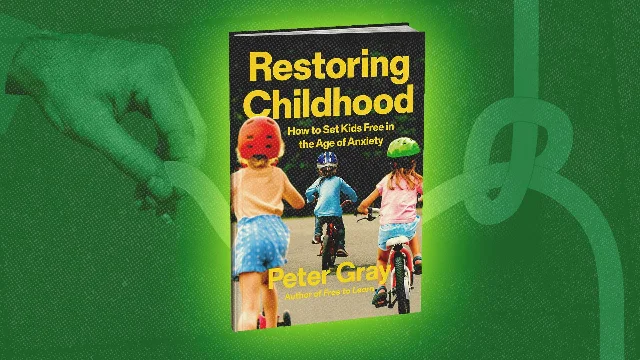
《The Reason Interview》是《Reason》杂志的一档长访谈:资深编辑尼克·吉莱斯皮(Nick Gillespie)每期请一位作家、研究者或活动者坐下来谈一个多小时,问题大多落在国家权力与个人自由的分界上。1 2026 年 9 月 16 日这一期的嘉宾是波士顿学院心理学与神经科学的研究教授彼得·格雷(Peter Gray)。格雷是进化心理学出身,几十年研究儿童的玩耍与自主学习,写过《自由学习》(Free to Learn),也是儿童独立倡导组织 Let Grow 的共同创办人;这次他来谈自己的新书《还给孩子童年》(Restoring Childhood: How to Set Kids Free in the Age of Anxiety)。23
这期节目是一场观点访谈,做的是一件很具体的事:把美国青少年心理健康在 2010 年之后的恶化,从「手机与社交媒体」这个流行解释里拆出来,换上另一条因果链——成人对儿童生活的逐步接管,加上 K-12 课改带来的考试与成就压力。格雷按自己的顺序讲下去:先给「童年」下定义,再讲玩耍怎样被大人接手、家长为什么越来越不敢放手、七十年自杀率曲线长什么形状、他与乔纳森·海特(Jonathan Haidt)的分歧在哪、Common Core 具体改了什么、瑞典与英格兰为什么在他看来是同一场实验的重复,最后落到学校与家长各自能做什么。他在节目里也讲了自己说不清的地方,并把支撑判断的几项研究点了名。
核心问题:把全国的课程收窄、统一,把教师和学校的命运绑在考试分数上,学龄孩子的焦虑会不会跟着上升?格雷的答案是会——他整理的证据显示,美国 2010 年之后的那一段就是这样来的。
先记住三件事
一、格雷给童年下的定义是功能性的。 从生物学看,童年的任务只有一个:一年比一年更不依赖父母。孩子天生被设计来完成这件事,工具是离大人越来越远的自主玩耍、混龄玩耍、独自出门、在青少年阶段做一点像大人做的事。他的整本书都在说同一件事:过去七十年,我们把这套工具一件件收走了。
二、他用来支撑判断的核心指标是一条七十年的曲线。 美国 15—19 岁青少年的自杀率从 1950 年前后一路上升到 1990 年前后,1990 到 2002 年下降约四成,之后维持了十来年,2010 年前后又开始上升。格雷说这条曲线先升、后降、再升的形状,与手机普及的时间表对不上,倒与「成人对儿童生活的控制强度」更像同一件事的两面。
三、他把 2010 年后的那一段归给课改,而不给手机。 诱因是 No Child Left Behind 与 Common Core 一类的全国性课程标准:课程从教师手里收到上层,教师按学生考试分数被评价,分数不达标学校可能被关闭。焦虑从学生扩散到教师和校长,再传回孩子。格雷承认社交媒体会带来麻烦,但他认为跨国证据不足以把它当成主因——他给出的反例是同一个时期欧盟的青少年心理指标在改善。
本期人物与背景
彼得·格雷(Peter Gray),波士顿学院心理学与神经科学的研究教授,进化心理学背景,长期研究儿童天然的学习方式与玩耍的进化意义,代表作《自由学习》(Free to Learn,已被译成十多种语言)。2 他在 Psychology Today 写了多年的专栏《Freedom to Learn》、在 Substack 写《Play Makes Us Human》,也是「自主学习」(self-directed education)运动的推动者之一。45 值得听他说这个话题的原因很直接:他是这条论证线最早的写作者之一,而这次站在他对面的是与他共同创办组织的旧同事。
乔纳森·海特(Jonathan Haidt),纽约大学斯特恩商学院的社会心理学家,2024 年的畅销书《焦虑的一代》(The Anxious Generation)主张童年从「以玩耍为基础」转向「以手机为基础」是青少年心理疾病流行的原因。6 他同样是 Let Grow 的共同创办人。两人在「玩耍减少导致孩子变脆弱」上意见一致,分歧全部落在原因上,这也是本期最尖锐的一段。
莱诺·斯凯纳齐(Lenore Skenazy),Let Grow 主席,2008 年因为让九岁的儿子独自坐纽约地铁而被称为「美国最差的妈妈」,此后写下《Free-Range Kids》,把「放养式育儿」(free-range parenting)这个词推成公共话题,也是《Reason》的长期撰稿人。78
Let Grow,由格雷、海特与斯凯纳齐共同创办的美国非营利组织,推动儿童独立与自由玩耍,为学校提供课前课后的混龄 Play Club 等项目。9
萨德伯里谷学校(Sudbury Valley School),位于马萨诸塞州弗雷明汉的一所不分年级的学校,从学前到高中年龄的学生自己决定学什么、怎么学。格雷在这里做过混龄玩耍的观察研究,他的一个研究生以此写成博士论文。10
术语与概念
自主玩耍(free play / self-directed play):格雷给出的判据是四条——自己选的、自己主导的、为了玩本身(不为奖品、表扬或简历)、自己说了算。在他这套论证里,玩耍不是休息,而是孩子练习「为自己的人生做主」的主要方式。
混龄玩耍(age-mixed play):不同年龄的孩子混在一起玩。格雷说不分年龄的玩伴群在狩猎采集社会里是常态,同岁玩耍是现代分级学校的产物。
陌生人危险(stranger danger):1980 年代在美国流行起来的恐惧,认为拐走孩子的人就在街角。格雷说这类事件在统计上极其罕见,恐惧却留到了今天,并被他称为一场道德恐慌。
Common Core(「共同核心州立标准」):各州在 2010 年前后陆续采用的统一课程标准,用以满足联邦的达标要求,配套的是全州统一考试。13
PISA(国际学生评估项目):经济合作与发展组织每三年对各国 15 岁学生做的阅读、数学与科学测评,排名是许多国家改课改的动因。14
学校氛围(school climate):学生是否觉得自己在学校被当作一个人对待。格雷说这是学校能改的、对心理健康与成绩都有效的单项变量。
模块一:童年的任务,和被成人接管的玩耍(00:00–17:00)
格雷从定义开始。他说自己受的是进化生物学的训练,从这个角度看,童年的任务或者功能只有一个:变得一年比一年独立于父母,最后离开他们。孩子出生时就带着完成这件事的设计,其中很大一块是自主玩耍——越来越多地在没有大人的情况下玩,并且跟同辈玩,因为同辈之间没有权威人物从天而降替他们解决问题。他的书名里那个「还给孩子童年」,指的就是这套设计被拆掉的过程。
他对玩耍的定义很严格。玩耍是自己选的、自己主导的,你做它只是因为你想做,不为奖品、不为表扬、不为简历好看,而且你说了算。自然选择让孩子天生想玩,是因为玩耍是孩子学会掌控自己生活的方式:做决定、解决问题、跟同伴谈判。
接着他讲自己的童年。他在明尼苏达和威斯康星长大,1950 年代打棒球、橄榄球、篮球,多数是临时凑人的野球(pickup games)。到战后婴儿潮那一代,事情变了:小联盟(Little League)、Pop Warner 橄榄球、教会办的 CYO 篮球把原本由孩子自己组织的活动系统地交到大人手里。格雷把这一步看作此后一切问题的样板。
代价有两层。第一层,大人接手之后,活动从「为了好玩」变成「为了赢」:一开始还说是娱乐,很快那些想着当大联盟教练的教练就要赢,压力转到孩子身上。第二层,也是最实际的一层,是钱。旅行队(travel team)的报名费把参与资格变成家庭收入的筛选:付得起的孩子留下,到 13 岁前后多数人已经倦怠退出。格雷说,今天孩子身上的成就压力不只来自学校,成人主导的体育运动是另一个来源。
第二个变化是年龄分层。格雷说,有分级学校之前,孩子一直在混龄群体里玩;同岁的玩伴群是现代制度的产物——狩猎采集群体里根本没有那么多同龄孩子,典型的玩伴群横跨六到十五岁。他在萨德伯里谷学校做过混龄玩耍的观察,一名研究生专门研究年龄相差四岁以上的互动,结论是每一段这样的互动都是玩,对双方也都是学习:大孩子从中得到「我能帮上忙」的能力感。年龄分层还有第二个后果:水平相当的人聚在一起更容易比较谁好谁差,而混龄会让「谁赢」变得无从计算——十六岁、六英尺高的孩子跟八岁的孩子打野球,唯一能做的就是让所有人都玩得开心。
吉莱斯皮在这里插了一句对蔡美儿的评论,出自格雷的书:蔡美儿不是「虎妈」,而是「驯虎师」——真的母虎会让幼崽自己去玩,而蔡美儿介入孩子生活的每一个部分。
模块二:家长的微观管理,与「意外必须有人负责」(17:00–23:20)
这一段从一个反直觉的数字开始。吉莱斯皮问的是格雷书里那句话:今天有全职工作的母亲,与孩子相处的时间比 1970 年代待在家里的母亲还要多。格雷没有否认,他解释差异出在哪。
1970 年代的母亲会对三个孩子说「出去,出去玩」,房子更小、人口更多;在北明尼苏达,父母的原话是外面零下也没关系,穿好衣服出去。孩子们在外面待着,母亲的时间与孩子的时间自然分离。
格雷把随后的变化归为「善意走过头」。保护孩子一直是父母的本分,但这件事被推到了极端:孩子受了伤,就一定是家长的责任。他小时候几乎人人摔断过胳膊,那没人需要被追责,顶多说一句你自己不小心;现在必须有人承担——通常是妈妈,或者学校,因为操场上有危险设备,或者市政府,因为公园里居然有跷跷板。为了免于指责和诉讼,我们先把孩子的乐趣拿掉了。他还指出另一层变化:看管孩子变成了道德问题,让没有大人看管的孩子出门,会被看作家长不负责。
这一段的落点是「陌生人危险」。1980 年代起,拐走孩子的人被想象成就在每个街角,而格雷说这类事件在统计上极为罕见。吉莱斯皮把这叫作真正的道德恐慌:媒体报道极其显眼的个案,实际发生概率接近于零。
模块三:一条七十年的曲线,与 1990 年代的反向证据(23:20–41:50)
节目走到格雷论证的核心:他在书里反复引用的那张图。
他把美国 15—19 岁青少年的自杀率从 1950 年画到 2024 年前后。按照吉莱斯皮在节目里的读法,这条线从 1950 年前后每十万人约 2.4 一路升到 1990 年前后的 11 左右;1990 到 2002 年下降约四成,几乎回到 1950 年代的水平;此后维持了十来年;2010 年前后再次上升。格雷强调他选自杀率当指标有原因:抑郁与焦虑的问卷口径这些年换过好几次,只有自杀率是前后一致的测量,而其他能拼起来的指标走的是同一条曲线。
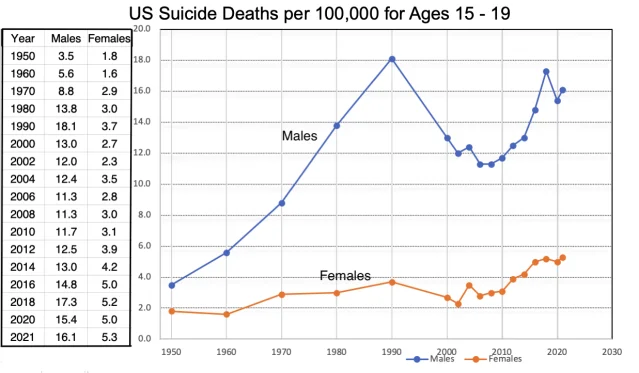
格雷说,多数人不知道 1990 年代青少年心理健康其实在改善。他自己起初也把它当成一次小波动,直到发现自杀率下降的幅度接近四成,才承认这不是噪声。接下来是这期节目里最有意思的一段推理:他开始排查可能的原因,最后活下来的解释是——1990 年代正是有青少年的家庭第一次拥有电脑、随后联上网的时期。
为什么电脑会让人变好?他的推理接回第一模块的前提。孩子此前已经被逐步剥夺了在没有大人的情况下与同伴玩、与同伴交流的机会,而「没有大人」这件事在他的论证里权重极高:青少年有很多事不会在父母面前做,有很多自我表达需要不被纠正地完成。电脑、联机游戏、聊天室与即时通讯正好补上了这条路。他说电子游戏完全符合玩耍的四条判据,男孩当时玩得更多,因为这些游戏里有暴力内容;女孩更多用聊天类的早期社交工具。
他引用了两类研究。一类是 1990 年代的研究:家里用电脑的孩子在各项心理指标上比不用的孩子更好,控制家庭社会经济背景之后依然如此。另一类更有意思:研究者给有青少年的家庭免费提供电脑,条件是定期报告谁在用、谁在教谁,结果确认了当时家长都知道的事——孩子先学会用电脑,成为家里的「电脑专家」,然后教父母。格雷说这是家庭内部的角色反转:在孩子最没有权力、最被管束的阶段,他们在一个领域忽然成了更有知识的一方。
他还讲了这条线对边缘青少年的意义:因为性取向或审美偏好在自己社区里被孤立的孩子,能在线找到同类,意识到自己不是异常。他甚至认为同性恋权利运动的一部分动力来自互联网。
模块四:与海特的分歧——手机能不能解释 2010 年后的变化(41:50–49:30)
2010 年前后曲线再次抬头,这是两个解释正面对撞的地方。海特的说法是智能手机与社交媒体改造了童年,造成了一场心理疾病流行;格雷的说法是课改。
格雷对海特的批评集中在三点。
第一是证据的选择。他说海特书里引用的是少数几项挑选过的研究,由他雇佣的年轻研究者按结论去找;而被忽略的是这个领域成百上千项研究里的大量综述与元分析,这些元分析显示手机或社交媒体的使用与青少年的心理健康之间没有临床意义上的相关。
第二是因果方向。他说就算看到相关,也完全可能是焦虑、抑郁的孩子更多地上社交媒体来应对自己的状态,而纵向研究显示这种情况确实常见。
第三是国别差异。他说这是美国现象:2010 到 2018 年美国指标急剧恶化时,欧盟的指标反而在改善,而欧盟的孩子并没有被剥夺手机和社交媒体。他承认能找到少数几个同期恶化的国家,但说那些国家的经历更符合他的解释。
他还补了一层同行态度:在这个领域做研究的人几乎一致批评那本书,并抱怨媒体把海特当成唯一专家,而不去找真正做这项研究的人;他点名了加州大学欧文分校的坎迪斯·奥杰斯(Candice Odgers)与斯泰森大学的克里斯·弗格森(Chris Ferguson)。奥杰斯 2024 年在《Nature》上写过一篇针对该书的评论,认为书中的证据被过度简化。17
吉莱斯皮在这一段加了一个历史类比:1950 年代的心理学家弗雷德里克·沃瑟姆(Frederick Wertham)在《无辜者的诱惑》(Seduction of the Innocent)里发现少年犯都看漫画,于是把漫画当成原因,忽略了这些孩子成长环境里的犯罪、种族主义与贫困。格雷同意这个类比,并且说了一句更直白的话:指责社交媒体公司,比指责学校系统容易得多。
模块五:Common Core 改了什么(49:30–58:00)
格雷把 2010 年的转折接到课改上,这条线索起点在 1980 年代。他在节目里把 No Child Left Behind 说成里根政府时期的法案,吉莱斯皮当场把它更正为小布什在 2000 年代初签署;真实的时间线是:1983 年的报告《国家处在危险之中》启动了对美国学校的一轮全国性焦虑,2002 年的《不让一个孩子掉队法》把联邦经费与各州标准、考试和教育成效绑定。11 此后各州在 2010 年前后陆续采用 Common Core,用统一标准和全州考试来满足联邦要求,联邦经费是那根胡萝卜。
格雷说 Common Core 最关键的动作是夺走了教师的课程权力。课程标准由上层制定,教师变成执行者,而他们的评价、晋升乃至是否能继续受雇,取决于学生的考试分数——不论班上坐的是什么样的孩子。压力再往上走一层:校长、整所学校也被按分数评价,分数不达标学校可能被关闭。于是教师焦虑,校长焦虑,焦虑再传给孩子。
他补充了一条更早的事实:学校一直是孩子最大的压力源,只要有过调查,无论怎么问,学校都排在第一位,且把其他答案甩得很远。这不是意外——孩子在校时间仅次于在家,而学校这个环境天生就是被微观管理、被不断与人比较、被反复暗示「这里失败就意味着一生失败」的地方。
今昔对比是他给出的另一个量级感。1950 年代他上小学时没有作业,偶尔老师让写一首诗或一个故事带到班上分享;每天在校六小时,其中两小时在户外——上午半小时课间、下午半小时课间、中午整整一小时午餐,零下的天气照旧出去打雪仗。今天作业量与在校时间都在增加,课间与午餐被压缩。
这一段最硬的证据是季节性。格雷最早是从一位儿童精神科医生那里听来的:她每年夏天生意就断了。当时没有公开数据,他就去找了一家按月公布入院人数的儿童精神病院,从月度数据里看到每年夏天入院率下降、开学后回升。此后有多项全国性研究显示,学年内各类青少年心理问题的指标至少是假期里的两倍,青少年自杀率同样在暑假下降。16
吉莱斯皮在这里补了财政这一层:纽约市与洛杉矶联合学区这些全美最大的学区都在流失学生,学校要关停、预算要压缩,成年人身上的压力会再加一层,再传给孩子。
顺带说明,美国疾病控制与预防中心 2023 年的调查显示,40% 的高中生在过去一年里持续感到悲伤或绝望,20% 认真考虑过自杀——格雷引用的那条历史曲线并不是一段已经过去的往事。18
模块六:瑞典、英格兰、韩国——同一场实验的重复(58:00–1:02:20)
为了检验自己的解释,格雷去看别的国家。他先排除了手机解释:跨国的手机与社交媒体普及时间表,与各国青少年心理指标的变化之间没有有意义的相关。14
然后他找同期恶化的国家,找到的这几个恰好都改了学校。动因是 PISA:各国被排名羞辱,于是向韩国模式靠拢——他特意点出这有多荒谬,因为韩国青少年自杀率高得惊人,这套学校系统对孩子伤害很大,但它能换来高分。
瑞典做了与美国 Common Core 高度相似的全国性课改,青少年焦虑、抑郁与自杀指标随之从与美国相近的时间点开始上升。英格兰改得更晚:2015 年英格兰把考试压力加码,指标就从 2015 年开始抬头。由于英格兰占英国人口约八成,对外看起来就像「英国晚了五年」。
格雷由此说出他这期节目里最像结论的一句话:几乎像存在一条社会心理学定律——在国别层面把学校系统收得更窄、更应试、削掉教师凭判断调整课程的空间,学龄孩子的焦虑、抑郁与自杀就会上升。这是他的解释,不是学界共识;把它读成一条已被证实的规律,超出了这期节目给出的证据。
模块七:如果没有手机(1:02:20–1:09:00)
吉莱斯皮问了一个绕不开的反事实:如果智能手机没有在 2010 年前后出现,情况会更好还是更坏?格雷先承认自己答不了:两个方向的论证他都能编出来,实证上也分不清。他的判断是课改的影响压过了其他因素,所以即便没有手机,他估计也不会好到哪里去。
接着他把话题转到政策。他反对用州法禁止青少年使用智能手机,理由有两条:这是言论自由问题,也是「我们本来就没有把青少年当成完整的人」这个道德问题。他举了佛罗里达的一项调查作为反证:在控制背景因素后,有智能手机的孩子朋友更多、自评更快乐,只在一项上略差——睡眠少一点。他的解法很具体:睡觉时把手机拿出卧室。
他最后讲自己对数字世界的看法。他说现在已经没有意义去区分「现实世界」和「数字世界」,两者已经合成一件事:他用手机找路、跟人会合、在树林里认野花。拿走智能手机,等于拿走孩子把两者合起来的能力——台式机与笔记本电脑做不到这一点,因为你不会一直带着它。
模块八:学校该做减法,家长该放手(1:09:00–1:22:28)
最后二十分钟是处方,格雷按学校、家长两端给。
对学校,他的第一条建议是做减法。他说每次去学校讲话,看到的都是不断往上加的东西;而更多学习时间不带来更多学习,只带来倦怠。第二条是恢复真正的玩耍:课间不要管得太细,管得太细就不再是玩;如果课间改不了,就把玩耍放到课前课后,Let Grow 的 Play Club 就是这种混龄的自由玩耍。
第三条是他认为最有效的单项改变——改善学校氛围。学校氛围指的是:我在这里是否自在,老师、校长甚至食堂的工作人员是否关心我这个人,而不只是我的分数。通常由校长带头示范,尽量记住每个人的名字、让他们被看见。他说自己最初关心这件事,是因为想弄清怎样才能缩小富裕家庭与贫困家庭孩子之间的成绩差距;在所有试过的办法里,唯一被证明有效的是那些刻意改变学校氛围的项目。让学生对校规、课堂怎么组织有一点发言权,他们会觉得自己是学校的一部分,而不是受害者。第四条是信任教师:教学是艺术,好老师懂得从孩子所在的地方出发,把内容讲到他们想学;没有智力上的投入,再多的重复练习也不产生学习。他说 Common Core 做的正好相反,它削弱了教师的这种能力。
对家长,他先承认处境的困难。最难的一步是如何在不触犯儿童保护机构的前提下给孩子自由:让七八岁到十岁的孩子自己走路上学、在公园玩,或者让十二岁的孩子照看五岁的弟妹,这些几十年前很普通的事,今天可能被当成疏忽。
他给出的一句话建议是:孩子四五岁以后,坐下来问他,有没有什么事你想做、但一直没有做,而且没有做是因为觉得我不会同意,或者因为你自己有点害怕,或者因为你压根没想过。让孩子自己列一张清单,然后一条一条谈怎么做、怎么分步。八岁的孩子想骑车穿过城区去看朋友,可以先由大人陪骑几次,也可以先自己绕街区几圈,再慢慢升到那个更大的目标。他说有些家长会意外发现,孩子想做的其实是做饭、承担家务这类事——那些稍复杂一点的家务,孩子是真心想学的。
他还提醒别把孩子排满。成人主导的活动占满时间,孩子就没有自由时间,连发呆都没有。而且压力不一定来自家长:同伴都在做,或者孩子自己觉得简历不够好看,也会自己逼自己。
最后他回到高成就学校这个高风险群体。他说研究这件事的学者(他点名苏尼娅·卢瑟)发现,重点学校与富裕社区的公立学校里,学生的焦虑、抑郁与自杀率高于全国平均,原因是极高的成就压力:进不了荣誉班、进不了常春藤就等于人生失败。19 家长能做的是把话说清楚——自己一点也不在意孩子上哪所大学,在意的是孩子是否快乐、是否满意,同时仍然帮他想清楚怎么谋生。他说这句话说出来,往往就是「有点焦虑」和「极度焦虑」之间的差别。
完整中英双语对照逐字转录稿
00:00 - 10:00
尼克·吉莱斯皮(Nick Gillespie):
This is The Reason Interview With Nick Gillespie, and my guest today is Peter Gray. He is a psychologist who focuses on childhood development and the role of play in making kids and even adults human. His new book is Restoring Childhood, How to Set Kids Free in the Age of Anxiety. Peter Gray, thanks for talking to Reason today.
这是 The Reason Interview With Nick Gillespie,我今天的嘉宾是彼得·格雷(Peter Gray)。他是一位心理学家,专注于儿童发展以及游戏在让孩子甚至成年人保持人性中的作用。他的新书是《还给孩子童年》(Restoring Childhood),《在焦虑时代如何让孩子自由》 。彼得·格雷(Peter Gray),感谢您今天与《Reason》交谈。
彼得·格雷(Peter Gray):
Thank you. Thank you for having me on. It's delightful to be here.
谢谢。谢谢你邀请我来。能来这里真是太高兴了。
尼克·吉莱斯皮(Nick Gillespie):
Yeah, you know, we talked for Reason about almost 10 years ago. You're one of the founders of Let Grow, the fantastic organization that you co-founded with Jonathan Haidt and Reason's own Lenore Skenazy. You and Haidt are on different sides of the childhood issue. We're going to get to that in a moment, as well as your prescriptions for how to make childhood better for kids. But first, you know, talk about Restoring Childhood, your basic thesis is, What is it and why is this book so important at this very moment?
是的,你知道,我们大约在十年前和《Reason》谈过。你是 Let Grow 的创始人之一,这个由你与乔纳森·海特(Jonathan Haidt)和《Reason》的共同创立的了不起的组织拥有莱诺·斯凯纳齐(Lenore Skenazy)。你和乔纳森·海特(Jonathan Haidt)在儿童问题上立场不同。我们很快会谈到这一点,以及你关于如何让儿童生活更美好的建议。但首先,你先谈谈《还给孩子童年》(Restoring Childhood),你的基本论点是什么,这本书为什么在这个时候如此重要?
彼得·格雷(Peter Gray):
Suppose the first thing you have to know to understand the title is what do I mean by childhood? So the way I look at it, I'm an evolutionary biologist by background. From a biological perspective, the purpose of childhood or the task of childhood is to become increasingly independent of your parents. That's the whole goal of childhood. And children come into the world biologically designed to achieve that goal. A big part of that design is independent play, playing away from adults increasingly, and Playing with peers where they have to solve problems with people who are in their generation as opposed to the previous generation, where there's no authority figures swooping down and solving their problems, taking care of them and so on. So that's the task of childhood. The thesis of this book is that we have gradually over decades been making it more and more difficult for children to achieve that task. By overprotecting them, by educating them along very narrow channels, spending more and more of their time doing that, adding pressure, scheduling them in ways, especially in competitive things that are adult-directed and adult-controlled things.
假设要理解标题,您首先要知道的是我所说的童年是什么意思? 所以在我看来,我是一名进化生物学家。 从生物学的角度来看,童年的目的或童年的任务是变得越来越独立于父母。 这就是童年的全部目标。 孩子来到这个世界上的生物学目的就是为了实现这一目标。 这种设计的一个重要部分是自主玩耍,越来越远离成年人玩,与同龄人一起玩,他们必须与同代人而不是上一代人一起解决问题,在上一代人中,没有权威人物突然下来解决他们的问题,照顾他们等等。 这就是童年的任务。 本书的主题是,几十年来,我们逐渐让孩子们完成这项任务变得越来越困难。 通过过度保护他们,通过非常狭窄的渠道教育他们,花费越来越多的时间来做这件事,增加压力,以各种方式安排他们,特别是在成人主导和成人控制的竞争性事物上。
彼得·格雷(Peter Gray):
So we've really taken children's freedom away from them, the freedom to do the things that children are biologically designed to do, primarily to write and explore independently.
所以我们真的剥夺了孩子们的自由,那种生来就该有的自由,本该去做孩子们生物上设计去做的事情,主要是独立写作和探索的自由。
尼克·吉莱斯皮(Nick Gillespie):
And so it's like, you know, we barely get to a point in human history where kids don't have to work. You know, as 10-year-olds, and, you know, they have a couple decades of kind of roaming around, and then we're back in a different type of lockdown, a more humane one. But you're essentially arguing, and I'm being a bit hyperbolic here, is that, you know, we're kind of back to chimney sweeps, right, where kids' days are structured and kind of harsh and directed by other, you know, by other people, particularly, I mean, by adults, right? Right. And you have a great line, and I guess I want to ask you about the scale of evolution versus the past 70 years or so, because you have a great critique, a stinging critique of Amy Chua, who wrote the battle hymn of the tiger mom. And you say she's not really a tiger mom, she's a tiger trainer, because tiger mothers let their cubs play. And they know, you know, like she doesn't, the tiger mother doesn't get involved. Amy Chua is involved in every aspect of her children's life. And that's kind of a synecdoche for the problem, right? But how is it if humans are designed by evolution, like, does it really matter that, you know, anything that's happened in the past 70 years, how does that really matter, I guess, in an evolutionary sense? Yeah.
所以,你知道,我们几乎没有达到人类历史上孩子们不需要工作的阶段。 你知道,作为 10 岁的孩子,他们有几十年的漫游时间,然后我们又回到了一种不同类型的封锁,一种更人道的封锁。 但你本质上是在争论,我在这里有点夸张,是不是,你知道,我们有点回到了扫烟囱的时代,对吧,孩子们的日子是结构化的,有点严酷,是由其他人指导的,你知道,由其他人,特别是,我的意思是,由成年人,对吗? 正确的。 你的台词很棒,我想我想问你关于过去 70 年左右进化的规模,因为你有一个伟大的批评,对写了虎妈妈战歌的 蔡美儿(Amy Chua) 的尖锐批评。 你说她不是真正的虎妈妈,她是一个驯虎师,因为虎妈妈让它们的幼崽玩耍。 他们知道,你知道,就像她不知道的那样,虎妈妈不会参与其中。 蔡美儿(Amy Chua) 参与了她孩子们生活的方方面面。 这就是这个问题的提喻,对吧? 但是如果人类是由进化设计的,那会怎样呢,比如说,过去 70 年发生的任何事情真的重要吗,从进化的角度来看,那真的有意义吗?是的。
彼得·格雷(Peter Gray):
So the way it really matters in terms, not so much in an evolutionary sense, but in a clinical sense, is that children are suffering. Children are suffering today more than ever. And this, but this is not a brand new thing that between the 1950s and present times, really even between the 1950s and 1990, we can go into why 1990 later if you want. The rates of anxiety, depression, suicide and so on among children, especially teens, has increased dramatically. And that increase correlates with. A continuous decline in children's opportunities to do things independently, to play, to explore, to take on as they become teenagers, responsible positions, part-time jobs, and so on, adult-like sorts of positions, which... In a certain sense, biologically, teens are apprentice adults. We're not allowing them to do that. So those are some of the changes. You mentioned that, you know, we freed children from some of the horrors of the earlier industrial age where they were working in sweatshops and coal mines and this kind of thing. Or on farms, right? Or on farms, but farms was probably not all that bad.
因此,从进化的角度来看,从临床的角度来看,真正重要的是儿童正在遭受痛苦。 今天的孩子们比以往任何时候都更加痛苦。 这,但这并不是一个全新的事情,从 20 世纪 50 年代到现在,甚至在 1950 年代到 1990 年间,如果你愿意的话,我们可以稍后再讨论为什么是 1990 年。 儿童尤其是青少年的焦虑、抑郁、自杀等现象急剧增加。 这种增长与相关。 孩子们在青少年时期独立做事、玩耍、探索、承担责任、承担责任的职位、兼职工作等等类似成人的职位的机会不断减少,从某种意义上说,从生物学上来说,青少年是成年人的学徒。 我们不允许他们这样做。 这些是一些变化。 你提到,你知道,我们让孩子们摆脱了早期工业时代的一些恐怖,他们在血汗工厂和煤矿等地方工作。 或者在农场,对吧? 或者在农场,但农场可能并没有那么糟糕。
彼得·格雷(Peter Gray):
They were outdoors and they were playing as they were guarding the sheep and so on. So by the beginning of the 20th century, we had outlawed extensive child labor. But by the middle of the 20th century, or certainly by the 1980s, 1990s, Children's schooling plus homework amounts to a full-time job. It amounts to the same thing as a full-time job. I have heard from children who would say, I'd rather work in a factory than go to school. Seriously.
他们在户外玩耍,同时照看羊群等等。所以到 20 世纪初,我们已经禁止了大规模的童工。但到 20 世纪中叶,或者至少到 1980 年代、1990 年代,孩子们的上学加上作业相当于一份全职工作。这相当于一份全职工作。我听过一些孩子说,我宁愿在工厂工作也不想上学。真的。
尼克·吉莱斯皮(Nick Gillespie):
Yeah, well, that would be a nice, maybe we, yeah, we could have a co-op program where you're six weeks in school and six weeks in a factory.
是啊,好吧,那会很不错,也许我们,嗯,我们可以有一个合作项目,你在学校上六周,然后在工厂工作六周。
彼得·格雷(Peter Gray):
It's not only a full-time job, but it's a full-time job that no adult that I know of would ever accept. It's a horrible full-time job. You're micromanaged, you're constantly in competition with your peers, you're judged every day, who's better, who's worse. You're not allowed to consult with your... With your workmates, your classmates, this is not a job that any of this job would drive you and me crazy if we had a job like that.
这不仅仅是一份全职工作,而且是一份我所认识的任何成年人都不会接受的全职工作。这是一份可怕的全职工作。你会被微观管理,你不断与同龄人竞争,每天都在被评判,谁更好,谁更差。你不被允许与同事、同学商量,如果我们有这样一份工作,这份工作会让你和我都疯掉。
尼克·吉莱斯皮(Nick Gillespie):
I mean, I always think about school, which is many years in the past for me, you know, certainly grammar school, but like it's the only place where you have to ask permission to go to the bathroom. Right, other than maybe working as an Amazon worker these days, if you believe certain reports.
我的意思是,我总是会想起学校,那对我来说已经是多年前的事情了,你知道的,当然是文法学校,但比如说那是唯一一个你上厕所必须请假允许的地方。对吧,除非现在你相信某些报道的话,可能在当亚马逊员工作也是如此。
彼得·格雷(Peter Gray):
But it's stunning.
但它令人惊叹。
尼克·吉莱斯皮(Nick Gillespie):
You, you know, you both in your previous work as well as in Restoring Childhood, you talk about what it was like for you growing up in Minnesota and Wisconsin, mostly in the 1950s. And what are the things that. You know, what I like about your work is that when I first encountered it, I was like, oh, this is another elegy for a baby, you know, an early baby boom childhood that, oh, you know, back when I was young, the world was fresh and interesting and, you know, exciting. And as I got older, the world got less good. Right. And it's not like that at all. But you talk and I think this will resonate with a lot. Anybody who's a parent or I guess a former kid. You played, you know, baseball, football, basketball, but it was mostly pickup games, particularly as a younger child. And then you talk about, like, the creation of Little League and Pop Warner football and, you know, if it's CYO basketball or other forms where suddenly in the, you know, in the postwar era as the baby boom was coming on, you know, fully online. A lot of stuff that used to be just directed by kids and created by kids got taken over by parents and systematized by adults. Talk a bit about that and why that is so bad for kids.
你知道,你在之前的作品以及 《还给孩子童年》(Restoring Childhood) 中都谈到了你在 明尼苏达 和威斯康星州长大的感觉,主要是在 20 世纪 50 年代。 那是什么东西。 你知道,我喜欢你的作品的原因是,当我第一次遇到它时,我想,哦,这是婴儿的另一首挽歌,你知道,婴儿潮早期的童年,哦,你知道,当我年轻的时候,世界是新鲜的、有趣的,你知道的,令人兴奋的。 随着我年龄的增长,世界变得越来越美好。 正确的。 事实根本不是那样的。 但你的讲话我认为这会引起很多人的共鸣。 任何为人父母的人,或者我猜是以前的孩子。 你知道,你打棒球、橄榄球、篮球,但大部分都是临时比赛,尤其是在年幼的时候。 然后你谈论小联盟(Little League)和波普华纳(Pop Warner)足球的创造,你知道,如果是 CYO 篮球或其他形式,你知道,在战后时代,随着婴儿潮的到来,你知道,完全在线。 很多过去只是由孩子指导、孩子创造的东西,现在被父母接管,并被成年人系统化。 谈谈这一点以及为什么这对孩子来说如此糟糕。
彼得·格雷(Peter Gray):
So... So the play, the way I define play and the way a lot of other researchers define play, and really the way kids understand play, there's research on this, is that it is self-chosen and self-directed. And it's something that you're doing just because you want to do it. You're not doing it to win prizes. You're not doing it to win praise. You're not doing it to improve your resume. And you are in charge of it. So the reason Mother Nature or natural selection designed children to want to play is because this is how they learn how to take charge of their own lives. This is how they learn how to make their own decisions, solve their own problems, negotiate with peers and so on and so forth. That happened all the time in the way I used to play baseball and the way other kids up until fairly, you know, the last few decades, we used to go out and you go out to the vacant lot. There'd be a bunch of other kids there and you'd figure out your game. There'd be no adults around. You were the adults. You were practicing adulthood in that situation because you were solving the problems, you were making the rules, you were making sure that your playmates, including those on the other team, were happy. Otherwise, they'd go home. You are learning a lot that is way more important than baseball.
所以……所以,游戏,我定义游戏的方式和许多其他研究人员定义游戏的方式,以及孩子们真正理解游戏的方式,有关于这个的研究,是它是自我选择和自我指导的。 你做这件事只是因为你想做。 你这样做不是为了赢得奖品。 你这样做不是为了赢得赞扬。 你这样做不是为了改善你的简历。 而你负责它。 因此,大自然或自然选择让孩子们想要玩耍的原因是因为这是他们学习如何掌控自己生活的方式。 这就是他们学习如何做出自己的决定、解决自己的问题、与同事谈判等等的方式。 这种情况一直发生在我过去打棒球的方式和其他孩子的方式上,直到最近几十年,我们过去常常出去,你出去到空地。 那里会有一群其他孩子,你会弄清楚你的游戏。 周围不会有大人。 你们是成年人。 在那种情况下,你正在练习成年人的行为,因为你在解决问题,你在制定规则,你在确保你的玩伴,包括另一队的队员,都开心。否则,他们会回家。你正在学习很多,比棒球重要得多的东西。
尼克·吉莱斯皮(Nick Gillespie):
Yeah.
是的。
彼得·格雷(Peter Gray):
Very few people are going to go out and make a living playing baseball. Right. But all of us are going to need to know how to manage our own lives, get along with peers, keep our playmates happy, keep our friends and mates happy, and so on and so forth. Those are extraordinarily important lessons. So when we take... When we take children's play and turn it into an adult-run activity, we are taking away children's opportunities to learn the most important lessons of life, the lessons that children are biologically designed to learn. We are also taking something that is done for fun and turning it into a competition, turning it into once adults take charge of it. At first, it might be, they might say, this is just really recreation, you know, we're kind of having, we're doing that, but doesn't take long before those coaches who are imagining that they're going to be major league coaches, you know, where they want to win. And no longer now, now there's pressure on the kids. And in fact, there's a lot of evidence. That it's not just school that's a source of achievement pressure on kids today. Adult directed sports are a source of achievement pressure. We have kids burning out from it all the time. We have kids suffering from anxiety because they didn't make the traveling team or they lost a tournament. They can't afford it.
很少有人会出去打棒球谋生。 正确的。 但我们所有人都需要知道如何管理自己的生活,与同龄人相处,让我们的玩伴快乐,让我们的朋友和伴侣快乐,等等。 这些都是非常重要的教训。 因此,当我们……当我们把儿童游戏变成成人主导的活动时,我们就剥夺了儿童学习生命中最重要课程的机会,而这些课程是儿童生来就需要学习的。 我们还把一些为了好玩而做的事情变成了一场比赛,变成了成年人负责的事情。 起初,他们可能会说,这可能只是真正的娱乐,你知道,我们正在这样做,但不久之后,那些想象自己将成为大联盟教练的教练,你知道,他们想赢。 现在不再是这样了,现在孩子们有压力了。 事实上,有很多证据。 今天,不仅仅是学校是孩子们取得成就的压力的来源。 成人定向运动是成就压力的一个来源。 我们有孩子因为这一切而精疲力尽。我们有孩子因为没能进入旅行队或者输掉比赛而焦虑。他们负担不起。
10:00 - 20:00
尼克·吉莱斯皮(Nick Gillespie):
They can't afford the cost of the traveling team, right?
他们承担不起旅行队的费用,对吧?
彼得·格雷(Peter Gray):
Well, that's the other thing that's happened as over recent. I mean, at first, you know, towns would sponsor this and it would be free. And now you pay a fee for it. And in fact... In fact, sports has become, as one writer put it, kind of the province of young children from wealthy families who can afford the fees. But the reasons we say young children is by the time they're 13 or so, most of them are burned out of it. They've quit.
嗯,这也是最近发生的另一件事。我的意思是,一开始,你知道的,城镇会赞助这个活动,而且是免费的。现在你需要支付费用。事实上……事实上,正如一位作家所说,体育已经变成了有钱家庭年轻孩子的专属活动,因为他们负担得起费用。我们之所以说是年轻孩子,是因为到他们大约 13 岁的时候,大多数人已经感到厌倦了,已经放弃了。
尼克·吉莱斯皮(Nick Gillespie):
And just to put a button on this, too, you played varsity sports in high school, right? So you're not anti-sport. You're not, you know, a bookish nerd who is just like, oh, you know, the football captain gets all the girls and all the accolades. I also, you know, one of the other things you stress, which... I think goes unremarked upon in an amazing way, which is that childhood has become increasingly stratified by age, you know, and obviously our schooling system is set up like this, you know, kids are the same age in the same grade, and that this outdoor unstructured play often had kids of different ages playing together. And that, you know, it's remarkable that If grammar school and high school are the only places where you have to ask to go to the bathroom, it's also kind of the only time in your life where you're surrounded completely by people exactly your own age. And can you talk a little bit about why it was important to have kids of different ages mixing with each other in unstructured environments? Sure.
顺便说一句,你在高中时参加过校队运动,对吧? 所以你并不反对运动。 你不是,你知道,一个书呆子,就像,哦,你知道,足球队长得到了所有的女孩和所有的赞誉。 我还,你知道,你强调的另一件事......我认为以一种令人惊奇的方式未被注意到,那就是童年已经变得越来越按年龄分层,你知道,显然我们的教育系统是这样建立的,你知道,孩子们在同一年级,同龄,这种户外非结构化游戏经常让不同年龄的孩子一起玩。 而且,你知道,如果文法学校和高中是唯一你必须要求上厕所的地方,那么这也是你一生中唯一一次完全被与你同龄的人包围的时间,这很值得注意。 您能否谈谈为什么让不同年龄段的孩子在非结构化环境中相互混合很重要? 当然。
彼得·格雷(Peter Gray):
Well, throughout history, until we had graded school, children always played in age-mixed groups. It's reasonable to say that same-age play or near-age play is an artifact of modern times. It never occurs in hunter-gatherer cultures. For one thing, most, at least, band hunter-gatherer cultures don't have enough kids that even if you wanted to self-segregate you, there wouldn't be enough kids your own age. The typical play group is... Maybe six to 12 years old or eight to 13 or eight to 15 years old. You know, you see kids over a range of age. I've studied age mixed play at a radically alternative school, the Sudbury Valley School, that doesn't segregate children by age. There are children there from age four on through 18, even 19 years old in some cases. And they play together across ages and I had a graduate student who did his dissertation on this, looking at age mixed play, focusing especially on when there's at least four years difference in age. And every such interaction, completely playful, but yet it is a learning experience, obviously for both partners. The older child is...
嗯,纵观历史,在我们上小学之前,孩子们总是分成不同年龄的小组玩耍。 可以说,同龄游戏或近龄游戏是现代的神器。 它在狩猎采集文化中从未发生过。 一方面,至少在大多数部落狩猎采集文化中,没有足够的孩子,即使你想自我隔离,也没有足够的与你同龄的孩子。 典型的游戏群体是……也许六到十二岁或八到十三岁或八到十五岁。 你知道,你会看到不同年龄段的孩子。 我在一所完全另类的学校 萨德伯里谷学校(Sudbury Valley School) 中研究了年龄混合游戏,该学校不会按年龄区分孩子。 那里的儿童年龄从 4 岁到 18 岁,有些甚至 19 岁。 他们跨年龄段一起玩耍,我有一个研究生就此做了论文,研究年龄混合玩耍,特别关注年龄至少有四岁差异的情况。 每一次这样的互动,完全是有趣的,但它也是一次学习经历,显然对双方来说都是如此。 大一点的孩子是...
彼得·格雷(Peter Gray):
So, let's get started. The seven-year-old is the mature one in this situation and getting a sense of, you know, I can do things. I can really help this little kid. That's a valuable lesson. When we segregate children by age, we lose all that. The other thing that happens when you segregate children by age, especially in our competitive society, even if there aren't adults making it competitive, it tends to become more competitive. When you're dealing with other people at your same level, there's a tendency to think who is better, who's worse. When you've got a mix of age, you know, that goes out the window because obviously the older kids are going to be better than the younger kids, almost always anyway. And so the play becomes more joyful, more, you know, more fun, less of a sense of trying to see who can beat whom. There's no point if you're the If you're playing a pickup game of basketball and you're 16 years old and six feet tall and can duck it and some of your other kids are eight years old, you're going to figure out a way of playing and everybody's having fun.
那么,让我们开始吧。 在这种情况下,七岁的孩子是成熟的,并且感觉到,你知道,我可以做事。 我真的可以帮助这个小孩子。 这是一个宝贵的教训。 当我们按年龄隔离儿童时,我们就失去了这一切。 当您按年龄隔离儿童时,会发生另一件事,尤其是在我们竞争激烈的社会中,即使没有成年人使其具有竞争力,它也往往会变得更具竞争力。 当你与处于同一水平的其他人打交道时,你会倾向于认为谁更好,谁更差。 当你的年龄不同时,你知道,这种情况就被排除在外了,因为显然年龄较大的孩子会比年龄较小的孩子表现得更好,无论如何,几乎总是如此。 所以比赛变得更加快乐,更加,你知道,更加有趣,而不是试图看看谁能打败谁的感觉。 如果你正在参加一场篮球比赛,而且你 16 岁,身高 6 英尺,可以躲避比赛,而你的其他一些孩子已经 8 岁了,那么你就会找到一种打球的方式,每个人都会玩得很开心。
彼得·格雷(Peter Gray):
You're not going to duck the ball. You're going to pass and dribble and you're going to do other things, but everybody's going to have fun and who wins is just no longer an issue.
你不会躲球。你会传球和运球,还会做其他事情,但每个人都会玩得开心,谁赢已经不再重要。
尼克·吉莱斯皮(Nick Gillespie):
Hey Reason fans, if you live in the New York City area, I want to tell you about the world premiere on Tuesday, October 13th of a feature-length Reason documentary directed by Jim Epstein. It's called Escaping Venezuela, and it tells the horrifying story of that country's collapse through the experience of Carlos Mora, an entrepreneur whose thriving business was crushed by the state. Mora was even thrown in prison. At a time when democratic socialists here are singing the praises of authoritarians like Hugo Chavez, it's more important than ever to understand exactly how socialism destroyed one of the richest countries in Latin America. The premiere of Escaping Venezuela is on Tuesday, October 13th at the IFC Film Center in Greenwich Village. Tickets are just $15 and there'll be a panel discussion afterwards. Go to reason.com slash events to watch the trailer and buy your tickets to Escaping Venezuela. Let's talk a little bit about parenting over the past, you know, 70 years or so, because you have a stat in the book, which, you know, was is amazing to me. And it kind of conforms with my own childhood. I was born in 63. So I grew up mostly in the 70s or like a most conscious of that. My mother works. So it's a little bit different. But you have a stat that says today's.
嘿,《Reason》 粉丝,如果您住在 纽约市 地区,我想向您介绍一下由 吉姆·爱泼斯坦(Jim Epstein) 执导的长片 《Reason》 纪录片将于 10 月 13 日星期二全球首映。 它叫《逃离委内瑞拉》(Escaping Venezuela),通过卡洛斯·莫拉(Carlos Mora)的经历讲述了那个国家崩溃的可怕故事,一位企业家的蓬勃发展被国家摧毁了。 莫拉甚至被投入监狱。 当这里的民主社会主义者歌颂像查韦斯(Hugo Chavez)这样的独裁者时,准确理解社会主义如何摧毁拉丁美洲最富有的国家之一比以往任何时候都更加重要。 《逃离委内瑞拉》(Escaping Venezuela) 将于 10 月 13 日星期二在格林威治村 IFC 电影中心 首映。 门票仅需 15 美元,随后将举行小组讨论。 前往 Reason.com 斜杠活动观看预告片并购买 《逃离委内瑞拉》(Escaping Venezuela) 门票。 让我们谈谈过去 70 年左右的养育子女的情况,因为书中有一个统计数据,你知道,这对我来说是惊人的。 这有点符合我自己的童年。 我出生于 63 岁。所以我大部分时间是在 70 年代长大的,或者说我是最清楚这一点的人。 我妈妈工作。 所以有点不同。 但是你有一个统计显示是今天的。
尼克·吉莱斯皮(Nick Gillespie):
Today's mothers who have full-time jobs spend more time with their kids than stay-at-home moms did in the 1970s. And, you know, I think that that's actually absolutely accurate. I don't question that. But can you talk a little bit about what does it mean, like what is going on with parents? Let's forget about kids for a second to say that you could, you know, in 1975, Your mother was in the kitchen, maybe preparing something or doing laundry or whatever, and there's three kids in the house. She spends less time with them than a mother who is working full time now. What's going on there and what does that say about a very changed dynamic in our society?
今天有全职工作的母亲与孩子相处的时间,比 1970 年代在家带孩子的母亲还要多。你知道,我认为这实际上是完全正确的。我对此毫无疑问。但你能谈谈这意味着什么吗,比如父母到底发生了什么变化?我们暂且不谈孩子,假设在 1975 年,你的母亲在厨房,也许在准备食物或者洗衣服什么的,家里有三个孩子。她与孩子相处的时间比现在全职工作的母亲还要少。这是怎么回事?这说明我们的社会动态发生了很大的变化吗?
彼得·格雷(Peter Gray):
So one of the differences, obviously, is that a mother with three kids in the 1970s or earlier would say to the kids, get out of the house. Get out of the house. Go out and play. It doesn't matter. I actually remember my parents saying, it doesn't matter that it's below zero. We live in northern Minnesota. It doesn't matter. Just dress up and get out of the house. That was, that was the, and houses were smaller. My families were bigger. Houses were much smaller than families bigger. You wanted to get the kids out of the house.
所以其中一个明显的不同是,1970 年代或更早时期有三个孩子的母亲会对孩子们说,出去离开房子。出去离开房子。出去玩。没关系。我实际上记得我父母说过,虽然零下也没关系。我们住在明尼苏达州北部。没关系。只要穿好衣服,出去就行了。那时候,那时候房子比较小。我的家庭比较大。房子比家庭小得多。你会想把孩子们赶出家门。
尼克·吉莱斯皮(Nick Gillespie):
Yeah. You talk about, I think you, you were living with your mother, your stepfather, a couple of siblings and like a two bedroom house.
是的。你说,你当时和你妈妈、继父、几个兄弟姐妹住在一套两居室的房子里。
彼得·格雷(Peter Gray):
In a very small house, yeah.
在一间很小的房子里,嗯。
尼克·吉莱斯皮(Nick Gillespie):
So there's nowhere really to play in the house.
所以在房子里实际上没有地方可以玩。
彼得·格雷(Peter Gray):
We had eight people in the family at one point because we took in a cousin. So that was, and that was typical.
我们家曾经有八口人,因为我们收养了一个表亲。所以那是,那很典型。
尼克·吉莱斯皮(Nick Gillespie):
I mean, that was typical. So that's part of it. And there's a lot of reasons.
我的意思是,那很典型。这就是其中的一部分。原因有很多。
彼得·格雷(Peter Gray):
The other thing that happened over time, you know, I call this good intentions gone too far. So. It's always been important to parents to protect their children. You want to protect your children. You don't want your children to die from some accident. You don't want them to get sick. You don't want them to get seriously injured and so on and so forth. And over time, though, we've taken this to extremes so that we worry it becomes we've developed the view that if a kid gets hurt, it is the parent's fault. Okay, so it used to be practically everybody I knew broke their arm at some point in childhood. I broke mine. This happens, right? This happens. Boys and girls, yeah.
随着时间的推移发生的另一件事,你知道,我称之为好意过度。所以,对父母来说,保护孩子一直很重要。你想要保护你的孩子。你不希望孩子因为某种意外而死去。你不希望他们生病。你不希望他们受到严重伤害,诸如此类。然而,随着时间的推移,我们把这种想法推向了极端,以至于我们担心的程度已经发展到一种观点:如果孩子受伤,那就是父母的错。好的,所以以前几乎我认识的每个人在童年时期都曾摔断过手臂。我也摔断过。这种事会发生,对吧?会发生。男孩和女孩都是,是的。
20:00 - 30:00
尼克·吉莱斯皮(Nick Gillespie):
Nobody had to be blamed for it, except maybe the kids themselves. Hey, you shouldn't have done that. You should have been more careful. But it wasn't like everybody pointed their finger at the mom and said, see what happens? And it's usually moms who get blamed. I would say parents to be politically correct. But to be honest, it's usually moms who take on this role and who get the blame if something goes wrong. So we almost feel like accidents can't just happen. Somebody has to be blamed. And maybe it's the parents, maybe it's the school because they had this dangerous piece of equipment, or maybe it's the city because they had, God forbid, teeter-totters in the playground. And these are dangerous things. So somebody gets sued, somebody gets blamed. We have developed this attitude and so therefore to protect against this blame or suit, we've taken away the fun for kids. And we also have developed the view that it's a parent's responsibility to either themselves or have some other responsible person basically watching their child all the time.
没有人应该为此受到责备,除了孩子们自己。 嘿,你不应该这样做。 你应该更加小心。 但并不是每个人都把矛头指向妈妈说,看看会发生什么? 受到指责的通常是妈妈们。 我想说的是,父母要政治正确。 但说实话,通常是妈妈们承担了这个角色,如果出现问题,她们就会受到指责。 所以我们几乎感觉事故不会自然发生。 必须有人受到指责。 也许是父母的原因,也许是学校的原因,因为他们有这种危险的设备,或者可能是城市的原因,因为他们在操场上跷跷板,但愿上帝保佑。 这些都是危险的事情。 所以有人被起诉,有人被指责。 我们已经形成了这种态度,因此为了防止这种指责或诉讼,我们剥夺了孩子们的乐趣。 我们还形成了这样一种观点,即父母有责任自己或让其他负责人一直监视他们的孩子。
彼得·格雷(Peter Gray):
Almost regardless of the age of the child, you know, and so this it's become a moral issue. It's become like you are not and you are an immoral parent if you allow your child to go out and do things without some adult watching them. Some of it is, you know, some people justify it. They say the world is more dangerous now, but statistically it's not more dangerous now, at least not in the ways that people think it is. So that's, people are afraid of things that are extraordinarily rare. Beginning in the 1980s, we developed this concept of stranger danger, that there's a stranger around every corner who's there to snatch your child away. This was an extraordinarily rare occurrence, a really extraordinarily diminishingly small. And yet, beginning in the 1980s, it became a prevalent fear and it's still today.
几乎不管孩子的年龄,你知道的,所以这已经变成了一个道德问题。就好像如果你允许孩子在没有成人看护的情况下外出活动,你就是一个不道德的父母。一部分原因是,有些人为此找到理由。他们说现在的世界更危险了,但从统计上看,现在并不是更危险,至少不是人们认为的那种方式。因此,人们害怕的是那些极其罕见的事情。从 20 世纪 80 年代开始,我们发展了“陌生人危险”的概念,认为每一个街角都有陌生人想要抓走你的孩子。这种情况极其罕见,真的是微乎其微。然而,从 20 世纪 80 年代开始,这种恐惧变得普遍,并且一直持续到今天。
尼克·吉莱斯皮(Nick Gillespie):
True moral panic, right? It really becomes a kind of moral panic. Yeah, high profile, very media focused stories of horrible acts to kids, but statistically, you know, zero essentially.
真正的道德恐慌,对吧?它真的变成了一种道德恐慌。是的,高调的,非常受媒体关注的关于对孩子犯下可怕行为的报道,但从统计上看,基本上是零。
彼得·格雷(Peter Gray):
And so we began and then the other thing is the other change that occurred over time, gradually at first, and then very recently, a huge change was schooling. Yeah. Begin to become far more stressful and took more and more of children's time.
于是我们开始了,然后另一件事情是随着时间发生的另一个变化,起初是逐渐的,然后在最近,学校教育发生了巨大的变化。是的,开始变得更加有压力,并占用了孩子们越来越多的时间。
尼克·吉莱斯皮(Nick Gillespie):
Let's put a button in that for now and come back to it in a second, because I because this is a very important factor in your disagreement with Jonathan Haidt about what is hurting children's or adolescents, young people's mental health. You have and you repeat this several times throughout the book of figure eight. Showing the suicide rate for US teens ages 15 to 19 from 1950 to 2024 or 2025. And this is kind of a proxy for what you were talking about, that kids are more stressed, that they are less happy. And, you know, all the provisos need to be there, you know, that very few children, relatively speaking, commit suicide, you know, that most kids are flourishing, all of this. But you show how in the chart, The suicide rate from 1950 up to 1990 goes up at a pretty steep clip from about 2.4 to 11 percent or 11 per 100,000 kids. So, you know, there's a steady incline. And then there is a drop for the better part of about a dozen years. You argue that one of the things that was happening is the macro trend in post-war America, which includes the baby boom and Gen X and all of this, is that kids were losing more and more autonomy, control over their life, schooling pressures were building up, parental pressures were building up, so they were less and less happy. And then in the 90s, it starts to dip.
暂时先在这里放一个按钮,我们稍后再回过头来看,因为这是你与乔纳森·海特(Jonathan Haidt)在关于什么影响儿童或青少年心理健康上的分歧中非常重要的一个因素。你在《八字形》一书中多次提到这一点。你展示了 1950 年至 2024 或 2025 年美国 15 至 19 岁青少年的自杀率。这在某种程度上可以作为你所谈论的一个代理指标,即孩子们压力更大,幸福感更低。当然,所有的前提条件都需要明确,比如相对来说,少量儿童会自杀,大多数孩子都在健康成长,这些都要考虑进去。但你在图表中显示,从 1950 年到 1990 年,自杀率以相当陡峭的速度上升,从每十万人中约 2.4 人增长到 11 人,呈现出稳步上升的趋势。然后,在大约十多年的时间里有所下降。 你认为其中发生的一件事是战后美国的宏观趋势,包括婴儿潮和 X 世代等等,那就是孩子们越来越失去自主权,对自己生活的控制权,学习压力在增加,父母压力在增加,所以他们越来越不快乐。然后到了 90 年代,这种情况开始下降。
尼克·吉莱斯皮(Nick Gillespie):
And you actually argue that the internet was a major factor in improving the mental health of adolescents and children. Can you explain your theory for that? And, you know, it's amazing to think about this because in the 90s itself, the internet was, of course, seen as the absolute You know, last stop for children like that, all they were going to see there was bestiality porn, they were going to be lured away by, you know, pedophiles, they were going to have their tastes destroyed in the same way that Frederick Wortham in Seduction of the Innocent, the anti-comic book. You know, diatribe in the 50s, which was very influential, you know, said that reading comic books would destroy children's taste for literature. It's like putting too much mustard on a ham sandwich. This all of these fears came back in droves in the 90s about the Internet, and they kind of stick around in different forms that we'll talk about. But you're saying in the 90s that decline started because of the Internet. Explain that.
And you actually argue that the internet was a major factor in improving the mental health of adolescents and children. Can you explain your theory for that? And, you know, it's amazing to think about this because in the 90s itself, the internet was, of course, seen as the absolute You know, last stop for children like that, all they were going to see there was bestiality porn, they were going to be lured away by, you know, pedophiles, they were going to have their tastes destroyed in the same way that Frederick Wortham in 《无辜者的诱惑》(Seduction of the Innocent) , the anti-comic book. You know, diatribe in the 50s, which was very influential, you know, said that reading comic books would destroy children's taste for literature. It's like putting too much mustard on a ham sandwich. This all of these fears came back in droves in the 90s about the Internet, and they kind of stick around in different forms that we'll talk about. But you're saying in the 90s that decline started because of the Internet. Explain that.
彼得·格雷(Peter Gray):
So the first point to be made here is that most people seem not to be aware that mental health actually improved beginning in the 1990s. Between 1990 and, as you say, about 2002, mental health improved. Then it held steady for another few years. And so at first, I think good news tends not to get the same play publicly as bad news does, you know. At first, I, like most other people, ignored the fact that mental health seemed to be improving. It was just a little blip, you know, it'll go back up again. But I began to realize as I got more into it, wait, this is more than a blip. This is a big, this is going, this is... Suicides were down about 40% of the way back down to 1950s levels. That was a big drop. That was a huge drop over a relatively short period of time. And as you point out, suicide, of course, is just the tip of the iceberg of mental suffering. And the reason I use suicide is it's at least a consistent measure over time. We haven't had other measures of depression and anxiety and so on that have been the same, but to the degree that we can piece together the measures, if we were to chart anxiety and depression, it would follow the same general curve. So just to clarify that.
因此,这里首先要指出的是,大多数人似乎没有意识到心理健康实际上从 20 世纪 90 年代开始有所改善。 正如你所说,从 1990 年到 2002 年左右,心理健康状况有所改善。 然后它又稳定了几年。 所以一开始,我认为好消息往往不会像坏消息那样受到公众的关注,你知道。 起初,我和大多数其他人一样,忽视了心理健康似乎正在改善的事实。 这只是一个小现象,你知道,它会再次上升。 但随着我越来越深入地了解它,我开始意识到,等等,这不仅仅是一个昙花一现。 这是一个大事件,这正在发生,这是……自杀率下降了约 40%,回到了 20 世纪 50 年代的水平。 那是一个很大的下降。 这是在相对较短的时间内大幅下降的结果。 正如您所指出的,自杀当然只是精神痛苦的冰山一角。 我使用自杀的原因是它至少是一种随着时间的推移而一致的措施。 我们还没有其他相同的抑郁和焦虑等衡量标准,但在我们可以将这些衡量标准拼凑起来的程度上,如果我们要绘制焦虑和抑郁图表,它将遵循相同的一般曲线。 所以只是想澄清一下。
彼得·格雷(Peter Gray):
So why do I say, I looked at every possibility, I looked at every possibility that I could think of, and the only one that made sense, and then the further I delved into it, it made a lot of sense, was the 1990s was when most families with teenagers, Got their first computer. And by the end of the 1990s, even by the middle of the 1990s, most families with a computer had also an internet connection. There is a lot of research that hasn't gotten a lot of public play showing that in the 1990s, those kids who were on computers were doing better psychologically than those who weren't. Even controlling for background factor, control for socioeconomic class, control for everything else. Those on computers were doing better by every measure that people looked at. Now, why were they doing better? So over time, children had been deprived of the ability, increasingly over time, of the ability to play with one another, to communicate with one another away from adults. And I can't overemphasize how important the away from adults is, because when adults are present...
所以我为什么说,我看了每一种可能性,我看了每一种我能想到的可能性,唯一有意义的,然后我越深入研究,它就变得很有道理,就是 20 世纪 90 年代,是大多数有青少年的家庭,得到了他们的第一台电脑。 到了 20 世纪 90 年代末,甚至到了 90 年代中期,大多数拥有计算机的家庭也都拥有了互联网连接。 有大量尚未得到广泛关注的研究表明,在 20 世纪 90 年代,那些使用电脑的孩子在心理上比不使用电脑的孩子表现得更好。 甚至控制背景因素,控制社会经济阶层,控制其他一切。 从人们所看到的每一项指标来看,计算机上的人都做得更好。 现在,为什么他们做得更好? 因此,随着时间的推移,孩子们被剥夺了与彼此玩耍、远离成人相互交流的能力,而且随着时间的推移,这种能力越来越被剥夺。 我无论如何强调远离成年人的重要性都不为过,因为当成年人在场时......
彼得·格雷(Peter Gray):
There's a lot of things that teenagers need to do that they're not going to do in front of their parents. A lot of ways they need to express themselves. They need to find themselves in certain kinds of ways without somebody correcting them and telling them what to do and not to do and so on and so forth. Suddenly now, teenagers had a new way to do this. They had been already by 1990 so overscheduled, so much committed to various other things, so little opportunity for them to get together in the physical world and do the things that teenagers had done before that. But, and had so little time, but now they could do it on the internet. Now they could do it, they could play video games. Video games were already popular even before 1990, but they became very popular once you had home computers. And video games are still-
青少年需要做很多事情,而他们不会在父母面前去做。很多表达自我的方式,他们需要以某种方式找到自我,而不被别人纠正或告诉该做什么不该做什么,诸如此类。突然之间,青少年有了一种新的方式去做这些事情。到 1990 年,他们已经安排得非常满,投入到各种事情中,对他们来说在现实世界里聚在一起做以前青少年会做的事情的机会非常少,而且时间也很有限,但现在他们可以在互联网上做这些事情。他们可以玩电子游戏。电子游戏在 1990 年前就已经很受欢迎,但一旦有了家用电脑,它们变得非常流行。电子游戏仍然是——
30:00 - 40:00
尼克·吉莱斯皮(Nick Gillespie):
And of course very, very demonized.
当然,非常,非常被妖魔化。
彼得·格雷(Peter Gray):
Yeah, that's right. They were demonized, but they are clearly play. There's no question, they meet all the criteria. I explain in the book how they meet all the criteria of play. And kids are playing these games and they are developing the kinds of skills, the kinds of attitudes, the kinds of strengths that come from any kind of play they're developing. And in addition, when they're playing with other kids, they're making contact with other kids. And it's not just video games. Boys were playing video games at that time much more than girls, partly because a lot of the video games, to be honest, had violent content and were boy-oriented for that reason.
是的,没错。他们曾被妖魔化,但它们显然是游戏。毫无疑问,它们符合所有的游戏标准。我在书中解释了它们如何符合所有的游戏标准。孩子们在玩这些游戏时,他们正在培养各种技能、态度和任何类型游戏所带来的能力。此外,当他们与其他孩子一起玩时,他们也在与其他孩子接触。而且不仅仅是电子游戏。那个时候男孩玩电子游戏的比女孩多,部分原因是老实说,很多电子游戏都有暴力内容,因此更偏向男孩。
尼克·吉莱斯皮(Nick Gillespie):
Yeah, there are versions of playing Army or Cowboys and Indians.
是的,有玩军队或牛仔与印第安人的版本。
彼得·格雷(Peter Gray):
That's right. Yeah, there are a lot of shooter games and so on and so forth. So, But the other thing that happened is the early forms of what we now call social media, chatting with one another, you know, at first just texting, and then you had kind of ways of getting together visually. Girls were doing more of that actually than boys. So you now had a way of hanging out with your friends, of communicating, of expressing yourself that wasn't there before. One other thing that happened with computers, and there was a wonderful study that I describe in the book Restoring Childhood, where what these researchers did is they gave a home computer to families with teenagers If the families would agree to report regularly about who's using it, who's teaching whom, and so on and so forth, what the study confirmed is something that most people who were parents at that time already knew, which is that the kids learned how to use this new device before the adults did. The kids became the home computer experts. They were the ones who taught their parents how to use it. You have a role switch here. You now have, in some sense, the kids are the, at least in this realm, the powerful, knowledgeable ones in the family helping out the older ones. I had this experience myself.
这是正确的。 是的,有很多射击游戏等等。 所以,但发生的另一件事是我们现在所说的社交媒体的早期形式,互相聊天,你知道,一开始只是发短信,然后你就有了一种视觉上聚集在一起的方式。 事实上,女孩比男孩做的更多。 所以你现在有了一种与朋友一起出去玩、交流、表达自己的方式,这是以前没有的。 计算机上发生的另一件事,我在书《还给孩子童年》(Restoring Childhood)中描述了一项精彩的研究,其中这些研究人员所做的是,他们向有青少年的家庭提供一台家用计算机,如果这些家庭同意定期报告谁在使用它,谁在教谁,等等,该研究证实了大多数当时为人父母的人已经知道的事情,那就是孩子们比成年人先学会了如何使用这种新设备。 The kids became the home computer experts. 他们是教父母如何使用它的人。 You have a role switch here. 从某种意义上说,现在孩子们在这个领域里至少是家里有权势、有知识的人,帮助年长的人。我自己也有过这样的经历。
彼得·格雷(Peter Gray):
When I got my first home computer, my kid was still at home, a teenager. He clearly learned how to use it before I did.
当我得到我的第一台家用电脑时,我的孩子还在家里,是个青少年。他显然比我更早学会了如何使用它。
彼得·格雷(Peter Gray):
For years, I would call on him to solve my computer problems until he finally got disgusted with me for not taking charge. He said, just turn it on and off, right? If that affects you.
多年来,我总是找他来解决我的电脑问题,直到他终于因为我不自己动手而对我感到厌烦。他说,只要开关机,对吧?如果那影响到你。
尼克·吉莱斯皮(Nick Gillespie):
So the... So you have a kind of a new status for teenagers. Yeah. And I mean, the 90s, if you were reading, you know, kind of people who were more optimistic about technology, you would hear stories about kids, you know, and adults, too, who were living, you know, kind of isolated because, you know, they might be gay or they might have weird taste in art and music and literature. And suddenly they were able to find a virtual community.
所以那个……所以你对青少年有一种新的地位。是的。我的意思是,90 年代,如果你在阅读那些对技术更乐观的人,你会听到关于孩子们的故事,当然也包括成年人,他们过着孤立的生活,因为他们可能是同性恋,或者他们在艺术、音乐和文学方面有奇怪的兴趣。突然之间,他们能够找到一个虚拟社区。
彼得·格雷(Peter Gray):
You know, even as they were still navigating their physical community and things like that. So that's, you know, essentially that's part of what you're arguing is that people were able to connect. And with kids, it gave them this redoubt from parental or adult supervision that is vital to mental health and development. I think that's right. And what you've just alluded to is another major point that kids who were, for whatever reason, stigmatized in their own community could find other people like them and learn, hey, I'm not the only one like this, and could develop a kind of a rapport. I even think that, this would be a different topic, but I even think that the gay revolution came about at least partly because of the internet, that Young people who were gay found others who were, and they began to realize, wait a minute, this isn't such an abnormality. This is, we're not necessarily sick or sinful. And it ultimately gave them courage to come out to their own parents and ultimately, I think, led to a growing acceptance That being gay is one way of being. It's a little bit like being left-handed. Some of us are right-handed. Most of us are right-handed, but some of us are left-handed.
你知道,即使他们仍在物理社区和类似的事情中航行。 所以,你知道,本质上这就是你所说的人们能够相互联系的一部分。 对于孩子来说,这让他们摆脱了父母或成人的监督,这对心理健康和发展至关重要。 我认为这是对的。 你刚才提到的另一个要点是,无论出于何种原因,在自己的社区中受到侮辱的孩子可以找到其他像他们一样的人,并学习,嘿,我不是唯一一个这样的人,并且可以建立一种融洽的关系。 我什至认为,这将是一个不同的话题,但我什至认为同性恋革命的发生至少部分是由于互联网,同性恋的年轻人找到了其他同性恋者,他们开始意识到,等一下,这并不是什么异常。 也就是说,我们不一定生病或有罪。 这最终给了他们勇气向自己的父母出柜,我认为,最终让他们越来越多地接受同性恋是一种存在方式。 这有点像左撇子。 我们中有些人是右利手。 我们大多数人是右撇子,但有些人是左撇子。
尼克·吉莱斯皮(Nick Gillespie):
And some of us are ambidextrous. Not as many as we would be, right? If we were allowed to. I have, like I said, I'm 63 years old. I have an older brother who was clearly left-handed and was taught to do everything right-handed in school because that, you know, Right hand was the right way to do it. And you were in not just a factory school, but you were kind of like on an assembly line. So you do things the same way. Before we go to what changed because mental health now has gotten worse among younger people. Can I ask, what is there? There's two big sociological things to account for, you know, in the big postwar era. So, you know, from like 1950 on. Let's say until, you know, there's the end of the Cold War and then the start of the new century. But two things that really are unique in that period. One is the baby boom and just the sheer number of kids, both in the boom and in Gen X. Like that was, you know, the baby boom was like two or three times bigger than the cohorts before it. So it's like, not only do you have, you know, the end of the depression in World War II, but then suddenly you have this massive, you know, just gigantic army of kids that have to be accounted for. At the same time that America is becoming much wealthier for a variety of reasons. So you have that is a big factor.
我们中的一些人是双手灵巧的。 没有我们那么多,对吧? 如果我们被允许的话。 正如我所说,我已经 63 岁了。 我有一个哥哥,他显然是左撇子,在学校里被教导要用右手做所有事情,因为,你知道,右手是正确的做法。 你不仅在工厂学校,而且有点像在装配线上。 所以你也以同样的方式做事。 在我们讨论发生了什么变化之前,因为现在年轻人的心理健康状况变得更糟。 我可以问一下,那里有什么吗? 你知道,在战后的大时代里,有两个重要的社会学问题需要解释。 所以,你知道,从 1950 年开始。 这么说吧,直到冷战结束、新世纪开始。 但有两件事在那个时期确实是独一无二的。 一是婴儿潮和婴儿潮的绝对数量,无论是在婴儿潮还是在 X 世代。就像那样,你知道,婴儿潮比之前的群体大两到三倍。 所以这就好像,你知道,你不仅看到了二战大萧条的结束,而且突然间你也有了这支庞大的、你知道的、庞大的孩子大军,必须加以考虑。 与此同时,美国由于各种原因变得更加富有。所以你会发现这是一个很大的因素。
尼克·吉莱斯皮(Nick Gillespie):
And then starting in the 70s, really, you have the return of women, of mothers to the workplace in jobs that are increasingly equal. They're career jobs. They're the same as men. So you have two parents, neither of whom are likely to be at home with the kids. How does that factor into the experience of women? I don't know if it's that, how does that factor into the increase in mental health problems among kids?
然后从 70 年代开始,女性,母亲们真的重新回到工作岗位,从事的工作越来越平等。这些是职业工作,与男性一样。所以你有两个父母,都不太可能在家照顾孩子。这如何影响女性的体验?我不知道,这是否与孩子中精神健康问题的增加有关?
彼得·格雷(Peter Gray):
So I think that is one of the, in one of my chapters early on, I talk about, I describe, if I remember correctly, 11 social changes that occurred between the 1950s and... And the 1990s, all of which would have the effect of restricting children's freedom. And one of them certainly is smaller families, fewer kids on the block to play with, and related to women's going to work, a decline in neighborhood cohesiveness. So when you had a parent home, that parent knew the neighbors and was kind of the glue that held neighborhoods together. But even dads were home more on weekends and people were outdoors more. So you knew your neighbor better. So it wasn't just women going to work, but women going to work played a role. That you no longer had people regularly at home. So you went from a world where pretty much everybody knew their neighbors and they knew their neighbors' kids. And so the kids played together to a world where very often you don't even know your next door neighbor. And if you don't know your neighbors, for all you know, that guy across the street could be a child molester or that...
所以我认为,在我前面的一章中,如果我没记错的话,我谈论、描述了 20 世纪 50 年代到……以及 90 年代之间发生的 11 个社会变革,所有这些变革都会产生限制儿童自由的效果。 其中之一肯定是家庭规模较小,街区里可供玩耍的孩子较少,以及与女性上班有关的邻里凝聚力下降。 因此,当你有父母之家时,这位父母认识邻居,并且是将社区凝聚在一起的粘合剂。 但即使是爸爸周末也更多地呆在家里,而人们更多地在户外活动。 所以你更了解你的邻居。 因此,不仅仅是女性去工作,女性去工作也发挥了作用。 你不再经常有人在家。 所以你来自一个几乎每个人都认识他们的邻居并且认识邻居的孩子的世界。 因此,孩子们一起玩耍,进入一个你常常甚至不认识隔壁邻居的世界。 如果你不认识你的邻居,据你所知,街对面的那个人可能是儿童猥亵者或者……
彼得·格雷(Peter Gray):
Kid next door who wears a hood like this over his head, maybe he's a bully, you know, because you don't know him. And that leads to an increased fear, an increased tendency to not let kids out. Even having smaller families, you have fewer siblings to play with, you have no siblings to play with. One of the things that led to age mix play in the past is if you had a fairly large family, the older kids would be responsible for care of the younger kids. And the way they would take that responsibility is they take the younger kids with them out to play when they're playing with their friends. So now you have automatically age mix play, right? So, yeah. So, in fact, part of it, and women going to work played a role in families becoming smaller as well. So, indeed, as much as I applaud the fact that women... Are no longer financially dependent upon drunken husbands because they can get a job. You know, I'm a feminist. I absolutely am.
隔壁那个戴着兜帽的孩子,也许他是个恶霸,你知道的,因为你不认识他。这会导致恐惧增加,更倾向于不让孩子出去玩。就算是小家庭,你的玩伴也会少,如果没有兄弟姐妹就更没有玩伴了。过去导致不同年龄孩子一起玩的一件事情是,如果你有一个相当大的家庭,年纪大的孩子会负责照顾年纪小的孩子。他们承担这种责任的方式就是,在自己和朋友玩的时候,会带上年纪小的孩子一起出去玩。所以现在你就自然而然有了不同年龄的混合游戏,对吗?是的。事实上,这其中一部分原因,女性去工作,也在家庭变小中起了作用。所以,的确,尽管我赞赏女性不再依赖酗酒的丈夫就能赚钱的事实,你知道,我是个女权主义者,我完全是。
尼克·吉莱斯皮(Nick Gillespie):
I don't think it's a moral issue at all. Yeah. Network of people who would make sure like that he wasn't doing anything criminal, etc. And, you know, that world is over. And it's a good thing that it's over because it was one that was much poorer and meaner and less forgiving in many profound ways. But we're here now where most kids are raised in kind of institutional settings and that institutional settings are different, right, than than ad hoc kind of neighborhood based places. But, and I guess they have the legal, you know, they have legal liability. They also have to justify, you know, if you're a school and you're explaining to taxpayers why you want more and more money to educate kids, you have to say, oh, well, they're getting better test scores, right? They're better students, they're better whatever. And if you're, you know, if you're a little league coach and you're demanding $800 to go travel to a nearby town, you've got to be winning, right? So like everything builds towards this. Professionalization of childhood, which leads to bad outcomes. Attention Reason interview listeners, I've got a big word from a big sponsor.
我认为这根本不是道德问题。 是的。 由一群人组成的网络,他们会确保他没有做任何犯罪行为,等等。而且,你知道,那个世界已经结束了。 事情的结束是一件好事,因为它在许多深刻的方面都更加贫穷、更加卑鄙、更加不宽容。 但现在我们大多数孩子都是在某种机构环境中长大的,而且这种机构环境与临时的社区环境不同,对吧。 但是,我想他们有法律责任,你知道,他们有法律责任。 他们还必须证明,你知道,如果你是一所学校,你向纳税人解释为什么你想要越来越多的钱来教育孩子,你必须说,哦,好吧,他们的考试成绩越来越好,对吧? 他们是更好的学生,无论如何,他们都更好。 如果你是,你知道,如果你是一名小联盟教练,并且你要求 800 美元去附近的城镇旅行,那么你一定会赢,对吧? 就像一切都朝着这个方向发展一样。 童年的职业化会导致不良后果。 《Reason》采访听众请注意,我从一位大赞助商那里得到了一个重要的消息。
40:00 - 50:00
尼克·吉莱斯皮(Nick Gillespie):
If you're interested in making the world more free, pay attention. Nobody is going to hand you the job you actually want, so you have to build it yourself. The Cato Institute, the country's leading independent libertarian think tank, is paying people to design their dream job for what they call the Innovation Project. This is a full-time role advancing individual liberty, limited government, free markets and peace. It pays at least $100,000 a year with full benefits and no committee watering down your idea. Give it a shot for two years, and if it's a success, you join Cato permanently. If not, you gave it your all and you'll have a hell of a story. The Innovation Project isn't just for policy warrants or scholars either. It's for people of every background, business, journalism, tech, law, communications, you name it. If you've got a good idea and a plan, that's all that matters. But they're closing this round of applications on November 1st. So send in your proposal and start building a freer society. Apply at Cato.org slash innovation. That's Cato.org slash innovation and do it before November 1st. So let's talk about what in, you know, around 2010, you know, and this is where you and Jonathan Haidt, I think, you know, really start to pull apart. There is a shift where mental health among teenagers and younger kids starts to deteriorate again.
如果您有兴趣让世界变得更加自由,请注意。 没有人会给你真正想要的工作,所以你必须自己构建它。 该国领先的独立自由主义智库 加图研究所(Cato Institute) 正在付钱给人们,让他们为他们所谓的创新项目设计他们梦想的工作。 这是一个致力于促进个人自由、有限政府、自由市场与和平的全职角色。 它每年至少支付 100,000 美元,并提供全额福利,并且没有委员会会淡化您的想法。 尝试两年,如果成功,你就永久加入卡托。 如果没有,你已经全力以赴,你将会有一个精彩的故事。 创新项目不仅仅针对政策授权或学者。 它适合各种背景的人,商业、新闻、科技、法律、通信,凡是你能想到的。 如果你有一个好主意和一个计划,那就很重要了。 但他们将于 11 月 1 日结束这一轮申请。 因此,请提交您的提案并开始建设一个更自由的社会。 在 Cato.org 申请削减创新。 这就是 Cato.org 削减创新并在 11 月 1 日之前完成的事情。 所以让我们来谈谈在大约 2010 年的时候,你知道的,这也是你和乔纳森·海特(Jonathan Haidt),我想,你知道的,真正开始分歧的地方。青少年和更小孩子的心理健康开始再次恶化。
尼克·吉莱斯皮(Nick Gillespie):
The suicide rate goes up, anxiety, depression. John Haidt has made it very clear that this is because of smartphones and social media and that a phone-based childhood is what has... So, there's the evidence doesn't support it.
自杀率上升,焦虑、抑郁。乔纳森·海特(Jonathan Haidt)已经非常明确地表示,这是由于智能手机和社交媒体造成的,而基于手机的童年就是导致这一切的原因……所以,证据并不支持这一点。
彼得·格雷(Peter Gray):
That's the reason why it's wrong. The great majority of people who read that book applaud it, but they already, well, the great majority of people already believed. It was just like they believed, just like they demonized video games back in the 1990s. They were demonizing social media and smartphones. And I also want to say I'm not somebody who says there are no problems with these things. Of course there are problems. Adults have problems with them, kids have problems with them, but there are also a lot of benefits of them. The reason Jonathan Haidt is wrong, the reason I say he's wrong is because the evidence absolutely does not support that position. That book refers to a few studies, cherry-picked studies, picked by the young person he hired as a researcher to find studies that seemed at least superficially to support his thesis. He ignores... The hundreds of studies, even maybe thousands of studies, there's an enormous amount of research in this area. He ignores the dozens of reviews and meta-analyses of this research that shows no clinically meaningful relationship between smartphone use or social media use and mental health among young people of either gender.
这就是为什么它是错误的。 绝大多数读过这本书的人都称赞它,但他们已经,嗯,绝大多数人已经相信了。 就像他们所相信的那样,就像他们在 20 世纪 90 年代妖魔化电子游戏一样。 他们妖魔化社交媒体和智能手机。 我还想说,我并不是说这些事情没有问题的人。 当然也有问题。 成人对它们有问题,孩子对它们有问题,但它们也有很多好处。 乔纳森·海特(Jonathan Haidt) 错的原因,我说他错的原因是因为证据绝对不支持这个立场。 那本书提到了一些研究,精心挑选的研究,由他聘请为研究员的年轻人挑选出来,以寻找至少表面上支持他的论文的研究。 他忽略了……数百项研究,甚至可能数千项研究,这个领域有大量的研究。 他忽略了这项研究的数十项评论和荟萃分析,这些评论和荟萃分析表明,智能手机的使用或社交媒体的使用与无论性别的年轻人的心理健康之间都没有临床意义的关系。
彼得·格雷(Peter Gray):
So you can find individual studies that show a positive correlation between use of these things and mental health, good mental health, and those that show, and you can find some that show a negative correlation. And you could pick or choose to say which one you want, but when you look at the larger, better studies, they basically find no meaningful correlation, even correlation, and correlation doesn't prove cause and effect, even if you found a correlation, it would make at least as much sense that if you are anxious or depressed, you're gonna go on social media As a way of dealing with that anxiety and depression. So longitudinal studies show, in fact, that that does occur in many cases. So the other thing is that This was largely an American phenomenon. This did not occur worldwide. The smartphones and social media for teens was worldwide. I have a graph in the book that shows at the same time between 2010 and 2018, the When mental health was deteriorating rapidly in the United States, it was actually improving in the European Union. The European Union kids were not deprived of smartphones and social media. They were glomming on to it just as our kids were.
因此,您可以找到表明使用这些东西与心理健康、良好的心理健康之间存在正相关的个别研究,以及那些显示出负相关的研究。 你可以选择或选择说出你想要哪个,但当你看更大、更好的研究时,他们基本上没有发现有意义的相关性,甚至相关性,而且相关性并不能证明因果关系,即使你发现了相关性,它至少也同样有意义,如果你焦虑或抑郁,你会去社交媒体作为处理焦虑和抑郁的一种方式。 事实上,纵向研究表明,这种情况确实在很多情况下发生。 所以另一件事是,这很大程度上是美国现象。 这在世界范围内并没有发生。 青少年的智能手机和社交媒体遍布全球。 我在书中有一张图表,显示在 2010 年至 2018 年的同一时间,当美国的心理健康状况迅速恶化时,欧盟 的心理健康状况实际上正在改善。 欧盟 孩子们并没有被剥夺智能手机和社交媒体的权利。 他们就像我们的孩子一样迷恋它。
彼得·格雷(Peter Gray):
I was able to find a couple of countries that did show increases in anxiety, depression, suicide around the same time that it occurred here. And... What happened in those countries fits my alternative explanation for why we had this big increase at that time in the United States. I might say, just one more thing if I can say this. One group of people who have regularly taken issue with Jonathan Haidt's book are the people who actually do research in this field. They have been essentially uniformly critical of the book. They point out that Jonathan Haidt has not paid attention to the bulk of the research or to the meta-analyses, to the reviews that are being done,
我能够找到几个国家确实在与这里同一时间段出现焦虑、抑郁、自杀增加的情况。而且……那些国家发生的事情符合我对为什么在美国那段时间会有这么大增加的另一种解释。我可能再多说一点,如果我可以说的话。有一类人一直对乔纳森·海特(Jonathan Haidt)的书提出质疑,那就是那些实际上在这个领域进行研究的人。他们基本上对这本书持一致的批评态度。他们指出,乔纳森·海特(Jonathan Haidt)没有关注大部分的研究,也没有关注元分析,也没有关注正在进行的综述研究,
尼克·吉莱斯皮(Nick Gillespie):
and are actually kind of upset that journalists are looking to Jonathan Haidt as the expert here and not talking to the people who are the real experts who have actually done the research. developmental psychologists or researchers, and I believe you name check people like Candace Hodgers of UC Irvine and Chris Ferguson of Stetson University, I believe. But and their work tends to show that when you look at children who are depressed or anxious or suicidal, when they go through the list of the issues, social media is not You know, it's not front and center. It might be way down towards the bottom of other concerns. And am I right to think, you know, again, going back to Frederick Wortham, the author of Seduction of the Innocent, the great anti-comic book diatribe, which, you know, was a pivotal moment in kind of. You know, kind of demonizing a particular form of, you know, undignified culture for a multitude of sins. He was a developmental psychologist. He was a child psychiatrist who worked at Columbia, and he found like the juvenile delinquents, which was kind of a category that was created largely after World War Two.
事实上,记者们希望 乔纳森·海特(Jonathan Haidt) 作为这里的专家,而不是与真正做过研究的真正专家交谈,这让我们感到有点沮丧。 发展心理学家或研究人员,我相信您会列出诸如加州大学欧文分校的 坎迪斯·奥杰斯(Candice Odgers) 和 斯泰森大学(Stetson University) 的 克里斯·弗格森(Chris Ferguson) 之类的人的名字。 但是他们的工作往往表明,当你观察那些抑郁、焦虑或有自杀倾向的孩子时,当他们浏览问题列表时,社交媒体并不是你知道的,它不是首要和中心的。 它可能远远低于其他问题的底部。 我的想法是否正确,你知道,再次回到《无辜者的诱惑》(Seduction of the Innocent)》的作者 Frederick Wortham,这是一部伟大的反漫画书谩骂,你知道,这在某种程度上是一个关键时刻。 你知道,这有点妖魔化某种特定形式的、你知道的、有损尊严的文化,因为它有多种罪孽。 他是一位发展心理学家。 他是一名在哥伦比亚大学工作的儿童精神病学家,他发现少年犯是一个主要在第二次世界大战后创建的类别。
尼克·吉莱斯皮(Nick Gillespie):
But, you know, one thing that he found was that they all read comic books. And so he kind of teased out from that that comic books are the problem. And if we change comic books, we'll change juvenile delinquents. And, you know, the reading of that with a little bit of distance is that, oh, you know, he was missing, you know, that these kids were growing up in like. You know, horrible neighborhoods, there was a lot of crime, racism, you know, various other forms of ills that were really the cause. And he was just fingering, he just saw this one mass media medium as a problem. You're essentially saying that's what's going on here.
但是,你知道,他发现的一件事是,他们都看漫画书。所以他从中有点得出结论,认为漫画书是问题所在。如果我们改变漫画书,我们就能改变青少年犯罪分子。你知道,从稍微有点距离去看,这段话是说,哦,你知道,他忽略了这些孩子是在什么环境中长大的。你知道,糟糕的社区里有很多犯罪、种族主义,以及各种其他问题,这些才是真正的原因。而他只是指责,他只是把这一个大众传媒媒介当作问题。你基本上是在说,这就是这里发生的事情。
彼得·格雷(Peter Gray):
I think that's exactly right. I think that it's, you know... We need to blame somebody, right? We need to blame something. So it's a heck of a lot easier to blame those social media companies than it is to blame, let's say, our school system.
我认为那完全正确。我认为,你知道的……我们需要责怪某人,对吧?我们需要责怪某事。所以,把责任归咎于那些社交媒体公司要比责怪,比如说,我们的学校系统容易得多。
尼克·吉莱斯皮(Nick Gillespie):
Which is what I think has been... It is Common Core, the mass adoption of Common Core protocols into the K-12 education system. Common Core was passed earlier in the century, but it took a while for it to come on board and explain how Common Core changed what schooling is like and why you hypothesize that this is why
我认为的情况是……这是「共同核心州立标准」(Common Core),即「共同核心州立标准」(Common Core)协议在 K-12 教育系统中的广泛采用。「共同核心州立标准」(Common Core)在本世纪早些时候通过,但花了一段时间才被采纳,并解释了「共同核心州立标准」(Common Core)如何改变了学校教育的方式,以及你为什么假设这就是原因。
50:00 - 60:00
彼得·格雷(Peter Gray):
Kids are doing worse now than they were 15 years ago. So Common Core grew out of what initially was the No Child Left Behind Act, which was way back in the 1980s during the Reagan administration. Already, the No Child Left Behind Act had led to some changes in schooling, some further narrowing of curriculum, and in some states, more standardized testing and so on and so forth.
孩子们现在的表现比 15 年前更差。因此,「共同核心州立标准」(Common Core) 是从最初的 《不让一个孩子掉队法》(No Child Left Behind) 法案发展而来的,该法案可以追溯到 1980 年代的 里根 行政时期。早在 《不让一个孩子掉队法》(No Child Left Behind) 法案实施时,就已经导致了一些学校教育的变化,课程进一步缩减,以及在一些州,更多的标准化测试,诸如此类。
尼克·吉莱斯皮(Nick Gillespie):
And if I, I'm sorry to interrupt, but just as a, you know, you talk about the big study from the mid-80s called A Nation at Risk that was put out by the Department of Education and said, you know what, like, we're in a Cold War, we are spending more and more on schools, the schools, Seem to be getting worse and worse. And our kids, you know, Bill Bennett, who was not the education secretary when it started, but he became education secretary, had a famous line about when I was in school in the 1950s and early 60s, the big problems were kids, you know, chewing gum and snapping gum in the hallways. And now they're murdering people, etc. We need... And this was ironic, and many conservatives even were like, what's going on here? What conservatives who had run on the idea of devolving power to local states and localities were saying, we need to have more control from the federal government over our K-12 education system because kids aren't learning the right things or they're not learning at all. And then that gets to the No Child Left Behind Act that gets signed by George W. Bush in the early 2000s.
如果我,我很抱歉打断一下,但就像,你知道,你谈论了 80 年代中期的一项名为 《国家处在危险之中》(A Nation at Risk) 的大型研究,该研究由 美国教育部 推出,并说,你知道吗,就像,我们正处于冷战时期,我们在学校上的支出越来越多,学校似乎变得越来越糟。 我们的孩子们,你知道,比尔·贝内特(Bill Bennett),刚开始时他不是教育部长,但他后来成为了教育部长,有一句著名的台词说,当我在 20 世纪 50 年代和 60 年代初上学时,最大的问题是孩子们,你知道,在走廊里嚼口香糖和折断口香糖。 现在他们正在杀人,等等。我们需要……这很讽刺,许多保守派甚至想,这里发生了什么事? 主张向地方州和地方下放权力的保守派人士表示,我们需要联邦政府对我们的 K-12 教育系统有更多的控制权,因为孩子们没有学到正确的东西,或者根本没有学到东西。 然后就是 乔治·W·布什(George W. Bush) 在 2000 年代初签署的 《不让一个孩子掉队法》(No Child Left Behind) 法案。
彼得·格雷(Peter Gray):
And suddenly there is more and more exertion of federal power, a kind of one size fits all curriculum. So there's a lot of talk about it and there were some changes. What Common Core was, was finally, you know, a little bit before 2010, somewhat before 2010, most of the states got together and they said, we're going to meet the federal requirements by developing a Common Core. All of us states are going to do the same thing. We're going to develop a curriculum. We're going to develop and we'll have standardized tests within each state. Every school has to take these standardized tests. The carrot, of course, is federal money. Ultimately, even though the federal government doesn't provide a heck of a lot of money, schools still depend on it. So they want that federal money. So they're going to please the federal requirement by having this Common Core. The primary thing that Common Core did, which was self-defeating in many ways because it didn't even succeed educationally, is that it disempowered teachers. It basically said teachers are kind of cogs in a wheel here. They are creating the curriculum for their classroom. The curriculum is created from above.
突然之间,联邦权力的发挥越来越大,形成一种一刀切的做法。 因此,人们对此进行了很多讨论,并且发生了一些变化。 「共同核心州立标准」(Common Core) 是什么,最后,你知道,在 2010 年之前一点,在 2010 年之前,大多数州聚集在一起,他们说,我们将通过开发 「共同核心州立标准」(Common Core) 来满足联邦要求。 我们所有的州都会做同样的事情。 我们将开发一个课程。 我们将在每个州内开发并进行标准化测试。 每所学校都必须参加这些标准化考试。 当然,胡萝卜是联邦资金。 最终,尽管联邦政府没有提供大量资金,但学校仍然依赖它。 所以他们想要联邦资金。 因此,他们将通过 「共同核心州立标准」(Common Core) 来满足联邦要求。 「共同核心州立标准」(Common Core) 所做的首要事情是剥夺了教师的权力,这在很多方面都是弄巧成拙的,因为它甚至没有在教育上取得成功。 它基本上是说教师在这里就像车轮上的齿轮。 他们正在为他们的课堂创建课程。 课程是从上面创建的。
彼得·格雷(Peter Gray):
Teachers now were going to be evaluated based on student test scores. No matter who you had in your class, your worth as a teacher, your future advancement, maybe even your continued employment, what depended upon the students doing well on the standardized tests of the curriculum. Well, you can well imagine what that's going to do. That's going to lead people to feel that they have to teach, and it's not just the teachers, the principals, the whole schools are being devalued. Schools might have to be closed. The threat was your school will be closed if test scores don't improve or if they're not above a certain rate. So the testing became the be all and end all of it. Now, I want to drop back a little bit and say, first of all, school has always been the major source of stress for kids, as long as we've ever had data on it. Every single survey in which kids are asked, what's stressing you out? School comes way out on top. Nothing else comes close to school. So there are other things that stress kids out, and for particular kids, there are some things that are way more stressful than school, right? But when you're looking at the population as a whole, as we're looking at here, When you're looking at the population, there's nothing else that comes close. And that should not surprise us.
现在将根据学生的考试成绩对教师进行评估。 无论你的班上有谁,你作为一名教师的价值,你未来的进步,甚至你的继续就业,都取决于学生在课程标准化测试中的表现。 嗯,你可以想象那会做什么。 这会让人们觉得他们必须教书,而不仅仅是老师、校长,整个学校都被贬低了。 学校可能不得不关闭。 威胁是,如果考试成绩没有提高或者没有超过一定的分数,你的学校将被关闭。 因此,测试成为一切的全部。 现在,我想退一步说,首先,只要我们有相关数据,学校一直是孩子们压力的主要来源。 每一项调查都会询问孩子们,什么给你带来压力? 学校遥遥领先。 没有什么比学校更接近了。 所以还有其他事情会给孩子带来压力,对于特定的孩子来说,有些事情比学校压力更大,对吧? 但是当你从整体上看人口时,就像我们在这里看的那样,当你看人口时,没有其他任何东西可以比得上。这不应该让我们感到惊讶。
彼得·格雷(Peter Gray):
Kids are spending more time in school than in any other setting except home. And school, as I already said a little earlier in our discussion, is by its nature a stressful place to be. You're micromanaged, you're continuously compared to others, and over time, you are kind of been increasingly made to feel like you will be a failure in life if you don't succeed in school.
孩子们在学校度过的时间比在除家之外的任何环境中都要多。正如我在讨论中稍早提到的,学校本质上是一个充满压力的地方。你被细致管理,不断被拿来与他人比较,随着时间的推移,你会越来越觉得如果你在学校不成功,你的人生就会失败。
尼克·吉莱斯皮(Nick Gillespie):
And you point out that, you know, in the 1950s, for instance, you know, homework was almost non-existent, whereas now kids go to school, you know, and they go to school a little bit longer, you know, they get to school early, they stay a little bit late, then they come home and they have a ton of work to do.
你指出,比如说在 1950 年代,作业几乎不存在,而现在的孩子去上学,他们上学的时间稍微长一些,早早到校,待到稍晚,然后回家后还有大量作业要做。
彼得·格雷(Peter Gray):
That's right, exactly. So certainly in elementary school, when I was in elementary school in the 1950s, there was no homework. Once in a while, a teacher might ask us to write a poem or a story, do something creative and bring it in to share with the class. Still at elementary school at that time, we had six-hour school days, but we had two of those hours outdoors. We had a half-hour recess in the middle of the morning, half-hour recess in the middle of the afternoon, a full hour at lunch.
没错,完全正确。所以当然在小学的时候,当我在 1950 年代上小学时,是没有家庭作业的。偶尔,老师可能会让我们写一首诗或一个故事,做一些创意活动,然后带到班上分享。那时的小学,我们每天上六个小时的学,但其中有两个小时是在户外的。早上有半小时的课间休息,下午有半小时的课间休息,午餐时间有整整一小时。
尼克·吉莱斯皮(Nick Gillespie):
And that was in sub-zero temperatures where wolves and wolverines were...
那是在零下的温度下,狼和狼獾在那里……
彼得·格雷(Peter Gray):
We were out having snowball fights and making farts and so on and so forth.
我们出去打雪仗,放屁,诸如此类。
尼克·吉莱斯皮(Nick Gillespie):
But you talk about how Common Core essentially, I mean, it reduces... The flexibility of individual schools and teachers. There's an argument for that because it's like kind of if you're, you know, from a managerial point of view, it's like, OK, we're giving you more and more money each year. You're producing worse outputs like from, you know, if you're looking at it from a kind of Taylorist model of like. And so that's your basic argument along with the data. And it's fascinating, you know, when you look at the data and it's like, if you ask a kid, you know, what's good in your life and what's stressful, they always say school is like everywhere.
但是你谈到 「共同核心州立标准」(Common Core) 基本上,我的意思是,它减少了……各个学校和教师的灵活性。对此有一个争论,因为从管理的角度来看,如果你知道的话,你会觉得,好吧,我们每年给你越来越多的钱,但你产出的效果却越来越差,就像从某种泰勒主义模型来看一样。所以这就是你的基本论点,加上数据。当你看这些数据时,非常有趣,如果你问一个孩子,你生活中什么是好的,什么是有压力的,他们总是说学校几乎无处不在。
彼得·格雷(Peter Gray):
Right. School is overall, school is the most stressful. The other bit of data, even before Common Core is... Every summer when school closes, the rates of pediatric mental health admissions plummets, the rates of suicide plummet among teenagers, the rates of, you know, I first got a clue to this. I knew somebody who was a psychiatrist working with children who said that her business dries up every summer. The kids aren't stressed in the summer. Then there's suddenly a stress again when school starts up again. And I actually, at that time, there was no published data showing a cyclic change. And I actually found one pediatric mental hospital that happened to publish their month by month admissions. And I could see every summer the admissions declined, then they went up again.
对。总的来说,学校是最有压力的地方。另一点数据,即使在「共同核心州立标准」(Common Core)之前也是……每年暑假学校放假时,儿童心理健康入院率大幅下降,青少年自杀率大幅下降,你知道的,我第一次发现这个线索。我认识一位从事儿童精神科的朋友,她说她的业务每年夏天都会冷淡下来。孩子们在夏天不紧张。然后当学校重新开学时,压力又突然增加了。实际上,当时还没有发表显示周期性变化的数据。我实际上找到了一家儿科精神病医院,碰巧公布了他们每月的入院数据。我可以看到每年夏天入院人数下降,然后又上升。
尼克·吉莱斯皮(Nick Gillespie):
I wrote a blog post on that, and after that, there were a number of formal studies showing very clearly nationwide, you know, the rates of all sorts of indices of mental problems are at least about twice as high during the school year as they are during the year. You also point to international experience with Common Core-like adoption, adoption of Common Core-like curriculum in Sweden, the UK, and then you talk about South Korea as a particular outlier in, you know, the end of childhood autonomy and play, etc. But can you talk a little bit about what happened in Sweden and the UK and why that supports your thesis? And then let's talk about South Korea.
我写过一篇关于这个的博客文章,之后有一些正式研究非常清楚地显示,在全国范围内,各种心理问题指标的发生率在学年期间至少是非学年期间的两倍。你还提到了在瑞典、英国等国家采用类似「共同核心州立标准」(Common Core)的课程的国际经验,然后你谈到了韩国作为一个特别的例外,比如童年自主性和玩耍的结束等。但你能谈一下在瑞典和英国发生了什么,以及为什么这支持你的论点吗?然后我们再谈谈韩国。
彼得·格雷(Peter Gray):
So I've developed, I present a lot of evidence. There's a lot of evidence showing that once Common Core was adopted, basically everybody involved with the school system became more anxious. The teachers became more anxious. Principles became more anxious. Everybody was now being evaluated in the same way the students had been evaluated all along. And if you've got an anxious teacher, that's going to sort of spread on to the anxiety of the kids as well. So there's all kinds of reasons for believing that school became more stressful. School psychologists reported it became more stressful. So then I began to look. So I already mentioned that the social media, smartphone theory does not hold up if you try to look at it internationally. There's no relationship overall there. Between the rollout of social media and smartphones and when kids are on them and youth mental health, there's just not any meaningful cross-country correlation. You can find a few individual countries where there was an increase at that time. So I looked at this and I found an increase in Sweden in anxiety, depression, suicide, beginning around the same time it did here.
所以我已经开发了,我提供了很多证据。 有大量证据表明,一旦采用「共同核心州立标准」(Common Core),基本上所有参与学校系统的人都变得更加焦虑。 老师们更加着急了。 原则变得更加焦虑。 现在每个人都以与学生一直以来受到的评估方式相同的方式受到评估。 如果你有一位焦虑的老师,那么这也会蔓延到孩子们的焦虑上。 因此,有各种各样的理由相信学校的压力变得更大了。 学校心理学家报告说,压力变得更大。 于是我开始寻找。 所以我已经提到过,如果你试图从国际角度来看,社交媒体、智能手机理论是站不住脚的。 总体来说没有任何关系。 社交媒体和智能手机的推出以及孩子们使用它们与青少年心理健康之间,并没有任何有意义的跨国相关性。 您可以找到当时有增长的几个国家。 所以我看了这个,发现焦虑、抑郁、自杀的 瑞典 有所增加,大约与这里的同期开始。
60:00 - 70:00
彼得·格雷(Peter Gray):
So it turns out that Sweden adopted a nationwide education change very similar to our Common Core for very much the same reason. A lot of this occurred because of the international PISA exams. And everybody, all these nations were embarrassed that their PISA scores aren't as high as, let's say, South Korea's PISA scores or China's, although China only includes sort of the urban people in China. So these countries embarrassed by this, you know, made these education changes. Yeah. Almost overtly saying we're going to make our school system more like South Korea's, right? Ignoring the fact that the rates of suicide in South Korea were through the roof among young people, that this was having disastrous, their school system was having disastrous effects on kids. But they got high PISA scores. So in Sweden and then the UK showed an increase, although it occurred a little bit later than in the United States. It began to increase around 2015. Well, it turns out when I looked into it in 2015, not the whole UK, but England changed its school system. England constitutes 80% of the UK population-wise.
事实证明,瑞典 出于同样的原因采取了与我们的 「共同核心州立标准」(Common Core) 非常相似的全国性教育变革。 其中很多都是由于国际 PISA 考试而发生的。 每个人,所有这些国家都感到尴尬,因为他们的 PISA 分数不如 韩国 的 PISA 分数或中国的分数高,尽管中国只包括中国的城市人口。 因此,这些感到尴尬的国家做出了这些教育变革。 是的。 几乎是公开地说我们将让我们的学校系统更像 韩国 的,对吧? 忽略了韩国年轻人自杀率极高的事实,这是灾难性的,他们的学校系统对孩子们产生了灾难性的影响。 但他们获得了很高的 PISA 分数。 因此,在瑞典,然后英国出现了增长,尽管比美国晚了一点。 它在 2015 年左右开始增加。好吧,当我在 2015 年调查时发现,不是整个英国,而是 英格兰 改变了它的学校系统。 英格兰 占英国人口的 80%。
彼得·格雷(Peter Gray):
England changes school system in a manner very similar to Common Core, but beginning in 2015. And lo and behold, that's when anxiety, depression, suicide rates increased in England. So I'm almost beginning to think, you know, there's a social psychological law here. If you, at a national level, make the school system more narrow, more test focused, reduce teachers' ability to modify what they're doing using their own wisdom and judgment, You're going to get an increase in anxiety, depression, and suicide among school-aged kids.
英格兰 以一种与 「共同核心州立标准」(Common Core) 非常相似的方式改变了学校体系,但从 2015 年开始。看看,正是在那时,英格兰 的焦虑、抑郁和自杀率上升了。所以我几乎开始认为,你知道,这里可能存在一个社会心理学规律。如果你在全国范围内,使学校体系变得更狭窄,更注重考试,减少教师使用自己智慧和判断来调整教学的能力,你将会看到适龄学生中的焦虑、抑郁和自杀率上升。
尼克·吉莱斯皮(Nick Gillespie):
And this is also, you know, I mean, against the backdrop of you mentioned, like, you know, schools being threatened with possible closure if they don't up their scores, etc. It's also, you know, in places like New York City, which is the largest school district in the country, there are hundreds of thousands of kids who have left the school system. There are fewer kids like that. You know, the system is built for many more children that are here. Same thing in L.A., Unified School District, the second largest district in the country. There needs to be closure. I mean, we've built a system that's designed to serve many more people. It's got to shrink if there's any kind of fiscal responsibility. That's also going to inject a huge amount of pressure and anxiety and stress among at least the adults who then pass it on to the kids. So this is not being managed very well politically or kind of institutionally. Let me ask you, though, why do you think... Do you think things would have been worse if smartphones had not emerged at the same time? Because if part of your theory about why things got better in the 90s and the early 2000s was because of social media and connectivity, was that helping keep things down? Or is it just that whatever those positive effects are completely overwhelmed by changes in the education system?
你知道,我的意思是,在你提到的背景下,比如,你知道,如果学校不提高分数,学校就会受到关闭的威胁,等等。你知道,在像纽约市这样的地方,这是全国最大的学区,有数十万孩子离开了学校系统。 这样的孩子越来越少了。 你知道,这个系统是为了这里更多的孩子而建立的。 洛杉矶的统一学区也是如此,该学区是美国第二大学区。 需要有一个关闭。 我的意思是,我们建立了一个旨在为更多人服务的系统。 如果有任何形式的财政责任,它就必须缩小。 这也会给至少成年人带来巨大的压力、焦虑和压力,然后将其传递给孩子们。 因此,这在政治上或制度上并没有得到很好的管理。 不过,让我问你,为什么你认为……你认为如果智能手机没有同时出现,情况会更糟吗? 因为如果你关于为什么 90 年代和 2000 年代初事情变好的理论的部分原因是因为社交媒体和互联互通,那这是在帮助抑制问题吗?还是说无论那些积极影响是什么,都完全被教育系统的变化所压倒了?
彼得·格雷(Peter Gray):
Well, it's interesting. I think the changes in the educational system have overwhelmed the other things. It's hard for me to address the question for sure. I mean, what if we didn't have smartphones? What if we didn't have social media? Would we be better off or worse off? I can think of, I could make up arguments in either direction. Empirically, it would be hard to prove it one way or another. It's very interesting. I believe that it's a very serious mistake. I think that parents, for all sorts of good reasons... Are, and this has been stimulated by Jonathan Haidt, are making a decision to not allow their young teenagers at least to have smartphones. Some parents have made that decision. And of course, there are some states that are either already outlawing or wanting to outlaw. To me, this is a free speech issue, among other things. There is a moral issue in my mind. I think that we are already not treating teens as full human beings. And I think teens deserve the same rights as human beings as other people do. This is a larger argument that we probably want to get into right now.
嗯,这很有趣。 我认为教育制度的变化压倒了其他事情。 我很难肯定地回答这个问题。 我的意思是,如果我们没有智能手机怎么办? 如果我们没有社交媒体怎么办? 我们会过得更好还是更糟? 我能想到,我可以从任一方向提出论点。 根据经验,很难以某种方式证明这一点。 这很有趣。 我认为这是一个非常严重的错误。 我认为父母出于各种充分的理由......并且受到 乔纳森·海特(Jonathan Haidt) 的刺激,正在做出决定,至少不允许他们的青少年拥有智能手机。 一些家长已经做出了这样的决定。 当然,有些州已经禁止或想要禁止。 对我来说,这是一个言论自由问题。 我心里有一个道德问题。 我认为我们已经没有将青少年视为完整的人。 我认为青少年应该像其他人一样享有与人类相同的权利。 这是我们现在可能想讨论的一个更大的争论。
尼克·吉莱斯皮(Nick Gillespie):
Well, it's also interesting from a Let Grow perspective, you know, part of the mission of Let Grow is to return, you know, age appropriate autonomy to children. And then, you know, this is obviously for you and Jonathan Haidt, a real sticking point of he's saying yes, but not for smartphones until you're 16 and social media accounts. And you're like, no, that's that's not the right approach. Right. And I think that's absolutely right. And if anybody is going to make that decision, it should not be the state. I don't want the state telling me. If I were a young parent, if I were a parent with kids, I would not want the state telling me what I can allow my kids to do and not allow.
嗯,从 Let Grow 的角度来看,这也很有趣,你知道,Let Grow 的使命之一就是将适龄的自主权还给孩子们。然后,你知道,这对你和乔纳森·海特(Jonathan Haidt)来说显然是一个真正的难点,他说可以,但智能手机要到 16 岁才能用,社交媒体账户也是如此。而你则觉得,不,那不是正确的方式,对吧。我认为这是完全正确的。如果要由谁来做这个决定,国家不应该来做。我不希望国家告诉我。如果我是一个年轻的父母,如果我有孩子,我不希望国家告诉我可以允许孩子做什么,不允许做什么。
彼得·格雷(Peter Gray):
I know my kids best, and this should be our attitude about it. But the evidence is that those kids who don't have smartphones, Are doing worse than those who do when you control for other things right now. So, for example, there is a study done in Florida. I wrote a sub stack post on it and right now I want to be careful about the details because I don't recall the details exactly, but this was relatively young children. I think they were children around the age of 13. And they did this survey of kids who had smartphones versus those who don't, looking at all kinds of questions and controlling for background factors. And what they found is the kids who had smartphones had more friends, reported themselves as more happy than those who didn't. And the one thing that they were a little bit worse on, but very slightly worse on, was amount of sleep. Those who had smartphones got a little less sleep. To me, that's an easy problem to solve. I would not mind as a parent saying, hey, keep the damn phone out of your bedroom at night, right? I think that solves the sleep problem, right? You can solve the sleep problem without depriving them of smartphones.
我最了解我的孩子,这应该是我们对此的态度。 但有证据表明,当你现在控制其他事情时,那些没有智能手机的孩子比那些有智能手机的孩子表现更差。 例如,佛罗里达 中进行了一项研究。 我在上面写了一篇子堆栈帖子,现在我想小心细节,因为我不记得确切的细节,但这是相对年幼的孩子。 我认为他们是 13 岁左右的孩子。他们对拥有智能手机的孩子和没有智能手机的孩子进行了这项调查,研究了各种问题并控制了背景因素。 他们发现,拥有智能手机的孩子比那些没有智能手机的孩子有更多的朋友,并且表示自己更快乐。 他们稍微差一点,但非常差一点的一件事是睡眠量。 那些拥有智能手机的人睡眠时间要少一些。 对我来说,这是一个很容易解决的问题。 作为父母,我不介意说,嘿,晚上把该死的手机放在卧室外面,对吧? 我认为这可以解决睡眠问题,对吗? 您可以在不剥夺他们智能手机的情况下解决睡眠问题。
彼得·格雷(Peter Gray):
The thing is, what I think so many people don't realize who are anti-technology, we live in a truly technological world right now. It is no longer meaningful to draw a distinction between the so-called real world and the digital world. They're totally combined. I wouldn't go outside without my smartphone. I used it for all kinds of purposes. It's a safety device, among other things, but I use it to find my way. I use it to, if I'm meeting up with somebody, to tell them, okay, I'm here, are you going to be here? I use that for when I'm walking in the woods, if I see a wildflower, I'd love to identify, I aim my little wildflower identification thing at it. There's no distinction between my virtual world and my real world. They are totally combined. So when you deprive a child of that opportunity to combine them like that, you can combine it with the smartphone. You can't combine it with the desktop because you're not carrying that around or the laptop. You're not carrying that around wherever you go. You are really depriving them of the opportunity to engage in the world in all the amazing ways that that allows us to engage in the world.
问题是,我认为很多人没有意识到谁是反技术的,我们现在生活在一个真正的技术世界。 区分所谓的现实世界和数字世界已经不再有意义。 他们完全结合在一起了。 没有智能手机我就不会出门。 我将它用于各种目的。 除其他外,它是一种安全装置,但我用它来找到路。 我用它来,如果我要和某人见面,告诉他们,好吧,我在这里,你会在这里吗? 我用它来当我在树林里散步时,如果我看到一朵野花,我很想识别它,我把我的小野花识别工具瞄准它。 我的虚拟世界和现实世界没有区别。 他们完全结合在一起。 因此,当你剥夺孩子这样将它们结合起来的机会时,你可以将其与智能手机结合起来。 您无法将其与台式机结合使用,因为您没有随身携带台式机或笔记本电脑。 无论你走到哪里,你都不会随身携带它。 你真的剥夺了他们以各种令人惊奇的方式参与世界的机会,而这些方式让我们能够参与这个世界。
尼克·吉莱斯皮(Nick Gillespie):
Well, let's talk in the time we have left, let's talk about some of the solutions you propose, because there is, you know, you agree there is a mental health, if not crisis, you know, a situation that is getting worse or it might not be a pandemic. And it is interesting to think about you and I remember a world before the Internet, before ubiquitous computers, much less smartphones. And it may be for kids who are growing up in this blended world. You know, they need. You know, we need to be mindful of how they experience things and how they will grow and how we build structures. But you suggest solutions that schools, parents, city planners or policymakers and medical people can use.
那么,让我们在剩下的时间里谈谈,让我们谈谈你提出的一些解决方案,因为你知道,你同意有一个心理健康的问题,如果不是危机的话,你知道,这是一个情况在恶化,或者它可能不是流行病。思考这个问题很有趣,我记得互联网出现之前的世界,普及计算机之前,更不用说智能手机了。对于在这种混合世界中成长的孩子来说,可能会有所不同。你知道,他们需要。你知道,我们需要注意他们如何经历事情,他们将如何成长,以及我们如何建立结构。但你提出的解决方案是学校、家长、城市规划者或政策制定者以及医疗人员可以使用的。
70:00 - 80:00
彼得·格雷(Peter Gray):
Can kind of adopt and let's start with schools, because for you, that is the big cause, you know, that, you know, out with the smartphones and with the schools, what should schools be doing differently, you know, in the most concise way possible in order to help kids, you know, restore childhood, but also get out of this mental health problem. So I often speak at schools. Usually they hold one meeting with the staff and the principal and the administrators in which I talk with them and another one with parents. And what I say to the educators at schools is start doing less. You know, always, every, we keep adding stuff. Let's start subtracting. And let's, you're just burning kids out. More hours of study doesn't lead to more learning. It leads to less learning because we're burning kids out. So that's number one. Increase the amount of play, real play at school. Have real play at recess. Not so overly regulated that it's no longer play. If you can't do it at recess, have play before school and after school. This is something we started through Let Grow, what's called Play Club, opportunity to play age-mixed play before school, after school. Do more of that kind of stuff. But what the research shows is that the single most...
可以采用,让我们从学校开始,因为对你来说,这是一个重要的原因,你知道,你知道,随着智能手机和学校的出现,学校应该做些什么不同的事情,你知道,以尽可能最简洁的方式帮助孩子们,你知道,恢复童年,但也摆脱这种心理健康问题。 所以我经常在学校演讲。 通常他们会与工作人员、校长和管理人员举行一次会议,我在会上与他们交谈,另一次与家长举行会议。 我对学校教育工作者说的是开始少做一些事情。 你知道,我们总是不断地添加东西。 我们开始做减法吧。 好吧,你只是让孩子们筋疲力尽。 更多的学习时间并不意味着更多的学习。 这会导致学习的减少,因为我们让孩子们筋疲力尽。 所以这是第一。 增加游戏量,真正在学校玩。 课间休息时进行真正的游戏。 没有过度监管,以至于不再有游戏可玩。 如果您无法在课间休息时进行游戏,请在放学前和放学后进行游戏。 这是我们通过 Let Grow 开始的,即所谓的游戏俱乐部,提供在放学前和放学后玩不同年龄的游戏的机会。 多做一些这样的事情。 但研究表明,最重要的单一因素是……
彼得·格雷(Peter Gray):
Positive change you can make to improve the general, to improve not only mental health at a school, but also even academic performance at a school is what is referred to as improving school climate. So the school climate refers to, do I feel at home at school? Do I feel comfortable there? Do I feel like the people at school, including the teachers, the principal, even the lunch people, lunch ladies or whoever there, do they care about me? About me, not just my test scores. Do they care about who I am? And there are ways that you can change this. It's usually led by the principal who models this, gets to know everybody by name that he can possibly do, gets to know who they are, shows that he cares about them, and not just based on what their scores are on tests. This kind of, and this also, the way I first got interested in this because I was interested in the So-called education gap, as is well known, those kids who come from wealthier families perform better in schools, quite a lot better in school on average than those who come from poorer families. And so I was interested in the question, what kinds of changes could close that education gap, not by bringing the better performers down, but by bringing the worst performers up. And I looked at, there's been all kinds of studies aimed at doing that.
您可以做出积极的改变来改善整体状况,不仅改善学校的心理健康,甚至改善学校的学业成绩,这就是所谓的改善学校氛围。 所以学校氛围指的是,我在学校有宾至如归的感觉吗? 我在那里感觉舒服吗? 我是否觉得学校里的人,包括老师、校长,甚至午餐人员、午餐女士或其他人,他们关心我吗? 关于我,不仅仅是我的考试成绩。 他们关心我是谁吗? 有一些方法可以改变这一点。 它通常由校长领导,他以此为榜样,了解他可能做的每个人的名字,了解他们是谁,表明他关心他们,而不仅仅是基于他们的测试分数。 这也是我最初对此感兴趣的原因,因为我对所谓的教育差距感兴趣,众所周知,那些来自富裕家庭的孩子在学校表现更好,平均比那些来自贫困家庭的孩子在学校表现要好得多。 所以我对这个问题很感兴趣,什么样的改变可以缩小教育差距,不是通过拉低表现较好的学生,而是通过提高表现最差的学生。我还研究了各种旨在实现这一目标的研究。
彼得·格雷(Peter Gray):
And the only studies that have shown success are those that deliberately change school climate, where they made deliberate attempts led by the principals to make everybody feel welcome at school. Part of it is giving kids more autonomy, giving them a little bit of a voice in how the school rules and even in the classroom, a little bit of a voice on even if the curriculum is determined, how are we going to run this curriculum here? How do we want to organize the classroom? And allowing students to have a voice makes a big difference. They begin to feel part of the school rather than just a victim of the school. So those are the kinds of changes that I would encourage. You have to, what you need, you know, teaching, especially teaching in our conventional schools is not a science, it's an art. And you need to have good teachers and you need to trust those teachers because good teachers, what good teachers know how to do is meet their kids where they are and engage them intellectually. If you're not engaged intellectually in school, no amount of drill is going to lead to much learning. You learn when you are engaged with it, when you care about it, when you incorporate it because, hey, this is really interesting. That's when you learn. Common Core did the opposite of improving school climate. It worsened school climate.
唯一取得成功的研究是那些故意改变学校氛围的研究,在校长的领导下,他们进行了刻意的尝试,让每个人都在学校感到受欢迎。 其中一部分是给予孩子们更多的自主权,让他们对学校的规则甚至在课堂上有一点发言权,即使课程已经确定,我们将如何在这里运行这门课程? 我们想要如何组织课堂? 允许学生发表意见会带来很大的不同。 他们开始感觉到自己是学校的一部分,而不仅仅是学校的受害者。 所以这些就是我鼓励的改变。 你必须,你需要什么,你知道,教学,特别是在我们传统学校的教学不是一门科学,而是一门艺术。 你需要有好的老师,你需要信任这些老师,因为好的老师,好的老师知道如何做的是满足他们的孩子,并在智力上吸引他们。 如果你在学校里没有进行智力上的投入,那么再多的训练也不会带来很多的学习。 当你投入其中、在意它、因为觉得它真的很有趣而将其融入时,你才会学习。那时你才会学习。「共同核心州立标准」(Common Core) 做了与改善学校氛围相反的事情。它让学校氛围恶化了。
彼得·格雷(Peter Gray):
It defeated teachers' abilities to engage students intellectually in the ways that the good teachers already knew how to do. To meet them where they are, talk about what's interesting to them, not necessarily what somebody else has decided has to be on the curriculum for today.
它削弱了教师在智力上吸引学生的能力,而这些正是优秀教师已经知道如何做的。要从学生的实际情况出发,谈论对他们有趣的内容,而不一定是别人决定今天课程中必须包含的内容。
尼克·吉莱斯皮(Nick Gillespie):
What about parents? What's the key, you know, and I will say I'm the new father of an eight-month-old. I have two children, so I am like, OK, you know, I'm going to be raising a kid in this new hellish, you know, this new hellscape. But, you know, what can parents do? What's the biggest thing parents can do to restore a childhood that their kids will benefit from?
父母呢?关键是什么,你知道,我会说我是一个八个月大婴儿的新父亲。我有两个孩子,所以我就想,好吧,你知道,我将要在这个新的地狱般的,你知道,这个新的地狱景象中养育一个孩子。但你知道,父母能做什么呢?父母能做的最大事情是什么,以恢复孩子们能够受益的童年?
彼得·格雷(Peter Gray):
First of all, I must say I have a lot of sympathy for parents, so my sympathies go out.
首先,我必须说我对父母有很多同情,所以我的同情献给他们。
尼克·吉莱斯皮(Nick Gillespie):
Mine to my children as well as me.
属于我和我的孩子们。
彼得·格雷(Peter Gray):
I'm a new grandparent to three young grandchildren now. Wonderful.
我现在是三个年幼孙子的祖父/祖母。太棒了。
尼克·吉莱斯皮(Nick Gillespie):
So the...
所以这个…
彼得·格雷(Peter Gray):
The most difficult thing, the most difficult for parents to solve is how to give your kids the freedom that they need, that you may even understand that they need, without running afoul of the child protective services in your community who might... Who might charge you with neglect if you allow your kids to walk to school when they're even 7, 8, 9, 10 years old, or play in the park or do things independently. Or God forbid you trust your 12-year-old to babysit the 5-year-old while you go out and do some shopping. All these things that parents regularly used to do and that many parents know is perfectly safe, or at least as safe as anything else. Yeah. But we live in a world where parents are judged negatively for doing reasonable things, and that's a real problem. The one thing I say is if sometimes I'm asked, well, if we were to give one word of advice, if there's one word of advice to parents, what I come up with is this. Once your child is beyond the age of four or five, because before then it's hard to have this kind of a conversation. Sit down with your child and say, are there things that you would like to do? That you haven't been doing. That you would like to do independently, without me,
最困难的事情,最难为父母解决的是如何给你的孩子他们需要的自由,你甚至可以理解他们需要的自由,而不与你所在社区的儿童保护服务发生冲突,他们可能会……如果你允许你的孩子在 7、8、9、10 岁的时候步行去学校,或者在公园里玩耍或独立做事,他们可能会指控你忽视。 或者,上帝禁止你在外出购物时让 12 岁的孩子照顾 5 岁的孩子。 所有这些父母经常做的事情,许多父母都知道是完全安全的,或者至少和其他事情一样安全。 是的。 但我们生活在一个父母因做了合理的事情而受到负面评价的世界,这是一个真正的问题。 我要说的一件事是,如果有时有人问我,好吧,我们是否要给出一句话建议,如果对父母有一句话建议,我想出的就是这个。 一旦你的孩子超过四五岁,因为在此之前很难进行这种对话。 和你的孩子坐下来问,有什么事情是你想做的吗? 那是你没做过的事情 你想独立完成,而不需要我
彼得·格雷(Peter Gray):
just independently, that you would like to do, but you're not doing. And maybe you're not doing it because you don't think I would allow it, or maybe you're not doing it because it's a little scary, or maybe you're not doing it because you actually haven't sat down and thought about what you would like to do. And so have the child develop a list. If it's a young child, which is kind of orally, if it's an older child, maybe write down a list of things they would like to do. And then sit down with that child and go through the list and talk about how they might do that. And in a way that you would accept they're doing it. So it might take a little bit of negotiation with your child about if your child wants to... If your eight-year-old wants to ride their bicycle across town to visit their friend, you might say, well, you know, I'm not quite ready to allow you to that, but how about if you start off by riding with me going with you the first time or a few times, or maybe you riding by yourself around the block a few times, or sort of a compromise and we'll work up to this other larger goal.
只是独立地,你想做,但你没有做。 也许你不这样做是因为你认为我不会允许这样做,或者也许你不这样做是因为这有点可怕,或者也许你不这样做是因为你实际上还没有坐下来思考你想做什么。 所以让孩子列一个清单。 如果是年幼的孩子,这是口头上的,如果是年龄较大的孩子,也许写下他们想做的事情的清单。 然后与那个孩子坐下来,浏览清单并讨论他们可以如何做到这一点。 并且以一种你会接受他们正在这样做的方式。 因此,可能需要与您的孩子进行一些协商,以确定您的孩子是否愿意……如果您八岁的孩子想骑自行车穿过城镇去拜访他们的朋友,您可能会说,好吧,您知道,我还没有准备好允许您这样做,但是如果您从第一次或几次与我一起骑车开始,或者也许您自己在街区骑车几次,或者某种妥协,我们将努力实现另一个更大的目标,怎么样?
彼得·格雷(Peter Gray):
Interestingly, some parents who've done this have been surprised to find that their kids really want to do more around the house. They want to cook a dinner. They want to, you know, who wouldn't want their child to cook dinner for them once the child is old enough to be able to do it. So children want to do these things, especially things. You know, they get tired of washing dishes or sleeping on the floor, but the things that are a little more complicated, they really want to do. And well, they should, because these are skills that are very important to entering adulthood. So I would say that's one thing to do. The other thing to do is really be careful about. To help your child not get overscheduled, not get into so many adult-directed activities that they don't have free time to do things on their own, to even to daydream, to do whatever they themselves choose to do. And, you know, kids may feel like they may feel like they have to do, even if you as a parent aren't pushing it, they may feel pushed because the other kids are doing it or because, you know, they themselves feel like, well, if I don't do this or I don't do that, then I might not have the resume I need for college, which results then in another step.
有趣的是,一些父母在这样做之后,会惊讶地发现他们的孩子真的很想在家里做更多事情。他们想做晚餐。他们想要,你知道的,当孩子足够大能够自己做晚餐时,谁不希望孩子为自己做晚餐呢。所以孩子们想做这些事情,特别是那些事情。你知道的,他们会对洗碗或睡在地板上感到厌倦,但那些稍微复杂一点的事情,他们真的很想去做。而且,他们确实应该这样做,因为这些技能对于进入成年非常重要。所以我会说,这是可以做的一件事。另一件事就是要非常小心。帮助你的孩子不要排得太满,不要参加太多由成人安排的活动,以至于他们没有自由时间去做自己想做的事情,甚至去做白日梦,去做他们自己选择做的任何事情。 而且,你知道,孩子们可能会觉得他们似乎必须去做,即使你作为父母没有推动,他们也可能会感到被迫,因为其他孩子在做,或者因为,你知道,他们自己觉得,好吧,如果我不做这个或者不做那个,那么我可能没有申请大学所需的简历,这随后又导致了另一个步骤。
彼得·格雷(Peter Gray):
One of the findings that's not very well known is that the kids who are suffering the most psychologically are the kids who are in what researchers call high achievement schools. These are schools, they're often prep schools, but they're also public schools in wealthy neighborhoods that pride themselves in high test scores and getting a high number of their graduates into elite colleges. The research, Sonoya Luther, who died much too young a few years ago, was the leader of this research. The researchers have found that the rates of anxiety, depression and suicide are much higher for students in those schools than the national average. And they're higher because of the extraordinary pressure those kids are feeling for high achievement. They are feeling like they're failures in life if they don't make it into the honors group, if they don't get accepted into an Ivy League college, if they don't, you know, they, they, they, the standards that they have set for themselves that, but really have been set by others for them are so high that what would be regarded as really good achievement someplace else, they regard as failure and it's hardly worth living if I fail to this degree.
一项不太为人所知的发现是,心理上承受最大痛苦的孩子是在研究人员所谓的高成就学校就读的孩子。 这些学校通常是预科学校,但它们也是富裕社区的公立学校,以高考试成绩和让大量毕业生进入精英大学而自豪。 这项研究由苏尼娅·卢瑟(Suniya Luthar)是这项研究的负责人,她几年前过早去世。 研究人员发现,这些学校学生的焦虑、抑郁和自杀率远高于全国平均水平。 他们之所以更高,是因为这些孩子为了取得高成就而感受到了巨大的压力。 如果他们没有进入荣誉组,如果他们没有被[[常春藤]]大学录取,如果他们没有,你知道,他们,他们,他们,他们为自己设定的标准,但实际上是别人为他们设定的标准太高了,以至于在其他地方被认为是真正好的成就,他们认为是失败,如果我没有达到这个学位,那几乎不值得生活。
80:00 - 82:28
彼得·格雷(Peter Gray):
So parents can combat that, even if you have a kid at such a school, by making it very clear that you don't care one whit what college your kid goes to. And I say that literally. You don't care one bit. What you care about is your child's happiness, your child's contentness. Of course you want your child to be able to make a living and you want to help your child figure out a way to do it. But you are not adding any of that pressure to get into an elite college. You are not adding pressure to make it into the honors group because that parental pressure can often make the difference between whether a child just feels some degree of anxiety or extraordinary anxiety.
所以家长即使你的孩子就读于这样的学校,也可以通过明确表示你一点也不在乎你的孩子上哪所大学来应对这种情况。我是字面意思地说的。你一点也不在乎。你关心的是你孩子的幸福,你孩子的满足感。当然,你希望孩子能够养活自己,也希望帮助孩子找到实现的方法。但你不会给孩子施加进入名校的任何压力。你也不会给孩子施加进入荣誉班的压力,因为这种父母的压力往往会决定孩子是仅感到些许焦虑,还是感到极度焦虑。
尼克·吉莱斯皮(Nick Gillespie):
We are going to leave it there. The book is Restoring Childhood, How to Set Kids Free in the Age of Anxiety, which when this podcast is out, it will be available for purchase everywhere. The author is Peter Gray, who's also the author of Free to Learn and is a developmental psychologist at Boston College. Peter Gray, thank you so much for talking to Reason.
我们就到这里吧。这本书是《还给孩子童年》(Restoring Childhood)》,《在焦虑时代如何让孩子自由》,当这期播客发布时,这本书将在各地发售。作者是彼得·格雷(Peter Gray),他也是《自由学习》(Free to Learn)》的作者,并且是波士顿学院(Boston College)的发育心理学家。彼得·格雷(Peter Gray),非常感谢你接受《Reason》的采访。
彼得·格雷(Peter Gray):
Thank you. It's been a lot of fun.
谢谢你。这非常有趣。
References
- 1The Reason Interview 官方节目页
reason.com
- 2彼得·格雷个人主页
petergray.org
- 3《Restoring Childhood》出版社页面
penguinrandomhouse.ca
- 4彼得·格雷的 Psychology Today 专栏
psychologytoday.com
- 5Play Makes Us Human(格雷的 Substack)
petergray.substack.com
- 6The Anxious Generation 官方站点
anxiousgeneration.com
- 7Free-Range Kids 官网
freerangekids.com
- 8《Reason》对斯凯纳齐的访谈
reason.com
- 9Let Grow 官网
letgrow.org
- 10Sudbury Valley School 官网
sudburyvalley.org
- 11《No Child Left Behind》概览(Education Week)
edweek.org
- 12白宫档案中的 NCLB 事实清单
georgewbush-whitehouse.archives.gov
- 13No Child Left Behind 与 Common Core 的关系
findlaw.com
- 14OECD 的 PISA 页面
oecd.org
- 15《Reason》对本书的书评
reason.com
- 16彼得·格雷《Why Did Teen Suicides Increase Sharply from 1950 to 1990?》
psychologytoday.com
- 17《Nature》:社交媒体的证据并不确定
nature.com
- 18CDC 2023 年青少年风险行为调查结果
cdc.gov
- 19Suniya Luthar 等关于高成就学校青少年的研究
pmc.ncbi.nlm.nih.gov
- 20本期官方单集页面
reason.com
- 21本期官方完整音频
dts.podtrac.com
This story was produced automatically by a channel. One sentence is all it takes for Neodrop to keep producing for you.
Related content
More from this channel
- 有效利他主义真是末日邪教吗:Reason《Freed Up》第 43 期谈 AI 末日论、得州球场合照与哈桑·皮克
- 只有一个人真的让 Agent 花过钱:外滩大会圆桌谈授权、KYA 与机器支付|《硅谷101》
- 一家一家磨卖家、海关卡货驻场六天、Double Double 大促:Shopee 跨境十年复盘|《晚点聊》第 181 期
- 冰锥、疟疾与电击:精神病学史家斯卡尔谈两百年疗法史与今天的用药困境|Lex Fridman #502
- 桐庐帮、黑快递、8 毛发全国:中国快递三十年是怎么长成的|《半拿铁》No.219
- 投中陌陌、理想、沐曦、宇树之后:经纬创投王华东在担心什么|《高能量》Vol.235
- 中折叠是不是手机的下一步?《乱翻书》第 274 期拆解小米 18 Fold 与六年高端化
- AI 到底会不会毁灭人类?《Reason》四人圆桌拆解减速呼吁、监管俘获与 5000 美元支票