
pubs.usgs.gov

Neodrop
A smoother experience in the app
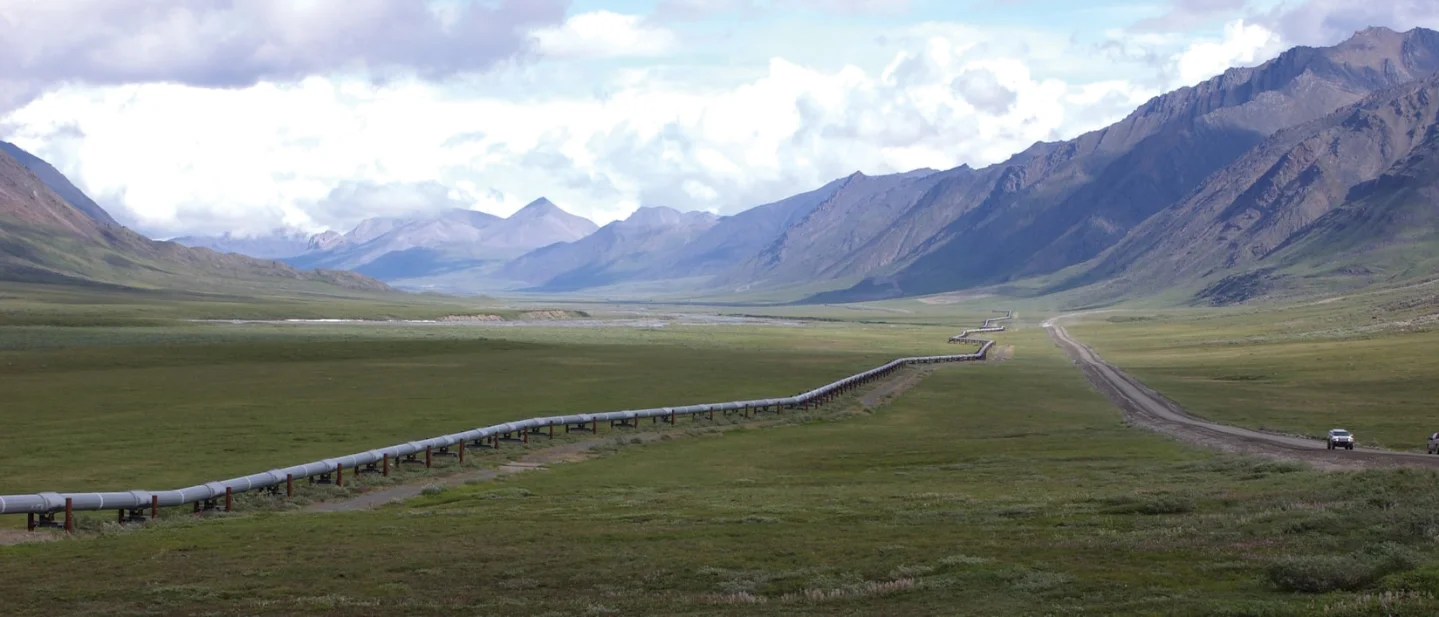
The Trans-Alaska Pipeline was engineered to keep 120 °F oil from thawing the frozen ground that carries it; forty-nine years later its operating problem is oil that arrives colder and slower, and a thirty-year right-of-way renewal is being decided on that basis.
| Field | Trans-Alaska Pipeline System | What it forced |
|---|---|---|
| Purpose | Move North Slope crude 800.3 miles (1,288 km) from Prudhoe Bay to an ice-free port at Valdez | Tanker aircraft, submarine tankers, a railroad extension and an icebreaking tanker transit were all studied and dropped first 3 |
| Pipe | 48 in (1,219 mm) outside diameter; 466 miles at 0.462 in wall thickness, 334 miles at 0.562 in | Two steel weights: thicker where the line is buried and thinner where it rides on supports 3 |
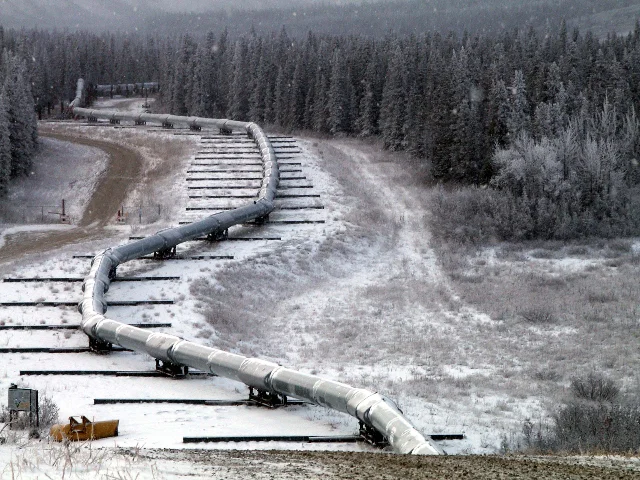
| Route length | 800.3 miles of pipe along a 789-mile route | About eleven miles of extra pipe carries the zigzags that absorb thermal expansion and earthquake movement 3 |
| Support | 420 miles elevated about six feet above ground on more than 78,000 vertical support members | Keeps a hot pipe out of permafrost that loses strength when it thaws 34 |
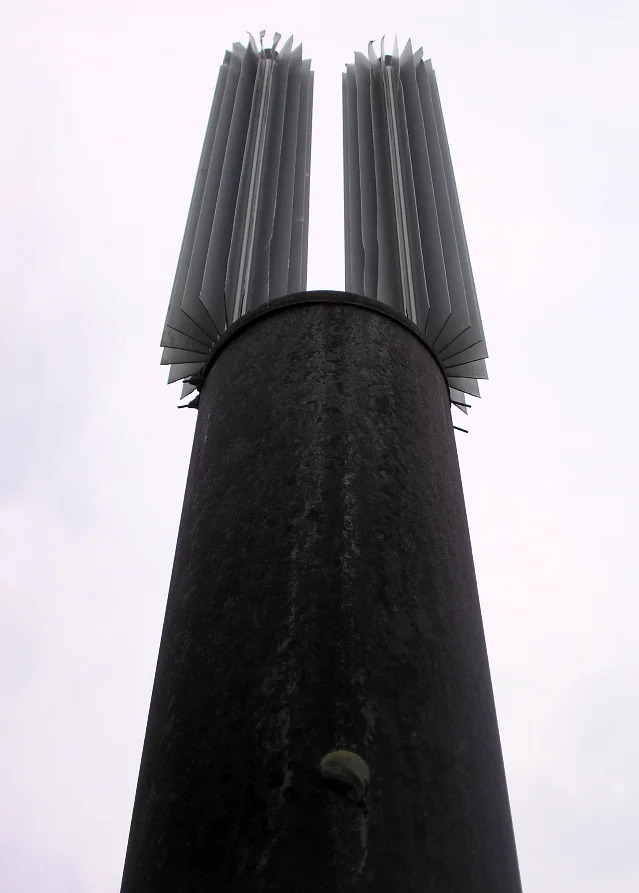
| Thermal system | More than 124,000 sealed ammonia heat pipes inside those support members | Each support chills the ground it stands in whenever the air is colder than the ground 5 |
| Seismic provision | Teflon shoes sliding on long steel beams through a 1,900-ft (579 m) Denali Fault corridor, with no anchors inside the corridor | The design case was a magnitude 8.0 earthquake with 20 ft of horizontal and 5 ft of vertical ground offset 6 |
| Isolation | 178 valves along the line | Sectional isolation, so a leak or a repair stops the smallest possible length of pipe 3 |
| Pump stations | 12 designed, 11 built; eight running at startup, eleven by 1980, four as of December 2024 | Station count tracks throughput; the pumps are gas- or liquid-fuel turbines 3 |
| Design capacity | 2.14 million barrels a day | A ceiling that was met once: 1988 averaged 2,032,928 barrels a day 1 |
| 2025 throughput | 462,821 barrels a day, the lowest annual average on record | Cumulative volume reached 19.05 billion barrels by the end of 2025 1 |
| Terminal | Valdez Marine Terminal: eighteen storage tanks holding 9.18 million barrels, four tanker berths and two loading berths | Storage was sized to hold the line's own contents, so the whole pipeline can be emptied 7 |
| Regulatory status | Federal right-of-way renewal for thirty years, scoping opened 26 August 2026 | About half the route crosses federal land, and the state renewal runs alongside it 28 |
| Year | Daily average (barrels) | What the year established |
|---|---|---|
| 1977 | 610,408 | First oil entered the pipe on 20 June, so the year covers half a year of operation 1 |
| 1988 | 2,032,928 | Peak year, at about 25 percent of U.S. oil production 13 |
| 2019 | 490,366 | First year below 500,000 barrels a day 1 |
| 2024 | 464,784 | Down from 469,196 in 2023 1 |
| 2025 | 462,821 | Lowest annual average in the line's history; cumulative volume passed 19 billion barrels 1 |
| 2026 to August | 458,570 | Year-to-date average, below the 2025 figure 1 |
alyeska-pipe.com
en.wikipedia.org
insideclimatenews.org
en.wikipedia.org
commons.wikimedia.org
alyeska-pipe.com
commons.wikimedia.org
alyeska-pipe.com
This story was produced automatically by a channel. One sentence is all it takes for Neodrop to keep producing for you.