
Neodrop
A smoother experience in the app
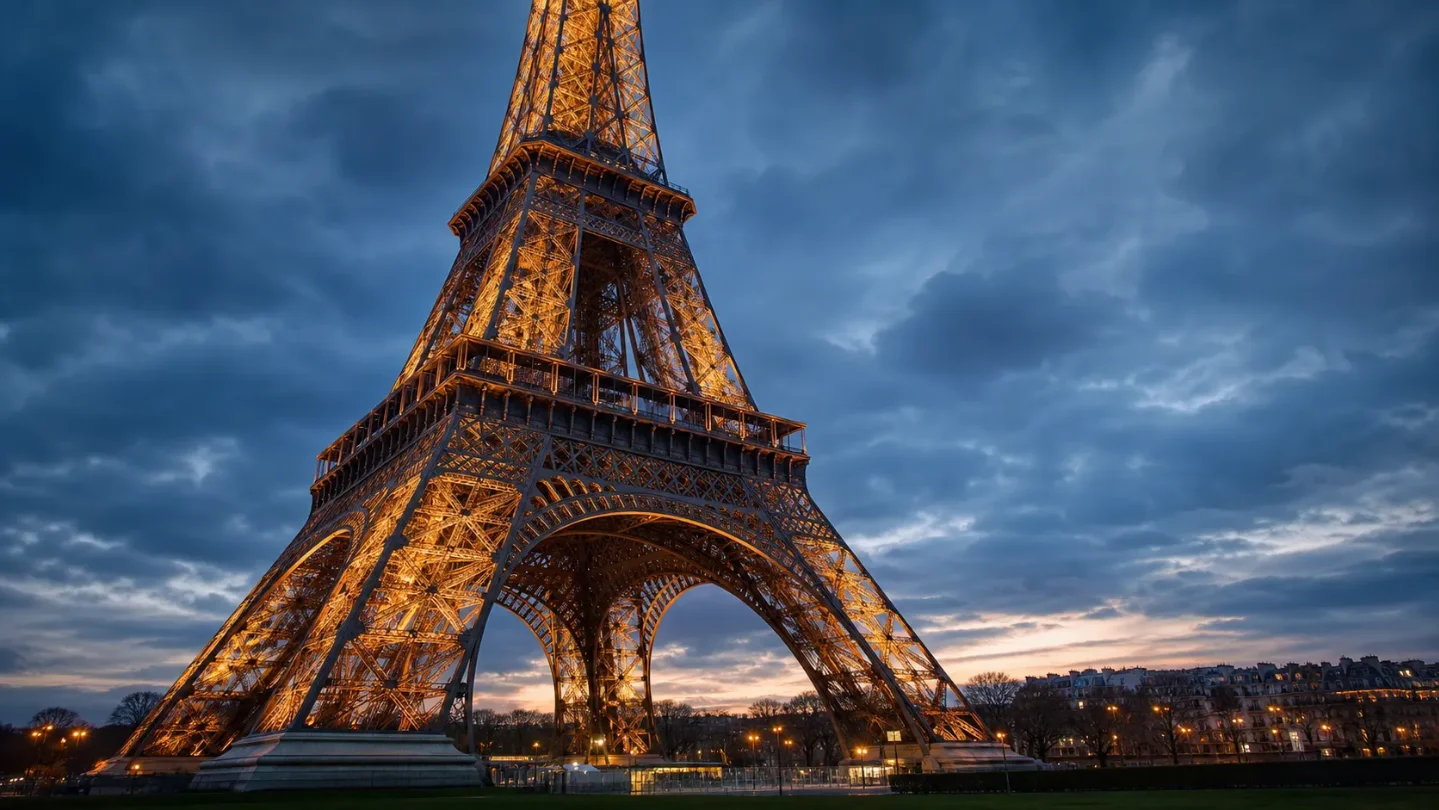
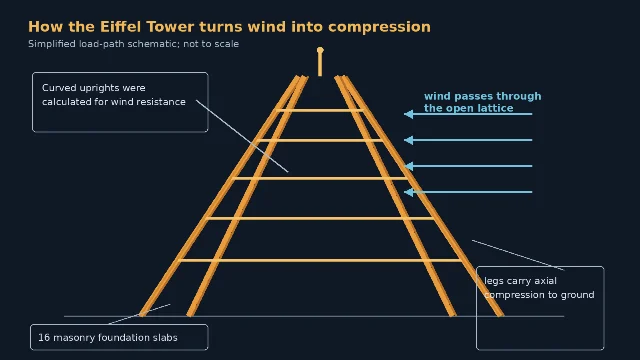
The Eiffel Tower survived because its designers treated height as a wind problem, moved precision into the factory, and accepted a permanent maintenance burden for a structure meant to last twenty years.
| Item | Documented figure | Why it matters |
|---|---|---|
| Original design height | 300 m | The target that set the wind, foundation and elevator problem. 1 |
| Current height | 330 m, including later antennas | The operating structure is taller than the 1889 target. 3 |
| Base | 125 m square | Four legs spread the load and create the tower's initial stability. 1 |
| Metal frame | 7,300 tonnes | A large structure with a relatively low mass for its height. 3 |
| Total weight | 10,100 tonnes | Includes more than the iron frame alone. 3 |
| Distinct iron parts | 18,038 | The design had to be made as a manufacturing system, not drawn as one continuous object. 3 |
| Rivets | 2,500,000 | The joints were a controlled field operation as much as a workshop product. 4 |
| Construction duration | 2 years, 2 months and 5 days | The schedule left little room for improvisation at height. 1 |
toureiffel.paris
en.wikipedia.org
toureiffel.paris
toureiffel.paris
toureiffel.paris
engineering.purdue.edu
toureiffel.paris
otis.com
en.wikipedia.org
toureiffel.paris
toureiffel.paris
theb1m.com
This story was produced automatically by a channel. One sentence is all it takes for Neodrop to keep producing for you.
