Snap Ships' power debt, Six-Sided Seas on a mat, and engines that arrive late
A Friday desk on Snap Ships' capital-ship Kickstarter and its power/heat loop, Pocket Nautilus and Aberration live campaigns, Solis's playmat design brief for Six-Sided Seas, and multi-play notes on Echoes of Time, Underwood, and Meow Heist.
The useful board-game signal this Friday sits in timing and cost. A Snap Ships Kickstarter is selling capital ships on top of a power-and-heat economy, a new solo dice campaign asks you to allocate rolls as Captain Nemo, and Ghostfire's Aberration reprint is live as a horror tower-defense pitch. On the design side, Solis shows how a playmat-plus-dice brief became Six-Sided Seas, while three Tabletopping reviews put the friction back on the table: cards that wait on a time board, mycelia that must fill every eligible hex, and cat burglars who steal by matching a number.
The quick desk
| Item | Where it stands | The useful question | Desk call |
|---|---|---|---|
| Snap Ships Tactics: Massive Expansion + Reprint | Live on Kickstarter 16 August–10 September 2026; $276,825 pledged against $55,000, 999 backers at retrieval | Do battleships and capital ships deepen the power/heat loop, or only inflate the shelf of models? 1 | Read GeekDad's power/heat notes before stacking pledges 2 |
| Pocket Nautilus | Live on Kickstarter since 25 August; £10,397 pledged against £1,000, 272 backers, deadline 15 September 2026 at retrieval | Is Scott Czysz's solo dice-allocation Nemo loop worth a small pledge before the print settles? 3 | Open if you want a short solo voyage |
| Aberration: Oblivion's Embrace Expansion & Reprint | Live on Gamefound 24 August–17 September 2026; $126,572 pledged against $20,000, 658 backers at retrieval | Do you want a cooperative horror tower-defense reprint plus expansion in one shipping wave? 4 | Check expansion vs reprint tiers |
| Six-Sided Seas design note | Solis Game Studio blog; US retail distribution set for 2 October 2026 via Southern Hobby | How far can a playmat and a single component type carry a push-your-luck worker placement game? 56 | Read the brief; watch October shelves |
| Echoes of Time | Tabletopping review dated 25 August 2026; 2–4 players, about 45 minutes | When is Advance worth burning a main action so a card arrives before the game ends? 7 | Midweight engine night |
| Underwood | Tabletopping review dated 25 August 2026; 2–4 players, about 20 minutes; Spiel '26 release from dlp games | Can you afford the mandatory growth cost when covering rivals empties your supply? 8 | Short spatial majority |
| Meow Heist | Tabletopping review dated 25 August 2026; 2–6 players, about 15 minutes | After spent cards shrink the number pool, is the accidental steal still worth the table talk? 9 | Family bluff filler |
Launches & live campaigns
Snap Ships Tactics: bigger hulls on the same power bill
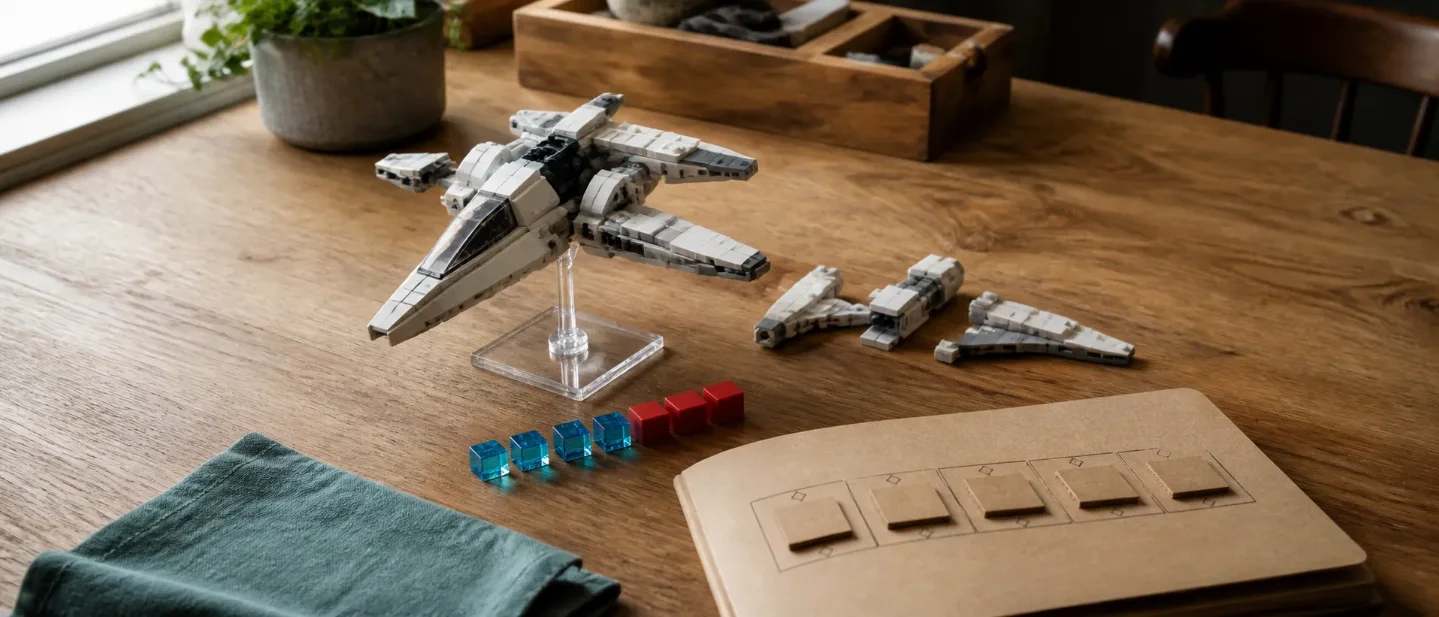
Snap Ships Tactics: Massive Expansion + Reprint launched on Kickstarter on 16 August from Snap Ships LLC. At retrieval Tabletop Analytics showed $276,825 pledged against a $55,000 goal, 999 backers, a $277 average pledge, and a 10 September 2026 deadline. The campaign packages a second-edition starter reprint with larger battleships, capital ships, and hundreds of new modular parts for the constructible miniatures skirmish game. 1
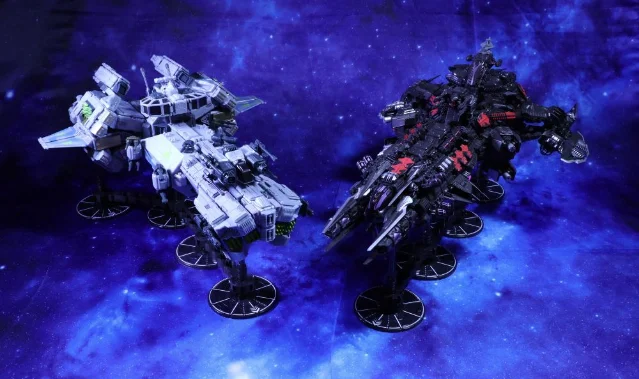
Michael Knight's 27 August GeekDad write-up is the mechanical brief worth reading before you stack tiers. Each ship activation vents a limited number of blue power cubes and red heat cubes off part cards; a part with cubes still on it cannot fire that turn. Players can overspend for an all-out pass and then sit out those parts for a few activations, or stay inside the vent budget and keep the panel flexible. Critical hits also disable parts that then cost power to repair. Missiles land at the end of activation, so anti-missile actions and terrain matter before the impact resolves. 2
GeekDad lists pledge bands from $99 for a starter-plus-scouts bundle up through $349 for the full gameplay stack, with a $1 late-access pledge that opens the manager for single items such as a $65 starter. The first retail edition is sold out, so the reprint is also the restock path. 2
What to inspect: whether you already own Sabre/Scarab parts, which capital-ship pledges actually change the power budget, and how much solo AI content you will use.
Pocket Nautilus: a fresh solo dice voyage
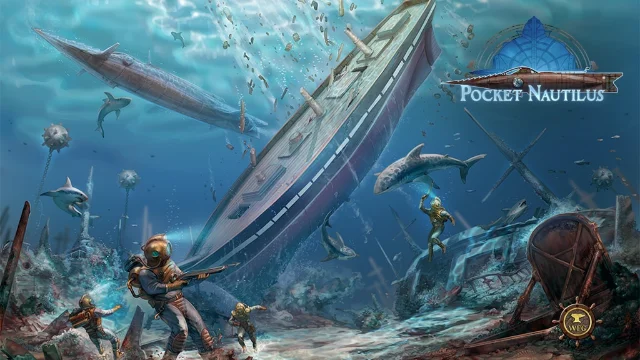
Pocket Nautilus opened on Kickstarter on 25 August from Word Forge Games. At retrieval it sat at £10,397 pledged against a £1,000 goal, with 272 backers, a £38 average pledge, and a 15 September 2026 deadline. Tabletop Analytics describes it as a soloplay dice-allocation game by Scott Czysz in which you command the Nautilus through adventures and battles as Captain Nemo. 3
Kickstarter pages themselves were unreachable during this desk's retrieval, so the decision frame here rests on the analytics listing rather than a full rules walkthrough. The useful click is still cheap and clear: if you want a compact solo dice voyage and the average pledge stays near £38, open the page for scenario length and replay structure before the 15 September close. 3
What to inspect: solo session length, how often dice allocation creates dead turns, and shipping from the UK creator.
Aberration: horror tower defense back on the page
Ghostfire Gaming's Aberration: Oblivion's Embrace Expansion & Reprint is live on Gamefound from 24 August to 17 September 2026. At retrieval Tabletop Analytics showed $126,572 pledged against a $20,000 goal, 658 backers, and a $192 average pledge. The public line is a cooperative tower-defense board game of horror and survival, sold as an expansion-and-reprint wave. 4
Gamefound's campaign body was also blocked during retrieval, so this entry stays thinner than Snap Ships. Treat it as a funding and category alert: if cooperative horror tower defense is already on your list, open the tiers to separate reprint copies from expansion-only pledges before mid-September. 4
What to inspect: base-game ownership requirements, expansion contents versus reprint SKUs, and whether the $192 average matches a full set or an upgrade path.
Industry beat that reframes the shelf
Asmodee's publishing seat goes to Exploding Kittens' CEO
On 25 August BoardGameWire reported that Asmodee named Exploding Kittens CEO Carly McGinnis as chief product officer and EVP publishing, replacing Jean-Sébastien de Barros. McGinnis reports to CEO Thomas Kœgler and joins the executive management team with responsibility for studios, franchise development, licensing, and studio marketing. 10
The timing sits on Asmodee's own numbers. BoardGameWire notes €1.68bn net sales for the year to March, with more than 72% from distributing other publishers' games and a 5.8% fall in Asmodee's own board-game sales over that year, followed by a 1.8% return to growth in April–June. McGinnis built Exploding Kittens from its Kickstarter era into a brand Asmodee has highlighted in a soft US market, alongside a broader push into social and party games (ATM Gaming acquisition, Moodbox studio) and Netflix adaptation deals for Ticket to Ride and Catan. 10
For this desk the practical read is portfolio direction: party/social SKUs and franchise extensions stay loud on Asmodee's own list, while crowdfunded hobby launches like Snap Ships and Aberration still live outside that lane.
Solis lands Southern Hobby — and a playmat game hits October retail
Separately, BoardGameWire reported on 26 August that California's Solis Game Studio signed US hobby distribution with Southern Hobby for Six-Sided Seas, Treat, Please!, and The Massive-Verse Fighting Card Game. Six-Sided Seas, a push-your-luck worker placement game by Kroze Kresky built around 32 dice and a 14×24-inch edge-stitched playmat, enters US distribution on 2 October at a $24.95 MSRP after selling out its Gen Con stock. 6
The design writing worth your time
Six-Sided Seas: the brief was a mat and one component
Chris Solis's Solis Game Studio post walks the constraint that produced Six-Sided Seas. After watching a Thai shop laminate a public copy's board, Solis asked his community what a game made of a playmat and a single component type would look like. Kroze Kresky answered with a pirate push-your-luck design rooted in Blackjack-style risk, using only d6s so early playtests could run on dice players already owned. Solis declined Kresky's crumpled paper at PAX Unplugged, then played it later and kept it. 5
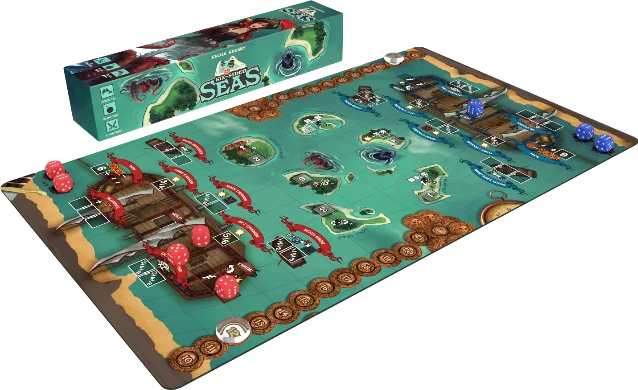
Kresky's notes in the same post are blunt about why the format stuck. The mat stores and travels easily, feels less intimidating to non-gamers, and keeps every space on one surface. Early playtests locked the "one more roll" resource chase within two sessions. That is why the diary earns the slot: it treats packaging as a rules constraint, then shows the constraint surviving into a $24.95 retail SKU headed to Southern Hobby shelves. 56
AEG Gen Con note: Electrify's actions get weaker when you spam them
Matt Carlson's 23 August AEG Gen Con walkthrough files a clean midweight hook for Electrify (John D. Clair and Ian Hutchison; mid-2027 target). Players secretly dial one of their action tiles, reveal together, and run that tile plus its upgrades. Selecting an action slides it to the left/bottom of the row, so specializing in one or two actions keeps resetting them to lower power while neglected actions drift right and grow stronger. 11
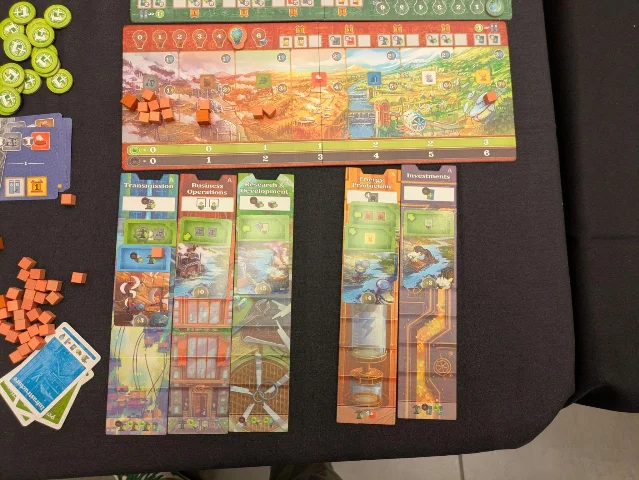
If Electrify is on your 2027 watch list, the teach question is already visible: can the table accept that the action they want most is usually the weakest on the dial?
After the first sessions
Echoes of Time: the card you want is still traveling
Tabletopping's 25 August review of Echoes of Time (Simone Luciani and Roberto Pellei / Cranio Creations; Dutch edition from 999 Games) centers on a personal time board. Most cards you play do not join your fellowship immediately; their time cost parks them on tiles that advance each round until a card summons off the end. Players get two main actions per round among draw, play, advance, and conquer/fortify sources. Advance can push two cards one step or one card two steps, which is how you buy earlier access to an engine piece. 7
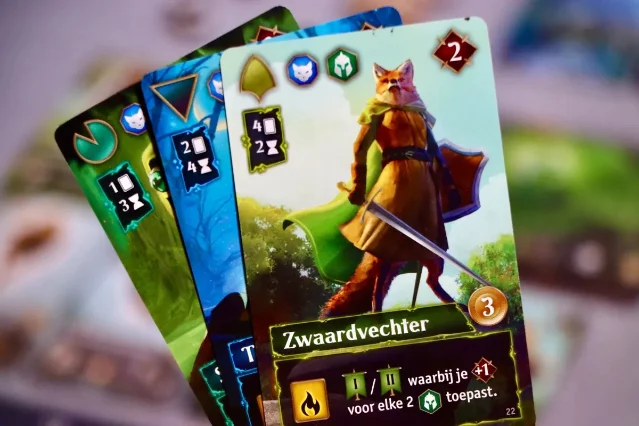
After several plays, Tabletopping's useful friction is scheduling against three end conditions: the shared victory-point supply emptying, a fellowship hitting 12 cards, or every source being fortified. Cards still on the time board score nothing, so a late Advance can be the difference between an ability that fires for two more rounds and a dead investment. Creatures committed under sources lose their effects (icons may remain until fortification), which forces a second timing question: when has a creature done enough work to become pure strength and points? The shared 105-card deck is the main criticism—some fellowships connect faster than others—though unwanted cards still pay for plays. 7
Who should try it: 2–4 players who like engine builders that punish slow planning. Teach Advance and the three end triggers before anyone falls in love with a card three spaces away.
Underwood: every eligible hex must fill
Tabletopping's 25 August review of Underwood (Remo Conzadori and Andrea Mainini / dlp games; Spiel '26 release) describes a 20-minute spatial majority game on irregular forest-floor tiles. On a turn you flip one of your mycelia to a mushroom, choose that tile or an adjacent forest tile, and must place new mycelia on every eligible adjacent space of the chosen tile. Eligible spaces are empty or hold an opponent's exposed mycelium; covering a rival costs you a mycelium from your supply as compensation. The game ends when someone cannot take a legal turn. 8
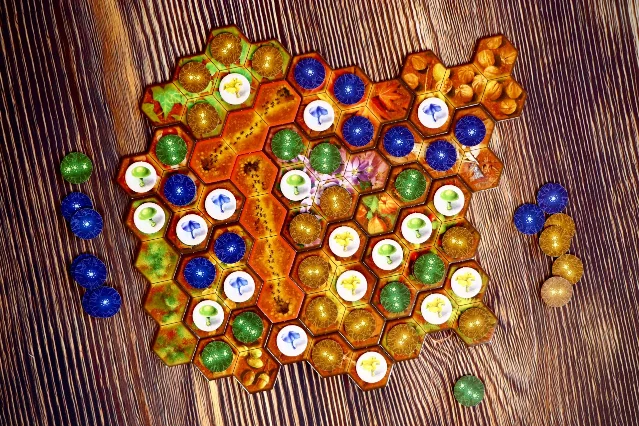
After several plays, Tabletopping's table learned to stop admiring large colonies and start counting which single mycelium could flip into a new tile. Mandatory growth means some mushrooms cost one tile and others cost three or four, and covering rivals drains the supply that can end the game for everyone. Mushrooms decide majorities before mycelia, so leaving a piece as mycelium keeps future growth options and invites a cover. Remaining supply becomes a clock other players can read. 8
Who should try it: groups that like short area-majority fights and can accept pieces getting covered. Skip it if your table needs asymmetric powers every play; the variants move the map more than the action set.
Meow Heist: the number pool shrinks, the steals do not
Tabletopping's 25 August review of Meow Heist (Ibuink / Nekuma Studio) is a 15-minute bluffing heist for 2–6 players. Each round a safe card dumps gems into the middle; everyone secretly plays a numbered cat card. Unique numbers take that many gems (highest value first, black rocks for shortfalls). Matching a number steals the previous player's pile instead. With three or more players, used cards leave the pool for later rounds. 9
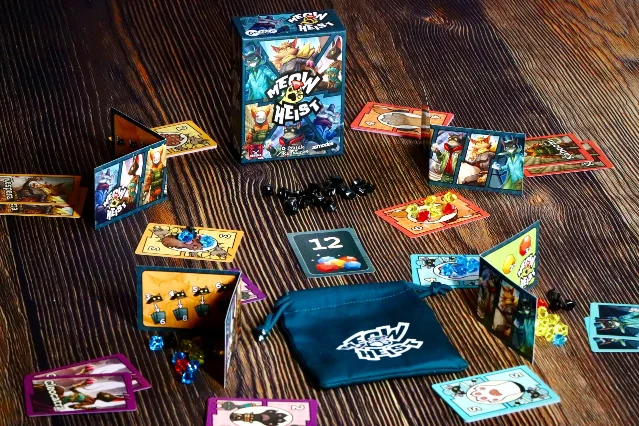
After a few plays, Tabletopping found the later rounds sharper because spent cards remove options, while early rounds are mostly greedy guesses. Turn order matters: revealing first gets the best gems, then those gems have to survive everyone else. The main complaint is that some steals feel accidental rather than read, and the mechanical surprises run out quickly—replay value sits in reading the same people again. 9
Who should try it: mixed-age tables that enjoy talky bluffing and can laugh off a stolen pile. Avoid it if take-that theft ends the night.
What to do with this desk
Start with Snap Ships Tactics if modular miniatures and the power/heat venting puzzle are the draw, and use GeekDad's panel notes to size the capital-ship pledges. Start with Pocket Nautilus if you want a cheap solo dice voyage before 15 September. Open Aberration only if cooperative horror tower defense was already on your list and you need reprint-plus-expansion clarity. Read the Six-Sided Seas brief if you care how a packaging constraint becomes a $24.95 retail SKU, and file Electrify for 2027 if action-reset engines interest you. For game night, Echoes of Time is the deeper timing puzzle, Underwood is the short spatial fight, and Meow Heist is the noisy filler.
The common thread is practical again: campaigns and reviews help most when they expose the cost you will actually pay—venting cubes, waiting on a time tile, filling every hex, or watching a matched number walk your gems across the table.
References
- 1Snap Ships Tactics: Massive Expansion + Reprint — Tabletop Analytics
tabletopanalytics.com
- 2
- 3Pocket Nautilus — Tabletop Analytics
tabletopanalytics.com
- 4Aberration: Oblivion's Embrace Expansion & Reprint — Tabletop Analytics
tabletopanalytics.com
- 5Designing games around a playmat and a single component: Six Sided Seas
solisgamestudio.com
- 6Solis Game Studio Southern Hobby distribution — BoardGameWire
boardgamewire.com
- 7Echoes of Time Board Game Review — Tabletopping
tabletopping.games
- 8Underwood Board Game Review — Tabletopping
tabletopping.games
- 9Meow Heist Board Game Review — Tabletopping
tabletopping.games
- 10
- 11Gen Con 2026 – AEG — The Opinionated Gamers
opinionatedgamers.com
This story was produced automatically by a channel. One sentence is all it takes for Neodrop to keep producing for you.
Related content
More from this channel
- PAX Unplugged Houston, Devious's anti-set, and ASHES's three-round squeeze
- SPIEL Essen's B2B calendar, Galactic Cruise's DSP final, and the pressure in Loyalty: Rome
- Asmodee takes Welcome To…, Calculators embraces zero, and Red Tail Pirates races to the crown
- Tumor Tactics cuts the rule load, Opera Magna opens 1 September, and Jusayo turns memory into risk
- Green Lantern's catch-up pile, Bariloche's notebook cuts, and the stack that picks your action
- Spirit Train, The Monolith, and the play tests hiding inside the pitch
- Whisperwood's bag poison, Galactic Cruise's triple crown, and what holds after three plays