从飓风Melissa预警到WeatherNext 3:Google DeepMind拆解AI如何重塑全球天气预报
Google DeepMind 深度对谈前沿气象 AI:从 2025 年 5 级超级飓风 Melissa 的 80% 高置信度提前预警实战,到 GraphCast、GenCast 概率预报与端到端 WeatherNext 3 的架构演进,全景解析机器学习如何突破流体力学计算死结并重构全球天气预报价值链。
在人类数千年的科学探索史中,天气预报始终是最古老、最贴近日常生活,却也最令人头疼的复杂物理难题之一。人类早已能通过万有引力定律精确算出一千年后某一秒的日食与月食,却很难在七天前完全确定下周三是否会下一场暴雨。造成这一局限的根源在于大气运动的强非线性混沌特性——也就是广为人知的“蝴蝶效应”:大西洋深处一阵微弱的气压波动,经过一周的动力学演化,就可能演变为撕碎沿海城镇的超级飓风。几十年来,全球气象学界依赖超级计算机对流体力学偏微分方程进行离散化近似求解(即数值天气预报 NWP),虽然构成了现代气象预警的技术基石,却始终受困于指数级爆炸的算力开销与微观尺度的截断误差。
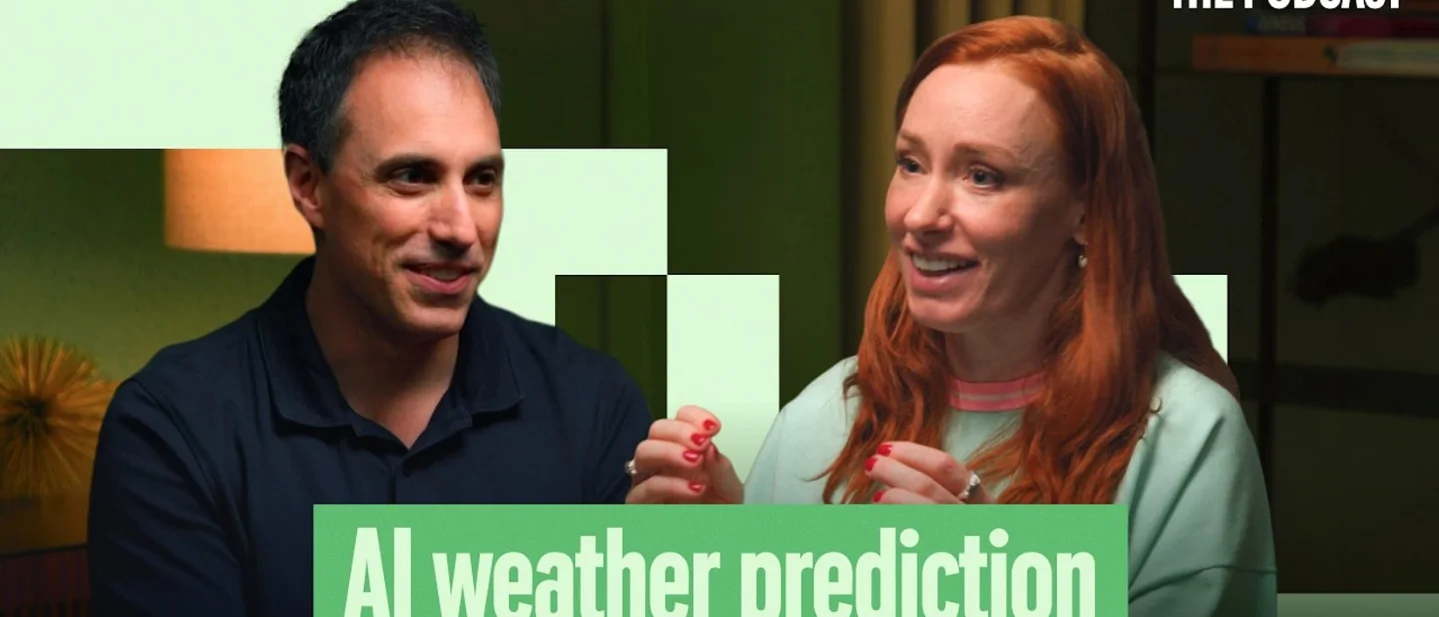
本期《Google DeepMind: The Podcast》展开了一场前沿机器学习与地球物理计算的跨学科高密度对谈。1 主持人 Hannah Fry 教授(伦敦大学学院 UCL 数学系教授、知名科普学者与英国皇家学会科学图书奖评委)与 Google DeepMind 研究高级总监 Peter Battaglia(物理模拟、图神经网络与复杂动力系统深度学习领域的先驱科学家,带领团队研发了 GraphCast、GenCast 以及最新的 WeatherNext 系列气象大模型)坐到一起,深度拆解人工智能如何突破传统数值物理学的计算死结。对谈从 2025 年 10 月袭击牙买加的 5 级超级飓风 Melissa 提前一周的高置信度预警实战切入,完整复盘了从早期局部雷达降水推演、GraphCast 的全尺度图网络建模、GenCast 的概率化扩散机制,直到最新一代端到端大模型 WeatherNext 3 的架构演进,让读者在进入细节之前,清晰掌握 AI 气象预报如何从根本上重构气象价值链并赋能新能源与防灾决策。2
先记住四件事
- 飓风 Melissa 实战验证了 AI 气象模型的早期洞察力: 2025 年 10 月,风暴 Melissa 在大西洋初起时仅为热带低压,传统物理模型普遍低估其爆发潜力;DeepMind 气象模型提前一周以 80% 的置信度预判其将在 48 至 60 小时内经历“快速增强”并成为 5 级超级飓风。这一结果直接支持美国国家飓风中心(NHC)发布了该机构历史上由最低初始强度做出的 5 级飓风官方预警,为牙买加等加勒比海岛争取了 24 至 72 小时的黄金疏散与防灾筹备时间。
- AI 不是单纯拟合均值,而是具备感知跨尺度“宏观结构”的能力: 传统数值天气预报(NWP)依赖局部相邻网格的通量计算,难以兼顾大范围动力学协同;以 GraphCast 为代表的图神经网络通过全局多尺度网格的消息传递(Message Passing),能够直接从跨越数百公里的风暴宏观场中推断局部演化,实现了计算效率与预测精度的代际跃迁。
- 极端天气的防灾决策依赖概率预报,AI 误差模式呈现“均值回归”而非“数值爆炸”: 面对发生概率仅 5% 至 10% 的极端尾部风险,单次确定的预测缺乏指导价值。GenCast 结合扩散模型(Diffusion Models)与 DeepMind 自研的函数生成网络(Functional Generative Networks, FGN),通过微扰参数与输入生成多样化的物理可能场景(意面图 Spaghetti plots);更关键的是,物理模式容易因误差累积产生数值发散,而 AI 统计模型的失效模式表现为“向常态气候均值收敛”,具备天然的物理边界稳定性。
- WeatherNext 3 终结多阶段处理,开启“原始遥感到站点直出”的端到端时代: 传统气象业务割裂为“数据采集-数据同化-全球模式-专业细分-终端应用”流水线。WeatherNext 3 首次实现直接输入原始高频卫星遥感图像、端到端直接预测地面真实气象站观测值;更新频率压缩至 1 小时级别,并原生输出风力发电与光伏发电的核心变量,将气象预报直接延伸至电网负荷调度与现代农业生产管理。
关键人物背景
- Hannah Fry 教授(主持人): 伦敦大学学院(UCL)高等空间分析中心数学教授,著名应用数学家与科学传播家,BBC 科学纪录片长期主持人,著有《数学的算法生活》等多部科普著作。Fry 长期专注于复杂人类行为、算法社会学与前沿计算科学的公众传播,在本期节目中以敏锐的数学家视角追问物理方程离散化求解与统计机器学习之间的本质分歧。
- Peter Battaglia(嘉宾): Google DeepMind 研究高级总监,长期领导计算物理模拟与机器学习交叉团队。Battaglia 早年在麻省理工学院(MIT)从事认知科学与计算视觉研究,加入 DeepMind 后开创了利用图神经网络(GNN)模拟复杂流体、粒子动力学与刚体物理的学术流派,是革命性气象模型 GraphCast、概率模型 GenCast 以及全流程系统 WeatherNext 3 的核心领导者与架构设计者。
飓风 Melissa:从热带低压到 5 级风暴的“生死预警”
2025 年 10 月,超级飓风 Melissa 在加勒比海肆虐,最终以创纪录的 190 mph(约 305 km/h)极端风速重创牙买加及周边岛屿,造成 95 人遇难与毁灭性的财产损失。然而,如果缺少及时的前期预警,人员伤亡与次生灾害很可能会成倍扩大。Peter Battaglia 在节目中披露了 DeepMind 气象团队与美国国家飓风中心(National Hurricane Center, NHC,隶属于美国国家海洋和大气管理局 NOAA)合作的实战细节。
飓风的发展通常始于大西洋洋面上微弱的大气热带扰动(Disturbance)。当时,海水表面温度较高,为风暴聚集能量提供了温床,但 Melissa 形成初期规模极为微小,仅处于热带低压或弱热带风暴阶段,且这种微弱状态维持了相当长一段时间。在传统的数值天气预报模拟中,面对这种尺度较小、动力学信号较弱的初期系统,不同模拟路径对于风暴未来的强度演化存在极大的分歧与不确定性,大部分物理模型在最初几天仅给出了温和增强的常规判断。
但在飓风最终登陆前约一周,DeepMind 运行在公开平台 Weather Lab 上的专用热带气旋 AI 模型开始出现异动:模型对 Melissa 将升级为 5 级飓风(最高级别热带气旋)表现出异常坚定的置信度。气象界活跃在社交网络 X 上的专业学者与气象观测者率先注意到了 Google 模型的异常预测,并引发了广泛讨论。
关键转折发生在登陆前约四天的那个星期六:当时 Melissa 甚至尚未达到 1 级飓风的强度门槛,但 DeepMind 模型的预测显示其即将在 48 至 60 小时内经历极端剧烈的“快速增强(Rapid Intensification)”。美国国家飓风中心的专业预报员综合各方情报,在评估了传统物理模式与 DeepMind 模型持续输出的 80% 高置信度概率后,正式拍板对外发布 5 级飓风预警。NHC 预报员随后向 DeepMind 团队证实:这是该机构有气象记录以来,从如此微弱的初始风暴强度做出的最高级别 5 级飓风预警。
这一提前 72 小时做出的高等级预警直接触发了政府层面的最高级防灾响应:牙买加及加勒比海沿岸各级应急部门迅速组织沿海脆弱区域的居民撤离、清空转运医院重症患者、开启避难所并加固公共基础设施。Battaglia 强调,正是与一线业务气象机构的实时反馈回路,验证了 AI 气象模型将有效预警时间向前推移整整 24 至 48 小时的巨大社会价值。
为什么预报天气在物理本质上如此困难?
面对公众常有的困惑——“为什么人类能探测百亿光年外的黑洞,却预测不了下周三是否下雨”,Peter Battaglia 与 Hannah Fry 从动力学系统理论给出了透彻的解释。
核心症结在于大气是一个高度混沌的连续流体系统。在数学物理上,大气的演化由纳维-斯托克斯方程(Navier-Stokes equations)、热力学状态方程与辐射传输方程共同主导。混沌系统的标志性特征在于“对初始条件的敏感依赖性”(即蝴蝶效应):微小的初始扰动在非线性动力学的作用下,会随着时间推移呈指数级发散放大。然而,人类现有的气象观测网络(包括气象卫星、雷达、探空气球与地面自动气象站)在物理上永远无法捕捉到大气中每一个分子的运动和每一朵微云的扰动。这种观测上的有限性,决定了确定性预报存在无法逾越的物理时间极限。
在过去六十年间,人类预测天气的主流范式被称为数值天气预报(Numerical Weather Prediction, NWP)。其基本流程是:
- 由全球超级计算机将地球大气层划分为离散的三维立体网格(例如水平方向每隔 9 至 15 公里划分一个格子,垂直方向划分为数十至上百层);
- 读取全球气象观测数据作为初始场;
- 利用超级计算机在离散网格上逐步数值迭代求解流体力学偏微分方程组。
然而,NWP 面临严酷的“跨尺度耦合(Coupling across scales)”矛盾:大尺度的行星风系、中尺度的冷锋气旋与微尺度的局地湍流与积雨云之间无时无刻不在交换动量与热量。超级计算机受限于算力瓶颈,只能采用粗粒度网格来模拟全球,而将网格尺度以下的微观物理过程用经验公式(参数化方案)进行模糊近似。这种离散截断误差会在逐轮时间步长的数值推演中不断累加,最终导致长周期模拟失真。
从辅助拟合到 GraphCast:AI 气象学的三代演进
人工智能进入气象预报领域经历了三个截然不同的发展阶段:
- 第一代(网格填充与后处理): 机器学习算法主要充当传统物理数值模式的“配角”,用于帮助传统 NWP 模型对粗糙网格中的微观细节进行插值修补或消除系统性偏差。
- 第二代(局部计算机视觉短临外推): 随着深度学习在图像与视频生成领域的突破(约 2016 至 2020 年间),研究人员开始将雷达反射率图像与卫星云图视为视频帧序列,利用卷积神经网络(CNN)等工具直接预测局部区域未来 90 分钟的降水(短临降水预报 Nowcasting)或特定地点的瞬时风速。这一阶段的模型绕过了物理方程,但无法模拟全球整体大气演变。
- 第三代(全球全尺度全要素物理场模拟): 以 Google DeepMind 于 2022 至 2023 年推出的 GraphCast 为标志,机器学习开始像传统 NWP 一样,直接在全球三维空间完整模拟地表气象要素与对流层、平流层多层大气的动力学全过程,能够独立推演未来 10 至 15 天的全球天气演变。
GraphCast 之所以能在预测精度与速度上全面超越欧洲中期天气预报中心(ECMWF)顶级的确定性物理模型(HRES),核心在于其独特的计算架构:
传统 NWP 模型在超级计算机上运行时,仅在空间相邻的微观网格之间进行局部差分计算;而 GraphCast 采用了多尺度图神经网络(Multi-mesh Graph Neural Network)。模型首先将全球网格映射到一个多层细化的二十面体空间图结构上,通过多轮全局消息传递(Message Passing),使得网络能够以同等的计算注意力同时感知局部微观流动与跨越数千公里的全球大气环流。
Battaglia 指出,一个成熟的飓风直径往往达数百公里,其西侧的风场与气压结构无时无刻不在直接影响东侧的对流组织。传统数值模拟必须经过成千上万次局部微观网格迭代才能将这种远程影响传递过去,极易累积数值耗散误差;而图神经网络由于具备捕捉“大尺度宏观结构(Large-scale Structure)”的能力,能直接从宏观图表征中提炼出风暴整体运动的动力学趋势,因而在路径预测与强度突变捕捉上展现出惊人的敏锐度。
概率预报的艺术:扩散模型与函数生成网络(FGN)
在气象科学中,确定性模型(Deterministic Model)无论多么强大,都只能根据输入给出“一种最可能发生的未来”。然而在防灾减灾的现实决策中,最致命的灾难往往隐藏在小概率的极端事件之中。如果一场风暴有 90% 的概率掠过无人区,但有 10% 的概率正面登陆大都市,决策者绝不能仅仅依据那 90% 的主流结果选择无动于衷。
因此,气象学从上世纪末开始全面转向概率预报(Probabilistic Forecasting):模型不再输出单一确定结果,而是输出数十个甚至数百个物理上自洽的未来情景,在气象图上表现为相互交织、逐步分叉的“意面图(Spaghetti Plots)”。
为了在 AI 框架下实现前所未有的高保真概率预报,DeepMind 在 GraphCast 之后研发了 GenCast,并开创了两条核心技术路线:
- 扩散模型(Diffusion Models): 借鉴现代 AI 生成高保真图像与视频的技术,模型从高斯噪声中学习逐步逆向去噪,将随机噪声转化为符合全球大气物理约束的真实天气场。每一次从不同随机噪声起点出发,去噪过程都会在物理约束边界内收敛到略有差异的自洽未来情景。
- 函数生成网络(Functional Generative Networks, FGN): 这是 DeepMind 的自研专利算法。传统扩散模型需要进行多步去噪采样,计算开销相对较大;FGN 则通过在神经网络的输入端与内部权重参数中直接注入受控的统计微扰,促使模型在前向推理中自然输出多样化的物理场景,大幅降低了生成系综预测(Ensemble Forecasting)的算力消耗。
在探讨模型长期推演的误差累积问题时,Battaglia 指出了传统物理数值模拟与 AI 统计模型之间一个本质的哲学差异:
- 物理模式的失效机制是“数值发散(Blow up)”: NWP 依赖偏微分方程逐步积分,一旦时间步长(Time-step)内出现微小的数值误差,方程中非线性项的相互放大可能导致气压或风速计算结果彻底失真、甚至出现物理上不可能的极值发散。
- AI 模型的失效机制是“回归均值(Regress to the mean)”: 统计学习模型在面临长周期不确定性增加、超出自身可靠推断边界时,其预测倾向于平滑收敛到历史气候学统计平均值(Climatological Mean)。它不会凭空产生数值爆炸,而是以一种“承认无知”的方式退回到季节常态,这使得 AI 气象模型在长周期的系统稳定性上具备先天的工程优势。
WeatherNext 3:重构气象“生命树”的端到端革命
在访谈后半段,Peter Battaglia 重点拆解了刚刚发布的最新一代气象系统 WeatherNext 3,并用一棵生动的“气象树(Weather Tree)”隐喻了传统气象业务与 AI 重构之间的分水岭:
- 传统气象树的四层结构:
- 根系(数据源): 气象卫星、雷达、地面站点、船舶浮标收集的零散原始物理信号。
- 树干(全球分析与同化系统): 气象局花费巨大算力将杂乱数据进行“四维同化(4D-Var)”,拼凑出一张平滑的全球当前天气估计图(Analysis field),并运行全球基础数值模式。
- 树枝(业务特化模式): 各行业(航空、海洋、风电、区域防汛)各自开发高分辨率局部模式或下游统计后处理程序。
- 树叶(终端服务应用): 用户手机上的天气 App、农业气象站告警系统、电网调度台。
Battaglia 指出,传统气象链条经过几十年的发展,各个环节高度割裂,每个环节都会向下游传递不可逆的滤波损耗与系统误差。而 WeatherNext 3 的核心野心,就是用一个统一的大模型架构,直接连通从“树根”到“树叶”的整条价值链:
- 输入端: 直接读取高频原始卫星遥感观测图像,不再必须等待气象局进行繁琐的数据同化预处理。
- 输出端: 直接端到端预测全球高精度地面真实气象站(如全球各大机场的高等级观测站)测得的实际风速、气温、湿度与辐照数值。
除了端到端架构,WeatherNext 3 还实现了多项关键工程升级:
- 时间分辨率的代际跃迁: 传统全球数值模式由于超算耗时巨大,通常每 6 小时才更新一次全球预报;WeatherNext 3 能够实现每 1 小时滚动发布全球预报,且在单个 6 小时预测窗口内具备逐小时的原生时间分辨率,能够极为精准地捕捉日内快速演变的雷暴大风与对流天气。
- 赋能新能源电网调度(Load forecasting): 现代电网面临可再生能源渗透率提升带来的巨大波动性挑战。风电功率取决于切变风速,光伏发电取决于太阳总辐射量,而电网的用电负荷(Load,即全社会电力需求)则受气温与湿度极端值的非线性驱使(例如夏季高温高湿与冬季极寒引发的空调用电负荷峰值)。WeatherNext 3 首次在输出中原生集成了精细化的风能、太阳辐射等专业气象变量,使电力调度机构能够同时从供给侧(风光出力)与需求侧(负荷预测)进行精准平衡。
- 精细化农业决策支持: 为农业从业者提供中长周期的稳定温度与累积降水预测,指导农户根据未来两至四季的气候趋势选择抗旱或耐湿种子品种,并精准锁定播种与收割窗口期。
物理方程会消失吗?科学计算的未来图景
在对谈的结尾部分,Hannah Fry 抛出了一系列引人深思的终极追问:当深度学习在速度与精度上全面压制传统物理模型,这是否意味着物理学正在被算法放逐?
Peter Battaglia 坚定地给出了否定回答:人类并没有远离物理学,因为训练 AI 气象模型所使用的数据,本身就是物理法则在地球上的忠实投射。 几十年来欧洲中期天气预报中心(ECMWF)等机构整理的 ERA5 再分析数据集,凝聚了人类对物理规律与观测数据长达半个世纪的沉淀。AI 所做的事情,是用一种计算效率更高、结构表达更灵活的统计机器学习方式,去逼近真实世界复杂的物理动力学过程。
然而,Battaglia 也客观坦陈了当前 AI 气象大模型的局限性与证据边界:
- 极端罕见现象的数据瓶颈: AI 模型虽然在热带气旋上表现优异,但在那些发生频次极低的极端气候事件上(例如一年一度的南亚季风爆发、局部强对流引发的孤立龙卷风、历史罕见的特大热浪),历史数据样本库中能够提供给算法学习的特征点极少。如何在小样本条件下保持无偏且鲁棒的泛化预测,仍是当前气象 AI 面临的核心技术瓶颈。
- 气象大模型与大语言模型(LLM)的双向互哺: WeatherNext 训练所吞吐的数据量远超一般的视频生成模型,其内部所沉淀的函数生成网络(FGN)等高效概率生成算法正在反哺通用多模态建模;而在另一端,将大语言模型引入气象系统的探索也已起步——未来的气象系统将不仅能输出多维张量数据,还能直接以自然语言多模态方式接受用户提问(例如:“某条山区峡谷明早是否会形成局地冻雨”),实现真正人机交互式的气象决策中枢。
- “评估是检验模型的唯一真理”: 面对模型“黑箱”争议,Battaglia 强调在工程与科学落地中,严谨、客观、涵盖全维度空间与物理变量的量化评估(Evaluation)才是衡量模型可信度的最高准则。
官方完整对谈中英双语转录稿
转录说明: 本转录稿完整忠实记录 2026 年 9 月 10 日发布的《Google DeepMind: The Podcast》第 50 集官方音频内容,英文文本完整收录官方 8519 词原始英文字幕,无删减、无加工;中文译文结合气象物理学与前沿深度学习专业术语进行精准校对;时间轴严格按照每 10 分钟标注一次,以讲话人为单位规范分段呈现。
[00:00]
Hannah Fry
Welcome to Google Deep Mind the podcast. [music] I'm Hannah Fry. When a hurricane is heading towards land, time becomes absolutely critical. An extra day of warning can clear the roads, empty the hospitals, open up shelters, and get people to [music] safety. Even a few hours can be the difference between a crisis and a catastrophe. But while we can [music] calculate the exact second the sun will rise a thousand years from now, predicting the weather in the future [music] with certainty remains one of the trickiest physics problems on the planet. How do you handle something that is so sensitive to tiny fluctuations [music] where a small change in today's air pressure can turn into a major storm a week later. The famous [music] butterfly effect. Well, the traditional way is solving fluid dynamics equations with supercomputers. But now there is another way that is doing [music] something completely different. The team at Google DeepMind have been thinking about the challenge of AI weather prediction for [music] years. They started back in 2020 with models that use satellite images to predict short-term rainfall. Today, the latest system, Weather Next, provides detailed [music] hourby- hour predictions for the entire planet. Joining me to discuss how AI models the weather is Peter Betaglia, [music] senior director of research at Google Deep Mind.
欢迎来到 Google Deep Mind 播客。 [音乐] 我是汉娜·弗莱。 当飓风向陆地袭来时,时间就变得至关重要。 多一天的警告可以清理道路,清空医院,开放避难所,并让人们到达安全的地方。 即使几个小时也可能是危机和灾难之间的区别。 但是,虽然我们可以[音乐]计算出一千年后太阳升起的确切时间,但准确预测未来[音乐]的天气仍然是地球上最棘手的物理问题之一。 您如何处理对微小波动(音乐)如此敏感的事物,今天气压的微小变化可能会在一周后变成一场大风暴。 著名的[音乐]蝴蝶效应。 传统的方法是用超级计算机求解流体动力学方程。 但现在有另一种方式来做[音乐]完全不同的事情。 谷歌 DeepMind 团队多年来一直在思考人工智能天气预报的挑战。 他们早在 2020 年就开始使用卫星图像来预测短期降雨量的模型。 今天,最新的系统“WeatherNext”提供了整个地球每小时的详细[音乐]预测。 与我一起讨论人工智能如何模拟天气的是 Peter Betaglia,他是 Google Deep Mind 的[音乐]高级研究总监。
Hannah Fry
Welcome to the podcast, Peter.
欢迎收听播客,彼得。
Peter Battaglia
Thank you.
谢谢。
Hannah Fry
I want to start with a really concrete example of how AI has made a difference. Tell me the story about Hurricane Melissa.
我想从一个非常具体的例子开始,说明人工智能如何产生影响。给我讲讲关于飓风 Melissa 的故事。
Peter Battaglia
Yeah. So, Hurricane Melissa was a a very powerful hurricane that struck Jamaica and several uh Caribbean islands in October 2025.
是的。所以,飓风 Melissa 是一场非常强大的飓风,它在 2025 年 10 月袭击了牙买加和几个加勒比海岛屿。
Peter Battaglia
And we had been working on uh specific models for hurricane forecasting for several years. And earlier in 2025, about a year ago, we released our best weather model and we created a website called weather lab uh that had live hurricane forecasts. We had also established these partnerships with a number of agencies including the national hurricane center which was in the US under Noah. So throughout the season we had been seeing that the model was fairly accurate at predicting hurricanes. And when Hurricane Meliss what became Hurricane Melissa started to form in the Atlantic about a week before it eventually made landfall, our forecast started showing that it was going to become a very intense hurricane
我们已经在飓风预测的具体模型上工作了好几年。早在 2025 年初,大约一年前,我们发布了我们最好的天气模型,并创建了一个名为 Weather Lab 的网站,该网站提供实时的飓风预测。我们还与包括美国美国国家飓风中心(NHC)在内的多家机构建立了合作关系,该中心隶属于 NOAA。在整个季节中,我们发现该模型在预测飓风方面相当准确。当大西洋中形成的飓风 Melissa(后来成为飓风 Melissa)大约一周后登陆时,我们的预测开始显示它将成为一个非常强烈的飓风。
Hannah Fry
cuz unusually it started really small, didn't it? And stayed small for a while.
因为它开始的时候异常地很小,不是吗?而且小了一段时间。
Peter Battaglia
Yeah. And this is how they work. They start as a disturbance. It's just some, you know, pattern that could eventually given the warm, you know, sea temperature draw up enough energy to then become a very intense and ferocious storm. So about a week before, a little a little less than a week before, we started to see the model becoming quite confident that it was going to turn into a category 5 hurricane, which is the strongest category of hurricane.
是的。这就是它们的工作原理。它们一开始只是一个扰动。就是一些,你知道的,模式,最终在温暖的海水温度下,可能会吸取足够的能量,然后变成一个非常强烈和猛烈的风暴。所以大约在一周前,稍微不到一周前,我们开始看到模型相当有信心地预测它将变成 5 级飓风,这是飓风中最强的等级。
Hannah Fry
And what was it at this point?
那此时它是什么?
Peter Battaglia
I don't think it was even a tropical storm yet. It might have been a tropical depression at that point. So actually we we watch uh the folks on like Twitter or XA there's actually a pretty active meteorological community and they follow a lot of the models. So they started to notice and say this is you know the the uh Google model is forecasting a very intense storm and you know they're saying it's going to be category 5 and people started noticing and we were really watching intently.
我不认为那时它甚至还算是热带风暴。那可能只是热带低压。所以实际上我们会关注,比如在 Twitter 或 XA 上的人们,那里实际上有一个相当活跃的气象社区,他们会跟踪很多模型。所以他们开始注意并说,你知道吗,谷歌模型预测了一场非常强烈的风暴,而且他们说这将是 5 级,人们开始注意到这一点,而我们也在非常专注地观察。
Hannah Fry
Were the other models I mean because there's there's numerous other simulations that are running looking at exactly that area at the same time. Were they also predicting at this point that it was going to be
我的意思是其他模型呢,因为同时有许多其他模拟正在研究同一领域。它们在这一点上也预测会是这样吗?
Peter Battaglia
were predicting that it was going to rise in intensity, but none to my knowledge had the confidence and of the the confidence around that it was going to become that intense and the specific trajectory and the specific level of intensity. The National Hurricane Center, their forecasters are making uh you know, they're constantly observing and making guesses and determinations and trying to refine their own um official projection about what's going to happen. They're drawing on all sorts of different information like you know traditional models that are well understood, newer models and they're designed as a center. They're sort of set up to take lots of different pieces of information and then sort of stitch that all together to form their uh forecast. And so on Saturday they made an official determination that it would become a category 5 storm and hit Jamaica. Um it still wasn't even I don't think it was even a category 1 storm yet. So it was go they had predicted that it was going to undergo rapid intensification in like a two-day two and a half day period.
我们预测它的强度将会上升,但据我所知,没有人有信心它会变得那么强烈,以及具体的轨迹和具体的强度水平。 美国国家飓风中心(NHC),他们的预报员正在做出,呃,你知道,他们不断观察、做出猜测和决定,并试图完善他们自己的对将要发生的事情的官方预测。 他们利用各种不同的信息,就像你知道的、众所周知的传统模型、较新的模型,它们被设计为一个中心。 他们的目的是获取大量不同的信息,然后将它们拼接在一起以形成他们的预测。 因此,周六他们正式决定将其升级为 5 级风暴并袭击牙买加。 嗯,我什至认为它还不是 1 级风暴。 因此,他们预测,疫情将在两天半的时间内迅速加剧。
Hannah Fry
So this is Saturday and it was predicted to hit land on what day?
所以今天是星期六,据预测它会在星期几登陆?
Peter Battaglia
I think it was going to reach category five I think on Monday and maybe make landfall on Tuesday if I remember correctly.
我认为它星期一可能会达到五级,如果我记得没错的话,可能会在星期二登陆。
Hannah Fry
So this is still actually a fair amount of warning then.
所以这实际上仍然是相当多的警告。
Peter Battaglia
Yeah. So that I think it had about 3day you know lead time and and when they issue that category 5 warning that also prompts it triggers a set of preparatory responses and then the local officials know okay this is there's a lot of confidence information suggesting this is going to be very dangerous. We're going to start evacuating. We're going to do all the different things that wouldn't have taken place had it been a less intense storm. And this was we were told later this was the lowest intensity storm that the National Hurricane Center had ever forecast to become category 5. They they had never made a category 5 forecast from such a low intensity. And we learned later that they said they were heavily informed by watching our model that the model our model confidence uh in the forecast was was really increasing their own confidence
是的。所以我认为它大约有三天的提前期,你知道,当他们发布五级警告时,这也会触发一系列准备应对措施,然后当地官员就会知道,好吧,有很多有信心的信息表明这将非常危险。我们要开始疏散。我们要做所有不同的事情,这些在风暴强度较低的情况下是不会发生的。后来我们被告知,这是美国国家飓风中心(NHC)曾经预测过的最低强度、最终会达到五级的风暴。他们从未从如此低的强度做过五级预测。后来我们才知道,他们表示,他们在很大程度上是通过观察我们的模型获得信息的,而我们的模型在预测中的信心实际上提高了他们自己的信心。
Hannah Fry
because you were saying it with 80% confidence, right?
因为你是以 80% 的自信在说,对吧?
Peter Battaglia
Yeah. I think it varied by which forecast cuz we made forecasts every uh 6 hours but about yeah about 80 you know as the week of uh unfolded it went from you know a lower probability to a pretty high probability. So they they issued the category 5 warning. It did strike Jamaica. I think 95 people uh lost their lives. A huge amount of damage I think on record it was the highest wind ever recorded.
是的。我认为这取决于哪一次预报,因为我们每大约六小时就做一次预报,但大约是这样的,你知道,随着那个星期的进展,它的概率从较低变成了相当高的概率。所以他们发布了五级警告。它确实袭击了牙买加。我认为有 95 人丧生,造成了巨大的损失,我认为这是有记录以来风力最高的一次。
Hannah Fry
190 mph winds. Yeah. Yeah. I mean the the thing is is that as devastating as it was, it could have been worse had there been less warning.
每小时 190 英里的风。是的。是的。我的意思是,问题是,虽然灾难性已经很严重了,但如果警告更少的话,情况可能会更糟。
Peter Battaglia
Yeah. We can we can never really know what would happen, but we do know that these types of operational centers are crucially important for protecting people and protecting property and also getting the services back online storm passes. So yeah, and we just in general through that whole experience that was very I mean we've had this wonderful partnership with the National Hurricane Center and our researchers talk to them, you know, all the time and we learn a lot about how they make their determinations. So then we can feed that back into how we operate. So even though it's sort of a case study in a single instance, we actually that partnership and seeing that whole thing through lets us then learn about how to improve our models and the types of information that the you know decision makers need to see in order to you know inform their decisions.
是的。我们永远无法真正知道会发生什么,但我们确实知道,这些类型的运营中心对于保护人员和财产,以及在风暴过后恢复服务至关重要。所以,是的,通过整个经历,我们总体上有了很深的体会。我是说,我们与美国国家飓风中心(NHC)有着非常棒的合作关系,我们的研究人员一直与他们交流,从中学到了很多关于他们如何做出判断的信息。然后我们可以将这些反馈到我们的运营中去。即使这只是单一实例的案例研究,这种合作关系以及亲历整个过程实际上让我们能够学习如何改进我们的模型,以及决策者需要看到的各种信息类型,以便做出决策。
Hannah Fry
We're going to get into the model a little bit later, but I but I just wonder on this topic of Melissa, do you think that that the AI model has a sort of a kind of advantage when it comes to predicting hurricanes that far out in the future? Or is it just that is it just that you're doing something different to the other models and that's that's maybe why you get a different result.
我们稍后会深入讨论这个模型,但我只是想在关于梅丽莎的话题上问一下,你认为人工智能模型在预测如此遥远的未来的飓风时是否有某种优势?还是说你只是做了一些与其他模型不同的事情,这可能就是你得到不同结果的原因?
Peter Battaglia
The way I think about it, it's it's pretty simple. What's happened in the past is the same physical process that happens in the future. So when you get enough evidence of the past and you have models that are capable of really making sense of the fine, you know, sort of subtle structure among these, you know, input and output and past and future relationships, you just get more accurate predictions. So the better you do your sort of modeling and your machine learning and your evaluation and your data, you know, all the data handling, the better your models are going to be
我对这个问题的看法很简单。过去发生的事情和将来发生的事情是相同的物理过程。所以当你获得足够的过去证据,并且拥有能够真正理解这些输入和输出以及过去和未来关系中细微结构的模型时,你就能得到更准确的预测。因此,你在建模、机器学习、评估以及数据处理方面做得越好,你的模型就会越好。
Hannah Fry
because it's still according to the same rules. It's still the same plan.
因为它仍然遵循相同的规则。它仍然是同一个计划。
Peter Battaglia
Same rules. just have to extract as much information about that data from the past as you can and then use it to forecast the future.
相同的规则。只需要尽可能多地从过去提取关于那些数据的信息,然后用它来预测未来。
Hannah Fry
So tell me a bit about this this cyclone forecasting that you're releasing to the world. Tell tell me a bit about that. What was the motivation behind that?
所以跟我讲讲你要向全世界发布的这个气旋预测。跟我讲讲那个。背后的动机是什么?
Peter Battaglia
We wanted to make a a special case of the model that was designed to predict tropical cyclones. These are like some of the most uh intense, strongest, rarest really weather phenomena. And we felt if we could do this well, it will have impact. It'll also be a pretty significant scientific challenge that'll force us to improve our methods. This sort of phase of our project began in earnest about four years ago and we were working on global models sort of forecasting all the weather on the surface and the atmosphere for 10 15-day forecasts. As we made progress on that, we wanted to have like downstream impact forecasting the actual weather events. So, we looked at things like tropical cyclones have been in all of our papers. We've done little analyses. Okay, so this predicted the temperature, you know, in 7 days, but can it predict the track of a tropical cyclone? So that had been going on for a while. But then we began a sort of focused line of work, a work stream with a dedicated sub team about 2 years ago or so. And we put a lot of uh investment in this. And we also built partnerships right from the get-go, academics, operational meteorological centers. We had trusted testers for many months before we released it. But then we released it last year and we made improvements to it over time. When we run the uh experimental evaluations over the last several years and across the globe, we see about uh an extra day of accuracy in the sense that a forecast which would have had an accuracy of at some level at a two-day forecast, we achieve that same accuracy as a at a 3-day forecast uh in many cases. And this allows you to make, you know, again, preparations for the storm and, you know, plan and issue warnings earlier. Uh, and in general, this is going to, you know, potentially be a pretty impactful, uh, tool for people to use.
我们想要为预测热带气旋的模型创建一个特例。 这些就像一些最强烈、最强烈、最罕见的真正的天气现象。 我们觉得如果我们能做好这件事,就会产生影响。 这也将是一个相当重大的科学挑战,迫使我们改进我们的方法。 我们项目的这一阶段大约在四年前开始,当时我们正在研究全球模型,对地表和大气中的所有天气进行 10 个 15 天的预测。 随着我们在这方面取得进展,我们希望对预测实际天气事件产生类似的下游影响。 因此,我们在所有论文中都研究了热带气旋等问题。 我们做了很少的分析。 好的,所以这预测了 7 天内的温度,但是它能预测热带气旋的路径吗? 这样的情况已经持续了一段时间了。 但大约两年前,我们开始了一种专注的工作,一个由专门的子团队组成的工作流。 我们在这方面投入了大量呃投资。 我们还从一开始就与学术界、运营气象中心建立了合作伙伴关系。 在发布它之前的几个月里,我们一直信任测试人员。 但我们去年发布了它,并随着时间的推移对其进行了改进。 当我们在过去几年和全球范围内进行实验评估时,我们看到了大约一天的准确度,也就是说,在两天的预测中具有一定程度的准确度的预测,在许多情况下我们达到了与三天的预测相同的准确度。 这使您能够再次为风暴做好准备,并且更早地计划和发布警告。 呃,总的来说,这可能是一个非常有影响力的工具,可供人们使用。
Hannah Fry
Do people have access to these forecasts? Like, if I wanted to know whether it was going to rain next week, could I look at your forecast?
人们可以获取这些预测吗?比如,如果我想知道下周会不会下雨,我能查看你们的天气预报吗?
[10:00]
Peter Battaglia
Yeah, so there's different ways to access the forecast. One way is we actually have a live feed of our forecast that you can access. So you can Google for weather next and you'll find it in a various forms. If you want the tropical cyclone forecast, you can go on weather lab. Uh we actually just released beyond the tropical cyclones like the temperature and wind and pressure as well. And if you want to know uh what the weather is going to be like if you want to just use your weather app you can use pixel or search and the weather next forecasts are also contributing to those forecasts as well. So there's a lot of ways you know whether you're a enterprise customer and you want to get the data or you just want to kind of see the icon you can see the forecast.
是的,所以获取天气预报有不同的方式。一种方式是我们实际上有一个可以访问的实时天气预报直播。你可以在谷歌上搜索“weather next”,就会以各种形式找到它。如果你想要热带气旋的预报,你可以访问 weather lab。呃,我们实际上刚刚发布了除了热带气旋之外的温度、风速和气压信息。如果你想知道天气会怎样,如果你只是想使用你的天气应用程序,你可以使用 Pixel 或搜索,而 weather next 的预报也为这些预报提供了数据支持。所以有很多方式,无论你是企业客户想获取数据,还是只是想看看图标查看预报,都可以做到。
Hannah Fry
I mean we're talking about all of these extreme weather events right of hurricanes and cyclones and so on. Is weather prediction becoming more urgent as time goes on?
我的意思是,我们正在谈论所有这些极端天气事件,比如飓风和气旋等等。随着时间的推移,天气预测是否变得越来越紧迫?
Peter Battaglia
Weather is becoming more extreme as time goes on. That's pretty clear. The real reason is because weather is energy. I mean, you have like, you know, the sun is electromagnetic radiation, the wind is mechanical energy. Um, temperature is kinetic energy. When you have a warmer Earth, you have more energy and so the weather will be more intense and that intensity also manifests as less predictable, at least by historical standards, because it's sort of changing weather patterns. And we're seeing that uh there's, you know, warmer temperatures globally. I think last year, the year before was the hottest year on record. And if you look back over the last 10, 15 years, all of the hottest years on record have basically been occurring in the last uh few decades. And so I think you know we see much more wildfires, other types of you know flooding and things like this. So I think as we see AI advance its calling is there to try to apply it to some of the challenges that are also becoming uh more difficult and important.
随着时间的推移,天气变得更加极端。 这很清楚。 真正的原因是因为天气就是能量。 我的意思是,你知道,太阳是电磁辐射,风是机械能。 嗯,温度就是动能。 当地球变暖时,就会有更多的能量,因此天气会更加强烈,而这种强度也表现得更难以预测,至少从历史标准来看是这样,因为这是一种不断变化的天气模式。 我们看到,呃,你知道,全球气温变暖。 我认为去年,前年是有记录以来最热的一年。 如果你回顾过去 10、15 年,有记录以来所有最热的年份基本上都发生在过去的几十年里。 所以我想你知道我们看到了更多的野火,其他类型的洪水和类似的事情。 因此,我认为,当我们看到人工智能的进步时,它的使命就是尝试将其应用于一些也变得更加困难和重要的挑战。
Hannah Fry
I can imagine there's some people listening to this who are like look why is it so hard right [laughter] like we've done amazing phenomenal things with science. Why can't you tell me whether it's going to rain next Wednesday? You know
我可以想象有些人在听这个时会想,看看,为什么这这么难,对吧(笑声)?我们已经用科学做了惊人的、非凡的事情。你为什么不能告诉我下周三是否会下雨?你知道的
Peter Battaglia
what makes weather forecasting hard is that um little things h can have big effects. So this is like the butterfly effect. If a butterfly flaps its wings or doesn't you know this can have actually an impact on what large scale if it's a storm or it's clear or what. Well, we can't observe every butterfly. So there's a fundamental limit to what we can observe and that then translates to a fundamental limit in what we can predict. But that doesn't mean that again on the basis of all the evidence we've ever seen, we can't detect subtle little patterns that uh maybe have gone unnoticed historically um with previous methods. And as technology advances and gets better, it's always we're always going to see an increase in the ability our ability to predict things more accurately. That's the reason it's hard. It's hard because we don't observe important features of that drive it. But they do leave little hints and breadcrumbs that we can capture with statistical learning.
天气预报之所以困难,是因为一些很小的事情可能会产生很大的影响。这就像蝴蝶效应。如果一只蝴蝶拍动翅膀或者不拍动,你知道的,这实际上可能会影响大规模天气,比如暴风雨还是晴朗。嗯,我们无法观察每一只蝴蝶。因此,我们能够观察到的存在一个根本性的限制,而这又转化为我们可以预测的根本性限制。但这并不意味着,基于我们曾经见过的所有证据,我们无法发现那些历史上用以前的方法可能被忽略的微小模式。随着技术的发展和改进,我们总是能够更准确地预测事物。这就是为什么它很难。它之所以难,是因为我们没有观察到驱动天气的重要特征。但它们确实留下了一些小线索和痕迹,我们可以通过统计学习捕捉到这些信息。
Hannah Fry
Because when people talk about the butterfly effect, I mean, they don't it's sort of not meant metaphorically, right? It's like it's sort of quite literally true, right? That in theory a butterfly could cause a hurricane.
因为当人们谈论蝴蝶效应时,我的意思是,他们并不是说它是隐喻性的,对吧?它在某种程度上实际上是字面上的真实,对吧?理论上,一只蝴蝶可能会引发飓风。
Peter Battaglia
I'm not sure like how many butterflies have actually caused [laughter] hurricanes. like I couldn't say but I but the the the point the the point is that the atmosphere is a fluid and the the flu a fluid has a particular type of physical characteristics that mean that little things can make big you know impact. So again, even if you drop like a small rock into a pond, you might see a little ring or a little wave or a little sort of, you know, splash of droplet of water and if you can capture that and understand that that indicates that there's probably something happen that will cause a sort of, you know, concentric circle to grow, you can take advantage of that. So this is where I think AI and machine learning are really uh how how they work. they they're able to, you know, realize, wait a second, I've seen droplets before that got splashed in this little ring over here and then what happens is you get a big ring of, you know, little waves that hit the other shore of the pond.
我不确定到底有多少蝴蝶实际上引发了(笑声)飓风。我不能说具体数字,但问题在于,大气是流体,而流体具有一种特定的物理特性,这意味着小事可能会产生大的影响。再举一个例子,即使你往池塘里扔一块小石头,你可能会看到一个小圈波纹或者一小股水花,如果你能捕捉到并理解它,这表明可能会发生一些事情,从而形成同心圆扩大的效应,你就可以利用这一点。这就是我认为人工智能和机器学习真正的工作原理,它们能够意识到:等一下,我以前见过类似的水花在这里形成了小圈,然后接下来会出现更大的圈波纹,冲击池塘的另一边。
Hannah Fry
When you put it like that, it sort of does make sense that this might be an AI problem because it's pattern recognition in a lot of ways. But why was an AI lab like Deep Mind? Why did you guys get involved in weather forecasting in the first place? What was the what was the motivation?
你这么说的话,某种程度上确实有道理,这可能是一个人工智能问题,因为在很多方面这是模式识别。但为什么是像 Deep Mind 这样的人工智能实验室呢?你们最初为什么会参与天气预报?动机是什么?
Peter Battaglia
I think there was two main reasons. So one is because weather is very important. It's like probably the oldest prediction problem, one of the oldest problems in science.
我认为有两个主要原因。其中一个是因为天气非常重要。这可能是最古老的预测问题之一,也是科学中最古老的问题之一。
Hannah Fry
And you know, part of our mission at will deep mind is to uh try to solve major scientific challenges that humanity faces. You know, one of the the goals of AI is to be able to, you know, increase our ability to to solve major scientific challenges that we face. Weather itself is a challenge is not but it's not a, you know, kind of uh abstract problem. It's actually touches literally everybody knows a lot about weather and it impacts everyone's lives every single day.
你知道,DeepMind 的一部分使命就是尝试解决人类面临的重大科学挑战。你知道,人工智能的目标之一是能够提升我们解决重大科学挑战的能力。天气本身是一个挑战吗?不是,但它并不是一种抽象的问题。实际上,它关系到每个人,每个人都对天气有所了解,并且它每天都影响着每个人的生活。
Peter Battaglia
For me more personally, I had been working on um machine learning for simulation for many many years even before this and we had even been working on using machine learning to simulate fluids. So several teams at deepmind came together uh folks were interested in weather, folks were interested in simulation and we realized that the methods that we had probably could apply to some of the methods uh some of the problems that in weather and then one other thing that actually helped us helped push us over to work on weather was that there was amazing data sets on weather that were already available. So the ECMWF, the European Center for Medium Range Weather Forecasting, have been building these records of weather on Earth that like span decades. So we see this and we're like, "This is perfect for machine learning." Like this is we're so fortunate to be able to build on this and and it's no surprise that they also have very powerful uh good AI weather models as well. Um, so you know when you have when the time is right, you have the right sort of raw materials and then you have like the teams that can put this together and it's aligned with your mission, it's something it's a good choice to work on it.
就我个人而言,甚至在此之前,我多年来一直致力于用于模拟的机器学习,我们甚至一直致力于使用机器学习来模拟流体。 因此,deepmind 的几个团队聚集在一起,呃,人们对天气感兴趣,人们对模拟感兴趣,我们意识到我们拥有的方法可能可以应用于天气中的一些方法,呃,一些问题,然后另一件事实际上帮助我们推动我们从事天气工作,那就是已经有关于天气的惊人数据集。 因此,欧洲中期天气预报中心(ECMWF)(欧洲中期天气预报中心)一直在建立这些跨越数十年的地球天气记录。 所以当我们看到这一点时,我们会想,“这对于机器学习来说是完美的。” 就像这样,我们很幸运能够在此基础上继续发展,并且毫不奇怪他们也拥有非常强大的人工智能天气模型。 嗯,所以你知道,当时机成熟时,你拥有合适的原材料,然后你就有像团队一样可以将这些材料组合在一起,并且它与你的使命相一致,这是一个很好的选择。
Hannah Fry
We should probably describe actually what the more traditional numerical methods. What was happening before? How would we solve the weather before?
我们可能应该实际描述更传统的数值方法。以前是怎样的?我们以前是如何预测天气的?
Peter Battaglia
Yeah. So you know one of the dominant uh uh methods of forecasting the weather is called numerical weather prediction. So uh the way this works is you have a supercomput and this it runs an algorithm that takes in the a current estimate of the weather on the earth and then it makes a prediction about the weather in the next you know hour or 6 hours and then it takes its own prediction and it feeds it back in and it makes another prediction for a few hours later
是的。所以你知道,天气预报的主要方法之一叫做数值天气预报(NWP)。它的运作方式是,你有一台超级计算机,它运行一个算法,该算法接收地球上当前天气的估计,然后对未来一个小时或六小时的天气做出预测,然后它将自己的预测结果反馈回去,再对几小时后的天气做出另一次预测。
Hannah Fry
and it's all based on essentially physics equations. So the yeah the algorithm itself it's an approximation to the solution to the the equations of fluid motion. So again the atmosphere is a fluid and but if you say I only know you know the variables of the present and I want to solve for the variables of the future I need to solve that somehow. Now this because again because of the butterfly effect and because there's coupling across scales it's very difficult to solve this these equations exactly because you'd have to know very very detailed information to be able to solve for the whole thing and it's a very big problem. So instead they approximate this and they approximate it by simulating the weather at a sort of coarse blurry scale and they find approximate solutions to those equations. And I mean really in in practice this has been a sort of triumph of science and engineering for decades, right? The fact that you can like know what's going to happen in a week and a half or 2 weeks, like what's the skies, you know, whether rain's going to fall or something is amazing really like this was never historically this was never possible. Maybe a day or two in advance, but
这一切本质上都是基于物理方程。 所以是的,算法本身是流体运动方程(Navier-Stokes 等流体力学方程)的近似解。 所以,大气层是流体,但如果你说我只知道你知道现在的变量,而我想解决未来的变量,我需要以某种方式解决这个问题。 现在,这又是因为蝴蝶效应以及跨尺度的耦合,很难准确地解决这些方程,因为你必须知道非常非常详细的信息才能解决整个问题,这是一个非常大的问题。 因此,他们通过在某种粗略模糊尺度上模拟天气来近似这一点,并找到这些方程的近似解。 我的意思是,实际上,这实际上是几十年来科学和工程的一种胜利,对吗? 事实上,你可以知道一周半或两周内会发生什么,比如天空怎么样,你知道,是否会下雨,或者发生什么令人惊奇的事情,这在历史上是从来没有的,这是不可能的。 也许提前一两天,但是
Peter Battaglia
it just sort of shows that through decades of, you know, physics and engineering and computing and uh data collection, this has already been a huge triumph for, you know, humanity and and an amazing demonstration of like, you know, human ingenuity, intelligence. But then how does Google deep minds approach differ from from everything that went before it?
这只是某种程度上显示,通过几十年的物理、工程、计算以及数据收集,这已经是对人类的巨大胜利,也是对人类聪明才智、智慧的惊人展示。但是谷歌深度思维的方法与之前的一切有何不同呢?
Hannah Fry
So these AI weather forecasts that we're building are based on looking at a history of weather and how it unfolds in time and then learning the statistical patterns and on the basis of the past patterns making predictions about the future in the same way. Uh so in the same way that you might like fit a line to a a trend of numbers that are increasing here we fit a very complicated line to a very complicated uh set of weather from the past and then extrapolated out into the future.
所以我们正在构建的这些人工智能天气预报是基于观察天气的历史以及它随时间的变化,然后学习这些统计模式,并基于过去的模式以相同的方式对未来进行预测。呃,就像你可能会对一个增长的数字趋势拟合一条直线一样,我们则对过去的一个非常复杂的天气数据集拟合一条非常复杂的曲线,然后将其外推到未来。
Peter Battaglia
Talk me through the lineage then of AI and weather forecasting like how's it progressed over time. So the earliest use of uh machine learning and AI and weather forecasting was usually to help traditional numerical models uh fill in the blanks especially in the finer scale structure that they weren't explicitly uh simulating. Then we saw as uh the image modeling work in machine learning evolved in the last maybe 8 10 years a new type of weather AI weather model that was predicting say the rain uh over a country for 90 minutes or um directly trying to predict the wind velocities in a small region. They weren't using numerical weather prediction, but they also weren't simulating all of the weather over the Earth. They were uh just trying to basically do image or video modeling, but with weather images and video. And this third phase we're in now is simulating all the weather over the Earth in the same way that the numerical weather prediction methods are also simulating them. So, they're trying to predict what's happening in the surface and in the atmosphere at all parts of the globe. And in principle, these are able to capture everything about the weather uh at least at the resolution they're modeling the same way that numerical weather prediction does.
请跟我讲讲人工智能和天气预报的沿袭,比如随着时间的推移它是如何发展的。 因此,机器学习、人工智能和天气预报的最早使用通常是帮助传统数值模型填补空白,特别是在它们没有明确模拟的更精细的尺度结构中。 然后我们看到机器学习中的图像建模工作在过去大约 8 到 10 年里发展出了一种新型天气 AI 天气模型,它可以预测一个国家上空 90 分钟的降雨,或者直接尝试预测一个小区域的风速。 他们没有使用数值天气预报(NWP),但也没有模拟地球上的所有天气。 他们基本上只是尝试进行图像或视频建模,但是使用天气图像和视频。 我们现在所处的第三阶段正在模拟地球上的所有天气,就像数值天气预报(NWP)方法也模拟它们一样。 因此,他们试图预测全球各地的地表和大气中正在发生的情况。 原则上,它们能够捕捉有关天气的一切,至少以它们建模的分辨率与数值天气预报(NWP)相同。
[20:00]
Hannah Fry
That thing you you're describing that's graphcast essentially, is it?
你正在描述的那个东西,本质上是 GraphCast,对吗?
Peter Battaglia
Yeah, graphcast was one of the first models in phase 3 where they were taking all the weather on the earth and then simulating a forecast out to 10 days. So, graphcast the way it works is it takes the full state of the weather over the globe and similar to other AI machine learning method, it runs the same local operation or learned function everywhere. And this roughly reflects that physics is the same everywhere. And then it processes this into a larger uh set of representations that cover the whole globe. And then it takes that and then predicts back down to what will happen locally again.
是的,GraphCast 是第三阶段的早期模型之一,当时他们把地球上的所有天气数据拿过来,然后模拟出长达 10 天的天气预报。GraphCast 的工作原理是,它获取全球的完整天气状态,然后类似于其他 AI 机器学习方法,在每个地方运行相同的局部操作或学得的函数。这大致反映了物理规律在任何地方都是相同的。然后,它将这些处理成覆盖整个地球的更大一套表示,并再基于这些表示预测局部的天气情况。
Hannah Fry
What will happen in London? Does this make sense across the entire globe all at once and back down to what's going to happen in London and you carry on going up and down and up and down.
伦敦会发生什么?这是否在全球范围内同时有意义,然后回到伦敦将要发生的事情,你不断上下反复循环。
Peter Battaglia
That's right. And the the the reason that's helpful. So numerical weather prediction doesn't do that. It just makes predictions at a very local scale.
没错。这么做有帮助的原因是。数值天气预报(NWP)不会那样做。它只是进行非常局部尺度的预测。
Hannah Fry
But statistical learning methods are able to learn largecale structure of weather. So for example, a very large hurricane can span, you know, hundred or more kilometers and there's a lot of structure there. So even the west side of a hurricane can tell you a lot about the east side of the hurricane. So by having the model able to represent the whole hurricane in one representation, it can better inform the local properties of what's going to happen next. And this is one big difference between AI weather models and traditional numerical weather prediction. That is probably why the AI models are so effective
但是统计学习方法能够学习天气的大规模结构。例如,一个非常大的飓风可能跨越几百公里甚至更多,并且其中包含大量的结构。因此,即使是飓风的西侧也能告诉你飓风东侧的很多信息。通过让模型能够用一个表示来表示整个飓风,它可以更好地预测接下来将发生的局部情况。这是人工智能天气模型与传统数值天气预报(NWP)之间的一个重要区别。这也可能是人工智能模型如此高效的原因。
Peter Battaglia
because they can see the whole global ones.
因为他们可以看到整个全球的情况。
Hannah Fry
See large scale patterns as well and learn that structure and exploit that as well as the local structure.
也要看到大规模的模式,并学习结构,并利用它以及局部结构。
Peter Battaglia
That makes sense. At what point did these models become probabilistic?
那很有道理。这些模型在什么时候变成概率模型的?
Hannah Fry
Probabilistic means probability or probably. So a deterministic model always makes exactly one guess based on its inputs. A probabilistic model makes many guesses because this could happen or that could happen. And this this allows a model to express the range of scenarios most likely and even some of the more unlikely but still possible events. So in the field of weather forecasting, they've been moving toward probabilistic forecast for a while. So even traditional numerical weather forecasting has been using probabilistic models and they just they roll out different scenarios that represent different possible futures. We started working on probabilistic weather models uh just after graphcast. So this was around 20 uh 23 and the first model we had in in that was called gencast. So it was in many ways a follow on to graphcast. It changed a bunch of things but the biggest difference was it instead of trying to predict the average weather that was expected to happen. It predicted many different scenarios that were likely to happen. And this is much more useful for uh extreme events and for any kind of decision- making scenario where if you have, you know, extreme things or rare things that matter a lot, you really want to kind of know even if it's only a 5 or 10% chance of happening, you probably want to prepare for it.
概率的意思是概率或可能。 因此,确定性模型总是根据其输入做出准确的猜测。 概率模型会做出很多猜测,因为这可能发生或那可能发生。 这使得模型能够表达最有可能发生的场景范围,甚至是一些不太可能但仍然可能发生的事件。 所以在天气预报领域,他们已经转向概率预报有一段时间了。 因此,即使是传统的数值天气预报(NWP)也一直在使用概率模型,它们只是推出了代表不同可能未来的不同场景。 在 graphcast 之后,我们就开始研究概率天气模型。 所以这大约是 20 呃 23,我们的第一个模型叫做 gencast。 所以它在很多方面都是 graphcast 的后续。 它改变了很多事情,但最大的区别是它不是试图预测预期发生的平均天气。 它预测了许多可能发生的不同场景。 这对于呃极端事件和任何类型的决策场景都更有用,在这种情况下,如果你遇到极端的事情或非常重要的罕见事情,你真的想知道,即使它只有 5% 或 10% 发生的可能性,你可能想为此做好准备。
Peter Battaglia
I mean, these are, I guess, in in a way the sort of cones of probability that you see when you're looking at the trajectory of a hurricane. It will probably land somewhere within these
我的意思是,这些,我想,在某种程度上,就像你在观察飓风的轨迹时看到的概率锥。它很可能会落在这些范围内的某个地方
Hannah Fry
Exactly. If you've seen the uh like all the little lines, they call them spaghetti plots. So the different scenarios.
没错。如果你看过那些呃类似的小线条,他们称之为意面图(Spaghetti plots)。所以不同的情景。
Peter Battaglia
Yeah, absolutely. So how do you how do you do it then within the AI models? How do you get them to be probabilistic? Because by nature they're making a prediction at a time, aren't they?
是的,绝对是。那么你如何在人工智能模型内部做到这一点呢?你如何让它们具有概率性?因为它们本质上是一次做一个预测,不是吗?
Hannah Fry
Yeah. So we have now we have two different ways of doing this. So uh one way of doing it is again like many other AI techniques for video generation uh we use diffusion models and the idea there is the model it learns to take a very noisy image and turn it into something that looks like weather in this case by starting with lots of different noisy images when you when you refine it to look like weather you wind up at a slightly different scenario And that is how you get this diversity in these different scenarios.
是的。现在我们有两种不同的方法来做这件事。其中一种方法是,像许多其他用于视频生成的 AI 技术一样,我们使用扩散模型(Diffusion Models)。其原理是,模型学习将一个非常嘈杂的图像转变为看起来像天气的东西。在这种情况下,模型从许多不同的嘈杂图像开始,当你将其精炼为看起来像天气的图像时,你会得到一个略有不同的场景。这就是如何在不同场景中获得这种多样性的方法。
Peter Battaglia
So it's almost like we were talking, you know, earlier about the butterfly and these like little perturbations. So it's almost like you're injecting a bit of statistical perturbation and then running it forward. Yeah.
所以这几乎就像我们之前在谈论蝴蝶效应和这些小扰动时一样。所以这几乎就像你注入一点统计扰动然后向前运行一样。是的。
Hannah Fry
So that you can see if anything changes.
这样你就可以看到是否有任何变化。
Peter Battaglia
Yeah. So I think um there's again we have two techniques. So diffusion models are traditionally used. We have another technique we use which we invented um called functional generative networks. And what this does is injects different input scenarios and it changes the actual weights in the neural network, the parameters of the neural network slightly. And this gives a diversity of outputs.
是的。所以我认为,嗯,我们这里又有两种技术。扩散模型(Diffusion Models)是传统使用的技术。我们还有另一种技术,我们发明的,叫做功能生成网络。它所做的是注入不同的输入场景,并稍微改变神经网络中的实际权重,也就是神经网络的参数。这样可以产生多样的输出。
Hannah Fry
So it's almost like you're saying what would the world look like if there was a butterfly here or a butterfly here or a butterfly here. Run them over and over and over and over again. And then when you've done it hundreds, maybe thousands of times, you sort of get a sense of of what the future is most likely to look like.
所以这几乎就像你在说,如果这里有一只蝴蝶,或者这里有一只蝴蝶,或者这里有一只蝴蝶,世界会是什么样子。反复重复这个过程。一遍又一遍,一遍又一遍。当你完成了数百次,甚至可能是数千次之后,你就会对未来最可能的样子有一种感觉。
Peter Battaglia
Yeah. the best way to just you know it's it's just these models just give a range of scenarios each of which could have happened and that allows people to uh look at the thing they they can you know again going back to the hurricane Melissa example when you see them all sort of making the same uh prediction about the intensity you can start to have a lot of confidence that's what's going to happen if they're spaghetti plots and they're all over the place then the model is saying it's very difficult for us to understand what could happen and that's a very important thing because it's a fact of how we forecast weather. We cannot know certain things. So it's important to for our models to recognize that and to essentially be sort of humble in the sense of not trying to over you know be overly confident about that
是的。最好的方式就是,你知道的,这些模型只是提供一系列可能发生的情景,每个情景都有可能发生,这让人们可以去观察。你知道的,再回到飓风 Melissa 的例子,当你看到它们都做出相同的强度预测时,你就可以开始非常有信心地认为那就是将会发生的情况。如果它们的意面图(Spaghetti plots)(spaghetti plots)散得很开,那么模型是在告诉我们,很难理解可能会发生什么,这是非常重要的,因为这是我们预报天气的事实。我们不能知道某些事情。因此,对于我们的模型来说,认识到这一点并且在某种意义上保持谦逊,不试图过度自信,这是很重要的。
Hannah Fry
and and I guess the flip side of that is that that is how you are coming up with your confidence scores for the predictions that you do make.
我想这一点的反面是,这就是你为你所做的预测得出置信度分数的方式。
Peter Battaglia
That's right. That's right. So when they all are making the same prediction, you you know that the model is uh that that there's a very high chance that will happen.
没错。没错。所以当他们都做出相同的预测时,你就知道这个模型有非常高的几率会发生那种情况。
Hannah Fry
How's Weather Next 3 different to all of this then?
那 WeatherNext 3 和这一切有什么不同呢?
Peter Battaglia
So Weather Next 3 differs because instead of strictly taking in the estimate of the state of the weather that's produced by a weather bureau, it also takes in raw satellite imagery. And instead of simply predicting the estimate of the global weather, it also predicts what's measured at high quality weather stations like airports. So this is one big big feature where Weather Next 3 is moving beyond traditional numerical weather prediction to take raw data as input and predict raw data as output. So traditionally in the field of weather forecasting, there's actually a pretty mature and robust sequence of steps. So I like to use this analogy of a tree. I call it like the weather tree. Um the roots represent the data. So you get data from all sorts of places. And and then where the roots meet the trunk, that's where we make the guess about the state of the weather at the current time. The trunk represents the operational models that predict all the weather on the earth. And then as you go up into the branches, you start using the weather forecast for many, many different things. So you can maybe have like a regional model or a model that's focused on energy forecasting or extremes. You have all sorts of different types of weather models that start to be uh developed by different groups for specific use cases. And at the at the leaves of the tree, that's like your applications. I want to know what the weather is. You know, I pull out my phone. I want to know what's the temperature right where I am right now. We want to change the whole value chain of weather and we want to reshape this weather tree. So a single model takes the information from the roots and makes predictions about the leaves all at once. And so Weather Next is the first attempt for us to do that where we're taking in raw satellite observations and we're also predicting raw station observations on the other side all in a single model. Traditionally, this has been done in at least three or four different stages. Many groups are are thinking about this. It's a pretty obvious idea to take more raw data and try to do the thing end to end. But Weather Next 3 is probably the first that is doing this at a at a level that's significantly more accurate than any previous AI or traditional model.
因此,WeatherNext 3 的不同之处在于,它不是严格采用气象局对天气状况的估计,而是采用原始卫星图像。 它不仅可以预测全球天气的估计值,还可以预测机场等高质量气象站的测量结果。 因此,WeatherNext 3 超越了传统的数值天气预报(NWP),将原始数据作为输入并预测原始数据作为输出,这是一大特色。 传统上,在天气预报领域,实际上有一个相当成熟和稳健的步骤序列。 所以我喜欢用树来比喻。 我称其为天气树。 嗯,根代表数据。 所以你可以从各种地方获取数据。 然后,在树根与树干相交的地方,我们就可以猜测当前的天气状况。 树干代表预测地球上所有天气的操作模型。 然后当你进入树枝时,你开始使用天气预报来处理很多很多不同的事情。 因此,您可能可以拥有区域模型或专注于能源预测或极端情况的模型。 您拥有各种不同类型的天气模型,这些模型开始由不同的小组针对特定用例开发。 在树的叶子上,这就像您的应用程序。 我想知道天气怎么样。 你知道吗,我拿出手机。 我想知道我现在所在的地方的温度是多少。 我们想要改变天气的整个价值链,我们想要重塑这棵天气树。 因此,单个模型从根部获取信息并同时对叶子进行预测。 因此,WeatherNext 是我们在这方面的首次尝试,我们采用原始卫星观测数据,并在单一模型中预测另一边的原始观测站观测数据。 传统上,这至少需要三到四个不同的阶段才能完成。 很多团体都在思考这个问题。 获取更多原始数据并尝试端到端地完成这项工作是一个非常明显的想法。 但 WeatherNext 3 可能是第一个这样做的,其准确度明显高于任何以前的人工智能或传统模型。
Hannah Fry
Is this sort of the AI version of looking out the window [laughter]
这算是 AI 版本的望窗户吗(笑)
Peter Battaglia
in some ways? Yes. It's a very sophisticated [laughter]
在某些方面?是的。这非常复杂 [笑]
Hannah Fry
a sophisticated
一种非常精密的方式。
Peter Battaglia
pretty sophisticated way. It uses more computers. But yeah, I mean ex that's exactly right. When you look out the window, you're looking at the sky. You you kind of go, "Oh, well, it's like cloudy. it's probably not going to be as warm or I can see, you know, the trees moving. It's probably windy or it's, you know, there's rain so I'm going to get wet. Um, and so we are collapsing the many many stages of processing into a a more singular architecture and algorithm. Some other features are that it's operating at a higher resolution. So this means instead of seeing a sort of blurry or pixelated image, it's a much more refined image. And in fact it has different resolutions that you can uh make predictions at. Another feature is instead of making a prediction about the weather every 6 hours, it makes a new prediction forecast every 1 hour. And the reason we can do that is because it's taking in satellite imagery that changes on an hourly basis. So by having data that's changing more frequently, we can then make forecasts that are different more frequently. And those forecasts themselves also have a higher temporal resolution. Uh the model act natively predicts a range of different uh uh weather states across a 6-hour window. So it says in, you know, 1:00, 2:00, 3:00, we're going to get this weather instead of just saying at 6:00, at 12:00, we're going to have this weather,
相当复杂的方式。 它使用更多的计算机。 但是,是的,我的意思是前任,这是完全正确的。 当你看向窗外时,你正在看天空。 你可能会说,“哦,好吧,就像多云一样。天气可能不会那么温暖,或者我可以看到,你知道,树木在移动。可能有风,或者,你知道,有雨,所以我会被淋湿。嗯,所以我们正在将处理的许多阶段折叠成一个更单一的架构和算法。其他一些功能是它以更高的分辨率运行。所以这意味着而不是看到某种 模糊或像素化的图像,事实上它有不同的分辨率,你可以进行预测,它不是每 6 小时进行一次预测,而是每 1 小时进行一次新的预测,因为它获取每小时变化的数据,因此我们可以更频繁地进行不同的预测。 呃,模型本身会预测 6 小时窗口内一系列不同的呃呃天气状态,所以它说,在 1:00、2:00、3:00,我们将得到这种天气,而不是仅仅说在 6:00、12:00,我们将有这种天气,
Hannah Fry
which I can imagine ends up being quite useful for, I don't know, renewable energy prediction of as to what you're actually going to get.
我可以想象,这最终会非常有用,比如,我不知道,用于预测可再生能源,以确定你实际上会得到什么。
Peter Battaglia
Yeah. So I think a lot of the decisions that went into weather next 3 were made on the basis of what people have been telling us they would like to see from the next generation of weather models. So for renewable energy forecasting or load forecasting
是的。所以我认为很多关于 WeatherNext 3 的决策,都是基于人们告诉我们他们希望在下一代天气模型中看到的内容来做出的。比如用于可再生能源预测或负荷预测。
[30:00]
Hannah Fry
what do you mean load forecasting?
你说的负荷预测是什么意思?
Peter Battaglia
So load is yeah that's a technical term for uh electricity demand.
所以负载是的,那是一个关于电力负荷(电力需求)的技术术语。
Hannah Fry
Um so you know renewable wind power is mostly dependent on the wind speed. uh the solar uh you know solar power is dependent on how sunny it is. It turns out that the amount of electricity that the power grid needs to provide tends to be uh highly uh influenced by the temperature because people turn on the heat when it's cold, they turn on their air conditioners when it's hot. So you get peaks in the hottest parts of the summer and the coldest parts of the winter in electrical demand. So if we can predict the wet the temperature uh and also the humidity more accurately we can make better predictions of uh the grids the demand for electricity and then we also if we can make better wind and solar predictions we can make better uh predictions about the supply of electricity. So, Weather Next 3 also offers uh new wind and solar variables that we hadn't been providing before and that should help with the generation and also with the higher resolution surface temperature. We should be able to help with the electrical demand forecasting.
嗯,所以你知道可再生风力发电主要取决于风速。 呃太阳能呃你知道太阳能取决于阳光的强度。 事实证明,电网需要提供的电量往往会呃很大呃受到温度的影响,因为人们在冷的时候开暖气,在热的时候开空调。 因此,电力需求会在夏季最热的地区和冬季最冷的地区达到峰值。 因此,如果我们能够更准确地预测湿度、温度和湿度,我们就可以更好地预测电网和电力需求,如果我们能够更好地预测风能和太阳能,我们就可以更好地预测电力供应。 因此,WeatherNext 3 还提供了我们以前没有提供过的新风能和太阳能变量,这应该有助于生成以及更高分辨率的表面温度。 我们应该能够帮助进行电力需求预测。
Peter Battaglia
I'm thinking about the impact on on agriculture here as well. I mean, this is they care a lot about weather. I think I I'm not sure if this is true, but I think farmers are probably the oldest uh category of weather forecasters because they like timing when to you know plant and when to harvest is like completely determined based on you know the temperature and the rain. So if you could start to forecast even like weekly rainfall or you know average temperature over a month things like this that can inform agricultural decision-m you can also plant different types of crops droughtresistant seeds you know rain resistant seeds uh as AI weather models start to bridge out into these impact areas we can think about making much longer term forecasts which people are starting to study and also trying to model more directly these agricultural decisions uh you know what what how much rainfall is too much rainfall that we'd want to then prepare for how much is sort of normal and it's okay to just sort of ignore.
我也在考虑对农业的影响。 我的意思是,这是他们非常关心天气。 我想我不确定这是否属实,但我认为农民可能是最古老的天气预报员,因为他们喜欢知道何时种植和何时收获完全取决于你知道的温度和降雨量。 因此,如果你可以开始预测每周降雨量,或者你知道一个月的平均温度,这样的事情可以为农业决策提供信息,你还可以种植不同类型的作物抗旱种子,你知道抗雨种子,呃,随着人工智能天气模型开始进入这些影响区域,我们可以考虑做出更长期的预测,人们开始研究这些预测,并尝试更直接地模拟这些农业决策,呃,你知道什么是多少降雨量,我们想要多少降雨量,然后准备多少是正常的,这是 可以忽略一下。
Hannah Fry
Has this required a complete overhaul of the architecture that went before or are you able to just sort of plug in the the data into what was there already?
这是否需要对之前的架构进行彻底的改造,还是你能够只是将数据插入到已经存在的部分?
Peter Battaglia
Some parts of the innovations in Weather Next 3 were relatively straightforward. So adding in solar variables and wind variables was relatively straightforward. It wasn't trivial because these variables have different characteristics that have to be accounted for. But making predictions about finer temporal resolutions or taking in satellite imagery or predicting stations were much more profound dramatic changes to the architecture of the model and the training process that we use to actually uh train it with data.
在 WeatherNext 3 中的一些创新部分相对直接。因此,添加太阳能变量和风力变量相对直接。这并非简单,因为这些变量具有必须考虑的不同特性。但是,对更精细的时间分辨率进行预测,或者使用卫星图像进行预测,或者对观测站进行预测,则是对模型架构和我们用来实际用数据训练它的训练过程的更深刻的重大改变。
Hannah Fry
So let me ask about their performance then. How do they compare to the sort of more traditional numerical processes?
那么让我来问一下他们的表现。那么他们与更传统的数值过程相比如何?
Peter Battaglia
Yeah, I mean these days the AI weather models are considerably more accurate. Um for us, Graphcast I believe was the first AI weather model to be more accurate than uh the traditional deterministic forecast. Uh Gencast was the first that was significantly more accurate than the best probabilistic forecast from numerical weather prediction. our new models are building on uh the performances of our old models. There's other again there's many other groups who are doing great work. Um I think the models we're building tend to be uh more accurate than those. Uh but it's also hard to say because there's different variables, there's temperature, there's wind, there's different uh forecast horizons in the far future, the near term, there's lots, you know, regions. So you you can't always say one model is uniformly better. Even in tropical cyclones it historically there was they usually relied on two different types of models to predict the track and the intensity. It turned out that predicting the track was better for models that were sort of coarse grain and large scale. The intensity was better predicted by models that had very fine grained kind of highly resolved local features. Our model was the best at track and intensity and it's a single model. Even then though you say well you have to look at is it better at most intense storms is better in the Pacific is it better in the Atlantic it's very important to not make a single claim about this because it it actually matters for decision makers if you you if you say this is the best model and then well in this region it's not you don't want people to rely on it as much so lot there's a lot I just the way I would say is we're really on a journey it's hard to say that we're better than anyone uniformly the models but when we evaluate we tend to uh outperform the competitors at the you know the ones we're comparing.
是的,我的意思是现在人工智能天气模型更加准确。 嗯,对我们来说,我相信 GraphCast 是第一个比传统的确定性预测更准确的人工智能天气模型。 呃 Gencast 是第一个比数值天气预报(NWP)的最佳概率预报准确得多的产品。 我们的新型号是建立在旧型号性能的基础上的。 还有其他许多其他团体也在做着出色的工作。 嗯,我认为我们正在构建的模型往往比那些模型更准确。 呃,但这也很难说,因为有不同的变量,有温度,有风,在遥远的未来,近期有不同的呃预测范围,有很多,你知道,地区。 所以你不能总是说一种模型更好。 即使在历史上的热带气旋中,它们通常也依赖两种不同类型的模型来预测路径和强度。 事实证明,对于粗粒度和大规模的模型来说,预测赛道效果更好。 具有非常细粒度的高分辨率局部特征的模型可以更好地预测强度。 我们的模型在赛道和强度方面是最好的,而且它是单一模型。 即使你说,好吧,你必须看看,在最强烈的风暴中,太平洋更好吗?在大西洋更好,不要对此做出任何声明,因为这对决策者来说实际上很重要,如果你说这是最好的模型,那么在这个地区,不是你不希望人们那么依赖它,所以有很多,我只是想说,我们真的在旅途中,很难说我们在 模型比任何人都好,但是当我们评估时,我们往往会优于竞争对手,因为你知道我们正在比较的模型。
Hannah Fry
What about extreme weather events? The AI models as good as the traditional ones.
极端天气事件呢?这个人工智能模型和传统模型一样好。
Peter Battaglia
Our models appear to be best on tropical cyclones.
我们的模型似乎在热带气旋方面表现最佳。
Hannah Fry
That's [snorts] some of the most extreme weather on Earth.
那是地球上一些最极端的天气。[轻笑]
Peter Battaglia
Um there's been less work on things like uh extreme heat, uh extreme cold, even fine grain like tornadoes and things like this. there's less work that I'm aware of, but I think all of this stuff is going to when you apply these same methods and uh you know using high quality data sets, you're going to you know the next few years you're going to see most of these phenomena be uh best predicted by AI models.
嗯,在极端高温、极端寒冷,甚至像龙卷风这样的小范围现象方面的研究较少。据我所知,这方面的研究较少,但我认为所有这些东西,当你应用相同的方法并使用高质量的数据集时,在未来几年,你会看到大多数这些现象将能够被人工智能模型最好地预测。
Hannah Fry
Here's one question about the fact that you are using the current time step to predict the next time step. If you end up getting a prediction slightly wrong, if there's like a little error in there, can those errors not compound over time?
这里有一个关于你使用当前时间步来预测下一个时间步的问题。如果你最终的预测有一点点错误,如果里面有一点小误差,这些误差会不会随着时间累积起来?
Peter Battaglia
So that's that tends to be more a problem of traditional methods. Um there's nothing to kind of bring them back to what's most plausible
所以那通常更像是传统方法的问题。嗯,没有什么东西能让他们回到最合理的状态
Hannah Fry
because you're just using the equations the
因为你只是使用这些方程
Peter Battaglia
Yeah. Once it just starts to go off into something that's rare, there's nothing about the equation that says it must be like normal weather.
是的。一旦它开始偏向一些罕见的情况,方程式中没有任何内容表明它必须像正常天气一样。
Hannah Fry
With AI models, their failure mode tends to be when they start to make errors, they tend to more just predict average weather. Like predicting the average weather is actually a pretty good way to predict weather. And it's actually the oldest way to predict weather. So if you're look if you're like a farmer and you're trying to figure out like
对于人工智能模型来说,它们的失败模式倾向于在开始出现错误时,它们更倾向于只预测平均天气。就像预测平均天气实际上是预测天气的一个相当不错的方法。这实际上是预测天气的最古老的方法。所以如果你看看,如果你是一个农民,试图弄清楚……
Peter Battaglia
you know when when do I you know plant my seeds you use like the season like [laughter] in the spring before it gets warm when we're going to have a lot of you know sunlight. So we see that statistical models tend to when they start to generate errors they just tend to
你知道,当我种下我的种子的时候,你会像根据季节使用一样,[笑声] 在春天,天还没热的时候,当我们将会有很多阳光的时候。所以我们看到统计模型倾向于,当它们开始产生错误时,它们只是倾向于
Hannah Fry
predict they you know they regress to the mean it's called they regress to the average weather. Um so they don't really blow up or explode very much like we see in kind of traditional numerical methods. But then I also wonder about unusual weather events, you know, that we're getting more and more of with climate change, these sort of statistical outliers as it were. Sort of those two things feel almost contradictory that it tends towards the average weather, but can also do even weather events you haven't seen before.
预测他们,你知道的,他们会回归均值(Regress to the mean),这叫做他们回归均值天气。嗯,所以他们实际上不会像我们在传统数值方法中看到的那样大幅度爆发或爆炸。但我也在想那些不寻常的天气事件,你知道的,随着气候变化,我们看到的这类统计上的极端值越来越多。那两件事似乎几乎是矛盾的,一方面趋向于平均天气,但另一方面也可能出现你以前没见过的天气事件。
Peter Battaglia
It's exactly it's a strange phenomena that these statistical learning methods can also predict the strongest hurricanes on that have ever been recorded.
这正是一个奇怪的现象,这些统计学习方法居然也能预测有史以来最强的飓风。
Hannah Fry
Right. Um, the reason we think this is possible is because the weather is it's really a mosaic of lots of local weather. So, while the model might not have seen this specific instance of this storm at this location and this trajectory, it has seen intense weather in other parts of the globe in other, you know, smaller scale things like storms and things like this. So the models learn the statistics of the local statistics and then they can form a sort of novel new extreme forecast because they've seen the parts and that's the best that we to our understanding of why this works. But I think also this is an area that probably needs to be explored better as well. So, as we try to get into regimes where we want to predict uh like the monsoon or things that are just they only happen once a year, um we just don't really actually have many examples of this and we want to make sure that we're also innovating on the uh efficiency of the learning that it can take not that many examples and still make use of them in a way that's sort of unbiased and accurate
正确的。 嗯,我们认为这是可能的原因是因为天气实际上是许多当地天气的马赛克。 因此,虽然该模型可能没有在这个位置和这个轨迹上看到这场风暴的具体实例,但它已经在全球其他地区看到了其他较小规模的天气,例如风暴等。 因此,这些模型学习了当地统计数据,然后它们可以形成一种新颖的新极端预测,因为它们已经看到了这些部分,这是我们理解其原理的最佳方式。 但我认为这也是一个可能需要更好探索的领域。 因此,当我们试图进入我们想要预测的制度,比如季风或每年只发生一次的事情时,嗯,我们实际上并没有很多这样的例子,我们希望确保我们也在学习的效率上进行创新,它可以采取没有那么多的例子,但仍然以一种公正和准确的方式利用它们
Peter Battaglia
because even if you've got a few decades where the data is, you know, still
因为即使你有几十年的数据,你知道,仍然
Hannah Fry
it's not that many
并不是很多
Peter Battaglia
for the points.
对于这些数据点来说。
Hannah Fry
Right. Right.
对,没错。
Peter Battaglia
What's next for weather next then? what what improvements would you like to see in the future?
接下来天气会怎样?你希望将来在天气方面看到哪些改进?
Hannah Fry
So there's so many applications of weather forecasting like weather the the estimated weather itself affects like a third of the economy. Now, it's not that a better weather forecast can, you know, help a third of the economy necessarily, but it makes contact with all sorts of things. Energy, agriculture, insurance, you know, transportation, uh, you know, again, disasters, all of those things need very specific information about what's going to happen. And also, there's a lot of applications of weather like in energy especially where they're also collecting a lot of weather observations themselves. and we could potentially incorporate these into our weather models. And we haven't done any of this yet. So the way I think about it is we've kind of made a significant advance on just forecasting the global weather. But now as we go into the many many different branches of weather, there's just zillions of problems that can be uh tackled and you can bring in data from the problem itself. Much higher resolution. I mean you often want to you see weather patterns that are like happening on a less than a kilometer scale
因此,像天气这样的天气预报有如此多的应用,预测的天气本身对经济的影响相当于三分之一。 现在,更好的天气预报不一定能帮助三分之一的经济,但它与各种各样的事情都有联系。 能源、农业、保险,你知道,交通运输,呃,你知道,再一次,灾难,所有这些事情都需要关于将要发生的事情的非常具体的信息。 而且,天气有很多应用,比如能源领域,特别是他们自己也收集了大量的天气观测数据。 我们有可能将这些纳入我们的天气模型中。 而我们还没有做到这一点。 所以我的想法是,我们在预测全球天气方面已经取得了重大进展。 但现在,当我们进入天气的许多不同分支时,有无数的问题可以解决,并且您可以从问题本身引入数据。 分辨率更高。 我的意思是,您经常希望看到发生在不到一公里范围内的天气模式
Peter Battaglia
uh and and there's all sorts of data sources that can be brought in as well. I mean most weather observations are actually not even used by weather agencies. So there's I actually think there's a ton of data. There's a ton of problems that haven't even been touched yet. This is we've just sort of demonstrated that we can make a very accurate forecast and now it's time to really like get to work. I think
嗯,还有各种各样的数据来源也可以被引入。我是说,大多数天气观测实际上甚至没有被气象机构使用。所以我实际上认为有大量的数据,有大量的问题还没有被触及。我们只是示范了我们可以做出非常准确的预测,现在是时候真正开始努力工作了。我认为
Hannah Fry
some people sort of I I think imagine that um there will be a point where the AI stuff just replaces the existing numerical methods, the existing supercomputers and so on that they've got running. Do you think that that will be the case? Do you think we'll move away from physics- based equations and and those kind of simulations?
有些人有点儿,我觉得,他们想象会有那么一个时刻,人工智能的东西会完全取代现有的数值方法、现有的超级计算机等等他们正在运行的东西。你认为会是这样吗?你认为我们会不再使用基于物理的方程和那种类型的模拟吗?
[40:00]
Peter Battaglia
Yes. So I think we will move away from approximating the solutions to equations, but we're not moving away from physics.
是的。所以我认为我们将不再去近似方程的解,但我们并没有远离物理学。
Hannah Fry
The data was also created by physics. we're just going to approximate the physics in a different way. And uh I actually think that we're probably going to open a lot more applications of weather forecasting. My hope is that this will actually uh create a lot more opportunities and value and like sort of cottage industries and things like this as it's possible to make forecasts that are more accurate and also make forecasts that are more directly tied to the impact of weather. So instead of forecasting like the wind, maybe you forecast the damage that the wind will cause to the, you know, power lines,
这些数据也是由物理产生的。我们只是打算以不同的方式来近似物理。我实际上认为我们可能会开启更多的天气预测应用。我的希望是,这实际上会创造更多的机会和价值,以及类似小型产业的东西,因为有可能做出更准确的预测,同时也能做出与天气影响更直接相关的预测。所以,不是预测风力,而是预测风可能对,比如说电力线路,会造成的损害。
Peter Battaglia
if we can get to a regime where we're starting to forecast the impact, I I think the sky's is the limit.
如果我们能够达到一种开始预测影响的模式,我认为天空是极限。
Hannah Fry
It's just so interesting though, this this idea that you're you're still not quite sure why it's able to do it so well. Like are you working on interpretability too?
不过这真是太有趣了,这个想法就是你仍然不太确定它为什么能够做得这么好。你也在研究可解释性吗?
Peter Battaglia
to some extent the lesson that I've learned about AI and machine learning is that ultimately it's the evaluation that determines the truth and the quality of the model. So while it's very helpful I think to understand how the model is making it predictions why it makes errors and things like this and it can also help folks who want to understand why the weather is they maybe they are meteorologists and they actually have a lot of knowledge about how the weather works. So if the model can help can can speak to them in that language then they can make more use of it. But at the end of the day, I think if we want more accurate models, we need to be very um diligent about keeping our focus on the evaluation and we just expand our evaluation beyond, you know, the temperature or the wind to again these many more variables and many more observations. That's what's most important.
在某种程度上,我从人工智能和机器学习中学到的教训是,最终决定模型真实性和质量的是评估。因此,虽然理解模型是如何做出预测的、为什么会出错以及类似问题非常有帮助,而且它也可以帮助那些想要理解天气的人,比如可能是气象学家,他们实际上对天气的运作有很多了解。如果模型能够以他们能理解的方式与他们交流,那么他们就能更好地利用它。但归根结底,我认为如果我们想要更准确的模型,我们需要非常认真地将注意力放在评估上,并且我们需要将评估扩展到更多的变量和更多的观测,而不仅仅是关注温度或风。这才是最重要的。
Hannah Fry
My final question, I think the public is really focused on large language models at the moment, right? and and sort of to some extent forgotten that [laughter] there are all of these other phenomenal um research projects that are going on um all over the place. Do you think there's things that the work on weather prediction [gasps] has learned that can be applied to other applications?
我最后一个问题,我认为公众目前确实非常关注大型语言模型,对吧?并且在某种程度上,有些人甚至忘记了(笑声),还有所有这些其他了不起的研究项目正在各地进行。你认为在天气预测方面的工作[倒吸一口气]学到的东西可以应用到其他领域吗?
Peter Battaglia
Yeah, I mean our weather forecasts are much bigger than the videos that we generate at the scale that we're operating at is enormous. The data is enormous. These are gigabytes of data, many gigabytes of data that are going in and out of the models. Even the technique we we've used we've invented for the probabilistic forecasting the functional generative network is a new technique of it's much more efficient to train and turned out to be much more effective for us than diffusion models. So we're also looking at that how to incorporate some of the technical advances back into video modeling uh probabilistic modeling that can span into other areas. By the same token, I want for us to also think about how to take LLMs and draw in insights from from them. And you can start to think about maybe the weather model takes in text data. Why not? People are talking about the weather. Why doesn't it operate on that? Maybe you can interrogate the model with an LLM the same way that you can interrogate a video model with an LLM and ask it questions about what's happening in the video. Maybe you can say what's going to is it going to rain on that uh mountaintop or in that valley? Uh, so we haven't even really scratched the surface of this, but I think there's a nice like two-way interaction between the innovations we're making and feeding those back into video modeling and and large scale models and also taking the insights from language and these models take very diverse information.
是的,我的意思是,我们的天气预报比我们以巨大的运营规模生成的视频要大得多。 数据是巨大的。 这些数据是千兆字节的数据,进出模型的数据有很多千兆字节。 即使我们发明的用于概率预测功能生成网络的技术也是一项新技术,它的训练效率更高,并且比扩散模型(Diffusion Models)对我们更有效。 因此,我们也在研究如何将一些技术进步融入视频建模呃概率建模中,从而可以扩展到其他领域。 出于同样的原因,我希望我们也思考如何攻读法学硕士并从中汲取见解。 您可以开始考虑天气模型是否会接收文本数据。 为什么不呢? 人们正在谈论天气。 为什么它不对此进行操作? 也许您可以用法学硕士询问模型,就像用法学硕士询问视频模型一样,并向其询问视频中发生的情况。 也许你可以说,那个山顶或者那个山谷会下雨吗? 呃,所以我们还没有真正触及这个问题的表面,但我认为我们正在做出的创新和将这些创新反馈到视频建模和大型模型中以及从语言中获取洞察力之间存在着一种很好的双向互动,这些模型获取了非常不同的信息。
Hannah Fry
So much exciting stuff going on. Please, thank you so much. That was fantastic.
有这么多令人兴奋的事情发生。请,非常感谢你。那真是太棒了。
Peter Battaglia
Thank you.
谢谢。
Hannah Fry
Weather prediction is one of the [music] oldest puzzles we have. For most of human history, all we had to go on were signs like whether the [music] sky was red at dusk or if you got a bad knee before the rain. And about 100 years ago, we started calculating the future using [music] the best equations we had at our disposal. And now this is one place where AI is out there in the real world [music] making a gigantic difference already, buying ourselves a bit more, an extra hour, an extra day. [music] But on the right day, that makes all the difference. You have been listening to Google Deep [music] Mind, the podcast with me, Professor Hannah Fry. We've got lots more coming up in this series, so make sure you subscribe and we'll see you next time.
天气预报是我们所面临的最古老的难题之一。在人类历史的大部分时间里,我们唯一能依靠的是诸如傍晚天空是否呈红色,或者下雨前膝盖是否酸痛等迹象。大约在 100 年前,我们开始使用手头最好的方程来计算未来。而现在,这是人工智能在现实世界中已经带来巨大变化的一个领域,为我们争取了更多的时间,额外的一小时,额外的一天。但在合适的日子里,这一切差别巨大。你正在收听《谷歌深度思维》播客,我是汉娜·弗莱教授。我们在这一系列中还有很多内容,所以确保订阅,下次节目再见。
References
- 1
- 2WeatherNext 3 官方演示与技术介绍视频
youtube.com
This story was produced automatically by a channel. One sentence is all it takes for Neodrop to keep producing for you.