
Listening practice: The ocean heat that turns coral white
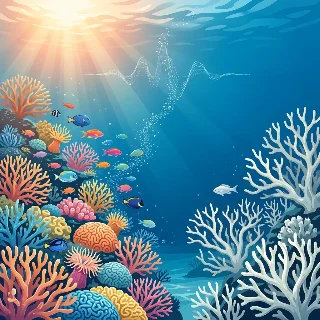
Imagine you are swimming above a coral reef. At first, the reef looks like a crowded city under the sea. Tiny fish move between branches of coral, and the colors seem almost painted onto the rocks. But then the scene changes. Some corals are not red, brown, or purple anymore. They are white, as if the color has been washed out. This is called coral bleaching. According to the NOAA National Ocean Service, bleaching happens when corals are stressed by changes in conditions, especially water that is too warm. The coral expels the tiny algae that live inside its tissues. Those algae normally give coral much of its color and much of its food. Without them, the coral turns pale or white.
0:00 / 9:07