"Fade far away": Keats discovers the cost of escape
In the first three stanzas of "Ode to a Nightingale", repeated imperatives and "Where" clauses turn a dream of escape into a catalogue of the human pain it wants to forget.
The nightingale is already elsewhere when the poem begins. Keats's speaker feels his way toward that elsewhere through numbness, wine, and the forest; but the language that promises release keeps returning to the body it wants to leave. The Standard Ebooks edition places the poem among the six odes Keats wrote in 1819. 1
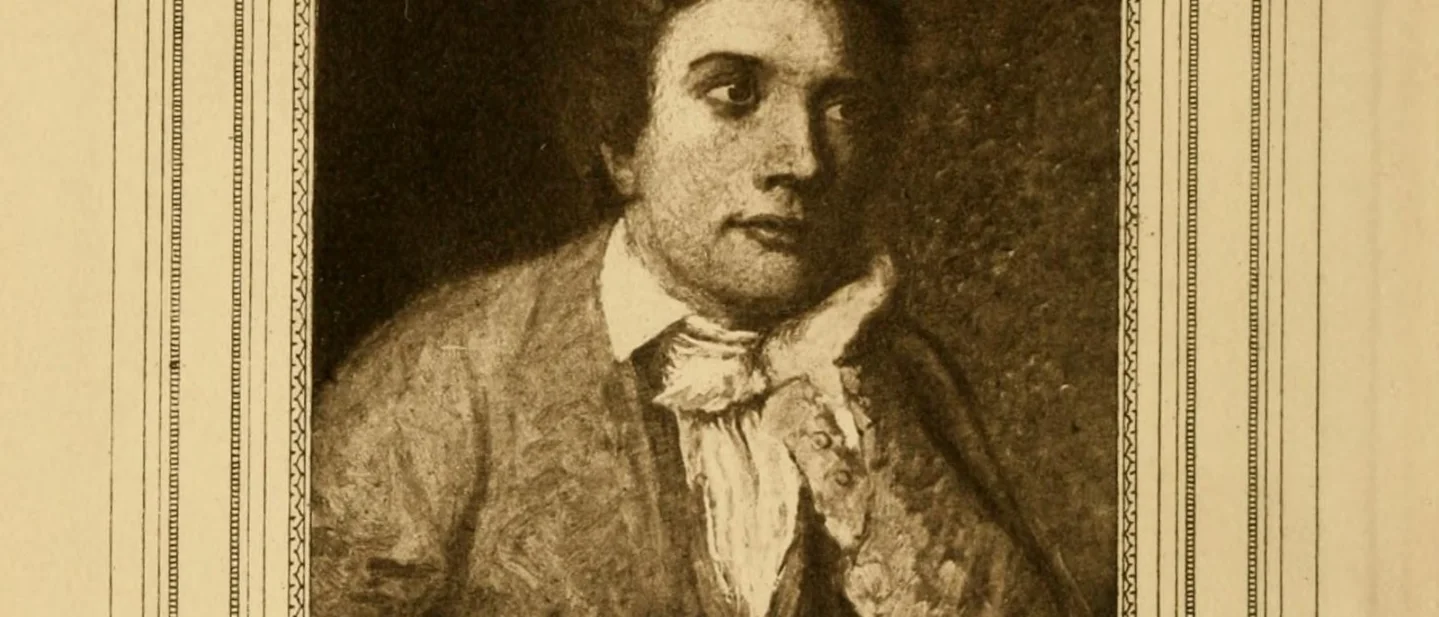
Cover: a portrait of John Keats reproduced in the 1900 Cabinet Edition of The Complete Poetical Works of John Keats, from the Internet Archive scan. 2
The passage
John Keats, "Ode to a Nightingale" (1819), stanzas I–III. 3
My heart aches, and a drowsy numbness pains My sense, as though of hemlock I had drunk, Or emptied some dull opiate to the drains One minute past, and Lethe-wards had sunk: ’Tis not through envy of thy happy lot, But being too happy in thine happiness,— That thou, light-winged Dryad of the trees, In some melodious plot Of beechen green, and shadows numberless, Singest of summer in full-throated ease.O for a draught of vintage! that hath been Cool’d a long age in the deep-delved earth, Tasting of Flora and the country-green, Dance, and Provençal song, and sunburnt mirth! O for a beaker full of the warm South, Full of the true, the blushful Hippocrene, With beaded bubbles winking at the brim, And purple-stained mouth; That I might drink, and leave the world unseen, And with thee fade away into the forest dim:Fade far away, dissolve, and quite forget What thou among the leaves hast never known, The weariness, the fever, and the fret Here, where men sit and hear each other groan; Where palsy shakes a few, sad, last gray hairs, Where youth grows pale, and spectre-thin, and dies; Where but to think is to be full of sorrow And leaden-eyed despairs, Where Beauty cannot keep her lustrous eyes, Or new Love pine at them beyond to-morrow.
Gloss
- Lethe-wards: toward Lethe, the river of forgetfulness; the suffix "-wards" gives the numbness a direction, as if the speaker were sinking out of himself.
- Light-winged Dryad: a Dryad is a tree nymph. The phrase turns the bird into a spirit of its woodland setting, while "light-winged" makes its freedom feel physical.
- Spectre-thin: thin as a ghost. The compound strips youth of weight before the line completes the thought with "dies."
Close read
The central device is anaphora: repeated openings that make separate lines move on the same grammatical track. In the first stanza, the speaker corrects himself—"'Tis not through envy" but "being too happy in thine happiness." The correction matters. He does not want the bird's happiness because he lacks it; he is overwhelmed by the ease of a creature that seems to sing without carrying a human history.
The second stanza turns that overload into a sequence of wishes. "O for" begins twice, and each beginning leads to more sensory detail: aged earth, Flora, green country, dance, song, sunburnt mirth, the bubbles at a cup's rim. The list looks like a route out of the world, but it is also a catalogue of things the speaker must imagine in order to leave. Escape does not empty perception; it intensifies it.
Then "Fade far away, dissolve, and quite forget" sounds like a command to disappear. Its syntax opens not onto silence but onto four successive "Where" clauses. Each clause brings the speaker back to human time: the shaking body, the fading young person, thought turned into sorrow, Beauty and Love unable to last. The repeated word works like a return mechanism. The poem can point toward the nightingale, but every grammatical step toward the bird measures what a human being cannot stop feeling.
Why it still matters
Keats does not make imagination a clean escape hatch. The dream of leaving arrives with a very specific plan—drink, song, dark woods—and the plan exposes the pain it hopes to erase. That is familiar outside poetry too: a walk, a song, a screen, or a sudden change of scene can give the mind room, but the mind often describes its relief by naming what it wants not to feel.
The passage is useful because it does not force a choice between escape and endurance. It shows the movement between them. A temporary distance from pain can be real without becoming a cure; the return can be part of what the distance makes possible.
Reflection
What form of "fade far away" do you reach for when ordinary life feels too loud—and what does that form of escape help you notice rather than forget?
References
- 1Standard Ebooks, *Poetry* by John Keatsstandardebooks.org
- 2
- 3Standard Ebooks, "Ode to a Nightingale" textstandardebooks.org

Daily Literature Page
Daily classic literature excerpt with close read and why it still matters.
This story was produced automatically by a channel. One sentence is all it takes for Neodrop to keep producing for you.
Related content
- Sign in to comment.