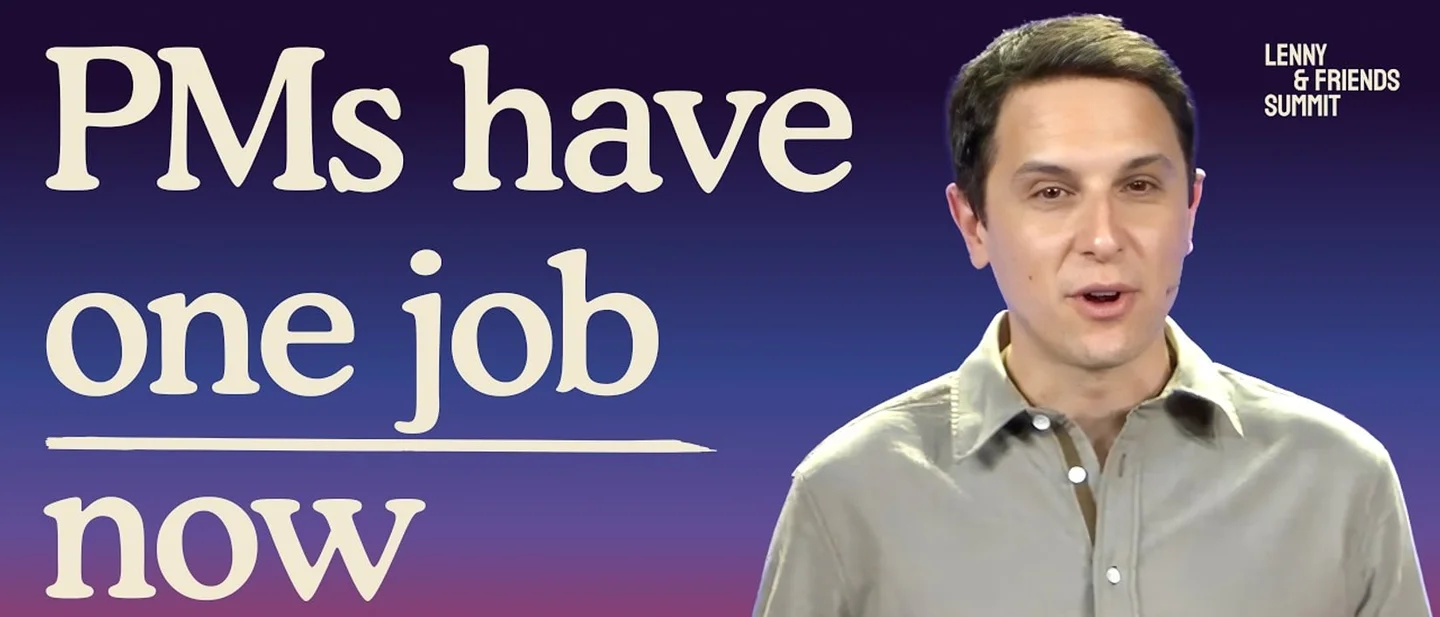
一张床上的桶滚、两场 Instagram 失败:Robby Stein 讲产品经理现在唯一该擅长的事|Lenny's Podcast
谷歌搜索产品副总裁 Robby Stein 在 Lenny 峰会上讲他做 Instagram 与谷歌搜索的三章产品法:怎么把人看深、怎么诊断根因、怎么把手艺做出来;文末附完整中英双语逐字稿。

2026 年 9 月 10 日,莱尼·拉奇茨基(Lenny Rachitsky)在旧金山办了第二届 Lenny and Friends Summit,面向产品与工程负责人1。现场演讲随后陆续发在他的播客频道上,这条 19 分 09 秒的视频是其中一场,标题是《今天做一个顶尖产品经理,需要什么》2,2026 年 9 月 28 日上线。
讲话人罗比·斯坦(Robby Stein)是谷歌搜索的产品副总裁(VP of Product, Google Search),眼下负责的核心产品包括 AI Overviews 与 AI Mode3。他做消费者产品将近二十年:2016 到 2021 年在 Instagram 带产品,团队做出并上线了 Stories,之后经手 Reels、信息流排序与私信;中间去 Artifact 做过产品负责人,也自己创过两次业4。
这场演讲是什么形态:单人口播,没有访谈者,一整套被他称为「还没写成书」的三章产品笔记。他的论点只有一句——当 AI 让几乎什么都能被做出来,产品经理的价值就从「把事推动起来」换成了「做判断」。19 分钟里他给了一个定义、三个亲身故事,以及一段搜索框改版的细节。想决定要不要花这 19 分钟,读完下面这份摘要就够了;想核对原话,文末附了完整的中英双语逐字稿。
核心手艺,从「推动」变成「判断」
他先描述所有人都在感受的那次位移。过去产品经理的价值有很大一块在「把事做成」上:组织各方、制造能量、维持动量,一半像项目经理、一半像产品经理。到了今天,几乎任何能想到的东西都能被做出来,这一块价值就被抽走了。剩下的、也是他认定真正的手艺,只有一件事,用他的原话是:产品经理最该擅长的,是决策。
他把这句话说得不留情面:多数决策是错的。所以这场演讲不是给产品经理正名,而是一份「怎么让错误少一点」的经验清单。他甚至把自己的失败也算进这套模式里——他做过一些今天零人在用的产品。
他给的三章是这样分的:理解人、诊断根因、把手艺做出来。整场演讲就按这三章走。
第一章:把人看深,从一张床上的桶滚说起
第一章的框架来自克莱顿·克里斯坦森(Clayton Christensen)等人在 2016 年出版的《Competing Against Luck》,也就是那套「待办任务」(Jobs to Be Done)方法5。它的核心说法是:我们并不使用产品,我们雇佣产品替我们做事;要弄清楚雇它做什么,最好的办法是讲故事,把自己放回那个时刻。
斯坦照这个办法现场演示了一遍。他问听众:你最近一次大额消费买的是什么?他自己的答案是一张床,然后他把过程还原出来:他和妻子在一排床前试躺,有三四张感觉都不错。这时妻子突然让他跳一下——准确地说是做个翻滚。他照做了,一个很难看的扑腾。妻子当场说:就这张,不用看了。
那天真正促成决定的,既不是散热,也不是环保材质,更不是价格,而是翻身时的传递感——她要的是一张在他翻身时不会把她吵醒的床。斯坦说,如果没人去跟你聊、没人挖出这一点,做床的产品经理永远想不到。散热、环保、价格这些当然都重要,但它们都不是那一天的决策依据。
他接着把框架搬到两个谷歌的产品上。一个是早期的对话式 AI 体验:他们发现人们来是为了找灵感,比如「该买哪种沙发」。可两年前的聊天机器人只有文字,而沙发没法用文字描述。团队因此最早一批投入多模态的理解、检索与知识系统,做成了能给出视觉结果、能追问「我想要祖母绿」「『毛茸茸』到底指什么」「我喜欢那个抱枕」这种多轮对话的体验。另一个是 AI Mode 里的吃饭与街区问题:模型信息很全,却缺了人们来谷歌时预期的那一层权威——地图、星级、营业时间、菜系、价位。把这一层接回去之后,用户能看到食物、点开实体、读一段可信的描述,这个体验到今天仍是产品里最受欢迎的部分之一,判据是点赞率一类的指标。
他还留了两个自己正在想的方向:把用户访谈的转录稿喂给模型,自动识别出里面提到的待办任务,让这件事规模化;以及做一个用他那套提问方法去做访谈的智能体,把「为什么用」问得更广。
第二章:诊断根因,Stories 与 Reels 的两次修正
第二章讲的是产品做出来之后怎么办。他把这个过程比作训练模型的一个轮次(epoch):先有一个愿景,做出来的东西通常不好,然后把产品空间里确切存在的问题排好优先级、彻底想清楚、动手修,再回头问一遍,如此递归。每跑一轮,就离产品市场契合(PMF)近一点。
他用 Instagram 的两段经历来说明。第一段是 Stories 上线初期。产品其实很快就起来了,但团队清楚很多人不愿意发。他们的做法是把问题反过来问:你为什么不用它?答案分成很多簇,按主题归拢之后,最大的一类是观众问题——前任在上面、老师在上面、姑妈在上面,所以不想随便发点傻东西。看到这一点之后,团队又做了覆盖数千人的定量调查,把各类顾虑的权重算出来。结论是:只要跨不过这道坎,做什么创意工具都没用。于是他们花了两年反复试,试过叫「收藏」的版本,还在个人主页里留了一个能看「私密版主页」的后门,用户完全看不懂。最后奏效的只有一种形态——把「密友」直接做进 Stories 里。
第二段是 Reels。最初在巴西上线时,团队以为大家发跳舞这类搞笑内容不会愿意让它们一直留在主页上,所以做成了当天消失的临时格式。结果是一场大失败。回过头看,更大的洞察是:发内容的人——哪怕年纪很小——想当表演者,想把自己的内容变成生意,想让内容留下来、传出去。于是团队做了一次大改动,把 Reels 变成一种永久格式,默认全学校都能看到。这个改动之后,Reels 才慢慢跑成了今天的样子。
AI 在这一章里帮上忙的地方,是让「问用户」这件事变便宜。他讲了一个内部系统:让愿意参与的用户在使用谷歌产品时随手留言,评论会进到一个巨大的反馈库里。模型可以同时处理定性与定量的反馈。他举的例子是买背包——用户会说:你知道每款背包的参数、知道哪个更大,这很好,但你该先问我儿子多高、包会不会对他来说太重。这类反馈堆起来看,规律立刻显形。团队据此把体验做成一次真正的对话,让对方在过程中补上他自己都不知道要说的信息。这一步在他们看过的所有指标里,是提升最大的一批。
第三章:手艺,先把痛苦消掉,再谈惊喜
第三章讲产品成型之后的收尾。他把「手艺」拆成两件事:产品是不是完全不添堵,以及用起来有没有感觉。
先说痛苦。他说这件事不能只靠团队自己当重度用户,于是用一个叫 Antigravity 的内部系统搭了个工具:让模型当智能体去用产品——打开谷歌、输入问题、追问、把过程截图,再按一份很细的评分量表(rubric)打分。工具有效得超出预期:它能看出数学题渲染得好不好、有没有冒出怪字符,也能看出问到「生物发光」这种视觉话题时该不该给一张图。团队已经养了一批智能体,专门找出这种不对规格的地方,再逐步自己去修。他说,过去那种靠一整个 QA 团队、靠几个人把产品每个角落都用烂的日子,大概要过去了。
再说感受。他放的例子是搜索框——20 年后重新设计,在 I/O 2026 上发布6。他要的平衡是:一眼还是谷歌,但能立刻看出「里面有 AI 在帮忙」。落地的细节包括一层渐变色代表背后的 AI 能力;光标闪烁时会循环谷歌的几种品牌色,这一点被人截图发到 X 上讨论过很多次;手指点进搜索框时,框会有一个向外弹一下、再转出加载圈的动效,配着触感反馈。他把这一段总结成:动作、颜色、手感、触感,加上设计上的刻意,都在向人传达产品背后有人,都在给它一个灵魂;而这一步最常被跳过。
几个词
产品经理(PM):为产品的结果负责、决定做什么与为什么做的人。待办任务(Jobs to Be Done):把用户的购买与使用解释成「雇佣某个产品去完成一件事」,重点在事、不在人。产品市场契合(PMF):产品真的被市场接住的那个状态。多模态(multimodal):模型能同时处理文字、图片、音频等多种输入输出。评分量表(rubric):一张事先写好的评分标准,让不同的人、也包括模型,对同一段体验给出可比的分。QA:质量保证,传统上指专门负责找出产品缺陷的团队。
这一场值不值得看
值得看的人:正在带产品、想听一个把方法讲成故事而不是讲成框架的版本的人。信息密度中等,19 分钟里有三章结构、四个具体例子,其中床、Stories 的「收藏」版本、Reels 在巴西的失败都不是常见案例。可以不看的人:想要可复制流程、清单和数字的人——他明确说这是「一种方式」,同一场峰会里还有别的讲者给了另外十种同样成立的版本。
人物背景与外部对照
斯坦的两段履历是有分量的。Stories 于 2016 年 8 月 2 日由 Instagram 官方发布7;「密友」名单在 2018 年底加入,Reels 则在 2020 年前后成为独立格式8。他讲的两条产品线,正是这两段时间线的主要参与者。他开场那句「现在数十亿人用着我们团队做出来的产品」,指的是 Instagram 的体量与谷歌搜索的体量,不是修辞。
这场演讲也是这套峰会系列里的一环。同一批已经发出来的,还有 Stripe 设计负责人 Katie Dill 讲如何在 AI 工具里保住品味与手艺、SVPG 创始人 Marty Cagan 讲他给过的十条产品建议里真正后悔的部分、Ramp 首席产品官 Geoff Charles 讲 AI 把瓶颈一步步往下游推,以及 Every 的 Dan Shipper 讲把产品团队当研究实验室来跑。斯坦这一场的位置在中间:他给的是方法本身,而不是某一环的工具。
完整中英双语逐字转录稿
逐字稿说明:英文原文取自本期官方视频的英文原始字幕轨,措辞未作删改,仅对少量专名做了订正(Instagram Stories、Close Friends、Reels、Antigravity、Competing Against Luck、AI Mode 等)。中文译文由机器翻译生成,只对专名做了统一,未逐句人工润色。这是一场单人口播演讲,全篇讲话人均为 Robby Stein。时间轴每 10 分钟标注一次;本期官方字幕轨这一次拿不到时间码,分段时间由演讲语速与词数折算,是近似位置。
00:00 - 10:00
Robby Stein:
Hey everyone, it's so great to be here and I love being here to get to talk about one of my favorite things ever, being a PM, product manager, and builder. And what's pretty incredible is that it's never been so interesting to be building products. And after 20 years almost of building, particularly in consumers, by the way, it's very upsetting to be able to say out loud. Um, but after almost 20 years of building, I've been fortunate to build all kinds of different products over my career. I've built startups and I've also helped lead teams and products through really big changes like Instagram and Google search where now billions of users are using products that our teams have created over the years.中文:大家好,非常高兴来到这里,我很喜欢在这里谈论我最喜欢的事情之一,那就是做产品经理(PM)、产品负责人和产品建设者。令人难以置信的是,现在做产品比以往任何时候都更有趣。顺便说一下,在消费者产品方面,经过将近 20 年的建设经历,说出来真的让人有些难过。嗯,但经过将近 20 年的建设经验,我有幸在职业生涯中参与过各种不同的产品开发。我做过创业公司,也帮助领导团队和产品经历过像 Instagram 和 Google 搜索这样的大变革,而现在数十亿用户正在使用我们团队多年来创建的产品。
Robby Stein:
Also have built some things that zero people use today, by the way. Absolutely zero. And what I've learned throughout this process is that there is a little bit of a pattern of the kinds of things that we've done to make the products really great. Sometimes it works out, sometimes it doesn't. But there has been a repeatable pattern that I've seen emerge from the things that have done really well and the things that have not. And that's really what I'm here to share today uh and in part to all of you.中文:顺便说一下,我也曾经做过一些今天完全没人使用的东西。真的完全没有人用。在这个过程中我学到的是,我们所做的事情在让产品出色方面确实有一个小小的模式。有时会成功,有时不会。但我确实看到了一种可重复的模式,从做得非常好和做得不好的事情中浮现出来。这也正是我今天在这里想要分享的内容,同时也想分享给你们所有人。
Robby Stein:
There's lots of things to talk about, but I wanted to give you just a little bit of extra background on me. So I spent some years at Instagram where my team has built out Instagram stories and shipped it originally and built all of the experiences around it. We have reels, feed ranking and direct messaging. So a whole bunch of products that came out of that era. Uh and then now at Google search where I am working through a brand new uh experience with the team to help think through what is Google search in the AI era so that you can truly ask anything on your mind and get the most helpful information imaginable across everything whether it's videos or audio text and you can tap into all of the knowledge of the of the web and of Google and connect the information that's out there.中文:有很多事情可以谈,但我想给你一点关于我的额外背景。我在 Instagram 工作了几年,我的团队最初构建并推出了 Instagram Stories,并围绕它构建了所有体验。我们有 Reels、动态排序和直接消息。所以那一时期出现了很多产品。然后现在我在 Google 搜索工作,我和团队一起开发一个全新的体验,帮助思考在 AI 时代的 Google 搜索是什么,这样你就可以真正询问任何你想知道的事情,并获得最有帮助的信息,无论是视频、音频还是文本,你都可以利用互联网上和 Google 的所有知识,并连接所有现有的信息。
Robby Stein:
But today I'm not talking about the transformation of product, although that is something I really deeply enjoy. I'm talking about the craft of product. What does it take to build? What does it take to have a product that people love and to shape that and make that? And how do you do that in the age of AI that ultimately from my opinion any one of you can do now with just a handful of agents or kind of AI assistants which took us years and whole teams of people to do um in the process here.中文:但是今天我不是在谈论产品的转型,尽管那确实是我非常喜欢的事情。我在谈论产品的工艺。构建它需要什么?拥有一个人们喜爱的产品并塑造它、制作它需要什么?在人工智能时代,你如何做到这一点?在我看来,你们现在任何一个人只需几名代理或某种 AI 助手就能做到,而我们当初在这个过程中花了几年时间和整支团队才完成。
Robby Stein:
Let's uh just mention one thing I wanted to say around the the role of PM before we get started and that is really the the fundamental shift that we're all feeling is that we used to be I think as PMs a big part of our value was around getting stuff done was around organizing creating energy and momentum and being almost like a project manager and a product manager and I think in some cases that's still true but really if in the world today almost anything you can think of can get built it's more clear to me ever that the actual true value of PM is actually around judging.中文:在我们开始之前,让我先提一下我想说的一件事,关于产品经理的角色,那就是我们都能感受到的一个根本性的转变。我认为我们以前作为产品经理的一个重要价值在于推动事情的完成,在于组织、创造能量和动力,几乎像是项目经理和产品经理的结合。我认为在某些情况下这仍然成立,但在今天的世界里,几乎任何你想到的东西都可以被构建出来,因此对我来说,产品经理真正的价值实际上更多在于判断。
Robby Stein:
It's around taste. It's around doing something extremely well. And I think what's something I've thought about a lot is that people say the PM's main craft is that you do lots of things pretty well. And I think that is somewhat true. But I think above all else, actually the craft of PM is one simple thing that you should be the absolute best at. And that is decision-m. It's about making decisions and you should be students of what it takes to make great decisions. And it's a humbling thing because most decisions, many decisions are wrong.中文:这关乎品味。这关乎把某件事情做到极致。我想我思考得最多的一点是,人们说产品经理的主要技能是你能把很多事情做得相当好。我认为这在某种程度上是对的。但我认为最重要的是,其实产品经理的技能在于一件简单的事情——你应该在这方面做到绝对最好。那就是决策。这关乎做决定,而你应该研究如何做出优秀的决策。这是一件让人谦卑的事情,因为大多数决定,很多决定都是错误的。
Robby Stein:
And these are just the things that I've learned over the years that have helped me and the teams make decisions that have led to some of the great experiences that are now out there today. There's kind of a book that's been unwritten uh in my mind that I've been kind of thinking about um in three chapters around the process that you know I've used and teams have used to build and I'm here to share that today really for the first time in this format. So chapter one is understanding people deeply.中文:这些只是我多年来学到的一些东西,它们帮助我和团队做出了决策,从而带来了现在大家能够体验到的一些美好经历。在我的脑海中,有一本尚未写成的书,我一直在思考,用三个章节来讲述我和团队用来建设的流程,今天我在这个形式下第一次真正分享它。第一章是深入了解人。
Robby Stein:
It all starts with people obviously and you can figure out lots of things that you can build but it comes back to the very root of what are the fundamental needs of a person. And I love the book um Clayton Christensen wrote Competing Against Luck. I'm sure many of you have read it and are probably read the jobs to be done framework which I really do love. The thought is that we don't use products, we hire them to do things for us. And we have to know what those things are.中文:这一切显然都是从人开始的,你可以弄清楚很多你可以构建的东西,但最终还是要回到一个人的基本需求。我很喜欢克莱顿·克里斯坦森写的《与运气竞争》这本书。我相信你们很多人都读过,可能也读过“待完成的工作”框架,我真的很喜欢这个框架。它的观点是,我们不是使用产品,而是雇佣它们为我们完成某些事情。而我们必须知道这些事情是什么。
Robby Stein:
And it's best articulated how to extract those kinds of insights through a story. And so actually um a team that we had uh at Instagram, we did a offsite with the people who created the jobs to be done framework. And we actually went through this process. So you can all think about this with me. What was the last major purchase that you made? So quickly think about it. And for me it was a bed. So here are a bunch of beds. And then what you're supposed to do, and the book actually talks about how to do this, we've really internalized this with our process, is to put yourself back into that moment.中文:通过故事来清楚地表达如何提取这种类型的洞察是最好的。实际上,我们在 Instagram 的一个团队曾经与创造“待完成工作”框架的人一起进行了一个外出活动。我们实际上经历了这个过程。所以你们都可以跟我一起来思考这个问题。你最近的一次重大购买是什么?快点想一想。对我来说,是一张床。这里有很多床,然后你应该做的事情,书中实际上也讲了如何去做,我们在流程中已经真正内化了,就是让自己回到那个时刻。
Robby Stein:
And we're talking to a person, ask them details about their life. What was it like that day? Where were you? What were you reading? Who were you with? What were you wearing? Were you with your kids? Were you by yourself? Were you in a store? Were you online? And you really deeply put yourself in the position of that user. For me, looking at the sea of beds with my wife. And basically, we were kind of trying different things out. And at the end of the day, three or four felt great, but my wife weirdly turned to me and said, "Can you do me a favor and jump on this?" Basically, uh she was like, "Do a barrel roll." I was like, "What?" Uh all right.中文:我们在和一个人交谈时,要询问他们生活的细节。那天是怎样的?你在哪里?你在读什么?你和谁在一起?你穿着什么?你和孩子在一起吗?你一个人吗?你在商店里吗?你上网了吗?你要真正地把自己置于那个用户的立场上。对我来说,就是和我的妻子一起看着一排床。基本上,我们在尝试不同的东西。到一天结束时,三四个床感觉很好,但我妻子奇怪地转向我说:“你能帮我一个忙吗,试试看这个?”基本上,她的意思是,“做一个滚桶动作。”我当时就想,“什么?”好吧。
Robby Stein:
And so I did like a huge flop, I guess. And she was like, "We're getting this bed right now. Thank you. We're done." And I was like, "What? This is so weird." She's like, "No, the main thing that I need is a bed that will not wake me up if you like move." And if you think about it, that's like a little offensive, but also I was like, "Okay, it's real." And if I was a PM for beds and I might be like classically thinking quick what's the road map for beds right you might be thinking okay uh how about cooling everyone's doing cooling like yeah cooling sure or like eco uh or just pure price like those things do matter but for us the thing that made the decision on that day is a concept of transference and if you didn't talk to me and you didn't learn that the PM the team they would never know that and so that's what it means to discover the job to be done for someone and how products things customers hire ire what your services do, your products do to help them.中文:所以我就像彻底失败了一样,我想吧。然后她就说:“我们现在就要买这张床,谢谢,我们完成了。”我当时就想,“什么?这也太奇怪了。”她说,“不,我最主要需要的是一张你移动的时候不会吵醒我的床。”如果仔细想想,这有点冒犯,但我当时也想,“好吧,这是真的。”如果我是床的产品经理,我可能会像传统方式那样快速思考床的路线图,比如你可能会想,嗯,大家都在做降温,那就降温吧,或者生态环保,或者单纯价格,那些确实重要,但对我们来说,那天决定的关键是一个‘转移’的概念。如果你不来跟我聊,不去了解,我这个产品经理和团队就永远不会知道这个信息,这就是发现客户“待完成任务”的意思,以及产品、服务或你提供的东西如何帮助客户完成这些任务。
Robby Stein:
And very quickly, just talking two quick examples in the digital world, one from Google. Early in our AI experiences, we realized that people actually came for inspirational journeys. But two years ago, chat bots were only text. So, we were one of the first teams to look at this need and say, how do you get inspired by what to buy or or what kind of uh couch to get through text? How do you describe a couch to someone? You can't. And so we were one of the earliest teams to really invest in state-of-the-art multimodal understanding, retrieval, and knowledge systems.中文:很快地,只举两个数字世界的例子,其中一个来自谷歌。在我们早期的人工智能体验中,我们意识到人们实际上是为了寻找灵感之旅而来的。但两年前,聊天机器人只能进行文字交流。所以,我们是最早关注这一需求的团队之一,并且提出问题:如何通过文字获得购物灵感或者选择哪种沙发?如何向别人描述一张沙发?根本不可能。因此,我们是最早真正投资于最先进的多模态理解、检索和知识系统的团队之一。
Robby Stein:
So you could actually ask about a couch, get an incredible visual response, and do multi-turn conversation with it to say, "Oh, I actually want emerald green, or I want fuzzy, like what does fuzzy mean?" Or, "I like that throw pillow. How does it create attention on the throw pillow?" And do a turn and then now do a grid of throw pillows. Like these were really hard things many years ago. And obviously you see them now in many places, but that was a core need and a core insight that we saw.中文:所以你实际上可以询问有关沙发的问题,获得令人难以置信的视觉反馈,并与它进行多轮对话,比如说:“哦,我实际上想要翡翠绿的,或者我想要毛绒质地的,毛绒质地是什么意思?”或者,“我喜欢那个抱枕。它是如何吸引人注意的?”你可以进行一次互动,然后再显示一组抱枕。多年前这些事情真的很难做到。显然,你现在在很多地方都可以看到它们,但这是我们看到的一个核心需求和核心洞察。
Robby Stein:
And then the last example was very early in our AI mode exploration which is a way that you can use Google search now to ask anything and have a conversation with Google was people came and it had all this incredible information like here this is a neighborhood and like a food question but it was missing something. It was missing something that people were coming to Google for and were expecting, which was the knowledge and the accuracy and the experience of actually seeing the places you go, seeing them on the map, getting the Google level authority of the star rating, the closing time, what kind of food it is, how expensive it is, it's completely missing from the product.中文:然后最后一个例子是在我们探索 AI 模式的早期阶段,这是你现在可以使用 Google 搜索的方式,可以向 Google 提问任何问题并进行对话。人们来时,它提供了所有令人难以置信的信息,比如这里有一个社区,还有像食物相关的问题,但它缺少一些东西。它缺少人们来 Google 时所期望的东西,那就是知识、准确性以及实际看到你要去的地方的体验,在地图上查看它们、获取 Google 级别的星级评价、关闭时间、食物类型和价格,这些完全在产品中缺失。
Robby Stein:
And when we brought that together so that now you can talk to Google, ask about food and then get this rich experience that brings all the goodness of seeing the food and clicking on an entity now and actually seeing the description that you can trust. That was the magical product and it's still one of the most popular things on the product today based on thumbs up ratings and other things that we follow. But again, back to a human insight of the why behind they were using the experience and what caused them to use it in the first place.中文:当我们将这些整合在一起时,现在你可以与谷歌对话,询问食物,然后获得这种丰富的体验,它带来了查看食物的所有好处,并且现在点击一个实体就能看到你可以信赖的描述。那是一个神奇的产品,至今仍然是基于点赞评分和我们关注的其他指标最受欢迎的产品之一。但再次回到一个人类洞察,即他们使用这种体验的原因,以及导致他们最初使用它的原因。
Robby Stein:
And so AI can actually change a lot of this and a lot of the talk today is how AI can apply to these. I think on this one I'm still thinking about some of these uh myself. But one of the things I'm excited to try more is how you can actually take the transcript data of these user interviews and actually have it specifically source jobs to be done and scale that much more. Another idea I've been thinking about um is actually an agent that can interview people with the exact methodology that I just described so that it can really ask a user more at scale to talk about why they're using the product they're using and what those underlying problems were.中文:因此,人工智能实际上可以改变很多这些内容,今天的很多讨论都是关于人工智能如何应用于这些方面。我认为在这一点上,我自己还在思考其中的一些问题。但我很期待尝试的一件事是,你实际上可以利用这些用户访谈的文字记录数据,专门找出待完成的工作,并大规模扩展。另一个我一直在考虑的想法是,实际上可以有一个代理按照我刚才描述的确切方法来访谈人们,这样它就可以在更大范围内真正询问用户他们为什么使用正在使用的产品,以及那些潜在问题是什么。
Robby Stein:
So that is understanding people. Next up you have a seed, you have something you're working towards. The next step diagnosing root causes. So the way I think about it is you have this initial vision of this problem you're solving for people. this initial understanding of what people want and then you make a thing and that thing is usually not great and most of the things that I've ever been a part of building started not great but everything did really um and what's incredible about this process is by having a clear and analytical view of the exact problems that are in your product space ranking them in priority and understanding them deeply and then actually fixing them and then asking it recursively again and really looping through you basically are doing your own training process, kind of like an epoch of model training a little bit.中文:所以这就是理解人。接下来你有一个种子,你有一些你正在努力实现的东西。下一步是诊断根本原因。所以我思考的方式是,你对自己正在为人们解决的问题有一个初步的愿景,对人们想要什么有一个初步的理解,然后你做出一个东西,而那个东西通常并不完美,我参与过的项目开始时大多数都不完美,但所有东西最终都真的…嗯,这个过程令人难以置信的地方在于,通过对你的产品领域中的具体问题有一个清晰且分析性的视角,对它们进行优先级排序,并深入理解它们,然后真正去修复,再递归地重复这个过程,并真正循环,你基本上就在进行自己的训练过程,有点像模型训练中的一个训练周期(epoch)。
Robby Stein:
And each update you do with this change list gets you closer to the market fit you want until you have that fit and then it works. And there's two stories I wanted to kind of articulate here, both uh from Instagram. Uh one was when we originally launched stories, it it actually did take off. It was one of the earliest things that worked pretty well out of the box, but um we had many internal versions where stories were fit into the feed that didn't work great. So there was a ton of um headache to get to the the final version, but one thing that was particularly clear was that not everyone was adopting it or felt comfortable sharing.中文:每一次你根据这个变更清单进行更新,都会让你更接近你想要的市场契合度,直到你达到了那个契合度,然后它就能正常运作。我想在这里讲两个故事,都是来自 Instagram 的。一个是当我们最初推出 Stories 的时候,它确实得到了发展。它是最早几个开箱即用效果不错的功能之一,但是,我们有许多内部版本的 Stories 是嵌入到信息流中的,这些版本效果并不理想。所以为了达到最终版本,我们经历了很多头痛的事情,但有一点特别清楚,那就是并不是每个人都在使用它,或者觉得分享它很舒适。
Robby Stein:
And really the whole premise was, hey, this is an opportunity to share your life throughout the day. Why aren't you doing this? And the process that we followed was pretty simple. We asked a very clear root cause of why you were not able to do the thing that was our goal. So it's kind of the inverse. The first one's like, why did you do the thing? Now you have a thing. It's like, well, why aren't you doing the thing? And it turns out that if you asked that question, people answered.中文:实际上整个前提是,嘿,这是一个在一天中分享你生活的机会。你为什么不这样做呢?我们遵循的过程相当简单。我们问了一个非常明确的根本原因,为什么你不能做到我们设定的目标。所以这有点相反。第一个问题是,你为什么做了那件事?现在你有了一件事情,就变成了,你为什么不做那件事?事实证明,如果你问这个问题,人们会回答的。
Robby Stein:
Think of all the leaf nodes like a cloud behind me of all of the answers people had. And then if you were to group them by theme, it turned out that the top one when you sorted them was something around audience problems more or less. Like my ex is on it, my teacher's on it, my aunt is on it, my sister's on it, I'm not going to like just put a goofy thing on like people are on it. And so what we realized in seeing that and then what we did was we then did a very large quantitative survey.中文:把所有的叶节点想象成像我身后的一片云,里面是人们给出的所有答案。然后,如果你按主题对它们进行分组,结果显示当你排序时,排在最前面的就是大致围绕观众问题的内容。比如,我的前任在上面,我的老师在上面,我的阿姨在上面,我的妹妹在上面,我不会只是随便放一件搞笑的东西上去,像人们在上面那样。于是我们在看到这些之后意识到,然后我们所做的是进行了一个非常大规模的定量调查。
10:00 - 19:09
Robby Stein:
thousands of people taking that as an input and then we were able to quantify the actual weights across them. And what we figured out was that if we couldn't overcome that burden, there's no creative tool. There's no like interesting product idea that would work. And so the team actually spent 2 years cycling through different ideas in the space until we came across close friends and it ended up working. And there were all kinds of weird permutations in this like multiverse scenario where like it's called favorites and it also has on your profile a back door that you can like see a like a private version of your profile and you can also post to your feed under that kind of close friends label.中文:成千上万的人把它作为输入,然后我们能够量化他们之间的实际权重。我们发现,如果我们无法克服这种负担,就不存在创意工具,也没有任何有趣的产品理念能够奏效。因此,团队实际上花了两年时间在这个领域不断尝试不同的想法,直到我们遇到了“亲密朋友”,最终这才起作用。在这个多重宇宙的场景中,有各种奇怪的排列组合,比如叫做“收藏夹”,它在你的个人主页上还有一个后门,你可以看到个人主页的私人版本,并且你也可以在这个“亲密朋友”标签下发布动态。
Robby Stein:
Super confusing. No one understood it. Like why would I put this like very raw photo in the middle of like a glitzy feed of all this stuff that's happening. The only thing that worked was within stories. So we cut out the entire product, relaunched it as a stories experience and it worked. Reels was the second example. We had we had a a launch for Reels in Brazil and we thought at the time that if you're doing goofy things and dances and posting them, why would you want them to live on your profile for everyone to see forever, which made sense and the team felt that way.中文:超级迷惑。没有人理解它。就像为什么我会把这样一张非常原始的照片放在一个闪亮的动态中,而这些动态都是发生的各种事情。唯一有效的就是在故事中。因此我们删掉了整个产品,把它重新作为一个故事体验推出,结果有效。短视频是第二个例子。我们在巴西推出了短视频,当时我们觉得,如果你在做搞笑的事情和舞蹈并发布它们,为什么你会希望它们永远出现在你的个人主页上让每个人都看,这很有道理,团队也有同感。
Robby Stein:
So, we launched it. Huge failure. So, it turns out that if you invest a bunch of time doing an awesome dance, you don't want it to go away in a day, which was an ephemeral format. It's very obvious in hindsight. But the the bigger insight was the people who were posting them, even if they were young, you know, people, they wanted to be entertainers. They wanted to make businesses out of their content and they wanted it to live on and go viral. And so we did a massive update. We talked about this change list where now it's its own format.中文:于是,我们推出了它。结果惨败。事实证明,如果你投入大量时间去做一个很棒的舞蹈,你是不希望它在一天内就消失的,而那是一种短暂的格式。从后来看这点很明显。但更重要的洞察是,那些发布内容的人,即使他们很年轻,他们也想成为表演者。他们希望从自己的内容中创建业务,希望内容能够延续下去并传播开来。所以我们进行了大规模更新。我们讨论了这个更新列表,现在它有了自己的格式。
Robby Stein:
Instead of being ephemeral, it lives like forever and it can be something your whole school sees. Instead of the opposite like, oh, I don't want my whole school to see it. It's like, no, that's actually what you want. You want everyone to get the joy from this product. And then obviously that take has taken off and done quite well over the years. So two really clear examples um of how that's happened and with AI this is actually possible to do a lot easier now using internal tools and I think things that you can all do every day and we use you know internally Google Antigravity but we have a system that effectively lets users that have opted into this.中文:它不是短暂的,而是像永远一样存在,而且它可以成为你整个学校都能看到的东西。不是像相反的那种,哦,我不希望我整个学校都看到它。而是,恰恰相反,这才是你真正想要的。你希望每个人都能从这个产品中获得快乐。显然,这种想法多年来已经流行起来,并且取得了不错的成果。这里有两个非常清楚的例子说明了这种情况的发生,而在人工智能的帮助下,现在使用内部工具实际上可以更容易地做到这一点。我认为这是你们每天都可以做到的事情,我们内部使用的工具,比如说 Google Antigravity,但我们有一个系统,实际上可以让选择加入的用户使用它。
Robby Stein:
They want to talk to us more and they've decided that they're they're comfortable sharing as they're using Google products with us. And so what will happen on the side is we will then ask them, hey, what did you think of this? Did it where did it miss the mark and they will put comments in. And so imagine this huge library of feedback from people now that's available. Well, now the model can take that and can both take qualitative feedback like above. This isn't this is a way a shopping example for backpacks.中文:他们希望与我们更多地交流,并且他们已经决定,在使用谷歌产品时愿意与我们分享。因此,一旁会发生的是,我们会问他们,嘿,你觉得这个怎么样?哪里没达到预期,他们会留下评论。想象一下,现在有了来自人们的大量反馈库。好了,现在模型可以利用这些反馈,同时处理上面提到的定性反馈。这是一个关于背包购物的示例。
Robby Stein:
And it's like it's awesome that you knew about each backpack and it's awesome that you knew which was larger and the sizing because Google has all this canonical information, but you should have asked me about my son and the height. like that's a pretty key thing or it's going to be too heavy for my kid. And it was so obvious that when you stack rank them, this was a very common kind of feedback. And so this concept of being collaborative and in and creating a conversation so you can actually help the the person make progress with to the ultimate objective because they don't actually know all the things that they need to know to answer.中文:而且就像你知道每个背包的情况很棒,你知道哪个更大,知道尺寸也很棒,因为谷歌有所有这些权威信息,但你本应该问我关于我儿子和身高的情况。这是一个相当关键的因素,否则对我的孩子来说会太重。当你给它们排排行榜时,这是一个非常常见的反馈。所以这种协作和创造对话的概念非常重要,这样你才能真正帮助对方朝最终目标取得进展,因为他们实际上并不知道回答问题所需的所有信息。
Robby Stein:
It was absolutely critical to getting the user to vote and say this was awesome. And so we invested a ton of energy in this and it's been one of the biggest things we've done in terms of engagement, in terms of usage, in terms of value and helpfulness, you know, that we've seen out of the product. So that's kind of chapter two, uh, which is around understanding the root causes. Now, if you're lucky, you have a great seed idea, you've done this process of finding the market fit by go looping through, seeing your problems, analyzing them rigorously, and fixing them aggressively.中文:让用户投票并说这个很棒是绝对关键的。因此我们在这上面投入了大量精力,这也是我们在参与度、使用量、价值和实用性方面做过的最大工作之一,你知道,这是我们从产品中看到的成果。所以这就是第二章,嗯,是关于理解根本原因的。如果你幸运的话,你会有一个很棒的种子想法,你已经通过循环迭代发现市场适配的方法,观察问题,严格分析问题,并积极解决问题。
Robby Stein:
Maybe you get to the stage now where the product is ready for prime time. You're going all out. You're going to all your customers, you're sending the blast email. And really, this is about the fit and finish and final elements of the product, which is around craft. And I think this is often overlooked, but basically the way I think about craft is the feeling that I think everyone has a general sense, and I believe people can detect whether the creators of a product cared about the product that they created basically.中文:也许你现在已经到了产品准备好大规模发布的阶段。你全力以赴,联系所有客户,发送群发邮件。实际上,这主要是关于产品的契合度、精致度和最终元素,也就是工艺。我认为这一点常常被忽视,但基本上我对工艺的理解是每个人都有一种普遍的感觉,我相信人们可以分辨出产品的创造者是否真的关心他们所创造的产品。
Robby Stein:
And there's two things that I think drive this. One is does the product work perfectly and is there any user pain basically in that experience? And the second is how does it make me feel? Do I feel something? Joy, excitement, using it. And so I'm going to talk about each real quick. Um, on the pain side, it's really not just about obsessing over it and you all being power users of your own product, but actually how to scale that now with AI, which is really incredible. And so I actually built a tool that I'm sharing here.中文:我认为有两件事驱动这一点。一是产品是否完美运作,基本上在使用体验中是否存在任何用户痛点?第二是它让我有什么感觉?我使用它时是否感到快乐、兴奋。所以我将快速谈谈每一点。关于痛点方面,这不仅仅是沉迷于它并让你们自己成为产品的高阶用户,而是如何利用人工智能扩大这种体验,这真的很不可思议。所以我实际上构建了一个工具,并在这里分享。
Robby Stein:
This is a real tool that I built um internally using the Antigravity system to basically look at all of the potential questions we might ask. So, here's a sample here on the side. Use the product as an agent. So, like literally like go to Google, type in a question, go to the AI, ask a follow-up, and then record that experience, screenshot it, and then evaluate what you see based on a really comprehensive rubric. And what we found out was that the model actually was incredibly capable to look at things like, hey, there's a math question, or this is like a school homework thing.中文:这是我真正内部构建的一个工具,使用了反重力系统,基本上是用来查看我们可能会问的所有潜在问题。所以,这里旁边有一个示例。把产品当作一个代理来使用。就像真的一样,去谷歌,输入一个问题,去问 AI,再提一个后续问题,然后记录那个体验,截屏,然后根据一个非常全面的评分标准来评估你看到的内容。我们发现的是,这个模型实际上非常有能力去处理类似的事情,比如,嘿,这是一个数学问题,或者这是学校作业的东西。
Robby Stein:
Is it doing a great job rendering math and latte? Or is it, you know, emitting weird uh characters? Or if you ask about bioluminescence, is it adding a visual tray, which is what the response should have if you're asking about something visual or is it just text? And you can go through and you not only can you get to the best response, but you can see breakages really easy. And the team easily and the team has now invested in a bunch of agents that can go figure out when stuff is just broken or offspec and then increasingly fix it itself.中文:它在渲染数学和拿铁方面表现得很好吗?还是,你知道,会出现奇怪的呃字符?或者如果你问生物发光,它是否添加了视觉托盘——如果你在问关于视觉的东西,这是回答中应该有的——还是只是文字?而且你可以浏览,不仅可以获得最佳答案,还可以很容易地看到错误。而且团队,现在已经投资了一堆代理,它们可以去弄清楚什么时候东西只是坏掉了或不合规格,然后越来越多地自己修复它。
Robby Stein:
and you have this feedback loop and where you used to have maybe a QA team, you you may need a PM or you might need people on your team who are obsessively using every single part of the product. I think many of those days are now over where we can scale this process much more elegantly for everyone. And then the last thing I'm going to say is around you know delight and really sparking joy. And this is a little experience. This is what the Google search box looks like now. We we reinvented this the search box after 20 years announced it at IO what an AI based search box should be.中文:然后你有这个反馈循环,以前你可能有一个 QA 团队,你可能需要一个产品经理,或者你可能需要团队中有人沉迷于使用产品的每一个部分。我认为那些日子现在已经过去了,我们可以为每个人更优雅地扩展这个过程。然后我要说的最后一件事是关于让用户感到愉悦并真正激发喜悦。这是一个小的体验,这是 Google 搜索框现在的样子。我们在 20 年后重新设计了这个搜索框,并在 IO 大会上宣布了一个基于 AI 的搜索框应该是什么样子。
Robby Stein:
It should grow with you. It should be able to upload things and have context around files, around videos, around photos. What what should that be like? And and how daunting of an experience is that? And what we did was we came up with a a system that said, okay, we wanted Google to still feel Google and but we wanted it to be this upgrade that felt like AI is here. It's there's AI inside that's helping you. And so there's this concept of this kind of gradient of color that really represents the AI kind of power behind the product.中文:它应该随着你一起成长。它应该能够上传内容,并围绕文件、视频、照片提供上下文。那会是什么样的体验?而那会是一种多么令人畏惧的经历?我们所做的是,我们想出了一个系统,认为好吧,我们希望谷歌仍然感觉像谷歌,但我们希望它成为一种升级,感觉像是人工智能已经到来。里面有人工智能在帮助你。所以这里有一个概念,是一种颜色渐变,真正代表了产品背后的人工智能力量。
Robby Stein:
And you can actually see a couple nice details here that the design team brought together. One was actually in the cursor. If you watch it blinking, it's cycling through the different Google colors. And I can't tell you how many times I've seen this pop up on X that like someone noticed this and and and felt like posting it. It just blows me away every time. Or if you tap in the search box, it's kind of excited. It like jumps out kind of and then loads the ring. It's like, "Ooh, like we're getting ready to load.中文:你实际上可以看到这里设计团队整合的一些不错的细节。其中一个其实是在光标上。如果你看它在闪烁,它会循环显示不同的谷歌颜色。我无法告诉你我看到过多少次在 X 上有人注意到这个并觉得想要发布它。这每次都让我惊讶不已。或者如果你点击搜索框,它会有点兴奋,会有点弹出来,然后加载那个圈圈,就像在说,“哦,我们准备加载了。”
Robby Stein:
Like we're we're here." You know, it has this kind of feeling and it actually has real feeling with haptic. So you actually see imagine all that coming together as an experience and it's just one small example of just by using the product and through motion through color through feel through touch you know and the intentionality of the experience you communicate the humanity behind the product and you give it a soul and I think many people overlook this you know part of the the product creative process and then really when you bring this kind of all together this is kind of the the wrap here I think that this really means that you can have a a playbook for what it means to be a PM in this new you know AI frontier here and it's you have to still do all the same things like a lot of this is not new but it's it's possible in a totally new light with AI so you have to understand people deeply get at their core needs and problems that they're feeling you have to be rigorous and analytical at sorting out what are the things I need to fix in order to get the product to win and to work for people against that objective and I need to build it so that it's awesome and it's simple to use and it works great and it makes people feel awesome using it and that's really the playbook and I think that now it's exciting that the craft of PM is so critical.中文:就像我们在这里一样。”你知道,它有这种感觉,它实际上有触觉的真实感觉。所以你实际上看到想象所有这些作为一种体验结合在一起,这只是一个小例子,通过使用产品,通过运动,通过颜色,通过感觉,通过触摸,你知道,你知道这种体验的意向性,你传达了产品背后的人性,你赋予它灵魂,我想很多人都忽略了这一点,你知道这是产品创意过程的一部分,然后真的当你把这一切结合在一起时,这是一种善意的体验。 我认为这确实意味着你可以有一本剧本,告诉你在这个新的人工智能前沿中,成为一名产品经理意味着什么,你仍然必须做所有同样的事情,比如很多这并不是什么新鲜事,但它可以在人工智能的全新视角下实现,所以你必须深入了解人们的核心需求和问题,他们觉得你必须严谨和分析性地整理出我需要解决的问题,才能让产品获胜。 为了帮助人们实现这个目标,我需要构建它,让它很棒,使用简单,效果很好,让人们在使用它时感觉很棒,这就是真正的剧本,我认为现在令人兴奋的是 PM 的技巧是如此重要。
Robby Stein:
I think it's never been more important time to be a PM and to do product and to be a builder. And I think the skill of making great decisions that can lead to great products has also never been, you know, more important. So hopefully all of you can take a little bit of something. It's just one way. There's so many ways to build products. You probably heard 10 other ones today that were just as valid as this one. You should decide on what makes sense for you, but hopefully you take one thing away um that you can take away with you and to build as well.中文:我认为,现在从事产品经理工作、做产品以及成为一名创造者,比以往任何时候都更重要。我也认为,做出能够带来优秀产品的重大决策的能力,从未像现在这样重要。所以希望你们每个人都能学到一些东西。这只是一种方法,构建产品的方法有很多。你们今天可能已经听到了其他十种方法,它们和这种方法一样有效。你应该决定什么最适合你,但希望你们能带走一些可以应用到自己产品建设中的东西。
Robby Stein:
And hopefully the next time you're thinking about your products, you're spending a little bit less time thinking about, hey, here's cool features kind of out of the blue, or here's some tech we're going to throw at it, or here's a new way we're going to get it in front of people. And you spend more of your time thinking about the actual people and the humans on the other side of the screen that you're building for. Thank you so much. [applause]中文:希望下次当你在考虑你的产品时,你会花更少的时间去思考,‘嘿,这里有一些突发奇想的酷功能’,或者‘这里有一些我们要投入的技术’,或者‘这是我们让它呈现在人们面前的新方式’。而是花更多的时间去考虑屏幕另一端的实际人,以及你为他们构建产品的人类。非常感谢大家。[掌声]
References
- 1The Lenny and Friends Summit is back!|Lenny's Newsletter
lennysnewsletter.com
- 2
- 3Robby Stein|Google 官方作者页
blog.google
- 4Robby Stein|Wikipedia
en.wikipedia.org
- 5
- 6A new era for AI Search|Google 官方博客
blog.google
- 7Introducing Instagram Stories|Instagram 官方博客
about.instagram.com
- 8Timeline of Instagram|Wikipedia
en.wikipedia.org

This story was produced automatically by a channel. One sentence is all it takes for Neodrop to keep producing for you.