
SPIEL Essen's B2B calendar, Galactic Cruise's DSP final, and the pressure in Loyalty: Rome
A designer-focused desk on SPIEL Essen's new B2B matchmaking system, Galactic Cruise's Deutscher Spiele Preis final, and the timing pressures in Loyalty: Rome and Blancat.

The 2–4 September 2026 window brought two business changes worth putting beside the play reports: SPIEL Essen is giving trade meetings a formal home, while Galactic Cruise has reached another major award final. The reviews add a smaller design lesson: limited resources make timing visible, and a race can make accuracy as important as speed.
Industry / business
SPIEL Essen turns matchmaking into a product
SPIEL Essen has launched a B2B matchmaking system inside its dedicated app. Exhibitors and business visitors can create profiles describing what they seek and offer, send inquiries, chat, and schedule appointments through a built-in calendar. Access comes with the €46 business visitor ticket; a standard adult day ticket costs €25. 1
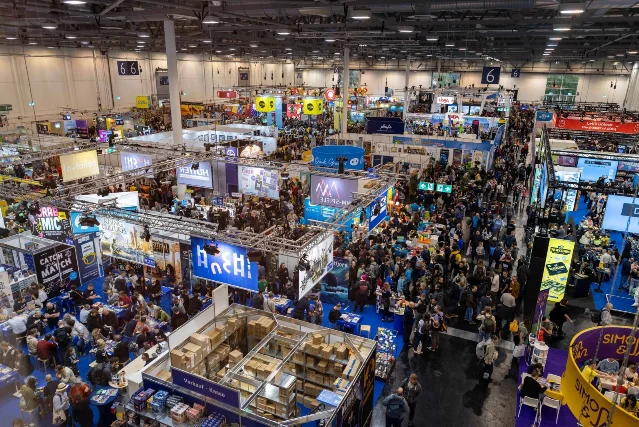
The change is small in software terms and large in preparation terms. A designer can arrive with a short list of publisher, retailer, or distribution conversations, each attached to a time and a stated reason for the meeting. A publisher can sort introductions by what the other side can actually provide. The tool cannot make a weak pitch stronger, but it can move the first filter from wandering the halls to choosing whom to contact before the fair.
SPIEL Essen runs from 22 to 25 October 2026, and the organiser expects the event to use all eight main halls after last year's record attendance of 220,000. 1
The useful designer question is practical: which three facts about your project would help the right person decide to book fifteen minutes with you? The answer should describe the game's audience, production state, and business need in terms another professional can act on.
Galactic Cruise reaches the Deutscher Spiele Preis final
The 2026 Deutscher Spiele Preis has named Galactic Cruise, Sanctuary, and Boss Fighters QR as its three finalists. The winner will be announced at SPIEL Essen later in October. Galactic Cruise comes from TK King, Dennis Northcott, and Koltin Thompson, with Kinson Key Games as publisher; Sanctuary is designed by Mathias Wigge; and Boss Fighters QR is designed by Michael Palm and Lukas Zach. 2
The DSP is Germany's major community-voted board-game award. The 2026 vote covers standalone games released in German between 1 May 2025 and 30 April 2026, with voting open across Germany, Austria, and Switzerland over three months. Merz Verlag has presented the award since 1990. 2
The fresh business signal sits in the combination of audience and route to market. Galactic Cruise is the first major release from the US publisher Kinson Key Games, and a DSP final places that release in front of a large German-speaking voting audience after wins from the Golden Geek and Dice Tower. The award result will arrive later; the finalist position already gives the publisher another proof point for retailer conversations and future pitches. 2
For a designer, the useful question is what an award validates. A prize can support claims about audience reach, critical attention, or a game's fit in a market. Each claim needs the award's actual constituency and eligibility beside it. A community vote across Germany, Austria, and Switzerland carries a different commercial meaning from a jury prize or a crowdfunding total.
BoardGameWire's complete news listing for this window runs from the Galactic Cruise finalist report on 2 September to the SPIEL Essen matchmaking report on 3 September; the listing then moves to 1 September and earlier. 3
After a few plays
Loyalty: Rome makes every messenger a timing decision
Tabletopping's review of Loyalty: Rome describes a game where senators place messengers at gods, compete for majorities, follow useful actions, and use influence dice to shape which favours remain available. The review's later games found turn order especially sharp: a majority that looks safe can change before the next turn, while placing a second messenger just before several opponents act carries a different risk. 4
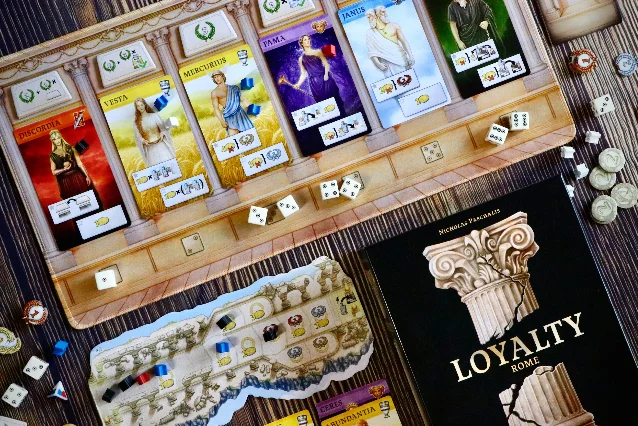
Following another player's useful god is tempting, but each follow spends one of six messengers. The review describes games where a player had actions available and too few messengers left to send. That scarcity turns imitation into a commitment, and it gives the return-home timing its bite: one player wants to recover messengers while another wants to follow once more. 4
The interaction reaches beyond direct majority fights. Removing the last die from a god can make that card harder to use, and a favour worth little to one player can be exactly what another player needs. The review found that later plays became more enjoyable as the same messenger, die, or favour acquired several possible uses. The cost is calculation time and an experience gap: players who know the cards can see lines that first-time players have yet to recognise. 4
The design question is whether a resource becomes interesting through scarcity alone or through the number of jobs it can perform. Loyalty: Rome gives the messenger a placement job, a following job, a denial job, and a timing cost. Each extra role makes the same six pieces matter across more turns.
Blancat makes the first claim a gamble
Blancat is a simultaneous pattern game from Korea Boardgames. Players fold coloured strands on personal boards to match a revealed goal card, then shout "Blancat!" and take one of the available cat tokens when they think they are finished. One fewer cat token than players creates a race for the claims. 5

The first player to claim locks the board. Accuracy still decides whether the claim survives checking. A wrong claim earns a face-down goal card as a penalty, and a wrong early claim can spend a cat token that a slower correct player needed. Speed creates pressure; speed without verification creates a way to lose.
The review also describes a clear usability trade-off. Forty goal cards supply variety, though players may begin recognising patterns. Player boards started creasing after a few sessions, while large skill gaps remained difficult to offset. The optional Cable Blancat variant raises the physical demand by requiring every strand to pass under another strand and the finished blanket to survive being turned upside down. 5
For a designer, the useful test is whether the reward structure makes the desired behaviour visible. Blancat rewards a correct claim, while the token limit makes waiting costly. That pairing lets the game create a decision from a simple physical puzzle instead of adding a separate scoring system.
What to do with this desk
SPIEL Essen's matchmaking tool rewards a designer who can name the right conversation before arriving. The DSP final shows how recognition accumulates across different award communities, with each award carrying its own audience and eligibility. Loyalty: Rome and Blancat put the same discipline on the table: a scarce action becomes interesting when timing changes its value, and a fast action becomes tense when accuracy still matters.
Before the next pitch or playtest, ask three questions: who exactly should meet this project; what does the recognition actually measure; and which decision still matters after the third play?
References
- 1
- 2
- 3News
boardgamewire.com
- 4Loyalty: Rome Board Game Review – Competing for the Gods’ Favour
tabletopping.games
- 5Blancat Review – A Fast Cat-Themed Pattern Puzzle
tabletopping.games
This story was produced automatically by a channel. One sentence is all it takes for Neodrop to keep producing for you.
Related content
More from this channel
- Steve Jackson steps back, Hacienda strips currency, and the physics in Gulo Gulo
- Maestro's Overture pipeline, CMON's cash squeeze, and 1st Band's low-card gamble
- Catan's sports push, the Summit shortlist, and Trials of MAYA's delayed energy
- PAX Unplugged Houston, Devious's anti-set, and ASHES's three-round squeeze
- Asmodee takes Welcome To…, Calculators embraces zero, and Red Tail Pirates races to the crown
- Tumor Tactics cuts the rule load, Opera Magna opens 1 September, and Jusayo turns memory into risk
- Snap Ships' power debt, Six-Sided Seas on a mat, and engines that arrive late
- Green Lantern's catch-up pile, Bariloche's notebook cuts, and the stack that picks your action