GLP-1 有效,但约一半人一年内停药:Huberman Lab 谈肠道、纤维与减重
哈佛医学院教授、麻省总医院布莱根介入胃肠病学主任 Chris Thompson 用 2 小时 28 分讲清肠道如何调控饥饿与血糖:纤维与发酵食物各自负责什么,GLP-1 药物为什么有效却有一半人一年内停用,以及从减重手术史到基因治疗的前沿尝试;文末附全量中英双语逐字稿。

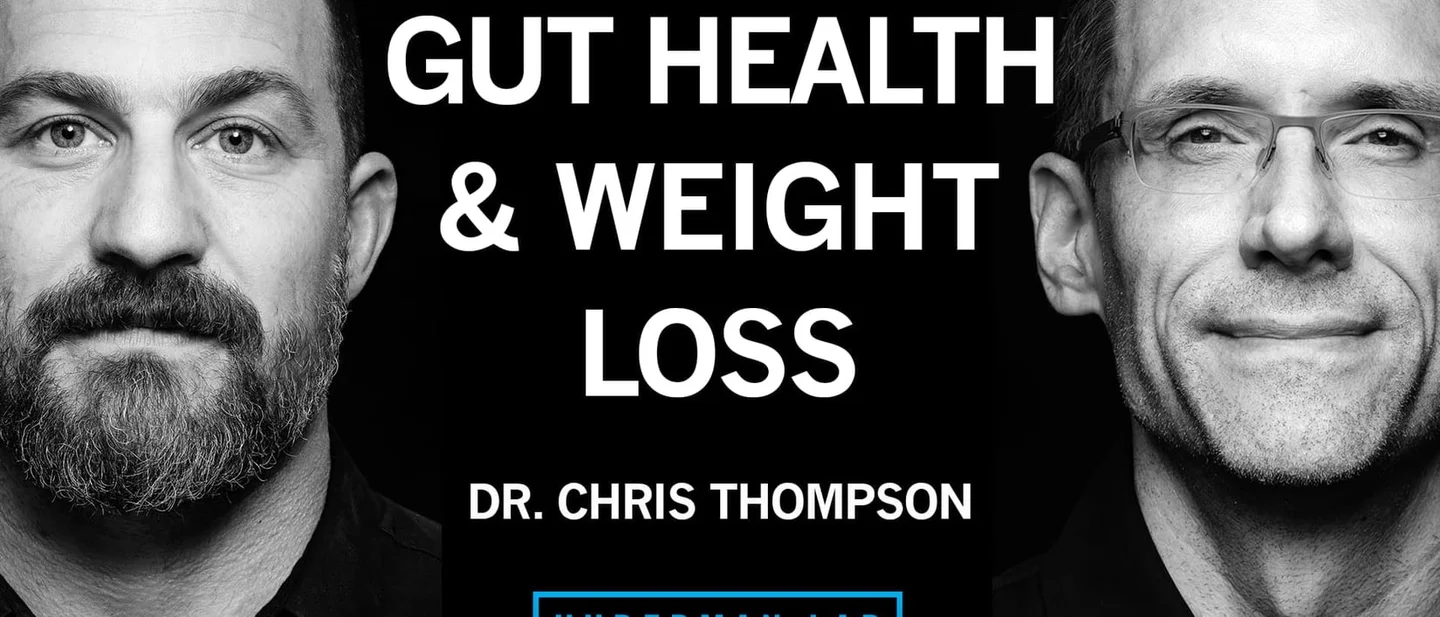
《Huberman Lab》由斯坦福医学院神经生物学与眼科学教授安德鲁·休伯曼(Andrew Huberman)主持,专门把科学机制翻译成日常可用的做法。2026 年 9 月 21 日上线的这一期换了领域:嘉宾是哈佛医学院医学教授、麻省总医院布莱根(Mass General Brigham)介入胃肠病学主任、体重管理与健康中心联合主任克里斯·汤普森(Chris Thompson),时长 2 小时 28 分,主题是肠道健康与减重——你的消化道怎么调控饥饿、饱腹和血糖,菌群与纤维在其中做什么,哪些检查与干预真的有用,以及 GLP-1 药物与非药物的减重路径各自把问题解决到了哪一步。1
这期的看点集中在四个地方:一是把「肠道是第二大脑」这类说法拆回具体的解剖与激素;二是给了 GLP-1 药物一个不站队的评价——他很感激这些药,也直言不完美,包括真实的停药率与肌肉流失;三是他讲了一段从 1950 年代到今天的内镜与外科减重史,里面藏着「为什么有些手术能立刻治好糖尿病」的线索;四是几项还没获批的前沿尝试,包括把 GLP-1 变成一次注射的基因治疗。1
先记住三件事
- 食欲的主控台是激素,不是意志力。 胃底分泌的胃饥饿素(ghrelin)负责「饿了」,十二指肠的 CCK、远端小肠与结肠 L 细胞的 PYY 和 GLP-1 负责「饱了」,脂肪细胞的瘦素(leptin)负责长期设定点。这期里几乎每一个干预——药物、手术、内镜、纤维——都是在动这几个旋钮。1
- GLP-1 药物有效,但不完美,而且大多数人不会一直用下去。 他给的数字是:每个月超过一百万人停用 GLP-1,约 30% 在第一个月停,约 50% 在一年内停。原因包括针头疲劳、恶心、肌肉流失;而且减重时约三分之一掉的是瘦体重,反复停药复胖时回来的是脂肪,身体成分一轮比一轮差。1
- 纤维、发酵食物、运动与「更早发现代谢问题」是地基。 他的判断很直接:如果不把饮食、纤维、胰岛素尖峰和运动这些基本功做好,手术、内镜和药物最终都会失败。1
说这些话的人是谁
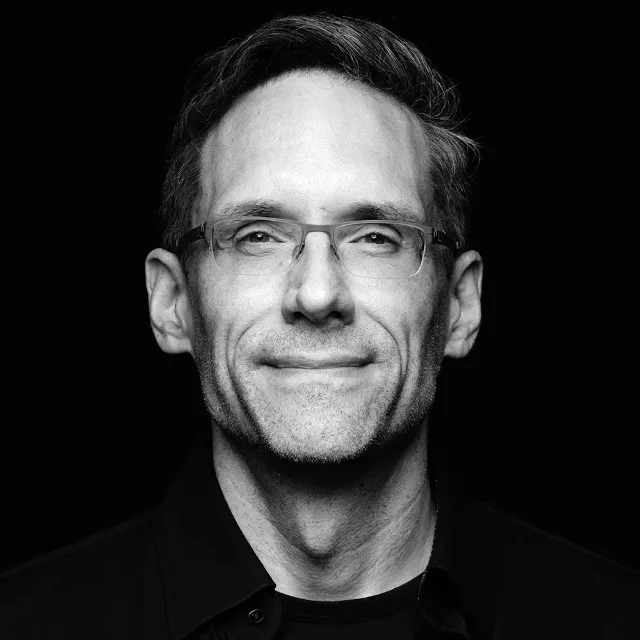
汤普森是哈佛医学院医学教授、麻省总医院布莱根介入胃肠病学主任,同时是体重管理与健康中心的联合主任,也是创业公司 Everself 的联合创始人。2 他在节目里的角色很特别:既是做内镜手术的临床医生,也是做研究的人——本期后半段讲的前肠排除假说、内镜袖状胃成形术、磁吻合,很多是他自己参与或主导的工作。休伯曼在开场也给了理由:他被认为是参与开创了整个 GI 与代谢健康治疗方向的医生之一。1
一条有分区的管道,同时是一个内分泌器官
休伯曼请他从最基础的地方讲起,他的回答先把「肠道」这个词拆开:它当然管消化,但它同时是一个内分泌器官,所以才会被人叫作「第二大脑」;而且它按段分区,每一段有各自的工作,也各自有各自的病。
- 食管:任务只是安全地把食团送进胃,壁比较厚,能承受粗糙食物。出问题时有贲门失弛缓症(食管下端不放松,吞咽困难、胸口有压力、食物返上来,他每周都能见到);长期反流会损伤食管内壁,形成癌前病变巴雷特食管,或造成瘢痕狭窄。
- 胃:闻到食物气味就会放松、撑开准备容纳一餐;胃底(fundus)暂存食物并分泌胃饥饿素,胃体研磨、分泌胃酸,胃窦把食物一点点推给十二指肠。溃疡、瘢痕或胃轻瘫都会打乱排空。
- 小肠:内衬只有一层细胞厚,表面积加起来约一个匹克球场大小,主要任务是吸收热量再往下送。他在这一段埋了一个他后面会展开的判断:小肠在代谢病、肥胖和糖尿病里可能处在核心位置。
- 结肠:主要吸收水分,主角是菌群;菌群与人体协作产生短链脂肪酸,其中最重要的是丁酸盐(butyrate),并在这儿产生 GLP-1。1
结肠癌筛查是他给的一条实用提醒。他指出筛查起始年龄已经移到 45 岁;有家族史的人从 40 岁开始,或比亲属确诊年龄提前 10 年。粪便基因检测每隔几年做一次,结肠镜正常可以每 10 年一次;CT 结肠成像用得较少。他的领域里结肠癌是最常见的癌症来源,而筛查确实在改善生存率——因为内镜能在还只是癌前病变时就把它摘掉,患者当天回家。13
纤维、抗性淀粉、发酵食物:各自负责什么
先学一条自检标准。 他给的排便规则很好记:一天不要超过三次,也不要超过三天没有一次;理想是一次成形的便,或几次成形便,而不是一粒粒的羊粪状。超过三次偏稀,超过三天提示你该想想纤维了。关于摄入量,两人对了一遍旧数字——成年男性每天约 35 克、女性约 25 克——他说「差不多」,但更取决于纤维的质量。14
抗性淀粉是他举的实证例子。 他提到两项研究:一是用 RS2 型抗性淀粉(大致相当于生的粉末状马铃薯类淀粉)每天补到约 40 克,脂肪肝显著改善,而体重相对稳定;二是用钳夹试验看胰岛素敏感性,同样看到改善。他的结论是:纤维不只管通便,它同时影响肝脏、胰岛素敏感性和菌群。5
发酵食物和纤维不是一回事。 休伯曼提到斯坦福贾斯汀·索嫩堡(Justin Sonnenburg)团队的研究:在高纤维和发酵食物两种饮食里,发酵食物提高了菌群多样性、降低了炎症标志,而高纤维组在这一项上没有做到。汤普森的解释是发酵食物同时起益生元与益生菌的作用,等于既播种又施肥,而且其中一部分已经被预消化。他还纠正了一个常见误解:你不能靠直接吃丁酸盐补到结肠,真正发生的是交叉喂养——第一层菌把纤维分解成乙酸、乳酸,别的菌再把它转成丁酸盐。丁酸盐的作用包括喂养结肠细胞、维持紧密连接、参与饱腹与 GLP-1 通路。6 他自己的做法是常吃开菲尔、泡菜、酸菜、酸奶和康普茶。
关于间歇性禁食,他的表态需要标注清楚:他认为有肠道问题的人不必因此回避限时进食,因为间歇性或限时进食的收益可能大于风险,而且频繁进食会让胰岛素一直处在高位。他也提到把进食窗口放在更早时段的可能好处。这一段是他基于临床与个人经验的判断,节目里没有给出针对菌群的对照证据。1
低纤维的机制链是这期的开场白,也是全期最重要的一条因果:纤维不够,菌群会转而啃食你的黏液层,丁酸盐随之减少,紧密连接受损,问题像滚雪球一样层层放大。他的一句话版本是:喂你的微生物,否则它们会来吃你。
幽门螺杆菌、溃疡与「多重打击」
休伯曼把话题引向教科书式的故事:溃疡曾被归因于压力和情绪,后来发现是细菌。汤普森补了细节——巴里·马歇尔(Barry Marshall)提出幽门螺杆菌致病时没人相信,他自己吞下细菌并真的得了溃疡;这项发现后来获得 2005 年诺贝尔生理学或医学奖。7 他还说幽门螺杆菌并非现代产物:约五千年前的冰人奥茨胃里就有。
这一节真正值得注意的是他对复杂性的诚实。他讲到胃旁路术后的溃疡并不一定是细菌引起的:可能是相对缺血,2 型糖尿病和吸烟会造成微血管缺血;手术后远端小肠接到胃上,但那一段缺少胰腺分泌的碳酸氢盐来中和胃酸;如果胃小囊太大、还在产酸,下面的肠段就更没有防御。他的结论很克制:「可能是多重打击,我们并不完全理解。」1
GLP-1:收益、限制,和真实的停药图景
先看一组依从性数字。 他说每个月有一百多万人停用 GLP-1,约 30% 在第一个月停,约 50% 在一年内停——这和降压药、降脂药的情况类似。原因包括针头疲劳、不想长期用药、加量期的恶心、肌肉流失,以及对长期超生理剂量用药的未知。在他自己的内镜诊疗实践里,超过 85% 的患者已经用过 GLP-1 药物,而且多数人正在挣扎或已经停用。1
微剂量这一节值得单独说,因为它是节目的原创信息,但也要标注清楚:这来自他的患者实践与个人临床经验,不是正式推荐。他说第一次是从一位本身是医生的患者那里听到的做法——觉得太贵、感觉不好,于是把笔剂注入无菌瓶,用胰岛素针抽取少量自己注射,结果不恶心、体重维持住了。他的用法是:先用能减重的剂量把体重降下来,之后不停药,而是减到能维持体重、感觉好、用药最少的那一点。「这不是设计来停用的药,这些某种意义上是要终身使用的。」
为什么不能硬停? 他用身体成分解释:用司美格鲁肽这类药物减重时,约三分之一掉的是瘦体重;如果停药复胖,长回来的是脂肪而不是肌肉,于是每循环一次身体成分都更差。他的建议是停药要有计划——微剂量,或者桥接到内镜、手术这类维持方案。他还提到,担心肌肉流失的人应该先做一次 DEXA(双能 X 线吸收测定)看肌肉量,肌肉本来就不足的人要三思,并且同时开始力量训练。1
副作用里最被忽略的一条是「欲望整体下降」。 休伯曼提到,食物噪音(food noise,指脑子里反复出现的进食念头)降下来的同时,有的人酒精欲望下降,甚至「生活的欲望」也下降。汤普森也提到极少数人出现眼部事件的报告,主张对眼结构做筛查,但他强调这不是普遍现象。至于患者停药的常见理由,他给的第一位是肌肉流失——从「Ozempic face」这种外观变化,到少数真正发展到肌少症的人,通常是不太运动、本就有易感因素的人。
饥饿与饱腹:激素主控台上的六个旋钮
- 胃饥饿素(ghrelin):胃底分泌的饥饿激素,饭前升高、饭后下降,离开肠道到大脑刺激饥饿。他说他们正是利用这个机制在内镜与手术中取得疗效。
- CCK:食物离开胃后由十二指肠第一部分分泌,让胆囊排胆汁,同时是饱腹信号。
- PYY 与 GLP-1:远端小肠与结肠的 L 细胞分泌,是饱腹的主力;休伯曼形容 GLP-1 和 GIP 的关系像「蝙蝠侠与罗宾」。
- GIP:由 K 细胞分泌,效力比 GLP-1 稍弱。他给了一个具体解释:GIP 可能减轻恶心,从而让你能用更高的 GLP-1 剂量而少受罪,同时改善胰岛素敏感性。
- 胰高血糖素(glucagon):胰岛素低时它高,主要任务是「烧脂肪」。把它的通路一起激活,理论上能保肌并多燃脂。
- 瘦素(leptin):脂肪细胞分泌、与脂肪量大致成正比,是长期设定点的恒温器。它当年被发现时被寄望成减肥药,结果失败;他的解释是瘦素抵抗——肥胖者瘦素长期偏高,大脑受体长期被泡在里面,加上低度炎症,最后不响应。1
多靶点药物就是从这里长出来的。休伯曼提到瑞他鲁肽(retatrutide)同时作用 GLP-1、GIP 和胰高血糖素三条通路,说三期数据看到约 30% 的体重下降;礼来 2026 年 9 月 15 日的新闻稿给出的 TRIUMPH-2 结果是:肥胖或超重合并 2 型糖尿病的成年人,80 周时体重最多平均下降 22.5 公斤(20.8%),糖化血红蛋白最多下降 1.6 个百分点。8 两人的共同判断是:与其只把一个杠杆推到极限,不如同时动几个通路,用更低剂量换更少副作用。
加工食品那一节给了数字。 汤普森引用的研究把约 20 位受试者随机交叉安排到「全食物」和「超加工食品」两种自由进食的饮食里,加工食品组每天多吃约 500 千卡。他的解释是加工食品更容易消化、血糖峰值更大、食物热效应更低、纤维更少,对菌群也不友好。9
这段药史要从 1930 年代讲起,也要从一只毒蜥讲起
汤普森的叙述把 GLP-1 拉回了一条很长的线索。1930 年代的伦敦,研究者把动物十二指肠磨碎、乳化后注射进另一只动物的血管,看到血糖下降,于是有了「肠促胰岛素」(incretin)这个词——名字借自更早的促胰液素(secretin)。后来用同一剂量的葡萄糖做口服与静脉对照,发现口服引起的胰岛素反应大得多,这就是肠促胰岛素效应。再往后,GLP-1 被克隆出来,也被发现很快会被 DPP 酶切掉——它的 N 端既容易挨刀,又正是结合受体需要的部分。1
转机来自美国布朗克斯。内分泌学家约翰·恩格(John Eng)注意到希拉毒蜥(Gila monster)长时间不进食仍能维持血糖稳定,于是在它的毒液里找出了一个新肽——毒蜥外泌肽-4(exendin-4):结构与功能都像 GLP-1,但不容易被降解,作用能持续数小时。它的人工版本艾塞那肽(exenatide)在 2005 年获批上市,成为后来所有 GLP-1 类药物的起点。10
从胰腺活检针,到「更早发现代谢问题」
在讲代谢之前,他先讲了自己的技术起点。做介入胃肠病学培训时,他学的是内镜超声(EUS):经口进入胃或小肠,用超声探头看腔外结构,也能穿刺、活检、消融。当时胰腺癌的诊断率大约五五开,他的导师拿针给他看,说这针根本不能可靠诊断胰腺癌。问题在于那根针是按皮下注射的思路设计的——为的是不损伤地分开组织、输送药物,而不是取组织。几年后他和工程师一起改了针尖斜面的设计,做出了能取到胰腺组织、又不引起胰腺炎的针。他的评价是:真正的价值在于更早诊断、保住细胞结构,从而能做精准医学和药物反应预测。1
然后他给了这期最实用的一套顺序。 现在大家等到糖化血红蛋白(A1C)升高或血脂异常才行动,但失调有可预测的顺序:
- 热量过剩,在西式饮食里常常是葡萄糖过多。
- 血糖尖峰——用连续血糖监测(CGM)就能看见。如果吃某样东西后血糖冲到 200,那就是你的敏感点,可以调整吃法,比如先吃脂肪,或换掉这样食物。
- 空腹胰岛素升高。他引用 Whitehall II 研究:这项对英国公务员的长期前瞻研究随访 10 到 15 年,发现空腹胰岛素高的人更可能在多年后患糖尿病,可以提前约 15 年看到信号——但没人常规查空腹胰岛素。11
- 异位脂肪堆积:皮下脂肪是健康的能量库,问题出在内脏脂肪和器官相关脂肪。
他还提到一项基于美国国家健康与营养调查(NHANES)的横断面研究:按较新的切点,只有约 12.2% 的美国成年人处在最佳代谢健康状态,连体重正常的人里也只有不到三分之一。12
为什么这些检查普及得这么慢? 两人的对话给了一个现实解释:医学要等随机对照试验、更多随机对照试验、meta 分析和指南;而且很多这类检查与操作是择期的,不是必须的。汤普森补充,即使 FDA 批准了、评估严格,很多医生仍不愿转诊——原因可能是文化、学新技术耗时、保险不覆盖。休伯曼则转述了业内一句非正式说法:遇到这类反弹,圈内人几乎总会说「给它 20 个月,它会成为标准」。这句是转述,不是证据。
减重手术与内镜:从「吸收不良」走到「重置前肠」
汤普森把减重手术的历史讲成了一条试错曲线。1950 年代,明尼苏达大学最早做的是空肠—回肠绕道,思路是让你吸收不到:患者确实瘦了,但留下很长一段没有食物通过的盲肠,细菌过度生长;没被吸收的脂肪在肠道里结合钙,草酸盐反而被吸收,在肾脏里结合钙,最终导致肾衰竭。他的评价是「很糟糕」「一场灾难」,而且持续了很多年。1960 年代中后期,马森的胃绕道术取代了它。后来又有可调胃束带、垂直束带胃成形术,直到今天的袖状胃。这些操作表面上分「限制型」和「吸收不良型」,但他强调机制和名字并不一致。1
他自己的线索来自一次意外。 2003 年他遇到一位胃绕道术后的患者:小胃囊和原来的胃之间出现瘘管,患者反流、体重回升、糖尿病复发。他用一台经口缝合器械把瘘管封上——器械和操作各自都获批,但「封闭瘘管」这个用途没有获批。结果反流停止、体重下降,糖尿病几乎立刻消失。这让他转向肠道激素研究。同事用 GK 大鼠做实验:一组只排除前肠(十二指肠和近端空肠),另一组做胃空肠吻合但食物仍能进入前肠;结果只有前肠排除那一组糖尿病显著改善。假说于是变成:前肠里可能存在某种「抗肠促胰岛素」的机制。他在瘘管研究里的数据是:封闭的人有 60% 糖尿病缓解,不封闭的无人缓解。13
按这个思路做出来的几种方案,监管状态各不相同:
- 十二指肠内衬(套管):经内镜放置、锚定后弹簧打开,食物走套管内,消化酶走套管外,两者在数英尺内不混合。糖化血红蛋白下降约 1 个点,体重下降约 7%。它是植入物、最终需要取出,仍在临床试验。
- 回肠移位:巴西有医生把远端小肠上移到靠近十二指肠的位置,用于体重不高的 2 型糖尿病,糖尿病消失了,但体重没降,因为没有限制也没有改变吸收。汤普森试过经内镜取回肠组织、培养后注射到前肠,没有成功。
- 十二指肠消融:一位心脏科同事建议直接消融十二指肠(可用蒸汽、热水等手段),逻辑是「十二指肠生病了」,重置黏膜也许有用。后来有公司推进,糖化血红蛋白下降超过 1 个点,但体重下降不明显。他还提到,有研究提示从 GLP-1 停药后使用这个治疗可以防止体重反弹——他明确说这些研究尚未发表。1
胃的那一端也在被改造。 内镜袖状胃成形术(ESG)是他在 2012 年开发的:经口把胃折叠成更小的胃囊。它起两个作用——食物更快拉伸胃壁,激活迷走传入信号告诉大脑「饱了」;食物在胃里停留更久,抑制胃饥饿素。因此减重之后不太会因为 ghrelin 飙升而剧烈反弹。顶级中心单用 ESG 减重约 18%;如果在胃底把分泌胃饥饿素的细胞一并消融,数字可以升到远超 20%、甚至 25%。他还讲了磁吻合:用上下两条内镜释放环状磁铁,把空肠与回肠连起来,让食物直接通过,产生大幅的 GLP-1 峰值;现在有人把这种吻合与内镜缝合结合,几乎复制出完整的胃绕道效果。14
别忘了基本功的账。 休伯曼提到 Look AHEAD 研究:十年下来平均减重约 6%,却没有看到心血管结局的改善——这正说明单靠饮食和运动有多难,因为身体会反制。15 汤普森的说法是:把纤维、饮食质量、避免胰岛素尖峰、多动这些基础做好,否则程序、手术、药物最终都会失败。
「肠漏」是真的,但不是万用解释
这一节是他参与研究最深的部分,也是他表态最谨慎的部分。研究上,过度喂养的小鼠肠道更长更重、绒毛更长;人类样本里,肥胖或 2 型糖尿病患者的绒毛更长更厚、炎症细胞更多,自然杀伤细胞增加约 8 倍、巨噬细胞增加约 1.5 倍;免疫染色显示紧密连接与支架蛋白更少、更紊乱。去年一项研究把 MASH(代谢功能障碍相关脂肪性肝炎)患者的小肠活检培养成类器官,发现它们的紧密连接发育更差,连相关蛋白的 RNA 都下调。16 另一组用 51-铬 EDTA 做通透性测试:MASH 患者的示踪剂直接进了血液,非 MASH 者没有,已治疗的乳糜泻患者也没有。17
机制链条是:肠道先经门静脉到肝(脂肪例外,走淋巴);如果细菌产物 LPS 穿过紧密连接,与 TLR4 结合,启动 NF-κB 等炎症级联;有研究把 LPS 注射给健康人,炎症标志物飙升,并诱发了胰岛素抵抗。他的边界说得很清楚:「肠道通透性增加是 100% 真实的」,但他不愿意把一切都归给它,也提醒「leaky gut」这个词在公众和医学里的定义并不一致。
甜味剂、果糖、种子油与 Omega-3:把争议放回原位
这几个问题他都没有给戏剧化的答案。人工甜味剂,他的判断是「肯定比高果糖玉米糖浆好」,但指出它们通常存在于高度加工食品里,很难和整个饮食结构分开看。果糖,他不担心水果里的:因为水果带着基质;但含糖饮料吸收快,果糖只能由肝脏处理,等于直接冲击肝脏。多不饱和脂肪与种子油被讨厌,多半是因为它们出现在不健康的加工食品里;真正的问题在氧化、反复油炸产生的反式脂肪。Omega-3 他吃得比较随意——每周吃几次富脂鱼,也用药用级高剂量 Omega-3 以避免汞摄入;但他明说这类数据是混合的,不主张人人补充,应该先看有没有缺乏,像维生素 D 一样。至于 Omega-6 与 Omega-3 的比例,他的原话是「我甚至不认为你需要担心那个比例」。1
运动、设定点与「最小必要干预」
他给患者推荐的运动很具体:HIIT 对动员内脏脂肪很好,因为内脏脂肪上有 β 肾上腺素能受体;长期来看最重要的是力量训练,再加少量 Zone 2 有氧。
体重设定点这一节值得记住他的措辞:设定点不一定是某个点,而是一个被防御的范围。当你用极端节食把体重压下去,身体会反制——静息能耗下降,GLP-1、PYY、CCK 等饱腹激素下降,胃饥饿素飙升,肌肉做功效率提高约 25%。NIH 对《超级减肥王》参赛者的随访甚至发现他们每天少烧约 500 千卡。18 他的评价是:GLP-1 药物能对抗其中一部分机制,但不解决全部,尤其不解决胃饥饿素那条线。
也正因为如此,他谈未来方向时讲的是按肥胖表型做最少必要的干预——先看这个人的问题出在限制、迷走信号、胃饥饿素还是 GLP-1 峰值,再决定用哪一种或哪几种组合,而不是所有人都上同一条最强路径。休伯曼的总结很直观:生物学上不要只把一只杠杆推到极限。
还在路上的两件事:AI 与基因治疗
AI 在手术室里目前是「副驾」。 它可以实时提示结构、在你缝合时数针数并提醒针距是否够近、判断胃缩小了多少体积,甚至在手术结束时给一个评分;这些目前主要在研究中心,还没有广泛可用。它也能让过去需要三小时准备的影像配准变得近乎自动,或者用超光谱成像给组织做「指纹」,帮助看清肿瘤边界。他还讲了一个很具体的判断:机器人能明显缩短复杂手术的学习曲线,让新手更快接近专家水平,但真正顶尖的外科医生不用机器人可能依然更好——所以机器人不是万灵药,它改变的是分布。他还提到结肠镜的腺瘤检出率一度被公开,结果患者集中去找高分医生、等待时间过长,后来停止了;这提示客观指标要用得稳妥。
GLP-1 基因治疗是这期最前沿的一块,也是最不确定的一块。做法是:用病毒载体携带 GLP-1 基因,配一段只在 β 细胞里活跃的胰岛素基因启动子;通过内镜超声把载体注射到胰腺尾部,而不是静脉注射,避免跑到别的组织。这样当患者按营养需求分泌胰岛素时,GLP-1 会在同一时间、同一批囊泡里一起释放,在胰腺局部以自分泌/旁分泌方式起作用。动物实验里,接受转基因的肥胖小鼠与用司美格鲁肽的小鼠都减重,随后进入平台;把司美格鲁肽组再随机分成停药与转基因两组,转基因组的体重回到同样的稳定点,停药组则全反弹。他说这项治疗刚在荷兰进入临床试验,希望未来某些病不是长期吃药,而是一次注射。1
听这期会反复遇到的几个词
- GLP-1(胰高血糖素样肽-1):进食后由小肠和结肠的 L 细胞分泌的激素,作用包括促胰岛素、延缓胃排空、给大脑饱腹信号。药物把它抬到远超生理的水平,所以既是「放大正常生理」,也带来恶心这类副作用。
- GIP:另一种肠促胰岛素,与 GLP-1 协同;替他解释 GIP 时,汤普森强调它可能减轻恶心,让 GLP-1 能用到更高剂量。
- 肠促胰岛素效应(incretin effect):同一份葡萄糖,口服引起的胰岛素反应远大于静脉注射——它证明了肠道在血糖调控中不是旁观者。
- food noise(食物噪音):脑子里反复冒出的进食念头。GLP-1 药物让很多人第一次意识到自己一直在承受这种背景噪音。
- 瘦体重与肌少症:瘦体重指除脂肪以外的部分(肌肉、骨骼、器官)。减重时约三分之一来自这里;肌少症指肌肉量低到影响功能。
- A1C、空腹胰岛素、CGM:糖化血红蛋白反映近两三个月的平均血糖,空腹胰岛素反映代偿状态,连续血糖监测看的是实时曲线。他的排序是:等到 A1C 异常就已经晚了,先看尖峰,再看空腹胰岛素。
- EUS(内镜超声)与 ESG(内镜袖状胃成形术):前者是经口进入、用超声看腔外并取活检的工具;后者是经口把胃折叠变小的减重操作。
- 前肠排除:把十二指肠和近端空肠排除在食物通路之外。这是从胃绕道术为什么能治好糖尿病这一现象里长出来的假说。
哪些是证据,哪些是经验
这期内容密度高,边界尤其重要,节目里他自己划出的界线包括:溃疡机制「我们并不完全理解」,属于多重打击;间歇性禁食对菌群的影响是他的临床与个人判断;GLP-1 微剂量来自患者实践,不是推荐方案;「阻力训练能抵消肌肉流失」他说肯定有帮助,但不熟悉以此为主要终点的研究;十二指肠消融与停药后防反弹的研究他说「尚未发表」;「肠漏」这个词在公众语境里的用法有歧义;种子油、Omega-3、牛油果油的争议多数还没有定论;GLP-1 基因治疗刚进入临床试验,适用人群与长期效果都未知。至于 AI 辅助手术与自动评分,目前仍在研究与早期实践阶段。
把这份清单和前面那些机制放在一起,这期的价值其实不在于给出一个「照着做」的方案,而在于让读者能分辨:哪些是已经进入临床的工具,哪些是正在被验证的假说,以及为什么一个做了几十年内镜手术的医生会把饮食、纤维和运动放在药物史的开头讲。
完整中英双语对照逐字转录稿
声明:本逐字转录稿基于《Huberman Lab》2026 年 9 月 21 日发布的第 299 期《Best Tools for Gut Health & Weight Loss | Dr. Chris Thompson》官方完整音频(时长 8873 秒,约 2 小时 28 分)自动识别生成,原始文字不加工、不删减。讲话人身份依据节目开场自我介绍、官方嘉宾信息与内容判据(提问、串场、赞助口播为主持人;讲解机制、举证、讲临床经验为嘉宾)判定:机器声纹分离在本期两条声纹高度混杂,少数快速交替处的姓名归属仅供参考。对话以讲话人为单位分段,每段开头标明讲话人姓名,采用中英双语对照(每段先列英文原文,紧随中文译文);时间轴每 10 分钟标注一次。[cite:1|Huberman Lab 官方单集页面|https://www.[hubermanlab.com/episode/best-tools-for-gut-health-and-weight-loss-chris-thompson]](https://hubermanlab.com/episode/best-tools-for-gut-health-and-weight-loss-chris-thompson]](https://www.hubermanlab.com/episode/best-tools-for-gut-health-and-weight-loss-chris-thompson])) cite:2|官方音频直链|[https://traffic.megaphone.fm/SCIM7025523715.mp3]
00:00 - 10:00
克里斯·汤普森博士(Dr. Chris Thompson):
There's all sorts of evidence that if you don't have a lot of fiber, your microbiome's not healthy. Feed your microbes, you know, they need to be fed. And what they eat is fiber, okay? That's what you want them eating. You want them eating fiber. And if you're not feeding them fiber, they'll eat your mucus layer, okay? And we already talked about how thin that barrier is. And all of a sudden they start eating your mucus layer. They're not producing the butyrate you need. And the butyrate's needed to maintain the tight junctions. So there's layers to this. It's like a snowball effect that if you're not feeding the microbiome and keeping it healthy, you're gonna run into all sorts of trouble. Welcome to the Huberman Lab Podcast, where we discuss science and science-based tools for everyday life.
有各种证据表明,如果你摄入的纤维不多,你的肠道菌群就不健康。要喂养你的微生物,你知道的,它们需要被喂养。而它们吃的就是纤维,好吗?这就是你希望它们吃的东西。你希望它们吃纤维。如果你不给它们提供纤维,它们就会吃掉你的粘液层,好吗?而我们已经谈过这个屏障有多薄。突然之间,它们开始吃掉你的粘液层。它们不会产生你需要的丁酸盐(butyrate)。而丁酸盐(butyrate)是维持紧密连接所必需的。所以这其中有层层关系。这就像滚雪球效应,如果你不喂养肠道菌群并保持其健康,你会遇到各种麻烦。欢迎来到 Huberman Lab(休伯曼实验室)播客,我们在这里讨论科学以及基于科学的日常生活工具。
安德鲁·休伯曼(Andrew Huberman):
I'm Andrew Huberman, and I'm a professor of neurobiology and ophthalmology at Stanford School of Medicine. My guest today is Dr. Chris Thompson. Dr. Chris Thompson is a professor of medicine at Harvard Medical School. He is also the chief of interventional gastroenterology at Mass General Brigham in Boston. He is a renowned expert on the intersection of gastroenterology, metabolism, nutrition and obesity medicine. And in today's episode, Dr. Thompson explains how to improve your gut health, including the roles of your diet, gut microbiome and gastrointestinal motility, as well as how your gut communicates with the rest of your body, which of course includes the gut microbiome, but as you'll learn today, much more.
我是安德鲁·休伯曼,我在斯坦福医学院担任神经生物学和眼科学的教授。今天我的嘉宾是克里斯·汤普森。克里斯·汤普森是哈佛医学院的医学教授,同时也是波士顿麻省总医院布莱根(Mass General Brigham)介入性胃肠病学的主任。他是胃肠病学、代谢、营养和肥胖医学交叉领域的知名专家。在今天的节目中,克里斯·汤普森解释了如何改善肠道健康,包括饮食、肠道肠道菌群和胃肠蠕动的作用,以及肠道如何与身体其他部分进行交流,当然包括肠道肠道菌群,但正如您今天将了解的,还有更多内容。
安德鲁·休伯曼(Andrew Huberman):
Dr. Chris Thompson is a guest on this podcast because he's not just a GI tract and obesity medicine expert. He's also credited with having created an entire new field of treatments and perspectives on GI and metabolic health. So the knowledge he shares today is truly at the cutting edge and applicable. Which is why by the end of today's episode, you will have a clear understanding of how your gastrointestinal system works, and you will have a set of new, modern, evidence-based tools for improving and maintaining your gut health. Before we begin, I'd like to emphasize that this podcast is separate from my teaching and research roles at Stanford. It is, however, part of my desire and effort to bring zero-cost-to-consumer information about science and science-related tools to the general public.
克里斯·汤普森 是这期播客的嘉宾,因为他不仅是肠胃道和肥胖医学方面的专家。他还被认为创建了一个全新的关于肠胃和代谢健康的治疗和观点领域。因此,他今天分享的知识确实处于前沿并且具有实用性。这就是为什么在今天节目的最后,你将清楚地理解你的消化系统是如何运作的,并且你将掌握一套新的、现代的、循证的方法来改善和维持肠道健康。在开始之前,我想强调,这个播客与我在 斯坦福 的教学和研究角色是分开的。然而,它确实是我希望并努力向公众提供零成本的科学及科学相关工具信息的一部分。
安德鲁·休伯曼(Andrew Huberman):
In keeping with that theme, today's episode does include sponsors. And now for my discussion with Dr. Chris Thompson. Dr. Chris Thompson, welcome. Thanks so much. Good to be here. A lot of us hear these days about the gut microbiome, the gut-brain axis. We hear about GLP drugs that help people lose immense amounts of weight and stop feeling this food noise thing and on and on. But... Could we start by just having a conversation about this tube that is the digestive tract and get real basic and just educate people a bit on what happens that stimulates them to want to eat, why perhaps for certain periods of day or night they don't want to eat, and then what the passage of food through us looks like as a series of steps.
为了呼应这个主题,今天的节目确实有赞助商。现在我们来讨论一下我与克里斯·汤普森的对话。克里斯·汤普森,欢迎。非常感谢。很高兴来到这里。如今我们很多人听到关于肠道肠道菌群,肠-脑轴的消息。我们还会听到关于 GLP 药物的消息,这些药物可以帮助人们大量减重,并停止感受到这种食物噪音等等。但是……我们能否先就这条消化道进行一次基本的对话,教育大家一些基础知识,说明是什么激发了人们想要进食的原因,为什么在一天中的某些时间或者夜间他们可能不想进食,然后食物通过我们体内的过程看起来像是一个怎样的步骤序列。
克里斯·汤普森博士(Dr. Chris Thompson):
This is such a critical part of our biology and our lives. It's becoming more and more complex all the time, right? The gut and it does a lot of things. So it's obviously involved in digestion, but it's also an endocrine organ. You can hear it called the second brain, right? So there's a lot of different ways we think about about the gut. And it is compartmentalized in each each area has a different job. So at first you have, you know, the esophagus, and his job is to just kind of move the food into the stomach safely. And it's thick, right? It has different linings so it can handle things that might be a little rougher. And it pushes sequentially down into the stomach. So it's taking that food bolus and driving it into the stomach.
这是我们生物学和生活中一个非常关键的部分。它变得越来越复杂,对吗?肠道可以做很多事情。显然,它参与消化,但它也是一个内分泌器官。你可能听说它被称为第二大脑,对吗?所以我们以很多不同的方式考虑肠道。它是分区的,每个区域有不同的功能。首先,你有食道,它的功能只是将食物安全地送入胃中。它很厚,对吧?它有不同的内衬,所以可以处理可能稍微粗糙一些的食物。然后它顺序地将食物推进胃中。也就是把食团推入胃里。
克里斯·汤普森博士(Dr. Chris Thompson):
And you can have all sorts of problems in your esophagus, right? So each one of these organs has things it's supposed to do and then things that it doesn't do well. Sometimes people don't swallow well. It gets too tight at the bottom. There's a condition called achalasia, where it's just the bottom of the esophagus doesn't relax, right? And so we have procedures we can do in my line of work where you can tunnel down in between the layers of that esophagus. It's very thin, you know, a few millimeters. You can tunnel down into there and cut that muscle to relieve the obstruction. So what are the symptoms of that? So inability to swallow. So what do they do? They choke? Yeah, they'd feel like they're choking.
你的食管可能会出现各种各样的问题,对吧?所以每一个器官都有它应该做的事情,也有做得不好的事情。有时候人们吞咽不顺利。底部会变得太紧。有一种叫做贲门失弛缓症的疾病,就是食管底部无法放松,对吧?所以在我的工作中我们有一些手术,可以在食管的层间隧道下去。它非常薄,你知道的,只有几毫米。你可以在里面开隧道,然后切开那块肌肉以缓解阻塞。那么它的症状是什么?就是无法吞咽。那么他们会怎么做?会呛吗?是的,他们会觉得像是在窒息。
克里斯·汤普森博士(Dr. Chris Thompson):
So they'll swallow food. It'll get down and stop. And then they'll feel pressure. They'll feel really uncomfortable. If they drank some fluid with it, it might start coming back up. It'll just stay there. And then sometimes they'll have to induce vomiting to remove it. It's very uncomfortable for them. And it's not a terribly common condition, but it's becoming more and more frequent. I see it every week. So that inability to swallow, and you can get that inability to swallow for other reasons actually that are far more common, chronic heartburn. If someone has reflux, that burning sensation, that can damage the lining of the esophagus and it can lead to precancerous conditions called Barrett's esophagus,
所以他们会吞食食物。食物会下去然后停住。然后他们会感到压力。他们会感到非常不舒服。如果他们喝一些液体,食物可能会开始反流。它会停留在那里。有时他们必须诱导呕吐才能清除食物。这对他们来说非常不舒服。这不是一种非常常见的情况,但越来越频繁。我每周都会看到这种情况。所以这种吞咽困难的情况,你实际上也可以因为其他原因出现吞咽困难,那些原因更常见,比如慢性胃灼热。如果有人有反流,那种灼烧感会损害食管的黏膜,并可能导致一种叫做巴雷特食管的癌前病变。
克里斯·汤普森博士(Dr. Chris Thompson):
which is something that needs to be treated, looked at and kind of followed. But with time, it can actually cause scarring. So you get a stricture. So it's kind of very fibrotic tissue there. That's another reason why people might have difficulty swallowing. There's other reasons as well that are more obscure. But so that's the job of that esophagus, just to move the food down safely. And a lot of times it doesn't work. And then you have the stomach next, right? First, what the stomach does is it stretches to accommodate and accept a meal, right? So it stretches. Normally it's like a tube in your abdomen, but then when you start to smell food, it starts stretching and becoming more like a bag.
这是需要治疗、观察并加以跟进的情况。但随着时间的推移,它实际上可能导致疤痕形成。所以就会出现狭窄。这就是那里的组织非常纤维化的原因之一。这也是人们可能会吞咽困难的另一个原因。还有其他一些更不明显的原因。但食管的作用就是安全地将食物送下去。很多时候这并不顺利。然后是胃,对吧?首先,胃的作用是伸展以容纳和接受一顿饭,对吧?所以它会伸展。通常它在腹部像一根管子,但当你开始闻到食物的气味时,它就会开始伸展,变得更像一个袋子。
克里斯·汤普森博士(Dr. Chris Thompson):
Really just the odor of food. Yeah, it can stretch, relax to accept that meal. And if it doesn't do that properly, it causes symptoms like nausea, right? So then it accepts the meal and it has to do its job, which is to break it down and pass it on so that the stomach now isn't just transporting, it's breaking it down. And it does that mechanically. So the fundus, the top of the stomach is holding that meal. That's what kind of stretched up to hold it. And then the rest of the stomach's working on it. So the body of the stomach, next segment, is breaking it down, is grinding the food into smaller bits. Acid is part of this as well. The stomach secretes acid. And then the bottom of the stomach called the antrum,
真的只是食物的气味。是的,它可以伸展、放松以接受那顿饭。如果它没有正确地做到这一点,就会引起恶心等症状,对吧?然后它接受这顿饭,它必须完成它的工作,也就是将食物分解并传递,以便现在胃不仅仅是在运输,而是在分解。它是机械地做这件事的。所以胃的胃底,也就是胃的顶部,承载着那顿饭。这就是它伸展来承载食物的方式。然后胃的其余部分开始处理它。胃体,也就是下一个部分,正在分解它,把食物研磨成更小的碎片。酸也是其中的一部分。胃会分泌酸。然后胃的底部叫幽门前庭,
克里斯·汤普森博士(Dr. Chris Thompson):
We'll push the food out slowly into the duodenum, right? That's the first part of the small bowel. Satiety, satiation all becomes part of this because the stomach's what secretes ghrelin. And we'll talk about that probably more later, but the stomach secretes ghrelin. And so this is part of your satiety signaling. All sorts of problems with the stomach, right? So similar to the esophagus, food might not leave as it should in the right timing. So it can happen due to ulceration in the stomach, scarring, or something called gastroparesis, where for a variety of reasons, it might be post-viral, it might be due to diabetes, neurohormonal kind of origins of this. The stomach just doesn't empty as it should.
我们会慢慢把食物推入十二指肠,对吧?那是小肠的第一部分。饱腹感、满足感都是这其中的一部分,因为胃会分泌胃饥饿素(ghrelin)。我们可能稍后会更多地讨论,但胃会分泌胃饥饿素(ghrelin)。所以这是你饱腹信号的一部分。胃会出现各种问题,对吧?所以和食管类似,食物可能不会按应有的时间离开。因此,这可能是由于胃溃疡、疤痕,或者一种叫做胃轻瘫的情况引起的,原因有多种,可能是病毒感染后,可能是糖尿病,也可能是神经激素方面的原因。胃就是不能按应有的方式排空。
安德鲁·休伯曼(Andrew Huberman):
People have nausea and vomiting with that and other problems. Then you get into the small bowel. And the small bowel job now, typically you do a little digestion still early on because you have pancreatic and biliary secretions going in there. But its main job is going to be to absorb calories. So that's absorbing calories and moving it down. That's very thin, it's one cell thick. Has about the surface area of like a pickleball court. One cell thick? Yeah, it's one cell thick. The lining is one cell thick. That's the barrier. What's the cell type just to? Enterocytes, yeah. Those must be some really sturdy cells. Columnar epithelium, yeah. So, they're pretty sturdy. They rely on more than just the cell itself
人们会出现恶心和呕吐以及其他问题。然后你进入小肠。小肠的工作,现在通常你仍然会在早期进行一些消化,因为胰腺和胆汁分泌物会进入那里。但它的主要工作是吸收卡路里。所以那就是吸收卡路里并将其向下移动。小肠非常薄,仅一层细胞厚。其表面积大约相当于一个匹克球场。一层细胞厚?是的,它一层细胞厚。内层是一层细胞厚。这就是屏障。细胞类型是什么来着?肠上皮细胞,是的。这些一定是非常坚固的细胞。柱状上皮,是的。所以,它们相当坚固。它们依赖的不仅仅是细胞本身。
克里斯·汤普森博士(Dr. Chris Thompson):
to maintain that barrier. There's certain cells called goblet cells that produce mucin, and that creates a nice thick layer there that help as another part of the barrier. They have something called tight junctions, right, between the cells, which are complex little structures that are part of that barrier as well. And there's immune cells in there. There's other elements to that barrier, but it is one cell layer thick. So that's why the stomach, the esophagus and stomach got a good job of processing that food so that it's safe to go down through the small bowel and be absorbed. All sorts of issues with the small bowel. Similarly, you can have different diseases that affect that, you know, celiac disease, Crohn's disease, et cetera.
维持那个屏障。有一些叫做杯状细胞的细胞会产生粘蛋白,这会形成一层很厚的层,作为屏障的另一部分。细胞之间有一种叫做紧密连接的东西,是复杂的小结构,也是屏障的一部分。而且里面还有免疫细胞。屏障还有其他组成元素,但只有一层细胞厚。所以这就是为什么胃、食管和胃在处理食物方面做得很好,使得食物可以安全地进入小肠并被吸收。小肠有各种各样的问题。同样地,你可能会有不同的疾病影响它,比如乳糜泻、克罗恩病等等。
克里斯·汤普森博士(Dr. Chris Thompson):
Different inflammatory conditions.
不同的炎症状况。
克里斯·汤普森博士(Dr. Chris Thompson):
And what we're learning now and we'll hopefully get into is it plays a central role, we think, in metabolic disease. And that's kind of what's very exciting is its role in obesity, diabetes and other similar conditions. And then eventually you have the colon, and that's where your microbiome is the star, right? The colon, its job is to usually just absorb water. Most of the nutrients are gone by then, but it does play an important role as well. And it is working hand in hand with your microbiome. To make sure that you're producing, it really is mostly butyrate. I think that's mostly involved there with the microbiome is producing short chain fatty acids and one of them, the most important probably is butyrate that has a lot to say
我们现在正在学习的,并且我们希望进一步深入的是,我们认为它在代谢性疾病中起着核心作用。令人兴奋的是,它在肥胖、糖尿病以及其他类似疾病中的作用。然后最终你有结肠,那里的肠道菌群是明星,对吧?结肠的工作通常只是吸收水分。大部分营养物质在那时已经消耗殆尽,但它也发挥着重要作用。而且它与您的肠道菌群紧密合作。确保你产生的,实际上主要是丁酸盐(butyrate)。我认为主要涉及肠道菌群的是产生短链脂肪酸,其中最重要的可能是丁酸盐(butyrate),它有很多作用。
安德鲁·休伯曼(Andrew Huberman):
about your metabolism as well. That's involved in satiety signaling and you have a lot of GLP-1 produced from the colon again. So you're getting these kind of endocrine function of your colon that's very involved and then it passes. And again, diseases in the colon, colon cancer is a big one, right? So colon cancer screening is important. People typically now, I think they move the age back to 45. Everyone should start getting screened and make sure, you know, they don't have cancer. You can do it different ways. There are genetic tests you can do like Cologuard. And if you do that, you have to do it every few years, but you can do that. You can do screening colonoscopy every 10 years if it's normal.
关于你的新陈代谢。这也涉及到饱腹信号,而你的结肠又会产生大量的 GLP-1。所以你会得到这种结肠的内分泌信号,这非常重要,然后它会传递下去。同样,结肠疾病,结肠癌是一个大问题,对吧?所以结肠癌筛查很重要。我认为现在人们通常把筛查年龄提前到 45 岁。每个人都应该开始筛查,并确保自己没有癌症。可以通过不同的方式进行。有一些遗传测试,比如 Cologuard。如果做这个测试,你需要每隔几年做一次,但你可以这样做。如果结果正常,也可以每 10 年进行一次筛查。
克里斯·汤普森博士(Dr. Chris Thompson):
And there's other things you can do as well. CT colonography is not as common in other tests, but those are the two most common. It's important to do that. How common is colon cancer? In our line of work, it's the most frequent cause of cancer, unfortunately. Are more people being diagnosed because of more diagnostic procedures and are more people surviving colon cancer? The survival rates are definitely improving due to screening programs, right? So that's important. So it is definitely important to get screened. Also, screening earlier helps. So for instance, starting at 45 is better than many people who started at 50 and they wouldn't get till 55 or 60, right? But also if you have a family member that has had cancer, you want to start at 40.
还有其他一些你可以做的事情。CT 结肠造影在其他检查中不太常见,但这两种是最常见的。进行这种检查很重要。结肠癌有多常见?在我们的工作领域,不幸的是,它是最常见的癌症原因。更多的人被诊断出来是因为有更多的诊断程序吗?更多的结肠癌患者存活下来吗?由于筛查项目,存活率确实在提高,对吧?所以这很重要。因此,进行筛查绝对很重要。同时,早期筛查也是有帮助的。例如,从 45 岁开始比很多人从 50 岁开始并且要到 55 或 60 岁才进行筛查要好,对吧?但如果你的家庭成员曾经患有癌症,你应该在 40 岁开始筛查。
克里斯·汤普森博士(Dr. Chris Thompson):
Or if they were younger, you want to start 10 years younger than when they were diagnosed, right? So you want to start that screening process early. It's very effective, you know, and it's important to do it. I think that things like Cologuard and other genetic tests are going to keep getting better and help because you don't have to have that kind of very uncomfortable screening procedure. Colonoscopy is not a great way to do screening, right? You shouldn't have to have a relatively invasive procedure to be screened for something. You know, it should be something you do to a blood test or a stool study or something like that. And I think we're getting there with technology and that will definitely show dividends because
或者如果他们更年轻,你会想从比他们被诊断时小 10 岁的时候开始,对吧?所以你想要尽早开始那个筛查过程。这非常有效,你知道,而且做这件事很重要。我认为像 Cologuard 和其他基因测试这样的东西会越来越好,并且有帮助,因为你不必进行那种非常不舒服的筛查程序。结肠镜检查 并不是一个很好的筛查方式,对吧?你不应该为了筛查某些东西而经历相对侵入性的程序。你知道,这应该是通过血液测试或粪便检查之类的事情来完成的。我认为我们在技术上正在朝这个方向发展,这肯定会带来回报,因为
10:00 - 20:00
克里斯·汤普森博士(Dr. Chris Thompson):
you can have the colonoscopy to remove the lesion, which is something that we can do. It's a newer technique where we can actually go in and remove these very early cancers endoscopically. So we call it organ sparing surgery. So you don't have to actually remove a piece of the colon anymore. You can just kind of So, you know, take the lining where that pre-cancer is residing. It's a complicated procedure, but it's easy for the patient. You know, they keep their colon, they go home the same day. And these tests, you know, are easy ways to diagnose those patients and get them in for proper care. So, very important. So, that's pretty much the quick overview of the gut. And it plays, one thing we haven't touched on too much yet is...
你可以使用结肠镜检查去除病变,这是我们可以做的事情。这是一种较新的技术,我们实际上可以通过内窥镜去除这些非常早期的癌症。所以我们称之为器官保留手术。因此,你不必真正切除结肠的一部分。你可以仅去除那些癌前病变所在的黏膜。这是一个复杂的手术,但对患者来说很简单。他们可以保留结肠,当天就回家。这些检查是诊断患者并让他们接受适当治疗的简便方法,非常重要。这大致就是消化道的快速概述。还有一点我们之前没有太多涉及...
安德鲁·休伯曼(Andrew Huberman):
Its role in really satiety and kind of how it's involved in processing of food in detail and the kind of enteroendocrine system that's involved. I'd like to take a quick break and acknowledge one of our sponsors, Element. Element is an electrolyte drink that has everything you need and nothing you don't. That means the electrolytes, sodium, magnesium and potassium, all in the correct ratios, but no sugar. Proper hydration is critical for brain and body function. Even a slight degree of dehydration can diminish your cognitive and physical performance. It's also important that you get adequate electrolytes. The electrolytes, sodium, magnesium and potassium, are vital for the functioning of all cells in your body,
它在真正的饱腹感中的作用,以及它如何具体参与食物的处理和相关肠内分泌系统。我想稍作休息,感谢我们的赞助商之一——Element。Element 是一种电解质饮料,拥有你所需的一切,而没有你不需要的东西。这意味着电解质、钠、镁和钾,都以正确比例存在,但不含糖。适当的水分摄入对大脑和身体至关重要 Function。即使是轻度脱水也会降低你的认知和身体表现。同样重要的是,你需要摄入足够的电解质。电解质、钠、镁和钾,对你体内所有细胞的 Function 至关重要。
安德鲁·休伯曼(Andrew Huberman):
especially your neurons or your nerve cells. Drinking Element makes it very easy to ensure that you're getting adequate hydration and adequate electrolytes. My days tend to start really fast, meaning I have to jump right into work or right into exercise. So to make sure that I'm hydrated and I have sufficient electrolytes, when I first wake up in the morning, I drink 16 to 32 ounces of water with an element packet dissolved in it. I also drink element dissolved in water during any kind of physical exercise that I'm doing, especially on hot days when I'm sweating a lot and losing water and electrolytes. Element has a bunch of great tasting flavors. In fact, I love them all. I love the watermelon, the raspberry, the citrus,
尤其是你的神经元或神经细胞。喝 Element 可以非常容易地确保你摄入足够的水分和足够的电解质。我的一天通常开始得很快,这意味着我必须立即投入工作或锻炼。所以为了确保我保持水分并有足够的电解质,我早晨刚醒来时,会喝 16 到 32 盎司溶有 Element 的水。我在进行任何体育锻炼时也会喝溶有 Element 的水,尤其是在炎热的日子里,当我大量出汗、失去水分和电解质时。Element 有很多好喝的口味。实际上,我都很喜欢。我喜欢西瓜味、覆盆子味和柑橘味,
安德鲁·休伯曼(Andrew Huberman):
and I really love the lemonade flavor. So if you'd like to try Element, you can go to drinkelement.com slash Huberman to claim a free Element sample pack with any purchase. Again, that's drinkelement.com slash Huberman to claim a free sample pack. Today's episode is also brought to us by Lingo. Lingo is an everyday wearable that tracks your glucose 24 seven. Glucose drives a lot of key processes that support energy, body composition and long term health. When glucose is constantly spiking and crashing, that's where we can start to see metabolic dysfunction. And over time, that can even progress to prediabetes. Right now, about 115 million adults in the US have prediabetes. Most don't know it, and a higher percentage of men have it than women do.
我真的很喜欢柠檬水口味。所以如果你想尝试 Element,可以访问 drinkelement.com/Huberman,通过任何购买领取免费的 Element 样品包。再说一次,就是 drinkelement.com/Huberman 来领取免费的样品包。今天的节目还由 Lingo 赞助。Lingo 是一种日常可穿戴设备,可以全天候追踪你的血糖水平。血糖驱动许多支持能量、身体组成和长期健康的关键过程。当血糖不断波动时,我们就可能开始看到新陈代谢紊乱 Function。随着时间的推移,这甚至可能发展成糖尿病前期。目前,美国大约有 1.15 亿成年人患有糖尿病前期。大多数人不知道这个情况,而且男性的比例高于女性。
安德鲁·休伯曼(Andrew Huberman):
Often there aren't clear symptoms of prediabetes early on, so people don't tend to look into it. But the fact is that metabolic health is shaping how your body functions every day, whether you feel it or not. Tracking your glucose with lingo can help you see how food, activity and stress impact your glucose throughout the day. I personally have used lingo and it's been an invaluable tool for improving my metabolic health. If you would like to try lingo, Huberman Lab listeners in the US and UK can save 10% on a four-week plan. Just visit hellolingo.com slash Huberman for more information. Terms and conditions apply. Again, that's hellolingo.com slash Huberman. A couple of questions that no doubt will resonate with people because they're fairly common and you'll tell me if they're of concern or not, depending on the frequency.
早期通常没有明显的糖尿病前期症状,所以人们往往不会去关注它。但事实上,代谢健康在每天都在影响你的身体 Function,无论你是否感觉到。使用 Lingo 追踪你的血糖可以帮助你了解食物、活动和压力如何在一天中影响你的血糖。我个人使用过 Lingo,它一直是改善我代谢健康的宝贵工具。如果你也想尝试 Lingo,美国和英国的 Huberman Lab(休伯曼实验室) 听众在四周计划上可以节省 10%。只需访问 helloLingo.com/huberman 获取更多信息。适用条款和条件。再次提醒,网址是 helloLingo.com/huberman。有几个问题无疑会引起人们共鸣,因为它们相当常见,你会告诉我它们是否值得关注,这取决于频率。
克里斯·汤普森博士(Dr. Chris Thompson):
We'll start at the top of the GI tract. People will say sometimes that they eat and some of the food seems to go up their nose. They know this because if they blow their nose, they might get some food particulate. It sounds like something that's not entirely uncommon based on the number of questions I get about it. What's going on there? Why would... I get asked a lot of questions, some of them truly weird and rare, and some of them weird and less rare, and I would put it in the second category. That could be a variety of different things. This is the area that I do work in, right? So it can be an oral pharyngeal transfer problem where the hypopharynx is transferring food into the esophagus. That can be an ENT thing.
我们从消化道的顶端开始。有时人们会说他们吃东西时,食物似乎会从鼻子里出来。他们之所以知道这一点,是因为如果他们擤鼻子,可能会有一些食物颗粒。根据我收到的问题数量来看,这听起来并不完全罕见。那到底是怎么回事呢?为什么会这样……我经常被问到各种问题,有些确实非常奇怪和罕见,有些则奇怪但不那么罕见,我会把它归入第二类。这可能有多种不同的原因。这正是我工作的领域,对吧?所以,这可能是口咽转运问题,其中下咽将食物转运到食道。这可能是耳鼻喉科的问题。
安德鲁·休伯曼(Andrew Huberman):
It can actually be functional medicine as well where you can work with a speech pathologist that teaches people how to swallow better. They might have to change the quality of the food they're eating, the thicker food. They might have to turn a certain way to swallow. And there's ways they can actually train people with kind of biofeedback. Thank you for joining us. And that can have high tension. And what I see a lot is something called Zenker's diverticula, which we haven't talked much about. There's a few different little pockets that can form high up in your esophagus near that sphincter. There's different names for how they, you know, kind of where they exactly occur. Okay. And with time and with age, this is like a herniation
它实际上也可以是 Function 中医药,在那里你可以与言语病理学家合作,他们教人们如何更好地吞咽。他们可能需要改变所吃食物的质地,比如更稠的食物。他们可能需要转到特定角度才能吞咽。还有一些方法可以通过生物反馈来训练人们。感谢您的加入。这可能会有很高的紧张感。我看到很多的情况叫做岑克尔憩室,我们之前并没有多谈过。在食管的高处靠近括约肌的地方可能会形成几个不同的小囊袋。它们确切出现的位置有不同的名称。随着时间的推移和年龄增长,这就像是一种疝气。
克里斯·汤普森博士(Dr. Chris Thompson):
of mucosa through the muscle and it creates a pocket and that can actually trap food. So when people are eating, the food goes into the pocket and then comes back up and can go out their nose or sit in there, which is very uncomfortable for them. That's another way you can have problems swallowing. And that can be fixed very easily. We go in through the mouth, actually make a tiny incision and just kind of take down the septum that's part of that pocket, opening up the pocket so that the food can leave. So it's important to do it early too, because people can actually, this, it looks like an inconvenience initially, right? It's, you know, you're not swallowing well, food, you know, is not where it's supposed to be necessarily.
黏膜穿过肌肉,形成一个囊袋,这个囊袋实际上可以困住食物。所以当人们进食时,食物会进入囊袋,然后又会返回,可能从鼻子出来或者停留在那里,这对他们来说非常不舒服。这是另一种可能导致吞咽问题的方式。而这个问题可以很容易地解决。我们从口腔进入,实际上做一个很小的切口,然后稍微切开囊袋的一部分隔膜,打开囊袋,让食物可以顺利离开。因此,及早处理也很重要,因为人们一开始可能觉得这是一个不便,对吧?你知道,你的吞咽不太顺畅,食物也不一定在它应该在的位置。
克里斯·汤普森博士(Dr. Chris Thompson):
The problem is when people then aspirate and that food goes in the lung and then it can lead to scarring in the lungs and eventually it can really cause problems. So it is something that should probably be taken seriously and looked at, even though it sounds funny, you know, it is something that can be a real problem. There's a weird thing about GI tract and bowel movements in particular, which is the following. With babies, with puppies, and to some extent with ourselves, but especially with babies and with puppies, because they can't speak, we have a couple of Like key readouts that we intuitively understand reflect their health. One is the power of their skin, the eyes, like if eyes are looking glassy or tired, you know, and the quality or lack thereof of their bowel movements, quality, frequency, etc.,
问题在于,当人们发生吸入(呛入)时,食物进入肺部,这可能导致肺部疤痕形成,最终真的会引起问题。所以这可能是需要认真对待和检查的事情,尽管听起来有点好笑,但你知道,这确实可能成为一个真正的问题。胃肠道和尤其是排便有一个奇怪的特点,如下。对于婴儿、幼犬,以及在某种程度上我们自己,但尤其是婴儿和幼犬,因为它们不会说话,我们有几个关键的指标可以直觉地理解它们的健康状况。一是皮肤的状态,眼睛,比如眼睛是否显得有光泽或疲惫,另外是排便的质量或者缺乏质量,排便的频率等等。
克里斯·汤普森博士(Dr. Chris Thompson):
But then something happens where speech comes online and we get, you know, toilet trained and then everyone's responsible for like understanding like their own bowel movements, right? And then we're never really told like what's healthy bowel movements, but we all kind of know what's normal for us or not normal. I'd be lying if I didn't say like these are important metrics of health. Yeah. Well, there's so much you can tell from bowel movements. Okay. So the rule of thumb is, you know, you don't want to have more than three a day and you don't want to go longer than three days without having a bowel movement. So that's kind of the general rule. And you want it to be one formed bowel movement, you know, or a couple. You don't want little tiny pebbles. That's called scabulous stool. And that's a sign something's going on.
但是后来发生了一些事情,语言能力开始发展,我们也开始学习如厕,然后每个人都要负责了解自己的大便,对吧?然后我们从来没有真正被告知什么是健康的大便,但我们都或多或少知道什么是对自己来说正常的或不正常的。如果我不说这些是重要的健康指标,那我就是在撒谎。是的。从大便中可以看出很多东西。好吧,一般经验法则是,你一天内不想超过三次排便,并且不想超过三天不排便。这就是大致的规则。你希望大便是成形的一次,或者几次,不希望是小小的颗粒状。这叫做颗粒状便,这是有问题的迹象。
安德鲁·休伯曼(Andrew Huberman):
But there's a lot you can tell. How much are they taking enough fiber? Right. The World Health Organization published something in The Lancet years ago on fiber, a fiber synthesis, I think they called it. And they found that, you know, the vast majority of population really doesn't, especially Western countries, just are not getting enough fiber, which is obviously concerning because that causes a lot of issues long term. Right. Which which we'll get into. But if you're having these scabulous stools, if you're if you are constipated, meaning you're having a bowel movement more than once every three days, Thank you for joining us. In general, that's kind of the rule of thumb with bowel movements.
但是你可以判断很多事情。他们摄入的纤维够吗?对。世界卫生组织多年前在《柳叶刀》上发布了一篇关于纤维的文章,我想他们称之为纤维综合研究。他们发现,你知道,大多数人群,尤其是西方国家,确实没有摄入足够的纤维,这显然令人担忧,因为长远来看会引发很多问题。对,我们会涉及到这些问题。但如果你的大便很糟糕,如果你便秘,也就是说你每三天排便少于一次,谢谢你的加入。一般来说,这是判断排便情况的经验法则。
克里斯·汤普森博士(Dr. Chris Thompson):
Having more than three a day is probably leaning towards being too loose, right? And if you're not having one every three days, you're probably bound up and you really have to think about fiber. As I recall, the recommendations were for adult men, 35 grams of fiber per day and for women, 25. And obviously, that's not accounting for variations in body weight and height and all the rest. Does that sound about right? Yeah, that's about right. And it kind of depends on the quality too. There's a couple of other really interesting studies that came out recently, just within the last few years, looking at the importance of fiber related to certain conditions. Like one was fatty liver, right? And fatty liver was an interesting study.
每天超过三次可能就偏向太稀了,对吧?如果你不是每三天一次,那可能就是便秘了,你真的得考虑摄入纤维。记得,建议是成年男性每天摄入 35 克纤维,女性每天 25 克。当然,这还没有考虑体重、身高以及其他所有差异。这听起来对吗?是的,差不多。也有点取决于纤维的质量。近几年有几项非常有趣的研究出来了,研究纤维对某些疾病的重要性。其中一项是脂肪肝,对吧?脂肪肝的研究很有意思。
克里斯·汤普森博士(Dr. Chris Thompson):
They were using resistant starch, like level two. So basically raw powdered potatoes, something like that, right? They were supplementing, I think it was at 40 grams. And they found that when they did that, they actually saw a significant improvement in fatty liver, which is phenomenal, right? And it was, you know, relatively weight stable. So it has important treatment effects. Another group actually studied it and looked at insulin sensitivity. So they did clamp studies, you know, where they would kind of... Really be able to detect insulin resistance and kind of try to look at kind of glucose utilization and clearance. And they found that with this RS2 type, you know, resistant starch too, they were able to improve insulin resistance and insulin sensitivity as well.
他们使用的是抗性淀粉,类似于二级。所以基本上是生土豆粉,类似那样,对吧?他们进行补充,我记得是 40 克。他们发现,当这样做时,实际上能够显著改善脂肪肝,这非常棒,对吧?而且体重相对稳定。所以它具有重要的治疗效果。另一组实际上也进行了研究,并观察了胰岛素的敏感性。他们做了夹钳实验,你知道的,就是那种可以真正检测胰岛素抵抗,并尝试观察葡萄糖利用和清除的实验。他们发现,用这种 RS2 类型的抗性淀粉,他们能够改善胰岛素抵抗和胰岛素敏感性。
克里斯·汤普森博士(Dr. Chris Thompson):
So fiber is very important. It's not just about the bowel movements, right? It's also about, you know, really just having, you know, health. It probably helps the microbiome. There's all sorts of evidence that if you don't have a lot of fiber, your microbiome's not healthy, right? You get less diversity in your microbiome. The different studies that have looked at that, it is important to have that fiber. And that constipation is an early window into it, right? It's an early sign that maybe you're not getting enough fiber. Yeah, I make it a point to eat fruits and vegetables because I like them. But recently I started supplementing with a powdered psyllium husk, and some of them actually taste pretty good.
所以纤维非常重要。这不仅仅关乎排便,对吧?它也关系到,你知道,真正的健康。它可能有助于肠道菌群。有各种证据表明,如果你摄入的纤维不多,你的肠道菌群就不健康,对吧?你的肠道菌群的多样性会降低。不同的研究都显示,摄取纤维非常重要。而便秘是一个早期信号,对吧?它是一个早期迹象,说明你可能没有摄取足够的纤维。是的,我特意吃水果和蔬菜,因为我喜欢它们。但最近我开始补充粉状车前子壳,其中一些味道其实挺好的。
20:00 - 30:00
克里斯·汤普森博士(Dr. Chris Thompson):
And my expectation is I was going to feel really bloated. It was quite the opposite. Not that I had got issues before. If it was normally kind of like hyper normalized things actually made post meal Subjectively, the sensation just like feel good, feel great. And I didn't expect that. I thought, okay, more fiber. I think a perception people have is like more fiber, more regularity and more bloat. And I think that might be true for some people, but it certainly wasn't my experience. And I think that if I feel like the messaging on fiber to the general public is pretty lousy, meaning people are told to take it, that's great. They're told all the time, but I think people think, oh, if I have a lot of fiber, I'm gonna be really gassy.
我的预期是我会感到非常胀气。结果完全相反。并不是说我之前有问题。通常情况下,像高纤维这种情况实际上在餐后给人的主观感觉就是很舒服,很棒。我没想到会这样。我以为,多吃纤维,人们普遍的认知是,多纤维意味着排便更规律,但也会更胀气。我觉得这可能对一些人是真的,但对我来说绝对不是。而且我觉得,对于大众来说,关于纤维的宣传其实相当糟糕。意思是,人们被告知要摄取纤维,这当然很好,他们一直被告知,但人们会想,哦,如果我吃很多纤维,我会非常放屁。
克里斯·汤普森博士(Dr. Chris Thompson):
I'm gonna be really bloated. But as you pointed out, it's not just about regularity and speed of digestion. It's about creating a healthy milieu for the gut. I think if more people knew that, they'd probably make a move to consume more fiber. Totally. It's like feed your microbes, you know, or they're going to eat you, right? Yeah. And it's kind of true, right? Yeah. Because they need to be fed. And what they eat is fiber. Okay, that's what you want them eating. You want them eating fiber. Mm-hmm. And if you're not feeding them fiber, they'll eat your mucus layer. Okay, and we already talked about how thin that barrier is and all of a sudden they start eating your mucus layer. They're not producing the butyrate you need
我会肚子胀得很厉害。但正如你指出的,这不仅仅是关于排便规律和消化速度的问题。关键是为肠道创造一个健康的环境。我觉得如果更多人知道这一点,他们可能会开始摄入更多的纤维。完全正确。就像喂养你的微生物一样,否则它们会吃掉你,是吧?是的。其实也有点道理,对吗?是的。因为它们需要被喂养。而它们吃的就是纤维。这正是你希望它们吃的东西。你希望它们吃纤维。嗯-hmm。如果你不给它们喂纤维,它们就会开始吃你的粘液层。好的,我们之前已经谈过那个屏障有多薄,然后它们开始吃你的粘液层。它们不会产生你所需要的丁酸盐(butyrate)
克里斯·汤普森博士(Dr. Chris Thompson):
and the butyrate's needed to maintain the tight junctions. So there's layers to this. It's like a snowball effect that if you're not feeding the microbiome and keeping it healthy, You're going to run into all sorts of trouble. Raises some interesting questions about intermittent fasting. I think very few people are doing long-term fasts of more than a day or so. I mean, it does happen, but most people, a lot of people do sort of time-restricted feeding or they'll skip breakfast. You know, I'm one of those people most days just by default. I had a... Colleague, friend at Yale who studied microbiome and I said, oh, so does fasting improve the gut microbiome? And he said, no, actually, during the fasting period, your microbiome starts eating up your digestive tract, which is what you're saying. But then he said, but then the rebound often puts you at a slightly better place afterward. So it's tricky. Should people avoid it?
以及维持紧密连接所需的丁酸盐(butyrate)。所以这是有层次的。这就像滚雪球效应,如果你不喂养肠道菌群并保持其健康,你会遇到各种各样的问题。这也对间歇性禁食提出了一些有趣的问题。我认为很少有人进行超过一天或更长时间的长期禁食。我的意思是,这确实会发生,但大多数人,很多人会进行某种时间限制的进食,或者他们会跳过早餐。你知道,我大多数日子也是这种情况。我的一个同事,耶鲁的一位朋友研究肠道菌群,我问他,哦,那禁食会改善肠道肠道菌群吗?他说,不,实际上,在禁食期间,你的肠道菌群开始吞噬你的消化道,这也正是你所说的。但随后他说,后来反弹往往会让你之后的情况稍微好一些。 所以这很棘手。人们应该避免它吗?
克里斯·汤普森博士(Dr. Chris Thompson):
Intermittent fasting, if they're having gut issues, I know we don't want to make any broad recommendations, it's highly contextual, but based on what you said, it seems that it stands to reason that you might want to avoid having your stomach empty for very long periods of time outside of sleep. I don't see it as being a major issue. I think the benefits of intermittent or time-restricted eating, intermittent fasting probably would outweigh that risk. You know, you need to give your pancreas time to relax. You know, you need to have insulin come down. If you're eating frequently, your insulin levels are already up, always up, and that causes problems. So I do think the benefit of the time-restricted eating definitely outweighs that potential risk.
间歇性禁食,如果他们有肠道问题,我知道我们不想给出任何广泛的建议,这高度依赖具体情况,但根据你所说的,似乎合理的推断是,你可能想避免在睡眠之外让胃空腹太长时间。我不认为这是一个大问题。我认为间歇性或限时饮食的好处,间歇性禁食,可能会超过这种风险。你知道,你需要给胰腺时间放松。你知道,你需要让胰岛素下降。如果你经常进食,你的胰岛素水平已经高,而且一直高,这会导致问题。所以我确实认为,限时饮食的好处肯定超过潜在风险。
克里斯·汤普森博士(Dr. Chris Thompson):
Great to hear, especially as somebody who just by default doesn't eat breakfast and just don't get hungry until 11. Yeah. I skipped breakfast as well, but there's studies because initially they actually used to say, well, you have a cortisol spike in the morning and you're more likely to store the food you take in if you eat in the morning. It turns out maybe that's not so true. It might be better to actually eat earlier and then have your fasting window start in the afternoon. I think doing it is better than not doing it. I still skip the breakfast. The topic of fermented foods, low sugar fermented foods as a possible benefit for gut health has come up since Justin Sonnenberg and colleagues have published that study.
很高兴听到这个消息,尤其是对于像我这样本来就不吃早餐的人,而且直到十一点才会有饥饿感的人来说。是的,我也会跳过早餐,但有一些研究表明,最初人们其实曾经说过,你早上会有皮质醇峰值,如果早上吃东西,你更容易储存摄入的食物。但事实证明,这可能不完全正确。实际上,可能早点吃东西,然后在下午开始你的禁食窗口,会更好。我认为做了总比不做好。我仍然跳过早餐。关于发酵食品的主题,低糖发酵食品可能对肠道健康有益,自从 Justin Sonnenberg 和他的同事发表了那项研究之后,这个话题就出现了。
克里斯·汤普森博士(Dr. Chris Thompson):
There's a small number of people in that study, admittedly, but that taking in some low sugar fermented foods really helped lower the inflammatome. They didn't look specifically at, as I recall, symptoms of. Gut irritability, irritation or things of that sort. But what are your thoughts on low sugar fermented foods? So we're not talking beer, we're talking that kimchi, sauerkraut, brine. I think they're important and they're missing in the Western diet, which is an issue. And I think there's the study you referred to actually, I think they compared it to fiber, right? It was fermented foods to fiber. And with the fermented foods, you had reclaimed some diversity in the microbiome, which was great, as well as the reduced inflammatory markers where the fiber didn't seem to do that.
诚然,那项研究中的人数很少,但摄入一些低糖发酵食品确实有助于降低炎症组。他们并没有特别关注,我记得,是肠道易激、刺激或类似症状。但你对低糖发酵食品有什么看法?我们不是在说啤酒,我们说的是泡菜、德国酸菜、盐水发酵食品。我认为它们很重要,而且在西方饮食中缺失,这是一个问题。我觉得你提到的那项研究实际上,我记得他们是和纤维比较的,对吧?是发酵食品与纤维相比。对于发酵食品,你可以恢复某些微生物多样性,这是很棒的,同时也减少了炎症标志物,而纤维似乎没有达到这种效果。
克里斯·汤普森博士(Dr. Chris Thompson):
And you saw all these benefits in these other fiber trials that we're talking about with the resistant starches, right? So it stands to reason that we'd probably see that as well as we do more research in the fermented foods market. They're beneficial for a variety of reasons. One, they're prebiotic, right? So you're feeding your microbiome things they want, which is phenomenal. And it's already kind of started, it's a little partially digested, which is really helpful. And they're also a little bit of a probiotic as well, because you do have some live cultures in there, right? And you usually have bifidobacteria, sialactobacillus or something like that in them and a variety of other things as well.
你在我们正在讨论的这些含纤维的试验中看到所有这些好处,对吧?所以可以推理出,随着我们在发酵食品市场进行更多研究,我们可能也会看到同样的效果。它们有多种好处。首先,它们是益生元,对吧?所以你在喂养 肠道菌群 所需要的东西,这是非常棒的。而且它们已经部分开始消化了,这非常有帮助。它们也有一点益生菌作用,因为里面确实有一些活性菌群,对吧?通常里面含有双歧杆菌、乳酸菌之类的东西,以及其他各种微生物。
克里斯·汤普森博士(Dr. Chris Thompson):
So it gets the ball rolling, right? So it's sort of like when you're trying to grow something, you want to plant the seeds, but also have the fertilizer and whatnot. And this is what fermented foods do for you. So I think that's very helpful. And it's all about maintaining this kind of healthy microbiome that can produce things like butyrate, which have a lot of benefits we can talk about. You can't just take butyrate and then it's not gonna make it to the colon, right? It needs to be in the colon to have its effect. And so what these bacteria do is they kind of, they will kind of crossfeed in a sense, right? So you have those first layer of bacteria that will take the fiber and break it down and they create acetate and lactate and whatnot.
所以它就开始起作用了,对吧?所以这有点像你在尝试种植某样东西时,你希望种下种子,但也需要施肥等等。而发酵食品就是为你做到这一点。所以我认为这是非常有帮助的。它的核心是维持这种健康的肠道菌群,这种菌群可以产生丁酸盐(butyrate)等物质,这些物质有很多好处,我们可以详细讨论。你不能只是摄入丁酸盐(butyrate),然后它就能到达结肠,对吧?它需要在结肠中才能发挥作用。因此,这些细菌所做的是,它们在某种意义上会互相提供养分,对吧?第一层细菌会利用纤维进行分解,产生乙酸、乳酸等物质。
克里斯·汤普森博士(Dr. Chris Thompson):
And then that can then be used by other bacteria. So you're feeding the other bacteria that can then turn that into butyrate, you know, and things like that. And the butyrate is magical, right? So that will feed your colon cells. Your colon cells live on that with butyrates needed for those tight junctions, right? Butyrate does all sorts of things via GLP-1 pathways and satiety pathways. So it has a lot of different roles that it's playing. Additionally, it keeps your bowel acidic, right? So like these short-chain fatty acids and, you know, We'll be right back. Really important to take these fermented foods in addition to fiber. Do you make it a point to consume them? I do, yeah. I like kefir and everyone will say that, right?
然后其他细菌就可以利用它。所以你是在喂养其他细菌,这些细菌又可以把它转化为丁酸盐(butyrate),你懂的,类似这样的东西。而丁酸盐(butyrate)是神奇的,对吧?所以它会喂养你的结肠细胞。你的结肠细胞依靠丁酸盐(butyrate)生存,这对于那些紧密连接是必需的,对吧?丁酸盐(butyrate)通过 GLP-1 通路和饱腹感通路完成各种功能。所以它扮演着很多不同的角色。此外,它还能保持你的肠道酸性,对吧?所以就像这些短链脂肪酸一样,你知道的。我们很快回来。在摄入纤维的同时,摄入这些发酵食品真的非常重要。你是否有意识地去摄入它们?我会,是的。我喜欢喝开菲尔,每个人都会这么说,对吧?
克里斯·汤普森博士(Dr. Chris Thompson):
I like that. Yeah, it's tasty. Yeah, it's good. Kimchi is good, you know, sauerkraut. There's all different types, yogurt, you know. There are different types I think that everyone should be able to find. Kombucha, you know. And it's certainly missing in our diets. So I think it's important to recommend that the folks do. Canker sores and ulcers, my understanding for a long time is they were caused by stress or wounds to the mouth. And then, you know, a couple of folks won a Nobel Prize for identifying a soil-based bacterium that causes ulcers. And I loved that Nobel Prize year, you know, as a scientist. Like some people watch the Super Bowl, like, you know, we're like, who will, you know, And I'll see you next time.
我喜欢那个。是的,它很好吃。是的,它很好。泡菜很好,你知道,酸菜。各种类型都有,酸奶,你知道。我认为每个人都应该能够找到不同类型的食品。康普茶,你知道。而且在我们的饮食中确实缺少它。所以我认为推荐这些东西给大家很重要。口腔溃疡和溃疡,据我长期了解,它们是由压力或口腔损伤引起的。然后,你知道,有几个人因识别出一种导致溃疡的土壤细菌而获得了诺贝尔奖。我很喜欢那个诺贝尔奖的年份,你知道,作为一个科学家。有些人看超级碗比赛,你知道,我们就像,谁会,你知道,下次见。
克里斯·汤普森博士(Dr. Chris Thompson):
So there's something going on there that's more than soil-based bacterium, right? Yeah, definitely. And that's the problem with these, you know, the way the media covers these findings, like it's not all that you ingested the wrong soil. I mean, stress can give you ulcers, right? Or am I missing something? Stress can play a role. It is certainly complicated. So Barry Marshall was phenomenal in Australia and he found H. pylori could cause gastric ulcers, right? And he had to consume, no one believed him. He had to consume himself, consume it and then he had gastric ulcers. I love it when scientists do self-experimentation. That's crazy, right? Yeah.
所以这里发生的事情不只是基于土壤的细菌,对吧?是的,绝对是的。这也是问题所在,你知道的,媒体报道这些发现的方式,就好像你只是摄入了错误的土壤。我是说,压力也会让你得胃溃疡,对吧?或者我理解错了吗?压力确实会起作用。这肯定是复杂的。所以巴里·马歇尔(Barry Marshall)在澳大利亚非常出名,他发现幽门螺杆菌可以引起胃溃疡,对吧?而且他必须亲自试验,没有人相信他。他必须亲自摄入,然后才得了胃溃疡。我喜欢科学家进行自我实验的时候。那太疯狂了,对吧?是的。
安德鲁·休伯曼(Andrew Huberman):
But that was phenomenal, right?
但是那真是太棒了,对吧?
安德鲁·休伯曼(Andrew Huberman):
And he proved H. pylori and we need to treat that, right?
而且他证明了幽门螺杆菌,我们需要处理这个,对吧?
克里斯·汤普森博士(Dr. Chris Thompson):
And actually H. pylori was actually found even in Otzi the Iceman. I don't know if you remember.
实际上,即使在冰人奥茨伊身上也发现了幽门螺杆菌。我不知道你是否还记得。
克里斯·汤普森博士(Dr. Chris Thompson):
Otzi the Iceman, he was this...
冰人奥茨,他是这个……
安德鲁·休伯曼(Andrew Huberman):
I see a 5,000-year-old homo sapien in the Italian Alps. He was found frozen, right?
我在意大利阿尔卑斯山看到一个有五千年历史的智人。他是被发现冻住的,对吧?
克里斯·汤普森博士(Dr. Chris Thompson):
So you could actually get into his stomach and see what was in there. He died stressed. He died stressed.
所以你实际上可以进入他的胃里看看里面有什么。他是在压力下死的。他是在压力下死的。
克里斯·汤普森博士(Dr. Chris Thompson):
He had H. pylori in his stomach. Poor guy. That thing's been around a long time. It's kind of interesting.
他肚子里有幽门螺杆菌。可怜的家伙。那东西已经存在很久了。有点有趣。
安德鲁·休伯曼(Andrew Huberman):
There's other lessons there, like a loss of diversity of the microbiome, right?
那里还有其他教训,比如 肠道菌群 的多样性丧失,对吧?
安德鲁·休伯曼(Andrew Huberman):
With industrialization, we have far fewer species and less genetic diversity in our microbiome. But...
随着工业化的发展,我们在肠道菌群中拥有的物种和遗传多样性大大减少。但是……
安德鲁·休伯曼(Andrew Huberman):
Regarding ulcers, so I actually did study this in gastric bypass patients a good bit, right?
关于溃疡,所以我实际上在胃旁路手术患者中对这个研究了不少,对吧?
安德鲁·休伯曼(Andrew Huberman):
And it was not a bacterium that was causing it, right?
而且引起它的不是细菌,对吧?
安德鲁·休伯曼(Andrew Huberman):
Sometimes it was a relative ischemia.
有时是相对缺血。
安德鲁·休伯曼(Andrew Huberman):
Type 2 diabetes causes kind of microvascular ischemia.
2 型糖尿病会导致某种微血管缺血。
安德鲁·休伯曼(Andrew Huberman):
Smoking can cause microvascular ischemia.
吸烟可以导致微血管缺血。
克里斯·汤普森博士(Dr. Chris Thompson):
In gastric bypass patients, the small bowel doesn't, it's a distal part of the small bowel from lower down that's connected to the stomach and it doesn't have bicarbonate that's being secreted from the pancreas in the area.
在胃旁路手术患者中,小肠本身并没有分泌,这是从下端取来的小肠远端部分与胃相连,并且该区域没有胰腺分泌的碳酸氢盐。
克里斯·汤普森博士(Dr. Chris Thompson):
So there's no way of neutralizing acid.
所以没有办法中和酸。
克里斯·汤普森博士(Dr. Chris Thompson):
So you have to pouch, which, you know, we can get into the anatomy here, but if the pouch of the gastric bypass is too large and makes acid,
所以你必须有一个小囊,你知道的,我们可以讨论一下解剖结构,但如果胃旁路的小囊太大并产生酸,
克里斯·汤普森博士(Dr. Chris Thompson):
The duodenum now has no, or the jejunum actually, has no natural defense against that.
十二指肠现在没有,或者其实空肠没有对那种情况的自然防御。
克里斯·汤普森博士(Dr. Chris Thompson):
So acid clearly plays a role.
所以酸显然起着作用。
安德鲁·休伯曼(Andrew Huberman):
And if you're stressed, you can produce more acid, right?
如果你有压力,你会产生更多的胃酸,对吗?
安德鲁·休伯曼(Andrew Huberman):
So generally, there's probably multiple hits.
所以一般来说,可能有多个命中。
30:00 - 40:00
安德鲁·休伯曼(Andrew Huberman):
We don't fully understand things, but clearly, it's not just an infectious organism.
我们并不完全理解这些事情,但显然,它不仅仅是一种传染性生物。
克里斯·汤普森博士(Dr. Chris Thompson):
And it kind of depends on individual circumstances and susceptibilities, but ulcers are certainly something that can occur short of a bacteria.
这在某种程度上取决于个人情况和易感性,但溃疡确实是可能在没有细菌的情况下发生的情况。
克里斯·汤普森博士(Dr. Chris Thompson):
So important for people to hear that, you know, because one thing can cause something, it doesn't mean it's always the case.
让人们听到这个非常重要,你知道,因为一件事可能会导致另一件事,但并不意味着情况总是如此。
克里斯·汤普森博士(Dr. Chris Thompson):
So let's talk about metabolic health, hunger, obesity, weight loss.
所以让我们来谈谈代谢健康、饥饿、肥胖、减肥。
克里斯·汤普森博士(Dr. Chris Thompson):
These are areas that, you know, square in your wheelhouse.
这些都是你熟悉的领域。
克里斯·汤普森博士(Dr. Chris Thompson):
Can't have this conversation without talking about the GLPs.
没有谈到 GLP,就不能进行这场对话。
克里斯·汤普森博士(Dr. Chris Thompson):
Most everyone has heard of these things nowadays.
如今几乎每个人都听说过这些东西。
克里斯·汤普森博士(Dr. Chris Thompson):
Millions and millions of people I've heard, I don't know if this is true, as many as 20%
我听说有数以百万计的人,我不知道这是否是真的,多达 20%
克里斯·汤普森博士(Dr. Chris Thompson):
of people 18 and older have taken or are currently taking a GLP or either, you know,
18 岁及以上的人中有人已经服用或正在服用 GLP 或其他,你知道的,
克里斯·汤普森博士(Dr. Chris Thompson):
Zempic, Manjaro, soon Redditor, TrueTide will be out to market.
Zempic、Manjaro,很快 Redditor、TrueTide 将面市。
安德鲁·休伯曼(Andrew Huberman):
What's your thought on these compounds?
你对这些化合物有什么看法?
安德鲁·休伯曼(Andrew Huberman):
Are they the perfect solution to weight loss?
它们是减肥的完美解决方案吗?
克里斯·汤普森博士(Dr. Chris Thompson):
Well, I'm grateful we have them, right? Obesity is a serious problem and all the metabolic issues that are kind of there with obesity need to be addressed. And we weren't doing much with it, unfortunately, until the GLP-1s came around.
嗯,我很感激我们有这些药,对吧?肥胖是一个严重的问题,所有与肥胖相关的代谢问题都需要处理。不幸的是,在 GLP-1 药物出现之前,我们对此几乎没有做什么。
克里斯·汤普森博士(Dr. Chris Thompson):
GLP-1s are fantastic from that standpoint.
从那方面来看,GLP-1 非常棒。
克里斯·汤普森博士(Dr. Chris Thompson):
They're not perfect, you know, there's limitations,
你知道的,它们并不完美,是有局限性的,
克里斯·汤普森博士(Dr. Chris Thompson):
but it's much better to have them
但是拥有它们要好得多
克里斯·汤普森博士(Dr. Chris Thompson):
than not having GLP-1s for sure.
总比没有 GLP-1 好。
克里斯·汤普森博士(Dr. Chris Thompson):
There's issues with certainly adherence, unfortunately,
不幸的是,在遵守方面确实存在问题,
克里斯·汤普森博士(Dr. Chris Thompson):
right, so there's a number, over a million people a month
对,所以每月有超过一百万人
安德鲁·休伯曼(Andrew Huberman):
are coming off GLP-1s, right?
你们正在停用 GLP-1,对吗?
安德鲁·休伯曼(Andrew Huberman):
And it's for a variety of reasons, about 30% come off GLP-1s in the first month and then 50% or so by the end of the year, right?
这是由于各种原因,大约 30%的人在第一个月就停用 GLP-1s,然后到年底时大约有 50%左右,对吧?
安德鲁·休伯曼(Andrew Huberman):
So, and it's not specific to GLP-1s, you see that with any medicine.
所以,这不仅仅针对 GLP-1,你会在任何药物上看到这种情况。
安德鲁·休伯曼(Andrew Huberman):
You see that with blood pressure medicines, you see that with cholesterol medicines.
你会在降血压药中看到, 你也会在降胆固醇药中看到。
安德鲁·休伯曼(Andrew Huberman):
Well, what's the, can we say what the primary driving force is in the case of GLP-1s?
那么,我们能说在 GLP-1 的情况下主要的推动力是什么吗?
安德鲁·休伯曼(Andrew Huberman):
Is it the side effects? Is it they don't like having to pin themselves?
是副作用吗?还是他们不喜欢必须自己注射?
克里斯·汤普森博士(Dr. Chris Thompson):
I think because the numbers are so curiously similar to all the other medicines, maybe there's some underlying thing where people just don't like taking medicines frequently. That tracks. That might be part of it.
我认为因为这些数字与其他所有药物非常相似,也许背后有一些原因,就是人们只是普遍不喜欢频繁服药。这说得通。这可能是其中的一部分原因。
克里斯·汤普森博士(Dr. Chris Thompson):
I think that sticking yourself is probably for some people.
我认为自我刺痛可能适合某些人。
克里斯·汤普森博士(Dr. Chris Thompson):
They don't want to jab themselves once a week.
他们不想每周给自己打一针。
克里斯·汤普森博士(Dr. Chris Thompson):
That might be something, needle fatigue. That's probably there.
那可能是某种东西,针头疲劳。那可能确实存在。
克里斯·汤普森博士(Dr. Chris Thompson):
I think when you take a medicine orally every day, it gets hard to remember to take it.
我认为当你每天口服药物时,会很难记得按时服用。
克里斯·汤普森博士(Dr. Chris Thompson):
And then I think there are issues with how you ramp them up to the effective dose and side effects.
然后我认为在如何把它们增加到有效剂量以及副作用方面存在问题。
克里斯·汤普森博士(Dr. Chris Thompson):
I think there's ways you can do that safely going step by step, but nausea is an issue with some of these. Muscle loss is an issue. There's different features there.
我认为有一些方法可以让你一步步安全地做到这一点,但有些方法会引起恶心。肌肉流失也是一个问题。那里有不同的特点。
克里斯·汤普森博士(Dr. Chris Thompson):
And then additionally, long term, you're taking a super physiologic dose of something.
另外,从长期来看,你摄入的是某种超生理剂量的东西。
克里斯·汤普森博士(Dr. Chris Thompson):
And we don't know what the long-term ramifications could be.
而我们不知道长期的影响可能会是什么。
克里斯·汤普森博士(Dr. Chris Thompson):
So even though I believe the benefits outweigh the costs, right? You're treating obesity. We know obesity is a problem.
所以,即使我认为好处超过成本,对吧?你正在治疗肥胖。我们知道肥胖是一个问题。
克里斯·汤普森博士(Dr. Chris Thompson):
We don't know GLP-1 is going to be a problem long-term.
我们不知道 GLP-1 长期会不会成为问题。
克里斯·汤普森博士(Dr. Chris Thompson):
That does weigh heavy on some people's minds and that might be why they stop as well.
这确实让一些人心里很重,这可能也是他们停止的原因。
克里斯·汤普森博士(Dr. Chris Thompson):
So in my practice where we do endoscopic therapies, over 85% of people have already been on a GLP-1 and either they're struggling on it or they've come off. 80? 85%. Wow. Yeah.
所以在我的临床实践中,我们进行内镜治疗时,超过 85%的患者已经使用过 GLP-1,他们要么在使用中遇到困难,要么已经停用了。80?85%。哇。是的。
克里斯·汤普森博士(Dr. Chris Thompson):
Yeah. Again, we don't want to get too far into the sociology and psychology of medication adherence, but it is interesting that so many people come off meds.
是的。再次强调,我们不想深入探讨用药依从性的社会学和心理学,但有趣的是,很多人都会停药。
安德鲁·休伯曼(Andrew Huberman):
But then there are meds like SSRIs and things like that, which I think can benefit certain people, like people with full-blown clinical OCD, they've been extremely, they've saved lives, right?
但也有像 SSRI 这样的药物,我觉得对某些人有好处,比如那些患有严重临床强迫症的人,它们非常有用,甚至拯救了生命,对吧?
安德鲁·休伯曼(Andrew Huberman):
But then they're overprescribed.
但是随后它们被过度开处方了。
安德鲁·休伯曼(Andrew Huberman):
I feel like, especially in the United States, people like their prescription drugs.
我感觉,尤其是在美国,人们喜欢他们的处方药。
安德鲁·休伯曼(Andrew Huberman):
So if they're stopping, I...
所以如果他们停下来了,我…
安德鲁·休伯曼(Andrew Huberman):
Feel like there's gotta be a reason.
感觉一定有原因。
安德鲁·休伯曼(Andrew Huberman):
I mean, aren't we the biggest consumer
我是说,我们不是最大的消费者吗
克里斯·汤普森博士(Dr. Chris Thompson):
of prescription drugs in the whole world? Like people love their drugs.
在全世界范围内的处方药?就像人们喜爱他们的药物一样。
克里斯·汤普森博士(Dr. Chris Thompson):
Like, you know, I've heard about the nausea. I don't...
比如,你知道的,我听说过恶心。我不…
克里斯·汤普森博士(Dr. Chris Thompson):
There are a number of people now who are, quote unquote, microdosing the GLPs and finding
现在有很多人所谓地微剂量使用 GLPs 并发现
克里斯·汤普森博士(Dr. Chris Thompson):
that they're getting some benefits without taking the prescribed amount.
他们在没有服用规定剂量的情况下就获得了一些好处。
克里斯·汤普森博士(Dr. Chris Thompson):
I'm not recommending people do that.
我并不建议人们那样做。
克里斯·汤普森博士(Dr. Chris Thompson):
You know, I guess talk to or don't talk to your doctor. They probably won't approve. But I know people are doing that.
你知道,我想你可以和你的医生谈谈,也可以不谈。他们可能不会同意。但我知道有人在这么做。
克里斯·汤普森博士(Dr. Chris Thompson):
I think initially it was because of cost and actually pen sharing, but also people feeling
我认为最初是因为成本,实际上也是因为共享钢笔,但也有人有这种感觉
克里斯·汤普森博士(Dr. Chris Thompson):
like, oh, I get the same effect.
就像,哦,我也有同样的效果。
克里斯·汤普森博士(Dr. Chris Thompson):
So is your sense that when, because the way clinical trials are done, there aren't
所以你的感觉是,由于临床试验的进行方式,没有……
克里斯·汤普森博士(Dr. Chris Thompson):
Often there aren't like really nice dose responses that you're just kind of comparing.
通常并没有那种你可以直接比较的非常好的剂量反应曲线。
克里斯·汤普森博士(Dr. Chris Thompson):
They're so expensive to do these trials that they're going, you know, two doses, you know, moderate high versus placebo.
进行这些试验的成本非常高,所以他们会,你知道,两种剂量,你知道,中高剂量对比安慰剂。
克里斯·汤普森博士(Dr. Chris Thompson):
And then that's what the doctors have to work from.
然后那就是医生们必须依据的情况。
安德鲁·休伯曼(Andrew Huberman):
Do you have any knowledge of whether or not the lower dosing?
你是否知道是否需要降低剂量?
安德鲁·休伯曼(Andrew Huberman):
Thank you for joining us.
感谢您的加入。
安德鲁·休伯曼(Andrew Huberman):
Plus, it takes away personalization.
而且,它消除了个性化。
安德鲁·休伯曼(Andrew Huberman):
You know, we're all trying to get to precision medicine and personalized medicine.
你知道的,我们都在努力实现精准医疗和个性化医疗。
安德鲁·休伯曼(Andrew Huberman):
And that's what microdosing allows you to do.
这就是微剂量使用让你能够做到的事情。
克里斯·汤普森博士(Dr. Chris Thompson):
And the first time I heard about microdosing was one of my patients. And he was a physician.
我第一次听说微剂量使用是从我的一位病人那里听说的。他是一名医生。
克里斯·汤普森博士(Dr. Chris Thompson):
And he came in and he said, you know, A, it's too expensive.
然后他进来说,你知道,A 太贵了。
克里斯·汤普森博士(Dr. Chris Thompson):
You know, B, I don't feel great on it.
你知道的,B,我用它感觉不太好。
克里斯·汤普森博士(Dr. Chris Thompson):
And C, I'm doing this thing where I take the pen and I inject it into a sterile vial.
还有 C,我在做这样一件事,我拿起笔把它注入一个无菌的小瓶里。
克里斯·汤普森博士(Dr. Chris Thompson):
And I use an insulin syringe.
我使用一支胰岛素注射器。
克里斯·汤普森博士(Dr. Chris Thompson):
And I'll take a small amount out and I'll give it to myself. Right.
我会取出一小部分,然后给自己。对吧。
克里斯·汤普森博士(Dr. Chris Thompson):
And he said, I'm doing great.
他说,‘我很好。’
克里斯·汤普森博士(Dr. Chris Thompson):
I don't feel nauseous, my weight is staying off. And he was a physician,
我没有感到恶心,我的体重保持不变。而且他是一名医生,
克里斯·汤普森博士(Dr. Chris Thompson):
so he was familiar with the equipment, if you will.
所以他熟悉这些设备,可以这么说。
克里斯·汤普森博士(Dr. Chris Thompson):
And that was the first time I came across it.
那是我第一次遇到它。
克里斯·汤普森博士(Dr. Chris Thompson):
I was like, wow, that's actually, that's a great idea.
我当时心想,哇,那实际上,真是个好主意。
克里斯·汤普森博士(Dr. Chris Thompson):
So a lot of my patients actually do microdose these things.
所以我的很多病人实际上都会微量服用这些东西。
克里斯·汤普森博士(Dr. Chris Thompson):
And generally you get up to the point where you want to lose weight, you get to that dose, you're losing weight, you're losing weight.
通常,你会达到你想减肥的程度,你达到那个剂量,你在减肥,你在减肥。
安德鲁·休伯曼(Andrew Huberman):
And then for maintenance, rather than just stopping it, because if you stop the GLP-1s, there's problems, right?
然后对于维持治疗,不是简单地停止它,因为如果你停止 GLP-1,会有问题,对吧?
安德鲁·休伯曼(Andrew Huberman):
This is not meant to be stopped.
这不打算被停止。
安德鲁·休伯曼(Andrew Huberman):
These are kind of lifelong medicines.
这些算是终身药物。
克里斯·汤普森博士(Dr. Chris Thompson):
Instead of stopping it, just go to microdosing and you'll find a spot, hopefully, not everyone does, but you'll find a spot where you keep the weight off, you feel good, and you're not taking as much of the med.
不要停止它,只要尝试微量服用,你就会找到一个点,希望不是每个人都能找到,但你会找到一个点,在那里你可以保持体重、感觉良好,而且用药量也不那么多。
克里斯·汤普森博士(Dr. Chris Thompson):
The problem with coming off of them is, especially with the original drugs, like semaglutide is an example, where when you lose weight, about a third of the weight you lose would be lean mass.
停用这些药物的问题是,尤其是原始药物,比如司美格鲁肽(semaglutide)就是一个例子,当你减肥时,你减掉的体重中大约有三分之一是瘦体重。
克里斯·汤普森博士(Dr. Chris Thompson):
So most muscle, maybe some bone, et cetera.
所以大部分是肌肉,也许还有一些骨头,等等。
克里斯·汤普森博士(Dr. Chris Thompson):
And the problem is when you cycle on and off, so say you come off of it and you put your weight back on, you're not putting the lean mass back on, you're putting the fat back on.
问题在于当你周期性地停用和使用它时,例如你停用它然后体重回升,你不是在增加瘦体重,而是在增加脂肪。
克里斯·汤普森博士(Dr. Chris Thompson):
So now you've shifted your body composition to be less favorable than before you were on the GLP-1.
所以现在你的身体组成已经变得比你使用 GLP-1 之前更不理想了。
克里斯·汤普森博士(Dr. Chris Thompson):
And then you go on it again and you lose weight again and you lose a little more muscle.
然后你又开始,体重又下降,你又会失去一点肌肉。
克里斯·汤普森博士(Dr. Chris Thompson):
And then you go off and you put more fat on, not more muscle.
然后你去做,结果你增加的是脂肪,而不是肌肉。
克里斯·汤普森博士(Dr. Chris Thompson):
So now basically you're taking your body composition and shifting it, you know, worse every cycle.
所以现在基本上你就是在把你的身体成分改变,每个周期都变得更糟,你知道的。
克里斯·汤普森博士(Dr. Chris Thompson):
So there has to be a game plan.
所以必须有一个游戏计划。
克里斯·汤普森博士(Dr. Chris Thompson):
If you're coming off the GLP-1, you need either to microdose it or have a bridging plan to a procedure or something else, which, you know, will keep the weight off for you.
如果你要停用 GLP-1,你需要么微量使用它,要么有一个过渡计划,例如某种手术或其他方法,这些方法会帮助你维持体重不反弹。
安德鲁·休伯曼(Andrew Huberman):
Are there any good studies showing that resistance training can offset the muscle loss from a standard or microdose of one of these GLP drugs?
有没有好的研究表明,抗阻训练可以抵消使用标准剂量或微量剂量这些 GLP 药物所导致的肌肉流失?
安德鲁·休伯曼(Andrew Huberman):
Yeah, resistance training, definitely.
是的,抗阻训练,绝对的。
安德鲁·休伯曼(Andrew Huberman):
I'm not familiar with one that was the primary outcome of the focus, right?
我不熟悉有哪一个是关注的主要结果,对吧?
克里斯·汤普森博士(Dr. Chris Thompson):
But you can actually see that that does play a major role in maintaining muscle.
但是你实际上可以看到,这确实在维持肌肉方面起着重要作用。
克里斯·汤普森博士(Dr. Chris Thompson):
And that's with anything. It's not just GLP-1 medications.
这适用于任何事物。不仅仅是 GLP-1 药物。
克里斯·汤普森博士(Dr. Chris Thompson):
It's with the first generation medications, it's with any surgical procedure or endoscopic weight loss procedure.
这是针对第一代药物,也是针对任何外科手术或内镜减肥手术。
克里斯·汤普森博士(Dr. Chris Thompson):
You know, if you're doing resistance training, you tend to maintain your muscle because the body realizes, oh, I need this muscle.
你知道,如果你进行力量训练,你往往能够保持肌肉,因为身体意识到,哦,我需要这些肌肉。
安德鲁·休伯曼(Andrew Huberman):
I'm not going to get rid of it as a person losing weight, right?
我不会因为减肥就把它丢掉,对吧?
克里斯·汤普森博士(Dr. Chris Thompson):
So when there's a caloric deficit, the body is looking for what it can do to, you know, to maintain, you know, energy levels, if you will.
所以当存在热量赤字时,身体会寻找它能做些什么,你知道,为了维持能量水平,如果可以这么说的话。
克里斯·汤普森博士(Dr. Chris Thompson):
And you don't want it chewing up the muscle to do that.
而且你不希望它为此消耗肌肉。
克里斯·汤普森博士(Dr. Chris Thompson):
The side effects that I see getting the most coverage are increased feelings of apathy.
我看到获得最多关注的副作用是麻木感增加。
克里斯·汤普森博士(Dr. Chris Thompson):
In general, you know, food noise is down, alcohol appetite is down, appetite for life is down.
一般来说,你知道,饮食欲望下降,酒精欲望下降,对生活的欲望下降。
克里斯·汤普森博士(Dr. Chris Thompson):
You hear this, but I don't know that...
你听到了这个,但我不知道那个……
克里斯·汤普森博士(Dr. Chris Thompson):
We'll be right back.
我们很快回来。
克里斯·汤普森博士(Dr. Chris Thompson):
So yes, the GLPs can make certain people blind, but yes, also, it's a very small number of people.
所以是的,GLP 确实会让某些人失明,但同样,是的,这只是一小部分人。
克里斯·汤普森博士(Dr. Chris Thompson):
So you want to get screened for this structural thing in the eye.
所以你想检查一下眼睛里的这个结构问题。
克里斯·汤普森博士(Dr. Chris Thompson):
But it's not true that GLPs are making people go blind all over the place.
但并不是说 GLP 让人到处失明这件事是真的。
安德鲁·休伯曼(Andrew Huberman):
So what I'd like to ask is that when patients come to you and they say, like, I didn't like the GLP or it wasn't working for me, are they telling you why?
所以我想问的是,当病人来找你,他们说,比如,我不喜欢 GLP 或者它对我不起作用时,他们有告诉你原因吗?
安德鲁·休伯曼(Andrew Huberman):
Are they saying, look, it made me feel nauseous?
他们是在说,看看,这让我感到恶心吗?
安德鲁·休伯曼(Andrew Huberman):
Certainly, you know, if they lost their vision because of it, but is there some resounding themes there?
当然,你知道,如果他们因此失明了,但那里是否有一些响亮的主题?
克里斯·汤普森博士(Dr. Chris Thompson):
There are. I think that muscle loss honestly is one of the bigger ones, right? And it might just be subtle, like ozempic face, ozempic butt, right? You're losing some muscle in places where it's noticeable.
有的。我认为肌肉流失说实话确实是比较大的一个问题,对吧?而且它可能只是微妙的,比如诺和泰(Ozempic)脸,诺和泰(Ozempic)屁股,对吧?你在一些显眼的地方失去了一些肌肉。
克里斯·汤普森博士(Dr. Chris Thompson):
Other people actually truly develop sarcopenia, I think, right? Where you have significant loss of muscle. It's rare, but those are people that they're not really exercising a whole lot when they take it and they might have had a predisposition to it in the beginning, right? To start with.
其他人实际上真的会发展成肌少症,我想,对吧?就是你的肌肉显著流失。这很少见,但那些人他们在服用时并没有进行大量运动,而且他们一开始可能就有这种倾向,对吧?最开始时就是这样。
克里斯·汤普森博士(Dr. Chris Thompson):
So in people that I'm concerned about that, it's good to get a DEXA scan beforehand, right? Make sure you have adequate muscle mass. And if you don't, you really have to think twice about if you want to do the GLP-1, right? Or if you want another avenue to try to lose the weight. And you definitely have to start hitting the gym. I think that's the most common thing is muscle loss in obvious places or sarcopenia developing. The other one's nausea.
所以对于我关心的那些人来说,事先做一个双能 X 线吸收测定(DEXA)扫描是很好的,对吧?确保你有足够的肌肉质量。如果没有,你真的需要再三考虑是否想使用 GLP-1,对吧?或者是否想尝试其他途径来减肥。而且你绝对需要开始去健身房。我认为最常见的问题是某些明显部位的肌肉流失或者肌少症发展。另一个问题是恶心。
安德鲁·休伯曼(Andrew Huberman):
A lot of folks do get nausea on the higher doses and they will not lose weight on the low dose, right?
很多人在高剂量时会感到恶心,而在低剂量时则不会减肥,对吗?
安德鲁·休伯曼(Andrew Huberman):
And if they go on the high dose, they feel nauseous.
如果他们服用高剂量,他们会感到恶心。
安德鲁·休伯曼(Andrew Huberman):
So that's another issue. Some people say it stops working.
所以那是另一个问题。有些人说它停止工作了。
克里斯·汤普森博士(Dr. Chris Thompson):
I mean, that might be because, you know, of that similar issue, they don't tolerate the higher doses.
我的意思是,那可能是因为,你知道,由于那个类似的问题,他们不能耐受更高的剂量。
克里斯·汤普森博士(Dr. Chris Thompson):
Those are the primary reasons that I hear.
那些是我听到的主要原因。
克里斯·汤普森博士(Dr. Chris Thompson):
Maybe we can move a bit towards some of the surgical procedures.
也许我们可以稍微谈谈一些外科手术程序。
克里斯·汤普森博士(Dr. Chris Thompson):
And I always like to remind people there's basically two ways you can affect your brain and body.
我总是喜欢提醒人们,基本上有两种方式可以影响你的大脑和身体。
40:00 - 50:00
克里斯·汤普森博士(Dr. Chris Thompson):
You've got chemical methods and mechanical methods.
你有化学方法和机械方法。
克里斯·汤普森博士(Dr. Chris Thompson):
And when I think of, quote unquote, stomach stapling, I think of that purely as a mechanical thing.
当我想到所谓的“胃束带手术”时,我纯粹把它看作是一种机械性的事情。
安德鲁·休伯曼(Andrew Huberman):
You're making the stomach smaller, make people feel full earlier in the meal is my naive view of this, right?
你是在让胃变小,让人们在吃饭时更早感到饱,这是我对这件事的天真看法,对吗?
克里斯·汤普森博士(Dr. Chris Thompson):
But of course, it stands to reason that you're also removing tissue and so you're going to change the chemical milieu of the environment.
但当然,很有道理的是,你也在去除组织,因此你会改变环境的化学环境。
克里斯·汤普森博士(Dr. Chris Thompson):
I'm sure that you'll tell us that both things are involved and what.
我敢肯定你会告诉我们两件事都涉及到以及什么。
安德鲁·休伯曼(Andrew Huberman):
We had this thing called stomach stapling for a long time. Why did we need the GLPs?
我们长时间有一种叫做胃束带手术的东西。我们为什么需要 GLP?
安德鲁·休伯曼(Andrew Huberman):
Now, some people say, well, that's a surgery.
现在,有些人会说,那是一场手术。
克里斯·汤普森博士(Dr. Chris Thompson):
But I think in today's conversation, hopefully we'll convince people that surgeries can be done less and less invasively now and can be done with tools that make it seem a lot more like a dental cleaning, maybe a bit more than the idea that, you know, you're cutting open the body and taking things out, laying them out on a table, putting them back in, this kind of thing.
但是我认为在今天的讨论中,希望我们能够说服大家,现在的手术可以越来越微创,并且可以使用一些工具,让手术看起来更像是牙齿清洁,也许比你知道的开刀取出东西、摆在桌子上再放回去这种想法稍微多一点的程度。
克里斯·汤普森博士(Dr. Chris Thompson):
Because people's minds go all sorts of crazy places, trust me, including mine when we hear surgery.
因为人的思维会跑到各种疯狂的地方,相信我,包括当我们听到手术时我的思维。
克里斯·汤普森博士(Dr. Chris Thompson):
Why did we ever need the GLPs? We had stomach stapling.
我们为什么还需要 GLP?我们已经有胃绕道手术了。
克里斯·汤普森博士(Dr. Chris Thompson):
So surgery, it really started back in the 50s. University of Minnesota, I think, was the first place they did it.
所以手术,实际上是在 50 年代开始的。我想明尼苏达大学是最先进行手术的地方。
安德鲁·休伯曼(Andrew Huberman):
And the first procedures were focusing on malabsorption, right?
而且最初的程序是针对吸收不良,对吧?
克里斯·汤普森博士(Dr. Chris Thompson):
So the idea was they're going to bypass a portion of the small bowel so that you don't absorb your calories.
所以这个想法是他们将绕过小肠的一部分,这样你就不会吸收热量。
克里斯·汤普森博士(Dr. Chris Thompson):
Okay. And it was called a jejuno-ileal bypass, but this procedure was awful, right? So the people did lose weight, but the problem was they created a long blind limb. So there was no actual food going through the limb. Okay. So you connected the jejunum, which is the kind of...
好的。它被称为空肠-回肠旁路手术,但这个手术非常糟糕,对吗?所以人们确实减轻了体重,但问题是他们创造了一个长的盲肠段。所以没有真正的食物通过这个肠段。好的。所以你连接了空肠,它是那种...
克里斯·汤普森博士(Dr. Chris Thompson):
So you had an early small bowel to the very bottom small bowel.
所以你有一个从小肠早期到最底部小肠的情况。
克里斯·汤普森博士(Dr. Chris Thompson):
And the rest of the small bowel was still in there,
其余的小肠仍然在那里,
克里斯·汤普森博士(Dr. Chris Thompson):
but it wasn't, no food was going into it.
但不是,没有食物进入它。
克里斯·汤普森博士(Dr. Chris Thompson):
So you had bacterial overgrowth in there. You had all sorts of problems.
所以你体内有细菌过度生长。你有各种各样的问题。
克里斯·汤普森博士(Dr. Chris Thompson):
You had the fat that was being malabsorbed
你有正在被吸收不良的脂肪
克里斯·汤普森博士(Dr. Chris Thompson):
was binding calcium.
正在结合钙。
克里斯·汤普森博士(Dr. Chris Thompson):
And so calcium, you didn't have calcium in the bowel. So what happens is the oxalate,
所以钙,你在肠道里没有钙。那么发生的情况是草酸盐,
克里斯·汤普森博士(Dr. Chris Thompson):
which normally binds calcium, gets absorbed.
通常结合钙,会被吸收。
克里斯·汤普森博士(Dr. Chris Thompson):
And then it binds calcium in the body, in the kidneys.
然后它会在体内、在肾脏中结合钙。
克里斯·汤普森博士(Dr. Chris Thompson):
So you're having all sorts of renal failure issues.
所以你正在经历各种肾衰竭问题。
安德鲁·休伯曼(Andrew Huberman):
And it was a disaster, went on for years, right?
那简直是一场灾难,持续了好几年,对吧?
克里斯·汤普森博士(Dr. Chris Thompson):
Because people were desperate, but it was a very bad procedure and it was replaced by something called gastric bypass.
因为人们非常绝望,但这是一种非常不好的手术,后来被一种叫做胃转流的手术所取代。
克里斯·汤普森博士(Dr. Chris Thompson):
And I think that came about probably in the mid to late 60s.
我认为这大概是在六十年代中后期发生的。
克里斯·汤普森博士(Dr. Chris Thompson):
Mason, I think, was the surgeon that came up with this.
我认为,梅森是提出这个的外科医生。
克里斯·汤普森博士(Dr. Chris Thompson):
So his goal was to avoid the problems with the GI bypass.
所以他的目标是避免胃肠旁路手术的问题。
克里斯·汤普森博士(Dr. Chris Thompson):
And, you know, still get a treatment effect. And he did, right?
而且,你知道,仍然能得到治疗效果。他确实得到了,对吧?
克里斯·汤普森博士(Dr. Chris Thompson):
So he thought of this as restriction.
所以他认为这是限制。
克里斯·汤普森博士(Dr. Chris Thompson):
So when you eat stomach stapling, the stomach is smaller.
所以当你进行胃束手术时,胃会变小。
克里斯·汤普森博士(Dr. Chris Thompson):
So you'd have some element of restriction.
所以你会有某种程度的限制。
克里斯·汤普森博士(Dr. Chris Thompson):
And then also an element of bypass where you're not absorbing all your calories.
然后还有一个绕过元素,你没有吸收所有的卡路里。
克里斯·汤普森博士(Dr. Chris Thompson):
Turns out that's not really how this thing works, really.
事实证明,这件事其实并不是那样运作的。
克里斯·汤普森博士(Dr. Chris Thompson):
But that's what he thought was going on. Mm-hmm.
但那就是他认为正在发生的事情。嗯哼。
克里斯·汤普森博士(Dr. Chris Thompson):
And then from there, you keep moving forward.
然后从那里,你继续向前走。
克里斯·汤普森博士(Dr. Chris Thompson):
You have all these other procedures, lap bands, adjustable gastric bands.
你还有所有这些其他手术,腹带,可调节胃束带。
克里斯·汤普森博士(Dr. Chris Thompson):
That was just purely restrictive. It worked.
那只是纯粹的限制。它起作用了。
克里斯·汤普森博士(Dr. Chris Thompson):
True stomach stapling, which was, I think, the VBG, and now the sleeve gastrectomy. So these are the real surgeries.
真正的胃缩窄手术,我认为是 VBG,现在是袖状胃切除术。所以这些才是真正的手术。
克里斯·汤普森博士(Dr. Chris Thompson):
And, you know, they were created at the time just conceptually thinking about either restriction or thinking about malabsorption,
而且,你知道,它们是在那个时候被创造出来的,概念上只是考虑限制或者考虑营养吸收不良,
克里斯·汤普森博士(Dr. Chris Thompson):
but they work entirely different than what they thought.
但它们的工作方式与他们想的完全不同。
克里斯·汤普森博士(Dr. Chris Thompson):
I have a question about your profession generally.
我有一个关于你职业的一般性问题。
克里斯·汤普森博士(Dr. Chris Thompson):
I'm guessing there are not large-scale clinical trials of each of these surgeries,
我猜这些手术都没有大规模的临床试验。
克里斯·汤普森博士(Dr. Chris Thompson):
like they're doing, you know, 5,000 of these surgeries comparing to the existing surgery.
就像他们正在做的,你知道,相比现有的手术,他们要做 5000 次这样的手术。
安德鲁·休伯曼(Andrew Huberman):
So how much license do surgeons have?
那么外科医生有多少执照权限?
安德鲁·休伯曼(Andrew Huberman):
Say, you know what, I'm very familiar with this tissue.
说,你知道吗,我对这张纸巾非常熟悉。
克里斯·汤普森博士(Dr. Chris Thompson):
Maybe I just like graft these two, cut out the middle. That's the part that absorbs stuff.
也许我只是喜欢把这两个嫁接起来,剪掉中间部分。那部分会吸收东西。
克里斯·汤普森博士(Dr. Chris Thompson):
Oops, okay, actually big problems and modify.
哎呀,好吧,实际上是大问题并进行修改。
克里斯·汤普森博士(Dr. Chris Thompson):
And then because, I mean, there's...
然后因为,我的意思是,有……
克里斯·汤普森博士(Dr. Chris Thompson):
There are other things, but there are few things greater in terms of trophies for a physician, knowing some physicians, aside from the great feelings they get from healing patients and saving lives. Let's be fair.
还有其他事情,但从奖杯的角度来看,对于医生来说很少有什么比这更宝贵的,我认识一些医生,除了从治疗病人和拯救生命中获得的极大满足感。让我们公平一点。
克里斯·汤普森博士(Dr. Chris Thompson):
Having a procedure named after you that saves lives.
有一种以你的名字命名的手术可以挽救生命。
克里斯·汤普森博士(Dr. Chris Thompson):
Like that seems to me like that's like the ultimate thing.
那在我看来就像是最终的事情。
克里斯·汤普森博士(Dr. Chris Thompson):
So there's got to be a huge incentive for...
所以必须有一个巨大的激励来……
克里斯·汤普森博士(Dr. Chris Thompson):
And I'll see you next time.
下次见。
克里斯·汤普森博士(Dr. Chris Thompson):
I'm still hungry, less hungry, but I got this pain on my left side.
我还是饿,饿得没那么厉害了,但我左边肋骨那里疼。
克里斯·汤普森博士(Dr. Chris Thompson):
You know what that pain could be.
你知道那种疼痛可能是什么。
安德鲁·休伯曼(Andrew Huberman):
Are there any procedures that you would love to be able to do?
有没有你很想能够做的手术?
克里斯·汤普森博士(Dr. Chris Thompson):
Because you have the sense that it could really help people, but the red tape is just too
因为你觉得它真的能帮助人们,但繁文缛节实在太多
克里斯·汤普森博士(Dr. Chris Thompson):
thick that it doesn't even make sense to try and develop that procedure. I don't think so. Okay, that's good.
太愚蠢了,以至于尝试开发那个程序都没有意义。我不这么认为。好吧,那就好。
克里斯·汤普森博士(Dr. Chris Thompson):
I think the proper channels are workable.
我认为适当的渠道是可行的。
克里斯·汤普森博士(Dr. Chris Thompson):
I do think that there are compassionate use cases where you need to make exceptions and
我确实认为有一些特殊情况需要出于同情而破例,并且
克里斯·汤普森博士(Dr. Chris Thompson):
then they have expedited protocols for that.
那么他们有针对那种情况的加快流程。
克里斯·汤普森博士(Dr. Chris Thompson):
I remember one time I had a person that was bleeding and it was bleeding that was chronically
我记得有一次我遇到了一个人在流血,而且是长期流血
克里斯·汤普森博士(Dr. Chris Thompson):
going on and couldn't be stopped and we needed something that was not yet approved in the
继续下去而无法被阻止,我们需要一些尚未获批的东西
克里斯·汤普森博士(Dr. Chris Thompson):
United States, it was approved in Canada.
美国,它在加拿大获得了批准。
安德鲁·休伯曼(Andrew Huberman):
And the person, they had no other option, right?
那个人,他们没有其他选择,对吗?
安德鲁·休伯曼(Andrew Huberman):
And so we were actually able to get within 12 hours approval
所以我们实际上能够在 12 小时内获得批准
安德鲁·休伯曼(Andrew Huberman):
to use it as compassionate use and it worked for the patient.
将其作为人道使用,并且对患者有效。
安德鲁·休伯曼(Andrew Huberman):
So there's even pathways for that, right?
所以甚至有那方面的途径,对吧?
安德鲁·休伯曼(Andrew Huberman):
So I think there's always a way to use that. It slows it down.
所以我认为总有办法利用它。它会让速度变慢。
安德鲁·休伯曼(Andrew Huberman):
Yeah, you're excited to do something, right?
是啊,你很兴奋去做某件事,对吧?
安德鲁·休伯曼(Andrew Huberman):
And it does slow things down,
而且它确实会让事情变慢,
安德鲁·休伯曼(Andrew Huberman):
but I think it's always workable.
但我认为它总是可行的。
安德鲁·休伯曼(Andrew Huberman):
Now, there are other examples of where you have a device
现在,还有其他一些你拥有设备的例子
安德鲁·休伯曼(Andrew Huberman):
that's approved for one thing
那只被批准用于一件事
安德鲁·休伯曼(Andrew Huberman):
And I think that's a really good example of what we're seeing.
我认为这是我们所看到情况的一个非常好的例子。
克里斯·汤普森博士(Dr. Chris Thompson):
We've been using it that way forever because no company ever went through and did it.
我们一直以那种方式使用它,因为从来没有公司去做过这件事。
克里斯·汤普森博士(Dr. Chris Thompson):
So the whole field is based on this, but it was never approved for that.
所以整个领域都是基于这个的,但它从未被批准用于那个。
克里斯·汤普森博士(Dr. Chris Thompson):
So there are examples where you use your clinical knowledge and use a device that's approved.
所以有一些例子是你使用你的临床知识并使用经过批准的设备。
克里斯·汤普森博士(Dr. Chris Thompson):
It's approved, but just not approved for that indication necessarily.
它已经获批,但不一定获批用于那个适应症。
克里斯·汤普森博士(Dr. Chris Thompson):
And so there's that, and that does require medical judgment. It happens on a daily basis.
所以就是这样,这确实需要医学判断。这种情况每天都在发生。
克里斯·汤普森博士(Dr. Chris Thompson):
But if you're developing something truly new, generally the proper channels are very workable.
但是如果你正在开发一些真正新的东西,通常正规的渠道是非常可行的。
克里斯·汤普森博士(Dr. Chris Thompson):
And actually, a lot of times they give you even better ideas.
实际上,很多时候他们会给你更好的主意。
安德鲁·休伯曼(Andrew Huberman):
Like, oh, why don't you think about checking these studies?
比如,哦,你为什么不考虑查看这些研究呢?
安德鲁·休伯曼(Andrew Huberman):
Like, if you're doing this, check this gut hormone, right?
比如说,如果你正在做这个,检查一下这个肠道激素,对吧?
克里斯·汤普森博士(Dr. Chris Thompson):
So they have, you know, a lot of times they give good feedback that helps the study, you know, improves the study.
所以他们有时,你知道,他们会提供很多有用的反馈,这有助于研究,你知道,改善研究。
克里斯·汤普森博士(Dr. Chris Thompson):
I'd like to take a quick break and acknowledge our sponsor, AG1.
我想稍作休息,并感谢我们的赞助商,AG1。
克里斯·汤普森博士(Dr. Chris Thompson):
AG1 just launched their newest formulation called AG1 Pro.
AG1 刚刚推出了他们最新的配方,名为 AG1 Pro。
克里斯·汤普森博士(Dr. Chris Thompson):
And right now you can get an extra 20% off your first subscription.
现在您可以在首次订阅时额外享受 20% 的折扣。
克里斯·汤普森博士(Dr. Chris Thompson):
AG1 takes the clinically backed AG1 formula,
AG1 采用经过临床验证的 AG1 配方,
克里斯·汤普森博士(Dr. Chris Thompson):
which is a blend of vitamins, minerals, probiotics,
这是一种维生素、矿物质、益生菌的混合物,
克里斯·汤普森博士(Dr. Chris Thompson):
and adaptogens, and adds three important new ingredients,
和适应原,并添加了三种重要的新成分,
克里斯·汤普森博士(Dr. Chris Thompson):
creatine monohydrate, calcium HMB, and zinc carnosine.
肌酸一水合物、钙 HMB 和肉碱锌。
安德鲁·休伯曼(Andrew Huberman):
It has five grams of creatine monohydrate to support muscle strength and performance along with brain health,
它含有五克一水肌酸,用于支持肌肉力量和表现,同时促进大脑健康,
安德鲁·休伯曼(Andrew Huberman):
calcium HMB to support muscle recovery and reduce muscle breakdown,
钙 HMB 以支持肌肉恢复并减少肌肉分解,
安德鲁·休伯曼(Andrew Huberman):
and zinc carnosine to support and improve the lining of your gut.
以及锌肌肽,以支持和改善肠道内壁。
安德鲁·休伯曼(Andrew Huberman):
Some of these ingredients I personally was already taking separate from the AG-1 formula,
这些成分中有一些我个人已经在单独服用,而不是通过 AG-1 配方。
安德鲁·休伯曼(Andrew Huberman):
so it's great to see all three of them now in the new AG-1 Pro.
所以现在看到他们三个都在新的 AG-1 Pro 中出现真是太棒了。
安德鲁·休伯曼(Andrew Huberman):
As you may know, I've been taking AG-1 every single day for about 14 years now.
正如你可能知道的,我已经每天服用 AG-1 大约 14 年了。
安德鲁·休伯曼(Andrew Huberman):
That means I discovered it and started taking it daily
那意味着我发现了它,并开始每天服用
安德鲁·休伯曼(Andrew Huberman):
long before I even knew what a podcast was.
早在我甚至不知道播客是什么之前。
安德鲁·休伯曼(Andrew Huberman):
I continue to take it and back it here on the podcast
我继续服用它,并在播客中回顾它
安德鲁·休伯曼(Andrew Huberman):
because it is an excellent formula
因为它是一个很好的配方
安德鲁·休伯曼(Andrew Huberman):
and it's now even better with the AG-1 Pro formula.
现在有了 AG-1 Pro 配方,它甚至更好了。
安德鲁·休伯曼(Andrew Huberman):
For a limited time, you can get an extra 20% off your first subscription to AG1 Pro by going to drinkag1.com slash Huberman and using the code back to routine.
限时优惠,通过访问 drinkAG1.com/Huberman 并使用代码 back to routine,您可以在首次订阅 AG1 Pro 时额外享受 20% 的折扣。
安德鲁·休伯曼(Andrew Huberman):
So that's with the numeral two, back, numeral two, routine.
所以那是用数字二,回来,数字二,例行公事。
安德鲁·休伯曼(Andrew Huberman):
Just go to drinkag1.com slash Huberman.
安德鲁·休伯曼(Andrew Huberman):
When it comes to the chemicals associated with hunger and satiety, maybe you just kind of like list out the big players.
当谈到与饥饿和饱腹感相关的化学物质时,也许你只是列出主要的参与者。
安德鲁·休伯曼(Andrew Huberman):
We're talking about the GLPs, which obviously play a role in satiety and other things, hence the side effects.
我们在谈论 GLP,它显然在饱腹感和其他方面起作用,因此会有副作用。
克里斯·汤普森博士(Dr. Chris Thompson):
So what are some of the big ones that we don't hear about so much anymore because of the GLPs? Yeah, yeah.
那么,有哪些大事件我们现在不太听说了,因为 GLP 的原因呢?是啊,是啊。
安德鲁·休伯曼(Andrew Huberman):
Well, it starts with something, ghrelin's a big one, that's the hunger hormone, right?
嗯,它是从某件事开始的,胃饥饿素(ghrelin) 是一个大因素,那是饥饿激素,对吧?
安德鲁·休伯曼(Andrew Huberman):
So that goes up and it's produced in the fundus of your stomach. And when that- The fundus is the-
所以它会上升,并且在你胃的胃底产生。当那个——胃底是——
安德鲁·休伯曼(Andrew Huberman):
The very top of the stomach, the top thin part of the stomach, right?
胃的最顶部,胃的上部薄部分,对吧?
安德鲁·休伯曼(Andrew Huberman):
Kind of where the esophagus comes in.
大概就是食管进入的地方。
安德鲁·休伯曼(Andrew Huberman):
And a lot of the ghrelin's produced there.
而且在那里生产了大量的胃饥饿素(ghrelin)。
安德鲁·休伯曼(Andrew Huberman):
And when that's high, you're feeling hungry.
当它高的时候,你会感到饥饿。
克里斯·汤普森博士(Dr. Chris Thompson):
So it leaves the gut, travels to the brain and stimulates hunger. Yeah, it's a hormone. What a beautiful mechanism.
所以它离开肠道,传到大脑并刺激饥饿感。是的,它是一种激素。多么美妙的机制啊。
克里斯·汤普森博士(Dr. Chris Thompson):
You're the top of the gut. You're like, I haven't seen food in a while. I'm still, you know, I have to say I'm perseverating in the background about this thing that the gut expands in anticipation of food and that that's odor-based. So does that mean that the olfactory neurons are communicating with the gut directly or are they talking to insulin goes up and then the gut expands?
你是肠道之巅。你就像,我好久没见到食物了。我还是,你知道的,我得说我在背景中反复思考这件事——肠道会在预期食物时膨胀,而且这是基于气味的。那么这是否意味着嗅觉神经元直接与肠道交流,还是它们先和胰岛素交流,然后肠道才膨胀?
安德鲁·休伯曼(Andrew Huberman):
Insulin actually does go up too. So insulin is before you eat, you'll have a little spike in insulin too, right?
胰岛素 实际上也会上升。所以在你吃东西之前,胰岛素 也会有一点上升,对吧?
克里斯·汤普森博士(Dr. Chris Thompson):
I don't know if they ever figured out exactly that mechanism by which smell, tasting food early on triggers, seeing food potentially, triggers this whole process to start.
我不知道他们是否曾经确切地弄清楚那种机制,即早期闻到气味、尝到食物,看到食物可能会触发整个过程的开始。
克里斯·汤普森博士(Dr. Chris Thompson):
But before you swallow any food, you already have insulin coming up a little, your stomach's already starting to stretch to accommodate the meal.
但是在你吞下任何食物之前,你的胰岛素已经有些上升了,你的胃已经开始伸展以适应这顿饭。
克里斯·汤普森博士(Dr. Chris Thompson):
And maybe some of it's learned as well.
也许有些也是学来的。
克里斯·汤普森博士(Dr. Chris Thompson):
I don't know, but I'm not sure of those mechanisms,
我不知道,但我不确定那些机制。
克里斯·汤普森博士(Dr. Chris Thompson):
but it's very interesting how it's a critical role, right? It certainly is involved.
但它在其中起着关键作用,这很有趣,对吧?它确实参与其中。
安德鲁·休伯曼(Andrew Huberman):
When was ghrelin discovered? I should know this. Oh man. This is like over 30 years ago?
胃饥饿素(ghrelin) 是什么时候被发现的?我应该知道这个。天哪。这是超过 30 年前的事了吗?
安德鲁·休伯曼(Andrew Huberman):
Yeah, it was a while ago, yeah.
是啊,那是很久以前的事了,是啊。
克里斯·汤普森博士(Dr. Chris Thompson):
So after ghrelin, that's your hunger hormone, right? When you eat, it drops and then, you know, it comes back again sometime after the meal. So ghrelin is one to watch because we actually use ghrelin. We work with ghrelin. It's one of the mechanisms we use to get our treatment effects with endoscopic procedures and with surgical procedures too. So that's ghrelin.
所以在胃饥饿素(ghrelin)之后,那是你的饥饿激素,对吧?当你吃东西时,它会下降,然后,你知道,餐后的一段时间它又会回升。所以胃饥饿素(ghrelin)是需要关注的,因为我们实际上使用胃饥饿素(ghrelin)。我们与胃饥饿素(ghrelin)合作。这是我们在内镜手术和外科手术中获得治疗效果的机制之一。所以那就是胃饥饿素(ghrelin)。
安德鲁·休伯曼(Andrew Huberman):
So then after it kind of, the food leaves the stomach, right?
所以之后,当食物有点儿离开胃的时候,对吧?
安德鲁·休伯曼(Andrew Huberman):
Then you have your CCK, which goes up, right?
然后你有你的 CCK,它会上升,对吧?
克里斯·汤普森博士(Dr. Chris Thompson):
Which CCK will cause the gallbladder to dump bile, but actually also will be a satiety signal as well.
哪种 CCK 会导致胆囊排出胆汁,但实际上也会成为饱腹信号。
克里斯·汤普森博士(Dr. Chris Thompson):
And that's secreted from the first part of the duodenum there.
而那是从十二指肠的第一部分分泌出来的。
克里斯·汤普森博士(Dr. Chris Thompson):
And you also have peptide YY and GLP-1, of course. They're big ones.
当然,你还有肽 YY 和 GLP-1。它们是非常重要的。
克里斯·汤普森博士(Dr. Chris Thompson):
Before you get there, I guess GIP from the K cells approximately too.
在你到那里之前,我想 K 细胞的大约也会有 GIP。
克里斯·汤普森博士(Dr. Chris Thompson):
GIP is like GLP-1. It's kind of similar.
GIP 像 GLP-1。有点相似。
克里斯·汤普森博士(Dr. Chris Thompson):
It's not quite as potent.
它没有那么强效。
50:00 - 60:00
安德鲁·休伯曼(Andrew Huberman):
People think of it as Batman and Robin with GLP-1 and GIP, right?
人们把它看作是有 GLP-1 和 GIP 的蝙蝠侠和罗宾,对吧?
克里斯·汤普森博士(Dr. Chris Thompson):
People might be curious to know that this drug, Reddit, TrueTide, that the more cavalier peptide curious folks are already getting off from compounding pharmacies and gray market, black market drugs.
人们可能会好奇地想知道,这种药物,Reddit、TrueTide,那些更随意的对肽好奇的人已经从配药药房以及灰色市场、黑市药物中获取了它。
克里斯·汤普森博士(Dr. Chris Thompson):
Red True Tide, as I understand, promotes GLP, GIP and glucagon.
据我了解,Red True Tide 促进 GLP、GIP 和胰高血糖素。
克里斯·汤普森博士(Dr. Chris Thompson):
I think the clinical trial Lily ran showed a 30% reduction in body weight, which is really striking.
我认为莉莉进行的临床试验显示体重减少了 30%,这真的很惊人。
克里斯·汤普森博士(Dr. Chris Thompson):
I was kind of curious that this GIP never really took off as a druggable thing, but GLP seems to be like the heavy gun.
我有点好奇,这种 GIP 从来没有真正成为一种可药用的东西,但 GLP 似乎像是重型武器。
克里斯·汤普森博士(Dr. Chris Thompson):
But now by combining with other things, maybe you actually get some synergistic effects. It does help.
但现在通过与其他事物结合,也许你实际上会得到一些协同效应。它确实有帮助。
克里斯·汤普森博士(Dr. Chris Thompson):
I think it helps with nausea.
我认为它有助于缓解恶心。
克里斯·汤普森博士(Dr. Chris Thompson):
So it allows you to have higher doses potentially of GLP-1 with less nausea.
所以它可能允许你使用更高剂量的 GLP-1,同时恶心感更少。
克里斯·汤普森博士(Dr. Chris Thompson):
So GLP, I think, plays that role.
所以我认为,GLP 扮演了那个角色。
克里斯·汤普森博士(Dr. Chris Thompson):
It has a role in insulin sensitivity as well.
它在胰岛素敏感性中也有作用。
克里斯·汤普森博士(Dr. Chris Thompson):
And it does some of the same stuff GLP-1 does.
它也做一些 GLP-1 所做的事情。
克里斯·汤普森博士(Dr. Chris Thompson):
And it's synergistic, I think.
我认为这是协同作用。
安德鲁·休伯曼(Andrew Huberman):
But what's interesting about the glucagon is potential muscle sparing there, right?
但是关于胰高血糖素有趣的是,它可能有保护肌肉的作用,对吧?
安德鲁·休伯曼(Andrew Huberman):
So glucagon, among other things, you know,
所以胰高血糖素,除此之外,你知道,
安德鲁·休伯曼(Andrew Huberman):
glucagon is usually up when your insulin is down and vice versa, right?
当你的胰岛素下降时,胰高血糖素通常会上升,反之亦然,对吗?
克里斯·汤普森博士(Dr. Chris Thompson):
And its job is to say burn fat, right? That's its main job.
它的作用是燃烧脂肪,对吧?那是它的主要作用。
克里斯·汤普森博士(Dr. Chris Thompson):
It also causes you to dump your glycogen out of your liver a little bit,
它还会导致你把肝脏中的糖原稍微排出一点,
安德鲁·休伯曼(Andrew Huberman):
but the main job with glucagon being up, it says burn fat, right?
但是主要的作用在于胰高血糖素升高,它说燃烧脂肪,对吧?
克里斯·汤普森博士(Dr. Chris Thompson):
It's kind of nice that they're adding that as a muscle preservation, as well as a way of helping to burn some of the fat potentially.
他们把这作为一种肌肉保护,同时也可能帮助燃烧一些脂肪,这有点不错。
克里斯·汤普森博士(Dr. Chris Thompson):
Yeah, these pharmaceutical companies, however, a bunch of people might hate, quote unquote, big pharma.
是的,然而这些制药公司,有一堆人可能会讨厌,所谓的“大制药”公司。
克里斯·汤普森博士(Dr. Chris Thompson):
I mean, they're putting hundreds of millions of dollars into the...
我的意思是,他们正在投入数亿美元到这个……
克里斯·汤普森博士(Dr. Chris Thompson):
The research is kind of an amazing case of like 20 years ago, there was nothing for a drugable for obesity as I understand.
据我理解,这项研究有点像一个令人惊讶的案例,大约 20 年前,几乎没有什么可以用于治疗肥胖的药物。
克里斯·汤普森博士(Dr. Chris Thompson):
And what was there was mainly stimulant based, like the fenfluramine and like this kind of thing. Yeah, the valve issues.
那里主要是基于兴奋剂的,比如 芬氟拉明 和类似的东西。是的,阀门问题。
安德鲁·休伯曼(Andrew Huberman):
But you had, well, you had fentramine, right?
但是你有,嗯,你有芬特拉明,对吧?
安德鲁·休伯曼(Andrew Huberman):
Which was a sympathomimetic really. And- Speed. Yeah, basically.
那实际上是一种拟交感神经药物。还有——兴奋剂。是的,基本上就是这样。
克里斯·汤普森博士(Dr. Chris Thompson):
Mother's little helper kind of thing, right? Right? I mean, and nicotine, you know,
就像妈妈的小帮手那种东西,对吧?对吧?我是说,还有尼古丁,你知道的,
克里斯·汤普森博士(Dr. Chris Thompson):
there's a whole set of conversations there.
那里有一整套的对话。
克里斯·汤普森博士(Dr. Chris Thompson):
Some people think that when we, you know,
有些人认为,当我们,你知道的,
克里斯·汤普森博士(Dr. Chris Thompson):
basically abolish smoking, people started eating more.
基本上禁止吸烟后,人们开始吃得更多。
克里斯·汤普森博士(Dr. Chris Thompson):
And then America got fat and then snack foods
然后美国变胖了,然后是零食
安德鲁·休伯曼(Andrew Huberman):
and highly palatable, and there are a lot of things, right?
而且非常可口,而且有很多东西,对吗?
安德鲁·休伯曼(Andrew Huberman):
Moving more, eating more, highly palatable foods and less fiber.
更多运动,更多食用高度美味的食物,纤维摄入较少。
安德鲁·休伯曼(Andrew Huberman):
But now nicotine's back in oral forms, it's back big time,
但现在尼古丁又回到了口服形式,而且是大规模回归,
克里斯·汤普森博士(Dr. Chris Thompson):
mostly with men, but also with women. And a lot of people like it
主要是和男人,但也和女人。很多人喜欢它
克里斯·汤普森博士(Dr. Chris Thompson):
because it's an appetite suppressant.
因为它是一种抑制食欲的药物。
克里斯·汤普森博士(Dr. Chris Thompson):
I'm not a fan for a bunch of reasons.
我有很多原因不喜欢。
安德鲁·休伯曼(Andrew Huberman):
Raises blood pressure, highly addictive and so on. But it's interesting, right?
会升高血压,非常容易上瘾,等等。但这很有趣,对吧?
安德鲁·休伯曼(Andrew Huberman):
Like people have struggled for forever to like, how can I eat, enjoy food, but not eat too much?
就像人们一直在努力思考,如何吃东西、享受食物,但又不吃得太多?
安德鲁·休伯曼(Andrew Huberman):
Whether it's a...
无论它是一个...
克里斯·汤普森博士(Dr. Chris Thompson):
Compound what we normally, you know, a drug that increases the compound we already make, like GIP, or we're taking something to make us move around more. And like you said, sympathomimetics, it's like stimulants. It's like a human obsession. Why can't we just eat enough and not too much?
复合我们通常的,你知道,一种能够增加我们已经产生的化合物的药物,比如 GIP,或者我们服用某种东西让我们活动更多。就像你说的,拟交感神经药物,就像兴奋剂一样。这就像人类的痴迷。为什么我们不能只是吃够而不吃太多呢?
克里斯·汤普森博士(Dr. Chris Thompson):
I think it's obviously metabolic dysregulation and there are layers of it.
我认为这显然是代谢失调,而且有多层次。
安德鲁·休伯曼(Andrew Huberman):
The processed foods which you touched on certainly is an element to it, right?
你提到的加工食品当然是其中的一个因素,对吧?
克里斯·汤普森博士(Dr. Chris Thompson):
There was a study done, I believe it was in Bethesda and an EH study when they had like
有一项研究,我相信是在贝塞斯达进行的,还有一项 EH 研究,当时他们有类似的情况
克里斯·汤普森博士(Dr. Chris Thompson):
20 subjects and they randomized and crossed it over and they could either have whole foods
20 个受试者,他们被随机分组并进行交叉试验,他们可以选择全食物
克里斯·汤普森博士(Dr. Chris Thompson):
or they could have processed foods.
或者他们可能会吃加工食品。
克里斯·汤普森博士(Dr. Chris Thompson):
And the people that are eating the processed foods, they could eat at will.
而那些吃加工食品的人,他们可以随意吃。
克里斯·汤普森博士(Dr. Chris Thompson):
They're eating like 500 calories more a day.
他们每天多吃大约 500 卡路里。
克里斯·汤普森博士(Dr. Chris Thompson):
So it is something that you do in your normal environment if you're eating stuff in a wrapper and you're eating it.
所以这是你在正常环境中做的事情,如果你在吃包装好的东西并且正在吃它。
克里斯·汤普森博士(Dr. Chris Thompson):
You're inclined to eat more of it.
你倾向于吃更多。
安德鲁·休伯曼(Andrew Huberman):
And not only are you eating more of it, right?
而且你吃的也更多了,对吧?
安德鲁·休伯曼(Andrew Huberman):
It's easier to digest, right?
这更容易消化,对吧?
安德鲁·休伯曼(Andrew Huberman):
You're getting bigger glucose spikes
你的血糖波动变大了
安德鲁·休伯曼(Andrew Huberman):
and you have a lower thermogenic effect of food, right?
而且你的食物的生热效应较低,对吧?
安德鲁·休伯曼(Andrew Huberman):
So it really is, it's probably also not doing great
所以确实如此,它可能也不太好
安德鲁·休伯曼(Andrew Huberman):
for your microbiome because there's less fiber in it.
因为它的纤维含量较少,所以适合你的肠道菌群。
安德鲁·休伯曼(Andrew Huberman):
And so that is playing a big role.
所以这在发挥着重要作用。
安德鲁·休伯曼(Andrew Huberman):
It starts starting the ball rolling for sure.
它肯定会开始推动事情的进展。
安德鲁·休伯曼(Andrew Huberman):
And then there's different layers to it.
然后它还有不同的层次。
安德鲁·休伯曼(Andrew Huberman):
Then you have your PYY and your GLP-1,
然后你有你的 PYY 和你的 GLP-1,
安德鲁·休伯曼(Andrew Huberman):
which the GLP-1, it's triggered by anything
GLP-1 是被什么触发的吗
安德鲁·休伯曼(Andrew Huberman):
but glucose tends to trigger more of it, right?
但葡萄糖往往会引发更多,对吧?
克里斯·汤普森博士(Dr. Chris Thompson):
And then the PYY, that's more your proteins and your fat. It does something similar. You stay full longer, I think,
然后是 PYY,那更多是你的蛋白质和脂肪。它的作用类似。我觉得,你会更长时间感到饱。
克里斯·汤普森博士(Dr. Chris Thompson):
and with a big heavy fat and protein meal,
以及一顿高脂肪高蛋白的大餐,
克里斯·汤普森博士(Dr. Chris Thompson):
probably because of the PYY.
可能是因为 PYY。
安德鲁·休伯曼(Andrew Huberman):
That's something that's been very hard to drug, right?
那是很难用药物治疗的,对吧?
安德鲁·休伯曼(Andrew Huberman):
They didn't have a Gila monster to solve the problem
他们没有一个希拉毒蜥来解决这个问题
克里斯·汤普森博士(Dr. Chris Thompson):
that the GLP-1 did, but it's also very potent. And they both come from the L cells
GLP-1 做到了这一点,但它也非常有效。而且它们都来自 L 细胞
克里斯·汤普森博士(Dr. Chris Thompson):
and the distal small bowel and the colon.
以及远端小肠和结肠。
克里斯·汤普森博士(Dr. Chris Thompson):
And those are kind of all the major players. You also have leptin in the background.
这些基本上就是所有主要参与者了。你还可以看到后台有瘦素(leptin)。
克里斯·汤普森博士(Dr. Chris Thompson):
Now, that's more of a thermostat, if you will.
现在,如果你愿意的话,那更像是一个恒温器。
克里斯·汤普森博士(Dr. Chris Thompson):
It gets involved in the set point and things like that.
它参与了设定点之类的事情。
克里斯·汤普森博士(Dr. Chris Thompson):
And that's secreted from your fat cells.
而且这是从你的脂肪细胞中分泌出来的。
克里斯·汤普森博士(Dr. Chris Thompson):
And it's almost in proportion to fat.
它几乎和脂肪成比例。
克里斯·汤普森博士(Dr. Chris Thompson):
So if it's high, generally, you're going to probably eat less. If it's low, you're going to eat more.
所以如果它高的话,通常你可能会吃得更少。如果它低的话,你会吃得更多。
克里斯·汤普森博士(Dr. Chris Thompson):
But there's all sorts of problems with leptin resistance and other things like that, too, that complicate it.
但是关于瘦素(leptin)耐药性以及其他类似的问题也有各种各样的麻烦,这使情况更加复杂。
克里斯·汤普森博士(Dr. Chris Thompson):
I remember coming up through science like leptin was all the rage. It's discovery. It's cloning.
我记得当时学习科学时,好像瘦素(leptin)非常流行。它是发现。它是克隆。
克里斯·汤普森博士(Dr. Chris Thompson):
And everyone thought, okay, there are drugs that are going to come along to mimic or stimulate leptin, and we're going to solve the obesity or overweight issue.
每个人都认为,好吧,会有一些药物出现来模仿或刺激瘦素(leptin),我们就能解决肥胖或超重的问题。
安德鲁·休伯曼(Andrew Huberman):
But it didn't really pan out. Why was that?
但事情并没有真正成功。那是为什么呢?
安德鲁·休伯曼(Andrew Huberman):
I think leptin never panned out in large part because of leptin resistance, right?
我认为瘦素(leptin)之所以未能成功,很大程度上是因为瘦素(leptin)的抵抗,对吗?
克里斯·汤普森博士(Dr. Chris Thompson):
I think the hypothalamus and the brain itself is just becoming resistant to it because it's
我认为下丘脑和大脑本身只是开始对它产生耐受性,因为它是
克里斯·汤普森博士(Dr. Chris Thompson):
so high in people with obesity for so long, right? And there's your saturated. They got a lot of fat, a lot of leptin.
在肥胖人群中持续这么高,对吧?那就是你的饱和。他们有很多脂肪,很多瘦素(leptin)。
克里斯·汤普森博士(Dr. Chris Thompson):
Receptors are clogged.
受体被堵塞了。
克里斯·汤普森博士(Dr. Chris Thompson):
There's a low grade inflammation we know in those tissues
我们知道那些组织中有轻度炎症
克里斯·汤普森博士(Dr. Chris Thompson):
and you eventually just, yep,
然后你最终就,会的,
克里斯·汤普森博士(Dr. Chris Thompson):
you don't respond to it anymore.
你不再回应它了。
克里斯·汤普森博士(Dr. Chris Thompson):
And so the drug just didn't pan out.
所以这药根本没成功。
安德鲁·休伯曼(Andrew Huberman):
I think that with the GLP-1s, it's another story, right?
我认为使用 GLP-1 类药物就是另一回事了,对吧?
安德鲁·休伯曼(Andrew Huberman):
I think, you know, incretins in general, we've talked about incretins.
我认为,你知道,总的来说,胰高血糖素样肽,我们已经讨论过胰高血糖素样肽了。
安德鲁·休伯曼(Andrew Huberman):
We've been talking about these hormones that are produced in the gut.
我们一直在谈论这些在肠道中产生的激素。
安德鲁·休伯曼(Andrew Huberman):
They go into the blood and they do something.
它们进入血液并做某事。
安德鲁·休伯曼(Andrew Huberman):
So the concept first came about in the 1930s
所以这个概念最初出现在 20 世纪 30 年代
安德鲁·休伯曼(Andrew Huberman):
and it was in London.
而且它发生在伦敦。
安德鲁·休伯曼(Andrew Huberman):
And they basically were grinding up animal duodenums, okay?
他们基本上是在研磨动物的十二指肠,好吗?
克里斯·汤普森博士(Dr. Chris Thompson):
And they were emulsifying it and injecting it back into the animal in the vascular system.
他们正在将其乳化,然后注射回动物的血管系统中。
克里斯·汤普森博士(Dr. Chris Thompson):
Science in its not crudest form.
科学在其并非最粗糙的形式中。
克里斯·汤普森博士(Dr. Chris Thompson):
This is 1930s.
这是 1930 年代。
克里斯·汤普森博士(Dr. Chris Thompson):
Science is not that old, you know, real science. Right? That's pretty crude. That's nitty gritty, right? That's pretty crude.
你知道的,科学并不是那么古老,真正的科学。对吧?那很粗糙。那是最基本的东西,对吧?那很粗糙。
克里斯·汤普森博士(Dr. Chris Thompson):
And the idea for that was secretin.
而这个想法是源于分泌素。
安德鲁·休伯曼(Andrew Huberman):
So someone had found secretin, right?
所以有人找到了秘密素,对吧?
克里斯·汤普森博士(Dr. Chris Thompson):
And that's a hormone produced in the duodenum that goes to the pancreas and says,
那是一种在十二指肠产生的激素,它会到胰腺并说,
克里斯·汤普森博士(Dr. Chris Thompson):
secrete fluids for digestion.
分泌消化液。
克里斯·汤普森博士(Dr. Chris Thompson):
So exocrine function of the pancreas.
所以胰腺的外分泌 Function。
克里斯·汤普森博士(Dr. Chris Thompson):
So this person thought, well, wow, if the duodenum secretes secretin, maybe it secretes something else.
所以这个人想,哇,如果十二指肠分泌促胰液素,也许它还分泌别的东西。
克里斯·汤普森博士(Dr. Chris Thompson):
So they did this study and in the animal, the blood glucose fell.
所以他们进行了这项研究,在动物体内,血糖下降了。
安德鲁·休伯曼(Andrew Huberman):
And like, holy cow, right?
而且,哇天哪,对吧?
安德鲁·休伯曼(Andrew Huberman):
This something in the duodenum is causing glucose to fall. Phenomenal.
十二指肠里的这个东西正在导致血糖下降。了不起。
克里斯·汤普森博士(Dr. Chris Thompson):
I'll call it incretin because you have secretin, I'll call it incretin. Thank you. So that was where it started in 1930s, right? And then there's another lab, Sheila Sherlock's lab in London. She was famous for being one of the kind of founding physicians that started the field of hepatology. And she was trained in some medicine and some internal medicine, some surgery. And they had this concept, but what they had access to was this new tool, which is wherever you see innovation, right? They had access to this way of actually detecting and measuring insulin. And so they did a very interesting study where they gave subjects a set amount of glucose intravenously, and then they measured the amount of insulin that was produced.
我会称它为肠促胰素,因为你有促胰素,我会称它为肠促胰素。谢谢。所以这就是它在 1930 年代开始的地方,对吧?然后还有另一家实验室,伦敦的希拉·谢尔洛克实验室。她因成为开创肝脏学领域的创始医师之一而闻名。她接受过一些内科学、一些内科和一些外科的训练。他们有这个概念,但他们能够使用的是一种新工具,无论你看到什么创新,对吧?他们可以使用这种方法实际检测和测量胰岛素。于是他们进行了一项非常有趣的研究,向受试者静脉注入一定量的葡萄糖,然后测量产生的胰岛素数量。
克里斯·汤普森博士(Dr. Chris Thompson):
Then they gave them the exact same amount of glucose orally. And they found they produced much more insulin. All right. So this was something they coined the Inkerton effect. But is that based on taste? So they had no idea, right? But they knew the insulin was going up. And they thought it probably because the only other research that was out there was from this old 1930s study where it was coming from the duodenum. It was probably due to that Inkerton. Then there's other studies that come after that, that get closer and closer to it, right? So eventually what ends up happening is in the Lilly Labs, I believe it was, there was a physician named Bell who actually, he had a pre-pro glucagon. He ends up cloning that.
然后他们给他们口服了完全相同量的葡萄糖。他们发现他们产生了更多的胰岛素。好吧。这就是他们所创造的“Inkerton 效应”。但这是否基于味觉呢?他们根本不知道,对吧?但他们知道胰岛素在上升。他们认为这可能是因为当时唯一的其他研究是来自 20 世纪 30 年代的一项旧研究,那时研究对象是十二指肠。这可能是由于 Inkerton 效应。后来又有其他研究接踵而至,越来越接近答案,对吧?最终发生的情况是在礼来实验室,我相信是这样,有一位名叫 Bell 的医生,他实际上拥有一个前胰高血糖素原。他最终克隆了它。
克里斯·汤普森博士(Dr. Chris Thompson):
And then from that, you get GLP-1 and GLP-2, right? And so we now have GLP-1, we've identified it. And then there was this physician, Blossom, I believe was the name, in London again. And this guy did some phenomenal work. So what he ended up doing is now we had GLP-1 so he could actually study it. He found GLP-1 was in the bowel where we thought it was. He also found out that when you actually gave glucose, GLP-1 increased in the blood. And then he actually infused GLP-1 and found that when he infuses it, insulin goes up, glucose goes down. So now all of a sudden, We had a real sign that what this incretin was and it was GLP-1. Very exciting work. The problem was you had to infuse it for it to work because it gets chewed up really quickly by dipeptidylpeptidase.
然后从那里面,你会得到 GLP-1 和 GLP-2,对吧?所以现在我们有了 GLP-1,我们已经确定了它。然后有一位医生,我记得名字叫 Blossom,在伦敦。同样,这个人做了一些了不起的工作。最终,他所做的是,我们现在有了 GLP-1,所以他可以实际研究它。他发现 GLP-1 确实存在于我们认为的肠道中。他还发现,当你真正给葡萄糖时,血液中的 GLP-1 会增加。然后他实际上给 GLP-1 输注,发现当他输注它时,胰岛素上升,葡萄糖下降。所以突然间,我们有了一个真正的信号,说明这种肠促胰素是什么,它就是 GLP-1。非常令人兴奋的工作。问题是,你必须输注它才有效,因为它会被二肽基肽酶迅速分解。
克里斯·汤普森博士(Dr. Chris Thompson):
It chews it up. There's something on the N-terminus of it that is susceptible to that. That's the part that binds the receptor so you can't really get rid of it. And then it was in the Bronx in the 90s when there's a Dr. Eng and he's studying the Gila monsters. And in the Gila monster, he finds this thing in the Gila monster's venom that looks very much like GLP-1. It has one substitution, like second amino acid in from the inside. Otherwise, it looks just like it'll bind a receptor. The C is a little longer and different. But this is, you know, Xtendin-4. And basically, this is the molecule he discovers. And this is what ends up becoming all the GLP-1s. These Gila monsters don't have to eat very often.
它会把它咀嚼掉。它的 N 端有某些东西容易受到影响。那是结合受体的部分,所以你不能真的去掉它。然后在 90 年代的布朗克斯,有一位 Eng 博士,他在研究希拉毒蜥。在希拉毒蜥中,他发现这种希拉毒蜥毒液里的东西,看起来非常像 GLP-1。它有一个替换,比如从里面数第二个氨基酸。除此之外,它看起来就像能结合受体一样。C 端稍微长一些,也有所不同。但你知道的,这就是 Xtendin-4。基本上,这就是他发现的分子。这也是最终发展成所有 GLP-1 的基础。这些希拉毒蜥不需要很频繁地进食。
安德鲁·休伯曼(Andrew Huberman):
So it makes a good candidate to study. So you do surgeries. We'll be right back. I guess there are multiple themes in today's discussion, but one of them is if the really great physicians look at a problem, they look at the tools they've got to solve that problem. And if they're not working for any number of patients, they build something better or different, or they increase the array of tools. So tell us that story. Where did that start and where are you at now with that? Really for me, I started in fellowship. So I'd moved to Boston to learn interventional gastroenterology, right? So this is not, you know, colonoscopy and whatnot. It's doing procedures, mostly focusing on pancreatobiliary, so pancreas and biliary conditions,
所以它是一个很好的研究对象。所以你们做手术。我们马上回来。我想今天的讨论中有多个主题,但其中一个是,如果真正出色的医生看一个问题,他们会看自己拥有的解决问题的工具。如果这些工具对任何患者都不起作用,他们会制造更好或不同的工具,或者增加工具的种类。告诉我们那个故事吧。那是从什么时候开始的,现在进展到什么程度?对我来说,实际上是从我的研究员阶段开始的。我搬到波士顿去学习介入性胃肠病学,对吧?所以这不是,你知道,结肠镜检查 什么的。主要是做操作,大多集中在胰胆系统,也就是胰腺和胆道的疾病。
60:00 - 70:00
克里斯·汤普森博士(Dr. Chris Thompson):
And the big problem at the time was really pancreatic cancer diagnosis. And so I was moving there to learn a new procedure that they called endoscopic ultrasound. So you'd be able to put a scope in the mouth, into the stomach and small bowel, and then use the ultrasound probe that's embedded in its tip to see the structures just outside the lumen, and you could gain access to them. You could put a needle in them, and that held a lot of promise. You could maybe ablate lesions with it. So you're feeding a needle through a tube, you're watching it on a screen, right? So you're not opening up the abdominal cavity. Yeah, so you can do it through the mouth. So it's a natural orifice, you're going through the mouth rather than opening up, which for pancreatic cancer, a lot of times that's how they would do it.
当时的一个大问题确实是胰腺癌的诊断。所以我搬到那里去学习一种他们称之为内镜超声的新技术。你可以把内镜放入口腔,进入胃和小肠,然后利用内镜顶部嵌入的超声探头来观察腔外的结构,并且可以接触到它们。你可以用针穿刺这些结构,这个技术很有希望。你甚至可能用它来消融病变。你通过一根管子送入针,然后在屏幕上观察,对吧?所以你不需要打开腹腔。是的,你可以通过口腔进行操作。这是一个自然孔道,你是通过口腔进入,而不是开腹,对于胰腺癌,很多时候他们通常都是开腹操作。
克里斯·汤普森博士(Dr. Chris Thompson):
They would go to surgery, open the belly up and get the biopsy. To see what it was. Because it's really hard to make the diagnosis. And so I wanted to learn this new technique where the patient goes home the same day, they don't feel anything. So I thought it was phenomenal. When I got there, I'd done a master's in health evaluation science at Penn State before going. And I thought that I would be doing epidemiologic research. And when I got there, my mentor, Bill Brugge at the time was a pioneer in this ultrasound. And he gave me a needle and said, hey, this thing doesn't work to make the diagnosis of pancreatic cancer. I need you to try to fix this, right? And he was right. The thing didn't work.
他们会去做手术,切开腹部取活检。看看那是什么。因为真正诊断很难。所以我想学习这种新技术,病人当天就能回家,他们什么也感觉不到。所以我觉得这非常棒。到那里之前,我在宾州州立大学完成了健康评估科学的硕士学位。我原以为会从事流行病学研究。到那里后,我的导师比尔·布鲁格当时是这项超声技术的先驱。他给了我一根针,说,嘿,这个东西不能用来诊断胰腺癌。我需要你来尝试修复它,对吧?他是对的,这东西确实不管用。
克里斯·汤普森博士(Dr. Chris Thompson):
Unfortunately, we had about a 50-50 chance of getting a diagnosis with the needle. And it's because... It was designed like a hypodermic needle, like you get an IV placed, right? The IV is not taking chunks of tissue out of you. It was designed to atraumatically split the tissue, and that's needles we were using, right? It's designed to deliver stuff and not take stuff. Yeah, yeah. So I kind of figured out what the problem was. I didn't know the solution, honestly, but I gave him my report, and the company thought it'd be too expensive to fix, and we didn't really do much with it, but it still went on. I was a couple of years into practice on faculty there. And, you know, we still had the problem of, you know, you take these FNAs, find the aspirations of it, and you wouldn't have an answer.
不幸的是,我们用针头进行诊断的几率大约是五五开。原因是……它的设计像一个皮下注射针,就像你插静脉一样,对吧?静脉注射不会从你体内取出组织块。它的设计是为了无创地分开组织,这就是我们用的针,对吧?它的设计是用来输送物质,而不是取出物质。是的,是的。所以我大概弄清楚了问题出在哪。我老实说不知道解决方案,但我把报告交给了他,公司觉得修理太贵,我们也没有做太多处理,但它还是继续使用。我在那里的教职工作了几年。你知道,我们依然有这样的问题——你进行这些细针穿刺,取到的一点点组织,你也得不到答案。
克里斯·汤普森博士(Dr. Chris Thompson):
And you'd have people that wouldn't wanna have a major surgery having their pancreas taken out without an answer. And then they'd have worsening cancer. And then by the time you'd be able to make the diagnosis, it'd be too late to treat them and help them. So that's where I started to kind of, entrepreneurial stuff, right? And so my first company, I guess you'd say, was based on that. And I needed a team, and one of the engineers had the brilliant idea of how to change that bevel design. I'll be raising the money. I knew what the clinical problem was and whatnot, but you needed a team to fix it. So we hired engineers and we got together and we came up with a needle that could biopsy the pancreas without causing pancreatitis or any problems.
你会遇到一些人,他们不想接受大手术,却被迫切除胰腺却得不到答案。然后他们的癌症会恶化。等你能够做出诊断时,已经太晚,无法治疗和帮助他们。这就是我开始从事创业活动的原因,对吧?所以我可以说我的第一家公司就是基于这个想法。我需要一个团队,其中一个工程师有一个天才的想法,如何改变那个斜面设计。我会筹集资金,我知道临床问题是什么等等,但你需要一个团队来解决它。所以我们雇用了工程师,大家聚在一起,设计出了一种可以在不引起胰腺炎或其他问题的情况下取胰腺活检的针头。
克里斯·汤普森博士(Dr. Chris Thompson):
And it has been wonderful because that really became very instrumental in helping a lot of people to get the diagnosis earlier. So we're saving lives with that. But now we look forward to the fact we have preserved cellular architecture. So you could do precision medicine. You can actually test different drugs on the tissue and see what it's going to respond to. You can do immunostaining. And it's a lot better than just having a few shaved cells. So that was the first time I really got involved in trying to solve a problem, like you say. And that was before I started diving into metabolic disease where I've spent really a large part of my time. But that was what started it off. So just like earlier, you know, saying that you have mechanical influences and chemical influences over our health and biology for what I call like reading from the body.
这非常棒,因为这确实在帮助很多人更早地获得诊断方面起到了非常重要的作用。所以我们因此在挽救生命。但现在我们期待的是我们已经保留了细胞组织结构。所以你可以进行精准医疗。你实际上可以在组织上测试不同的药物,看看它对什么会有反应。你可以做免疫染色。这比仅仅拥有几片剥离的细胞要好得多。这是我第一次真正参与尝试解决问题,就像你说的那样。而那是在我开始深入研究代谢疾病之前,我在这方面花了很大一部分时间。但那是它的起点。就像之前说的,你知道,我们对健康和生物学有机械影响和化学影响,我称之为从身体读取信息。
安德鲁·休伯曼(Andrew Huberman):
Like people get a sleep score or your heart rate or blood pressure, that's reading. Obviously, you're not writing to the body, but you have a structure and you have functional readout. So like if, you know, someone goes, I have a pain in my side and you go, okay, well, you, you, uh. We'll be right back. I might shock a few people, but if you told me that I could come into the clinic and spend one long day under anesthesia and get completely non-damaging biopsies of every single one of my major organs to grab a few cells here and there through the mouth or, heck, even if they had to make a small incision one place and then zip me back up and send me home and I can just say, okay, like I'm... Let's just look at all the cells.
就像人们得到睡眠评分或者你的心率或血压,那就是读取。很明显,你不是在给身体写东西,但你有一个结构,并且你有 Function 的读数。所以比如,如果,你知道,有人说,我的侧腹疼,你就会说,好吧,你,你,呃。我们马上回来。我可能会让一些人吃惊,但如果你告诉我,我可以来诊所,花一天的时间在麻醉下,获得每个主要器官完全无损的活检,从口腔拿出几个人体细胞,或者,天哪,即使他们不得不在某个地方开一个小切口,然后再缝合送我回家,我也可以直接说,好吧,我想……我们就看看所有的细胞。
克里斯·汤普森博士(Dr. Chris Thompson):
Let's see what's, you know, let's see if I have any issues. A lot of people will be like, why would you do that? Well, I'd rather do that than walk into the clinic at 72 and go, I've got this pain or I'm not sleeping well, or I'm sweating or I have this bump here. I mean, in the end, we end up diagnosing ourselves. Well, we either drop dead, diagnose ourselves or someone else diagnoses us, right? And so with a procedure like yours, Kind of inclined to say like, would you just get it? You seem healthy. Have you done it to yourself? Can I come in and get it just for checking things out? We take blood tests now. People go, what's my testosterone, my estrogen, my luteinizing hormone, my lipids, my small LDL, ApoB.
让我们看看,我知道的,让我们看看我有没有什么问题。很多人会说,你为什么要那样做?嗯,我宁愿那样做,也不愿意等到 72 岁走进诊所然后说,我有这个疼痛,或者我睡不好,或者我出汗,或者我这里有个肿块。我的意思是,最终,我们都是自己诊断自己。嗯,我们要么突然去世,要么自己诊断自己,或者让别人来诊断我们,对吧?所以像你这样的手术,我倾向于是这样说:你干脆去做吧,你看起来很健康。你自己做过吗?我能来做一下检查吗?我们现在抽血,人们会问,我的睾酮、雌激素、促黄体生成激素、血脂、小 LDL、ApoB 是多少。
克里斯·汤普森博士(Dr. Chris Thompson):
20 years ago, If you wanted to get a blood test 15 years ago and you didn't have a problem to motivate that, it was thousands and thousands of dollars at best. It was very hard to find people that give you these. Now it's trivially inexpensive for most people. So I feel like we're kind of going that way with biopsy. So how soon are we going to just be doing biopsies with non-damaging procedures? So I think a lot of times with biopsies, you have to be very targeted to get the tissue of interest, right? So even in the pancreas, like we said earlier, you can be even in the area that looks like a lesion, like a tumor and not getting cancer cells out. So I think that you have to be very, very targeted.
20 年前,如果你想做血液检查,而 15 年前如果你没有一个促使你去检查的问题,费用顶多也要数千数千美元。找到提供这些服务的人非常困难。现在对于大多数人来说,这几乎是微不足道的低价。所以我觉得我们在活检方面也正朝这个方向发展。那么,我们什么时候才能仅用无创的方式进行活检呢?所以我认为很多时候做活检时,你必须非常有针对性地获取感兴趣的组织,对吧?即使是在胰腺,就像我们之前说的,即使你在看起来像病变的区域,比如肿瘤,也可能取不到癌细胞。所以我认为你必须非常非常有针对性。
安德鲁·休伯曼(Andrew Huberman):
But then once you do get the tissue, you can do all these stains and you can really figure out what's going on. Is there a genetic predisposition to it? Is there some way it'll respond to one drug over another? I think that's phenomenal. But I would like to see the diagnostic studies become less and less invasive so they can scale easily. So the one problem with procedure-based diagnosis, I like procedure-based treatment. I love it. It's better than surgery. You know, going through the mouth and rather than making an incision in the abdomen, I think has benefits for the most part. But when you get diagnostic studies, similar to colonoscopy, there's a scaling problem, right? So when a patient has to come in
但是一旦你真的拿到了组织,你就可以进行所有这些染色,并真正弄清楚情况。它是否有遗传易感性?是否有某种方式可以让它对一种药物比另一种药物更有反应?我认为那太棒了。但我希望看到诊断研究变得越来越少侵入性,这样它们就可以更容易推广。所以基于操作的诊断的一个问题是,我喜欢基于操作的治疗。我喜欢它。它比手术更好。你知道,通过口腔而不是在腹部切开切口,我认为大体上是有好处的。但是当你进行诊断研究时,类似于结肠镜检查,就会有规模问题,对吧?所以当病人必须进来时
克里斯·汤普森博士(Dr. Chris Thompson):
and spend an hour with a doctor or two hours, that doctor is taking care of one patient for two hours and he's outnumbered, right? Everyone needs screening. It becomes very complicated. So I would love to see innovation and technology go where we have minimally invasive ways of diagnosing things, whether it's via your smartphone and AI or it's via minimally invasive scans. And blood tests are great because it's quick and easy to do. And we're not even doing... Talk about metabolic health. There's several things we could be doing non-invasively at home right now that we're not doing that catch it much earlier. Such as? So an example is most of the time we're waiting for hemoglobin A1c, right? And that's the marker of diabetes.
花一个小时或者两个小时和医生在一起,那么那个医生就是用两个小时照顾一个病人,他是人数上处于劣势的,对吧?每个人都需要筛查。情况会变得非常复杂。所以我很希望看到创新和技术的发展,让我们有最小侵入性的方式来诊断问题,无论是通过你的智能手机和人工智能,还是通过最小侵入性的扫描。而血液检测也很好,因为它快速且容易进行。而我们甚至都没有……谈到代谢健康。现在有几种我们可以在家无创进行的事情,我们没有做,但能更早发现问题。比如?举个例子,大多数情况下我们都在等待血红蛋白 A1c,对吗?那是糖尿病的一个标志。
克里斯·汤普森博士(Dr. Chris Thompson):
And that's going to be the thing that once you have an A1c or a high ApoB, which you're probably not checking, maybe an LDL-C or something, right? Once those are high, we know there's a problem. However, there are signs much, much earlier than that. Dysregulation follows a fairly predictable sequence. First, it's calorie excess. In the Western diet, it's usually glucose. You have too much glucose around. You can have too much saturated fat too, but too much glucose. Then that too much glucose, you could catch that by doing a CGM. That's one way you could do it, a continuous glucose monitor. You could then see if you have particularly glucose spikes to certain foods. If your glucose is shooting up to 200 with certain
这将是这样一个问题:一旦你的 A1c 或者 ApoB 升高,而你可能并没有检查过,也许是 LDL-C 之类的指标,一旦这些指标升高,我们就知道存在问题。然而,其迹象出现要早得多。功能失调遵循一个相当可预测的顺序。首先是热量摄入过多。在西方饮食中,通常是葡萄糖。体内葡萄糖过多。饱和脂肪也可能过多,但主要是葡萄糖过多。然后,通过使用 CGM(连续血糖监测器),你可以检测到葡萄糖是否过多。这是一种方法。你可以通过它观察到某些食物是否引起血糖特别高的波动。如果你的血糖因为某些食物飙升到 200
克里斯·汤普森博士(Dr. Chris Thompson):
You know you're sensitive to that, and maybe you should change how you're eating it. Try to eat it after having something fatty, maybe avoid it, right? So, because we know this is part of a sequence, that's gonna lead to problems. And this goes back to the Whitehall 2 study, which, to give relevance here. So the Whitehall 2 study was on British civil servants. It was a prospective kind of longitudinal thing. And they found that, they followed all sorts of metrics. One of them was insulin. Fasting insulin was one thing that they followed. They followed other things as well. And they saw that if someone had high fasting insulin, they're more likely to get diabetes long-term. So, and it was a long period of time.
你知道你对那个很敏感,也许你应该改变吃它的方式。尝试在吃之前先吃一些脂肪类食物,也许尽量避免它,对吧?所以,因为我们知道这是一个序列的一部分,这会导致问题。这可以追溯到白厅 2 号研究,为了让这里更相关一些。白厅 2 号研究是关于英国公务员的。这是一种前瞻性的纵向研究类型。他们跟踪了各种指标。其中之一是胰岛素。空腹胰岛素是他们跟踪的一个项目。他们还跟踪了其他事情。他们发现,如果某人的空腹胰岛素高,他们在长期内更有可能患上糖尿病。这是一个长期的研究。
安德鲁·休伯曼(Andrew Huberman):
It was like a 10, 15-year time. They could detect this thing 15 years earlier. They could do something about it, right? But no one does because no one looks for fasting insulin. And the other thing that's very relevant here is there was another study. It was the UNC NHANES study, okay? And that's another large database. It's more cross-sectionally looking at a point in time. And what they found was that less than a third of people that are lean are metabolically healthy. That's crazy. 12% of the whole population, less than a third of lean people are metabolically healthy based on their parameters. And their parameters looked at waist circumference and glucose and blood pressure and whatnot, right?
这就像是一个 10 到 15 年的时间。他们本可以在早 15 年就发现这个问题。他们本可以对此采取措施,对吧?但是没有人这么做,因为没人去查找禁食 胰岛素。另外一个非常相关的事情是,还有另一项研究。那是北卡罗来纳大学的 NHANES 研究,好吗?那也是一个大型数据库。它更多的是横向地在某个时间点进行观察。他们发现,瘦的人中不到三分之一是代谢健康的。这太疯狂了。整个群体中只有 12%,瘦的人中不到三分之一是根据他们的参数判断为代谢健康的。他们的参数包括腰围、血糖、血压等,对吧?
克里斯·汤普森博士(Dr. Chris Thompson):
So looking at metabolic signals. The word there is start looking early and don't look with the traditional things, okay? We have to look at other things, getting back to metabolic syndrome ideas. So first you could check for glucose. So glucose spikes, a CGM can do that. I wouldn't say wear it all the time. Get one for a month or two, learn what spikes your glucose, see if something spikes your glucose and adjust it. Next, you have fasting insulin, okay? So the next thing that happens is first in anybody, they have the insult of excess calories. The excess calories comes, That's what happens. Insulin's job is to take that sugar and push it into the cells, because glucose is really bad for the body.
所以我们来看代谢信号。关键是要尽早开始关注,而且不要用传统的方法来观察,好吗?我们必须关注其他方面,回到代谢综合征的概念。首先,你可以检查血糖。血糖的骤升,可以通过连续血糖监测(CGM)来做到。我不是说要一直佩戴它。可以佩戴一个月或两个月,了解什么会导致你的血糖飙升,看看有什么东西会让你的血糖升高,然后进行调整。接下来,你还有空腹胰岛素,好吧?所以接下来发生的事情是,首先任何人都会受到过量热量的冲击。过量热量到来了,这就是发生的事情。胰岛素的工作是把这些糖分推送进细胞,因为葡萄糖对身体真的很有害。
70:00 - 80:00
克里斯·汤普森博士(Dr. Chris Thompson):
We know this. If you look at end-stage diabetes, where they can't control their glucose anymore, they go blind, they have kidney failure, it's killing the vasculature. It's sticky. Glucose is sticky, it glycates things, it causes problems. So the insulin's gotta get it out of the bloodstream. So next in the sequence of metabolic dysregulation is high insulin levels. Fasting insulin goes up. So you can get a fasting insulin level. That's the next thing you check, right? It's not a lot to ask for. It's an inexpensive test. And you can see if you've evolved into that problem where now you have chronically high insulin levels. And part of that, honestly, is due to eating too frequently and could be eating certain things that are high fructose corn syrups or things that basically have a high glycemic index or load that's going to cause your sugar to spike.
我们知道这一点。如果你看看糖尿病晚期,那时患者已经无法控制血糖,他们会失明,会发生肾功能衰竭,血管系统会受损。这很黏稠。葡萄糖是黏的,它会糖化物质,导致各种问题。所以胰岛素必须把它从血液中清除出去。那么在代谢失调的序列中,下一个就是高胰岛素水平。空腹胰岛素会上升。所以你可以测一个空腹胰岛素水平。这是你接下来要检查的,对吧?这并不难,也不贵。你可以看看自己是否已经发展到那种问题,现在慢性处于高胰岛素水平。坦白说,这部分是因为吃得太频繁,也可能吃了某些含高果糖玉米糖浆或基本上高血糖指数或负荷的食物,这会导致血糖飙升。
克里斯·汤普森博士(Dr. Chris Thompson):
So, and the problem is if you're eating every few hours, insulin goes up and it spikes, it drives the glucose out of your blood, but then the insulin stays high, okay? It doesn't go right back down. It stays high for a few hours. So if you're eating every few hours, you always have this high insulin, that's gonna lead to other problems. And the next thing that happens is ectopic fat. So your fat exists in different areas. You have subcutaneous fat, that's where it's supposed to be. That's your depot for energy. And it's healthy there, has different ways of growing. Then you have visceral fat, which is really in your momentum. It's in the abdomen and in your mesentery in the abdomen that's around the bowel, okay?
所以,问题是如果你每隔几小时就吃东西,胰岛素会上升并出现尖峰,这会把血液中的葡萄糖驱赶出去,但随后胰岛素保持在高水平,好吗?它不会立刻下降,会保持高水平几个小时。所以如果你每隔几小时就吃东西,你总是会有这种高胰岛素,这会导致其他问题。接下来发生的事情是异位脂肪。你的脂肪会存在于不同的区域。你有皮下脂肪,这是它应该存在的地方。那是你的能量储备,并且在那里的脂肪是健康的,增长方式也不同。然后你有内脏脂肪,它实际上位于你的肠系膜。在腹部和围绕肠道的腹膜中,好吗?
安德鲁·休伯曼(Andrew Huberman):
So that's kind of your visceral fat. Then you have your organ associated fat. You have some fat around the heart. You have some fat around the kidneys, et cetera. It's kind of supposed to be there. They're all adipocytes. They're all fat cells. Their job is to store fat and release it, right? That's what they do. Then the last bucket is ectopic fat. And ectopic fat is where you have fat in cells that it's not their job to store fat, right? Like liver cells or muscle cells or pancreas cells. And that becomes a problem. It's like Wagyu beef. Yeah. It's like Wagyu beef. Yeah, those cows, they don't move, they're overfed. Yeah. And that's another problem, right? So that's the next phase of metabolic dysregulation.
所以那就是你的内脏脂肪。然后你还有器官相关脂肪。心脏周围有一些脂肪,肾脏周围也有一些脂肪,等等。这些脂肪本来就应该存在。它们都是脂肪细胞,它们的工作是储存脂肪并释放脂肪,对吧?这就是它们的功能。然后最后一类是异位脂肪。异位脂肪是指脂肪出现在那些本不该储存脂肪的细胞里,对吧?比如肝细胞、肌肉细胞或者胰腺细胞。这就会成为一个问题。就像和牛牛肉。是的,就像和牛牛肉。是的,那些牛不运动,被过度喂养。是的,这又是另一个问题,对吧?所以这就是代谢失调的下一个阶段。
克里斯·汤普森博士(Dr. Chris Thompson):
And they've done all sorts of great studies that are shown exactly from each step what happens and how you get there, right? And so that's when you get fat in your muscle and you get fat in your liver and that's bad. Fatty liver is very bad. And then that is what goes on to insulin resistance. So for the fat, how can you look for that? Well, you can do a waist circumference measurement, waist to height ratio. You can get a DEXA scan. That'll tell you if you have visceral fat or if you have a lot of subcutaneous fat. A CT scan, MRIs, other things will do it too. Or an ALT, look at a liver test measurement. That's an immunotransferase in your liver. And usually that'll signify some inflammation.
他们做了各种很棒的研究,这些研究展示了每一个步骤中具体发生了什么,以及你是如何到达那一步的,对吗?于是你肌肉里会堆积脂肪,肝脏里也会堆积脂肪,这是不好的。脂肪肝非常糟糕。接着,这会导致胰岛素抵抗。那么,关于脂肪,你如何去检测呢?你可以测量腰围、腰高比。你可以做一个双能 X 线吸收测定(DEXA)扫描,它会告诉你你是否有内脏脂肪,或者你是否有大量皮下脂肪。CT 扫描、MRI 以及其他检查也可以做到这一点。或者检查 ALT,看看肝功能测试结果。ALT 是一种存在于肝脏的转氨酶。通常,这会表明有炎症存在。
克里斯·汤普森博士(Dr. Chris Thompson):
So, you know, that's the next level, right? And then you have insulin resistance, which that's a little harder to check. That's a combination of, there's a formula that you can do to look at that. It's a fasting blood glucose and a fasting insulin level. And you multiply those and divide it by a constant. And if it's greater than two, you have insulin resistance. So that's the next phase of it. And then finally, you have metabolic inflexibility. Your body is supposed to change between calories, right? What is burning? If you're fasting, it's supposed to be burning fat. And if you're eating, it's supposed to be burning some element of carbs, depending on what you eat. But if you have carbs in it, it should be burning the carbs, right?
所以,你知道,这就是下一个阶段,对吧?然后你有胰岛素抵抗,这有点难检查。这是一个组合,你可以用一个公式来查看它。它是空腹血糖和空腹胰岛素水平。你把它们相乘,然后除以一个常数。如果结果大于二,你就有胰岛素抵抗。这就是下一个阶段。最后,你会有代谢僵化。你的身体应该在不同的能量来源之间切换,对吧?正在消耗什么?如果你空腹,它应该消耗脂肪。如果你在吃东西,它应该消耗某种碳水化合物,这取决于你吃的东西。但如果里面有碳水,它就应该消耗碳水,对吧?
克里斯·汤普森博士(Dr. Chris Thompson):
And so you can develop metabolic inflexibility as the next phase of this once you have insulin resistance. Where when you're fasting, you're not really accessing your fat anymore. Your fat's still there. It's burning more of your glycogen stores and, God forbid, it's chewing up muscle, right? But it is no longer accessing the fat stores it's supposed to be accessing anymore. And then when you eat, it doesn't shift over to burn the carbs well either. It doesn't know what to do. That's a loss of metabolic flexibility. And by then, you're getting near the time when all of a sudden something's going to happen. Because once you have a loss of metabolic flexibility, they've shown in studies that you're more likely to gain weight and develop obesity.
所以,一旦你有了胰岛素抵抗,你就可能发展出代谢僵化作为下一个阶段。在禁食时,你实际上已经无法再利用你的脂肪了。你的脂肪仍然存在,但身体更多地燃烧你的糖原储备,天哪,甚至可能消耗肌肉,对吧?但它不再去利用本应该利用的脂肪储备。而当你进食时,它也无法很好地切换去燃烧碳水化合物。身体不知道该怎么办。这就是代谢灵活性的丧失。而到那时,你正接近某种事件发生的时间点。因为一旦你失去了代谢灵活性,研究显示你更容易增加体重并发展为肥胖。
克里斯·汤普森博士(Dr. Chris Thompson):
You're more likely to start losing beta cells. You start burning out your beta cells and they became apoptotic and you lose beta cell mass. Right. And you start having all sorts of other problems. So this is a very kind of typical sequence that you see. It can happen in other ways, but that's a typical sequence that's backed by science and different clinical trials. And each step of that way, you have a study you could do to find out about it. The last one, the metabolic flexibility is a little harder because you have to do, kind of go on and do a breath study for that, where you're looking at gas exchange. And it's very accurate actually, because we know that there's a respiratory exchange ratio
你更可能开始失去β细胞。你开始消耗你的β细胞,它们变得凋亡,你会失去β细胞的数量。对的。然后你会开始出现各种其他问题。这是一种很典型的顺序,你会看到。当然也可能以其他方式发生,但这是科学和不同临床试验支持的典型顺序。在这个过程中,每一步你都可以做一个研究来了解情况。最后一个,代谢灵活性稍微难一些,因为你需要进行呼吸测试,在其中观察气体交换。这实际上非常准确,因为我们知道有一个呼吸商比率。
克里斯·汤普森博士(Dr. Chris Thompson):
And I'll see you next time. When you eat carbohydrates, carbohydrates have an equal number of carbon and oxygen, so it doesn't require much oxygen to burn the carbohydrates. But when you burn fat, it requires more oxygen. So if that ratio is like 0.7, so it's carbon dioxide or oxygen, that means you're using more oxygen. That means you're burning fats, right? And if it's one, you're burning carbs and then there's an in-between. And so this is a great way to see if you're metabolically flexible. Eat fat, see what happens. Eat carbs, see what happens. Do it fast and see what happens, right? And you sit in a chair and you breathe for half an hour. There's companies that are actually developing at-home methods doing this too.
我们下次再见。当你摄入碳水化合物时,碳水化合物的碳和氧数量相等,因此燃烧碳水化合物不需要太多氧气。但是当你燃烧脂肪时,需要更多的氧气。所以如果这个比值像 0.7,也就是二氧化碳与氧气的比值,这意味着你使用了更多的氧气。这意味着你在燃烧脂肪,对吗?如果比值是 1,你就是在燃烧碳水化合物,中间还有其他情况。这是检查你是否代谢灵活的好方法。吃脂肪,看看会发生什么。吃碳水化合物,看看会发生什么。快点试试,看看结果,对吗?你坐在椅子上,呼吸半小时。也有公司正在开发在家就能进行这种测量的方法。
安德鲁·休伯曼(Andrew Huberman):
There's a few of them. And actually one of them recently, I think, now has one that does both the oxygen and the carbon dioxide. I've seen this, like a little box that you breathe into. So, I mean, you can do everything, right? Or you can just wait until you have diabetes and your A1C goes up. And so, yeah, there's a lot of things that we should be doing before we do the standard test of looking at your fasting glucose and looking at your hemolymine A1c. I'd like to take a quick break and acknowledge our sponsor, Function. Function provides over 160 advanced lab tests to give you a clear snapshot of your bodily health. This snapshot gives you insights into your heart health, your hormone health, autoimmune function, nutrient levels, and much more.
它们有几个。实际上,我想最近其中一个现在已经有一个同时检测氧气和二氧化碳的设备。我见过这个,就像一个小盒子,你可以对着呼吸。我的意思是,你可以做所有的检测,对吧?或者你也可以等到你得了糖尿病,你的 A1C 升高的时候再说。所以,是的,在我们做标准检测之前,比如查看空腹血糖和血红素 A1C,我们应该做很多事情。我想稍作休息,感谢我们的赞助商 Function。Function 提供 160 多种先进的实验室检测,给你一个清晰的身体健康概览。这个概览可以让你了解心脏健康、荷尔蒙健康、自身免疫 Function、营养水平等等更多信息。
安德鲁·休伯曼(Andrew Huberman):
They've also recently added access to advanced MRI and CT scans. Function not only provides testing of over 160 biomarkers key to your physical and mental health, it also analyzes these results and provides recommendations for improving your health from top doctors. For example, in a recent test with Function, I learned that some of my blood lipids were slightly out of range. As a result, I decided to start supplementing with natokinase, which can naturally help reduce LDL cholesterol. And it did. In a follow-up test, I could confirm that this strategy worked. My blood lipids are now back exactly where I want them. Comprehensive lab testing of the sort that Function offers is just so important for health.
他们最近还新增了高级 MRI 和 CT 扫描的访问权限。Function 不仅提供对 160 多种与身体和心理健康相关的重要生物标志物的检测,还分析这些结果并提供顶级医生给出的改善健康的建议。例如,在最近一次使用 Function 的测试中,我发现自己的一些血脂略高于正常范围。因此,我决定开始补充纳豆激酶,它可以自然地帮助降低 LDL 胆固醇。结果确实有效。在随后的复查中,我可以确认这一策略奏效了。我的血脂现在已经完全恢复到我期望的水平。像 Function 提供的这种全面的实验室检测对于健康来说非常重要。
安德鲁·休伯曼(Andrew Huberman):
I mean, how else are you going to know what's going on under the hood? And while I've been doing blood work for years, it used to be time consuming, complicated and expensive. In fact, I used to spend thousands of dollars per year trying to get this kind of data and the data, frankly, were not all that good. But now with Function, it's extremely easy and affordable. A function membership is only a dollar a day, $365 a year. And if you think about the information it provides and the health challenges it helps you avoid and the proactive things that it can do for you to enhance your health, I truly look at it as a savings. To learn more, visit functionhealth.com slash Huberman and use the code Huberman
我的意思是,你还能通过其他方式知道内部发生了什么吗?虽然我多年来一直在做血液检测,但以前这是一件耗时、复杂且昂贵的事情。事实上,我过去每年都要花费数千美元来获取这种数据,而且说实话,数据并不那么理想。但现在有了 Function,这变得非常简单且负担得起。Function 会员每天只需一美元,每年 365 美元。如果你考虑一下它提供的信息、它帮助你避免的健康问题以及它可以为你主动提升健康所做的事情,我真的把它看作是一种储蓄。要了解更多信息,请访问 Functionhealth.com/Huberman 并使用代码 Huberman。
安德鲁·休伯曼(Andrew Huberman):
for a $50 credit towards your membership. Again, that's functionhealth.com slash Huberman. It's gratifying to hear that you put the CGM pretty early on that list, very early in fact. I mean, I don't, I want to be clear, I'm neither complaining about nor am I trying to turn you against your colleagues. But I'm going to just be really blunt from, and these are my words and my words only. I want people to understand this. I mean, I've gone public. Thank you. And I'm going to be talking about that in a minute. It's going to be interesting to see what happens. I have neurosurgeon friends who tell me about life-saving procedures they do all the time. The neurosurgery community was super angry. It generated some press.
可用于抵扣您会员资格的 50 美元信用额度。再说一次,网址是 Functionhealth.com/Huberman。听到你把连续血糖监测(CGM)排在那个名单的很前面,实际上非常前面,真的很令人欣慰。我的意思是,我想澄清一下,我既不是在抱怨,也不是在试图让你对你的同事产生反感。但我会非常直率地说,这些都是我的话,仅仅是我的话。我希望人们能够理解这一点。我的意思是,我已经公开了。谢谢。我稍后会谈到这个。这将会很有趣,看看会发生什么。我有做神经外科的朋友,他们一直告诉我他们进行的救命手术。神经外科界非常愤怒,还引起了一些媒体报道。
克里斯·汤普森博士(Dr. Chris Thompson):
This week, actually, this is how the tables kind of turn. There's a celebrity, I forget their name, who took one of these types of scans from a company I have no affiliation with, by the way. I took a ProNovo scan and identified a malignant issue that could be cut out and very likely save their life or at least extended it. So I get it on the one hand why a lot of physicians are worried about people walking around with a lot of data. I heard the same about CGMs. Okay, I'm gonna try not to rant here. It was like, oh gosh, who needs to know that? Glucose goes up, glucose comes down. In the absence of diabetes or prediabetes, like you can have a glucose spike. We don't want people walking around
实际上,这周,情况是这样的。 有一位名人,我忘记了他们的名字,做了这种类型的扫描,这是来自一家我没有任何关联的公司。 我做了一个 ProNovo 扫描,并发现了一个可以切除的恶性问题,很可能挽救他们的生命,或者至少延长寿命。 所以从一方面来说,我理解为什么很多医生会担心人们手里有大量数据。 我也听过类似的关于 CGM 的担忧。 好的,我尽量不发牢骚。 当时的反应是,哦天哪,谁需要知道这些呢? 血糖升高,血糖下降。 在没有糖尿病或糖尿病前期的情况下,你可能会有血糖峰值。 我们不希望人们随处走动。
克里斯·汤普森博士(Dr. Chris Thompson):
neurotically worried about eating a grape, which I totally understand. Your body can manage these things. But now that CGMs have been out for a couple of years, I don't hear much pushback. Yeah, if somebody wants to use CGM for a couple of weeks and see how they react to different foods, post-exercise, post-poor sleep, et cetera, cool. So it's kind of wild to me that physicians don't want patients to have data, but here I'm hearing something very different. You're saying, yeah, I think people should pay attention to how they're regulating their blood glucose. The problem with medicine is it moves very slow, right? So a lot of people are going to want a randomized control trial, another randomized control trial,
因为吃一颗葡萄而神经过敏地担心,我完全理解。你的身体可以应付这些事情。但现在连续血糖监测仪(CGM)已经上市几年了,我没听到太多反对意见。是的,如果有人想使用 CGM 几周,看看他们对不同食物、运动后、睡眠不足后等的反应,没问题。所以对我来说,有点不可思议的是,医生不希望患者有数据,但在这里我听到的却完全不同。你说,是的,我认为人们应该注意他们是如何调节血糖的。医学的问题是它进展很慢,对吧?所以很多人会想要一个随机对照试验,再一个随机对照试验,
克里斯·汤普森博士(Dr. Chris Thompson):
maybe a few more and then a meta-analysis. Understandably. And then maybe a guideline. Yeah, understandably. But from a patient perspective, people want data now and if they can get it inexpensively. And by the way, are they called elective or elected procedures? Elective, yeah. They're elective procedures. So no one's saying you have to get this done. It's an option. Yeah. I don't get it. Yeah. I can't wrap my head around it, guys. It's unfortunate that there's a reason for it, obviously. Do no harm, right? There's a reason for it. But by the same token, it does not necessarily do the patient any favors. By waiting for something that is logical and makes sense, right? And there's enough evidence for this sequence of events, if you will, for metabolic illness, all the way back to syndrome max in the 80s, right?
也许再多做几例,然后进行一项荟萃分析。可以理解。然后也许会有一份指南。是的,可以理解。但从患者的角度来看,人们现在就想要数据,如果他们能以低成本获得的话。顺便问一下,它们是称为选择性手术还是被选手术?选择性,对,它们是选择性手术。所以没人说你必须做这个手术,这是一个选择。是的。我不明白。是的,我真的想不通,各位。很遗憾,这显然是有原因的。不可伤害,对吧?这是有原因的。但与此同时,这不一定对患者有利。等待一些合乎逻辑、合理的东西,对吧?如果有足够的证据支持这一系列事件的话,从代谢疾病的一系列研究,到 80 年代的综合征 max,对吧?
80:00 - 90:00
克里斯·汤普森博士(Dr. Chris Thompson):
We know there's this constellation of things. And we also know that if you don't act early, you're much less likely to have a good treatment effect. If you start treating someone once they have diabetes, it's much harder to get them back to healthy and normal. They've already lost beta cell mass. Or peripheral nerve, I mean, they could have loss of their fingertips and toes, or sensation, excuse me, their fingertips and toes. And now, before, I mean, we might not have had access to things. We had access to fasting insulin, right? But think about this. So say you don't get the CGM and you have fasting insulin, right? And the fasting insulin is normal. You don't know if step before that is a problem and you're going to have problems with fasting insulin.
我们知道存在这样一系列问题。同时我们也知道,如果你不早早采取行动,你获得良好治疗效果的可能性会大大降低。如果你在某人已经患有糖尿病后才开始治疗,要让他们恢复健康和正常状态就困难得多。他们已经失去了β细胞的数量。或者周围神经,我是说,他们可能已经失去了手指尖和脚趾的感觉,抱歉,是手指尖和脚趾的感觉。之前,我们可能没有接触到相关的东西。我们能够接触到空腹胰岛素,对吧?但请考虑一下这个问题。比如说,你没有使用 CGM,而只有空腹胰岛素,对吧?而空腹胰岛素是正常的。但你不知道在这之前的步骤是否有问题,并且你会在空腹胰岛素上出现问题。
克里斯·汤普森博士(Dr. Chris Thompson):
No. Or if it's abnormal, you need the CGM to learn how to eat, right? Because that fasting insulin is high for a reason. You're spiking your insulin or you got to figure out why you're spiking it, right? So then you go back to the CGM and you learn, and I don't have any stock in a CGM company either. You got to learn how to eat to not spike your insulin in that case. Now, if you're taking a bunch of saturated fat, that's not great either. You can't be on super high saturated fat with an ApoB through the roof. But either way, it's not good, right? So most of the time in Western countries, it's the glucose and insulin that are the problem. And that's the very beginning of it. So why not learn about yourself,
不行。或者如果它异常,你需要 CGM 来学习如何饮食,对吧?因为空腹胰岛素升高是有原因的。你的胰岛素在暴涨,或者你得弄清楚为什么会暴涨,对吧?然后你回到 CGM 上学习,我在 CGM 公司也没有任何股份。在这种情况下,你必须学会如何饮食以避免胰岛素暴涨。现在,如果你摄入大量饱和脂肪,那也不好。你的 ApoB 飙升时不能吃超高饱和脂肪。但无论哪种情况,都不好,对吧?所以在西方国家,大多数情况下,问题在于葡萄糖和胰岛素。而这只是刚开始。那么为什么不去了解自己呢,
克里斯·汤普森博士(Dr. Chris Thompson):
take some responsibility, right? And learn and prevent these diseases from going on. And I do hope physicians are more open to kind of encourage this as well, where we start acting earlier. It's gonna be better for the population in general. Because I could see why physicians would be very reluctant towards self-directed interventions. I get it. But here we're just talking about getting data. And it's voluntary. The costs are coming down. And as you point out, having data early is better than having data late when it comes to physician guided interventions. So what I've heard in this regard is, you know, in conversations is, well, the problem is a patient's going to then figure out they can eat junk food, like something that's really bad for them.
承担一些责任,对吧?并且学习并预防这些疾病的发生。我也确实希望医生们能够更开放地鼓励这种做法,让我们能更早开始采取行动。这对整体人群来说会更好。因为我能理解为什么医生会对自我导向的干预非常犹豫。我理解。但在这里,我们只是谈论获取数据。而且这是自愿的。成本在下降。正如你所指出的,早期获取数据要比在医生指导下干预时晚获取数据更好。所以我在这方面听到的,是在谈话中说的问题是,患者可能会发现他们可以吃垃圾食品,吃那些对他们真的很不好的东西。
克里斯·汤普森博士(Dr. Chris Thompson):
Mm-hmm. I think more information is better, almost in all circumstances, with diagnostic stuff. Now, I agree with this MRI thing being concerning because you might have a lot of little lumps and bumps there that now you're doing diagnostic studies for that could increase risk, right? So, because diagnostic studies can increase risk and also can be a burden on the healthcare system. But... I still think more information is better. We just have to find better ways of doing the follow-up confirmatory diagnosis. There might be other ways we can do it, looking for metabolic activity of tissue like PET scans or whatever, doing other things rather than a biopsy and something that would increase risk.
嗯哼。我认为在诊断方面,信息越多越好。我同意 MRI 这个问题令人担忧,因为你可能有很多小肿块和凸起,现在你正在做诊断研究,可能会增加风险,对吧?所以,诊断性研究会增加风险,也可能给医疗系统带来负担。但是......我仍然认为更多信息更好。我们必须找到更好的后续确认诊断方法。可能还有其他方法,比如观察组织的代谢活动,比如 PET 扫描,或者做其他方法,而不是活检,或者增加风险。
克里斯·汤普森博士(Dr. Chris Thompson):
Okay, well, thank you. I wasn't asking you to take my side in the argument, but since you threw out CGMs first, I just kind of took that as an opportunity. I think my, I won't name names, but let me put it this way. Whenever I get that sort of pushback, I'll go to people I know in the field and I'll say, I'm not looking for confirmation that I was right and they were wrong. So tell me what I'm hearing here. What's beneath, what's the layer beneath what I'm seeing? And almost inevitably, they say the same thing, give it 20 months, this will be standard. And that happened with CGMs. No one bulks at the idea of a CGM. Yeah, you want to put that thing on, you can afford it, you want to get some data.
好吧,谢谢你。我并不是在要求你在争论中站在我这边,但既然你首先提到了 CGM,我就有点把它当作一个机会。我觉得我的,我不会点名字,但我可以这么说。每当我遇到那种反驳时,我会去找我在这个领域认识的人,我会说,我不是在寻求确认我对他们错的看法。所以告诉我我在听到什么。这背后是什么,我看到的下面是什么层次?几乎不可避免地,他们会说同样的话,20 个月后,这将成为标准。这就是 CGM 的情况。没有人会对 CGM 的想法感到犹豫。是的,你想戴那个东西,你买得起,你想获取一些数据。
克里斯·汤普森博士(Dr. Chris Thompson):
Like most physicians I know now are comfy, but at the beginning, it was like all the pushback in the world. That's really wild. So wait 20 months and this will be a non-issue is what I keep hearing again and again. Well, even when you have procedures that have gone through rigorous, you know, evaluations and they have FDA approval and, you know, they're ready. You have so many people that are reluctant to send patients for them, right? Why is that? I think it's in the culture. Are they afraid they'll do it wrong? It's like a new skill to learn? That could be. So some of these procedures, you can't learn them in a weekend course. You know, you have to end a year or longer learning some of these things.
像我认识的大多数医生一样,现在他们都很自在,但一开始,几乎所有人都在反对。那真的很疯狂。所以我不断听到的就是,等 20 个月,这就不成问题了。好吧,即使你有一些经过严格评估的手术,你知道,它们已经获得了美国食品药品监督管理局(FDA)的批准,并且已经准备好了。还是有很多人不愿意把病人送去做,对吧?这是为什么呢?我认为这是文化原因。他们害怕做错吗?就像是一项需要学习的新技能?那可能是的。所以这些手术,有些不可能在一个周末的课程中学会。你知道的,你必须花一年或更长时间去学习其中的一些东西。
安德鲁·休伯曼(Andrew Huberman):
And so for a physician who wants to add something to their practice, that's... Thank you for joining us. Just give it time. Wait until it's... Maybe insurance is not covering it yet, right? Wait to see if the insurance companies think it's a good idea. Then maybe we'll start sending patients. So... It just, it moves slowly. Yeah. Well, I don't want to hover on this too long, but I have a friend who's really into cars. And he told me that in the mechanic and automobile community, a similar thing. Like as things became more and more computerized, there was a lot of pushback. Because it makes it hard for auto shops to do their work. You know, it changes, the field changes and you need more people.
所以,对于想要在自己的诊所增加一些东西的医生来说,那是……感谢你加入我们。只需要给它一些时间。等到它……也许保险还没有覆盖,对吧?等着看保险公司是否认为这是一个好主意。然后也许我们会开始派病人去。所以……它只是,进展缓慢。是啊。我不想在这个问题上停留太久,但我有一个非常喜欢汽车的朋友。他告诉我,在机械师和汽车社区中,有类似的情况。随着事物变得越来越计算机化,出现了很多反对声音。因为这让汽车维修店的工作变得困难。你知道,领域变化了,你需要更多的人。
克里斯·汤普森博士(Dr. Chris Thompson):
And I'll be right back. We'll be right back. Most devices we see are kind of incremental improvements, a little bit of better wire, you know, devices a little more ergonomic. But what I see kind of happening more recently is AI starting to have an impact where it can actually coach you through procedures. How does that work? You have an earbud? So, what's the best way to get your gut in or something? On the screen itself, it's like a heads up display. On that heads up display, it will actually give you information. So, you're not just seeing the images you're working on. It can actually highlight certain structures you want to work on. It can actually point to something where you want to put your stitch.
我很快就回来。我们马上回来。我们看到的大多数设备都是逐步改进的,有点更好的导线,你知道,设备更符合人体工程学。但我最近看到的趋势是人工智能开始发挥作用,它实际上可以在操作过程中指导你。那是怎么做到的呢?你有耳机吗?那么,把你的肠子弄进去的最佳方法是什么?在屏幕本身上,它就像一个抬头显示。在那个抬头显示上,它实际上会提供信息。因此,你不仅仅是在看你操作的图像。它实际上可以高亮显示你想操作的某些结构。它甚至可以指示你想放置缝线的位置。
克里斯·汤普森博士(Dr. Chris Thompson):
And it can count the stitches as you're placing them and tell you if they're close enough together. It can change the shape of the stomach as you're working on the stomach to let you know if you're having a good treatment effect. This is something that we never could have done before. This is in real time. Real time, yeah, which is phenomenal. Right now, it's not widely available yet. This is in research centers, right? But you actually can see this happening in real time and it's phenomenal. So you see that in more and more is happening in different surgical procedures where AI is kind of real time coaching you and in endoscopic procedures. Additionally, there's the hope for robotics to help as well.
它可以在你缝合时计算针数,并告诉你针距是否足够近。它可以在你处理胃部时改变胃的形状,让你知道治疗效果是否良好。这是我们以前从未做到过的。这是实时的。实时的,是的,这非常惊人。现在,这还没有广泛应用。这主要存在于研究中心,对吧?但你实际上可以看到这实时发生,真的非常惊人。所以你会看到,在越来越多的不同外科手术中,人工智能正在进行实时指导,包括内镜手术。此外,也有人希望机器人技术能够提供帮助。
克里斯·汤普森博士(Dr. Chris Thompson):
And we've done a lot of research in our lab on robotics and how it can take trainees that are learning a new, very complicated procedure and shorten their learning curve dramatically. And we'll randomize the trainees and have them do the traditional way. Like this is usually resecting a tumor from the colon, leaving the colon in place. That's a very complicated procedure. And, or from somewhere else in the stomach or whatnot. And the fellows will learn, they'll spend a couple of weeks training in both modalities, and then they will struggle horribly with the original way. That's why it takes two or three years to learn how to do it. They'll sit down with a robot and be almost good as an expert.
我们在实验室里对机器人技术做了大量研究,研究它如何帮助正在学习一个新的、非常复杂操作的学员,大幅缩短他们的学习曲线。我们会随机分配学员,让他们采用传统方法。比如,通常是从结肠切除肿瘤,同时保留结肠。这是一个非常复杂的手术。或者从胃的其他部位切除肿瘤。学员们会学习,他们会花几周时间在两种方式上训练,然后在原来的方法下会非常挣扎。这就是为什么要花两三年才能学会怎么做。他们坐到机器人旁边操作时,几乎可以达到专家的水平。
克里斯·汤普森博士(Dr. Chris Thompson):
So robotics are very interesting. And now, In the future, we haven't done it yet, but when you start layering on AI and automation with the robots, now you may have a big win. And we've seen this before with different surgeries as well with intuitive surgicals robots when they first came out years ago. It democratized the field. It took mediocre surgeons and it made them excellent. And the excellent surgeons were still excellent, right? But it really helped the ones that were struggling. How do the excellent surgeons feel about it in keeping with our previous discussion? Seriously, like, is it... Is it like athletics? Like people want to be, they want a hierarchy of performance for themselves.
所以机器人技术非常有趣。现在,未来我们还没有做到,但当你开始将人工智能和自动化与机器人结合时,你可能会取得很大的胜利。我们在不同的手术中也见过类似情况,当年直观手术机器人刚出现时,它普及了这一领域。它把普通的外科医生变得非常优秀。而那些优秀的外科医生仍然很优秀,对吧?但它确实帮助了那些在努力的医生。那么,根据我们之前的讨论,优秀的外科医生对此感觉如何呢?说真的,它……是不是像体育一样?人们想要为自己建立一个表现的等级体系。
克里斯·汤普森博士(Dr. Chris Thompson):
They don't want patients dying at the hands of poor surgeons. But I would think that if do no harm is really the true central cord of medicine, then every person in a field would want more people being healed independent of their own stature as a physician. I think they're supportive of robots, but I think that a truly exceptional surgeon is probably just going to be better without the robot. And the robot is just going to make you worse. How do I know if I'm getting a truly exceptional surgeon? That's a good question. Understanding, am I getting the best physician for this thing is really hard to determine. Yeah. That's common across all medicine, right? And even as I'm looking for a doctor for something, it's hard to find the right person.
他们不希望病人死于糟糕的外科医生之手。但我认为,如果“无伤害”真的是医学的核心,那么每个领域的人都会希望更多的人得到治愈,而不只是关心自己作为医生的地位。我认为他们支持机器人手术,但我认为一个真正优秀的外科医生可能在没有机器人的情况下会做得更好。而机器人只会让手术变得更糟。我怎么知道我遇到的是真正优秀的外科医生呢?这是个好问题。要明白,我是否找到了最适合治疗这个问题的医生,真的很难判断。是的,这在整个医学界都很常见,对吧?即使我在为某个问题找医生,也很难找到合适的人选。
克里斯·汤普森博士(Dr. Chris Thompson):
I'm in a massive medical center, you know, and have great connectivity. But knowing who truly is the best is complicated, right? So some things we rely on are volume, case volume and historic case volume. So how many procedures do they do? That's important and probably more important, how many have they done over the course of their career? So if you're having a procedure, you wanna know volume because volume is important. It's not the whole story, but volume is important, right? And we need in medicine, honestly, to move more towards objective metrics. And this is one thing AI can do for us, right? I'm involved in a healthcare delivery platform. It's called EverSelf. And what it does basically is the doctors that are doing these procedures are held to a certain metric, right?
我在一个大型医疗中心,你知道的,而且连接性很好。但知道谁是真正最优秀的很复杂,对吗?所以我们依赖的一些指标是数量、病例数量和历史病例数量。那么他们做了多少手术?这很重要,可能更重要的是,他们在整个职业生涯中做了多少手术?所以如果你要做手术,你会想知道数量,因为数量很重要。这不是全部,但数量很重要,对吗?说实话,我们需要在医学中更多地转向客观指标。这正是 AI 可以为我们做的一件事,对吗?我参与了一个医疗服务平台,叫 EverSelf。它的基本运作方式是那些进行这些手术的医生需要达到一定的指标,对吗?
90:00 - 100:00
克里斯·汤普森博士(Dr. Chris Thompson):
So it starts with just collecting the data, you know, finding out what their weight loss outcomes are, finding out how many stitches they place per procedure, looking at their procedure time, looking at their complications. So you're grading all that. But the next layer is putting this AI on top of it, where the AI, not only can it coach you through the procedure, it can give you a grade at the end of the procedure. It can be very specific and it can tell you, you placed this many full thickness sutures versus this many. You want 100% of your sutures to be full thickness. Maybe the doctor is putting in 70 of their full thickness. That's not good. This number of sutures were close enough together.
所以一开始只是收集数据,你知道,了解他们的减肥效果,弄清楚他们每次手术放多少针,看手术时间,查看并发症。所以你要对所有这些进行评分。但下一步是在此基础上加上人工智能,这个人工智能不仅可以在手术过程中指导你,还可以在手术结束时给你打分。它可以非常具体地告诉你,你放了多少全层缝合针对比其他类型的。你希望所有缝合针都是全层的。也许医生只放了 70%的全层缝合针,那就不太好。这些缝合针的间距足够接近。
克里斯·汤普森博士(Dr. Chris Thompson):
Some were too far apart. It will give you a grade. This is the pattern you use. This is the volume of stomach you reduced by. It'll give you a grade at the end of that procedure. And that grade is incredibly important. And then the idea next would be is to share that data so people know kind of what grade you're getting. It'd be great to share that with governing bodies that do credentialing. So people that are truly underperforming, maybe they should get a refresher, right? It would be nice for patients to be able to select who they're going to go to based on objective metrics. And AI can do this probably across the board with other things as well. So that's part of it. We've seen this a little bit with ADR, adenoma detection rates and colonoscopy, where they used to publish that and they stopped doing it.
有些距离太远。它会给你一个评分。这就是你使用的模式。这是你减少的胃容量。在那个程序结束时,它会给你一个评分。而这个评分非常重要。接下来的想法是分享这些数据,让人们知道你得到的评分是多少。最好与进行认证的管理机构分享这些信息。对于那些真正表现不佳的人,也许他们应该接受复训,对吧?患者能够根据客观指标选择要去找谁也是很好的。而人工智能可能也可以在其他方面广泛实现这一点。这就是其中的一部分。我们在 ADR(腺瘤检出率)和结肠镜检查中看到了一点点这种情况,以前他们会发布这些数据,但后来停止了。
克里斯·汤普森博士(Dr. Chris Thompson):
So doctors were expected to have a certain number of polyps they'd see per colonoscopy and they'd report that. That was something that was another way. But then the problem was all the patients wanted to go to one or two doctors that had the high DRs and their wait times became enormous. And then patients couldn't get access to them. That's a problem as well. But there should be a reasonable cutoff where a certain level of expertise is required. And I think AI hopefully will help us get there. I'm excited by what you told me about how AI can provide real-time data and prospective data about how the stomach will change shape with the opportunity to make the adjustments as you go, as opposed to having the patient heal up and have to come back in for another surgery.
因此,医生们预期每个结肠镜检查都会看到一定数量的息肉,并且他们会报告这些情况。这是另一种方法。但问题在于,所有患者都想去那一两位高 DR 的医生那里,而他们的等待时间变得非常长。然后患者就无法获得就诊机会。这也是一个问题。但应该有一个合理的截止点,在这个点上需要一定水平的专业技能。我认为 AI 有望帮助我们达到这个目标。我对你告诉我的关于 AI 如何提供实时数据和前瞻性数据的内容感到兴奋,这些数据可以显示胃将如何改变形状,并有机会在过程中进行调整,而不是等患者康复后再回来进行另一场手术。
克里斯·汤普森博士(Dr. Chris Thompson):
Years ago, I saw something amazing. A neuro-ophthalmologist friend allowed me to sit in on something and said, People forget that surgeons wear microscopes on their eyes, right? They wear these like optics that allow them to see things bigger, obviously. But then there are all these new tools that, you know, like a little drop of fluorescein, a little bit of like innocuous liquid that creates a contrast for the surgeon or for the eye doctor to see what is what and not cut the wrong tissue. It seems like such an obvious thing, but I was told... Thank you. AI combined with really good microscopes, either worn on the eyes or you're looking down a microscope, better surgical tools. To me, it just seems obvious, like yes, yes, and yes.
多年前,我看到了一些令人惊叹的东西。一位神经眼科医生朋友让我旁听他说的事情,他说:“人们常常忘记外科医生在眼睛上戴着显微镜,对吧?他们戴着这种光学设备,显然可以让他们看得更大。但后来有了许多新工具,比如一小滴荧光素,一点无害的液体,为外科医生或眼科医生创造对比,让他们看清楚什么是什么,不会切错组织。这看起来似乎是显而易见的事情,但有人告诉我……谢谢你。人工智能结合真正好的显微镜,无论是戴在眼睛上还是通过显微镜观察,更好的手术工具。对我来说,这看起来就是显而易见的,像是“是的,是的,还有是的。”
克里斯·汤普森博士(Dr. Chris Thompson):
But a lot of people hear AI, they hear robot, and they hear surgery, and they go, oh my goodness, like what if the, they go to the extreme. I think with AI, people think it can go rogue. It has a mind of its own. So I don't want you to give false assurance that that's not going to happen, but when you sit down to do a procedure and you're getting information from AI, where does your trust come from? That it's giving you good information as opposed to faulty information. Yeah. So the AI is trained on thousands and thousands of procedures, right? So more than I've done, right? So, which is good. And so it recognizes patterns. So you have to use your clinical judgment and you're not doing, you're not using this AI kind of blindly.
但是很多人听到人工智能,他们会想到机器人,再想到手术,然后会说,天哪,如果……他们会想到极端情况。我认为人们认为人工智能可能会失控,它有自己的意识。所以我不想给你错误的保证说这种情况不会发生,但当你坐下来进行手术并从人工智能获取信息时,你的信任来源于哪里?你相信它给你的是正确信息,而不是错误信息。是的,所以人工智能是基于成千上万的手术进行训练的,对吧?所以比我做的还多,对吧?这很好。它能够识别模式。所以你必须运用你的临床判断,而不是盲目使用人工智能。
克里斯·汤普森博士(Dr. Chris Thompson):
You're using your clinical judgment and you might ignore it sometimes. You don't have to follow it. Now, if it becomes the time where you're automating Operative robots using AI. Like suture placement, for instance. Yeah, that'd be different if it's doing it itself, that's different. But for this, where it's just suggesting where you put a stitch or showing where a blood vessel is, I think it's a huge advantage. So we do these procedures that are very technical, where you tunnel, you know, you're creating a potential space in the esophagus. So back to that earlier person that couldn't swallow, right? They had trouble swallowing because they had achalasia. So the procedure, how we do that is, we go in through the mouth,
你在运用你的临床判断,有时候你可能会忽略它。你不必一定要遵循它。现在,如果到了你要使用 AI 自动化操作手术机器人的时候,比如缝合放置。是的,如果它自己操作,那就不同了,那是另一回事。但对于这种情况,它只是建议你把缝线放在哪里或者显示血管的位置,我认为这是一个巨大的优势。所以我们进行这些非常技术性的手术,你需要打通通道,你知道,你在食管里创建一个潜在空间。回到之前那个无法吞咽的人,对吧?他们吞咽困难是因为他们有贲门失弛缓症。所以手术的方式是,我们从口腔进入。
克里斯·汤普森博士(Dr. Chris Thompson):
we inject a little fluid under the mucosal layer, To lift it with a pocket of fluid, we make an incision in that and we take the endoscope and we slide under in between the mucosal layer and the muscle. We dig all the way down to the bottom of the esophagus and then we cut through the muscle. When you're doing it, there's vessels in there and they're hard to see. AI can actually see those vessels because it's got pattern recognition and color them for you so you don't hit the vessels as you go, reducing your chances of hitting a blood vessel. Beautiful. So that's just one example of something that's a very complicated procedure and you're making certain aspects of it a little easier. We think that physicians are looking at the equivalent of a medical textbook with coloring, but it's not.
我们在黏膜下层注入少量液体,用液体形成一个囊袋将其抬起,然后在上面切一个口,我们拿入内窥镜,将其滑入黏膜层和肌肉层之间。我们一路挖到食管底部,然后切开肌肉。在操作过程中,那里有血管,而且很难看清。人工智能实际上可以看到这些血管,因为它具有模式识别功能,并为你标出血管颜色,这样在操作时就不会伤到血管,从而减少损伤血管的可能性。非常棒。这只是一个例子,展示了一项非常复杂的手术,而你让其中某些环节变得更容易。我们认为医生看到的是相当于一本附有着色的医学教科书,但实际上并不是那样。
克里斯·汤普森博士(Dr. Chris Thompson):
It's black and white and gray and beige. And there are certain structures that look different. They're contrasty and look different. So now with endoscopic ultrasound, it's not even color. It's all gray. So when we're doing endoscopic ultrasound, we talked about looking for a pancreas tumor. It's all gray. It's just different shades of gray. There's no coloring to it. Now you can turn on a button to see if there's blood flow, right? But it's all gray. So years ago at my lab, I was trying to use image registration so I could take a CT PET scan and I could link it to the angle of the probe and you could see a CT scan fluctuating in the probe of the ultrasound and lay the ultrasound over it. And then you get an idea of the tumor you're looking for, the lesion you want to biopsy
它是黑白、灰色和米色的。有些结构看起来不同,它们对比明显,看起来很不一样。所以现在使用内镜超声时,它甚至没有颜色,都是灰色的。当我们做内镜超声时,我们讨论寻找胰腺肿瘤,一切都是灰色的,只是不同的灰色阴影,没有其他颜色。当然你可以打开一个按钮来看是否有血流,对吧?但是还是全灰的。几年前在我的实验室,我试图使用图像配准,这样我就可以把 CT PET 扫描和探头的角度联系起来,你可以看到 CT 扫描在超声探头中的波动,然后将超声叠加上去。这样你就能对你要寻找的肿瘤、你想要活检的病变有一个概念了。
克里斯·汤普森博士(Dr. Chris Thompson):
or whatever, right? It was too hard to do. It would take three hours of preparation to be able to set that up. You can never scale that. Now with AI, other groups are doing similar work now and it's almost automated. So I'm hoping that we'll see image registration with these very advanced imaging tools that are being used help us with diagnosis and hopefully even with therapy too. They're doing something now called hyperspectral imaging and they're doing it in surgery as well. There are several groups doing this. One group in London is doing phenomenal work. They're using all these narrow bands of wavelengths, just tons of wavelengths. And they're finding out that each tissue actually has a fingerprint.
或者什么的,对吧?做起来太难了。要准备三小时才能设置好。你永远无法把它规模化。现在有了人工智能,其他团队也在做类似的工作,而且几乎是自动化的。所以我希望我们能看到使用这些非常先进的成像工具进行图像配准,它们可以帮助我们诊断,并希望甚至能用于治疗。他们现在正在做一种叫做高光谱成像的技术,也在手术中使用。有几个团队在做这项工作。伦敦有一个团队正在进行非常出色的工作。他们使用所有这些窄波段的波长,数量非常多。他们发现,每种组织实际上都有一个指纹。
安德鲁·休伯曼(Andrew Huberman):
So you can actually use this hyperspectral imaging to fingerprint tissue and you can actually see margins of tumors with this. And it's very interesting without giving a dye anymore. So you still want to give it for lymph node testing or whatever. Sometimes they'll inject something into a tumor and then look to see if it gets into lymph nodes. That's different. But this is if you're actually looking for margins or for lesions. And it's just with light technology, it's amazing. So that's what LEDs are doing, right? In different kind of... Thank you for watching. I'd like to take a quick break to acknowledge our sponsor, Our Place. Our Place makes my favorite pots, pans and other cookware. Surprisingly, toxic compounds such as PFASs
所以你实际上可以使用这种高光谱成像来对组织进行指纹识别,你实际上可以看到肿瘤的边界。这非常有趣,而且不再需要使用染料。当然你仍然可能需要使用染料来进行淋巴结检测或其他用途。有时他们会向肿瘤注射某种物质,然后观察它是否进入淋巴结。那是不同的情况。但如果你实际上是在寻找边界或病变,这仅仅是通过光技术实现的,真的很神奇。这就是 LED 所做的,对吧?在不同类型的……感谢观看。我想稍作休息,感谢我们的赞助商 Our Place。Our Place 制作我最喜欢的锅、平底锅和其他炊具。令人惊讶的是,有毒化合物如 PFASs
安德鲁·休伯曼(Andrew Huberman):
or forever chemicals are still found in 80% of nonstick pans as well as utensils, appliances and countless other kitchen products. As I've discussed before on this podcast, these PFASs or forever chemicals like Teflon have been linked to major health issues such as hormone disruption, gut microbiome disruption, fertility issues and many other health problems. So it's very important to avoid them. This is why I'm a huge fan of Our Place. Our Place products are made with the highest quality materials and are all PFAS and toxin free. I particularly love their Titanium Always Pan Pro. It's the first nonstick pan made with zero chemicals and zero coating. Instead, it uses pure titanium. This means it has no harmful forever chemicals
永续化学物质仍然存在于 80%的不粘锅,以及餐具、电器和无数其他厨房产品中。正如我之前在这个播客中讨论过的,这些 PFAS 或像特氟龙这样的永续化学物质已被证明与重大健康问题有关,如激素紊乱、肠道肠道菌群紊乱、生育问题以及许多其他健康问题。因此,避免它们非常重要。这也是我非常喜欢 Our Place 的原因。Our Place 的产品采用最高质量的材料制作,并且全部无 PFAS 和毒素。我特别喜欢他们的钛金属 Always Pan Pro。这是首款零化学物质、零涂层的不粘锅。取而代之的是,它使用纯钛。这意味着它没有有害的永续化学物质。
安德鲁·休伯曼(Andrew Huberman):
and does not degrade or lose its nonstick effect over time. It's also beautiful to look at. I cook eggs in my Titanium Always Pan Pro almost every morning. The design allows for the eggs to cook perfectly without sticking to the pan. I also cook burgers and steaks in it and it always puts a really nice sear on the meat. But again, nothing sticks to it, so it's really easy to clean and it's even dishwasher safe. I love it and I use it constantly. So if you're looking for non-toxic, long-lasting pots and pans, go to fromourplace.com slash Huberman and use the code Huberman. With a 100-day risk-free trial, free shipping and free returns, you can try Our Place with zero risk and you can see why more than 1 million people have made the switch to Our Place Kitchenware.
并且不会随着时间的推移而降低或失去其不粘效果,看起来也很漂亮。我几乎每天早上都在我的钛金属 Always Pan Pro 中煎鸡蛋。它的设计可以让鸡蛋完美烹饪而不粘锅。我也用它煎汉堡和牛排,它总是能在肉上煎出漂亮的焦痕。但同样,没有任何东西会粘在上面,所以清洁非常容易,甚至可以用洗碗机清洗。我非常喜欢它,也经常使用它。所以,如果你在寻找无毒、耐用的锅具,请访问 fromourplace.com/Huberman 并使用代码 Huberman。凭借 100 天无风险试用、免费送货和免费退货,你可以零风险尝试 Our Place,并亲自看看为什么超过 100 万人已经转向使用 Our Place 厨具。
安德鲁·休伯曼(Andrew Huberman):
I feel like one conceptual structure that we could put on things I'm realizing today is medicine has a couple of different ways to determine what's going on, for better or worse. One is the stuff that comes out of the body. And we do this with babies. Like, oh, their mucus looks really green. We do this. Maybe I have a sinus infection. It comes out of the body. Or with bowel movements. Or we're not so good at gauging the color of blood kind of things. Then we have the surface of the body. So, we're going to talk about the gut microbiome, the gut microbiome, the gut microbiome, the gut microbiome, the gut microbiome, the gut microbiome, the gut microbiome, the gut microbiome, the gut microbiome, the gut microbiome, the gut microbiome, the gut microbiome, the gut microbiome, the gut microbiome, the gut microbiome, the gut microbiome, the gut microbiome, the gut microbiome, the gut microbiome, the gut microbiome, the gut microbiome, the gut microbiome, the gut microbiome, the gut microbiome, the gut microbiome, the gut microbiome, the gut microbiome, the gut microbiome, the gut microbiome, the gut microbiome, the gut microbiome, the gut microbiome, the gut microbiome, the gut microbiome, the gut microbiome, the gut microbiome, the gut microbiome, the gut microbiome, the gut microbiome, the gut microbiome, the gut microbiome, the gut microbiome, the gut microbiome, the gut microbiome, the gut microbiome, the gut microbiome, the gut microbiome, the gut microbiome, the gut microbiome, the gut microbiome, the gut microbiome, the gut microbiome, the gut microbiome, the gut microbiome, the gut microbiome, the gut microbiome, the gut microbiome, the gut microbiome, the gut microbiome, the gut microbiome, the gut microbiome, the gut microbiome, the gut microbiome, the gut microbiome, the gut microbiome, the gut microbiome, the gut microbiome, the gut microbiome, the gut microbiome, the gut microbiome, the gut microbiome, the gut microbiome, the gut microbiome, the gut microbiome, the gut microbiome, the gut microbiome, the gut microbiome, the gut microbiome, the gut microbiome, the gut microbiome, the gut microbi
我感觉今天我意识到我们可以对事情应用的一个概念结构是,医学有几种不同的方法来确定发生了什么,不管是好是坏。一种是从身体中排出的东西。我们对婴儿也会这样做。比如,他们的粘液看起来很绿。我们会这样做。也许我有鼻窦感染。这种东西是从身体中排出来的。或者通过排便。或者我们不太擅长判断血的颜色之类的东西。然后我们还有身体表面。 所以,我们要谈谈肠道肠道菌群,肠道肠道菌群,肠道肠道菌群,肠道肠道菌群,肠道肠道菌群,肠道肠道菌群,肠道肠道菌群,肠道肠道菌群,肠道肠道菌群,肠道 肠道菌群、肠子肠道菌群、肠子肠道菌群、肠子肠道菌群、肠子肠道菌群、肠子肠道菌群、肠子肠道菌群、肠子肠道菌群、肠子肠道菌群、肠子肠道菌群、肠子 肠道菌群、肠子肠道菌群、肠子肠道菌群、肠子肠道菌群、肠子肠道菌群、肠子肠道菌群、肠子肠道菌群、肠子肠道菌群、肠子肠道菌群、肠子肠道菌群、肠子 肠道菌群、肠子肠道菌群、肠子肠道菌群、肠子肠道菌群、肠子肠道菌群、肠子肠道菌群、肠子肠道菌群、肠子肠道菌群、肠子肠道菌群、肠子肠道菌群、肠子 肠道菌群、肠子肠道菌群、肠子肠道菌群、肠子肠道菌群、肠子肠道菌群、肠子肠道菌群、肠子肠道菌群、肠子肠道菌群、肠子肠道菌群、肠子肠道菌群、肠子 肠道菌群、肠子肠道菌群、肠子肠道菌群、肠子肠道菌群、肠子肠道菌群、肠子肠道菌群、肠子肠道菌群、肠子肠道菌群、肠子肠道菌群、肠子肠道菌群、肠子 肠道菌群、肠子肠道菌群、肠子肠道菌群、肠子肠道菌群、肠子肠道菌群、肠子肠道菌群、肠子肠道菌群、肠子肠道菌群、肠子肠道菌群、肠子肠道菌群、肠子 肠道菌群、肠子肠道菌群、肠子肠道菌群、肠子肠道菌群、肠子肠道菌群、肠子肠道菌群、肠子肠道菌群、肠子肠道菌群、肠子肠道菌群、肠子肠道菌群、肠子 肠道菌群,肠道微生物
100:00 - 110:00
安德鲁·休伯曼(Andrew Huberman):
Thank you for joining us.
感谢您的加入。
克里斯·汤普森博士(Dr. Chris Thompson):
You know, it hasn't, I don't know, 50 years ago, the tools were really crude there, but I think they might still be kind of crude now compared to where they are in 10 years.
你知道的,这不,五十年前,我也不知道,那时候的工具真的很粗糙,但我认为相比十年后的水平,它们现在可能仍然有点粗糙。
安德鲁·休伯曼(Andrew Huberman):
Are you hopeful that in 10 years you can go into a tube, 20 minutes later, walk out and we might be able to scan with good enough resolution? Do you have any tumors anywhere?
你是否抱有希望,在 10 年后你可以进入一个管道,20 分钟后走出来,我们可能能够以足够好的分辨率进行扫描?你身体任何地方有肿瘤吗?
安德鲁·休伯曼(Andrew Huberman):
Compare that to a blood test and you're good to go.
把那和血液测试相比,你就可以开始了。
克里斯·汤普森博士(Dr. Chris Thompson):
I don't know if we'll get there. I'm hoping, right? Because we are seeing capsule technology improve.
我不知道我们能否到达那里。我希望能,对吧?因为我们确实看到了胶囊技术的进步。
克里斯·汤普森博士(Dr. Chris Thompson):
We're seeing imaging technology improve and blood tests improve.
我们看到成像技术在改进,血液检测也在改进。
克里斯·汤普森博士(Dr. Chris Thompson):
And there's all sorts of things you can do with kind of genotyping things and whatnot.
你可以用某种基因分型和其他东西做各种各样的事情。
克里斯·汤普森博士(Dr. Chris Thompson):
I think that's exciting. But where we are seeing improvements, I think, are in learning about physiology and how things work and then being able to do a targeted approach.
我觉得那很令人兴奋。但我认为我们看到的进步是在学习生理学和事物如何运作方面,然后能够进行有针对性的方法。
克里斯·汤普森博士(Dr. Chris Thompson):
So you're not just doing that with drugs where GLP-1 is. Actually, GLP-1 isn't really targeting anything.
所以你不仅仅是在使用 GLP-1 作用的药物。实际上,GLP-1 并不真正针对任何东西。
克里斯·汤普森博士(Dr. Chris Thompson):
A deficit necessarily. There's different ways you can treat things. You can either find a pathology and treat the pathology, right? Like cutting a tumor out. It's kind of like treating a pathology. It's not supposed to be there. Or you can take normal physiology and augment it, right? And that's what they're doing with GLP-1. There's not like some horrible GLP-1 deficit that's totally clear, right?
必然存在赤字。有不同的方式可以处理问题。你可以找到一种病理并治疗该病理,对吗?比如切除肿瘤。这有点像在治疗病理,它本不应该存在。或者你可以增强正常的生理功能,对吗?这就是他们用 GLP-1 做的事情。并不是说有某种严重的 GLP-1 缺乏,这是完全明确的,对吗?
克里斯·汤普森博士(Dr. Chris Thompson):
They're ramping things up thousandfold over what they would be, even the healthiest person. Most people don't know that, by the way.
他们把事情的程度提高到比正常情况高一千倍,即使是最健康的人也一样。顺便说一下,大多数人不知道这一点。
克里斯·汤普森博士(Dr. Chris Thompson):
They think that the GLPs are bumping things up like two or fourfold.
他们认为 GLPs 正在把事情提高大约两倍或四倍。
克里斯·汤普森博士(Dr. Chris Thompson):
It's like never before in human history, at least to my knowledge,
至少据我所知,这在人类历史上是前所未有的。
克里斯·汤普森博士(Dr. Chris Thompson):
have people walked around with this level of GLP-1 circulating in their blood. Yeah.
有人曾经血液中循环着这种水平的 GLP-1 吗?是的。
克里斯·汤普森博士(Dr. Chris Thompson):
You're supposed to have a little tiny amount that's produced in response to a meal, right? And then it goes away.
你应该只在进食后产生一点点,对吧?然后它就消失了。
克里斯·汤普森博士(Dr. Chris Thompson):
And it's kind of like, relatively speaking, this is super physiologic doses.
相对来说,这种剂量是非常符合生理的剂量。
安德鲁·休伯曼(Andrew Huberman):
You're bathing the area post-treatment in this chemical, right?
你是在用这种化学品清洗治疗后的区域,对吗?
安德鲁·休伯曼(Andrew Huberman):
And it's like it's not functioning like in a physiologic way.
而且它就像没有以生理方式 Function 一样。
安德鲁·休伯曼(Andrew Huberman):
Our GLP-1 is secreted, it's nutrient responsive, it's secreted from L cells, right?
我们的 GLP-1 会被分泌,它对营养物质有反应,它是由 L 细胞分泌的,对吗?
安德鲁·休伯曼(Andrew Huberman):
And then it does its job.
然后它就开始工作了。
安德鲁·休伯曼(Andrew Huberman):
It goes to the pancreas, says produce insulin.
它进入胰腺,说产生胰岛素。
安德鲁·休伯曼(Andrew Huberman):
It goes to the stomach, it says slow emptying.
它到达胃部,显示排空缓慢。
安德鲁·休伯曼(Andrew Huberman):
It goes to the brain, it says you're full.
它传到大脑,它说你已经饱了。
安德鲁·休伯曼(Andrew Huberman):
It does things like that, right?
它会做那样的事情,对吧?
克里斯·汤普森博士(Dr. Chris Thompson):
And it does it in response to a meal and it's in much smaller doses, like you've said.
而它是在对一顿饭做出反应时产生的,而且剂量要小得多,就像你说的那样。
克里斯·汤普森博士(Dr. Chris Thompson):
So, medicines have done this for a while where they kind of see something as a mechanism they can augment or they see a pathology they can treat. That augmenting is very interesting.
所以,药物已经做了有一段时间,他们有点把某些东西视为可以增强的机制,或者他们看到一个可以治疗的病理。这种增强是非常有趣的。
克里斯·汤普森博士(Dr. Chris Thompson):
And surgery for a long time wasn't doing that.
而手术很长一段时间都没有做到那一点。
克里斯·汤普森博士(Dr. Chris Thompson):
They were just thinking, oh, I'm going to make you malabsorb calories.
他们只是在想,哦,我要让你吸收不了卡路里。
克里斯·汤普森博士(Dr. Chris Thompson):
I'm going to make this tight so you feel full quicker.
我要把它弄紧,这样你会更快感到饱。
克里斯·汤普森博士(Dr. Chris Thompson):
But now that we're understanding mechanisms and there's some great research that has gone into this, we can actually develop targeted therapies. Okay.
但现在我们正在理解机制,并且在这方面已经有了一些很好的研究,我们实际上可以开发有针对性的疗法。好了。
克里斯·汤普森博士(Dr. Chris Thompson):
And I think that's what's very excited.
我认为这就是非常令人兴奋的地方。
克里斯·汤普森博士(Dr. Chris Thompson):
It's more so even than a new device,
它甚至比一台新设备更重要,
克里斯·汤普森博士(Dr. Chris Thompson):
it's being able to do targeted therapies
能够进行针对性治疗
克里斯·汤普森博士(Dr. Chris Thompson):
and get better outcomes with that.
并且获得更好的结果。
克里斯·汤普森博士(Dr. Chris Thompson):
Where I started with this is in fellowship.
我从团契开始了这个。
克里斯·汤普森博士(Dr. Chris Thompson):
So I saw a patient with a gastric bypass.
所以我看了一位做过胃旁路手术的患者。
克里斯·汤普森博士(Dr. Chris Thompson):
So they have a gastric bypass anatomy. They have a small gastric pouch,
所以他们进行了胃旁路手术。他们有一个小的胃囊,
克里斯·汤普森博士(Dr. Chris Thompson):
like I mentioned, and a bigger stomach.
正如我提到的,还有一个更大的肚子。
克里斯·汤普森博士(Dr. Chris Thompson):
And a patient was sent to me that had bad reflux.
有一位患者被送到我这里,他有严重的反流。
克里斯·汤普森博士(Dr. Chris Thompson):
They had weight gain after the gastric bypass
他们在胃旁路手术后体重增加
克里斯·汤普森博士(Dr. Chris Thompson):
and their diabetes came back.
而他们的糖尿病又复发了。
克里斯·汤普森博士(Dr. Chris Thompson):
Their diabetes was gone, but now it'd come back. So the surgeon basically said,
他们的糖尿病消失了,但现在又会复发。所以外科医生基本上说,
克里斯·汤普森博士(Dr. Chris Thompson):
hey, take a look at this patient,
嘿,看看这个病人,
克里斯·汤普森博士(Dr. Chris Thompson):
see if they have an ulcer, what's going on. They're having all this pain and heartburn, find out what's going on.
看看他们是否有溃疡,到底发生了什么。他们一直有这种疼痛和烧心,弄清楚发生了什么。
克里斯·汤普森博士(Dr. Chris Thompson):
So I went and looked and there's this little hole between the pouch, the new stomach and the old stomach.
于是我去看了看,发现新胃和旧胃之间有一个小孔。
克里斯·汤普森博士(Dr. Chris Thompson):
And I thought, well, maybe the acid's produced in the other side.
我心想,也许酸是在另一边产生的。
克里斯·汤普森博士(Dr. Chris Thompson):
Maybe the acid's coming up through that fistula.
也许酸正通过那个瘘管上来了。
克里斯·汤普森博士(Dr. Chris Thompson):
And we had a new device.
我们有了一个新设备。
克里斯·汤普森博士(Dr. Chris Thompson):
It was a suturing device that you could actually put in through the mouth and put stitches in.
那是一个缝合装置,你实际上可以通过口腔放进去然后缝合。
克里斯·汤普森博士(Dr. Chris Thompson):
I thought maybe the suturing device, I could use it to close that hole.
我想也许可以用缝合装置来关闭那个洞。
克里斯·汤普森博士(Dr. Chris Thompson):
So I waited until I was on faculty a few months and I talked to the surgeon, he was supportive.
所以我等到自己成为教职几个月后,我和外科医生谈了,他很支持。
克里斯·汤普森博士(Dr. Chris Thompson):
So again, this is kind of that thing, are you inventing something? The procedure is FDA approved,
所以,再次,这有点像那种情况,你是在发明什么吗?这个程序是美国食品药品监督管理局(FDA)批准的,
克里斯·汤普森博士(Dr. Chris Thompson):
the device is FDA approved, the procedure is not. No one's closed a fistula with us.
该设备已获得美国食品药品监督管理局(FDA)批准,程序尚未获批。还没有人用我们的方法闭合瘘管。
克里斯·汤普森博士(Dr. Chris Thompson):
But we talked to the patient, we told them we weren't sure if it was going to help or not,
但是我们和病人谈过,我们告诉他们我们不确定这是否会有帮助,
克里斯·汤普森博士(Dr. Chris Thompson):
we tried to do it, they were willing and we did the procedure, closed the fistula.
我们尝试去做,他们也愿意,我们进行了手术,闭合了瘘管。
克里斯·汤普森博士(Dr. Chris Thompson):
And so I was hoping the reflux would stop. The reflux stopped. But the person started losing weight
所以我希望反流会停止。反流停止了。但这个人开始体重下降。
克里斯·汤普森博士(Dr. Chris Thompson):
and their diabetes went away almost immediately again.
他们的糖尿病几乎又立即消失了。
克里斯·汤普森博士(Dr. Chris Thompson):
And that was for me, and this is 2003, 2004, 2003,
那是给我的,这是 2003 年、2004 年、2003 年,
克里斯·汤普森博士(Dr. Chris Thompson):
I was like flabbergasted. You know, was it a coincidence? What the heck was that?
我当时简直目瞪口呆。你知道吗,这是巧合吗?那到底是怎么回事?
安德鲁·休伯曼(Andrew Huberman):
Why is closing that little hole so important, right?
为什么封住那个小洞这么重要,对吧?
安德鲁·休伯曼(Andrew Huberman):
So that's what got me involved
所以那就是让我参与进来的原因
安德鲁·休伯曼(Andrew Huberman):
in understanding these gut hormones, honestly,
老实说,在理解这些肠道激素时,
安德鲁·休伯曼(Andrew Huberman):
because we were able to now, if I learned about the gut hormones
因为我们现在能够,如果我了解肠道激素
安德鲁·休伯曼(Andrew Huberman):
and why we saw this treatment effect, we could potentially manipulate them
以及我们为什么会看到这种治疗效果,我们可能能够操纵它们
安德鲁·休伯曼(Andrew Huberman):
to get better results, right?
为了获得更好的结果,对吧?
安德鲁·休伯曼(Andrew Huberman):
So that was the beginning of it for me.
所以那对我来说就是它的开始。
安德鲁·休伯曼(Andrew Huberman):
And there was, shortly after that, one of my friends and colleagues
就在那之后不久,我的一位朋友和同事
安德鲁·休伯曼(Andrew Huberman):
actually did some animal work.
实际上做了一些动物实验。
安德鲁·休伯曼(Andrew Huberman):
He had a rat model, they're called GK rats,
他有一个大鼠模型,它们被称为 GK 大鼠,
安德鲁·休伯曼(Andrew Huberman):
and they're rats with diabetes that don't have obesity. Okay.
它们是患有糖尿病但没有肥胖的老鼠。好的。
安德鲁·休伯曼(Andrew Huberman):
And they were a great model for this
他们在这方面是一个很好的榜样
安德鲁·休伯曼(Andrew Huberman):
because you didn't want weight loss to confound things.
因为你不想让体重减轻混淆事情。
安德鲁·休伯曼(Andrew Huberman):
And so he did two surgeries.
于是他做了两次手术。
安德鲁·休伯曼(Andrew Huberman):
So the one surgery, he basically excluded the foregut.
所以那次手术,他基本上切除了前胃。
安德鲁·休伯曼(Andrew Huberman):
So he excluded the duodenum
所以他排除了十二指肠
安德鲁·休伯曼(Andrew Huberman):
and the very first part of the jejunum.
以及空肠的最前部分。
克里斯·汤普森博士(Dr. Chris Thompson):
And he did a little bypass surgery there. So no food could get in the duodenum. It went from the stomach
他在那里做了一个小的旁路手术。所以食物无法进入十二指肠。它从胃里过去
克里斯·汤普森博士(Dr. Chris Thompson):
and it went to the very first part of the duodenum
它进入了十二指肠的最前部
克里斯·汤普森博士(Dr. Chris Thompson):
and then boom, down into the jejunum,
然后砰地一下,进入空肠,
克里斯·汤普森博士(Dr. Chris Thompson):
not touching that foregut, not touching that bowel.
不碰那个前肠,不碰那个肠子。
克里斯·汤普森博士(Dr. Chris Thompson):
The other one, he did a gastrojejunal anastomosis, so stomach, too small bowel, but he left the rest open. So food could go either way.
另一个,他做了胃空肠吻合术,所以胃连小肠,但他把其他部分留开。所以食物可以走任一条路。
克里斯·汤普森博士(Dr. Chris Thompson):
It could go into the duodenum like it normally would in the foregut or go to the hindgut, dropping down into the distal bowel.
它可以像在前肠中那样正常进入十二指肠,或者进入后肠,下降到远端肠道。
克里斯·汤普森博士(Dr. Chris Thompson):
What he found was, these were diabetic rats.
他发现,这些是糖尿病老鼠。
克里斯·汤普森博士(Dr. Chris Thompson):
He did glucose tolerance tests on them.
他对他们进行了葡萄糖耐量测试。
克里斯·汤普森博士(Dr. Chris Thompson):
And he found that the ones that had the exclusion,
他发现那些有排除条款的,
克里斯·汤普森博士(Dr. Chris Thompson):
their diabetes got much, much better.
他们的糖尿病好得多了。
克里斯·汤普森博士(Dr. Chris Thompson):
The ones that didn't have exclusion didn't get better at all,
那些没有排除的人根本没有好转,
克里斯·汤普森博士(Dr. Chris Thompson):
even though you were dumping stuff into the distal gut. Very interesting.
尽管你把东西倒进了远端肠道。非常有趣。
克里斯·汤普森博士(Dr. Chris Thompson):
So he thought there was something very important about foregut exclusion.
所以他认为前肠排除术有非常重要的意义。
克里斯·汤普森博士(Dr. Chris Thompson):
And he hypothesized there was something called
他假设有一种叫做
克里斯·汤普森博士(Dr. Chris Thompson):
an anti-ancretin in that bowel
那肠道中的一种抗宿黄素
克里斯·汤普森博士(Dr. Chris Thompson):
that would maybe protect against hypoglycemia.
那可能会防止低血糖。
克里斯·汤普森博士(Dr. Chris Thompson):
But there was something in there that if you exclude it,
但里面有某样东西,如果你把它排除在外,
克里斯·汤普森博士(Dr. Chris Thompson):
you got a better treatment effect.
你获得了更好的治疗效果。
克里斯·汤普森博士(Dr. Chris Thompson):
So that was my fish work and then his very interesting animal work got us going down that path.
所以那是我的鱼类工作,然后他非常有趣的动物研究让我们沿着那条路前进。
克里斯·汤普森博士(Dr. Chris Thompson):
And it kind of fed well into something that actually was done in the 1980s that was from a continuation of that work that Sherlock had done looking at incretins.
这在某种程度上很好地延续了实际上在 1980 年代进行的一些工作,这些工作是 Sherlock 关于胰高血糖素样肽(incretins)研究的延续。
克里斯·汤普森博士(Dr. Chris Thompson):
And it was a famous publication by Nock.
这是诺克的一本著名出版物。
克里斯·汤普森博士(Dr. Chris Thompson):
And what he did is he looked at the same study that Sherlock did in London,
他所做的是他查看了和夏洛克在伦敦所做的同一项研究,
克里斯·汤普森博士(Dr. Chris Thompson):
where they were giving glucose to look at the insulin response,
他们正在给予葡萄糖以观察 胰岛素 反应,
克里斯·汤普森博士(Dr. Chris Thompson):
but he did it in diabetics and he did it in normal population, normal healthy population.
但他在糖尿病患者中做了这件事,也在正常人群、健康人群中做了这件事。
克里斯·汤普森博士(Dr. Chris Thompson):
The normal population had that exact same incretin response,
正常人群有完全相同的促胰岛素激素反应,
克里斯·汤普森博士(Dr. Chris Thompson):
where you gave a certain amount of glucose intravenously,
你静脉注射了一定量的葡萄糖,
克里斯·汤普森博士(Dr. Chris Thompson):
little spike, same amount of glucose orally, big spike.
小峰值,口服相同量的葡萄糖,大峰值。
克里斯·汤普森博士(Dr. Chris Thompson):
Diabetics didn't do that.
糖尿病患者没有那样做。
克里斯·汤普森博士(Dr. Chris Thompson):
And they had already taught it maybe to GLP-1 and maybe in the bowel. So very exciting. So maybe by excluding this foregut, you're playing a role, you're having something to do with that, or maybe not. So that was the beginning of trying to understand the procedures for me. And with that...
他们可能已经把它教给了 GLP-1,也可能在肠道里。所以非常令人兴奋。所以也许通过排除这个前肠,你正在起作用,你在参与其中,或者可能没有作用。这就是我开始尝试理解这些手术的起点。接着就是...
安德鲁·休伯曼(Andrew Huberman):
I then did another study where I closed those fistulas, right?
然后我又做了另一项研究,我封闭了那些瘘管,对吗?
克里斯·汤普森博士(Dr. Chris Thompson):
And where we closed the fistulas, 60% of people had resolution to their diabetes.
在我们关闭瘘管的地方,60%的人糖尿病得到缓解。
克里斯·汤普森博士(Dr. Chris Thompson):
If we didn't close it, no one got resolution to diabetes. So, okay, that's a good thing.
如果我们没有关闭它,就没有人能解决糖尿病的问题。所以,好吧,这是件好事。
克里斯·汤普森博士(Dr. Chris Thompson):
So we learned there's some important element to foregut exclusion. Okay.
所以我们了解到,前胃排除有一些重要元素。好的。
克里斯·汤普森博士(Dr. Chris Thompson):
Then there's various device companies that start getting involved in the space because there's this information out there that excluding the foregut might be important.
然后有各种设备公司开始参与这个领域,因为有信息显示,排除前胃可能很重要。
克里斯·汤普森博士(Dr. Chris Thompson):
And a company comes up with the idea of putting a liner in endoscopically. So it's like a little sleeve. You anchor it.
有一家公司提出了在内镜下放置衬里(liner)的想法。所以它就像一个小套管。你把它固定住。
克里斯·汤普森博士(Dr. Chris Thompson):
It has a little dent that springs open.
它有一个小凹痕,会弹开。
克里斯·汤普森博士(Dr. Chris Thompson):
You anchor it in the first part of the small bowel.
你将它固定在小肠的第一部分。
克里斯·汤普森博士(Dr. Chris Thompson):
It covers the duodenum, protects it.
它覆盖十二指肠,保护它。
克里斯·汤普森博士(Dr. Chris Thompson):
It's an implant, so it has to come out, right, at some point in time, maybe a year later.
这是一个植入物,所以它总有一天得取出来,对吧,也许是一年后。
克里斯·汤普森博士(Dr. Chris Thompson):
But it was very interesting because I was part of those clinical trials.
但这非常有趣,因为我参与了那些临床试验。
克里斯·汤普森博士(Dr. Chris Thompson):
And we found you had a one point in diabetics, you have a one point drop in A1C. That's fantastic.
我们发现你的糖尿病患者 A1C 下降了一个百分点。这太棒了。
克里斯·汤普森博士(Dr. Chris Thompson):
And you lose weight, about 7% total weight loss.
你的体重会下降,大约总重量的 7% 。
克里斯·汤普森博士(Dr. Chris Thompson):
So clearly it's doing something and it's important.
所以很明显它在做某些事情,而且这很重要。
克里斯·汤普森博士(Dr. Chris Thompson):
The problem is it's an implant.
问题是它是一个植入物。
克里斯·汤普森博士(Dr. Chris Thompson):
It's got to come out, but it's exploiting this mechanism potentially.
它必须出来,但它可能在利用这个机制。
安德鲁·休伯曼(Andrew Huberman):
So you're essentially cinching down this compartment of the gut or you're creating more compartmentalization along the tube?
所以你基本上是在收紧这段肠腔,还是在沿着管道创造更多的隔间?
安德鲁·休伯曼(Andrew Huberman):
You have the duodenum, right?
你有十二指肠,对吧?
安德鲁·休伯曼(Andrew Huberman):
And then there's a liner that you place in it.
然后还有一个你放进去的衬里。
安德鲁·休伯曼(Andrew Huberman):
So this is like a stent, so it springs open
所以这就像一个支架,所以它会弹开
安德鲁·休伯曼(Andrew Huberman):
and holds its form inside it.
并且在其中保持其形状。
安德鲁·休伯曼(Andrew Huberman):
And then it's a sleeve that kind of goes down.
然后它是一个有点往下延伸的袖子。
安德鲁·休伯曼(Andrew Huberman):
So you can still get all your secretions
所以你仍然可以获取所有分泌物
安德鲁·休伯曼(Andrew Huberman):
that go on the outside of the sleeve and track down,
那种放在袖子外侧并向下延伸的
安德鲁·休伯曼(Andrew Huberman):
but it's right after the pylorus, the outlet of the stomach.
但它就在幽门后面,胃的出口处。
安德鲁·休伯曼(Andrew Huberman):
So all the food is going in the tube.
所以所有的食物都通过管子进入。
安德鲁·休伯曼(Andrew Huberman):
So the food is inside the sleeve,
所以食物在套管里面,
安德鲁·休伯曼(Andrew Huberman):
the digestive enzymes are outside the sleeve
消化酶在套管的外面
安德鲁·休伯曼(Andrew Huberman):
and they don't mix for a few feet down.
而且它们在下面几英尺内不会混合。
安德鲁·休伯曼(Andrew Huberman):
So that's very interesting and it worked.
所以那非常有趣,而且它奏效了。
安德鲁·休伯曼(Andrew Huberman):
The problem is it's still in clinical trials,
问题是它仍在临床试验中,
安德鲁·休伯曼(Andrew Huberman):
been around for a while, but it's an implant.
已经存在一段时间了,但它是一个植入物。
安德鲁·休伯曼(Andrew Huberman):
So it's just like taking a drug,
所以这就像服用一种药物,
安德鲁·休伯曼(Andrew Huberman):
eventually it has to come out.
最终它必须出来。
安德鲁·休伯曼(Andrew Huberman):
But then there was a brilliant idea
但是随后出现了一个绝妙的主意
克里斯·汤普森博士(Dr. Chris Thompson):
that came about by one of my colleagues at the Brigham, and he's a cardiologist, right?
那是我在布里格姆的一位同事提出来的,他是心脏病专家,对吧?
克里斯·汤普森博士(Dr. Chris Thompson):
And he knew I was trying to do something that was,
他知道我正在试着做某件事,
安德鲁·休伯曼(Andrew Huberman):
so I traveled to Brazil, right?
所以我去了巴西,对吧?
安德鲁·休伯曼(Andrew Huberman):
And I was doing surgery, endoscopic procedures in Brazil,
我当时在巴西进行手术和内窥镜操作,
安德鲁·休伯曼(Andrew Huberman):
and there was a doctor in a room nearby.
附近的房间里有一位医生。
安德鲁·休伯曼(Andrew Huberman):
And that doctor was doing a very novel experimental surgery
那位医生正在进行一项非常新颖的实验性手术
安德鲁·休伯曼(Andrew Huberman):
called ileal interposition.
称为回肠旁置术。
克里斯·汤普森博士(Dr. Chris Thompson):
And what he was doing, and this was a lean diabetic, so they weren't suffering from obesity, they had type 2 diabetes.
而他在做什么,这个人是一个瘦弱的糖尿病患者,所以他们并不肥胖,他们患有 2 型糖尿病。
克里斯·汤普森博士(Dr. Chris Thompson):
And he was taking the small bowel, the distal small bowel, kind of the opposite a little bit of what Rubino had done.
他正在切除小肠,即远端小肠,有点相反于鲁比诺所做的手术。
克里斯·汤普森博士(Dr. Chris Thompson):
He took the distal small bowel and he moved it up, kept it on his mesenterium blood flow.
他取了远端小肠并将其上移,保持其在肠系膜血流上。
克里斯·汤普森博士(Dr. Chris Thompson):
He resected it out of the distal small bowel near the colon and he moved it up and he put it near the duodenum.
他切除了近结肠处远端小肠的部分,然后将其移位,放置到接近十二指肠的位置。
克里斯·汤普森博士(Dr. Chris Thompson):
And his idea was...
而他的想法是……
克里斯·汤普森博士(Dr. Chris Thompson):
You know, the concept was that GLP-1 was denser in that part of the bowel,
你知道,这个概念是 GLP-1 在肠的那部分更密集,
克里斯·汤普森博士(Dr. Chris Thompson):
and it was also denser, you know, down lower.
而且它在下方也更密,你知道的。
克里斯·汤普森博士(Dr. Chris Thompson):
And if you moved it up higher, you'd get a more immediate,
如果你把它移得更高,你会得到更直接的效果,
克里斯·汤普森博士(Dr. Chris Thompson):
accurate effect from GLP-1.
来自 GLP-1 的准确效果。
克里斯·汤普森博士(Dr. Chris Thompson):
So you'd hit GIP and then immediately GLP-1,
所以你会先击打 GIP,然后立即击打 GLP-1,
克里斯·汤普森博士(Dr. Chris Thompson):
and you'd have this amazing effect.
然后你会有这种惊人的效果。
安德鲁·休伯曼(Andrew Huberman):
And he did, it was incredible, right?
他确实做到了,太不可思议了,对吧?
安德鲁·休伯曼(Andrew Huberman):
These people, their diabetes went away and they didn't lose any weight
这些人,他们的糖尿病消失了,而且他们没有减轻任何体重
克里斯·汤普森博士(Dr. Chris Thompson):
because he didn't actually have any blind areas. The food, he didn't change anything.
因为他实际上没有任何盲点。食物,他什么都没改变。
克里斯·汤普森博士(Dr. Chris Thompson):
There's no restriction, there's no absorptive change.
没有限制,也没有吸收性变化。
克里斯·汤普森博士(Dr. Chris Thompson):
You just move that part of the bowel up.
你只需把那部分肠子移上去。
克里斯·汤普森博士(Dr. Chris Thompson):
That was phenomenal.
那太棒了。
克里斯·汤普森博士(Dr. Chris Thompson):
So I was trying to do that endoscopically
所以我试图通过内镜来做那件事
克里斯·汤普森博士(Dr. Chris Thompson):
by harvesting tissue from the ileum via colonoscopy,
通过通过结肠镜检查从回肠获取组织,
克里斯·汤普森博士(Dr. Chris Thompson):
creating stem cells and then injecting it in the foregut
创建干细胞然后将其注入前肠
克里斯·汤普森博士(Dr. Chris Thompson):
and getting him to take and hopefully getting an anchor
并让他采取行动,并希望能够获得一个锚
克里斯·汤普森博士(Dr. Chris Thompson):
and in effect that wasn't successful.
实际上那并不成功。
110:00 - 120:00
克里斯·汤普森博士(Dr. Chris Thompson):
But one of my colleagues is a cardiologist and he actually said,
但是我的一个同事是一名心脏病专家,他实际上说过,
克里斯·汤普森博士(Dr. Chris Thompson):
why don't you just burn the duodenum,
你干脆把十二指肠烧掉算了,
克里斯·汤普森博士(Dr. Chris Thompson):
ablate the duodenum, There's different ways you could do it.
切除十二指肠,有不同的方法可以做到。
克里斯·汤普森博士(Dr. Chris Thompson):
You could do it with steam, hot water, et cetera.
你可以用蒸汽、热水等等来做。
克里斯·汤普森博士(Dr. Chris Thompson):
Just ablate it and see if you can reset those stem cells
只需消融它,看看你是否能重置那些干细胞
克里斯·汤普森博士(Dr. Chris Thompson):
because the duodenum is sick, okay? And this is very interesting research to prove the duodenum is sick, we should probably talk about. But the duodenum is sick.
因为十二指肠生病了,好吗?这是非常有趣的研究来证明十二指肠生病了,我们可能应该谈谈。但十二指肠确实生病了。
安德鲁·休伯曼(Andrew Huberman):
If you can reset the duodenum, it might work. And I said, why don't you do it?
如果你能重置十二指肠,可能会有效。我说,为什么你不去做呢?
安德鲁·休伯曼(Andrew Huberman):
And he did and he started a company and it's been great.
他做了,他创办了一家公司,一切都非常顺利。
安德鲁·休伯曼(Andrew Huberman):
So, and that is something that we're studying more and more
所以,这是我们越来越多地在研究的东西
安德鲁·休伯曼(Andrew Huberman):
of and now you don't have a sleeve in place. You don't reroute any bowel.
现在你没有放置袖状部分。你没有重新引导任何肠道。
安德鲁·休伯曼(Andrew Huberman):
You just ablate the duodenum, okay?
你只是切除十二指肠,好吗?
安德鲁·休伯曼(Andrew Huberman):
And what happens is your A1C drops by over a point. You don't lose a lot of weight by just ablating the duodenum, right?
结果是你的 A1C 下降了超过一个百分点。单靠消融十二指肠,你并不会减掉很多体重,对吗?
克里斯·汤普森博士(Dr. Chris Thompson):
But your A1C corrects and it's a potential treatment for diabetes. They've also done some studies
但是你的 A1C 得到了纠正,这是一种潜在的糖尿病治疗方法。他们也做了一些研究
克里斯·汤普森博士(Dr. Chris Thompson):
I don't believe these are published yet, but I think that it's showing that when someone
我认为这些还没有发布,但我认为它正在显示当某人
克里斯·汤普森博士(Dr. Chris Thompson):
comes off a GLP-1, if you use this treatment, it keeps them from regaining their weight.
停止使用 GLP-1,如果你使用这种治疗,它可以防止他们体重反弹。
克里斯·汤普森博士(Dr. Chris Thompson):
So you can take a GLP-1 and then have your duodenum kind of reset, if you will, the stem
所以你可以服用 GLP-1,然后让你的十二指肠有点像重置一样,如果你愿意的话,干细胞
克里斯·汤普森博士(Dr. Chris Thompson):
cells come back and you've maybe healed those tight junction and other problems that you're having. So it regenerates. It regenerates. Yeah. It comes back more healthy and more normal.
细胞会回来了,你可能已经治愈了那些紧密连接和其他你遇到的问题。所以它会再生。它会再生。是的。它会变得更健康,更正常。
安德鲁·休伯曼(Andrew Huberman):
And the rationale for that comes from a lot of very good research, right?
而且这一点的理由来自大量非常好的研究,对吧?
克里斯·汤普森博士(Dr. Chris Thompson):
There were studies that showed in mice that if you feed mice, you overfeed them, an overfeeding study, and you have a control group, you don't overfeed.
有研究显示,在小鼠身上,如果你给小鼠喂食,你会过量喂食,进行过量喂食研究,同时你有一个对照组,不进行过量喂食。
克里斯·汤普森博士(Dr. Chris Thompson):
When you take them to necropsy and you look at their bowels, the bowels in the overfed mice are longer, they're heavier, the villi are longer.
当你带它们去进行尸体解剖并观察它们的肠道时,过度喂养的老鼠的肠道更长、更重,绒毛也更长。
克里斯·汤普森博士(Dr. Chris Thompson):
They've adapted, they've adapted it, up-regulated the ability to absorb calories.
他们已经适应了,他们已经对其进行了调整,上调了吸收热量的能力。
克里斯·汤普森博士(Dr. Chris Thompson):
And then these studies have been repeated in humans where people getting gastric bypass,
然后这些研究已经在人类身上重复进行,那些接受胃旁路手术的人,
克里斯·汤普森博士(Dr. Chris Thompson):
they're already going to be doing surgery on them, so they resect part of their small bowel.
他们已经打算给他们做手术,所以会切除部分小肠。
克里斯·汤普森博士(Dr. Chris Thompson):
And someone getting cancer surgery is a control patient, they resect their small bowel and they
而接受癌症手术的人是对照患者,他们切除小肠并且他们
克里斯·汤普森博士(Dr. Chris Thompson):
look at the differences. And there's extreme differences, right? The villi are longer,
看看这些差异。差异非常大,对吧?绒毛更长,
克里斯·汤普森博士(Dr. Chris Thompson):
it's thicker, there's more inflammation in people with obesity or type 2 diabetes, a lot more inflammatory cells.
它更厚,肥胖或 2 型糖尿病患者的炎症更多,炎症细胞也多得多。
克里斯·汤普森博士(Dr. Chris Thompson):
The natural killer cells are up eightfold.
自然杀伤细胞增加了八倍。
安德鲁·休伯曼(Andrew Huberman):
Macrophages up 1.5 fold in these studies, right?
在这些研究中,巨噬细胞增加了 1.5 倍,对吧?
安德鲁·休伯曼(Andrew Huberman):
So you have more inflammatory activity going on in these patients.
所以这些患者体内有更多的炎症活动正在进行。
安德鲁·休伯曼(Andrew Huberman):
The only thing that's different is really obesity, right?
唯一不同的真的是肥胖,对吗?
克里斯·汤普森博士(Dr. Chris Thompson):
Additionally, if you look at those patients and you do immunostaining for like zonula occludin, like tight junction proteins, scaffolding proteins and proteins, you'll see that those are much lower and they're disorganized.
另外,如果你看这些病人并进行免疫染色,例如用封闭环蛋白(zonula occludin)、紧密连接蛋白、支架蛋白和其他蛋白,你会发现这些蛋白水平要低得多,而且排列混乱。
安德鲁·休伯曼(Andrew Huberman):
Two questions, so if I understand correctly, if people overeat, they feel like basically little finger-like protrusions inside the gut that can sense things but also collect nutrients, right?
两个问题,如果我理解得正确的话,如果人们过度饮食,他们会感觉肠子里基本上有像小手指一样的凸起,这些凸起能够感知东西但也能收集养分,对吧?
安德鲁·休伯曼(Andrew Huberman):
They're growing to adapt to the elevated levels of calories.
它们正在生长以适应升高的热量水平。
克里斯·汤普森博士(Dr. Chris Thompson):
And so then essentially you've changed the digestive tract in a way that, yes, they can make more use of those calories, but that also creates a more pro-inflammatory environment. Do I have that right? That's absolutely correct.
所以从本质上讲,你已经以一种方式改变了消化道,是的,他们可以更好地利用这些热量,但这也会创造一个更容易引发炎症的环境。我说得对吗?完全正确。
克里斯·汤普森博士(Dr. Chris Thompson):
Also, because they're changing in configuration and you're using that energy, the cells are using energy to do other things, your tight junctions are deprioritized. Okay, right.
另外,因为它们的结构在改变,而你又在使用那股能量,细胞正在用能量去做其他事情,你的紧密连接被降级了。好,对吧。
克里斯·汤普森博士(Dr. Chris Thompson):
So then there's this secondary or parallel effect of the tight junctions.
所以紧密连接还有这种次要或平行的作用。
克里斯·汤普森博士(Dr. Chris Thompson):
We haven't really talked too much about tight junctions here, but I'm not by no means an expert, but I'm familiar with them from the blood-brain barrier.
我们在这里还没有真正多谈过紧密连接,但我绝不是专家,只是我对它们有一些了解,来自血脑屏障的知识。
克里斯·汤普森博士(Dr. Chris Thompson):
Like cells need to stick together and some tissues you want things sticky, but not too sticky.
就像细胞需要互相粘附,有些组织你希望它们有些粘性,但不要太粘。
克里斯·汤普森博士(Dr. Chris Thompson):
Some dishes you want them really sticky.
有些菜你希望它们非常粘。
克里斯·汤普森博士(Dr. Chris Thompson):
And my understanding is that the tight,
我的理解是紧的,
克里斯·汤普森博士(Dr. Chris Thompson):
as the name suggests, tight junctions,
正如其名称所示,紧密连接,
克里斯·汤普森博士(Dr. Chris Thompson):
the goal is to keep stuff inside the gut,
目标是把东西留在肠道内,
克里斯·汤普森博士(Dr. Chris Thompson):
not let bacteria out.
不要让细菌出来。
克里斯·汤普森博士(Dr. Chris Thompson):
Is leaky gut a real thing or is leaky gut, because I've heard it sort of like chronic fatigue syndrome that a lot of the standard medical community, they hear a chronic fatigue syndrome and they go, okay, that was made up by people in the Bay Area. I'm only half kidding here. I'm from the Bay Area.
肠漏症是真实存在的吗,还是肠漏症,只是我听说它有点像慢性疲劳综合症,很多传统医学界的人听到慢性疲劳综合症时,他们会说,好吧,那是旧金山湾区的人发明的。我这里半开玩笑。我来自旧金山湾区。
克里斯·汤普森博士(Dr. Chris Thompson):
But that's how a lot of physicians react online to this phrase leaky gut. But we've had a...
但这就是很多医生在网上对“肠漏”这个词的反应方式。但我们有一个...
克里斯·汤普森博士(Dr. Chris Thompson):
Fair number of people come on here and talk about tight junction deficits, bacteria getting out of the gut. This isn't good for the body.
相当多的人会在这里谈论紧密连接缺陷、细菌从肠道逸出。这对身体不好。
安德鲁·休伯曼(Andrew Huberman):
Inflammation going up, bacteria circulating places they shouldn't be is not good. So is leaky gut real?
炎症上升,细菌在不该出现的地方循环是不好的。那么,肠漏真的存在吗?
安德鲁·休伯曼(Andrew Huberman):
Well, increased gut permeability is 100% real.
嗯,肠道通透性增加是真实存在的,百分之百。
克里斯·汤普森博士(Dr. Chris Thompson):
But that's, I mean, I'm not pushing back on you. That is a thing.
但是,我的意思是,我不是在反驳你。这确实是件事。
克里斯·汤普森博士(Dr. Chris Thompson):
That sounds like a different language for leaky gut. Yeah, so it is.
那听起来像是漏肠症的另一种说法。是的,确实如此。
安德鲁·休伯曼(Andrew Huberman):
So why is this phrase leaky gut so, no pun intended, so irritating to the medical community?
那么为什么这个短语“肠漏”会如此——不打趣——令医学界感到恼火呢?
克里斯·汤普森博士(Dr. Chris Thompson):
So I think if you say leaky gut, it could have other connotations that you don't know what it means to the person.
所以我认为,如果你说‘肠漏’,可能会有其他含义,而你并不知道对方会如何理解它。
克里斯·汤普森博士(Dr. Chris Thompson):
Someone might think that leaky gut means that it's responsible for a certain constellation of symptoms potentially.
有人可能会认为,肠漏意味着它可能对某些症状的组合负责。
克里斯·汤普森博士(Dr. Chris Thompson):
Like irritable bowel or Alzheimer's, like they can take a leak.
像易激综合征或阿尔茨海默病一样,就像他们可以撒尿一样。
安德鲁·休伯曼(Andrew Huberman):
Yeah, yeah, because you see in lay literature, right, in other literature, they say leaky gut is associated with XYZ, right?
是的,是的,因为你看,在通俗文学,对吧,在其他文献中,他们说肠漏与 XYZ 有关,对吧?
安德鲁·休伯曼(Andrew Huberman):
And it's not clear that that phrase leaky gut
而且那句话“肠漏”并不清楚
安德鲁·休伯曼(Andrew Huberman):
is really talking the same thing I'm talking about. Now, is leaky gut the same thing?
真的在谈论和我说的同样的事情。现在,肠漏是同一回事吗?
安德鲁·休伯曼(Andrew Huberman):
Yes, I'm still talking about leaky gut in a sense, right?
是的,我说的还是某种意义上的肠漏,对吧?
安德鲁·休伯曼(Andrew Huberman):
But the danger is calling something leaky gut
但危险在于将某些东西称为‘肠漏’
安德鲁·休伯曼(Andrew Huberman):
when people already might have a definition for leaky gut in mind,
当人们心中可能已经有了漏肠的定义时,
安德鲁·休伯曼(Andrew Huberman):
like it's responsible for all these other problems, right?
就好像它要对所有这些其他问题负责,对吧?
安德鲁·休伯曼(Andrew Huberman):
But let me tell you what leaky gut is to me
但让我告诉你漏肠对我来说是什么
安德鲁·休伯曼(Andrew Huberman):
or what increased gut permeability is.
或者什么是肠道通透性增加。
安德鲁·休伯曼(Andrew Huberman):
And I'll tell you that it's very real
我会告诉你,这是真的
安德鲁·休伯曼(Andrew Huberman):
and it is actually tied to metabolic illness, right?
而且它实际上与代谢性疾病有关,对吧?
安德鲁·休伯曼(Andrew Huberman):
We can start with a study that used small bowel biopsies, right?
我们可以从一项使用小肠活检的研究开始,对吧?
安德鲁·休伯曼(Andrew Huberman):
And this was recent, just last year.
而且这是最近的,就在去年。
安德鲁·休伯曼(Andrew Huberman):
And they did small bowel biopsies,
他们进行了小肠活检,
安德鲁·休伯曼(Andrew Huberman):
and then they actually were able to,
然后他们实际上能够
安德鲁·休伯曼(Andrew Huberman):
from the stem cells, grow little organoids, right?
从干细胞中,培养小型类器官,对吗?
安德鲁·休伯曼(Andrew Huberman):
And then organoids are like three-dimensional cultures
然后类器官就像三维培养一样
安德鲁·休伯曼(Andrew Huberman):
that they behave as they should.
他们应该表现得像他们应该的那样。
安德鲁·休伯曼(Andrew Huberman):
As the cells kind of populate out of there,
随着细胞从那里逐渐扩散出来,
安德鲁·休伯曼(Andrew Huberman):
they take their normal form and structure.
它们保持正常的形态和结构。
安德鲁·休伯曼(Andrew Huberman):
And they had a control group and they had a group with MASH, obesity and MASH, right?
他们有一个对照组,还有一个有 MASH、肥胖和 MASH 的组,对吗?
安德鲁·休伯曼(Andrew Huberman):
So, which is a metabolically associated steatohepatitis.
所以,这是一种与代谢相关的脂肪性肝炎。
安德鲁·休伯曼(Andrew Huberman):
So these two groups, they looked at the organoids
所以这两组,他们观察了类器官
安德鲁·休伯曼(Andrew Huberman):
and they found that the tight junctions
他们发现紧密连接
安德鲁·休伯曼(Andrew Huberman):
were far less well-developed and more disorganized
远不如发达,而且更加杂乱
安德鲁·休伯曼(Andrew Huberman):
in the MASH patients compared to the control patients.
在 MASH 患者中相比于对照组患者。
克里斯·汤普森博士(Dr. Chris Thompson):
Additionally, they did transcriptomics on it and they found that they weren't even producing the proteins.
此外,他们还对其进行了转录组学分析,结果发现它们甚至都没有产生那些蛋白质。
克里斯·汤普森博士(Dr. Chris Thompson):
They weren't even making the RNA to produce the tight junction proteins.
他们甚至都没有制造用于产生紧密连接蛋白的 RNA。
克里斯·汤普森博士(Dr. Chris Thompson):
So clearly, at transcriptional level, they were down-regulating the tight junction proteins.
所以很明显,在转录水平上,它们正在下调紧密连接蛋白。
克里斯·汤普森博士(Dr. Chris Thompson):
So with the immunohistochemical staining and then transcriptomics, they found that the tight junctions just weren't functioning as they should in people with MASH.
所以通过免疫组化染色和转录组学,他们发现 MASH 患者的紧密连接根本没有像应该那样 Function。
克里斯·汤普森博士(Dr. Chris Thompson):
So if you don't have tight junctions, it stands to reason you might have quote unquote leaky gut.
所以,如果你没有紧密连接,就有理由认为你可能有所谓的“肠漏”。
安德鲁·休伯曼(Andrew Huberman):
So another group actually looked at something similar, right?
所以另一个小组实际上也看过类似的东西,对吧?
克里斯·汤普森博士(Dr. Chris Thompson):
They had the same population, patients with MASH, and they actually studied, there's different tests you can do to look for a leaky gut.
他们有相同的人口,患有 MASH 的患者,他们实际上进行了研究,有不同的测试可以用来检查肠漏。
克里斯·汤普森博士(Dr. Chris Thompson):
You can give something that's very small, but it should not get through those tight junctions, right? There's different tracers you can use.
你可以给一些非常小的东西,但它不应该通过那些紧密连接,对吧?你可以使用不同的示踪剂。
克里斯·汤普森博士(Dr. Chris Thompson):
51-chromium EDTA is one that they use.
他们使用的是 51 铬 EDTA。
克里斯·汤普森博士(Dr. Chris Thompson):
And that's one that was used in this study. And so they give it,
那是本研究中使用的一个。因此他们给它,
克里斯·汤普森博士(Dr. Chris Thompson):
it's not supposed to get into the bloodstream.
它不应该进入血液。
克里斯·汤普森博士(Dr. Chris Thompson):
In patients with MASH, zipped right in,
在患有 MASH 的患者中,直接深入
克里斯·汤普森博士(Dr. Chris Thompson):
much higher levels than they should be.
比它们应该的水平高得多。
克里斯·汤普森博士(Dr. Chris Thompson):
And in patients without MASH, it wasn't getting in.
而在没有 MASH 的患者中,它没有进入。
克里斯·汤普森博士(Dr. Chris Thompson):
Additionally, in patients with celiac disease that was treated, it wasn't getting in.
此外,在接受治疗的乳糜泻患者中,它没有进入。
克里斯·汤普森博士(Dr. Chris Thompson):
But in patients with fatty liver disease, it was getting in.
但是在脂肪肝患者中,它正在进入。
安德鲁·休伯曼(Andrew Huberman):
And it's probably playing a role, right?
而且这可能也在起作用,对吧?
克里斯·汤普森博士(Dr. Chris Thompson):
So if you think about it, the gut, the first place it goes is the liver.
所以如果你仔细想想,食物首先去的地方是肝脏。
克里斯·汤普森博士(Dr. Chris Thompson):
There's a portal circulation and the gut goes to that portal circulation.
有一个门静脉循环,肠道血液流向那个门静脉循环。
克里斯·汤普森博士(Dr. Chris Thompson):
Everything that goes through there has to stop by the liver, with the exception of fat.
通过那里的一切都必须经过肝脏,脂肪除外。
克里斯·汤普森博士(Dr. Chris Thompson):
Fat gets into the lymphatics and dumps out of the thoracic duct.
脂肪进入淋巴系统,并从胸导管排出。
克里斯·汤普森博士(Dr. Chris Thompson):
It doesn't have to actually go to the liver.
它实际上不必进入肝脏。
安德鲁·休伯曼(Andrew Huberman):
If you have bacterial products, LPS, lipopolysaccharide, it's a portion of gram-negative bacterial cell membrane, right?
如果你有细菌产物,LPS,脂多糖,它是革兰氏阴性菌细胞膜的一部分,对吧?
安德鲁·休伯曼(Andrew Huberman):
If that gets through these tight junctions, it causes all sorts of problems.
如果它通过这些紧密连接,就会引起各种问题。
安德鲁·休伯曼(Andrew Huberman):
It is going directly, they're inflammatory.
它正直接进行,他们是煽动性的。
克里斯·汤普森博士(Dr. Chris Thompson):
They interact with total receptor four and that starts all sorts of inflammatory cascades.
它们与总受体四相互作用,并启动各种炎症级联反应。
克里斯·汤普森博士(Dr. Chris Thompson):
So it goes via NF-kappa-B signaling, et cetera. That can be problematic. Another group proved that was problematic, but actually this was done at Duke.
所以它通过 NF-κB 信号传导等途径。这可能会有问题。另一组证明了这是有问题的,但实际上这是在杜克大学完成的。
克里斯·汤普森博士(Dr. Chris Thompson):
They actually took LPS and they injected it into healthy people.
他们实际上取了 LPS 并将其注射到健康人身上。
克里斯·汤普森博士(Dr. Chris Thompson):
And they found that their inflammatory markers went through the roof
他们发现他们的炎症指标飙升了
克里斯·汤普森博士(Dr. Chris Thompson):
and they found all sorts of other problems out,
他们还发现了各种其他问题,
克里斯·汤普森博士(Dr. Chris Thompson):
including they did clamp studies in these patients.
包括他们在这些患者中进行了夹紧研究。
克里斯·汤普森博士(Dr. Chris Thompson):
They found it induced insulin resistance.
他们发现它会诱导胰岛素抗性。
克里斯·汤普森博士(Dr. Chris Thompson):
Yes, I think leaky gut can be involved in all this stuff.
是的,我认为肠漏可能与所有这些事情有关。
克里斯·汤普森博士(Dr. Chris Thompson):
And that gets back to our very early discussion about fiber and about fermented beverages and how important it is to keep your microbiome healthy.
这又回到了我们最早关于纤维和发酵饮料的讨论,以及保持你的肠道菌群健康是多么重要。
安德鲁·休伯曼(Andrew Huberman):
Because that microbiome and that butyrate is critical to producing healthy enterocytes. That's first and foremost, right?
因为那种 肠道菌群 和那种 丁酸盐(butyrate) 对产生健康的肠上皮细胞至关重要。这是最重要的,对吧?
安德鲁·休伯曼(Andrew Huberman):
As well as healthy tight junctions, a healthy mucin layer.
以及健康的紧密连接和健康的黏液层。
克里斯·汤普森博士(Dr. Chris Thompson):
And actually, it also works together, butyrate and the microbes and the byproducts of the microbes.
实际上,它也可以一起起作用,丁酸盐(butyrate)、微生物以及微生物的副产物。
克里斯·汤普森博士(Dr. Chris Thompson):
Work with your immune system, your innate immune system.
与您的免疫系统合作,您的先天免疫系统。
安德鲁·休伯曼(Andrew Huberman):
It tells them what to recognize and what not to recognize, which is just as important because your bowel is full of bacteria, right?
它告诉他们该识别什么、不该识别什么,这同样重要,因为你的肠道里充满了细菌,对吧?
安德鲁·休伯曼(Andrew Huberman):
So absolutely very important.
所以绝对非常重要。
克里斯·汤普森博士(Dr. Chris Thompson):
And you do see where this increased gut permeability is associated, hardcore, good science evidence with real illness.
你确实能看到这种肠道通透性增加与真正疾病之间存在关联,有着硬核的、可靠的科学证据。
克里斯·汤普森博士(Dr. Chris Thompson):
So absolutely is a problem.
所以绝对是一个问题。
克里斯·汤普森博士(Dr. Chris Thompson):
It's just I don't want to blame it for everything. Yeah.
只是我不想把所有事情都怪它。是的。
克里斯·汤普森博士(Dr. Chris Thompson):
Right, right. I get it. I think that the, you know, earlier we were talking about CGMs and there's sort of a kind of a common theme here, which is the general public now, because of online health information, good and bad, is starting to create their own nomenclature.
对,对。我明白了。我认为,嗯,你知道的,之前我们在讨论连续血糖监测(CGM),这里有一个共同的主题,那就是一般公众现在因为在线健康信息的存在,不管好坏,都开始创造自己的命名体系。
克里斯·汤普森博士(Dr. Chris Thompson):
And I could see why that would scare physicians. But I think that a more symbiotic relationship between like the public's knowledge of their own data, questions about like maybe it's leaky gut, you know, and being able to approach their physician with these things in mind and understanding.
我可以理解为什么这会让医生感到害怕。但我认为,公众对自己数据的了解、关于可能是肠道渗漏之类的问题,并且能够带着这些想法和理解去找医生,这之间形成一种更为共生的关系会更好。
克里斯·汤普森博士(Dr. Chris Thompson):
Still acknowledging that the physician is the physician, right? Could be really helpful.
仍然承认医生就是医生,对吧?这可能真的很有帮助。
克里斯·汤普森博士(Dr. Chris Thompson):
I have a couple of questions that feel free to pass if these aren't meaningful.
我有几个问题,如果这些问题没有意义,可以随意跳过。
克里斯·汤普森博士(Dr. Chris Thompson):
I get a lot of questions about artificial sweeteners and negative effects on the gut microbiome.
我经常被问到关于人工甜味剂及其对肠道的负面影响的问题肠道菌群。
克里斯·汤普森博士(Dr. Chris Thompson):
Seems like they're marginal to zero effect on insulin and resting blood glucose from artificial slash low-calorie sweeteners in a way that...
似乎它们对 胰岛素 和静息血糖的影响微乎其微或几乎没有影响,这种影响来自人工或低热量甜味剂,方式是...
克里斯·汤普森博士(Dr. Chris Thompson):
Like would lead people to say these are bad.
人们会说这些不好。
克里斯·汤普森博士(Dr. Chris Thompson):
There's no reason to run out and use them if you don't want to.
如果你不想用,没有理由非得去用它们。
120:00 - 130:00
克里斯·汤普森博士(Dr. Chris Thompson):
But the weight loss data say people who drink diet sodas
但减肥数据表明喝减肥汽水的人
克里斯·汤普森博士(Dr. Chris Thompson):
instead of water actually lose more weight. I've seen those data.
实际上不是水,而是失去了更多的体重。我已经看过那些数据。
克里斯·汤普森博士(Dr. Chris Thompson):
This is not an incentive for people
这不是对人们的激励
克里斯·汤普森博士(Dr. Chris Thompson):
to start drinking diet sodas.
开始喝低糖汽水。
克里斯·汤普森博士(Dr. Chris Thompson):
It sounds like saccharin and Splenda are probably worse for you than stevia and aspartame.
听起来,糖精和甜味素可能比甜叶菊和阿斯巴甜对你更不好。
安德鲁·休伯曼(Andrew Huberman):
Where are you at with these things in terms of their potential negative effects?
就这些事情的潜在负面影响而言,你处于什么阶段?
安德鲁·休伯曼(Andrew Huberman):
And if you know of any positive effects, I'd be curious.
如果你知道有什么积极的影响,我会很感兴趣。
安德鲁·休伯曼(Andrew Huberman):
I think they're better than high fructose corn syrup for sure, right?
我认为它们肯定比高果糖玉米糖浆更好,对吧?
安德鲁·休伯曼(Andrew Huberman):
I mean, that I think we should be treating like alcohol.
我的意思是,我认为我们应该像对待酒精一样对待它。
克里斯·汤普森博士(Dr. Chris Thompson):
Right. Yeah. I think fructose and fruit is fine. I'm not worried about fructose and fruit,
对。是的。我觉得果糖和水果没问题。我不担心果糖和水果,
克里斯·汤普森博士(Dr. Chris Thompson):
fructose in general, because it comes with a matrix around it. It's not like a rush of
一般来说是果糖,因为它伴随着周围的基质。它不像一种冲击的
克里斯·汤普森博士(Dr. Chris Thompson):
fructose into your liver, but fructose can only be processed by the liver, right? And so it's busy
果糖进入你的肝脏,但果糖只能由肝脏处理,对吧?所以它很忙
克里斯·汤普森博士(Dr. Chris Thompson):
as it is. Now it's got to take the burden out of a beverage, which is absorbed very rapidly,
就照原样。现在它必须从饮料中减轻负担,而饮料吸收得非常快,
克里斯·汤普森博士(Dr. Chris Thompson):
goes directly to the liver and it has to be dealt with. And it gets trapped in the liver very
直接进入肝脏,并且必须处理它。而且它会非常容易被困在肝脏里
克里斯·汤普森博士(Dr. Chris Thompson):
quickly and it's the only place that can really process it. So-
很快,而且这是唯一能够真正处理它的地方。所以-
克里斯·汤普森博士(Dr. Chris Thompson):
I think that fructose is something to watch.
我认为果糖是需要注意的东西。
克里斯·汤普森博士(Dr. Chris Thompson):
Again, not if it's in fruit. Even in juices, it can be kind of... Juices are processed fruit, right? So it's similar. Minimally processed stuff is better.
再次,如果是在水果中就不算。即使是在果汁中,它也可能有点……果汁是加工过的水果,对吧?所以差不多。尽量少加工的东西更好。
克里斯·汤普森博士(Dr. Chris Thompson):
I think the problem with sweeteners, artificial sweeteners, is they come in...
我认为甜味剂,人工甜味剂的问题是它们出现于……
安德鲁·休伯曼(Andrew Huberman):
Foods that are highly processed as it is, right?
这些食物本身就高度加工,对吧?
安德鲁·休伯曼(Andrew Huberman):
And you can't separate the two.
而且你无法将两者分开。
安德鲁·休伯曼(Andrew Huberman):
I think that's for a while why people were so down
我认为那就是为什么人们一度感到沮丧的原因
安德鲁·休伯曼(Andrew Huberman):
on polyunsaturated fats, right?
关于多不饱和脂肪,对吧?
克里斯·汤普森博士(Dr. Chris Thompson):
Because they'll come in a bar full of a bunch of other stuff that's not good for you.
因为它们会以一种充满许多对你不好的其他东西的酒吧形式出现。
克里斯·汤普森博士(Dr. Chris Thompson):
So, well, I guess the polyunsaturated fat's also bad for you in some way, right? That was like a recent phenomenon.
所以,好吧,我想多不饱和脂肪在某种程度上对你也不好,对吧?那好像是最近才出现的现象。
克里斯·汤普森博士(Dr. Chris Thompson):
Well, no, the food that it's in is bad for you,
嗯,不,里面的食物对你不好,
克里斯·汤普森博士(Dr. Chris Thompson):
but the polyunsaturated fat has been shown
但多不饱和脂肪已被证明
克里斯·汤普森博士(Dr. Chris Thompson):
to reduce LDL and has health benefits.
降低低密度脂蛋白并有益健康。
克里斯·汤普森博士(Dr. Chris Thompson):
Essentially translation for people like seed oils, basically.
本质上就是像人们喜欢种子油那样的翻译,基本如此。
克里斯·汤普森博士(Dr. Chris Thompson):
Yeah, there's some still debate about whether or not the processing of them can make them worse.
是的,仍然有一些关于加工它们是否会让它们变得更糟的争论。
克里斯·汤普森博士(Dr. Chris Thompson):
But yeah, it's hard to...
但是,是的,这很难……
克里斯·汤普森博士(Dr. Chris Thompson):
Well, I don't know, do you see this recent avocado oil thing out of UC Davis? This is wild.
嗯,我不知道,你看到最近 UC Davis 关于牛油果油的事情了吗?这太疯狂了。
克里斯·汤普森博士(Dr. Chris Thompson):
UC Davis went and analyzed all these avocado oil-containing products.
加州大学戴维斯分校去分析了所有这些含有牛油果油的产品。
克里斯·汤普森博士(Dr. Chris Thompson):
They're supposed to be healthier.
它们应该更健康。
克里斯·汤普森博士(Dr. Chris Thompson):
You know how much avocado oil these products contain? Is he wrong? Oh no.
你知道这些产品含有多少鳄梨油吗?他错了吗?哦不。
克里斯·汤普森博士(Dr. Chris Thompson):
And the pushback has been that maybe they're looking
而反对的声音是,也许他们正在观察
克里斯·汤普森博士(Dr. Chris Thompson):
at the wrong metabolites of avocados.
在鳄梨的错误代谢物上。
克里斯·汤普森博士(Dr. Chris Thompson):
I don't know how this is gonna play out,
我不知道这将如何发展,
克里斯·汤普森博士(Dr. Chris Thompson):
but this could potentially do more damage to the,
但这可能会对…造成更大的伤害,
克里斯·汤普森博士(Dr. Chris Thompson):
I just call it the non-olive oil.
我只是称它为非橄榄油。
克里斯·汤普森博士(Dr. Chris Thompson):
And I'm going to talk about that in a minute. Olive oil, butter, right? Or if you're the physician, tell me, am I thinking about this wrong? I do the same, no.
我一会儿会谈到这个。橄榄油,黄油,对吧?或者如果你是医生,告诉我,我的想法有错吗?我也是一样,不是吗。
克里斯·汤普森博士(Dr. Chris Thompson):
Olive oil is the best, obviously,
橄榄油显然是最好的,
克里斯·汤普森博士(Dr. Chris Thompson):
then small amounts of butter.
然后少量黄油。
克里斯·汤普森博士(Dr. Chris Thompson):
I don't think large, bad, and small amounts.
我不认为大量、坏的和少量的。
安德鲁·休伯曼(Andrew Huberman):
I think the problem is overall amount of saturated fat, right?
我认为问题是饱和脂肪的总量,对吧?
克里斯·汤普森博士(Dr. Chris Thompson):
But polyunsaturated fats have a lot of proof that they're very safe. Where you get into problems
但是多不饱和脂肪有大量证据表明它们是非常安全的。问题出在哪里
克里斯·汤普森博士(Dr. Chris Thompson):
if you have a big container of it, a huge container,
如果你有一个大容器,一 个巨大的容器,
克里斯·汤普森博士(Dr. Chris Thompson):
you're not gonna use it in a reasonable amount of time, and it's sitting in the sun or something,
你不会在合理的时间内使用它,而且它正暴露在太阳下或什么的,
克里斯·汤普森博士(Dr. Chris Thompson):
and you get oxidized, you know, it oxidizes. That's a problem.
而且你会被氧化,你知道,它会氧化。这是一个问题。
安德鲁·休伯曼(Andrew Huberman):
You don't wanna take an oxidized oil into your body, right?
你不想把氧化的油摄入体内,对吧?
克里斯·汤普森博士(Dr. Chris Thompson):
Or you're deep frying with it and you're frying over and over again to start generating trans fats. That's a different story.
或者你在用它进行深炸,而且你一次又一次地炸,以开始产生反式脂肪。那就是另一回事了。
克里斯·汤普森博士(Dr. Chris Thompson):
But in general, I think, you know, I think they're fine.
但总的来说,我认为,你知道,我觉得他们没问题。
安德鲁·休伯曼(Andrew Huberman):
And I don't even think you need this omega-3 to omega-6 ratio people used to worry about, right?
我甚至认为你根本不需要人们以前担心的这种欧米茄-3 与欧米茄-6 的比例,对吧?
安德鲁·休伯曼(Andrew Huberman):
I think you need a certain minimal amount of omega-3s, right?
我认为你需要一定量的欧米茄-3,对吧?
克里斯·汤普森博士(Dr. Chris Thompson):
You know, if you eat fish once in a while, you're getting all you need.
你知道,如果你偶尔吃鱼,你就能得到所需的一切。
克里斯·汤普森博士(Dr. Chris Thompson):
Do you strive to get like some fatty fish in your diet? I do. Yeah. I love fatty fish. It's good for you. Try to do it a couple times a week.
你是否努力在饮食中多吃一些肥鱼?我会。是的。我喜欢肥鱼。它对你有好处。尽量每周吃几次。
克里斯·汤普森博士(Dr. Chris Thompson):
I take Lavazza, a high dose omega-3 pharmaceutical because I don't want the mercury. It's cleaned of mercury. Oh, yeah, yeah.
我服用 Lavazza,一种高剂量的处方级欧米伽 3,因为我不想摄入汞。它已经去除了汞。哦,对,对。
安德鲁·休伯曼(Andrew Huberman):
I don't know, my blood markers are where I want them to be, but I'm curious, what's your read of the data on omega-3s for metabolic health and cardiovascular?
我不知道,我的血液指标达到了我想要的水平,但我很好奇,你如何看待关于欧米伽-3 对代谢健康和心血管的数据显示?
安德鲁·休伯曼(Andrew Huberman):
It's mixed. I mean, it's probably better for Alzheimer's, right?
情况混合。我是说,这可能对阿尔茨海默病更好,对吧?
克里斯·汤普森博士(Dr. Chris Thompson):
If someone's starting to show signs of Alzheimer's, I think it's better for that, the data.
如果某人开始出现阿尔茨海默病的迹象,我认为这样做对那些数据更好。
克里斯·汤普森博士(Dr. Chris Thompson):
I think the problem is universally supplementing is not necessarily the way to go.
我认为普遍补充这个问题不一定是可行的办法。
安德鲁·休伯曼(Andrew Huberman):
You want to find a deficit and then supplement, right?
你想先找出缺口,然后补充,对吗?
克里斯·汤普森博士(Dr. Chris Thompson):
So even with vitamin D, most people probably are deficient, so they benefit from it, but
所以即使有维生素 D,大多数人可能仍然缺乏,因此他们会从中受益,但是
克里斯·汤普森博士(Dr. Chris Thompson):
there's no point in really doing it unless you're deficient for most things.
除非你在大多数方面都有缺乏,否则实际上做这件事没有意义。
克里斯·汤普森博士(Dr. Chris Thompson):
And I think with omega-3s, it's similar.
我认为欧米茄-3 也是类似的情况。
克里斯·汤普森博士(Dr. Chris Thompson):
You want to get your daily allowance, if you will.
你想要领取你的每日津贴,如果你愿意的话。
克里斯·汤普森博士(Dr. Chris Thompson):
I mean, again, if you're a vegetarian, you can do it from algae, the original source,
我的意思是,再说一次,如果你是素食者,你可以从藻类,也就是原始来源,获取它。
安德鲁·休伯曼(Andrew Huberman):
the fish are just consolidating, right?
鱼只是在巩固,对吧?
安德鲁·休伯曼(Andrew Huberman):
So you don't have to eat the fish.
所以你不必吃鱼。
克里斯·汤普森博士(Dr. Chris Thompson):
That or get that in some kind of supplement form. You heard it here from Chris Thompson.
那或者以某种补充剂的形式摄取。从克里斯·汤普森这里听到的。
克里斯·汤普森博士(Dr. Chris Thompson):
Fish are just consolidated algae. I'm just kidding. I put those words in your mouth. I love that.
鱼只是凝结的海藻。我只是开玩笑。我把这些话放到你嘴里。我喜欢那样。
克里斯·汤普森博士(Dr. Chris Thompson):
For all the people who are like, no, you can't get omega-3s from non-animal sources. I mean, I think you put it beautifully.
对于所有那些说,不,你不能从非动物来源获取欧米茄-3 的人。我是说,我觉得你表达得很美妙。
克里斯·汤普森博士(Dr. Chris Thompson):
I don't like eating fish, so I take the Lavazza. Yeah. I don't like it. But I'm on the East Coast. You guys tend to have better seafood. It's delicious. Yeah, I know. I got it.
我不喜欢吃鱼,所以我点了拉瓦萨。是的。我不喜欢它。但我在东海岸。你们那里的海鲜通常更好吃。很好吃。是的,我知道。我明白了。
克里斯·汤普森博士(Dr. Chris Thompson):
But it's too cold out there. Then you have to take vitamin D out here. I'm just kidding.
但是外面太冷了。然后你必须在外面补充维生素 D。我只是开玩笑的。
安德鲁·休伯曼(Andrew Huberman):
What else do you recommend to your patients as they start to move away from obesity?
当你的患者开始远离肥胖时,你还会向他们推荐什么?
安德鲁·休伯曼(Andrew Huberman):
So obviously fiber, some fermented foods.
所以显然是纤维,一些发酵食品。
克里斯·汤普森博士(Dr. Chris Thompson):
It sounds like resistance training might be in the list given that they're at risk of becoming fatigued. So, you know, I think that's a really good question. I think that's a really good question. I think that's a really good question. I think that's a really good question. I think that's a really good question. I think that's a really good question. I think that's a really good question. I think that's a really good question. I think that's a really good question. I think that's a really good question. I think that's a really good question. I think that's a really good question. I think that's a really good question. I think that's a really good question. I think that's a really good question.
听起来阻力训练可能在列表中,因为他们有疲劳的风险。所以,你知道,我认为这是一个非常好的问题。我认为这是一个非常好的问题。我认为这是一个非常好的问题。我认为这是一个非常好的问题。我认为这是一个非常好的问题。我认为这是一个非常好的问题。我认为这是一个非常好的问题。我认为这是一个非常好的问题。我认为这是一个非常好的问题。我认为这是一个非常好的问题。我认为这是一个非常好的问题。我认为这是一个非常好的问题。我认为这是一个非常好的问题。我认为这是一个非常好的问题。我认为这是一个非常好的问题。
克里斯·汤普森博士(Dr. Chris Thompson):
I think that's a really good question. I think that's a really good question. I think that's a really good question. I think that's a really good question. I think that's a really good question. I think that's a really good question. I think that's a really good question. I think that's a really good question. I think that's a really good question.
我认为这是一个非常好的问题。我认为这是一个非常好的问题。我认为这是一个非常好的问题。我认为这是一个非常好的问题。我认为这是一个非常好的问题。我认为这是一个非常好的问题。我认为这是一个非常好的问题。我认为这是一个非常好的问题。我认为这是一个非常好的问题。
克里斯·汤普森博士(Dr. Chris Thompson):
HIT is great. So high intensity interval training is great for mobilizing visceral fat because your visceral fat, we haven't talked a whole lot about it, but it has beta adrenergic receptors on it. It also has gonadotropic hormone receptors on it as well. So it's responsive to stress, like acute stress. So it will mobilize when you're going through the stress of high intensity interval training.
高强度间歇训练(HIT)很棒。所以高强度间歇训练对于动员内脏脂肪非常有效,因为我们的内脏脂肪,虽然我们没有详细讨论过,但它上面有β-肾上腺素能受体。它上面也有促性腺激素受体。因此它对压力有反应,比如急性压力。所以当你经历高强度间歇训练的压力时,它会被动员起来。
克里斯·汤普森博士(Dr. Chris Thompson):
It'll mobilize. It won't be burned right away, right? Because you're burning carbs at the time.
它会被调动。它不会马上被燃烧,对吧?因为你当时正在燃烧碳水化合物。
克里斯·汤普森博士(Dr. Chris Thompson):
You're burning your liver glycogen and your muscle glycogen. You're burning that.
你正在燃烧你的肝糖原和肌肉糖原。你正在燃烧那个。
克里斯·汤普森博士(Dr. Chris Thompson):
But you mobilize the fat at least. And that's kind of what it's designed for.
但你至少调动了脂肪。这也是它设计的目的之一。
克里斯·汤普森博士(Dr. Chris Thompson):
That's why you have some visceral fat there.
这就是你那里有一些内脏脂肪的原因。
克里斯·汤普森博士(Dr. Chris Thompson):
So I try to have them do those things.
所以我尽量让他们去做那些事情。
克里斯·汤普森博士(Dr. Chris Thompson):
HIT, little zone two, and then resistance training.
高强度间歇训练,小区二,然后阻力训练。
克里斯·汤普森博士(Dr. Chris Thompson):
I think those are the most important things long term. Do they do it? This is very interesting.
我认为这些是长期来看最重要的事情。他们会做到吗?这非常有趣。
克里斯·汤普森博士(Dr. Chris Thompson):
So I think they try.
所以我认为他们在努力。
克里斯·汤普森博士(Dr. Chris Thompson):
And depending on how they lost the weight determines if it's effective.
而且取决于他们减掉体重的方式,这决定了它是否有效。
安德鲁·休伯曼(Andrew Huberman):
So it's theory of set point, right?
所以这是定点理论,对吧?
安德鲁·休伯曼(Andrew Huberman):
Which is something that's very important
这是非常重要的事情
安德鲁·休伯曼(Andrew Huberman):
back to metabolic health.
回到代谢健康。
安德鲁·休伯曼(Andrew Huberman):
So it's not a point necessarily,
所以它不一定是一个要点,
克里斯·汤普森博士(Dr. Chris Thompson):
it's a defended range if you will, right? So you have this defended range
可以说这是一个有防御的范围,对吧?所以你有这个有防御的范围
克里斯·汤普森博士(Dr. Chris Thompson):
of what you think your weight's supposed to be.
你认为你的体重应该是多少的情况。
克里斯·汤普森博士(Dr. Chris Thompson):
And that's set by a variety of things.
而这是由各种因素决定的。
安德鲁·休伯曼(Andrew Huberman):
Leptin is part of it, right?
瘦素(leptin) 是其中的一部分,对吗?
安德鲁·休伯曼(Andrew Huberman):
And your thyroid hormones and whatnot.
还有你的甲状腺激素之类的东西。
安德鲁·休伯曼(Andrew Huberman):
And you think you're supposed to be a certain weight.
而你认为自己应该有某个体重。
安德鲁·休伯曼(Andrew Huberman):
And then what you do is you do a crash diet. You lose a bunch of weight.
然后你要做的是进行速成饮食。你会减掉很多体重。
安德鲁·休伯曼(Andrew Huberman):
Like the Biggest Loser was a great example of this, right?
就像《超级减肥王》就是一个很好的例子,对吧?
安德鲁·休伯曼(Andrew Huberman):
You lose a bunch of weight.
你减了很多重量。
安德鲁·休伯曼(Andrew Huberman):
So now you're fighting several factors, right?
所以现在你正在与几个因素作斗争,对吧?
安德鲁·休伯曼(Andrew Huberman):
So one factor is your body's smaller,
所以一个因素是你的身体较小,
克里斯·汤普森博士(Dr. Chris Thompson):
so it burns less weight, okay? So,
这样燃烧的重量就少,好吗?所以,
克里斯·汤普森博士(Dr. Chris Thompson):
You have to eat less to just maintain the same weight you're at now, this lower weight. That's a bit of a problem.
你必须少吃才能维持你现在的体重,这个较低的体重。这有点问题。
克里斯·汤普森博士(Dr. Chris Thompson):
You downregulate your gut hormones.
你会下调你的肠道激素。
克里斯·汤普森博士(Dr. Chris Thompson):
We talked about a bunch of gut hormones.
我们讨论了一大堆肠道激素。
克里斯·汤普森博士(Dr. Chris Thompson):
You're producing less GLP-1. You're producing less PYY.
你的 GLP-1 产生得更少。你的 PYY 产生得更少。
克里斯·汤普森博士(Dr. Chris Thompson):
You're producing GIP is here, neither here nor there. A little less CCK. So your satiety hormones are being produced less. Your ghrelin goes through the roof.
你产生的 GIP 就在这里,既不在这里也不在那里。CCK 稍微少一点。所以你的饱腹激素产生得更少。你的胃饥饿素(ghrelin)飙升。
安德鲁·休伯曼(Andrew Huberman):
If you do this with diet and exercise, your ghrelin goes through the roof, right?
如果你通过饮食和锻炼做到这一点,你的胃饥饿素(ghrelin)会飙升,对吧?
安德鲁·休伯曼(Andrew Huberman):
So that, in addition to the fact that your muscles become more efficient, I think they become 25% more efficient in doing a similar task.
所以,除了你的肌肉变得更高效之外,我认为它们在执行类似任务时效率提高了 25%。
安德鲁·休伯曼(Andrew Huberman):
They're going to burn less fuel to do the same task. It's amazing, right?
他们将燃烧更少的燃料来完成同样的任务。很惊人,对吧?
克里斯·汤普森博士(Dr. Chris Thompson):
Your kind of non-exercise energy expenditure, right? So just kind of daily activity. Your basal metabolic rate as well.
你说的是那种非运动能量消耗,对吧?就是日常活动。还有你的基础代谢率。
克里斯·汤普森博士(Dr. Chris Thompson):
They all kind of go down.
它们都差不多向下走。
克里斯·汤普森博士(Dr. Chris Thompson):
So you're burning less calories at rest.
所以你在静息时消耗的热量更少。
克里斯·汤普森博士(Dr. Chris Thompson):
So we've shown this study, study after study.
所以我们已经展示了这项研究,一项又一项研究。
安德鲁·休伯曼(Andrew Huberman):
So your whole body is fighting you, okay?
所以你全身都在和你作对,好吗?
克里斯·汤普森博士(Dr. Chris Thompson):
It wants to go back to that weight, whatever it thought it was supposed to be at.
它想回到那个体重,不管它认为自己应该达到什么体重。
克里斯·汤普森博士(Dr. Chris Thompson):
The Biggest Loser was a great, there was that kind of an NIH follow-up study to that.
《超级减肥王》 很棒,那是对那个进行的一种 美国国立卫生研究院(NIH) 后续研究。
克里斯·汤普森博士(Dr. Chris Thompson):
And they found that they were burning 500 fewer calories per day.
他们发现他们每天少消耗了 500 卡路里。
克里斯·汤普森博士(Dr. Chris Thompson):
After that, so, and there's other studies that have shown this as well, if you lose weight that way.
在那之后,所以,还有其他研究也显示了这一点,如果你以那种方式减肥的话。
克里斯·汤普森博士(Dr. Chris Thompson):
So that's why it's so important.
所以这就是为什么它如此重要。
安德鲁·休伯曼(Andrew Huberman):
GLP-1s help fight part of that, right?
GLP-1 有助于对抗其中的一部分,对吧?
安德鲁·休伯曼(Andrew Huberman):
You're replacing the GLP-1 that's, you're not addressing the ghrelin or other things.
你是在替代 GLP-1,你并没有解决 胃饥饿素(ghrelin) 或其他问题。
安德鲁·休伯曼(Andrew Huberman):
So time will tell if we can have long-term weight loss, but it does, it does. So ghrelin isn't the whole story, right?
所以时间会证明我们是否能够长期减重,但确实,它确实有效。所以胃饥饿素(ghrelin)并不是全部,对吗?
安德鲁·休伯曼(Andrew Huberman):
So like with our procedures, so we're addressing these very targeted with procedures.
所以就像我们的方法一样,我们通过这些非常有针对性的方法来处理这些问题。
安德鲁·休伯曼(Andrew Huberman):
And one bridge into that is the ESG procedure.
而进入这一点的一个桥梁是 ESG 程序。
安德鲁·休伯曼(Andrew Huberman):
So this is the procedure I developed in 2012.
所以这是我在 2012 年开发的程序。
安德鲁·休伯曼(Andrew Huberman):
So you're going through the mouth,
所以你是从嘴里进去的,
安德鲁·休伯曼(Andrew Huberman):
someone's sleeping obviously with a little scope
有人显然在用小望远镜睡觉
安德鲁·休伯曼(Andrew Huberman):
and you fold the stomach on itself.
然后你把胃折叠起来。
安德鲁·休伯曼(Andrew Huberman):
Now the goal of that was to do two things.
现在,其目标是做两件事。
安德鲁·休伯曼(Andrew Huberman):
That one was to augment the stress receptors. So it's a smaller pocket.
那个是用来增强压力感受器的。所以它是一个更小的口袋。
安德鲁·休伯曼(Andrew Huberman):
So when food hits that, the stomach stretches quicker
所以当食物碰到那里时,胃会更快地扩张
安德鲁·休伯曼(Andrew Huberman):
and you have the vagal afferents now that go up to the,
现在你有迷走神经传入纤维,它们向上到达,
克里斯·汤普森博士(Dr. Chris Thompson):
No-dose ganglia and then NTS and then boom into the hypothalamic areas. As you tell the brain, we're full.
不用剂量的神经节,然后是 NTS,然后一下子进入下丘脑区域。当你告诉大脑我们已经饱了时。
克里斯·汤普森博士(Dr. Chris Thompson):
Yeah, exactly. We're full. Stretch, fast, boom. So when you stretch, you get that signal, boom, and you're full. That's part of it. That's phenomenal.
是的,完全正确。我们满了。拉伸,快,砰。所以当你拉伸时,你会收到那个信号,砰,你就满了。这是其中的一部分。太棒了。
克里斯·汤普森博士(Dr. Chris Thompson):
The other part of it is you suppress ghrelin because food stays in the stomach longer, and so it's suppressing ghrelin. So it's doing two different things.
另一方面是你抑制了胃饥饿素(ghrelin),因为食物在胃里停留的时间更长,所以它在抑制胃饥饿素(ghrelin)。因此它在做两件不同的事情。
克里斯·汤普森博士(Dr. Chris Thompson):
Now, when those people lose weight, they don't have to worry about their ghrelin going up because it's been suppressed. So it's easier to keep the weight off for 10 years or longer because you're not fighting that part of the countermeasures that the body will do to defend this potential range. We're not doing anything with that necessarily to GLP-1 and other due to hormones, but you'll see it actually, you have ways of dealing with it. So- How do you augment weight loss? You have all these different targets, right?
现在,当那些人减肥时,他们不必担心他们的胃饥饿素(ghrelin)会上升,因为它已经被抑制了。因此,更容易在 10 年或更长时间内保持体重,因为你不必对抗身体为防御这一潜在范围所采取的应对措施。我们不一定对 GLP-1 和其他相关激素做任何处理,但你会看到,实际上你有方法应对它。那么——你如何增强减重效果?你有这么多不同的靶点,对吧?
克里斯·汤普森博士(Dr. Chris Thompson):
So one thing we're doing now is we talked about
所以我们现在正在做的一件事是我们谈到了
克里斯·汤普森博士(Dr. Chris Thompson):
how ghrelin resides in the fundus.
胃饥饿素(ghrelin) 如何位于底部。
克里斯·汤普森博士(Dr. Chris Thompson):
Now, in addition to that ESG where we tighten the stomach,
现在,除了那个我们收紧胃部的 ESG 之外,
130:00 - 140:00
克里斯·汤普森博士(Dr. Chris Thompson):
someone developed an idea, I think they were in Germany,
有人提出了一个想法,我想他们当时在德国,
克里斯·汤普森博士(Dr. Chris Thompson):
where you can actually ablate those fundal ghrelin cells.
你实际上可以消融那些底部的胃饥饿素(ghrelin)细胞。
克里斯·汤普森博士(Dr. Chris Thompson):
Because they live in the mucosal layers, you can get to them.
因为它们生活在黏膜层,所以你可以到达它们。
克里斯·汤普森博士(Dr. Chris Thompson):
So you can, they use argon plasma coagulation, there's different ways to ablate it.
所以你可以,他们使用氩等离子凝固,还有不同的方法可以消融它。
克里斯·汤普森博士(Dr. Chris Thompson):
You just kind of spray this over the fundus
你只需将其喷洒在子底上
克里斯·汤普森博士(Dr. Chris Thompson):
and it kills off the ghrelin producing cells.
并且它会杀死产生胃饥饿素(ghrelin)的细胞。
安德鲁·休伯曼(Andrew Huberman):
They grow back and there's not much of them, right?
它们会再长出来,而且数量不多,对吧?
安德鲁·休伯曼(Andrew Huberman):
So now all of a sudden you can suppress ghrelin as well.
所以现在你突然也可以抑制胃饥饿素(ghrelin)了。
安德鲁·休伯曼(Andrew Huberman):
So the weight loss goes from about 18% with the ESG alone
所以减重从仅使用 ESG 的大约 18% 开始
安德鲁·休伯曼(Andrew Huberman):
in a top center, goes up to way over 20%, maybe 25%
在顶部中心,上升到超过 20%,可能是 25%
安德鲁·休伯曼(Andrew Huberman):
if you start ablating the ghrelin.
如果你开始消融 胃饥饿素(ghrelin)。
安德鲁·休伯曼(Andrew Huberman):
Are there drugs that just inhibit ghrelin?
有没有只抑制胃饥饿素(ghrelin)的药物?
安德鲁·休伯曼(Andrew Huberman):
No, not effectively, yeah.
不,并没有有效,是的。
安德鲁·休伯曼(Andrew Huberman):
And then you add to it, right?
然后你把它加上,对吧?
安德鲁·休伯曼(Andrew Huberman):
So now if you've delayed gastric emptying, your CCK is not spiking as much as it was, et cetera.
所以现在如果你有胃排空延迟,你的胆囊收缩素不会像以前那样剧烈上升,等等。
安德鲁·休伯曼(Andrew Huberman):
But you're not getting, which is a subtle countermeasure potentially, right?
但是你没有明白,这可能是一种微妙的反制措施,对吧?
安德鲁·休伯曼(Andrew Huberman):
It will still spike, but GLP-1 is an issue.
它仍然会飙升,但 GLP-1 是一个问题。
安德鲁·休伯曼(Andrew Huberman):
So now what if you combine that with a small bowel procedure, right?
那么现在如果你把它和小肠手术结合起来,会怎样呢,对吧?
克里斯·汤普森博士(Dr. Chris Thompson):
And there are different small bowel procedures that we've come up with using magnetic anastomosis.
我们已经提出了使用磁性吻合术的不同小肠手术方法。
克里斯·汤普森博士(Dr. Chris Thompson):
This is one we published about 10 years ago.
这是我们大约十年前发布的一个。
克里斯·汤普森博士(Dr. Chris Thompson):
We did it in the Czech Republic. We used endoscopes. It was a hard way to do it.
我们在捷克共和国做的。我们使用了内窥镜。这是一个很困难的方式来做这件事。
克里斯·汤普森博士(Dr. Chris Thompson):
We went from below a colonoscopy. My partner did that. I went from above.
我们从低于 结肠镜检查 的地方过去。那是我搭档做的。我则是从上方过去的。
克里斯·汤普森博士(Dr. Chris Thompson):
It released these two magnets and we connected the jejunum, the first part of the jejunum
它释放了这两个磁铁,我们连接了空肠,即空肠的第一部分
克里斯·汤普森博士(Dr. Chris Thompson):
to the lower part of the ileum.
到回肠下部。
克里斯·汤普森博士(Dr. Chris Thompson):
We should probably tell people what anastomosis is.
我们可能应该告诉人们什么是吻合。
克里斯·汤普森博士(Dr. Chris Thompson):
Basically, when you connect two tubes- Exactly. Is that right? Yeah. So you're basically like ligating a tube. Yep. Or now here we're using more nomenclature.
基本上,当你连接两根管子——没错。对吧?是的。所以你基本上就像是在结扎一根管子。没错。或者现在我们使用更多的术语。
克里斯·汤普森博士(Dr. Chris Thompson):
You're bridging two tubes. Bridging them, right, yeah.
你在连接两根管子。连接它们,对吧,是的。
克里斯·汤普森博士(Dr. Chris Thompson):
And they did it originally with sutures.
他们最初是用缝线做的。
克里斯·汤普森博士(Dr. Chris Thompson):
You cut a hole and you suture the tubes together.
你切一个洞,然后把管子缝合在一起。
克里斯·汤普森博士(Dr. Chris Thompson):
And then they did staplers, and staplers they do it.
然后他们做了订书机,而订书机就是他们做的。
克里斯·汤普森博士(Dr. Chris Thompson):
But they're big and bulky and hard to position.
但是它们又大又笨重,很难摆放。
克里斯·汤普森博士(Dr. Chris Thompson):
So our lab developed magnets, right? And these are ring magnets.
所以我们的实验室开发了磁铁,对吧?这些是环形磁铁。
克里斯·汤普森博士(Dr. Chris Thompson):
So they come out, they're magnets encased in nitinol so they can take a certain shape. So you put them through a tube, in this case it's an endoscope.
所以它们出来时,是镍钛合金包裹的磁铁,因此可以呈现某种形状。所以你把它们通过一个管子,在这种情况下是内窥镜。
克里斯·汤普森博士(Dr. Chris Thompson):
You can put them through a laparoscope or whatever else you want to put it through.
你可以通过腹腔镜或你想用的其他任何方式将它们放进去。
安德鲁·休伯曼(Andrew Huberman):
And they come out and they form a ring, right?
然后他们出来,形成一个环,对吧?
克里斯·汤普森博士(Dr. Chris Thompson):
So we went from the top endoscope, we formed a ring in the jejunum, in the bottom we formed one in the ilium way downstream.
所以我们从上端镜开始,在空肠形成了一个环,在下端我们在远端回肠形成了一个环。
克里斯·汤普森博士(Dr. Chris Thompson):
And then we had an anastomosis that...
然后我们做了一个吻合术,那个...
克里斯·汤普森博士(Dr. Chris Thompson):
What allowed the food to directly pass there.
是什么让食物能够直接通过那里。
克里斯·汤普森博士(Dr. Chris Thompson):
And what we found is you get these big spikes in GLP-1.
我们发现的是,你会出现这些 GLP-1 的大幅激增。
克里斯·汤普森博士(Dr. Chris Thompson):
So now what people are doing,
所以现在人们在做什么,
克里斯·汤普森博士(Dr. Chris Thompson):
I'm conflicted and can't do this part of the procedure,
我感到矛盾,无法执行这部分程序,
克里斯·汤普森博士(Dr. Chris Thompson):
but what they're doing is they're doing that anastomosis
但他们正在做的是他们正在做那个吻合术
克里斯·汤普森博士(Dr. Chris Thompson):
and they're doing suturing procedure endoscopically.
他们正在通过内镜进行缝合操作。
克里斯·汤普森博士(Dr. Chris Thompson):
And together, you're really replicating
而且你们一起,真的在复制
克里斯·汤普森博士(Dr. Chris Thompson):
a full gastric bypass.
全胃旁路手术
克里斯·汤普森博士(Dr. Chris Thompson):
You're having a GLP-1 hindgut spikes.
你正在经历 GLP-1 后肠高峰。
克里斯·汤普森博士(Dr. Chris Thompson):
You're getting that sense of restriction
你正在感受到那种限制感
克里斯·汤普森博士(Dr. Chris Thompson):
in the vagal afferent signaling.
在迷走神经传入信号中。
克里斯·汤普森博士(Dr. Chris Thompson):
You're getting ghrelin to be suppressed
你正在被压制 胃饥饿素(ghrelin)
克里斯·汤普森博士(Dr. Chris Thompson):
and you're getting really amazing weight loss.
而且你的减肥效果真的非常惊人。
克里斯·汤普森博士(Dr. Chris Thompson):
What we can do now is take a procedure that was really big.
我们现在可以做的是采取一个真正大的程序。
克里斯·汤普森博士(Dr. Chris Thompson):
It started off as a big open procedure that had certain risks to it.
它最初是一个大的开放性手术,具有一定的风险。
克里斯·汤普森博士(Dr. Chris Thompson):
We didn't know how it was working and it did a bunch of different things.
我们不知道它是如何运作的,它做了很多不同的事情。
克里斯·汤普森博士(Dr. Chris Thompson):
And we're targeting different aspects of it.
而且我们针对它的不同方面进行目标定位。
克里斯·汤普森博士(Dr. Chris Thompson):
And the goal moving forward is to even be more precise and find out what someone's going to be more responsive to and then just do the least you need to do.
接下来的目标是更加精确,找出某人对什么反应更积极,然后只做你需要做的最少工作。
克里斯·汤普森博士(Dr. Chris Thompson):
Maybe they just have ghrelin that's driving them.
也许他们只是有 胃饥饿素(ghrelin) 在驱使他们。
安德鲁·休伯曼(Andrew Huberman):
Just to plate the ghrelin, right?
只是为了给胃饥饿素(ghrelin)装盘,对吗?
安德鲁·休伯曼(Andrew Huberman):
Maybe they need something more.
也许他们需要更多的东西。
安德鲁·休伯曼(Andrew Huberman):
And people are actively studying that.
人们正在积极研究这一点。
安德鲁·休伯曼(Andrew Huberman):
They're studying the phenotyping of obesity.
他们正在研究肥胖的表型。
安德鲁·休伯曼(Andrew Huberman):
It's quite exciting.
这非常令人兴奋。
安德鲁·休伯曼(Andrew Huberman):
Sensing another theme here,
感觉这里有另一个主题,
安德鲁·休伯曼(Andrew Huberman):
this procedure that you co-developed or developed? Which one?
这个程序是你共同开发的还是你自己开发的?哪一个?
安德鲁·休伯曼(Andrew Huberman):
This bridging of- So is my lab. So yeah, that was my lab.
这是桥接——所以这是我的实验室。嗯,是的,那是我的实验室。
安德鲁·休伯曼(Andrew Huberman):
I'm the PI, but I have a whole team obviously, yeah.
我是首席研究员,但我显然有一个完整的团队,是的。
安德鲁·休伯曼(Andrew Huberman):
So it's increasing GLP,
所以它正在增加 GLP,
安德鲁·休伯曼(Andrew Huberman):
but I'm guessing it's not increasing it thousands fold,
但我猜它并没有增加数千倍,
安德鲁·休伯曼(Andrew Huberman):
like a GLP drug would.
就像 GLP 药物那样。
安德鲁·休伯曼(Andrew Huberman):
It's got some other positive consequences
它还有一些其他积极的影响
安德鲁·休伯曼(Andrew Huberman):
that help cure the obesity.
那有助于治疗肥胖。
安德鲁·休伯曼(Andrew Huberman):
I'm kind of sensing a theme here, right?
我有点感觉这里有一个主题,对吧?
安德鲁·休伯曼(Andrew Huberman):
Like we have these drugs like Ozempic, Monjaro, et cetera,
像我们有这些药物,比如 诺和泰(Ozempic)、Monjaro 等等,
克里斯·汤普森博士(Dr. Chris Thompson):
that blasted GLPs through the roof, helped a lot of people that needed help,
那些该死的 GLPs 飙升到了顶点,帮助了很多需要帮助的人,
克里斯·汤普森博士(Dr. Chris Thompson):
but there were a lot of side effect issues.
但是有很多副作用问题。
克里斯·汤普森博士(Dr. Chris Thompson):
Then along comes this other drug, Reta-Trutide,
然后来了另一种药物,Reta-Trutide,
克里斯·汤普森博士(Dr. Chris Thompson):
which is like, okay, well, let's increase GLP,
那就像,好吧,那么我们增加 GLP,
克里斯·汤普森博士(Dr. Chris Thompson):
but let's also kind of bump up the GIP system a nudge or two.
但我们也把 GIP 系统稍微调高一两点。
克里斯·汤普森博士(Dr. Chris Thompson):
Let's also bump up the glucagon system.
让我们也提升胰高血糖素系统。
克里斯·汤普森博士(Dr. Chris Thompson):
And lo and behold, we get a much better effect,
瞧,我们得到了一个更好的效果,
克里斯·汤普森博士(Dr. Chris Thompson):
muscle sparing and,
肌肉保留以及,
克里斯·汤普森博士(Dr. Chris Thompson):
Actually, better weight loss.
实际上,更好的减肥。
克里斯·汤普森博士(Dr. Chris Thompson):
So kind of a, perhaps a lesson to us that like,
也许对我们来说是一个教训,比如,
克里斯·汤普森博士(Dr. Chris Thompson):
you don't really want to push really hard
你其实不想用力过猛
克里斯·汤普森博士(Dr. Chris Thompson):
on one lever in biology or take any one thing out without,
在生物学中用一个杠杆,或者在不做任何更改的情况下拿出任何一件东西,
克里斯·汤普森博士(Dr. Chris Thompson):
maybe the more combinatorial approach is the better approach.
也许更组合的方法是更好的方法。
克里斯·汤普森博士(Dr. Chris Thompson):
I'm speculating here, but there seems to be a, you know, parallel theme. Oh, definitely. I think that,
我在这里只是猜测,但似乎有一个,你知道的,平行的主题。哦,绝对。我觉得,
克里斯·汤普森博士(Dr. Chris Thompson):
You can mitigate risk by doing that, by not giving too much of one thing.
通过这样做,通过不要给予某一种事物太多,你可以降低风险。
克里斯·汤普森博士(Dr. Chris Thompson):
And I think it's hitting, again, using multiple levers
我认为它再次发挥作用,使用了多种手段
克里斯·汤普森博士(Dr. Chris Thompson):
is definitely a way to get a treatment effect
绝对是一种获得治疗效果的方法
克里斯·汤普森博士(Dr. Chris Thompson):
without exposing the body to potentially the harms
而不让身体暴露于潜在的伤害
克里斯·汤普森博士(Dr. Chris Thompson):
of going too big on one thing. So that'd be the argument
在某件事情上做得过大。所以这就是论点
克里斯·汤普森博士(Dr. Chris Thompson):
for these kind of multimodal approaches.
对于这类多模态方法。
安德鲁·休伯曼(Andrew Huberman):
And then you can also combine these procedures with the drugs, right?
然后你也可以把这些手术和药物结合起来,对吧?
安德鲁·休伯曼(Andrew Huberman):
So you do an endoscopic procedure,
所以你进行了一次内窥镜手术,
安德鲁·休伯曼(Andrew Huberman):
like tighten the stomach and then give a drug
像是收紧腹部然后给药
安德鲁·休伯曼(Andrew Huberman):
and see if you get much more weight loss. Or at a lower dose and get this- Lower dose, right?
看看你是否能减掉更多的体重。或者用更低的剂量,看看这个——更低的剂量,对吧?
安德鲁·休伯曼(Andrew Huberman):
Yeah, this was years ago on this podcast, we looked at the whole ADHD thing and the effects of these drugs on ADHD.
是的,这是几年前在这个播客上,我们讨论了整个多动症的问题以及这些药物对多动症的影响。
克里斯·汤普森博士(Dr. Chris Thompson):
And, you know, like parents who get a great effect of a, you know, an Adderall or a Vyvanse for their kid that couldn't focus.
你知道,就像那些父母,为了他们那个无法集中注意力的孩子用 Adderall 或 Vyvanse 而得到极大效果的情况。
克里斯·汤普森博士(Dr. Chris Thompson):
I have friends with a kid like this and, you know, they're just like, it's remarkable.
我有一些朋友有这样的孩子,你知道的,他们就像,真是令人惊讶。
克里斯·汤普森博士(Dr. Chris Thompson):
They're worried about the reduced growth effects.
他们担心生长受抑的影响。
克里斯·汤普森博士(Dr. Chris Thompson):
They're worried about the sleep effects.
他们担心睡眠影响。
克里斯·汤普森博士(Dr. Chris Thompson):
And, you know, so they're in this trade-off.
你知道的,所以他们处于这种权衡之中。
克里斯·汤普森博士(Dr. Chris Thompson):
And that's where I think it's not always an either or.
我认为情况并不总是非此即彼。
克里斯·汤普森博士(Dr. Chris Thompson):
We forget it could be, well, maybe this child could get by with a lower dose of medicine
我们忘了,也许,这个孩子用更低剂量的药也能应付
克里斯·汤普森博士(Dr. Chris Thompson):
if they're also doing some things behaviorally,
如果他们在行为上也做一些事情,
克里斯·汤普森博士(Dr. Chris Thompson):
if they're also doing some things with nutrition, et cetera.
如果他们也在做一些与营养等相关的事情。
克里斯·汤普森博士(Dr. Chris Thompson):
Obviously, the constellation of things will differ, but we don't often think like that.
显然,事物的组合会有所不同,但我们并不常这样思考。
克里斯·汤普森博士(Dr. Chris Thompson):
Americans want the drug that fixes the problem.
美国人想要的是能解决问题的药物。
克里斯·汤普森博士(Dr. Chris Thompson):
We love that.
我们喜欢那个。
克里斯·汤普森博士(Dr. Chris Thompson):
And then we get all pissed off when we're like,
然后当我们像…时,我们就会感到很生气
克里斯·汤普森博士(Dr. Chris Thompson):
we had a generation of kids raised on amphetamines.
我们有一代孩子是在安非他命的影响下长大的。
克里斯·汤普森博士(Dr. Chris Thompson):
It's like, maybe kids just drink a little amphetamines
就好像,孩子们可能只是喝了一点苯丙胺
安德鲁·休伯曼(Andrew Huberman):
and more exercise, right?
而且还要多锻炼,对吧?
安德鲁·休伯曼(Andrew Huberman):
And so it's gratifying to hear that you're doing
所以听到你做得很好令人欣慰
安德鲁·休伯曼(Andrew Huberman):
these multi-pronged approaches
这些多方面的方法
安德鲁·休伯曼(Andrew Huberman):
and that you do recommend exercise,
并且你确实推荐运动,
安德鲁·休伯曼(Andrew Huberman):
including resistance training, right?
包括力量训练,对吗?
克里斯·汤普森博士(Dr. Chris Thompson):
And they do all these studies that show diet and exercise alone don't work because of the set point.
他们进行所有这些研究,显示饮食和运动单靠自己不起作用,因为有一个体重设定点。
克里斯·汤普森博士(Dr. Chris Thompson):
Like Look Ahead was a great study, right? That's running, right? It's like treadmill. Look Ahead. It was a lot of that.
就像《Look Ahead》是一个很棒的研究,对吧?那是在跑步,对吧?就像跑步机一样。《Look Ahead》。那里面有很多这样的东西。
克里斯·汤普森博士(Dr. Chris Thompson):
And it was a lot of just diet, heavy diet too.
而且主要是饮食上的问题,饮食也很重。
克里斯·汤普森博士(Dr. Chris Thompson):
And they found they got like a 6% total weight loss or something like that at 10 years and no improvement in heart disease and stuff like that, right? Yeah.
他们发现,在十年后,他们的总体体重减轻大约是 6%左右,心脏疾病等方面没有改善,对吧?是的。
克里斯·汤普森博士(Dr. Chris Thompson):
So there's other studies that show it's hard to do it alone, just like the Biggest Loser version.
所以还有其他研究表明,单独做这件事很难,就像 《超级减肥王》 版本一样。
克里斯·汤普森博士(Dr. Chris Thompson):
And there's several other versions of that, where it's hard to do it alone because you're
还有几种其他版本的情况,单独做很难,因为你正在
克里斯·汤普森博士(Dr. Chris Thompson):
not addressing the countermeasures the body throw at you, right? The body throws at you.
没有应对身体对你采取的反制措施,对吧?身体会向你发起反制。
克里斯·汤普森博士(Dr. Chris Thompson):
But that doesn't mean it's irrelevant, right? So when you do a procedure, like say gastric bypass
但这并不意味着它无关,对吧?所以当你进行一个手术,比如说胃旁路手术时
克里斯·汤普森博士(Dr. Chris Thompson):
surgery, right? Or you go on a GLP-1, you've still got to fix the fundamentals that got you
手术,对吧?或者你使用 GLP-1 药物,你仍然需要解决导致你问题的根本原因
克里斯·汤普森博士(Dr. Chris Thompson):
in the problem to begin with, right? You need to start getting more fiber. You need to
从一开始的问题,对吗?你需要开始摄入更多的纤维。你需要
克里斯·汤普森博士(Dr. Chris Thompson):
have a better diet, try to avoid the insulin spikes, do what you can.
有一个更好的饮食,尽量避免胰岛素峰值,尽你所能去做。
克里斯·汤普森博士(Dr. Chris Thompson):
To treat those things, you got to start moving, got to start exercising. Otherwise, it's going to fail. The treatments will fail. The endoscopic procedures, the surgeries, the medicines will fail unless you really address those underlying problems. So even though alone they don't do it because the body has adapted, they're still important to the ultimate treatment.
要治疗这些问题,你必须开始运动,必须开始锻炼。否则,治疗会失败。内镜手术、手术、药物治疗都会失败,除非你真正解决那些根本问题。所以即使单独依靠这些方法不能解决问题,因为身体已经适应了,它们仍然对最终的治疗很重要。
克里斯·汤普森博士(Dr. Chris Thompson):
So given where things are at now, the treatments that you and colleagues have developed, and when I say colleagues, I mean people within your laboratory and clinic, but you know, clearly is like an international thing going on, trying to solve these issues.
所以鉴于目前的情况,你和同事们开发的这些治疗方法,我说的同事,是指你实验室和诊所里的人员,但你也清楚,这显然是一个国际范围内的努力,试图解决这些问题。
克里斯·汤普森博士(Dr. Chris Thompson):
Where are things headed next? You mentioned AI.
接下来事情会往哪个方向发展?你提到了人工智能。
安德鲁·休伯曼(Andrew Huberman):
What's the potential role of other technologies to improve health and outcomes?
其他技术在改善健康和结果方面可能扮演什么角色?
安德鲁·休伯曼(Andrew Huberman):
Well, I think one thing that's very exciting is gene therapy.
嗯,我认为有一件非常令人兴奋的事情就是基因疗法。
安德鲁·休伯曼(Andrew Huberman):
So we talked about GLP-1s and how it's mega dosing, super physiologic.
所以我们讨论了 GLP-1 以及它如何进行超量剂量,非常符合生理。
安德鲁·休伯曼(Andrew Huberman):
It's not nutrient responsive.
它对营养没有反应。
克里斯·汤普森博士(Dr. Chris Thompson):
There's a new company working on a new approach, which is a gene therapy.
有一家公司正在研究一种新方法,这是一种基因疗法。
克里斯·汤普森博士(Dr. Chris Thompson):
And I was involved in the very early work for this.
我参与了这项工作的早期阶段。
克里斯·汤普森博士(Dr. Chris Thompson):
And basically what they're doing is they've developed a viral vector, right, that has the gene for GLP-1 in it.
基本上,他们所做的是他们开发了一种病毒载体,对吧,其中含有 GLP-1 的基因。
克里斯·汤普森博士(Dr. Chris Thompson):
And they're using the promoter for the beta cell insulin.
他们正在使用β细胞的启动子胰岛素。
克里斯·汤普森博士(Dr. Chris Thompson):
Gene, right? So basically when a patient would secrete insulin in a nutrient responsive way, they simultaneously be secreting GLP-1.
基因,对吧?所以基本上当一个患者以营养反应的方式分泌胰岛素时,他们同时也会分泌 GLP-1。
克里斯·汤普森博士(Dr. Chris Thompson):
These viral vectors are, they're a beautiful tool of...
这些病毒载体,它们是,一个非常美妙的工具...
克里斯·汤普森博士(Dr. Chris Thompson):
Biology, where you can put some genetic cargo into a virus that doesn't cause any problems, but allows for stable expression of and the production of certain proteins in the cell.
生物学,在这里你可以将一些遗传物质放入一种不会引起任何问题的病毒中,但可以在细胞中实现某些蛋白质的稳定表达和生产。
安德鲁·休伯曼(Andrew Huberman):
So how are you getting into the pancreas?
那么你打算如何进入胰腺?
安德鲁·休伯曼(Andrew Huberman):
You injecting it through the skin?
你是通过皮肤注射它吗?
安德鲁·休伯曼(Andrew Huberman):
No. So we actually are using endoscopic ultrasound.
不。所以我们实际上正在使用内镜超声。
安德鲁·休伯曼(Andrew Huberman):
So that same device we developed to actually, you know, biops the pancreas.
所以我们开发的那个设备实际上是用来做胰腺活检的,你知道的。
安德鲁·休伯曼(Andrew Huberman):
We're now using something similar to actually treat.
我们现在使用类似的方法来实际治疗。
安德鲁·休伯曼(Andrew Huberman):
And you can you can ablate tumors with energy as well.
你也可以用能量消融肿瘤。
安德鲁·休伯曼(Andrew Huberman):
People are using electroporation to cause apoptosis. They're using thermal means,
人们正在使用电穿孔来引发细胞凋亡。他们正在使用热方法,
安德鲁·休伯曼(Andrew Huberman):
but you can also inject something,
但是你也可以注入一些东西,
安德鲁·休伯曼(Andrew Huberman):
fine needle injection, right?
细针注射,对吧?
安德鲁·休伯曼(Andrew Huberman):
So, and we're injecting the viruses
所以,我们正在注射病毒
安德鲁·休伯曼(Andrew Huberman):
basically into the tail of the pancreas.
基本上到胰腺的尾部。
安德鲁·休伯曼(Andrew Huberman):
Now you wouldn't wanna just take this intravenously
现在你肯定不想直接静脉注射这个
安德鲁·休伯曼(Andrew Huberman):
because it can end up in other tissue, right?
因为它可能最终进入其他组织,对吗?
安德鲁·休伯曼(Andrew Huberman):
We've done a lot of work to make sure those things
我们已经做了很多工作来确保这些事情
克里斯·汤普森博士(Dr. Chris Thompson):
stay in the tail of the pancreas too, right? We've done a lot of animal studies
也留在胰腺尾部,对吧?我们已经做了很多动物研究
克里斯·汤普森博士(Dr. Chris Thompson):
where we've injected it and we make sure
我们注射到的地方,并且我们确保
克里斯·汤普森博士(Dr. Chris Thompson):
We use green fluorescent protein, make sure it doesn't end up in areas it's not supposed to be.
我们使用绿色荧光蛋白,确保它不会出现在不应该出现的区域。
安德鲁·休伯曼(Andrew Huberman):
We're getting technical here, but is there a pancreas specific promoter?
我们这里开始涉及技术问题了,但有没有特异性针对胰腺的启动子?
安德鲁·休伯曼(Andrew Huberman):
Translation, this would allow, even if some got out, it wouldn't get expressed elsewhere.
翻译,这将允许,即使有些泄露出去,也不会在别处表达出来。
安德鲁·休伯曼(Andrew Huberman):
Is there a way to make it only expressed by pancreatic islet cells? Very, very close. Yeah.
有没有办法让它只由胰岛细胞表达?非常,非常接近。是的。
安德鲁·休伯曼(Andrew Huberman):
But still, you just don't want to get anywhere else anywhere.
但是,你仍然就是不想去其他任何地方。
安德鲁·休伯曼(Andrew Huberman):
But the only place it becomes active is in the beta cells.
但它唯一活跃的地方是在β细胞中。
安德鲁·休伯曼(Andrew Huberman):
It doesn't become active in the alpha cells, right, of the pancreas, right?
它不会在胰腺的α细胞中活跃,对吧?
安德鲁·休伯曼(Andrew Huberman):
So it really is just active in beta cells.
所以它确实只在β细胞中活跃。
安德鲁·休伯曼(Andrew Huberman):
And again, you secrete insulin into these little vesicles, right?
再一次,你把胰岛素分泌到这些小囊泡里,对吧?
安德鲁·休伯曼(Andrew Huberman):
And so you're secreting GLP-1 into the same vesicles.
所以你把 GLP-1 分泌到相同的囊泡中。
安德鲁·休伯曼(Andrew Huberman):
So then when you have your meal, the vesicles release GLP-1 and insulin together. Well, that's clever. Nutrient responsive. So you're making the drug.
所以当你吃饭时,小泡囊会一起释放 GLP-1 和胰岛素。嗯,这很聪明。对营养有反应。所以你在制造药物。
安德鲁·休伯曼(Andrew Huberman):
I mean, we were already making the drug, but now you're making it an elevated rate.
我的意思是,我们本来就已经在生产这种药了,但现在你是在以更高的速度生产它。
安德鲁·休伯曼(Andrew Huberman):
Not only that, you're not making it in the L cells where it has to go all the way up through, go to the liver, go around, do its thing, right?
不仅如此,你没有在 L 细胞里制造,它必须一路向上,通过,进入肝脏,绕一圈,完成它的功能,对吧?
安德鲁·休伯曼(Andrew Huberman):
You're making it at the place where it's needed, right at the pancreas.
你正在需要的地方制造它,就在胰腺那里。
安德鲁·休伯曼(Andrew Huberman):
So it has an autocrine function, paracrine, and it's much faster.
所以它具有自分泌 Function、旁分泌,而且速度更快。
安德鲁·休伯曼(Andrew Huberman):
How often are these cells turned over?
这些细胞多久更新一次?
克里斯·汤普森博士(Dr. Chris Thompson):
Because if it were brain, no problem, because brain cells don't turn over. But how often does pancreas turn over? Very important.
因为如果是大脑,就没问题,因为脑细胞不会更新。但是胰腺多久更新一次呢?非常重要。
140:00 - 150:00
克里斯·汤普森博士(Dr. Chris Thompson):
Why you can't do it in the bowel is because they're not terminally differentiated.
你不能在肠道里做这件事的原因是它们没有完全分化。
克里斯·汤普森博士(Dr. Chris Thompson):
You're turning over your whole bowel every five days or whatever.
你每五天左右就把整个肠子翻个底朝天。
克里斯·汤普森博士(Dr. Chris Thompson):
Pancreas are terminally differentiated, so they're not going to be changing. So it's a permanent...
胰腺是终末分化的,所以它们不会发生变化。所以这是永久的……
克里斯·汤普森博士(Dr. Chris Thompson):
The episomal DNA stays in there. It doesn't integrate into the host DNA. It stays next to it. It's transcribed with it in the process. But they're not going to have to turn over.
环状 DNA 停留在那里。它不会整合到宿主 DNA 中。它停留在旁边。在这个过程中,它与宿主 DNA 一起被转录。但它们不需要被翻转。
克里斯·汤普森博士(Dr. Chris Thompson):
I feel like here's another theme emerging.
我感觉这里又出现了另一个主题。
克里斯·汤普森博士(Dr. Chris Thompson):
We're hearing about drugs that you can get one injection
我们听说有一种药物,你只需注射一次就能获得
克里斯·汤普森博士(Dr. Chris Thompson):
to permanently lower your LDL.
永久降低你的低密度脂蛋白。
克里斯·汤普森博士(Dr. Chris Thompson):
We're now hearing about gene therapy to chronically elevate GLP
我们现在听说有通过基因疗法长期提高 GLP 的做法
克里斯·汤普森博士(Dr. Chris Thompson):
at exactly the place and time that you want
在你想要的准确地点和时间
克里斯·汤普森博士(Dr. Chris Thompson):
in order to offset excess calorie consumption and obesity. I mean, is this what we're gonna see? Like instead of people taking drugs,
为了抵消过量的热量摄入和肥胖。我的意思是,这就是我们将要看到的吗?就像人们不再服用药物一样,
克里斯·汤普森博士(Dr. Chris Thompson):
they're gonna take a one-time injection? That's what I'm hoping, right? It's very exciting.
他们要进行一次性注射吗?这就是我希望的,对吧?真是令人兴奋。
克里斯·汤普森博士(Dr. Chris Thompson):
They actually just entered clinical trials in, I think, the Netherlands. So it's very exciting. So we'll see how that goes.
他们实际上刚刚在,我想是在荷兰,开始了临床试验。所以这非常令人兴奋。我们拭目以待吧。
安德鲁·休伯曼(Andrew Huberman):
But it looks like it'd be very promising, right?
但看起来这会很有前途,对吧?
安德鲁·休伯曼(Andrew Huberman):
So one-time GLP-1 injection, that could be nice.
所以一次性的 GLP-1 注射,那可能不错。
安德鲁·休伯曼(Andrew Huberman):
Additionally, you could use it to augment other therapies.
此外,你还可以用它来增强其他疗法。
克里斯·汤普森博士(Dr. Chris Thompson):
You can use it to augment the gastric procedure or the small bowel procedures.
你可以用它来增强胃部手术或小肠手术。
克里斯·汤普森博士(Dr. Chris Thompson):
It might be another tool in your armamentarium.
它可能是你武器库中的另一个工具。
安德鲁·休伯曼(Andrew Huberman):
It might be more useful for diabetes than it is for weight loss. We don't know, right?
它可能对糖尿病比对减肥更有用。我们不知道,对吧?
安德鲁·休伯曼(Andrew Huberman):
So it's so early right now, but it's certainly very encouraging.
现在还很早,但这无疑非常令人鼓舞。
克里斯·汤普森博士(Dr. Chris Thompson):
Really glad you're doing this work because I'm aware of a few conditions, but they're
真的很高兴你在做这项工作,因为我了解一些情况,但它们是
克里斯·汤普森博士(Dr. Chris Thompson):
rare, fortunately, but they're not exceedingly rare where hyperphagia is an issue, Prader-Willi
罕见,幸运的是,但在暴食症成问题的情况下,并不是极其罕见,普拉德-威利综合征
克里斯·汤普森博士(Dr. Chris Thompson):
syndrome and other syndromes where...
综合症以及其他综合症,其中…
克里斯·汤普森博士(Dr. Chris Thompson):
These kids just can't stop eating because they lack of hypothalamic signals.
这些孩子就是停不下来吃东西,因为他们缺乏下丘脑信号。
克里斯·汤普森博士(Dr. Chris Thompson):
And I don't know, my read is that the traditional GLP drugs are not really working there. This would be amazing.
我也不清楚,我的理解是传统的 GLP 药物在那里并不真正起作用。这将是非常了不起的。
克里斯·汤普森博士(Dr. Chris Thompson):
And I mean, in rodent models, it's phenomenal
我的意思是,在啮齿动物模型中,这非常棒
克里斯·汤普森博士(Dr. Chris Thompson):
because we did these trials where you randomized mice
因为我们进行了这些实验,其中你对小鼠进行了随机分组
克里斯·汤普森博士(Dr. Chris Thompson):
to get semaglutide, high dose semaglutide,
获取司美格鲁肽(semaglutide),高剂量司美格鲁肽(semaglutide),
克里斯·汤普森博士(Dr. Chris Thompson):
much higher than you get for a human,
比人类得到的要高得多,
安德鲁·休伯曼(Andrew Huberman):
and then the transgene, right?
然后是转基因,对吧?
安德鲁·休伯曼(Andrew Huberman):
And both groups lose weight,
而且两组人都减轻了体重,
克里斯·汤普森博士(Dr. Chris Thompson):
transgene lose a little more, then they stop losing, so you don't keep losing weight forever, right? Which is good.
转基因会再减一点,然后就停止减重,所以你不会一直减下去,对吧?这很好。
克里斯·汤普森博士(Dr. Chris Thompson):
And then you took the group on semaglutide
然后你带着团队去了 司美格鲁肽(semaglutide)
克里斯·汤普森博士(Dr. Chris Thompson):
and you randomize them further to get nothing or to get the transgene.
然后你进一步随机化它们,以得到什么都没有或者得到转基因。
克里斯·汤普森博士(Dr. Chris Thompson):
They get the transgene and they go back right down
他们拿到转基因后又直接回去
克里斯·汤普森博士(Dr. Chris Thompson):
to the same settling point, which is great. And the ones that were randomized to nothing
到相同的稳定点,这很好。还有那些被随机分配到无的情况
克里斯·汤普森博士(Dr. Chris Thompson):
put all their weight back on.
把所有的重量都放回去。
克里斯·汤普森博士(Dr. Chris Thompson):
Phenomenal, right? So it seems to be getting really good results from a weight loss standpoint as well.
非常棒,对吧?从减肥的角度来看,它似乎也能取得非常好的效果。
克里斯·汤普森博士(Dr. Chris Thompson):
I won't take too much more of your time, but if you're willing, if we could just briefly talk about you for a second.
我不会占用你太多时间,但如果你愿意的话,我们能不能稍微谈谈你自己。
克里斯·汤普森博士(Dr. Chris Thompson):
We won't go into deep layers. That's not the purpose here.
我们不会深入探讨。这不是此处的目的。
克里斯·汤普森博士(Dr. Chris Thompson):
But you're an interesting person, whether you realize it or not.
但你是一个有趣的人,无论你是否意识到这一点。
克里斯·汤普森博士(Dr. Chris Thompson):
I hope you do, because it occurs to me that you had certain solutions in hand, but you decided to make
我希望你做,因为我想到你手里有某些解决方案,但你决定去做
安德鲁·休伯曼(Andrew Huberman):
And I'm just curious, was that always, are you always been a tool builder?
我只是好奇,你一直都是工具制造者吗?
克里斯·汤普森博士(Dr. Chris Thompson):
Like in medical school and residency or even prior, like high school, are you the person
就像在医学院和住院医师阶段,甚至更早,比如高中,你是那个人吗
克里斯·汤普森博士(Dr. Chris Thompson):
who sees like, okay, the reason you have to keep, I'm dating myself here, like fix the
谁看到就像,好吧,你必须保持的原因,我在自我追溯,就像修复那个
克里斯·汤普森博士(Dr. Chris Thompson):
antenna on the TV is because actually the antenna sucks.
电视上的天线是因为实际上天线很差。
安德鲁·休伯曼(Andrew Huberman):
Let's do something to the antenna. Were you that kid?
我们来处理一下天线。你是那个孩子吗?
安德鲁·休伯曼(Andrew Huberman):
Yeah, my mother would attest to that.
是的,我母亲会证明这一点。
克里斯·汤普森博士(Dr. Chris Thompson):
Unfortunately, I took my motorcycle apart in high school, couldn't get it back together.
不幸的是,我在高中时把摩托车拆开了,却没能把它重新组装起来。
克里斯·汤普森博士(Dr. Chris Thompson):
I had to have it flatbed away and fixed.
我不得不让它用平板拖走并修理。
克里斯·汤普森博士(Dr. Chris Thompson):
And I fixed some parts of my car that ended up bursting into flames. Okay.
我修好了我车上一些最终着火的部件。好了。
克里斯·汤普森博士(Dr. Chris Thompson):
I'm much better at dealing with patients than with- Thank goodness.
我处理病人比处理——谢天谢地,强多了。
安德鲁·休伯曼(Andrew Huberman):
Could have been the other direction, right?
本来可能是相反的方向,对吧?
克里斯·汤普森博士(Dr. Chris Thompson):
Exactly. So no, I always would tinker with things for sure. And I needed to do things with my hands. So that's why in medical school, I couldn't be kind of a general internist. I think I needed to solve problems with my hands. And I think that's fulfilling to me. I don't like managing...
没错。所以不,我总是会肯定地摆弄东西。我需要用手去做事情。所以这就是为什么在医学院时,我不能成为那种普通内科医生。我觉得我需要用手去解决问题。我觉得那让我很有成就感。我不喜欢管理……
安德鲁·休伯曼(Andrew Huberman):
And I felt like internal medicine, we were giving people a reason to continue with their current life, right?
我感觉就像内科一样,我们是在给人们一个继续他们当前生活的理由,对吗?
安德鲁·休伯曼(Andrew Huberman):
And instead of addressing problems, like their blood pressure is high.
而不是解决问题,比如他们的血压很高。
克里斯·汤普森博士(Dr. Chris Thompson):
Well, instead of finding a way to really help them address that as well, take this medicine, your LDL is high.
好吧,与其想办法真正帮助他们应对这个问题,不如吃这种药,你的 LDL 很高。
克里斯·汤普森博士(Dr. Chris Thompson):
Instead of finding a way to address it, you give them a medicine.
你不是想办法解决它,而是给他们吃药。
克里斯·汤普森博士(Dr. Chris Thompson):
And you see what that gets us into, these situations where we treat a high LDL, ApoB really effectively.
你看到这把我们带入了什么情况,这些情况下我们非常有效地治疗高 LDL、ApoB。
安德鲁·休伯曼(Andrew Huberman):
But we're not, we've reduced mortality from that specific thing, but we took our eye off the ball and fatty liver is up and diabetes is up and people are still dying in greater numbers, right?
但我们并没有,我们确实降低了那种特定疾病的死亡率,但我们却忽视了其他问题,脂肪肝增加了,糖尿病增加了,人们仍然以更高的数量死亡,对吧?
克里斯·汤普森博士(Dr. Chris Thompson):
So I feel like we need to address the underlying problem and that's very important.
所以我觉得我们需要解决根本问题,这非常重要。
克里斯·汤普森博士(Dr. Chris Thompson):
But aside from that, I just like doing things with my hands and I think that was a large part why I was going to go into cardiology or go into interventional gastro.
但除此之外,我只是喜欢动手做事情,我认为这也是我为什么打算进入心脏病学或介入胃肠学的一个重要原因。
克里斯·汤普森博士(Dr. Chris Thompson):
So grateful that you're a tinkerer.
非常感激你是个修补者。
克里斯·汤普森博士(Dr. Chris Thompson):
It's a unique thing to find these qualities and expertise woven into the same person.
能在同一个人身上发现这些品质和专长是件独特的事情。
克里斯·汤普森博士(Dr. Chris Thompson):
The fact that you clearly have immense compassion for your patients and that you're willing to come here and share information publicly.
事实是,你显然对你的患者有巨大的同情心,并且你愿意来这里公开分享信息。
克里斯·汤普森博士(Dr. Chris Thompson):
You have many, many important roles in your daily life.
你在日常生活中有许多非常重要的角色。
克里斯·汤普森博士(Dr. Chris Thompson):
So the fact that you take the time out of your schedule to educate the public is, I and everyone
所以你能够在日程中抽出时间来教育公众这一点,我和每个人都很感激
克里斯·汤普森博士(Dr. Chris Thompson):
listening have immense gratitude for that. And that you're thinking about what could be done
倾听对此感到非常感激。并且你在思考可以做些什么
克里斯·汤普森博士(Dr. Chris Thompson):
better. That's like the ultimate quality, in my opinion, of an excellent physician or scientist
更好。在我看来,那就是一位优秀的医生或科学家的终极品质
克里斯·汤普森博士(Dr. Chris Thompson):
or engineer. But when it comes to physicians and the general public, we need people who are
或者工程师。但当涉及到医生和普通公众时,我们需要的是那些
克里斯·汤普森博士(Dr. Chris Thompson):
thinking about how things, yes, there are some solutions for some people, but we need to broaden the...
思考事情的方式,是的,对于某些人来说确实有一些解决方案,但我们需要拓宽……
克里斯·汤普森博士(Dr. Chris Thompson):
The treatments to help many more people. So I'm just very grateful to you. And thanks for coming here today and sharing this info.
这些治疗可以帮助更多的人。所以我非常感激你。也谢谢你今天来到这里并分享这些信息。
克里斯·汤普森博士(Dr. Chris Thompson):
Well, thanks so much for having me. Very kind. It's definitely always a team effort, as you know, right? As well as anyone, everything is a team effort. And I think innovation is never the result of one person's, you know, work. It's a whole group. And I've been very fortunate to be surrounded by a bunch of amazing people that help us move things forward.
嗯,非常感谢你邀请我来。非常好心。正如你所知,这绝对总是一项团队的努力。和任何人一样,一切都是团队合作。我认为创新从来不是一个人的成果,是整个团队的结果。而我非常幸运,周围有一群了不起的人帮我们推进事情的发展。
克里斯·汤普森博士(Dr. Chris Thompson):
Well, throughout today's discussion, your reflex to give proper attribution is more a testament to what you just said. It's not lost on me and nor the people listening. People who give credit where credit's due, it says a lot about them. So thank you. Come back again, maybe in a...
好吧,在今天的讨论中,你给出适当的归属的反应更多地证明了你刚刚所说的。这一点我没有忽视,听众们也一样。那些在应得之处给予认可的人,这说明了他们很多事情。所以谢谢你。再次回来,也许在……
克里斯·汤普森博士(Dr. Chris Thompson):
Thank you.
谢谢你。
克里斯·汤普森博士(Dr. Chris Thompson):
Thank you for joining me for today's discussion with Dr. Chris Thompson.
感谢您加入我与克里斯·汤普森的今天讨论。
安德鲁·休伯曼(Andrew Huberman):
To learn more about his work, please see the links in the show note caption.
要了解更多关于他工作的内容,请查看节目说明中的链接。
安德鲁·休伯曼(Andrew Huberman):
If you're learning from and or enjoying this podcast, please subscribe to our YouTube channel.
如果你正在从这个播客中学习或享受它,请订阅我们的 YouTube 频道。
安德鲁·休伯曼(Andrew Huberman):
That's a terrific zero cost way to support us.
这是一个支持我们的绝佳零成本方式。
安德鲁·休伯曼(Andrew Huberman):
In addition, please follow the podcast by clicking the follow button on both Spotify and Apple.
此外,请通过点击 Spotify 和 Apple 上的关注按钮来关注播客。
安德鲁·休伯曼(Andrew Huberman):
And on both Spotify and Apple, you can leave us up to a five-star review.
在 Spotify 和 Apple 上,您都可以给我们留下最高五颗星的评价。
安德鲁·休伯曼(Andrew Huberman):
And you can now leave us comments at both Spotify and Apple.
现在你也可以在 Spotify 和 Apple 上给我们留言了。
安德鲁·休伯曼(Andrew Huberman):
Please also check out the sponsors mentioned at the beginning and throughout today's episode.
请也查看在今天节目开头和整个节目中提到的赞助商。
安德鲁·休伯曼(Andrew Huberman):
That's the best way to support this podcast.
这是支持这个播客的最佳方式。
安德鲁·休伯曼(Andrew Huberman):
If you have questions for me or comments about the podcast or guests or topics that you'd like me to consider for the Huberman Lab Podcast, please put those in the comments section on YouTube. I do read all the comments.
如果你对我有问题,或者对播客、嘉宾或你希望我在 Huberman Lab(休伯曼实验室)播客中考虑的主题有任何意见,请在 YouTube 的评论区留言。我会阅读所有评论。
安德鲁·休伯曼(Andrew Huberman):
And if you're not already following me on social media, I am Huberman Lab on all social media platforms.
如果你还没有在社交媒体上关注我,我在所有社交媒体平台上的用户名都是 Huberman Lab(休伯曼实验室)。
安德鲁·休伯曼(Andrew Huberman):
So that's Instagram, X, Threads, Facebook and LinkedIn.
所以那就是 Instagram、X、Threads、Facebook 和 LinkedIn。
安德鲁·休伯曼(Andrew Huberman):
And on all those platforms, I discuss science and science related tools, some of which overlaps with the content of the Huberman Lab Podcast, but much of which is distinct from the information on the Huberman Lab Podcast.
在所有这些平台上,我讨论科学以及与科学相关的工具,其中一些内容与 Huberman Lab(休伯曼实验室)播客的内容有重叠,但大部分内容与 Huberman Lab(休伯曼实验室)播客上的信息是不同的。
安德鲁·休伯曼(Andrew Huberman):
Again, it's Huberman Lab on all social media platforms. And if you haven't already subscribed
再次提醒,各大社交媒体平台都是 Huberman Lab(休伯曼实验室)。如果你还没有订阅的话
安德鲁·休伯曼(Andrew Huberman):
to our Neural Network Newsletter, the Neural Network Newsletter
我们的神经网络简报,神经网络简报
安德鲁·休伯曼(Andrew Huberman):
is a zero cost monthly newsletter that includes podcast summaries,
是一份零成本的月度通讯,包括播客摘要,
安德鲁·休伯曼(Andrew Huberman):
as well as what we call protocols
以及我们所称的协议
安德鲁·休伯曼(Andrew Huberman):
in the form of one to three page PDFs
以一到三页的 PDF 形式
安德鲁·休伯曼(Andrew Huberman):
that cover everything from how to optimize your sleep,
涵盖了从如何优化你的睡眠开始的所有内容,
安德鲁·休伯曼(Andrew Huberman):
how to optimize dopamine, deliberate cold exposure.
如何优化多巴胺,刻意的冷暴露。
安德鲁·休伯曼(Andrew Huberman):
We have a foundational fitness protocol
我们有一个基础健身方案
安德鲁·休伯曼(Andrew Huberman):
that covers cardiovascular training and resistance training.
涵盖心血管训练和抗阻训练。
安德鲁·休伯曼(Andrew Huberman):
All of that is available completely zero cost.
所有这些都是完全免费的。
安德鲁·休伯曼(Andrew Huberman):
You simply go to hubermanlab.com,
你只需访问 hubermanlab.com,
安德鲁·休伯曼(Andrew Huberman):
go to the menu tab in the top right corner, scroll down to newsletter, And enter your email.
前往右上角的菜单标签,向下滚动到新闻通讯,并输入您的电子邮件。
安德鲁·休伯曼(Andrew Huberman):
And I should emphasize that we do not share your email with anybody.
我应该强调,我们不会将您的电子邮件与任何人共享。
安德鲁·休伯曼(Andrew Huberman):
Thank you once again for joining me for today's discussion with Dr. Chris Thompson.
再次感谢您今天加入我与克里斯·汤普森的讨论。
安德鲁·休伯曼(Andrew Huberman):
And last but certainly not least,
最后但同样重要的是,
安德鲁·休伯曼(Andrew Huberman):
thank you for your interest in science.
感谢你对科学的兴趣。
References
- 1Huberman Lab 官方单集页面
hubermanlab.com
- 2Chris Thompson 官方主页
drchristhompson.com
- 3NIDDK:结肠镜检查
niddk.nih.gov
- 4Carbohydrate quality and human health,The Lancet
pubmed.ncbi.nlm.nih.gov
- 5Resistant starch decreases intrahepatic triglycerides in patients with NAFLD,Cell Metabolism
pubmed.ncbi.nlm.nih.gov
- 6Gut-microbiota-targeted diets modulate human immune status,Cell
pmc.ncbi.nlm.nih.gov
- 7The Nobel Prize in Physiology or Medicine 2005
nobelprize.org
- 8Eli Lilly 新闻稿:EASD 2026 数据
prnewswire.com
- 9Ultra-Processed Diets Cause Excess Calorie Intake and Weight Gain,Cell Metabolism
pubmed.ncbi.nlm.nih.gov
- 10
- 11Trajectories of glycaemia, insulin sensitivity, and insulin secretion,The Lancet
pubmed.ncbi.nlm.nih.gov
- 12Prevalence of Optimal Metabolic Health in American Adults
pubmed.ncbi.nlm.nih.gov
- 13The mechanism of diabetes control after gastrointestinal bypass surgery,Annals of Surgery
pubmed.ncbi.nlm.nih.gov
- 14
- 15Cardiovascular effects of intensive lifestyle intervention in type 2 diabetes,NEJM
pubmed.ncbi.nlm.nih.gov
- 16Duodenal Organoids From MASH Patients,Gastro Hep Advances
pubmed.ncbi.nlm.nih.gov
- 17Increased intestinal permeability and tight junction alterations in NAFLD,Hepatology
pubmed.ncbi.nlm.nih.gov
- 18Persistent metabolic adaptation 6 years after "The Biggest Loser",Obesity
pubmed.ncbi.nlm.nih.gov
This story was produced automatically by a channel. One sentence is all it takes for Neodrop to keep producing for you.