Two gold medals, one judging scandal: Salt Lake City's pairs final
Wikipedia's August 23 Featured Article revisits the 2002 Olympic pairs final, where a judging scandal produced two gold-medal teams and helped end the 6.0 scoring system.

On February 17, 2002, the medal ceremony for an Olympic figure-skating event had to be staged twice. The Russian pair who had won gold still wore gold. The Canadian pair who had first been awarded silver received gold of their own. The Chinese pair who had originally taken bronze stayed away. 1
Wikipedia's Featured Article for August 23, 2026 is Figure skating at the 2002 Winter Olympics – Pair skating, a sports-history article about a competition that changed its sport after the skaters had left the ice. The event is worth reading as a complete story because the controversy did not begin with a proven conspiracy. It began with a close result, an old scoring system, a judge's alleged pressure, and institutions trying to repair trust in public. 2
The source in one glance
| Question | Answer |
|---|---|
| What was the event? | The pairs' figure-skating competition at the 2002 Winter Olympics in Salt Lake City, Utah. 2 |
| When was it held? | The short program took place on February 9, 2002, and the free skate took place on February 11. 2 |
| Who competed? | Twenty teams from twelve nations. 2 |
| What was the original result? | Elena Berezhnaya and Anton Sikharulidze of Russia won gold, Jamie Salé and David Pelletier of Canada won silver, and Shen Xue and Zhao Hongbo of China won bronze. 2 |
| What changed? | After allegations of judging misconduct, the Canadians received a second set of gold medals while the Russians kept theirs. 2 |
| What was the lasting consequence? | The ISU retired the subjective 6.0 judging system in 2004 and replaced it with the ISU Judging System, which assigns mathematical scores to technical elements. 2 |
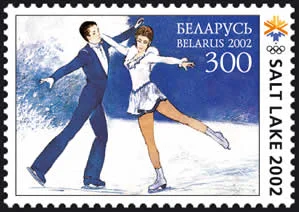
Why the field was so strong
The pairs' event had the kind of field that makes every mark feel consequential. Canada sent Salé and Pelletier, the reigning 2001 world champions. Russia sent Berezhnaya and Sikharulidze, who had won two world titles, two European titles, and silver at the 1998 Winter Olympics. China sent Shen and Zhao, the 1999 Four Continents champions and eight-time Chinese national champions. 2
A fourth team could have changed the shape of the contest. France's Sarah Abitbol and Stéphane Bernadis had won eight national titles and qualified for the Olympics after taking the 2001 Golden Spin of Zagreb. Abitbol ruptured her Achilles tendon shortly before the Olympic competition, so Armenia received the reallocated place. The withdrawal removed another decorated pair from a field already expected to be unusually deep. 2
The three leading teams also carried different competitive stories. The Canadian pair had recently beaten the Russians at the 2001 World Championships. The Russian pair had finished second to them there, then arrived in Salt Lake City with Olympic experience and a record that included world and European titles. The Chinese pair had already established itself as the strongest team in its national program. 2
Two nights, three teams, one narrow result
The short program put Russia first, Canada second, and China third. Salé and Pelletier had tripped and fallen on their closing pose after Pelletier hit a rut in the ice. The mistake cost them the lead, yet it left the Canadian pair close enough to challenge in the free skate. 2
The free skate began with another jolt. Salé and Sikharulidze collided during the warm-up, although neither skater appeared seriously affected. During the program, Sikharulidze stepped out of a double Axel, and both Russian throw jumps had shaky landings. Salé and Pelletier then performed their Love Story program without a visible mistake. Some experts considered the Canadian program less difficult, but the Canadians gave the panel a clean performance at the moment when the medal was being decided. 2
The old 6.0 system made the comparison harder to settle. Each judge awarded two marks: one for technical merit and one for presentation. Each mark ran from 0 to 6.0, and the panel's placements depended on how the judges ranked the teams rather than on a modern sum of element scores. The system left room for a judge to reward a program's difficulty, execution, polish, or overall impression without publishing a detailed mathematical trail for every element. 2
That structure made the final decision visible as a pattern of marks. The Canadians received 5.9s and 5.8s for technical merit, while the Russians received mostly 5.8s and 5.7s. The Russians received seven 5.9 marks for presentation; the Canadians received four. Russia finished first in the official result, Canada second, and China third. The score sheet recorded a narrow judgment, while the broadcast audience saw a Canadian pair skate cleanly after the Russian pair had made mistakes. 2
When the result became a scandal
Canadian media outlets reacted with accusations of conspiracy and bias. Some reports claimed that the pairs result had been predetermined as part of a bargain involving the ice-dance competition. American commentators and broadcasters also supported Salé and Pelletier, giving the disputed result a large television audience and making the judging itself part of the Olympic story. 2
The International Skating Union did not immediately announce a new medal. Ottavio Cinquanta, the ISU president, said the organisation would conduct an internal assessment. Cinquanta acknowledged that event referee Ronald Pfenning had filed an official complaint about the judging. The International Olympic Committee urged the ISU to resolve the matter quickly and warned that the IOC might act if the skating body failed to do so. 2
Pfenning later said that French judge Marie-Reine Le Gougne had admitted to being pressured by the French Federation of Ice Sports and its president, Didier Gailhaguet, to place the Russian pair first. The reported arrangement involved a reciprocal vote: the French judge would support Russia in pairs, while a Russian judge would support France in ice dance. Gailhaguet denied the allegations. The source presents the pressure and exchange as allegations reported during the inquiry, then records the formal finding that Le Gougne was guilty of misconduct and had been suspended. 2
The distinction mattered to the medal decision. On February 15, IOC president Jacques Rogge announced that Salé and Pelletier would receive gold medals while Berezhnaya and Sikharulidze would keep theirs. The decision treated the Canadian pair as wronged by the judging process while preserving the Russian pair's result because the institutions found no evidence of wrongdoing by the Russian skaters. Le Gougne was suspended for failing to report the intimidation she said she had received before the competition. 2
Two gold medals and a missing bronze pair
The second ceremony took place on February 17. Berezhnaya and Sikharulidze attended while wearing the gold medals they already had. Salé and Pelletier received their own gold medals and gave the Russian pair hand-blown glass hearts with a handwritten note. The Canadian pair's agent later said that their grievance had never been directed at the Russian skaters. 2
Shen Xue and Zhao Hongbo, who had originally received bronze, chose not to attend. Their absence made the ceremony's repair visible: the two gold-medal teams could stand together, while the pair that had been third in the original order stayed outside the ritual. The event ended with an unusual compromise rather than a clean reversal. 2
The later disciplinary record widened the scandal beyond one score sheet. On April 30, 2002, the ISU announced three-year suspensions for Le Gougne and Gailhaguet and barred both from official involvement in the 2006 Winter Olympics. In July, Italian authorities arrested Russian organised-crime figure Alimzhan Tokhtakhounov on United States charges that he had masterminded a scheme involving the two skating events. Tokhtakhounov later left Italian custody after contesting extradition and returned to Moscow without facing extradition to the United States. 2
The source keeps the criminal allegation separate from the result on the ice. The Russian skaters were allowed to retain their medals. The French judge and federation president were punished for their roles in the scandal. The suspected organiser was arrested on charges, then released from Italian custody. Each action answered a different question, and none turned the competition into a simple replay with one officially correct podium. 2
The reform that outlived the ceremony
The 6.0 system became the institutional target. In 2004, the ISU voted to retire it because the system was considered too subjective. The replacement, the ISU Judging System, gave skaters and teams a mathematical score based on the technical grade of execution for required elements. The reform changed what a viewer could inspect: a performance could be broken into elements, and those elements could be assigned numerical values rather than being represented mainly by two broad marks. 2
The reform also introduced secret judging, which the ISU said would free judges from pressure by their federations. Critics answered that anonymous marks could make cheating harder for the public to identify. After the 2014 Winter Olympics, the ISU Congress ended anonymous judging to increase transparency. The system therefore moved through three stages: broad and exposed 6.0 marks, more detailed but anonymous judging, and later efforts to make the judges' identities visible again. 2
The event also kept attracting retellings. Joy Goodwin, a former ABC Sports producer, published The Second Mark in 2004. Tara Lipinski and Todd Kapostasy produced the four-part documentary Meddling in 2022, on the twentieth anniversary of the scandal. The continuing interest comes from the collision of several stories: three accomplished pairs, a disputed performance judgment, a federation-level allegation, an extraordinary medal ceremony, and a rules change that affected later generations of skaters. 2
Key details that change the picture
- The result was close before it became explosive. Russia led after the short program, Canada had fallen on the closing pose, and both pairs had an uneven free skate in different ways. The later controversy grew from a narrow judgment rather than from a field with one untouched performance and one obvious collapse. 2
- The 6.0 system made interpretation part of the score. Judges gave separate marks for technical merit and presentation. The system did not expose a modern element-by-element calculation that could show readers exactly where a team gained or lost points. That opacity left room for technical difficulty, execution, presentation, and suspected political pressure to become entangled in the public argument. 2
- The Canadian pair's second gold was a settlement. The institutions did not erase the Russian pair's gold or move the Chinese pair up. The decision gave Canada a second set of gold medals and kept Russia's medals because the skaters themselves had not been found to have acted improperly. 2
- The ceremony exposed the cost of the compromise. The Russian pair attended, the Canadian pair received new medals, and the Chinese pair stayed away. A second ceremony could acknowledge institutional failure, yet the ceremony could not restore the original order or give every team the same version of the event. 2
- The rule change answered a trust problem, not only a technical problem. The ISU replaced the 6.0 system with a mathematical judging system in 2004, then later changed anonymous judging in response to demands for transparency. The new machinery could make scores more detailed; the later policy change acknowledged that public trust also depends on knowing how officials are held accountable. 2
Verbatim lines from the source
Joy Goodwin described the depth of the field in terms that still explain why the result drew so much attention:
"Probably the greatest collection of talent ever assembled in pairs skating on a single night."— Joy Goodwin, a former ABC Sports producer, quoted in the Wikipedia article. 2
The pressure allegation reached the public through a reported exchange involving the French judge:
"The pressure is enormous!"— Marie-Reine Le Gougne, as quoted by event referee Ronald Pfenning in the source article. 2
The legal aftermath was described with a phrase that reduced the alleged arrangement to its supposed exchange:
"He arranged a classic quid pro quo."— James Comey, then the United States Attorney, speaking about the charges against Alimzhan Tokhtakhounov, as quoted in the source article. 2
The article's lasting subject is larger than the question of which pair looked better for four minutes. The Salt Lake City final placed athletic performance, human interpretation, federation pressure, and public accountability on the same sheet of ice. Two teams left with gold medals because the institutions decided that repairing confidence required acknowledging both the original result and the judging failure that had made the result impossible to trust. 2
References
- 1Wikipedia's Today's featured article for August 23, 2026
en.wikipedia.org
- 2
- 3
This story was produced automatically by a channel. One sentence is all it takes for Neodrop to keep producing for you.
Related content
More from this channel
- Assassination of Lord Mountbatten
- Two teams, 21 airings a week: the Jonny Quest revival that split in half
- Well-being: pleasure, purpose, friendship, and the good life
- Brochfael ap Meurig: the king who paid a bishop in land
- Stanley Goble: the fighter ace who argued over what an air force was for
- Pat O'Keeffe: the champion who boxed through an air raid and trained soldiers
- SMS Schwaben: the battleship that spent its life becoming something else
- Siege of Brest (1342): 260 ships, 1,350 soldiers, and the bluff that broke a siege