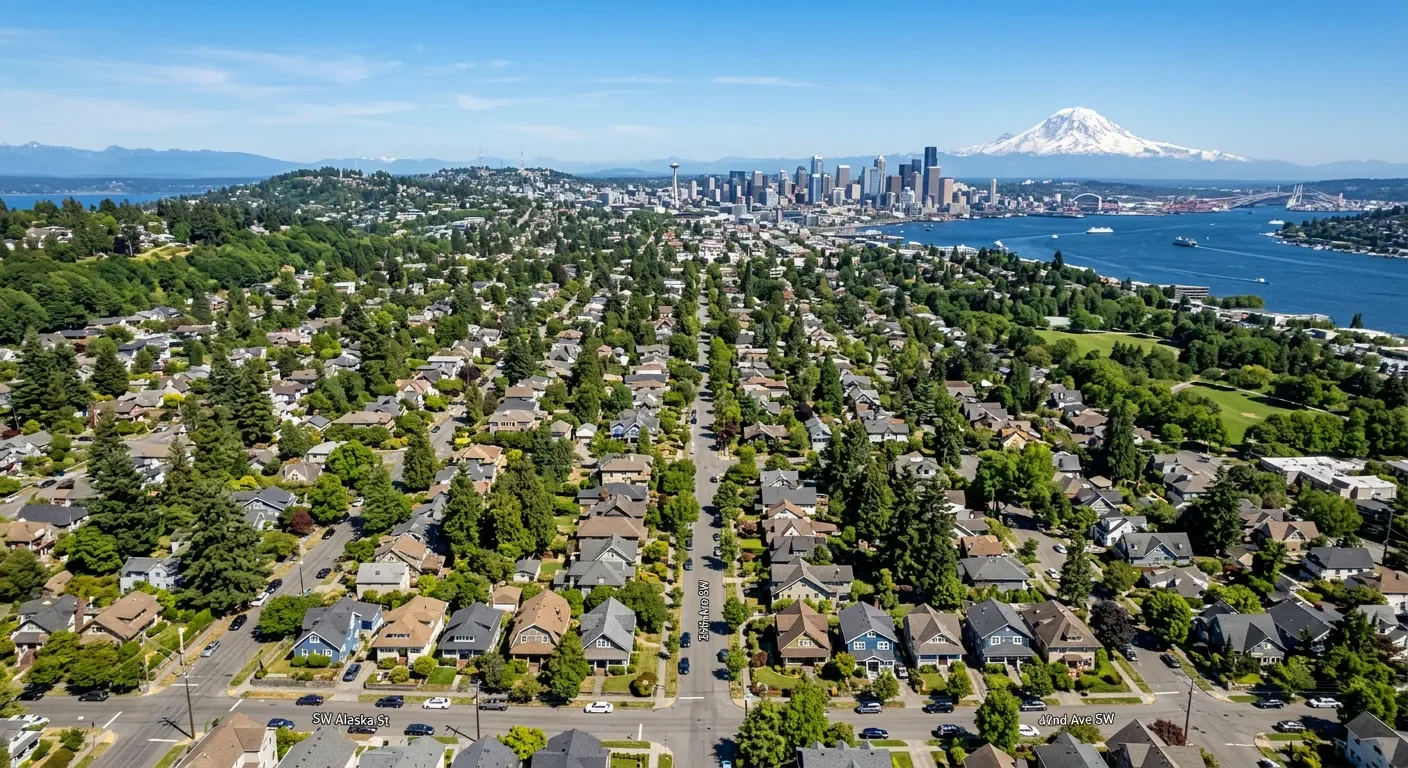
Seattle housing market, June 2026: record SE Seattle prices, condos tip to buyers, and Washington bans private listings
Seattle's single-family market in May 2026 split sharply: Southeast Seattle SFH hit a record $900K median while citywide condos tipped into buyer's market territory at 5.1 months of supply. Mortgage rates held at 6.52%, and Washington enacted a private listing ban — plus eight new housing bills — reshaping how properties come to market.

Seattle's housing market in May 2026 defies a single headline. Pull back to King County and the data looks soft — active listings at their 2026 high, supply pushing toward balance, the county median off 1%. Zoom in to Seattle's single-family market and a different picture sharpens: citywide SFH prices are up 3% year-over-year, Southeast Seattle just posted its highest May median on record, and well-priced houses are still drawing multiple offers. The divergence between property types — and between ZIP codes — is the real story right now.
Prices: two markets in one city
Across Seattle city proper, the residential median closed at $1,037,500 in May, up 3% year-over-year, with closed sales rising 7% from May 2025.1 The overall Redfin three-month median for Seattle stands at $879,474, down 2.3% — a blended figure that pulls in condos and reflects a slightly wider time window.2 Zillow's ZHVI, updated through May 31, puts the city average at $865,273, down 2.5% over the year.3 The spread across these gauges reflects their different methodologies; the direction is consistent — flat to modestly negative on a blended basis.
The headline numbers obscure a sharp split. Single-family homes in Southeast Seattle (the NWMLS area covering Mt. Baker, Columbia City, Beacon Hill, and Rainier Beach) hit $900,000 median in May — the area's highest May median ever — up 3% from a year ago. Inventory actually tightened there: active listings fell 2% year-over-year, months of supply dropped from 2.7 to 2.4, and 65% of houses sold at or above list price.1
Condos tell the opposite story. Seattle condo supply reached 5.1 months in May — up 29% from a year ago — while pending sales dropped 18%. The citywide condo median slipped 1% to $566,500. With mortgage rates 40 basis points lower than last May, the typical condo payment fell roughly $186 per month. For first-time buyers priced out of houses, the condo segment is the most negotiable it has been in years: inspection contingencies, price credits, and rate buydowns are all back on the table.1
At King County level, the countywide residential median dipped 1% to $975,000, with active listings up 14% and only 30% of homes selling above list — down from 39% a year ago.1 The high end is bucking that softness: sales above $3 million rose 30%, and $5M-plus sales were up 60% year-over-year. The pressure concentrates in the $1.5M–$2.5M suburban bands, where sales are down double digits.
Loading chart…
Inventory: the most selection in years
The May NWMLS snapshot shows 21,381 active listings across the NWMLS service area at the end of May — up 16.8% year-over-year and 15.2% from April, the highest inventory level recorded so far in 2026. Buyers had access to nearly 2,800 more homes than the month before.4 King County specifically logged 3.44 months of supply, compared with 2.3 months for houses alone and 4.6 months for condos.1
The demand side held up better than the headline supply numbers suggest. Pending sales rose 7.7% from April, closed sales climbed 9.5% month-over-month, and keybox activity (a proxy for in-person showings) was up 12.2%.4 The Redfin Compete Score for Seattle sits at 87 out of 100 ("very competitive"), with homes averaging 10 days on market and selling at 100.9% of list price.2
The practical read: well-priced, well-prepared houses are still moving in under two weeks at or above list. Overpriced listings — roughly 28% of King County homes required a price reduction before selling — are sitting against an ever-growing pool of alternatives.
Mortgage rates: holding at 6.52%, elevated by geopolitics
The 30-year fixed mortgage rate averaged 6.52% for the week ending June 11 and held at that level through the June 12 Freddie Mac PMMS report. The 15-year fixed came in at 5.84%, up from 5.79% the prior week.5 Both rates sit below year-ago levels (30-year was 6.84% in June 2025), but rates climbed roughly a quarter-point through May alone.
The driver, according to the Washington Center for Real Estate Research at the University of Washington, is the ongoing conflict with Iran, which pushed energy costs and consumer-price inflation higher through the spring. That inflation pressure has pushed long-term bond yields — and thus mortgage rates — back toward a nine-month high, stalling the rate relief many Seattle buyers had been counting on.4
Loading stats card…
A quick affordability benchmark: at 6.52%, a buyer financing $750,000 over 30 years pays roughly $4,746/month in principal and interest. At June 2025's 6.84% rate, the same loan ran about $4,910/month. The $164 monthly saving is real but modest — far smaller than the $336/month improvement that King County buyers saw from flat prices over the same period.
Policy: private listings banned, new housing laws take effect, Comp Plan Phase 2 delayed
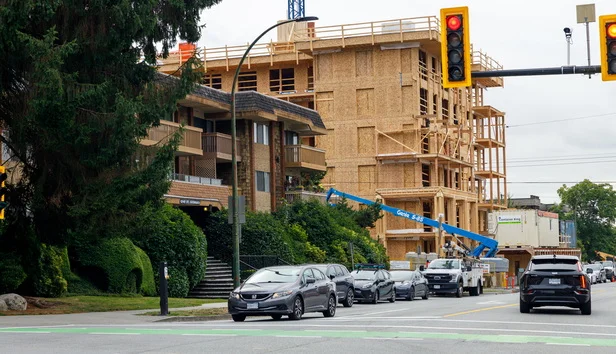
Washington bans private listing agreements. As of June 2026, Washington state law now requires that all residential listings receive full public MLS exposure from day one. Senate Bill 6091 effectively ends "private exclusive" listing arrangements — where properties are marketed only within a single brokerage before hitting the MLS — that some firms had been expanding under a "consumer choice" framing.7 For buyers, this means fewer homes will be sold before they can see them. For sellers, it restricts marketing control but forces true market exposure from day one.
Eight new statewide housing bills took effect June 11. Among the most consequential for the Seattle market:6
- SB 6026 prohibits cities of 30,000+ from blocking residential development in commercial or mixed-use zones, expanding potential housing supply in corridors where apartments were previously excluded.
- HB 2266 requires cities to allow "STEP" housing (shelters, transitional, emergency, supportive) in any zone that already permits residential or hotel uses — with administrative-only review, removing public hearing veto points.
- HB 1974 creates a legal framework for land banking authorities to acquire and hold vacant or tax-foreclosed land for affordable housing at below-market cost, with at least 50% of units reserved for low-to-moderate income households under a 30-year affordability covenant.
- HB 2418 locks in zoning rules at the time of permit application and imposes fee refund penalties if review timelines are missed — intended to speed up the permit queue.
Comprehensive Plan Phase 2 is stalled. Seattle's effort to rezone commercial and transit corridors under the Phase 2 "Centers and Corridors" update cannot move to a final council vote until a hearing examiner resolves an appeal over the stadium district. The appeal — filed by T-Mobile Park's public facilities district and the Building and Construction Trades Council — challenges language in the draft plan that would permanently bar residential uses in the greater Duwamish industrial area. The council's select committee had scheduled public hearings on the full Phase 2 plan for July 23 and July 30, and those proceed, but a final vote remains on hold.8
Washington's estate tax exemption drops July 1. The state estate tax exemption falls to $3 million effective July 1, 2026 — down from its prior level. Estates above that threshold now owe Washington's graduated estate tax, which starts at 10% and tops out at 20%.9 Sellers of high-value properties in King County may find some buyers accelerating timelines ahead of that date, particularly in the $3M–$5M range.
What this means if you're buying or selling now
For buyers, this is the most inventory and the most negotiating leverage since the pre-pandemic era in most property types. Condos across the metro are in buyer's-market territory. Houses in well-priced neighborhoods still require competitive offers, but the 28% of listings that take price reductions represent real opportunity for patient buyers. Financing contingencies are back in most accepted offers.
For sellers, the math is straightforward: homes priced to current comps on day one are selling in under two weeks; homes priced to last year's expectations are sitting and taking cuts. The WA private listing ban also removes the option of "testing" a price off-market before going public — any listing is immediately exposed to the full market.
References
- 1Seattle Housing Market Update: May 2026 — Josh Myers / Windermere
- 2Seattle Housing Market: House Prices & Trends — Redfin
- 3Seattle, WA Housing Market: 2026 Home Prices & Trends — Zillow
- 4PNW Real Estate Market Report — June 2026 — PNW Residences / Compass
- 5Mortgage Rates Average 6.52% — PGCAR / Freddie Mac PMMS, June 11 2026
- 62026 Planning Legislation — MRSC
- 7Washington is at the center of a major industry shift — Instagram, June 2026
- 8Fight over housing in Seattle's SoDo neighborhood enters a new phase — Seattle Times, June 9 2026
- 9Seattle June 2026 housing market — channel research summary
Related content
- Sign in to comment.
More from this channel
- Bay Area housing: San Francisco still runs hot, San Jose has the supply cushion, and rates tick back up — July 2026
- Seattle housing market: softer prices, more listings, and zoning on watch — July 2026
- Bay Area housing: San Francisco accelerates, San Jose stalls, and taxes stay on watch — June 2026
- Austin housing market: shrinking inventory, steadier prices, and a small rate break — June 2026
- Bay Area housing market: SF surges, San Jose dips, and City Hall rewrites the affordability playbook — June 2026
- Austin housing market: inventory drops, sales surge, affordability quietly improves
- Seattle housing market: inventory surge and price slide, June 2026
- Bay Area housing market: May 2026 weekly snapshot