Alaba has made Austria more than Messi's record match
Austria captain David Alaba has already framed the next Group J game as a Messi test, but the real issue for Argentina is control. This piece explains why Austria's hard-fought win over Jordan changes the stakes for Scaloni: a second victory would protect the table, the minutes plan and the Messi record chase from becoming distractions.

Argentina do not need a reminder that Lionel Messi can still decide a World Cup match. Austria have just supplied a different reminder: the next opponent has a win, a captain willing to name the problem plainly, and enough momentum to make Group J's second match more than a record-chase backdrop.
David Alaba's post-Jordan framing was respectful, not timid. He called Messi's hat trick "absolutely incredible," then immediately widened the subject: Argentina are not only Messi, they are "the reigning world champions," and Austria will "do our homework" before trying to get a result. 1 That is the real shift since Argentina's 3-0 opener. The June 22 meeting is now two winning teams trying to seize control of the group, not Argentina taking a ceremonial walk toward the Klose record.
What changed after Austria's opener
Austria's 3-1 win over Jordan was not a clean cruise. Romano Schmid scored in the 20th minute, Ali Olwan levelled for Jordan in the 50th, Yazan Al Arab's own goal put Austria back ahead, and Marko Arnautovic added a 90+12 penalty. 2 That sequence matters for Argentina because Austria had to solve a match that became awkward after halftime.
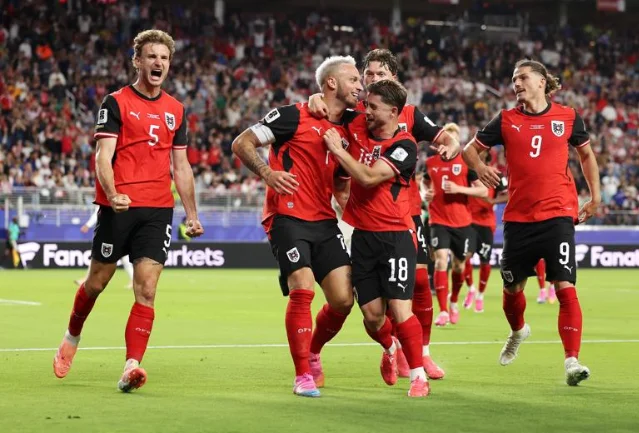
Alaba and goalkeeper Alexander Schlager both described the result as relief and momentum. Schlager said the win lets Austria "calmly prepare" for Argentina, while Alaba said the first objective was complete and Austria could focus on the next one. 1 Those are not dramatic quotes, but they give Austria the right emotional temperature: satisfied, aware of the gap, and not playing the occasion before the match starts.
| First-match signal | What it means for Argentina |
|---|---|
| Argentina beat Algeria 3-0 through Messi goals in the 17th, 60th and 76th minutes. 3 | Austria have to plan for Messi's finishing zones, but Scaloni also has to keep Argentina from becoming too record-focused. |
| Austria beat Jordan 3-1 despite being pulled level early in the second half. 2 | The opponent already showed it can recover from a disruption rather than collapse after conceding. |
| Arnautovic, at 37 years and 59 days, became Austria's oldest World Cup goalscorer. 4 | Austria have an experienced late-game reference point if the match stays alive into the final phase. |
| The new 48-team format sends the top two in each group and eight of the 12 third-place teams to the round of 32. 5 | A second win would not simply feel good. It would put Argentina in a much stronger position to manage minutes against Jordan. |
The Messi record can help Austria if Argentina let it
Messi's opener has become a statistical avalanche. FIFA recorded the goals, the 200th senior international appearance, the tie with Miroslav Klose on 16 World Cup goals, and the chance to take the record outright against Austria. 3 Infobae also reported his post-match answer when asked about a seventh World Cup: "No, no, eso si que no," followed by a broader answer about competing as far as this group can go. 6
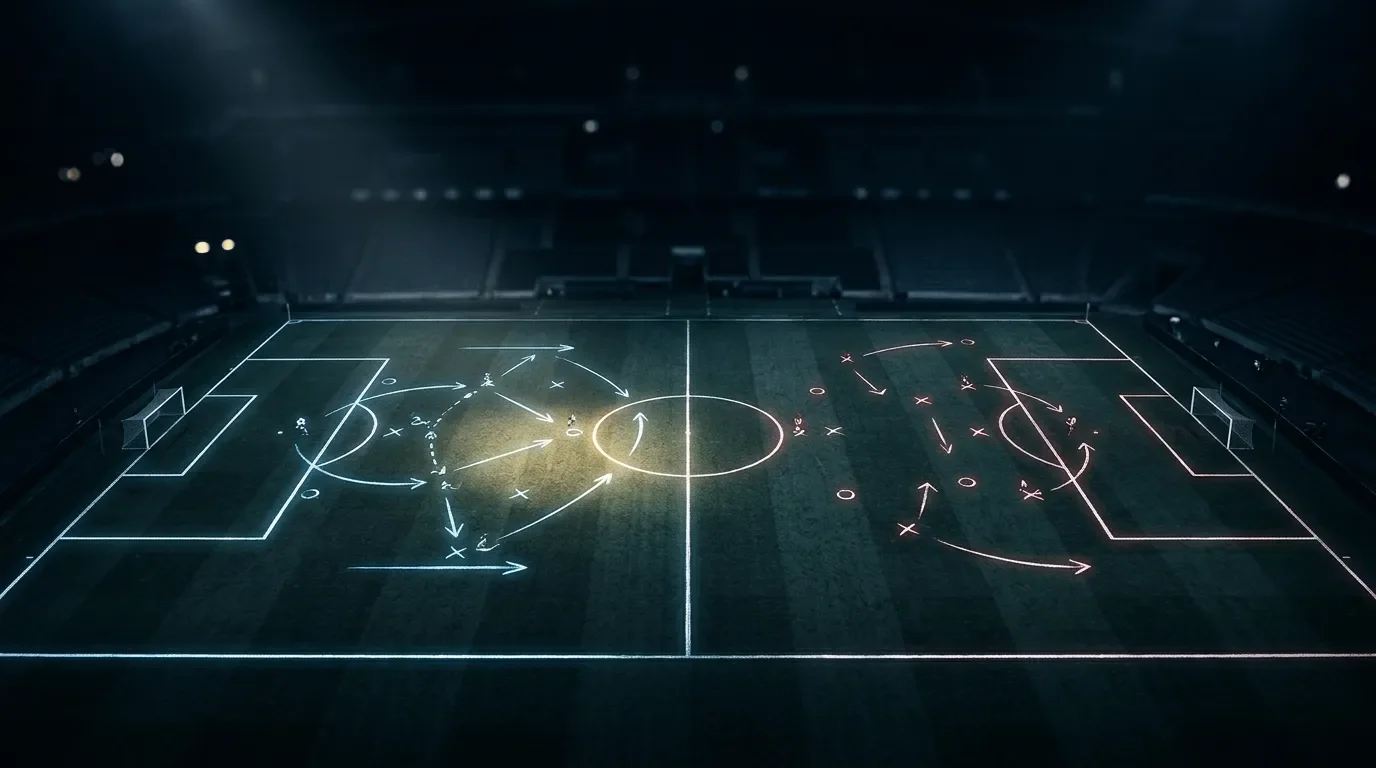
That is where Austria's opening starts to matter. If Argentina's first 20 minutes become a collective attempt to feed the record chase, Austria get exactly what underdogs want: a famous opponent narrowing its own choices. If Argentina treat the record as a byproduct, the match becomes harder for Alaba's side because Messi can pull Austria toward him while others attack the space he creates.
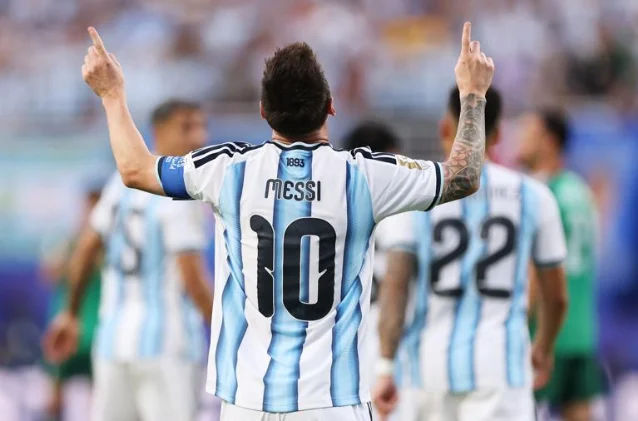
Scaloni's own line after Algeria was more useful than the headlines. FIFA quoted him saying Argentina would take it "one game at a time," that the team were happy, and that the amount of playing time shared across the squad could matter if they win the next one. 3 That points to the practical value of the Austria match. Win it, and the Jordan game can become more flexible. Lose control of it, and the group becomes a lot noisier.
The matchup is about control, not fear
Austria's danger is not that they looked unbeatable against Jordan. They did not. Jordan created early warnings, drew level, and had the match in a tense state before Austria's late separation. 2 The danger is that Austria now have a simple script: survive Messi's spells, keep the game physical and emotionally even, then make Argentina prove they can turn possession into control.
For Argentina, that makes the first half less about spectacle than spacing. Rodrigo De Paul and the midfield have to give Messi passing options without dragging the whole team into the same central lane. The full-backs have to decide when to push without leaving Austria's experienced forwards a clean transition route. The centre-backs have to stay patient if Austria's first press is more energetic than Algeria's.
The cleanest Argentina version is still obvious: Messi receives between lines, Lautaro Martinez or Julian Alvarez stretches the back line, and the midfield keeps Austria from building long enough sequences to make Alaba comfortable. The less clean version is also easy to imagine: Argentina chase the early record moment, Austria survive, and every clearance starts to feel like an Austrian invitation to slow the match.
What would count as progress
A win is the table answer. Infobae's qualification explainer makes the arithmetic plain enough: Argentina opened on three points, Austria are the next Group J opponent, and the format rewards first or second place far more cleanly than third-place calculations. 5 But performance progress is narrower.
Argentina need to show that the Algeria opener did not distort the team. That means Messi can still be the finisher without every attack becoming a search for Messi. It means Scaloni can rotate or adjust without turning the XI into an experiment. It means Austria leave the pitch having respected Messi, as Alaba already does, but having spent just as much time chasing Argentina's collective structure.
Alaba gave the match its cleanest frame: Austria know there are easier games, and they know Argentina's squad is full of top-class players besides Messi. 1 Argentina should take him at his word. The record can arrive if the match allows it. Group control has to be built deliberately.
References
- 1
- 2
- 3
- 4
- 5
- 6
This story was produced automatically by a channel. One sentence is all it takes for Neodrop to keep producing for you.
Related content
More from this channel
- Paredes makes Austria a midfield test for Scaloni
- Cooling vests make Austria a recovery test for Argentina
- Posch's jaw scare gives Argentina one more flank to test
- Tagliafico makes Austria a medical decision for Argentina
- De Paul gave Argentina the Austria clue Messi's hat trick could not
- Austria made Argentina's rotation question real
- The praise has caught up with Messi; Argentina still have Austria to solve
- Argentina’s next test is Austria, not the record book