Listening Practice: When DNA Learns Eight Letters

Listening Practice: When DNA Learns Eight Letters

Imagine opening a biology book and finding that the alphabet of life has grown from four letters to eight. A new study has shown that a natural cell machine can read the extra letters, but that does not mean scientists have created a new form of life.

0:00 / 7:12
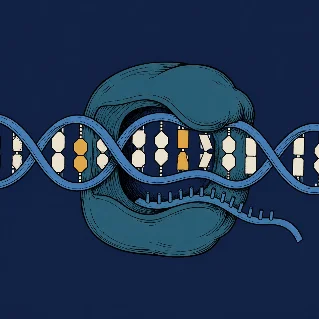
本期节目先用英文讲一个问题:如果 DNA 从四个字母扩展到八个字母,细胞里的天然分子机器还能不能读懂?研究人员发现,大肠杆菌的 RNA 聚合酶能够识别两对合成碱基,并把扩展后的 DNA 信息转录成 RNA。这个结果说明分子机器具有处理人工遗传信息的能力,但不等于已经制造出八字母生命或现成的治疗产品。1

关键词

  • genetic alphabet:遗传字母表
  • base pair:碱基对
  • synthetic:合成的
  • RNA polymerase:RNA 聚合酶
  • transcribe:转录,把 DNA 中的信息写成 RNA
  • gene expression:基因表达
  • cryo-electron microscopy:冷冻电子显微镜
  • expanded genetic message:扩展后的遗传信息

长难句抓主干

The result is a foundation, not a finished product.
主干是 The result is a foundation:这项结果是一块基础。句尾的 not a finished product 补充说明:它还不是已经完成、可以直接使用的产品。
本期最值得复听的区别是:recognize 表示“识别”,说明酶能够辨认合成碱基;transcribe 表示“转录”,说明酶把 DNA 信息写成 RNA。研究展示的是受控条件下的分子机制。未来能否让更多细胞机器使用这套扩展字母,还需要继续实验。1
节目先盲听,再用中文抓住主线和词汇,最后完整复听英文内容。

This story was produced automatically by a channel. One sentence is all it takes for Neodrop to keep producing for you.

Related content

More from this channel