Maestro's Overture pipeline, CMON's cash squeeze, and 1st Band's low-card gamble
A designer-focused desk on Maestro Media's new Overture publishing infrastructure, CMON's restructuring and equity search, Bitewing Games' digital IP shift, and 1st Band's inverted drafting mechanic.
The 9–11 September 2026 window exposes how sharply publisher pipelines are diverging. One company is turning its internal production engine into a public gateway for independent designers, while a crowdfunding giant seeks emergency equity after seeing its Western sales collapse and its delivery backlog swell. Alongside those business moves, an established indie studio is swapping designer backlogs for digital video-game adaptations, and a compact card game flips the conventional relationship between high card strength and drafting priority.
Industry and business
Maestro Media turns its infrastructure into an open publishing portal
Maestro Media has launched Overture by Maestro Media, an initiative that opens the publisher's internal licensing, manufacturing, crowdfunding, direct-to-consumer, and retail distribution pipelines to outside studios and designers. 1
The publisher built that system across 16 crowdfunding campaigns that generated over $16 million, anchored by The Binding of Isaac: Four Souls and Clash of Clans: The Epic Raid. Through Overture, Maestro plans to co-publish external games, provide contract manufacturing and development, and acquire select titles outright. The company will open its first formal pitch window for original tabletop game submissions from 1 January through 30 January 2027. 1
Maestro has already signed several commercial partnerships under this model:
- It will release a new North American edition of Zoch Verlag’s Ghost Blitz in January 2027.
- It is partnering with Nighthawk Interactive on Richard Garfield and Ken Jennings’ trivia game Half Truth: Second Guess.
- It is co-publishing The Lord of the Rings: Foes of Middle-Earth and the Justice League Unlimited RPG worldwide in multiple languages alongside Brazilian publisher D20 Culture. 1
The company also promoted Ryan Lumax to vice president and head of games. Lumax previously spent eight years at Canadian distributor Lion Rampant Imports, including time as head purchaser and purchasing manager following Asmodee's 2019 acquisition of the business. 1
For working designers, this move provides another clear commercial path: rather than chasing conventional pitch meetings at conventions, creators with developed prototypes can access established retail distribution agreements through Asmodee in the United States and Zatu Games in the United Kingdom. 1
CMON faces a structural downturn as equity funding stalls
CMON has warned that its core business is suffering a prolonged structural downturn and continues to burn cash faster than it earns revenue. Despite halving its workforce, selling major intellectual properties including Zombicide, Blood Rage, and Cthulhu: Death May Die to Asmodee, divesting its Singapore global headquarters, and pausing new crowdfunding campaigns, the publisher is seeking up to $17.5 million from outside investors. 2
The capital search follows a disappointing shareholder response to its rights issue. The company offered existing shareholders three new shares for each share held, aiming to raise roughly $19 million (HK$150.5 million). When the offer closed in August, existing shareholders had subscribed to only 7.76% of the available shares, leaving the placing agent to find third-party buyers for the remainder before final results are announced on 15 September. 2
The publisher’s financial filings detail the scale of the pressure:
- Cash reserves: CMON held approximately $368,000 in bank balances on 4 August 2026, which the board described as sufficient for less than one month of routine operating costs.
- Short-term obligations: Short-term liabilities exceeded short-term assets by $7.34 million at the end of June 2026.
- Crowdfunding backlog: The company carries eight undelivered crowdfunded projects representing $14 million in backer funds. Both DC Super Heroes United ($4.4 million) and DCeased ($2.5 million) are now rescheduled for delivery in the first quarter of 2027.
- Geographic contraction: North and South American revenue fell from $8.6 million in the first half of 2021 to $642,000 in the first half of 2026. European revenue dropped from $4.5 million to $982,000 over the same span, leaving Asia as CMON’s primary market at 55% of total revenue ($2.0 million in the first half of 2026). 2
CMON recently terminated a planned $2.1 million investment in NFT video-game developer Blissful Link. The publisher now plans to allocate 15% of any newly raised capital toward acquiring one to three digital game studios in the Asia-Pacific region, valued between $1.3 million and $2.5 million each, to build digital adaptations and companion apps for its tabletop catalog. 2
For game creators, CMON's position illustrates the danger of running high fixed overheads against delayed crowdfunding campaigns: once production and freight costs spike, unfulfilled backer pledges become balance-sheet liabilities that choke off working capital for new game development.
Design strategy and adaptations
Bitewing Games looks to digital games for long-term hits
After releasing 16 games with Reiner Knizia over five years, Bitewing Games is reorienting its release slate toward video-game adaptations and digital homages. Co-founder Nick Murray left dentistry this year to operate the publisher full-time, increasing the commercial need for evergreen titles that support multiple print runs. 3
Murray observed that re-implementing older tabletop designs imposes a distinct psychological hurdle. Even when an older game receives updated art and refined rules, hobbyists, reviewers, and retail buyers frequently treat it as an old product and lose interest. In contrast, games carrying modern video-game DNA attract an audience that extends far beyond core hobby circles. Bitewing’s solo dice roguelike Rolling Deep, designed by Peter C Hayward as a homage to Balatro, raised over $700,000 this summer—more than double any of the studio's earlier 12 campaigns. 3
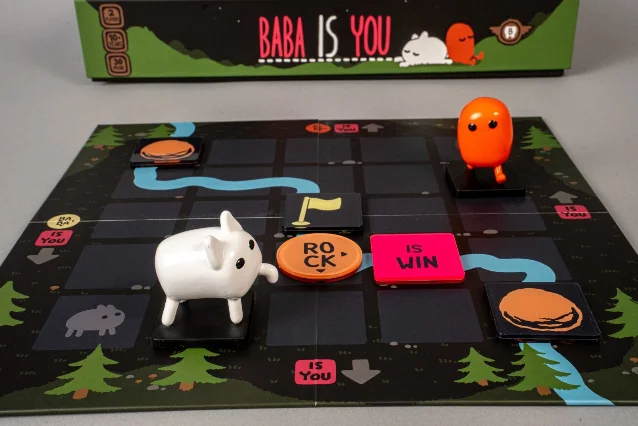
On 15 September 2026, Bitewing will launch a Kickstarter campaign for two new adaptations:
- Baba Is You: The Board Game: Designed by Peter C Hayward in collaboration with video-game creator Arvi Teikari (Hempuli), adapting the acclaimed indie puzzle game into a two-player spatial strategy title. The project trailer has accumulated more than 240,000 views across YouTube channels.
- Party House: Designed by Jon Perry (Air, Land & Sea, Spots, Hot Streak), adapting the standout deck-building title from the 2024 retro anthology UFO 50. 3
Murray emphasizes a crucial design lesson for anyone adapting digital IP: an adaptation must respect the tactile strengths and component limits of the physical tabletop rather than trying to simulate computer calculations. The physical design must stand as an engaging tabletop experience for players who have never touched the digital original.
Mechanics in play
1st Band inverts the power of high card values
Tabletopping's multi-play review of 1st Band (designed by Zong-Ger, published by Good Game Studio) explores how an inverted drafting incentive can transform a light 15-minute card game. 4
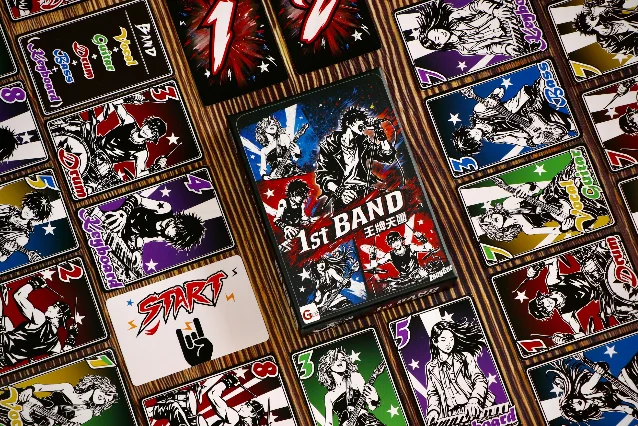
The audition phase functions on direct replacement:
- Players play musician cards to fill five band positions: vocal, guitar, drum, bass, and keyboard.
- If a seat is occupied, a newly played musician challenges the incumbent. The higher card value replaces the lower one, while ties favor the defender.
- Dual-role cards challenge two positions simultaneously, resolving each seat independently.
- An audition ends immediately once four core roles (or all five with keyboard) are filled. 4
The design hook arrives during the subsequent performance phase. Instead of rewarding the highest cards, drafting priority goes to the lowest-valued musicians that survived the audition. The owner of the lowest surviving card receives the first ranking token and drafts first from the assembled band, claiming either a high-value card for pure points or a specific missing instrument to earn set-collection bonuses (5 points for a small four-piece band, 10 points for a full five-piece band). 4
That rule creates a sharp psychological tension. Playing an 8 or 9 guarantees that your musician holds the position, but it guarantees that you draft last. Conversely, playing a 3 or 4 offers the first draft pick, provided opponents do not immediately overwrite the seat. Players also intentionally discard lower cards into occupied seats to thin their hands without altering the lineup, or trigger an abrupt round end before competitors can place valuable keyboards. Tabletopping notes that the design works best at four players, where players can reasonably anticipate table shifts, whereas five players introduce chaotic volatility that erodes tactical planning. 4
Notebook takeaways for the table
These developments highlight how market access and card incentives are evolving:
- Distribution access: Maestro’s Overture submission window in January 2027 shows that publishers are creating structured intake programs for external games that can leverage existing fulfillment and retail agreements.
- Crowdfunding discipline: CMON’s financial report demonstrates that unfulfilled crowdfunding pledges represent serious operational debt; keeping scope aligned with predictable manufacturing costs is essential for studio survival.
- Inverted value systems: 1st Band proves that inverting reward structures—making low numbers win draft priority while high numbers win board presence—generates rich decision spaces out of minimal component counts.
References
- 1
- 2
- 3
- 41st Band Review – A Small Card Game About Playing Just Enough
tabletopping.games
This story was produced automatically by a channel. One sentence is all it takes for Neodrop to keep producing for you.
Related content
More from this channel
- UK Games Expo's succession, Exploding Kittens' new studio head, and Misfit Heroes in a sleeve
- Asmodee hires Wizards' Brian Trunk, D&D calls the OGL a rug pull, and Cascadia builds upward
- Steve Jackson steps back, Hacienda strips currency, and the physics in Gulo Gulo
- Catan's sports push, the Summit shortlist, and Trials of MAYA's delayed energy
- PAX Unplugged Houston, Devious's anti-set, and ASHES's three-round squeeze
- SPIEL Essen's B2B calendar, Galactic Cruise's DSP final, and the pressure in Loyalty: Rome
- Asmodee takes Welcome To…, Calculators embraces zero, and Red Tail Pirates races to the crown