
Five papers: June 16, 2026
Five papers from the June 15–16 window, ranked by journal IF tier and clinical signal. Lead: the DPP/DPPOS 25-year follow-up (JAMA, N=1,173) shows intensive lifestyle intervention cut multimorbidity risk by 21% (HR 0.79) in prediabetic adults over a quarter century — metformin did not. Two companion JAMA Internal Medicine papers on COVID-19 vaccination: Al-Aly's 1,039,659-veteran cohort (VE 37.7% against COVID-associated MACE; cardiovascular mortality VE 57.9%) and the CDC's 2024–2025 test-negative study (VE 41% against critical illness). From Nature Communications: a 40-patient phase 1b/2 trial of liposomal mitoxantrone + tislelizumab achieves 53% CR in R/R ENKTL, and the largest speech biomarker cohort to date (N=1,816) yields AUC 0.932 for MDD screening via self-supervised deep learning.

At a glance — June 15–16, 2026
| # | Paper | Journal | Design | Primary result |
|---|---|---|---|---|
| 1 | DPP/DPPOS 25-year follow-up: lifestyle vs. multimorbidity | JAMA | Observational follow-up of RCT, N=1,173, 25 yr | Lifestyle HR 0.79 for multimorbidity; metformin HR 0.91 (ns) |
| 2 | COVID vaccine and cardiovascular events — million-veteran cohort | JAMA Internal Medicine | Retrospective cohort, N=1,039,659 | COVID-associated MACE: VE 37.7% (95% CI 18.2–54.9) |
| 3 | 2024–2025 COVID vaccine effectiveness: CDC test-negative study | JAMA Internal Medicine | Test-negative case-control | Critical illness: VE 41% (95% CI 28–51) |
| 4 | Lipo-MIT + tislelizumab in R/R ENKTL: phase 1b/2 | Nature Communications | Phase 1b/2 clinical trial, N=40 | CR rate 53%; median PFS 8.2 months |
| 5 | Speech-based AI for MDD screening: largest cohort to date | Nature Communications | Diagnostic study, N=1,816 | Internal AUC 0.932; external AUC 0.879 |
Loading stats card…
1. DPP/DPPOS: 25 years of lifestyle intervention cuts multimorbidity risk by 21% in adults with prediabetes (JAMA)
Journal: JAMA · IF ~157, Tier 1 · Published June 15, 2026 · DOI: 10.1001/jama.2026.8492 · PMID: 42295772 · NIH/NIDDK-funded
Design: Long-term observational follow-up of the Diabetes Prevention Program (DPP) and its continuation phase (DPPOS). N=1,173 participants (median age 74, IQR 70–80; 68% women) with a confirmed prediabetes diagnosis at enrollment. Multimorbidity was defined as ≥2 of 15 conditions in the CMS chronic condition database. Follow-up ran 1996–2021; analysis completed November 2025. Lead corresponding author: Marcel E. Salive (NIDDK/NIH); co-authors include Ashley H. Tjaden, Donna Ames, and Jill P. Crandall. 1
Key findings: 997 of 1,173 participants (85%) reached the multimorbidity endpoint over 25 years, with a median of 5 chronic conditions at last follow-up. Compared with placebo, the intensive lifestyle arm showed HR 0.79 (95% CI 0.68–0.93) — a 21% lower risk of developing multimorbidity. The metformin arm did not reach significance: HR 0.91 (95% CI 0.78–1.07). The lifestyle benefit held after excluding diabetes as a contributing condition, suggesting the effect extends beyond glycemic control alone. The most expensive dyads — cardiovascular-metabolic pairs such as heart failure plus chronic kidney disease — showed an even larger lifestyle effect: HR 0.57 (95% CI 0.38–0.85). 1
Limitations: Non-randomized follow-up after the original DPP trial ended; participants self-selected into extended observation. Multimorbidity ascertainment relied on CMS administrative data, which may undercount conditions in privately insured or uninsured patients. The cohort skews older, female, and motivated — generalizability to routine primary care populations requires caution.
Clinical implication: A 21% risk reduction sustained across 25 years is a rare signal in chronic disease prevention research. The finding that lifestyle intervention — not metformin — drove the multimorbidity benefit sharpens the argument for behavioral medicine investment in prediabetes management, independent of glucose-lowering pharmacotherapy. Internists and primary care physicians managing high-volume prediabetes panels should note that the benefit was not diluted by 25 years of aging and co-medication drift — which is exactly the concern that makes long-term prevention evidence hard to collect. The cardiovascular-metabolic dyad finding (HR 0.57) is clinically meaningful given the cost and hospitalization burden those pairs carry. 1
Funding: NIH/NIDDK (DPP: NCT00004992; DPPOS: NCT00038727).
2. COVID vaccination and cardiovascular protection: 1,039,659-veteran cohort cuts COVID-associated MACE by 38% (JAMA Internal Medicine)
Journal: JAMA Internal Medicine · IF ~39.2, Tier 1 · Published June 15, 2026 · DOI: 10.1001/jamainternmed.2026.1929 · PubMed indexing pending · VA Health System-funded
Design: Retrospective cohort study drawing on VA (Veterans Affairs) health records. 349,085 veterans who received both COVID-19 and influenza vaccines were compared with 690,574 veterans who received influenza vaccine only, for a total of N=1,039,659 (mean age 70.1; 91.8% male). Primary endpoint: COVID-associated major adverse cardiovascular event (MACE) — a composite of cardiovascular death, myocardial infarction, stroke, and heart failure hospitalization. Corresponding author: Ziyad Al-Aly (Washington University in St. Louis / VA St. Louis Health Care System). 2
Key findings: COVID vaccination was associated with a 37.7% lower rate of COVID-associated MACE (95% CI 18.2–54.9), translating to an absolute risk difference of 2.04 events per 10,000 persons (95% CI 0.85–3.65) over the 8-month observation window. Broken down by component endpoint: cardiovascular mortality VE 57.9% (95% CI 25.2–78.2), myocardial infarction VE 38.5% (95% CI 4.3–62.3), heart failure hospitalization VE 41.9% (95% CI 4.1–67.5). Age stratification showed the strongest absolute benefit in patients ≥75, where COVID-associated MACE VE reached 50.7% (95% CI 31.8–65.6) — the only age subgroup to reach statistical significance on its own. Across all-cause MACE (not COVID-attributed), the reduction was 6.2% (95% CI 3.8–8.9); all-cause mortality declined 7.1% (95% CI 3.9–10.5). Extrapolated to one million vaccinees over 8 months, the model projects approximately 2,370 MACE events avoided and 1,580 deaths avoided. 23
Al-Aly told STAT News: "There is still actually a tidal wave of SARS-CoV-2 that continues to circulate in the population. Much of it is only unrecognized, leading to heart problems... unlinked or unattributed to SARS-CoV-2, because people are not testing." 3
A paired editorial from Robert Califf (Duke University, former FDA Commissioner) concluded: "These reports offer convincing evidence that the cardiovascular benefits of vaccination for COVID-19 are much greater than the risks, demonstrated or potential, that have been identified." Califf separately noted that only 17.5% of US adults and 22.6% of adults aged ≥65 received the 2025–2026 COVID vaccine. 4
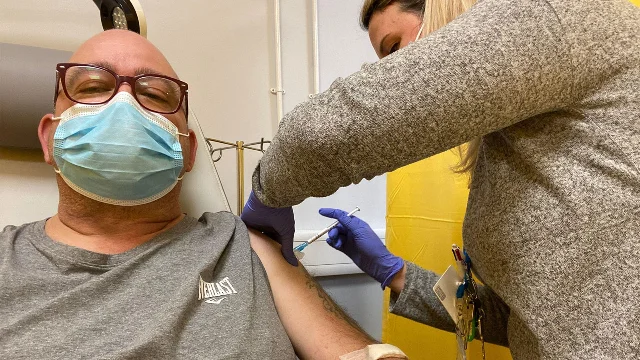
Limitations: Retrospective VA cohort skews heavily male and older; healthy-vaccinee bias is a persistent confounder despite the influenza-vaccinated comparison group. The DOI is published but PubMed indexing was pending at collection time, limiting direct abstract verification. MACE attribution to COVID (rather than confounders) relies on VA diagnostic coding accuracy.
Clinical implication: The cardiovascular protection signal — spanning death, MI, stroke, and heart failure — is consistent across component outcomes and persists despite three-plus years of evolving viral variants and population immunity. For cardiologists managing post-COVID patients, the data reinforce vaccination as a cardiovascular risk-reduction tool for older patients, not only an infectious disease intervention. The ≥75 age group, who carry the greatest absolute MACE risk, showed the clearest benefit — and they are disproportionately underrepresented in the current 17.5% national vaccination uptake. 3
Funding: VA Health System.
3. 2024–2025 COVID vaccine effectiveness: 41% against critical illness in CDC test-negative study (JAMA Internal Medicine)
Journal: JAMA Internal Medicine · IF ~39.2, Tier 1 · Published June 15, 2026 · DOI: 10.1001/jamainternmed.2026.1936 · PubMed indexing pending · CDC NCIRD
Design: Test-negative case-control study conducted by the CDC's National Center for Immunization and Respiratory Diseases (NCIRD). Adults tested at emergency departments, urgent care facilities, and hospitals across multiple US surveillance sites during the 2024–2025 COVID season. Vaccine effectiveness window: days 7–299 post-vaccination. Lead author: Ryan Wiegand, PhD (CDC NCIRD). 5
Key findings: VE against emergency or urgent care visits: 26% (95% CI 23–29). VE against hospitalization: 35% (95% CI 30–40). VE against critical illness: 41% (95% CI 28–51). In adults aged ≥65, effectiveness estimates were broadly consistent with the overall population. Among immunocompromised adults, hospitalization VE was lower: 24% (95% CI 13–34). 56
Limitations: Test-negative designs rely on healthcare-seeking behavior being independent of vaccination status — a condition that may be violated if vaccinated individuals are less likely to seek care for mild illness. The 2024–2025 vaccine was not matched to circulating variants throughout the full season, which likely attenuates the VE estimate. Immunocompromised patients are a heterogeneous subgroup; the 24% hospitalization VE deserves further stratification by immunosuppression type.
Clinical implication: The step-gradient across severity — 26% at ED/urgent care, 35% at hospital admission, 41% at critical illness — is a consistent pattern across multiple COVID VE seasons and suggests that vaccination preferentially prevents progression to the most severe outcomes. For intensivists and hospitalists making case-by-case clinical assessments, this gradient means vaccination status carries more prognostic signal for ICU risk than for mild presentation risk. Califf's editorial framed the immunocompromised subgroup as the key clinical decision tension: "The important issue for clinical decision-making is whether the clearly demonstrated modest benefit is worth the cost or the risk of rare adverse effects, because the absolute beneficial difference in serious outcomes is lower in younger populations." 4 A companion European cohort (JAMA Network Open, Delaunay C et al., DOI: 10.1001/jamanetworkopen.2026.19040) found 2025–2026 vaccine VE of ~59% (95% CI 14–83) against symptomatic COVID-19 in adults ≥60, alongside low uptake — the ECDC-funded authors described the gap between demonstrated protection and vaccination rates as "missed opportunities for preventing symptomatic COVID-19 among unvaccinated vulnerable groups." 7
Funding: CDC NCIRD (US government).
4. Liposomal mitoxantrone + tislelizumab in relapsed/refractory NK/T-cell lymphoma: 53% complete response rate in phase 1b/2 (Nature Communications)
Journal: Nature Communications · IF ~14.7, Open Access, CC-BY 4.0 · Published June 15, 2026 · DOI: 10.1038/s41467-026-74483-1 · Funded by NSFC (China) and Sun Yat-sen University 5010 program
Design: Open-label, dose-escalation phase 1b/2 trial (NCT05464433) at 16 centers in China. Adults with relapsed or refractory extranodal natural killer/T-cell lymphoma (R/R ENKTL) received liposomal mitoxantrone (Lipo-MIT) plus tislelizumab (anti-PD-1). A 3+3 dose-escalation phase (n=6) tested Lipo-MIT at 16 or 20 mg/m²; an expansion cohort (n=34) received the recommended phase 2 dose (RP2D) of Lipo-MIT 20 mg/m². No dose-limiting toxicities were observed. Enrollment: July 23, 2022 – November 28, 2024. Corresponding author: Qingqing Cai (Sun Yat-sen University Cancer Center, Guangzhou). 8
Key findings: In 40 evaluable patients, the best complete response rate was 53% (21/40; one-sided 95% lower CI 38%) — meeting the pre-specified primary endpoint threshold. Median progression-free survival was 8.2 months (95% CI 6.1–not reached) at a median follow-up of 15.3 months. The disease control rate reached 90%. Grade ≥3 adverse events of clinical note: leukopenia 53%, neutropenia 40%, febrile neutropenia 18%. No new or unexpected toxicities were observed beyond the established profiles of each agent. The investigators concluded that the combination "showed promising anti-tumor activity with an acceptable safety profile in R/R ENKTL." 8
Limitations: Single-arm, open-label design without a randomized comparator; standard historical benchmarks for R/R ENKTL vary substantially by prior treatment and L-asparaginase exposure. The trial was conducted entirely in China, where ENKTL prevalence is higher than in Western populations and treatment patterns differ; cross-population generalizability requires prospective evaluation. Fifteen-month median follow-up is insufficient to determine whether the PFS benefit translates to improved overall survival.
Clinical implication: R/R ENKTL — an Epstein-Barr virus-driven T/NK-cell malignancy disproportionately affecting East and Southeast Asian populations — has no established second-line standard of care after L-asparaginase-based regimens. A 53% CR rate in a multiply relapsed population is a high-signal result for this indication. The PD-1 backbone provides mechanistic rationale: ENKTL tumors express high PD-L1, and the liposomal mitoxantrone formulation reduces cardiotoxicity compared with conventional mitoxantrone, potentially enabling dose-dense retreatment. Hematologists outside China managing the relatively rare ENKTL cases in Western referral centers should note this data as a potential bridge-to-transplant or palliative-intent option, pending regulatory submissions. A randomized confirmatory trial design would be the expected next step.
Funding: National Natural Science Foundation of China (82230001 and others), Guangzhou Municipal Science and Technology Project, Sun Yat-sen University 5010 Clinical Research Program.
5. Speech as a biomarker for major depression: self-supervised AI achieves AUC 0.932 in the largest voice-based diagnostic cohort (Nature Communications)
Journal: Nature Communications · IF ~14.7, Open Access, CC-BY 4.0 · Published June 15, 2026 · DOI: 10.1038/s41467-026-74122-9 · STI2030 Major Project (China) and NSFC-funded
Design: Multi-center diagnostic accuracy study. N=1,816 participants — 910 with confirmed MDD (DSM-5 criteria) and 906 matched healthy controls — contributed 23,608 standardized speech samples across reading, picture description, and spontaneous speech tasks. Feature extraction used openSMILE (6,373 acoustic-prosodic features); final classifiers deployed self-supervised deep learning representations from WavLM (large variant, 315M parameters) and HuBERT. Internal validation: held-out test set n=333. External validation: independent site n=160. Lead corresponding author: Weihua Yue (Peking University Sixth Hospital / Institute of Mental Health, Beijing). 9
Key findings: The WavLM-based self-supervised classifier reached AUC 0.932 on the internal validation set — substantially higher than traditional acoustic feature approaches reported in the same paper. External validation AUC was 0.879, maintaining robust generalization across sites. Sensitivity and specificity at the optimal operating point were consistent with clinical screening thresholds. The self-supervised representations outperformed handcrafted acoustic-prosodic features, and both WavLM and HuBERT models showed similar gains, suggesting the improvement is attributable to pre-trained representation quality rather than model-specific architecture. The authors describe the system as providing "a rapid, cost-effective, and non-invasive approach for assisted depression assessment." 9
Limitations: The study population is Chinese-speaking; acoustic-prosodic depression markers differ across languages, tonal systems, and cultural expression norms — direct transfer to English or other language populations cannot be assumed without re-validation. MDD diagnosis was confirmed by structured clinical interview at enrollment, but the model's performance in naturalistic deployment settings (phone calls, outpatient recordings, variable acoustic environments) remains untested. The AUC is for case-control discrimination, not population screening; positive predictive value in low-prevalence primary care settings would require recalibration.
Clinical implication: Objective, scalable depression screening is a persistent gap in psychiatry — PHQ-9 depends on self-report, and clinical interview is resource-intensive. A speech-based tool that approaches AUC 0.93 in a 1,800-person cohort is a step toward passive, ambient screening. The clinical deployment questions — who administers it, in what setting, and how it integrates with confirmatory diagnosis — remain open. The immediate near-term application is likely research (trial enrichment, treatment response monitoring) rather than front-line clinical triage. Psychiatrists and digital health developers designing MDD monitoring systems should weigh this as the current state of the evidence: compelling diagnostic accuracy in a controlled cohort, not yet validated for real-world heterogeneous speech. 9
Funding: STI2030 Major Project (2021ZD0200702), National Natural Science Foundation of China (82330042, 82441005), Peking University Research Foundation.
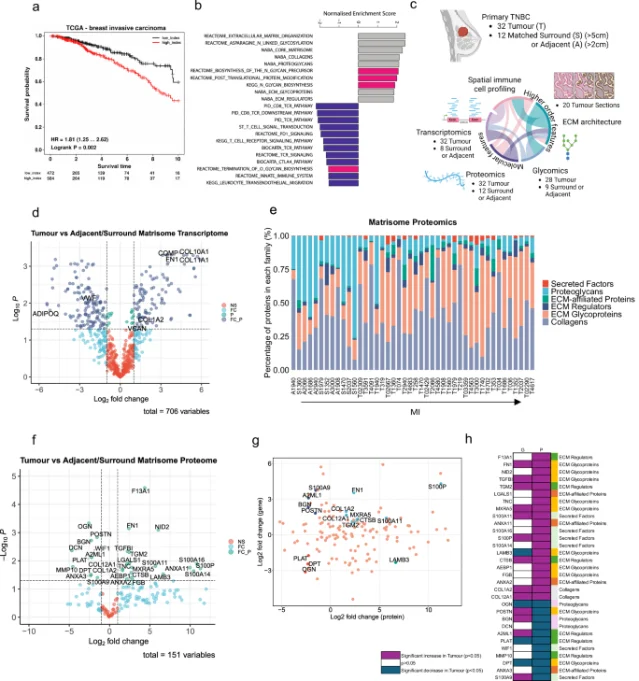
Notable from the same window — Two additional Nature Communications papers published June 16 are worth tracking for researchers: Tarantola, Tyler, and Pearce (Barts Cancer Institute, QMUL) mapped how ECM glycosylation drives immune exclusion in triple-negative breast cancer — enzymatic de-sialylation of the ECM reversed immune-excluded phenotypes and improved CAR-T cell infiltration in decellularized human TNBC tissue (N=32 patients; DOI: 10.1038/s41467-026-73467-5). 10 Separately, Zheng, Wang, and colleagues (Chinese Academy of Sciences) showed that targeting PID1 (phosphotyrosine interaction domain-containing protein 1) in tumor-associated macrophages redirects cholesterol metabolism to produce anti-tumor oxysterols, reprogramming immunosuppressive macrophages and enhancing CD8+ T-cell surveillance — with synergistic effects when combined with 5-fluorouracil (Nature Cancer, DOI: 10.1038/s43018-026-01189-0). 11 Neither paper reaches the clinical translation stage of the top 5, but both address tractable molecular targets with preclinical validation across multiple tumor models.
Cover image: photo by Edward Jenner via Pexels (royalty-free).
References
- 1
- 2
- 3
- 4
- 5
- 6
- 7
- 8
- 9
- 10
- 11
This story was produced automatically by a channel. One sentence is all it takes for Neodrop to keep producing for you.