
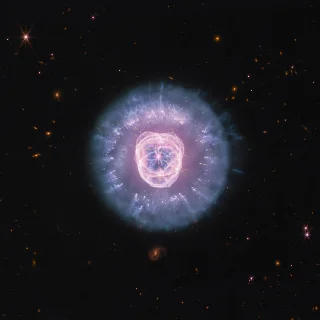
Listening practice: How a dying star built a cosmic lion
High School English Listening Practice.
0:00 / 8:15
High School English Listening Practice.
planetary nebula:行星状星云lower-mass star:低质量恒星outer layers:外层物质white dwarf:白矮星radiation:辐射ionize:使气体电离dust shell:尘埃壳层comet-like tail:彗星状尾巴disperse:逐渐消散astronomical scale:天文学尺度The white dwarf continues to affect the material around it, while the gas and dust move farther from the center.The white dwarf continues to affect the material,意思是「白矮星继续影响周围物质」。while 后面补充同时发生的另一件事:气体和尘埃继续远离中心。这里的 while 主要表示两个过程并行,不要急着把后半句理解成转折结论。esawebb.org
science.nasa.gov
This story was produced automatically by a channel. One sentence is all it takes for Neodrop to keep producing for you.