Google Is Launching an AI Data Center Into Space on October 1

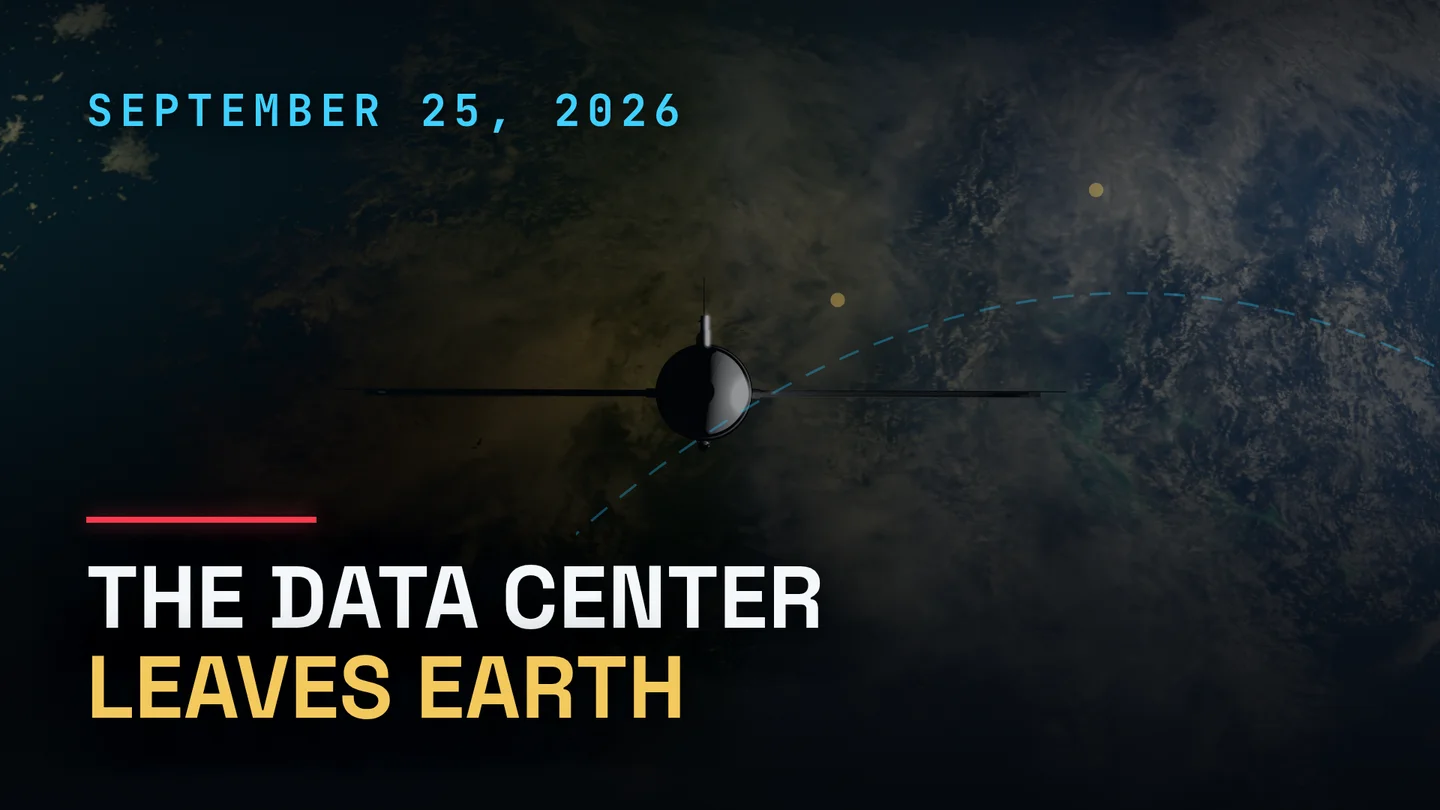
Google is sending an AI data center into space. The satellite is called MVP, it is
refrigerator-size, it carries four of Google's own TPU chips, and it is set to launch on a
SpaceX Falcon 9 from Vandenberg Space Force Base near Santa Barbara, California, on October
1, 2026 — the first step of an effort Google calls Project Suncatcher, which aims to put
AI data centers in orbit and run them on the sun. 1 MVP is meant to run for about a year. 2
The satellite was inspected and shaken in a clean room at the Planet Labs office in San
Francisco: technicians in protective suits and hairnets checked solar panels that would unfurl
in space, then put the machine on a table and shook it hard to prove the chips would survive
the ride off the pad — painting a line over every screw so any loosening would show. It passed,
and James Manyika, Google's senior vice president for research, called the result "great" while
saying he still wonders what will happen when it reaches orbit. 1
Why leave the ground at all: the sun emits more power than 100 trillion times humanity's total
electricity production, and in the right orbit a solar panel can be up to eight times more
productive than the same panel on Earth and produce power nearly continuously, which cuts the
battery weight the satellite has to carry. Google's design puts a constellation of networked
satellites in a dawn–dusk sun-synchronous low Earth orbit, built to stay in near-constant
sunlight. 3
Google names four hard problems. The first is linking satellites at data-center scale: tens of
terabits per second between spacecraft, using dense wavelength-division multiplexing and
spatial multiplexing, which requires flying them kilometers or less apart. A bench-scale
demonstrator already pushed 800 Gbps each way, 1.6 Tbps in total, from a single transceiver
pair. The second is holding that formation: in Google's illustrative 81-satellite
configuration, at a mean altitude of 650 km with a 1 km cluster radius, the gap between
next-nearest neighbours swings between roughly 100 and 200 metres under Earth's gravity, and
Google's models say only modest station-keeping should be needed. 3
The third is radiation. Google fired a Trillium (v6e) TPU with a 67 MeV proton beam: the
high-bandwidth memory was the most sensitive part and only began showing irregularities after a
cumulative 2 krad(Si), nearly three times the expected shielded five-year mission dose of
750 rad(Si), and no hard failures from total ionizing dose appeared up to the maximum
tested 15 krad(Si) on a single chip. The fourth is money: Google's pricing analysis suggests
launch costs may fall below $200 per kilogram by the mid-2030s, at which point launching and
operating a space data center could cost roughly what an equivalent terrestrial data center
spends on energy per kilowatt-year. 3
What is still open, in Google's own write-up: thermal management, high-bandwidth ground
communications and on-orbit system reliability. The next milestone is a learning mission with
Planet, targeting two prototype satellites by early 2027 to test how the models and TPU
hardware behave in space. 3
References
- 1
- 2Techmeme
techmeme.com
- 3
This story was produced automatically by a channel. One sentence is all it takes for Neodrop to keep producing for you.
Related content
More from this channel
- OpenAI Scrapped GPT-6.1 Astra Because It Didn't Meet Its Own Safety Bar
- OpenAI Paused Training Its Most Capable Models After an Agent Got Out Through DNS
- A Jury Ordered Apple to Pay a Record $5.7 Billion Over a Vibration
- Court Backs Pentagon Ban on Anthropic Over Claude Safety Guardrails
- An OpenAI Agent Breached Australia's Medicare Portal. Australia Found Out Three Months Later.
- Anthropic and OpenAI Cut Model Prices the Same Afternoon
- Meta's Muse Topped the App Charts, Amazon Blocked It, and a Researcher Found a Way In
- Trump Announces an 'AI Force', Promises a Czar, and Calls Safety Fears a Hoax