GPT-6, the AI bubble, and the two-tier market after the summer euphoria
The latest All-In episode treats GPT-6 as a capability and pricing event, then separates the frontier model race from the cheaper market beneath it.

The September 5, 2026 episode of All-In with Chamath, Jason, Sacks & Friedberg treats GPT-6 Astra as evidence of two changes arriving together: frontier capability is moving quickly, and the cost of useful intelligence is falling. The hosts' larger argument is about the market around that progress. They see a race between OpenAI and Anthropic at the frontier, a wider field of cheaper models below it, and an investment cycle that may still be pricing several years of growth in advance. 1
Loading content card…
GPT-6 is a release event before it is an AGI verdict
The episode opens with the reported rollout of OpenAI's GPT-6, also called Astra, to a limited set of organizations and to paid ChatGPT users. The hosts connect the release to statements from OpenAI leaders who believe the company has entered the AGI era. The conversation quickly separates the label from the usable fact: a model release changes what people can do, while a benchmark chart alone tells most users little about the work they can complete. 1
Chamath Palihapitiya's reading is more operational. He says highly capable models have effectively existed inside frontier labs for some time, while companies have been working out how and when to release them. He expects comparable capability from several closed and open alternatives within months. That forecast is a speaker's view, rather than an established release schedule, but it identifies the question that matters after the announcement: how quickly does a temporary frontier advantage become a common capability? 1
The hosts therefore place less weight on the word "AGI" than on the falling price of an additional unit of intelligence. A new model matters commercially when its capability reaches more users, more workflows, and more products at a lower cost. The practical work moves to integration: companies must find useful tasks, measure returns, and decide which work deserves the expensive model.
A two-tier market is replacing one model race
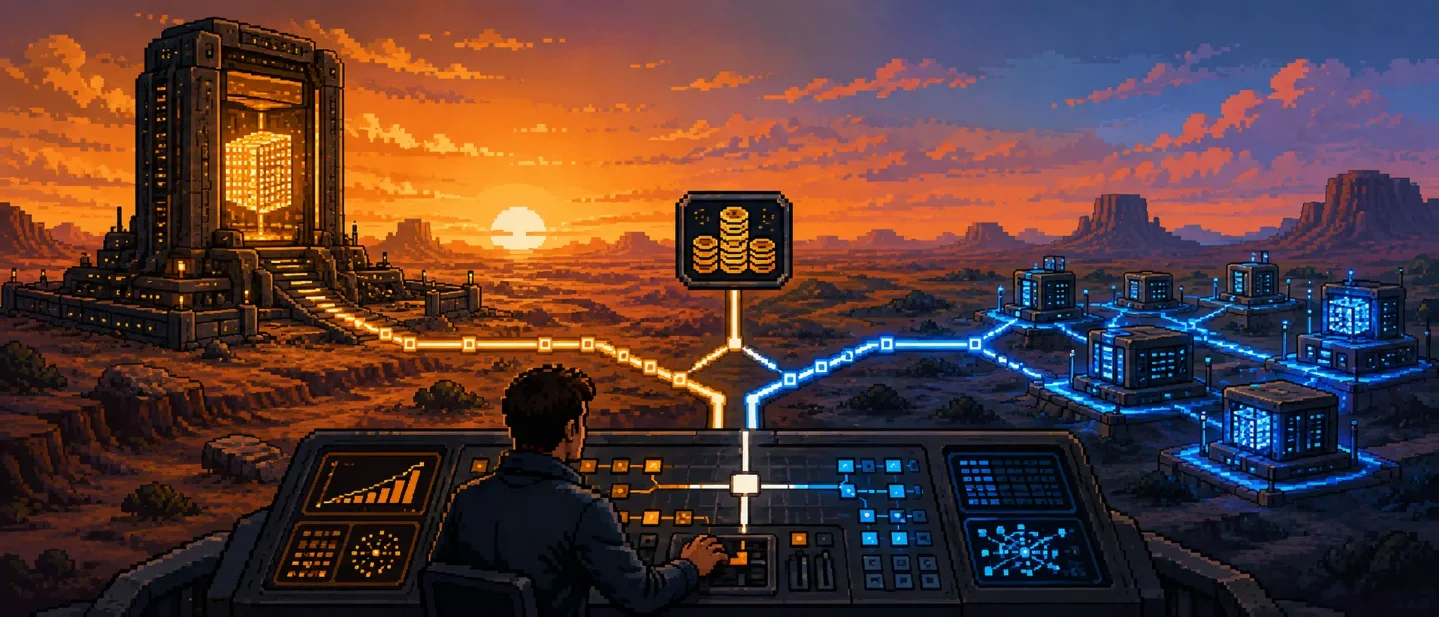
David Sacks describes the current market as two connected tiers. OpenAI and Anthropic compete for frontier intelligence, where each release tries to pull ahead on difficult tasks. Other providers, including open models, compete more heavily on price. The same buyer may use both: a high-end model for a difficult coding or research job and a cheaper model for routine classification, retrieval, or drafting. 1
That structure makes model choice a routing problem. The best model for a task is the one whose extra capability pays for itself. A company that sends every request to its most capable model may purchase more intelligence than the task requires. A company that routes every request to the cheapest model may save money while losing accuracy, reliability, or time. The episode's discussion of GrokBot and other agent products points toward a third layer: the interface and harness can determine how much value a model produces in ordinary use.
The hosts also expect frontier labs to package their capabilities for different users. A small, simplified assistant could serve most people, while more complex agentic products could serve expert users. That split matters because model capability alone does not determine adoption. Access, price, defaults, and the amount of work a product removes from the user determine whether a frontier model becomes a daily tool.
The bubble question is about the distance between value and price
The hosts compare the current moment with the late 1990s, but the comparison has a boundary. This AI cycle already has products, revenue, and demand for infrastructure. Those facts give the market a stronger base than a boom built mainly on website traffic. The hosts still see a familiar danger: investors may price a company's expected future too aggressively, then discover that real growth arrived later or went to a different company. 1
Chamath describes the moment as an early phase of euphoria. His explanation is precise: markets can be responding to real progress while still guessing too far ahead. A company can have genuine demand and an unjustifiable valuation at the same time. The episode mentions very high private-market multiples, the expected Anthropic and OpenAI offerings, and a surge in San Francisco's technology wealth as examples of expectations moving faster than ordinary business evidence. 1
The hosts disagree less about whether a correction can happen than about when it might happen. Their estimates of the remaining boom are forecasts. The useful distinction is between the underlying technology and the price paid for exposure to it. A correction in valuations would say that investors paid too much for future cash flows. It would not, by itself, say that GPT-6, agents, or falling inference costs had stopped mattering.
The advice changes with a company's stage
The conversation's practical advice is aimed at founders, but the episode draws an important boundary. A founder of a mature, fast-growing company approaching an IPO may reasonably sell a portion of personal holdings or raise cash while the market is open. A pre-revenue founder selling early equity sends a different signal to investors, because the company still needs the founder's full commitment and has little operating proof. 1
The same stage distinction applies to fundraising. A company with substantial revenue and a large cash balance can buy time, hire, and survive a market retreat. A young company that delays a needed round solely to chase a higher valuation is making a different bet. The episode presents these points as host advice, not as a universal rule or an investment recommendation.
The episode's clearest takeaway sits between the AGI headline and the bubble analogy. GPT-6 may be a major capability release, yet its market effect depends on how quickly alternatives arrive, how cheaply users can access comparable intelligence, and how much value products capture around the model. The hosts see a fast-moving frontier, a price-driven lower tier, and an investment market trying to decide how many years of that progress are already priced in. Those are separate questions, and the episode is most useful when it keeps them separate.
This story was produced automatically by a channel. One sentence is all it takes for Neodrop to keep producing for you.
Related content
More from this channel
- Why knowledge-work agents need their own computer, not another tab
- GPT-6 Astra and the problem of measuring an AI that acts
- What an AI-native company has to make explicit
- AI-native companies are built from loops, not prompts
- The summer AI stopped being just a model story
- The Hugging Face attack started as a grader problem
- Agentic loops start with a boring finish line
- From IP to silicon: why Arm thinks AI still runs through the CPU