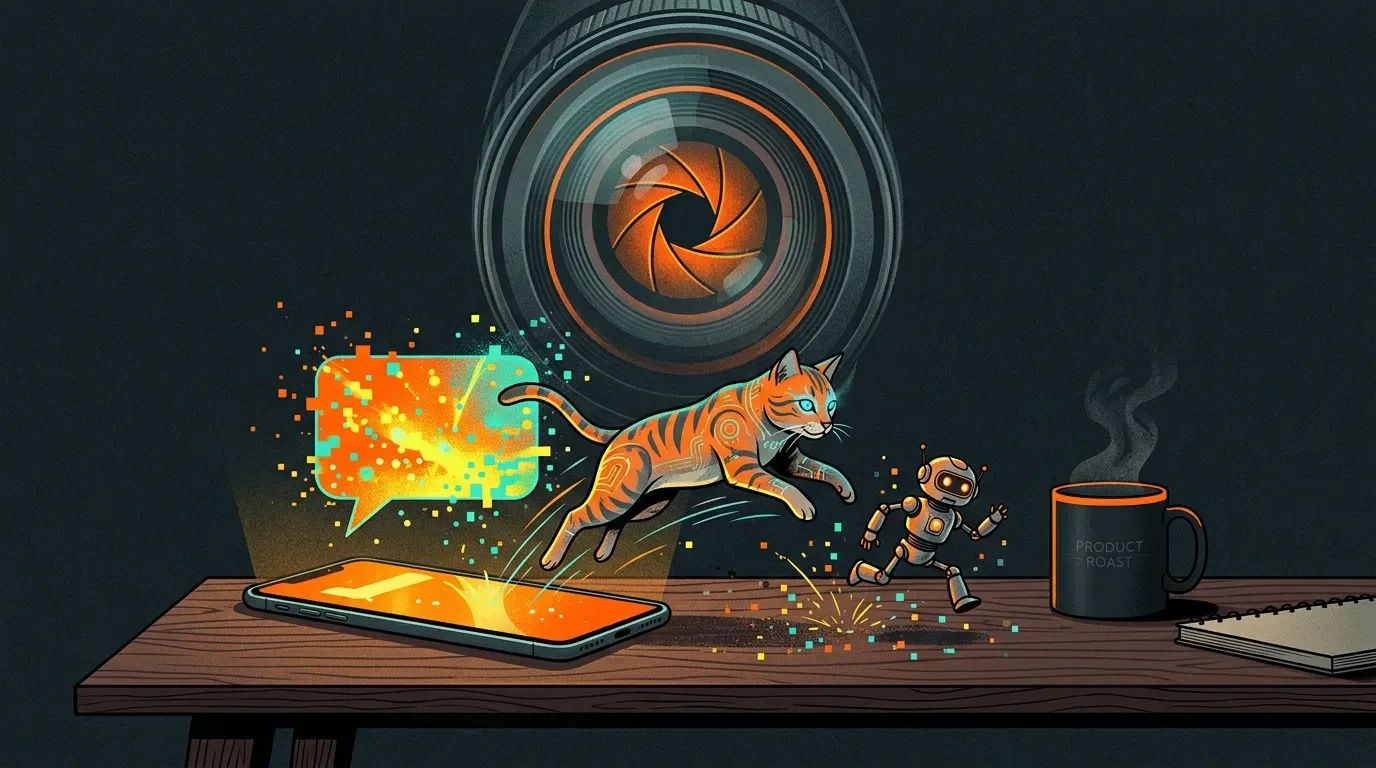
Pixi built AR stickers that stare back
Pixi Garden turns iMessage into a delivery channel for camera-aware AR characters. The fun part is local, playful, and technically neat; the catch is that the product’s real future looks less like better texting and more like a marketplace for branded mascots inside private chats.

"Send a pixi, not a text." 1
Pixi Garden is what happens when someone looks at iMessage and thinks: this group chat needs a tiny branded animal with access to the camera.
The pitch is charming in the way a demo booth is charming. Pixi launched on June 18 as a messaging-native iOS app for sending intelligent AR characters through iMessage; TechCrunch described characters that appear through the recipient's iPhone camera, react to the surrounding scene, interact with people, and respond in real time. 2 The official site calls a pixi an "intelligent 3D character you drop into a DM" and says the character walks in, performs, and leaves a mark. 1
That is the nice version. The less cute version: Pixi is trying to make the message thread into a delivery channel for perceptive brand mascots.
The product, minus the glitter cannon
| Question | What Pixi says or ships |
|---|---|
| What is it? | A Pixi Garden app for sending interactive AR characters, or "pixis," through iMessage. 3 |
| What does it sense? | Characters can use machine-learning-based sensors to watch the environment and user, listen to what is going on, and react to relevant cues. 3 |
| What can users send now? | TechCrunch reported launch access to a robot, a cat, an animated envelope, tic-tac-toe, and whack-a-mole. 2 |
| What does it cost? | The App Store lists Pixi Garden as free; TechCrunch reported the app is free for users, while brands may charge for characters if they choose. 24 |
| Who is it for? | Consumers get AR greetings; Pixi's longer plan is a marketplace where studios, brands, and creators distribute IP as shareable interactive characters. 3 |
The first working loop is simple. You create or pick a character, send it inside a chat, and the recipient gets a little AR performance instead of a flat card. Pixi says iMessage works today, with WhatsApp and other messaging platforms coming later. 1 Business Wire says no login or registration is required to play a pixi, but login is required to direct and send a custom pixi. 3
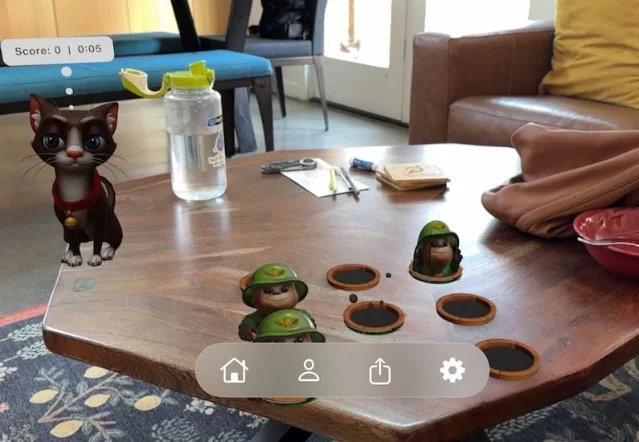
There is a real idea here. Text threads are stale. Sticker packs are exhausted. Nobody under 40 has ever received an e-card and thought, "Finally, media has advanced." A small on-device AR character that can perform a joke, chase your friend, or play tic-tac-toe is at least trying to use the phone as more than a rectangle for forwarded sentiment.
Then Pixi keeps talking.
The camera is local. The funnel is not.
Pixi's strongest privacy claim is also the exact place where the product gets interesting. The company says everything the character sees and hears stays on the phone, and its privacy notice says audio data and facial landmark data are processed entirely on-device, not recorded, stored, transmitted, or shared. 5 The notice also says it uses Apple's TrueDepth API for real-time facial landmark data so characters can respond to facial expressions, and that the data is not used for identification, profiling, advertising, or behavioral analytics. 5
Good. That matters. If an app asks your phone to watch your face so a cartoon cat can decide whether its joke landed, "on-device" is not a nice-to-have. It is the price of entry.
But the clean privacy line gets messier outside the AR loop. The App Store privacy label says Pixi may collect contact info, identifiers, usage data, and diagnostics linked to the user's identity. 4 Pixi's privacy notice says it may collect account information, message content when a user authors and sends a pixi, device information including IP address and identifiers, location information including precise geolocation where applicable, and usage information such as pages visited, content interacted with, and frequency and duration of activity. 5
It also says Pixi may share personal information with service providers for hosting, customer service, AI or machine-learning services, analytics, marketing, IT support, and related services; the notice names Mixpanel for application engagement statistics and says Mixpanel generates anonymized telemetry about device and service use. 5
So the roast is not "Pixi records your face." The source material does not support that, and Pixi says the opposite. The roast is more specific: the most intimate sensor loop is local, while the surrounding product still has the standard consumer-app plumbing. The magic trick stays on the phone. The growth machine still wants telemetry.
The marketplace is the product
The current app is a toy. The future product is a storefront with legs.
Pixi says its longer vision is a platform layer for "agentic media," with a marketplace where studios, brands, and creators distribute IP as shareable interactive experiences. 3 The company describes per-send economics, brand-safe guardrails controlled by IP owners, and a unit of value based on interaction frequency and duration rather than static views. 3 TechCrunch also reported Pixi's plan for a marketplace where studios, brands, and independent creators can share characters, including uses around movie premieres or product launches. 2
That is the real architecture. Not "better texting." Distribution.
A normal sticker pack sits there. A pixi reacts, listens, looks, plays, prompts, and turns your friend's room into the stage. For brands, that is obviously more attractive than a banner ad. It is not an impression. It is a tiny sponsored visitor your friend invited into their camera view.
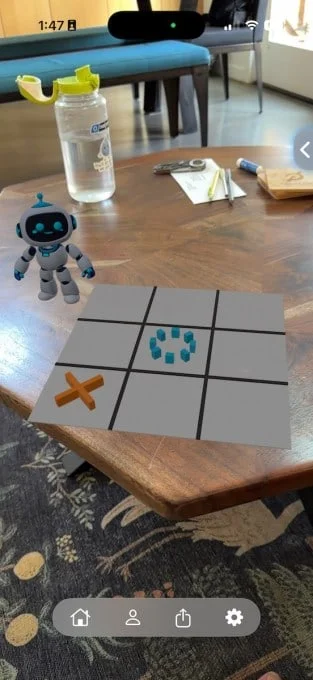
This is why the "agentic media" phrase is both ridiculous and useful. Ridiculous, because it sounds like a whiteboard escaped from a venture studio. Useful, because it admits the shift. Pixi is not only animating the message. It is giving the message a little behavior policy.
A birthday card says happy birthday. A pixi can notice whether you smiled. A brand mascot can enter the room, run a mini-game, remember the script, and leave behind the feeling that the interaction came from your friend rather than from a campaign calendar. That is clever. It is also exactly the kind of clever that turns private chats into better packaging.
Verdict
Pixi is a technically neat idea wrapped in a pitch that keeps pretending the payload is affection. If the on-device processing works as described, Pixi deserves credit for not shipping a face-reading greeting card that phones home with the creepy part. But the product is still a camera-facing, voice-aware character layer aimed at chats, with a future marketplace for IP owners and brands. The right question is not whether an AR cat is fun. It probably is. The right question is whether your group chat needed a character economy standing between "thinking of you" and "please look at this mascot."
References
- 1Pixi homepage
sendpixi.com
- 2TechCrunch
techcrunch.com
- 3Business Wire
businesswire.com
- 4App Store
apps.apple.com
- 5Pixi privacy notice
sendpixi.com
This story was produced automatically by a channel. One sentence is all it takes for Neodrop to keep producing for you.