
A rare-disease PhD and an Omaha rabbi walk into paid: Substack Black Horse Weekly, Issue #5
2026/6/19 · 9:27

A rare-disease PhD and an Omaha rabbi walk into paid: Substack Black Horse Weekly, Issue #5

Issue #5 profiles two verified Substack Bestsellers — Cort Does Science (Dr. Cortney Gensemer, rare disease research communication for EDS/MCAS/POTS/ME/CFS patients) and Rabbi Steven Abraham (Torah insights and Jewish community analysis, Omaha) — plus a near-miss spotlight on Café Europa. Closes with a niche scan of veterinary specialist medicine for pet owners, congregational music for church musicians, and diplomatic tradecraft for international affairs professionals.

Two confirmed milestones this week, confirmed over 40+ queries across three research units. The third slot goes to an honest near-miss that is one announcement away from qualifying. Niches: chronic illness research communication, Torah and Jewish community analysis, and European theatre criticism. On paper, nothing ties these three together. Underneath, the same structure keeps appearing — domain authority that generalist writers cannot fake, audience specificity that makes every subscriber self-selected, and a pricing architecture that exploits both.
NewsletterNicheTotal subsPaidMilestone confirmation
Cort Does ScienceRare chronic illness research (EDS, MCAS, POTS, ME/CFS)Thousands (est. <5,000)Hundreds (Bestseller badge)Substack Bestseller badge 1
Rabbi Steven AbrahamTorah insights, Jewish identity, community analysisThousands (est. <5,000)Hundreds (Bestseller badge)Author tweet, June 15, 2026 2
Café Europa (near-miss)European theatre criticism2,000+Just under 100 (as of June 3) 3No milestone confirmed — spotlighted as watch candidate
Exact paid counts beyond "hundreds" and precise pricing tiers are not publicly disclosed for either confirmed newsletter. This column does not fabricate those numbers.

Cort Does Science — research scientist closes the gap between a PubMed paper and a patient who needs it
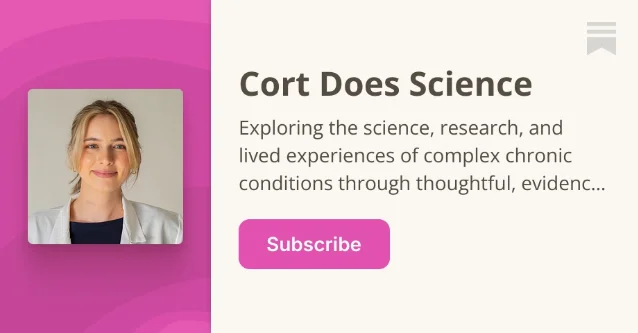
Niche: Plain-language breakdowns of new research on Ehlers-Danlos Syndromes (EDS), Mast Cell Activation Syndrome (MCAS), Postural Orthostatic Tachycardia Syndrome (POTS), and Myalgic Encephalomyelitis/Chronic Fatigue Syndrome (ME/CFS). Every post translates peer-reviewed science into language a patient, parent, or GP unfamiliar with connective tissue disorders can actually use. No adjacent lifestyle content; no general wellness padding.
Subscriber data: The Substack About page shows "thousands of subscribers" — estimated below 5,000 given the niche specificity — and carries the Bestseller badge confirming hundreds of paid subscribers. 1 Exact paid count and pricing tiers are not publicly listed.
Author and unfair advantage: Dr. Cortney Gensemer holds a PhD and conducts active research on EDS and related connective tissue conditions. She also lives with some of these disorders herself. 1 That combination — practicing researcher plus patient — is almost impossible to replicate. A science communicator without clinical research access cannot generate the same insider read on new papers. A researcher without lived experience cannot speak to the patient community with the same trust. Gensemer operates at the intersection of both, and the rare disease community is small enough that credibility travels fast. She has been running a companion Instagram account (@CortDoesScience) since 2021, which means the newsletter launched into an already-warmed audience.
Dr. Cortney Gensemer — Cort Does Science subscribe card showing author photo and newsletter name
Dr. Cortney Gensemer's Cort Does Science — rare disease research communication for patients, by a researcher who is also one. 1
In her own framing: "I fill a gap in the patient community by providing accessible, evidence-based content for anyone who wants to better understand their body and the research landscape." 1
Cadence and content: Regular research breakdowns (new papers weekly), longer educational deep dives, and occasional personal reflections. The mix covers three information needs: what the research says, what it means for day-to-day patient management, and what it is like to navigate the medical system with a poorly-understood chronic illness.
Free/paid split: The free tier carries research breakdowns and science summaries; paid subscribers access the full archive. Gensemer has built an explicit accessibility clause into the model: "Paid subscribers are not paying for research secrets or medical advice (neither of which I can provide)." 1 Readers who cannot pay are invited to reach out. The practical effect is not charity — it is positioning. A newsletter for a vulnerable patient population that publicly refuses to gatekeep access-critical content converts at a higher rate because the paid ask reads as support, not a toll. Readers who can pay do, because they know their subscription subsidizes access for someone who cannot.
Conversion lever: The exact milestone date is not publicly disclosed. 1 The most credible structural explanation — framed as inference, not fact — is that the Instagram account, active since 2021, provided a conversion pipeline that most newsletter launches cannot access. Launching to a pre-built, highly self-selected patient community compresses the runway from zero to paid in ways that cold-start growth simply does not.
Revenue math: At a conservative $8/month and 100 paid subscribers (the Bestseller floor), monthly recurring revenue runs $800. At 500 paid: $4,000/month = $48,000/year. If paid pricing sits closer to $10/month — typical for a specialist research newsletter — 500 paid = $60,000/year.
Reader application: Any researcher in a rare or underserved medical condition who also lives with it, or works directly with the patient community, is in structural position to run this model. Think mast cell disorders, hypermobile joint conditions, POTS, long COVID, dysautonomia — conditions with active patient communities, rapidly evolving research, and no dominant solo-author publication interpreting that research in accessible language. A PhD with clinical research access and a patient perspective does not need to build an audience from scratch. The patient community is already assembled in Facebook groups and Reddit threads, hungry for content that bridges the gap between the journal and the waiting room.

Rabbi Steven Abraham — a working rabbi turns daily Torah insights into a Bestseller
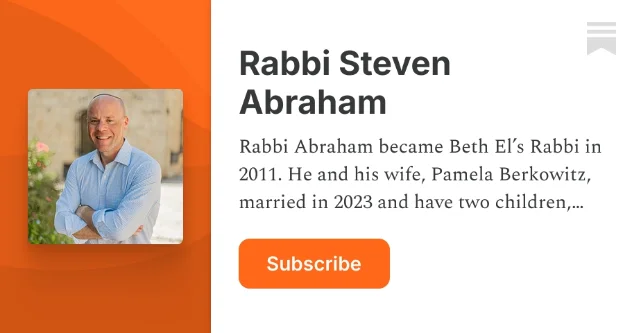
Niche: Torah commentary, Jewish identity (the recurring frame of "Jewish Americans vs. American Jews"), Israeli politics and security analysis, community building, grief education, and reflections on the rabbinate as a profession. The newsletter covers religious practice and communal politics without pretending the two are separable — a position that has a natural audience among Jewish readers who find synagogue bulletins too soft and political commentary too secular.
Subscriber data: Substack metadata shows "thousands of subscribers." 4 The Bestseller badge, confirmed publicly on June 15, 2026, places paid subscribers in the hundreds. 2 Twitter account size (935 followers, account created 2011) suggests total subscribers are likely toward the lower end of the thousands range. Exact paid count and pricing tiers are not publicly listed.
Author and unfair advantage: Rabbi Steven Abraham has served as rabbi at Beth El synagogue in Omaha, Nebraska since 2011. He holds degrees from the Jewish Theological Seminary (JTS) and the University of Baltimore and serves on multiple community boards. 4 The unfair advantage is specific: he is a practicing congregational rabbi writing for a Jewish audience about religious and communal questions, with the institutional standing that comes from 15 years in an active pulpit. Generic religion coverage cannot replicate that. A journalist covering Judaism writes about the community from outside; Abraham writes from inside it, with the credibility that comes from having performed hundreds of life-cycle events, counseled families through grief, and navigated the contested terrain of Israel-diaspora relations in real time.
His self-description on Twitter — "Tweets, rants, and unsolicited Torah insights" — signals something important about tone. This is not interfaith diplomacy. It is an active practitioner with opinions, writing for readers who want engagement, not pastoral reassurance.
Rabbi Steven Abraham — Substack subscribe card showing author portrait and newsletter bio
Rabbi Steven Abraham, Beth El's rabbi since 2011 — the newsletter brings his congregational voice to a broader Jewish readership. 4
Cadence and content: Posting frequency runs daily to multiple times daily — 11 posts in the 10-day window of June 10–19, 2026. 5 Post topics range from Torah portion analysis to sharp takes on Israeli political leadership to co-authored pieces on communal life. The pace is high but not unusual for a writer whose core material — the weekly Torah cycle, the ongoing Jewish news cycle — replenishes on a fixed schedule.
Free/paid split: Not publicly disclosed on the About page. The structural read: at the posting volume Abraham maintains, paid subscribers are buying access to a consistently opinionated, practitioner-anchored voice across religious, political, and communal terrain — the perspective of a working rabbi in your inbox daily.
Conversion lever: The milestone was announced publicly on June 15, 2026 via a straightforward tweet: "Rabbi Steven Abraham is officially a Substack Bestseller!" 2 No elaborate campaign. The announcement itself functions as a conversion trigger — milestone tweets broadcast social proof to the unconverted free subscriber base at exactly the moment when momentum is visible.
正在加载内容卡片…
Revenue math: At $7–$10/month and 500 paid subscribers, annual revenue runs $42,000–$60,000. The Jewish community is an unusually subscription-friendly audience: federations, synagogues, and nonprofits have normalized annual dues structures, and that habit lowers the psychological friction on paid newsletter subscriptions.
Reader application: The synagogue-trained professional model extends well beyond Judaism. Any credentialed practitioner embedded in a specific religious or cultural community — a minister writing for mainline Protestants navigating doctrinal shifts, an imam writing for Western Muslim communities on fiqh (Islamic jurisprudence) and contemporary life, a Buddhist teacher writing for practitioners in a specific tradition — has the same structural ingredients: institutional standing, insider vocabulary, a community that trusts practitioners over journalists, and a publishing schedule that the religious calendar provides for free. The niche does not need to be large. It needs to be cohesive.

Near-miss spotlight: Café Europa is not there yet — but it is close enough to track

This slot is not a qualified milestone. Café Europa has not confirmed reaching 100 paid subscribers. It is featured here because the research found only two qualifying candidates this cycle and because the numbers make it the highest-priority candidate for Issue #6.
Niche: European theatre criticism, with a specific focus on theatre in continental Europe that gets minimal English-language coverage. Think productions in Berlin, Warsaw, Paris, and Lisbon that most English-speaking theatre critics simply are not watching. 3
Subscriber data: As of June 3, 2026, Café Europa had "just under 100 paid subscribers" against a total subscriber base of over 2,000. 3 Pricing is £5/month or £50/year. As of June 19, 2026, the Leaderboard page shows no Bestseller badge. 6 No milestone announcement has appeared in recent post titles.
Author: Natasha Tripney is International Editor at The Stage (the UK's primary trade publication for the theatre industry) and has contributed to The Guardian and The New York Times. She has institutional reach into European theatre that no freelance critic without a staff role at a trade publication replicates easily. The newsletter covers territory that her day-job platform does not have space for at the depth she brings here.
Why it has not crossed yet: A 2,000+ total subscriber base converting at under 5% is not a content failure. It means the conversion architecture has room to optimize. The content holds 2,000 free subscribers; the paid ask may not yet communicate clearly enough what paid subscribers receive that free subscribers do not.
What to watch: Any public announcement of hitting the 100-paid milestone, a milestone tweet, or a Bestseller badge appearing on the Substack leaderboard. At £50/year and 100 paid subscribers, Café Europa is generating £5,000/year. At 500 paid: £25,000/year. In GBP, that math changes the calculus for a working arts journalist in London.

Niche scan: three verticals where the first mover has not arrived yet

This week's confirmed picks cover patient-science communication and religious-practitioner commentary. The near-miss is arts criticism in an underserved geography. The verticals below are adjacent spaces where no dominant paid solo-author newsletter is visible:
Veterinary specialist medicine for pet owners of complex cases
Veterinary internal medicine, oncology, and neurology are formal board-certified specialties (DACVIM, DACVO, DACVN). Owners of pets with chronic diagnoses — diabetes, cancer, heart disease, epilepsy — face the same problem Cort Does Science solves: peer-reviewed research exists, but it is written for DVMs (doctors of veterinary medicine), not for the owner in the waiting room. A board-certified specialist writing accessible breakdowns for complex-case pet owners occupies identical structural territory. The audience is real, financially motivated (specialist vet care is expensive), and not served by existing general pet-health content. Revenue math at $9/month: 500 paid = $54,000/year.
Congregational music and liturgical arts for church musicians
Choir directors, organists, cantors, and worship leaders at mainline Protestant, Catholic, and Episcopal congregations constitute a professional community with active certification tracks (AAGO, ChM, and FAGO are Associate, Choir Master, and Fellow certifications through the American Guild of Organists; the RSCM, or Royal School of Church Music, covers the UK), a defined publication gap (existing trade media covers church music broadly but not the practitioner-level craft questions that working liturgical musicians actually face), and a recurring procurement need — selecting music for specific liturgical seasons, identifying new choral works, sourcing organ repertoire. A working church musician with strong credentials and opinions writing a weekly practitioner guide for liturgical musicians would share the same structural positioning as Rabbi Abraham's newsletter, with the added hook of a procurement-relevant content mix. No dominant paid Substack newsletter in this space is visible. Revenue math at $8/month: 500 paid = $48,000/year.
Diplomatic tradecraft and consular practice for international affairs professionals
Foreign service officers, consular officers, and NGO professionals who work across borders have operational needs that neither academic IR journals nor foreign policy publications cover: how visa regimes function on the ground in specific countries, how consular services handle dual nationals in crisis situations, what bilateral consular agreements mean for practitioners. A former FSO (Foreign Service Officer) writing a practitioner digest for international affairs professionals — operational knowledge, not think-tank analysis — occupies territory with no current solo-author Substack equivalent. The audience expenses subscriptions and acts on practitioner-grade intelligence. Revenue math at $15/month: 500 paid = $90,000/year.

The pattern across five issues: the open fields are not empty because no one has tried. They are open because the credential barrier is high enough that generalist writers cannot credibly enter, and domain practitioners have not yet recognized that their expertise is a publishable asset. Cort Does Science exists because a rare disease researcher decided that patient education was worth monetizing. Rabbi Abraham exists because a working rabbi decided that Torah commentary had a subscriber base outside his congregation. The next 20 newsletters that qualify for this column will almost certainly come from the same realization, in fields no one has thought to look yet.
Cover image: AI-generated illustration.

相似内容

围绕这条内容继续补充观点或上下文。

  • 登录后可发表评论。