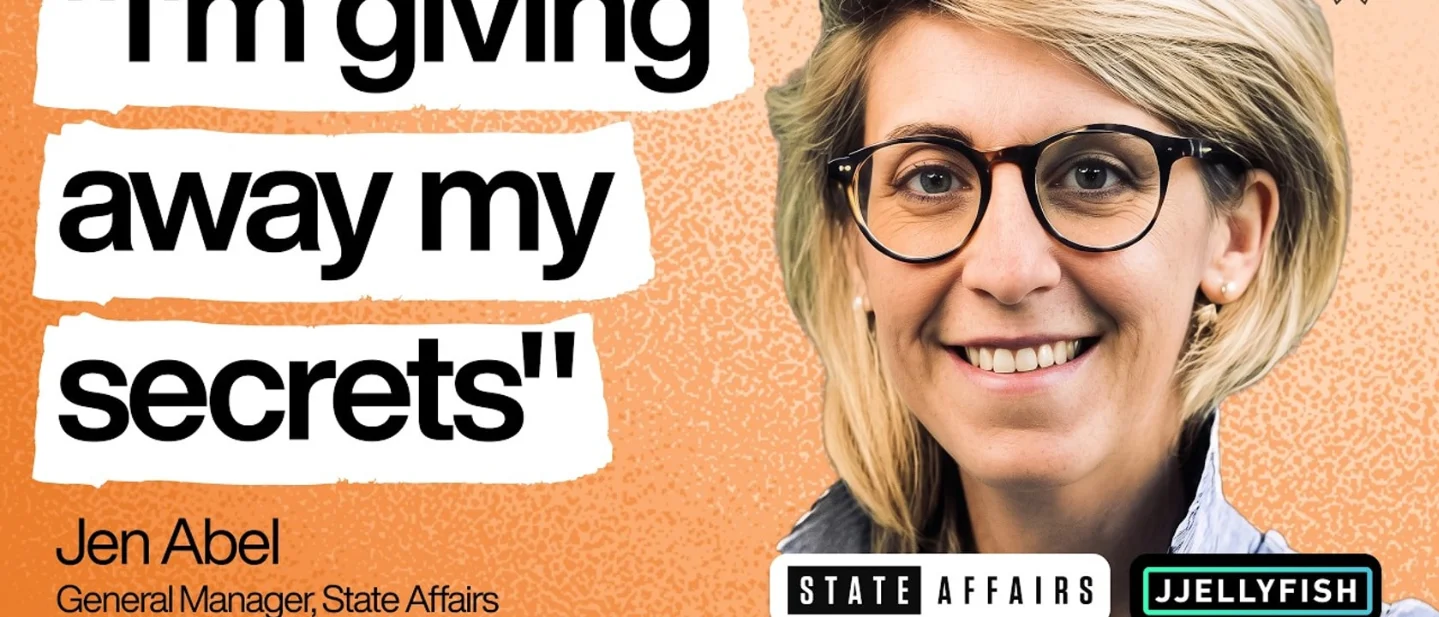
企业销售不是五步漏斗:Jen Abel 拆解 10 万美元到 100 万美元交易的 14 个动作
Jen Abel 把一笔 10 万美元到 100 万美元级别的企业交易拆成从找人、首次通话、演示、试点到采购签字的完整动作链。

这期 Lenny's Podcast 解决的是一个很具体的问题:一笔 10 万美元到 100 万美元级别的企业软件交易,从第一次联系到签约,究竟要怎样推进?主持人 Lenny Rachitsky 邀请企业销售顾问 Jen Abel,把通常写在 CRM 里的「介绍—演示—提案—签约—赢单」五个大桶,拆成接近 15 个实际动作。读者会看到一条完整路径:找谁、第一次电话问什么、为什么演示前还要再约一次、怎样设计两到三天的试点、何时把采购和法务拉进来,以及签字之后如何考虑扩张。1
节目里的 SpaceX 法务团队是一个假想案例,用来演示打法;节目没有声称 SpaceX 购买过这款法律 AI 工具。Jen Abel 是 JJELLYFISH 联合创始人,也是 State Affairs 的企业销售总经理;这是她第三次参加这个播客。节目方把这次对话定位为对完整企业销售周期的逐步拆解,视频时长为 1 小时 24 分 57 秒,于 2026 年 8 月 23 日发布。2
这套方法到底在解决什么
Jen Abel 反复强调一个词:alpha。在本期语境里,alpha 指一位企业高管引入新工具后能够获得的组织级增量价值,例如争取更多预算、获得更多人手、改变团队的工作方式,或把一项高风险工作重新组织起来。它比「我们能让某项任务快 30%」更高一层,因为高管要承担引入新供应商的风险,也要把这项变化讲给 CEO、COO、董事会或自己的团队听。
她给出的判断是:企业客户通常同时面对三种替代方案——什么都不做、继续使用现有供应商,或者改用竞争对手的部分方案。销售人员要获得的优势,一部分来自产品本身,另一部分来自对客户组织的信息差:客户告诉你的优先级、内部阻力、真正的支持者和潜在的反对者,竞争对手并不知道。因而,企业销售不是把一套固定推介词塞进客户的流程,而是逐步理解客户的购买流程,再影响这个流程。
她还把 10 万美元交易和 100 万美元交易放在同一条方法论里讨论。差别主要在前期会议数量、集成深度和价格;交易的基本动作仍然是找到高管价值、建立内部支持、验证用户价值、处理采购和推动签字。这个判断属于节目嘉宾的经验总结,适合用来检查流程,不能直接当成所有公司的经营定律。
第一步:从两层联系人同时进入
以假想的 SpaceX 法务团队为例,Jen Abel 建议创始人直接联系总法律顾问、法务负责人或首席法务官;企业客户经理(AE)或企业销售负责人则联系距离最高决策者一层的负责人,也就是 N-1。N-1 可以是负责一块业务的副总裁或相近级别的人。她不建议从更低层级开始,因为信息容易在组织里变成「传话游戏」:销售人员听到的是用户价值,却无法得到能让高管批准预算的组织价值。
这两个方向被她称为「pinser」或「pincher」模型。创始人和 AE 各自从自己的级别发起联系,目标是让其中一人回应后,把另一位同事或上级带进来。她把这种做法理解为级别对等:创始人可以说自己会带一位同事参加,AE 也可以邀请自己的创始人,并询问对方是否愿意让老板加入。
第一次触达只需要两到三句话。邮件、LinkedIn、电话、活动和个性化营销都可以成为入口,但 C-suite 高管更可能回应一对一沟通,而不是泛化的营销活动。信息里要说清楚三件事:你为什么找他、你理解组织正在发生什么变化、你的产品能解锁什么新的上行空间。只说「我们比别人快十倍」仍然像商品;更有力的问题是:如果这位高管把产品带给 CEO 或董事会,他能说自己因此改变了什么。
这一步的目标不是把所有功能讲完,而是让对方愿意开一场探索性对话。节目中提到可以用 OpenAI 或 Anthropic 辅助查找 N-1 候选人,但嘉宾同时要求人工核实结果。她还提醒,企业高管每天可能收到数百封邮件;创始人是否亲自参与、故事线能否让高管看到自己的组织收益,往往比再堆一个自动化触达工具更重要。
第二步:首次介绍电话,先让客户说
Jen Abel 把首次介绍电话称为所有通话中最重要的一通。她建议把它做成 30 分钟的一对一对话,不展示产品、不放幻灯片,也不要把它做成标准销售演示。开场可以很短:「我想先了解你是谁,也分享我们在做什么,以及我为什么联系你。你愿意先介绍一下自己吗?」
让客户先说的价值,在于销售人员可以先获得信息,再根据对方真正关心的事情组织表达。她建议围绕这些问题继续追问:公司面向下一年要改变什么?目前有哪些 AI 任务或组织要求?如果一年后做成了,内部会看到什么指标?为什么现在要做,为什么不能再等一年?这些问题要帮助对方说明变化、成熟度和组织优先级,而不是把对方引向某个预设功能。
她给出的一个假想回答是:法务团队希望把更多工作放到内部完成,大幅减少对外部律师事务所的依赖。销售人员接下来要问的,是内部化以后怎样才算成功、为什么这件事现在重要、团队想怎样重新组织。对方说得越具体,销售人员越能把自己的产品放进客户想去的方向里。
节目特别强调「不要录音」。这是 Jen Abel 的具体建议,理由是她认为对方在知道被录音后会减少脆弱和坦诚的表达。这个建议涉及隐私和合规时,应以参与者同意与适用法律为前提;节目本身没有展开法律边界。
首次电话不需要固定的推介稿。Jen Abel 认为,训练过度的销售人员容易把客户塞进既定脚本;创始人往往更擅长听出线索、讲清愿景和让对方兴奋。她把每四次介绍电话中的约一次视为成熟度不匹配:这时可以明确告诉客户,当前差距太大,一年后再谈。她的经验里,每四次电话有两到三次会暴露真正的问题;这组比例属于节目中的经验判断,不是独立统计。
她还区分了两种「节省成本」。一种是客户只想用最低成本完成低优先级任务,做到 60% 也可以;另一种是客户在处理高风险法务事项,错误、延误或漏掉法规会带来重大损失,这时解决风险可能支撑 25 万到 50 万美元的价格。销售人员需要判断客户要买的是便宜的执行,还是降低高风险的上行空间。
第三至第五步:演示前,先建立内部共同作者
传统流程常常把介绍电话直接连到演示。Jen Abel 认为中间缺了一次关键的 15 分钟跟进通话。此时,第一次通话中的联系人已经成为内部支持者,也就是 champion:他从早期就参与,希望项目落地,会持续提供内部信息,帮助组织协调。
在演示前,销售人员要和 champion 确认四件事:谁必须参加、每个人在意什么、什么内容应该避免、怎样才算一次成功的演示。销售人员可以列出五个可展示方向,再根据第一次电话提出其中两个最相关的方向,让客户补充自己团队的职责和关注点。这样做的结果,是客户内部的人开始在故事线上留下自己的判断,感觉自己参与了购买,而不是被动接收推销。
如果客户还没有形成足够成熟的判断,可以在大群演示前先做一次预演。预演的作用不是重复产品,而是再增加一位内部参与者,向他转述已经了解到的情况,再问对方能补充什么。每一次补充都会增加对组织的理解,并让更多人准备好参加正式演示。
正式演示应当有一小时,并尽量让所有参与决策的人入场。面对前面没有参加过电话的新成员,销售人员要重新说明自己是谁、为什么讨论这个问题,并用他们的语境开场。客户可以提前告诉销售人员,他们更喜欢 30 分钟讨论、10 分钟产品展示,还是更长的上手时间。演示不是把产品所有按钮依次点一遍,而是只展示与客户优先事项直接相关的那部分。节目中的经验说法是:产品 80% 的价值可能来自 20% 的功能;这不是普遍测量结果,而是用来提醒销售人员收窄范围。
第六步是演示后复盘。演示结束后,销售人员要尽快联系 champion,询问刚才的会议哪里有效、哪里失去了一位参与者、谁需要更多时间、还应该和谁单独沟通。组织里总会有能让交易停下来的关键人物,越早找到,越有机会补上理解缺口。若某人沉默两三周,champion 的反馈可以帮助判断是需求变弱、内部优先级变化,还是那位参与者没有得到足够说明。
这几步构成了企业销售里的信息积累:销售人员逐渐知道客户要解决什么、谁会使用、谁能反对、谁能推动、谁要为结果负责。对方也开始觉得自己在购买,而不是被销售人员推进。
第七至第九步:把试点变成一场有边界的验证
Jen Abel 建议,轻量产品的试点控制在 两到三天。她不希望把一个能在半天或几天内展示价值的体验拖成两周,因为漫长试点会让销售周期增加,也会把工作重新推回客户。试点对象应该是三到四名真实用户,而不是 C-suite 高管;高管负责赞助和预算,用户负责验证产品能否进入日常工作。
试点前要共同定义成功。客户不能只是登录后随便逛一圈,销售人员要写清楚参与者要完成哪三项具体任务、谁参加入门培训、每个人怎样使用产品,以及结束时要看哪些结果。成功标准要由双方共同写出,客户才知道自己在验证什么,销售人员也才知道试点结束后应该带什么证据回到决策会议。
节目区分了两种试点:
- 轻量试点。 客户不需要导入自己的数据,也能在沙盒中判断产品价值。此时可以做两到三天的低摩擦体验,嘉宾建议通常不收费。
- 深度集成试点。 产品必须接入客户数据、完成配置或搭建,30 天甚至更久才能看到价值。此时可以收费;如果客户继续签约,试点费用可以抵扣后续合同金额。客户愿意为前置工作付费,被 Jen Abel 视为一个强信号。
试点人数要少,试点任务要具体,销售人员还要记录用户真正做了什么:用了哪些功能、花了多少时间、在哪里遇到问题、谁没有完成第一步。用户说「我不喜欢这个」时,追问应该落在具体体验上:哪里不清楚、哪里不明显、在哪一步迷路。销售人员的工作,是把 99% 的试点任务从客户清单上拿走,而不是把一个空白环境交给客户自己探索。
试点开始前还要反向规划签约。销售人员可以先问:如果这次试点成功,距离承诺和全面部署还有多远?希望什么时候签字?采购负责人、安全负责人和法务负责人何时参与?如果客户回答「即使成功也要等下个季度」,节目建议推迟试点,以免试点成功后失去势头。
价格适合在演示完成、更多人理解价值之后继续讨论。若客户询问范围,可以给出区间,再和 champion 一起回答:他准备从哪一项预算中支付、如何向上级说明投资回报、需要一页什么样的材料。若客户还没有能力承担完整价格,可以讨论第二年逐步提高价格,但不应在没有理解客户价值的情况下先报一个看似精确的数字。
前置部署工程师(FDE)是否值得投入,取决于他在流程中承担什么任务。若 FDE 帮客户完成复杂工作、缩短周期、把产品从落地推向扩张,这项投入可能有价值;若 FDE 只是掩盖产品难以使用的问题,或让一名全职工程师长期服务一笔 10 万美元交易,经济模型就会变得危险。节目用 Palantir 的高额、复杂交易作对比,强调不同价格和服务结构不能直接套用。
第十步:试点后会议,先找出哪里会坏
试点结束后,销售人员可以发问卷、逐一访谈用户,或让 champion 组织内部复盘。会议前要把实际使用数据和共同定义的成功标准对上:大家使用了哪两项功能,第三项为什么没有使用?用户遇到的 bug 是阻断性问题,还是培训可以解决的问题?客户提出的愿望是新需求,还是他们根本没有尝试已经存在的功能?
这一步的重点是让客户说出真实顾虑。很多人会为了避免冲突而说「挺好的」,随后停止回复。Jen Abel 的判断是,champion 沉默往往比一句明确的拒绝更值得关注;真正投入的人会告诉你应该暂时搁置,等组织成熟或时机合适再回来。销售人员需要利用内部支持者,找到失去的参与者,并在正式结论形成前补一次沟通。
为什么 CRM 的五阶段不等于客户的购买流程
「介绍、演示、提案、签约、赢单或输单」适合做销售预测。比如,CRM 可以给介绍阶段 10% 的预测权重、提案阶段 50%、合同阶段 80%,帮助团队计算加权管道。Jen Abel 认为,这些阶段是宽泛的预测桶,不是客户实际要参加的五场会议。
真实交易可能在每个桶里都需要三到五次关键沟通:找人、建立内部支持、澄清成功标准、准备演示、复盘、做试点、倒推采购、处理合同和确认签字人。10 万美元交易在资格审查做得好的前提下可以更快;100 万美元交易通常需要更多前期会议,并且必须始终知道执行赞助人是谁。企业销售的任务,是镜像并影响客户的购买流程,而不是把客户硬塞进自己的五步流程。1
第十一至第十四步:采购、合同和签字
合同工作要在试点成功之前就开始倒推。销售人员应把双方同意的时间表写进邮件,让 champion 能够转发给采购部门:什么时候签字、价格基于什么日期、按时完成是否有合理的激励。节目建议把己方合同以 Microsoft Word 文件发送,而不是 PDF,让客户选择使用销售方文本,还是转用客户自己的文本。哪一份合同更快,应由时间表决定。
Jen Abel 把采购看成交易中真正能让销售人员拿到钱的环节。业务部门负责人喜欢产品,并不等于他有权从预算中付款;在采购流程完成、合同签署前,销售人员不应开始实施、推广或让人员入职。节目把采购流程描述为通常约 30 天的合同与法务往返,这个时长是嘉宾的经验估计,不是每家企业的固定周期。
合同审查发生后,不要把所有 redline 都当成同等重要。Redline 指合同一方对条款做出的修订标记。容易处理的修改可以先接受;影响业务、责任和风险的条款,则应尽快把双方律师、采购负责人和法务负责人拉进实时电话,而不是让邮件来回拖延。节目举例说,如果一家小公司被要求承担 1000 万美元责任保险,销售方可以根据真实风险提出反驳;如果风险确实达到这个水平,就必须按实际风险处理。
最后是签署。合同发出前,要确认真正的签字人。有时签字人是首席财务官,而不是推动项目的执行赞助人;champion 必须知道这一点,并在出现延迟时提醒签字人。到这里才算完成一笔交易,资金到账仍取决于客户自己的付款流程。
胜率、价格与流程健康度
Jen Abel 给出的企业销售经验基准是:从合格销售线索或商机到签署合同,健康赢单率大约在 25%—35%;她在对话的不同位置说过 30%—35% 和 25%—35% 两种区间。她还估计,从合格线索到演示结束可能损失一半,进入试点后约有 80% 能成功完成试点。上述数字都属于节目中的经验判断,文章不把它们当成普遍行业统计。
她的逻辑是,赢单率长期高于这个水平,可能说明价格太低,或者销售团队只挑选了成熟度很高、价值很容易被证明的客户。企业市场会互相交流价格;同一产品对不同公司报出 5 万美元和 50 万美元,可能破坏信任。另一方面,暂时没有推进的交易也可能在一年后重新回来,节目给出的经验估计是这类「回流」约占失败交易的四分之一。
这套指标适合做诊断,而不是拿来惩罚销售人员。赢单率低,可能是筛选不准、产品还没有达到承诺,或试点没有定义好;赢单率高,也可能是定价和客户选择出了问题。真正值得检查的是每一步有没有正确的人、明确的成功标准、可复述的证据和下一步安排。
签约之后:扩张、拒绝与产品管理
签约不是客户旅程的终点。若公司已经经历过相似客户旅程,扩张路径可能很清楚;若公司还在签下前十个企业客户,创始人需要参与判断:哪些功能是为单个客户定制的,哪些值得做成通用产品,哪些服务应该单独收费。节目认为,ARR(Annual Recurring Revenue,年度经常性收入)很重要,但企业预算里一直存在服务支出,服务也可以成为软件公司的销售内容。这个判断仍然需要结合产品毛利、交付成本和客户规模来验证。
对买方来说,最省时间的做法是尽早说清楚为什么现在不合适:时机不对、组织还没有准备好,或正在经历收购等重大变化。若客户已经承认某项变化很重要,只是卡在一个可以解决的内部条件上,销售人员可以利用前面谈到的信息一起拆解障碍;若组织确实没有能力在当前阶段接纳技术,销售人员也应尊重这个决定。
Lenny 在结尾把企业销售比作产品管理:两者都需要理解对方的问题、协调不同角色、定义成功、安排下一步,并持续处理小的阻力。这个类比有用的地方,在于它把销售从「讲一段话然后等待客户买单」还原成一项连续的项目工作。
给正在做企业销售的人:逐笔检查这 14 个动作
- 联系人:创始人是否触达最高决策者,AE 是否触达 N-1?
- 两到三句话:信息是否说明客户能解锁什么组织级价值,而不是只罗列功能?
- 首次电话:客户是否先说,销售人员是否问出变化、成熟度、时间和优先级?
- 内部支持者:是否有人从第一天起推动项目,并愿意提供内部信息?
- 演示前跟进:是否确认参与人、关注点、风险和成功标准?
- 正式演示:是否只展示与当前优先事项有关的功能?
- 演示后复盘:是否及时找出失去的人、需要补充的人和潜在反对者?
- 试点边界:试点是两到三天的轻量验证,还是需要收费的深度集成?
- 试点任务:三到四名用户要完成什么,结束时看什么证据?
- 试点后会议:实际使用情况是否与成功标准逐项对上?
- 采购时间表:签字日期、预算、采购、法务和安全审查是否已经倒推?
- 合同文本:客户要用哪一方的 paper,谁负责审查 redline?
- 采购谈判:哪些条款影响业务,哪些条款可以快速处理?
- 签字人:真正能签字、付款的人是谁,champion 是否知道如何推动他?
这份清单的用途,是发现交易中被跳过的动作。它不能替代对具体客户的理解,也不能把节目嘉宾的数字变成你的公司承诺。
原始节目
节目方单集页面:How to close $100K-$1M deals, step by step | Jen Abel。官方 YouTube 视频:How to close $100K+ enterprise deals, step by step | Jen Abel。视频发布时间为 2026 年 8 月 23 日 20:30(北京时间),时长 1 小时 24 分 57 秒。2
完整双语逐字稿
以下内容完整保留官方公开视频英文自动字幕,并在每一段后附中文翻译。公开视频字幕没有可靠的姓名级讲话人标记;
>> 只表示平台识别出的可能讲话切换,不能据此判断是 Lenny 还是 Jen Abel。因此以下统一标注「讲话人未区分」,不强行归名。节目中的 Work OS、Mercury 等赞助广告也保留在原文中,因为逐字稿按节目原始顺序完整呈现。原始字幕中的自动识别错误不在英文原文中擅自修正。时间轴|00:00
讲话人未区分
英文原文:
So, we're going to do something really unique with this conversation. Basically, go through the enterprise sales life cycle step by step. Let's set this up. >> Let's start with how do I even get the first meeting? We're in this flood the zone moment of everyone trying to break into the enterprise, but like what exactly are you solving for them as a problem? That's level one, but most importantly, the alpha and it needs to be different. >> Step two is basically writing the intro call. >> This is the most important call out of all of them. This is what I like to do. Super informal. Don't show them a demo. Don't show them slides. Focus on them. Have a one-on-one dialogue for 30 minutes. The whole game is to slow down to go fast. And by the way, do not bring a recorder to this call. >> What are the benchmarks for how often you get through each of these stages? >> The win rate for enterprise is usually around 30 to 35%. If your win rate is higher than that, your price is too low. What are some signs that your salesperson is not doing a great job? >> The most successful sales people are not trained salespeople. Fastest way to commoditize yourself is to go into some sales script. Budget, authority, need, timing. Like that should be in the back of your brain. You never actually ask those questions. >> What percentage do you think are just doing it wrong? >> 90%. >> Wow. >> Like it's literally so fun. People read these sales books, go to these sales trainings, they try and take someone else's game and run with it. And it never works that way. Most people think the sales process is five steps and we're already in step 10 and we're not even done. >> The worst thing you can do in the sales process is >> today my guest is Jen Ael. This is her third time on the podcast. For those that don't know Jen, she's co-founder of Jellyfish, GM of enterprise sales at State Affairs, and most importantly is the person that I've learned the most from about the art and science of enterprise sales. In our first conversation, we went deep on founder sales. In our second conversation, we focused on the1 million to $10 million enterprise sales playbook. And in this conversation, we do something I've never seen anyone do on another podcast. We go step by step through the full enterprise sales cycle. Most people think this is a five-step process. It turns out it's closer to 15 steps. Most people ignore a bunch of these steps that you'll hear about. We go through everything that you need to know at each step to significantly increase the odds that you close your deals. This episode is incredibly tactical and specific. You will learn a ton. I did for sure. Like I say in the episode, I always get so energized and just excited to sell something after talking to Jen. You will feel the same way after this conversation. I'm so thankful to Jen for sharing so much alpha with us. Before we get into it, don't forget to check out lennisproass.com for a free year of the hottest and most beautifully crafted AI products in the world available exclusively to Lenny's newsletter subscribers. With that, I bring you Jen Ael. Jen, thank you so much for being here. Welcome back to the podcast. A very rare third visit to the podcast. How does it feel? >> Round three. Super excited to be here, Lenny. >> I'm even more excited. So, we're going to do something really unique with this conversation. I've never done anything like this before. We're going to basically go through the enterprise sales life cycle step by step. You'll talk about this, but many people think it's like five steps. You talk about how it's actually something like 15 steps. A lot of people ignore a lot of these steps. >> And the idea is I want to create a very concrete and um tactical playbook for how to do enterprise sales. >> Okay, >> we've had conversations secrets >> all let's go. Just just suck them all out. make everybody amazing at sales. It'll be great. >> Awesome. >> Um, and you know, this touches on just like why why I think the podcast is really helpful to people and just the valley vibe even though you don't live in the valley. Just like there's so much win-winwin in helping people learn these things, you know, it may feel like why is she giving away all these things? But maybe actually let me ask you that just like why why do you share these things? Well, it's so interesting because there's so much art to this that even if you gave someone a 15step playbook there there's so much of a a feeling that you have to go off of. Like sales is sales is one-on-one, right? You're you're dealing with a variable, which is another individual. And if you ran the same flow every single time, it's going to probably not hit one out of every four times because everyone's different. Like some people like to joke, some people like the small talk opener, others want to jump right into it, some are technical, some are not technical, you know. So everybody's so different that even if I gave even as we go through all these 15 steps, while it's 80% of it, the other 20% is obviously the art of like how you make someone feel, do they feel heard, did you make it fun, did you tell a good story? I mean, that's also a huge part of this. too much to cover today. So, we'll stick to the we'll stick to the road map of like how to close these deals. But I think the interesting thing about enterprise sales is even if you're selling a the if you sell a $100,000 solution, it is the same exact process to sell a million-doll solution. So that's why it's it's an interesting process because the enterprise organizations are more sensitive to the process you take them through from a sales motion than they almost are with demoing the product. >> Amazing. And I'll just give a plug for if people want to continue learning, your Twitter feed is just the best. >> You share all this stuff constantly. >> Yeah. And I think you you talk about there's like rational reasons to share this stuff, but I think there's it feels like there's just like I just need to get this stuff out. People need to >> it's like a diary and it also helps me like keep it in my mind too, >> right? >> It's like my own education. Yeah, >> I know exactly what you mean. That's why I started writing. I started I was just like I just want to remember this stuff myself. I'm just going to share it and crystallize it. >> Okay. So before we get into the steps, let's set this up. What are some things people should know? What's kind of like the case study of what we're going to be using here? Let's use a company like SpaceX, right? Recently, you know, has seen massive news pressings. It, you know, everyone's probably targeting them, right? So, it's going to be a hard logo to go in and and win. Um, they are a technical organization, but I think what we do is target a non-technical team. So, we're going to like really get into like the nuance of this. So, let's do SpaceX. Why don't we pick legal? Let's have some fun with legal. The interesting thing about legal, it's the largest budget line item in the enterprise uh kind of budget, right? Sometimes three to four times other budgets and it's forever. There's always more money for legal. That's why there's so many legal AI startups. I get it now. >> 100%. >> Amazing. And I'll just add the reason like the reason I love to have you on this podcast is I I've left both of our previous conversations so just like fired up about selling. I just like I have nothing to sell, but I'm always feeling like I want to sell something now. I feel like I've learned all these things. It feels so fun. >> Sales. >> You're a master. You're actually a master at this. Sales is marketing. Marketing is sales to some extent, right? And >> All right. You do that better than a lot of people. I feel like you're using some sales technique on me to make me feel good about myself. Okay. Anything else before we get into step one of the sales enterprise? >> No, I think it's just good >> sales cycle. >> SpaceX and targeting the legal function >> and then like a 100K, let's say deal. And to your point, >> it's the same process whether it's 100K a million. And I will add a plug for a previous episode. You talk about why you want to be at least 100K something as a deal to be a a real enterprise company that will that will survive because the ROI and the >> and just the whole economics of that stuff, but we won't get into that. >> This episode is brought to you by our season's presenting sponsor, Work OS. What do OpenAI, Anthropic, Cursor, Replet, Sierra, Clay, and hundreds of other winning companies all have in common? They are all powered by work OS. If you're building a product for the enterprise, you've felt the pain of integrating single signon, skim, arbback, audit logs, and other features required by large companies. Work OS turns those deal blockers into drop-in APIs with a modern developer platform built specifically for B2B SAS. Literally every startup that I'm an investor in that starts to expand up market ends up working with Work OS. And that's because they are the best. Whether you are seedstage startup trying to land your first enterprise customer or a unicorn expanding globally, work OS is the fastest path to becoming enterprise ready and unblocking growth. It's essentially Stripe for enterprise features. Visit works.com to get started or just hit up their Slack where they have actual engineers waiting to answer your questions. Work OS allows you to build faster with delightful APIs, comprehensive docs, and a smooth developer experience. Go to works.com to make your app enterprise ready today. Okay, step one, where does where does it start? How do you start selling someone on your product? >> It's a great question. So, I think we'll start with like how do I even get the first meeting? How do I even engage with these people? There is so many there's so much nuance as you target as you know as we're using the case study of SpaceX today. You have the top of the rung, right, which is the the general counsel, the head of legal, uh the chief legal officer. They all kind of have slightly different titles, but they all carry the same weight, which is like who's the who's the lead of the team? And then underneath that, you have a bunch of people that carry a VP title, carry a director title, maybe just say lawyer on their LinkedIn. So you have to do the work to figure out what is my entry point. And there's only two entry points. Starting at the very very tippy top, meaning going direct to the decision maker, the chief legal officer, or finding the individual that would be maybe one step removed. Okay, I personally, other people would argue with this. I personally would not be targeting anybody else. It is the executive themselves or an N minus one. Okay, so let's talk about like why in order for an enterprise deal to move forward, you need to have this extremely compressed storyline that lands immediately to the objective that they want to solve for at the organization. It has to go beyond just an AI mandate. I think every company today has an AI mandate and I know everyone is an AI tool, but like what exactly are you solving for them as a problem? That's one, that's level one.
中文译文:
所以,我们要在这次对话中做一件非常独特的事。基本上,我们会逐步走过企业销售的整个生命周期。我们先把背景设定好。
我们先从一个问题开始:我到底要如何拿到第一次会议?现在正处于大家都试图打入企业市场、全面进攻的阶段,但你究竟在帮他们解决什么问题?这是第一层,但最重要的是,你的核心优势必须不同。
第二步基本上是设计首次介绍通话。
这是所有通话中最重要的一通。我喜欢这样做:非常非正式。不要给他们看演示,也不要给他们看幻灯片。把重点放在他们身上,用 30 分钟进行一对一的对话。整个关键在于,放慢速度,才能更快推进。顺便说一句,这通电话不要带录音设备。
每个阶段的通过频率,有什么基准吗?
企业销售的赢单率通常在 30%到 35%左右。如果你的赢单率高于这个水平,那说明你的价格定得太低了。
有哪些迹象说明你的销售人员表现不佳?
最成功的销售人员通常不是受过专业训练的销售员。让自己最快被商品化的方法,就是套用某种销售脚本。预算、权限、需求、时间。这些应该放在你的脑海深处。你实际上从来不会直接问这些问题。
你觉得有多大比例的人做错了?
90%。
哇。
这真的太有意思了。人们读这些销售书,参加这些销售培训,然后试图照搬别人的打法去执行。但事情从来不是这么运作的。大多数人认为销售流程有五个步骤,但我们其实已经进行到第十步了,而且还没有结束。
在销售流程中,你能做的最糟糕的事情就是——
今天的嘉宾是 Jen Ael。这是她第三次来到播客。不了解 Jen 的朋友,她是 Jellyfish 的联合创始人、State Affairs 的企业销售总经理,更重要的是,她是我在企业销售艺术与科学方面学到最多东西的人。
我们第一次对话时,深入讨论了创始人销售。第二次对话,我们聚焦于从 100 万美元到 1000 万美元的企业销售打法手册。而在这次对话中,我们做了一件我从未在其他播客上见过的事:逐步走过完整的企业销售周期。
大多数人认为这是一个五步流程。结果它更接近 15 个步骤。大多数人忽略了其中很多步骤,而你会听到这些步骤。我们会讲到每个阶段你需要知道的一切,从而显著提高成交的概率。
这一期节目非常注重实操,也非常具体。你会学到很多东西。我肯定学到了很多。就像我在节目中说的,每次和 Jen 聊完之后,我总是会变得特别有活力,甚至兴奋地想去卖点什么东西。听完这次对话,你也会有同样的感觉。
非常感谢 Jen 与我们分享这么多核心经验。在进入正题之前,别忘了访问 lennisproass.com。Lenny 的 newsletter 订阅者可以专享一年免费使用全球最热门、设计最精美的 AI 产品。
下面有请 Jen Ael。
Jen,非常感谢你来到这里。欢迎再次回到播客。非常罕见的第三次做客播客。感觉怎么样?
第三轮。非常激动能再次来到这里,Lenny。
我比你还兴奋。所以,我们要在这次对话中做一件非常独特的事。我以前从来没有做过这样的内容。我们要逐步走过企业销售的整个生命周期。你会讲到,很多人认为这大概只有五个步骤,但实际上更接近 15 个步骤。很多人忽略了其中很多步骤。
我的想法是,想为企业销售打造一份非常具体、非常实操的打法手册。
好,
我们之前已经聊过秘诀了。
好,来吧。把所有秘诀都榨出来,让所有人都变得非常擅长销售。一定会很棒。
太棒了。
嗯,你知道,这也触及了我为什么认为这个播客对人们很有帮助,以及即使你不住在硅谷,也能感受到那种硅谷氛围的原因。帮助人们学习这些东西,能带来很多双赢、三赢的效果。人们可能会觉得:她为什么要把这些东西全部分享出来?
不过,也许我应该问问你:为什么、为什么你要分享这些东西?
这个问题很有意思,因为销售里面有太多艺术性了。即使你给某人一份 15 步的流程手册,里面仍然有很多很多需要凭感觉判断的东西。销售就是一对一,对吧?你面对的是一个变量,也就是另一个人。如果你每次都完全按照同一套流程执行,可能每四次就有一次不会奏效,因为每个人都不一样。
有些人喜欢开玩笑,有些人喜欢用寒暄开场,另一些人想直接进入正题;有些人偏技术型,有些人则不懂技术。每个人都如此不同。所以,即使我们把这 15 个步骤全部讲一遍,虽然这能覆盖 80%的内容,但另外 20%显然是销售的艺术:如何让对方产生感受,对方是否觉得自己被倾听了,你是否让过程变得有趣,你是否讲了一个好故事。我的意思是,这也是其中非常重要的一部分。
今天没有足够的时间覆盖全部内容。所以,我们还是坚持讲如何成交这些交易的路线图。但我认为,企业销售有意思的地方在于,即使你卖的是一个 10 万美元的解决方案,销售一个 100 万美元的解决方案,流程也完全一样。所以这是一个很有意思的流程,因为企业组织对你带他们走过的销售动作和流程非常敏感,甚至几乎比他们对产品演示的敏感度还高。
太棒了。在继续学习方面,我还要推荐一下:你的 Twitter 动态真的很棒。
你一直在持续分享这些内容。
是的。我觉得你分享这些东西有一些理性的原因,但我感觉其中还有一种「我必须把这些东西写出来」的冲动。
它就像一本日记,而且也能帮助我把这些东西记在脑子里。
对吧?
就像是我自己的学习过程。
对,我完全明白你的意思。我开始写东西,就是因为我想让自己记住这些内容。我就想,把它们分享出来,把这些东西梳理清楚。
好。在进入这些步骤之前,我们先设定一下背景。我们要用的案例大概是什么?
我们就用 SpaceX 这样的公司吧,对吧?最近,你知道,它受到了大量新闻报道。大家可能都在瞄准它,对吧?所以,这会是一个很难打入的客户。
它是一家技术型组织,但我认为我们要瞄准的是一个非技术团队。所以,我们要深入讲讲这里面的细节。我们就用 SpaceX。为什么不选法务部门呢?让我们在法务上玩点有趣的。
企业预算中,法务是最大的预算项目。有时它是其他预算的三到四倍,而且是长期存在的。法务部门总会有更多预算。这就是为什么会有这么多法律 AI 初创公司。现在我明白了。
完全正确。
太棒了。我还想补充一下,我喜欢邀请你来这个播客的原因是,每次结束我们之前两次对话后,我都会特别兴奋,甚至会产生强烈的销售冲动。我总觉得自己想要卖点什么东西。你真的是销售大师。
销售就是营销。在某种程度上,营销就是销售,对吧?而且——
好吧。你在这方面确实比很多人做得更好。我感觉你是在对我使用某种销售技巧,让我自我感觉良好。
好。在进入企业销售的第一步之前,还有其他要补充的吗?
没有,我觉得这样就很好。
销售周期。
SpaceX,以及把法务职能作为目标。
然后,比如说一笔 10 万美元的交易。正如你所说,
无论是 10 万美元还是 100 万美元,流程都一样。我还想为之前的一期节目做个宣传。你讲过,为什么一笔交易至少要达到 10 万美元,才能让公司成为真正的企业级公司,并且能够存活下来,因为这涉及投资回报率,以及整套经济模型,但我们今天就不展开讲了。
本期节目由我们的季度冠名赞助商 Work OS 提供。
OpenAI、Anthropic、Cursor、Replet、Sierra、Clay,以及数百家其他成功公司有什么共同点?它们都由 Work OS 提供支持。
如果你正在为企业构建产品,你一定感受过集成单点登录、skim、arbback、审计日志,以及大型公司所要求的其他功能时的痛苦。Work OS 将这些会阻碍交易的问题,转化为可直接接入的 API,并通过一个专为 B2B SAS 打造的现代开发者平台提供服务。
我投资的每一家创业公司,只要开始向上拓展企业市场,最终都会与 Work OS 合作。因为他们是最好的。
无论你是一家试图拿下第一个企业客户的种子期创业公司,还是一家正在全球扩张的独角兽,Work OS 都是让产品达到企业级标准、解除增长阻碍的最快路径。
它本质上就是企业级功能领域的 Stripe。
访问 works.com 开始使用,或者直接加入他们的 Slack 社区。他们那里有真正的工程师在等待回答你的问题。Work OS 让你能够借助易于使用的 API、完善的文档和流畅的开发者体验,更快地构建产品。访问 works.com,让你的应用今天就具备企业级能力。
好,第一步究竟从哪里、从哪里开始?你如何开始向别人销售你的产品?
这是个很好的问题。我们先从一个问题开始:我到底要如何拿到第一次会议?当你瞄准 SpaceX 这样的公司时,会有很多细节需要注意。
最顶层的人选是总法律顾问、法务负责人、首席法务官。他们的职位名称略有不同,但权重基本相同:谁是这个团队的负责人?
在他们下面,有很多人拥有副总裁头衔、总监头衔,也有人可能只在 LinkedIn 上写着「律师」。所以你必须做好功课,找出你的切入点。
而且切入点只有两个:从最顶层开始,也就是直接联系决策者——首席法务官;或者找到一个低一级的人,也就是 N-1 级的人。
好,我个人的看法可能会受到其他人的质疑。我个人不会去联系其他任何人。要么就是这个高管本人,要么就是低一级的人。
好,我们来谈谈原因。要让一笔企业交易向前推进,你需要有一条极其精简的故事线,能够立即落到组织想要解决的目标上。
这必须超越单纯的 AI 倡议。我认为现在每家公司都有 AI 倡议,而且我知道现在大家都在做 AI 工具,但你究竟在帮他们解决什么问题?
这是第一点,也是第一层。
时间轴|10:00
讲话人未区分
英文原文:
But most importantly, the alpha, what does this executive uncover and unlock by bringing in a net new tool? Because bringing in a net new tool, okay, is risky. No one wants it. So if we're targeting the chief legal officer and the N minus one, you get two sent two two to three sentences max. Okay, that might be through an email LinkedIn, that might be through a phone call, that might be through an event, um or that might be through some marketing capability. Most most sea level executives don't respond to marketing. They might see your brand, they're not going to respond to a marketing campaign, okay? They will respond one-on-one. And the best individual to one-on-one to a corporate executive is the founder. Even if you're a series B, series C, right? It is the founder should be ecstatic to want to get in front of the chief legal officer at SpaceX. I think any founder that is um you know building something really meaningful knows the importance important role of that. Second is you can get your enter your um AE or enterprise sales lead to target the N minus one and you do what you call this I call it the the pincher model because you're going after two different people and trying to get them together. It's actually called the pinser model which is start at the very very top find that kind of floor and work in between them. Okay. So you're So these are the two types of these are the two layers you want to be targeting in landing that meeting because if you go any further than that you risk they're not going to be able to communicate your storyline. It's a game of telephone, right? And now you're learning from someone that is not near the budget or the executive discussions, right? Which is super risky because now you're learning about user value, not executive value. And a $100,000 deal needs a executive sponsor to sign off on it to allocate the budget. And this is why you need to start at these this these two layers only. >> Wow. This is there's going to be fractals of questions and things to dig into with each of these steps. Uh this is amazing. I love how just how specific and tactical you are with all of these things. I'm going to try to summarize a couple of these tips and then I have a follow-up question. Okay. So tip one is go after either the exact. So, in this case, it' be general counsel, head of legal sort of person or N minus one. >> Love that way of describing it. Maybe a VP. Uh, you want to pitch them two or three sentences in like a text or email or in a at a conference. Uh, and the key is to focus on the alpha, like the way what your product will unlock for them. >> Love that. Um, and it sounds like they're still like here's the problem we solve for you, but here's like really the alpha we unlock. >> Correct. Because for an executive to bring something in and be the sponsor and like share this and disseminate this down their down the down their command, they they need to stand behind something beyond, hey, we're going to make we're going to alleviate, you know, the the time it takes to do X activity. That's not big enough. They want like they're like a founder two of their own business unit. Like you got to sell the vision and what are these people going to how are they going to get to the next stage? um whether with their influence, get more budget, get more people um however they want to define that. >> Yeah. So it it sounds like you don't want to like they want to win and to win you need something unfair unfair advantage. That's exactly what you're >> pitching. That's exactly right. Yep. >> Okay. And then this Pinsir move I so the idea here is for the exact say chief legal officer general counsel foundry needs to reach out. Yep. >> And then this AE reaches out to the N minus one contact and you do this, you go from both directions. >> Y >> and I imagine the goal is one of them at least responds. >> That's correct. And then and then because you're only one step removed, they'll usually loop in that next person and or you can say the founder could say, "Hey, I'm going to loop in my so and so colleague. Who on your team should we also include?" Or the uh an enterprise executive could say, "Hey, I'm going to bring in my founder. Could we see if your boss might want to be a part of this, too? It's that parody of um of uh kind of rule. >> Yeah. Uh and they might be like, "Wait, I've heard of that. I think I heard that name before because I got this other email." >> Exactly. >> May not remember. >> Okay. Two questions. Um how do you find this N minus one person? Any just tricks? Is it just sitting on LinkedIn kind of figuring out? And then two is any channel recommendations these days? Like what's the best way to try to contact these people? So I'll use you can ask you can spar with open AI and anthropic to like let them do the quick scan of like hey I'm looking to target the chief legal officer of SpaceX and their deputy who are possibly people I should be targeting and then go off that and do your own gut check and search from there but usually they'll give you the the the proper names. Now here's the interesting thing about this. Everyone is probably also targeting those people. Okay? And this is why you need to be, and we talked about this in other episodes, it needs to feel so different and it needs to be about alpha. And if you don't have executive value, meaning you cannot get an executive exc excited by your value proposition, then you probably shouldn't be moving up into the enterprise doing a top down strategy. >> Got it. Okay. And then in terms of trying to reach out to them, any tips? Is it like the tools there to do to figure out their number, whatever? >> They're all so unique. Cold calling works. Again, it depends on the role. You're not going to cold call a highly technical person, but a non-technical person like it works. Email, LinkedIn, Twitter. >> Are there tools to find these emails and things? Like, is there something you recommend? >> Yeah, you can get like there's a ton of tools that do uh that do enrichment. Um I also like I'll try like LinkedIn first and say, "Hey, I shot you a note on on LinkedIn. I just want to make sure you got it." Like most people don't check that on a daily basis, but yeah. I mean you you have like um len list and all sorts of these enrichment tools that can give you the email but I think the number one thing is assume they are getting hit with hundreds of emails how are you going to message your storyline to stand out and that's that's not easy to do and that's really why I think having going back to our first episode why founder led sales is so important to figure that piece out. So that was my next question is what are some examples of two to three sentences if you have some in your head maybe even from your current job that that you think are good examples of this two to three sentence pitch. >> Yeah I think it comes down to like what is the differentiator to what you were offering not even like what do you do 10x better because to them it still sounds like a commodity. How are you rethinking the business model? How can you help them rethink the way that they're structuring their team? We're in this like flood the zone moment of like everyone trying to break into the enterprise and the number one thing that breaks into the enterprise is like oh the way I'm modeling my business unit here's how I should be thinking about it in the age of AI and it needs to be different it can't just be like oh like we'll help you reduce the number of resources here like no no no like how are they going to show needlemoving impact to their COO CEO you if they were to bring it to the board meeting like what would they say about the product this product will allow me to do what that's like the litmus test >> is this a pitch that you iterate on over time because it's pro you know you're probably getting some percentage of people responding so okay so the advice is like keep try to refrain this >> that's exactly right >> awesome okay anything else on the first reach out before we get to the next step >> no I think that's good >> okay okay let's do it I started shaking your head before you said it in case people are confused okay uh step two step two is basically running the intro call >> yes Okay, this is the most important call out of all of them. Okay, because you are setting the tone with how they think about you, how they respect you in your role in your craft and the information they will tell you on the first call, they will clam up moving forward because it starts to feel like a sales process. So, all of the information edge you can gain as a seller is on this first call. Okay? So, keep it and this is this is what I like to super informal. Don't show them anything. Don't show them a demo. Don't show them slides. Don't like focus on them. Have a one-on-one dialogue for 30 minutes. Okay? Now, again, if they're bringing in a seuite executive, you better have your founder join that call as well. I don't know any founder that wouldn't want to be in the room with a Fortune 100 seuite executive. So, make sure you bring in your founder uh if if you have that person on, but let's say you had the N minus one, you had like the VP out. Okay, like super brief. Hey, this is how I typically open. Hey, I'm going to keep this super informal. I don't even know if we need a full 30 minutes. Put them on the back for like, oh, this person's not trying to take up my time. All I would like to do is swap intros and if it makes sense, we can always get on another call and go much much deeper. But I just want to better understand like who you are and I'd love to share what we are doing and why I specifically reached out to you. So I say would you like to go first? Always let them go first. Give yourself the edge, right? Because if the more information you are receiving before you speak, the more you can frame it and and tighten it to what they specifically care about. So >> and they also aren't like sitting there now listening to a pitcher like everybody. >> Yeah. Exactly. Now they're talking. Now they're conversing. Now it's like, okay, now it's fun. Now this person's not pitching me. I'm in a conversation and a dialogue. Okay. So now you're talking to them and they usually they usually do a very brief over and they're like, "Hey, um, we didn't get a chance to look up the chief legal officers uh at SpaceX. Obviously, this is just a case, but like whoever that person's name is, you know, I oversee the legal team and blah blah blah." Okay, okay, great. They usually don't give you much. So they say, "Okay, interesting." Like how are you thinking about um like do you guys have an AI mandate going on at the organization? Like how are you thinking about the existing way you guys are doing work? like what are you looking for going into 2027? Like does anything need to change? Like ask does anything need to change? Because again, what they're going to usually default to is what conversations have have happened above them and have been transcended down.
中文译文:
但最重要的是,alpha,这个高管通过引入一个全新的工具,究竟能发现并解锁什么?因为引入一个全新的工具,好吧,是有风险的。没有人想要它。所以,如果我们的目标是首席法务官和 N-1 层的人,你给他们发两、发两到两到三句话,最多。可以通过邮件、LinkedIn,也可以通过电话、活动,或者某种营销手段。
绝大多数、绝大多数 C 级高管不会回应营销。他们可能会看到你的品牌,但不会回应营销活动,好吗?他们会回应一对一的沟通。而与企业高管进行一对一沟通的最佳人选,就是创始人。即使你是一家 B 轮、C 轮公司,对吧?创始人也应该非常兴奋地想要见到 SpaceX 的首席法务官。我认为,任何正在打造真正有意义的东西的创始人,都知道那个重要、重要的角色。
第二,你可以让你的企业客户经理,呃,AE,或者企业销售负责人去接触 N-1 层的人。你要做的是我称为「pincher 模型」的东西,因为你是在接触两类不同的人,并试图把他们联系到一起。它实际上叫作「pinser 模型」,也就是从最、最顶层开始,找到那一层,然后在他们之间推进。好吧,所以这是你在拿下那次会议时应该瞄准的两层。因为如果你再往下走,就有风险:他们可能无法传达你的故事线。这就是一场「传话游戏」,对吧?现在你从一个离预算或高管讨论并不近的人那里获取信息,对吧?这非常危险,因为现在你了解的是用户价值,而不是高管价值。而一笔 10 万美元的交易,需要一位高管赞助人来签字批准,并分配预算。这就是为什么你只能从这两层开始。
哇,这其中每一步都会有很多分形式的问题,以及很多可以深入挖掘的地方。呃,你讲得太棒了。我很喜欢你对所有这些事情讲得如此具体、如此有战术性。我会试着总结其中几个建议,然后再问一个后续问题。
所以,建议一是去找那个准确对应的人。以这个例子来说,就是总法律顾问、法务负责人之类的人,或者 N-1 层的人。很喜欢你这种描述方式。可能是一位副总裁。你要通过短信、电子邮件,或者在会议上,用两到三句话向他们推介。关键是要聚焦于 alpha,也就是你的产品会为他们解锁什么。我很喜欢这一点。听起来,里面仍然包括「这是我们为你解决的问题」,但更重要的是「这是我们真正能为你解锁的 alpha」。
没错。因为对于一位高管来说,要把某个东西引入公司、成为它的赞助人,并把它分享、传达给自己下面的团队,他们需要支持的不只是「我们会减轻完成某项活动所需的时间」这种说法。这还不够大。他们想要的是一种愿景,以及这些人将如何到达下一个阶段。比如,他们可以利用自己的影响力,获得更多预算、更多人手,或者用任何他们想定义的方式来实现。
是的。所以听起来,你不想只是说「他们想赢」,而是要说,要想赢,他们需要某种不公平、不公平的优势。你推介的正是这个。
完全正确。
好。然后是这个「pinser」动作。我的理解是,对于这位高管,比如首席法务官或总法律顾问,创始人需要主动联系。
对。
然后 AE 去联系 N-1 层的联系人,你从两个方向同时推进。
对。
我想目标是,至少其中一个人会回应。
没错。然后,因为你们之间只隔着一层,他们通常会把下一位相关的人也拉进来。或者,创始人可以说:「嘿,我会把我的某位同事也拉进来。你们团队里还应该包括谁?」又或者,企业销售负责人可以说:「嘿,我会把我们的创始人带进来。我们能不能看看你的老板是否也愿意参加?」这就是一种地位对等、级别对等的规则。
对。他们可能会想:「等等,我好像听说过这个名字。我觉得我收到了另一封邮件。」
没错。
好。我有两个问题。第一,你怎么找到这个 N-1 层的人?有什么小技巧吗?是不是就在 LinkedIn 上查找、想办法确定?第二,现在有什么渠道建议?如今尝试联系这些人的最佳方式是什么?
你可以和 OpenAI、Anthropic 进行对话,让它们快速扫描一下。比如说:「我想联系 SpaceX 的首席法务官,以及他们的副手。可能应该联系哪些人?」然后你再根据结果,凭自己的判断核实,并从那里继续搜索。但通常它们会给出合适的姓名。
现在,这件事有一个有趣的地方:可能所有人也都在联系那些人。好吧?所以这就是为什么你必须做到非常不同,而且我们在其他几期节目里也谈过,内容必须围绕 alpha。如果你没有高管价值,也就是说,你无法让一位高管对你的价值主张感到兴奋,那你可能就不应该进入企业市场,也不应该采取自上而下的策略。
明白了。好。那在联系他们方面,有什么建议吗?比如有没有什么工具,可以查到他们的电话号码之类的?
他们都非常独特。冷呼叫是有效的。还是那句话,这取决于职位。你不会去给一个高度技术型的人打冷电话,但对于非技术型的人来说,这种方式是有效的。电子邮件、LinkedIn、Twitter 都可以。
有没有什么工具可以找到他们的电子邮件之类的?比如有什么你推荐的吗?
有很多工具可以做数据补全。呃,我也喜欢先从 LinkedIn 开始,说:「嘿,我在 LinkedIn 上给你发了一条消息。我只是想确认一下你收到了。」大多数人不会每天查看 LinkedIn。但对,你也可以使用 len list 之类的工具,以及各种各样的数据补全工具来获取电子邮件。不过,我认为最重要的一点是:要假设他们每天会收到数百封邮件。你要怎样组织你的故事线,才能让它脱颖而出?这并不容易,而这正是为什么我认为,回到我们第一期节目所说的内容,创始人主导的销售如此重要。你需要弄清楚这一点。
所以,我接下来正想问这个问题:如果你脑中有一些例子,哪怕是来自你现在的工作,有没有一些关于两到三句话推介的好例子?
我认为,这归根结底是:你所提供的东西,差异化在哪里?而不只是「你比别人做得好 10 倍」——因为对他们来说,听起来仍然像是一种商品。你是如何重新思考商业模式的?你如何帮助他们重新思考团队的组织方式?
我们现在正处在一个所有人都试图进入企业市场、全面涌入的时刻。而真正能进入企业市场的第一大因素,就是让对方产生这样的想法:「哦,我现在的业务部门运作方式是这样的,但在 AI 时代,我应该这样思考。」这必须有所不同,不能只是说:「哦,我们可以帮你减少这里所需的资源。」不、不、不。你要问的是:如果他们把你的产品带到 COO 或 CEO 面前,他们怎样才能展示出推动重大变化的影响?如果他们把它带到董事会会议上,他们会如何描述这个产品?「这个产品将让我做到什么?」这就是试金石。
这是一种会随着时间不断迭代的推介吗?因为你可能会看到一定比例的人回复,然后继续尝试,继续重新组织这个推介。
完全正确。
太棒了。进入下一步之前,关于第一次联系,还有其他要补充的吗?
没有了,我认为这些就够了。
好,好。你刚才在我说之前就开始点头了,以防有人感到困惑。呃,第二步。
第二步基本上就是进行介绍电话。
对。这是所有电话中最重要的一通。好,因为你要通过这通电话,设定他们如何看待你、如何尊重你的角色和专业,以及他们会向你提供哪些信息。对方在第一次通话中告诉你的信息,之后会开始变少,因为整个过程会逐渐让人感觉像一个销售流程。所以,作为销售人员,你能获得的所有信息优势,都在第一次通话里。好吧?
所以,要让这次通话非常非正式。这是我喜欢的方式。不要给他们展示任何东西。不要给他们看演示。不要给他们看幻灯片。不要这样做。把重点放在他们身上,进行一次 30 分钟的一对一对话。
当然,如果对方带来了一位 C-suite 高管,那你最好也让你的创始人加入这通电话。我不知道有哪位创始人不愿意和一家《财富》100 强公司的 C-suite 高管同处一个会议。一定要让你的创始人参加,呃,如果对方确实邀请了这样的人。
但假设你联系到的是 N-1 层的人,比如某位副总裁。好吧,开场要非常简短。你可以这样说:「你好,我会让这次沟通保持非常非正式。我甚至不知道我们是否需要完整的 30 分钟。如果合适,我们之后随时可以再安排一次电话,进行更深入的交流。但我只是想更好地了解你是谁,也想分享一下我们正在做什么,以及我为什么特别联系你。所以,你愿意先介绍一下自己吗?」
永远让对方先说。给自己留下优势,对吧?因为在你开口之前,获得的信息越多,你就越能根据对方真正关心的事情来组织和收紧自己的表达。
而且,对方也不会觉得自己正坐在那里听一场推销,像面对其他所有人一样。
对,完全正确。现在他们开始说话了。现在你们是在交谈。现在感觉像是:「好,这很有趣。这个人不是来向我推销的。」你们是在进行对话和交流。
好。接下来你和他们交谈时,他们通常会做一个非常简短的介绍。他们可能会说:「嘿,我们还没来得及查一下 SpaceX 的首席法务官,当然,这只是一个例子。不过,不管那个人叫什么名字,我负责管理法务团队,等等等等。」
好,好,有意思。你们目前是如何考虑这些问题的?你们公司有没有正在推进的 AI 任务或要求?你们如何看待目前的工作方式?面向 2027 年,你们正在寻找什么?有什么需要改变的吗?
因为同样地,他们通常会默认重复上层已经发生过、并且层层传递下来的那些讨论。
时间轴|20:00
讲话人未区分
英文原文:
So the change is usually dictated from the top, which is great. So like what needs to change going into 2027 that you did in 2026 or maybe not at all. And that's when they start to open up. And again, you don't want to be too pointed of like anchoring them towards your product because again, the more they speak, you can start to like pull on the strings that matter. So they could say something along the lines of, you know, I'm making this up at this point, but we are really looking to figure out how to bring more of this work inhouse and rely less rely far less on external law firms, right? Because now we have more tools and capabilities. Okay. like is there a measurement to that right now? Like how are you guys like what does that look like internally in terms of um if you've done that successfully in 2027? And then they'll say you you're trying to understand like how mature is this thought, right? Okay. So now they're they're going in and they say they can't really answer that fully because okay like why is that important now? Like why didn't you why not wait another year? I mean you guys have so much going on. You just had this massive IPO. like what's what's causing the team to want to reshape this or or rework the way that they're um managing internally? And that's usually the moment of like where they start to really um guide you in terms of like how they want to structure their team. So now you're getting all of this information about where they want to go, right? How now when you talk about what you do, now you're the vehicle to get them there, right? And so the I try and spend maybe 10 minutes, the back 10 minutes explaining what we do and just keep asking them questions. Be like, "Oh, that's so interesting. Like what an exciting role to be in." Be like, "Okay, full disclosure, right?" And by the way, I take a step back to that. Do not bring a recorder to this call. Do not record the call. They will not be open. They will not be vulnerable. It might assume it's being recorded because I think everyone kind of operates under that assumption right now. But for the benefit of yourself, do not have a recorder present. Okay? like off the record between the two of us talking right now of what you just shared like what really matters like what what like or like what do you want to own or like what's the chronological like keep digging digging dig because the more you dig the deeper you go the more information they give okay now you can't sit there and just pepper them with questions this is that that art piece of like how open is this person some people are poker faces some people are not you will be able to go much deeper with some and not deeper than other. You just have to um improv. Okay. But after you now have that intel and you can now understand, okay, here's the frame I'm going to take. Now you can give them the pitch. Okay. I will confirm every single conversation I have this the storyline that I tell looks slightly different. I do not have a scripted pitch or frame for any call because it feels artificial. They feel it. It feels like you're putting them into a square box. Um, the best thing you can do is listen actively and then feel confident enough to to craft the pitch around what they just shared for you. >> That last part seems really hard to >> adjust and make up like here's what you're focusing on and here's how product is going to solve that problem for you. So that's kind of where that art and skill comes in. >> That's right. In enterprise sales, it's so so hard to hire for because the more someone is trained in sales, the less natural it feels. I know this is counterintuitive and we spoke about this on another call. The most successful salespeople are not trained salespeople. That's why founders are so good at this. Like they don't give themselves enough credit. What are they not good at? Probably following this process. What are they great at? pulling out information, pulling on strings, getting people excited by vision. No one can do that better than they can. >> What percentage of the time are you just like, "Okay, this isn't actually going to help you that much." So, just we'll share we're up to Okay, you're nodding that happens. >> One I would say two to three out of every four calls there's something real. >> One there's something real. >> Yeah, there's something real. One out of every four calls I'm like, "Listen, based off of the maturity of where you guys are and where we are, it's too much of a gap. Like I'd love to revisit this in a year like once you guys have a chance to like solve for X Y or Z. The that's such a great question about the qualification. Most people are not going to be qualified not because necessarily you're talking to the wrong person because if you're in an if you're an enterprise executive or enterprise account executive, your job is to know who to talk to. Okay. Um and your job is also to quickly um quickly disqualify someone. And it's probably one in every four calls. >> Awesome. >> Simply because of maturity. >> Cool. So you don't have to have this like intense pressure to nail it on every call and here's the here's the pitch. Okay. Awesome. What I also want to comment on is this idea of like getting them to share a bunch. It may feel tricky like you're tricking them into sharing all this, but really they have problems they want to solve and you're there to help them solve a problem. And so why would they not want to just like, okay, here's what we need help with. Here's the problem. Here's our priority. Their job is to their job is to buy solutions to these problems, right? That's why they have budgets, >> right? Um so that's why the the and the the fastest way to commoditize yourself is to go into some sales script like budget, authority, need, timing like that should be in the back of your brain. You never actually ask those questions. >> Cool. Okay. So the core kind of lesson here is focus on learning and extracting their priorities. And what I felt as you push them to get more real and and like really pressure test how big of a deal are these? Why are this why is this important? >> Because you want them to ask you those questions cuz that's when you know you're building a relationship. Like I like I had a client last week say to me, "What's the biggest learning your team has had this year?" Like every product needs to get better. Every product has a bug. Every product, you know, isn't able to do X or Y um as well as they said. And they're and I'm like that's a really good I'm like that's so funny. We just had a conversation about that and I she was like thank you for sharing that's they just want to know you're vulnerable because then it doesn't feel like it feels less like sales. >> I imagine um priorities for a lot of companies these days is saving token costs. >> I know classically you don't want to focus on lowering costs as a sales pitch. This is the cheaper option. Yeah. >> Thoughts on if that just comes up a bunch. We just like legal we just need to save costs. >> Yeah. So, in pricing, their job is to there's going to there's usually going to be two motions. I need the lowest cost way to do X because it's low on the totem pole and I really don't care if it's 60% of the way there. No one's getting fired over it. I'd rather just save budget or you're solving a problem that you can charge, you know, 250 500k land because the pro because it is a um uh high risk if you're dealing with legal, there's high risk to it, right? Missing information, being delayed on something, um uh not having people understand the importance of some new regulation or or law. um uh not being buttoned up. Um so I think for if you every organization looks differently right like marketing needs to have needs to prod you know marketing and sales it's very clear that number numbers drive them for legal it's probably they they need to stomp out risk. >> Awesome. So yeah basically this comes back to the idea of alpha and upside. The more you can be in that bucket the more you can charge the easier everything gets. >> Okay. Uh, anything else before we get to step three? >> No, I think for step one like that that that is the most important meeting and I feel like people just spend so much time talking about themselves and miss all the competitive advantage to win the deal. >> Yeah, your point about how as a buyer it's so like low pressure at that point. You're just exploring and so I could see why people come into it like cool, let's learn. Let's see if this versus you're in the funnel like oh I gota actually make a decision. I'm gonna have to let them down if I don't want this. Yeah, that's like dating. >> Yeah, like their openness to share more start to clam up a little bit more. But we'll talk about how to make sure that doesn't happen, too. >> Amazing. Okay, great. Great foreshadowing. Okay, so step three is writing a follow-up intro call. >> Yes. Okay, >> so usually right now the stages that most people have is intro, demo, proposal, contracting, you know, close one or close loss. There's five stages. They're very basic. People usually go from an intro call straight to a demo. Okay. The demo is your carrot in the process. Everyone wants to see this amazing thing you just spoke about. Okay. So, there's your job is to make sure that when you do that demo, the formal demo, you have the right people on the call because if you don't, one, it's you you lost your leverage to like organize that group and rally them. But more importantly, it you never want it to feel like one person's baby, right? If you're selling to that director or that VP, you need to make sure that that executive feels like they're part it's part of their baby and they're helping craft and they have their fingerprints on it. And vice versa, like you want the seuite if they they want they want their the actual users to feel like that they were bought in on this, too. Okay? So, you want to make this to be and this is the tricky part. You want it to you there's going to be someone that's going to champion it and get the deal done, but you got to make it feel like a group effort. Okay? So, the person that you had the intro call with, that's who you built the rapport with. That that's your that's your champion at this point. Whether it's the seauite executive or um one step removed. I say champion, mo most champions are one step removed. But let's just say the sea suite executive has delegated this now to the champion to to to navigate. Okay. for that demo call. Now with now before you do the demo, get on another call with them. Hey, I had so much fun on our first call. I think that there is a great opportunity to get to, you know, support you guys. This call should be 15 minutes, by the way. Okay. I'd love to do a demo, but before we do the demo, I want to make sure we have the right people in the room and I'm demoing the right things. Can you help me understand from the conversation we had earlier and as I'm walking you through now I'm walking you through the product.
中文译文:
所以,变化通常是由上层决定的,这很好。比如,进入 2027 年时,你们在 2026 年做过的哪些事情需要改变,或者哪些事情完全没做、但需要开始做?这时候他们就会开始敞开心扉。再说一次,你不想太过直接,不要把他们引向你的产品,因为他们说得越多,你就越能抓住那些真正重要的线索。
他们可能会说类似这样的话:「你知道,我现在是在举例,但我们确实很想弄清楚,如何把更多这类工作放到内部完成,少依赖——不,是大幅减少对外部律师事务所的依赖,对吧?因为现在我们有了更多工具和能力。」
好的。那目前有没有什么衡量指标?比如,如果你们在 2027 年成功做到这一点,内部来看,具体会是什么样子?然后他们可能会说……你其实是在试图了解,这个想法目前成熟到什么程度,对吧?
好。现在,他们继续说,但表示自己还不能完整回答这个问题。于是你可以问:「好,那为什么这件事现在很重要?为什么不再等一年?我的意思是,你们现在有那么多事情要处理。你们刚刚才完成了一次规模很大的 IPO。到底是什么原因,让团队想要重新塑造这件事,或者重新设计他们内部的管理方式?」
通常就在这一刻,他们才会真正开始引导你了解他们想如何组织团队。于是,你现在获得了所有关于他们想往哪里发展的信息,对吧?这样,当你谈到自己所做的事情时,你就成了帮助他们到达那里的一种工具,对吧?
所以,我会用大概 10 分钟——后面 10 分钟——来解释我们做什么,同时不断问他们问题。比如:「哦,这真有意思。能担任这样的角色一定很令人兴奋。」然后说:「好,坦白说,对吧?」
顺便说一下,关于刚才那一点,我要退一步强调:不要带录音设备参加这次通话。不要录音。他们不会敞开,也不会表现得脆弱。他们可能会默认通话正在被录音,因为我觉得现在每个人多少都在这种假设下行事。但为了你自己着想,不要让录音设备出现在现场。好吗?
比如,就我们现在两个人谈话而言,针对你刚才分享的内容,可以继续问:「真正重要的是什么?到底是什么?你想负责什么?事情的时间顺序是什么?」不断追问,继续挖掘。因为你挖得越深,走得越深,他们提供的信息就越多。
好。不过你不能坐在那里不停地用问题轰炸他们。这其实是一种艺术:这个人有多开放?有些人一脸扑克脸,有些人则不是。你会发现,有些人可以挖得深得多,而对另一些人就没办法那么深入。你只能即兴发挥。
好。但在你拿到这些信息之后,你就能理解:「好,我要采用这样的切入框架。」现在,你就可以开始向他们推介了。
好。我可以确认,我进行的每一次谈话,我所讲的故事线都会略有不同。我没有为任何一次通话准备固定的推介稿或框架,因为那会显得很不自然。他们能感觉出来。那会让人觉得你在把他们塞进一个方框里。
你能做的最好的事情,就是积极倾听,然后有足够的信心,围绕他们刚刚与你分享的内容来设计你的推介。
——最后那部分似乎真的很难现场调整并编出来,比如:「这就是你们目前关注的重点,而产品将这样帮助你解决那个问题。」所以,这正是艺术和技能发挥作用的地方。
——没错。在企业销售中,这一点非常难招聘到合适的人,因为一个人接受的销售训练越多,表现得就越不自然。我知道这听起来违反直觉,而且我们在另一次通话中也谈过这个问题。
最成功的销售人员并不是受过训练的销售人员。这就是创始人在这方面如此出色的原因。他们没有充分认识到自己的能力。他们不擅长什么?可能是不太会遵循这个流程。他们擅长什么?挖掘信息,抓住关键线索,让人对愿景感到兴奋。没有人能比他们做得更好。
——有多少时候,你会直接说:「好,这其实不会对你们有多大帮助。所以,我们就先分享一下目前做到哪一步了。」好,你点头了,这种情况确实会发生。
——我会说,每四次通话里,有两到三次确实存在真正的问题。
——两到三次?确实存在真正的问题?
——对,确实存在真正的问题。每四次通话里有一次,我会说:「听着,根据你们目前的成熟度,以及我们目前所处的阶段,这个差距太大了。我很愿意一年后再重新讨论,等你们有机会解决 X、Y 或 Z 之后。」
关于客户筛选,这是个非常好的问题。大多数人不会符合资格,未必是因为你找错了人。因为如果你是企业高管,或者企业客户经理,你的工作就是知道该和谁谈,对吧?你的工作还包括迅速判断某个人是否不符合资格。大概每四次通话里就有一次会这样。
——太棒了。
——仅仅是因为成熟度的问题。
——好。所以,你不需要承受那种必须在每次通话中都完美拿下、并且马上给出推介的巨大压力。
好。我还想补充一点关于让他们分享很多内容这件事。你可能会觉得这有点棘手,好像是在诱骗他们分享这么多东西,但实际上,他们确实有想解决的问题,而你就是来帮助他们解决问题的。所以,他们为什么不愿意直接说:「好,这就是我们需要帮助的地方。这就是问题。这就是我们的优先事项。」他们的工作就是购买这些问题的解决方案,对吧?这就是他们拥有预算的原因,对吧?
所以,让自己变成一种可替代的商品,最快的方式就是套用某种销售话术,比如预算、决策权、需求、时间安排。这些内容应该放在你的脑子里,但你实际上永远不要直接问这些问题。
——好。好的。所以,这里的核心经验就是,重点放在了解并提取他们的优先事项上。而且,当你推动他们说得更真实,并真正检验这些事情到底有多重要时,你会不断追问:「这到底有多大的影响?为什么这件事很重要?」
——因为你希望他们反过来问你这些问题,因为那时你就知道自己正在建立关系。比如,上周有个客户问我:「你们团队今年最大的收获是什么?」
每个产品都需要不断变好。每个产品都有 bug。每个产品都会有一些事情做不到,或者做得没有他们所说的那么好。然后我就说:「这是个很好的问题。说来也很有意思,我们刚刚正好讨论过这个问题。」她对我说:「谢谢你的分享。」
他们只是想知道你也有脆弱的一面,因为这样就不会感觉像是在销售,或者说,销售感会减轻一些。
——我想,现在很多公司的优先事项可能是节省 token 成本。
——我知道,传统上你不希望把降低成本作为销售话术:「这是更便宜的选择。」是的。
——如果这个问题经常出现,比如他们说:「我们在法务方面就是需要节省成本。」你怎么看?
——对。在定价方面,他们通常会有两种情况。
第一种是:「我需要用最低成本的方式完成 X。」因为这件事的优先级很低,我并不在意它是否只做到 60%。没人会因此被解雇。我宁愿直接节省预算。
另一种情况是,你正在解决一个问题,因此可以收取大约 250k 到 500k 的金额,因为它本身具有高风险。如果你处理的是法务问题,风险就很高,对吧?比如遗漏信息、某件事被延误、没有让人们理解某项新法规或法律的重要性,或者没有把事情做得足够周全。
所以我认为,每个组织的情况都不一样。营销需要……需要推动……你知道,营销和销售很明显是由数字驱动的;而对法务来说,他们可能需要做的是消除风险。
——太棒了。所以,基本上这又回到了 alpha 和上行空间的理念。你越能处在那个区间里,你就越能收费,而且一切都会变得更容易。
——好。在进入第三步之前,还有其他要补充的吗?
——没有。我认为就第一步而言,那是最重要的一次会议。我觉得人们总是花太多时间谈论自己,从而错过了赢得交易的全部竞争优势。
——对。你提到,作为买方,在那个阶段压力其实很小。你只是在探索,所以我能理解为什么人们会以这样的心态参加:「好,我们来了解一下,看看这个和那个。」而不是觉得自己已经进入了销售漏斗:「哦,我实际上得做出决定。如果我不想要这个,我还得让他们失望。」对,这就像约会。
——对。他们愿意分享更多的程度会开始稍微收缩一些。不过,我们也会谈到如何确保这种情况不会发生。
——太棒了。好,很好。这个铺垫很棒。
好,第三步是撰写一次介绍电话后的跟进通话。
——是的。好。
所以,现在大多数人通常设置的阶段是:介绍、演示、提案、签约,然后是成交或流失。一共五个阶段。它们都非常基础。人们通常会从介绍电话直接进入演示。
好。演示就是整个流程中的「胡萝卜」。每个人都想看看你刚才谈到的这个了不起的东西。
好。所以,你的工作是确保在进行正式演示时,通话中有合适的人参加。因为如果没有,第一,你就失去了组织并动员这个群体的杠杆。更重要的是,你绝不能让人感觉这只是某一个人的项目,对吧?
如果你是向那位总监或副总裁销售,就必须确保那位高管觉得这是他们自己的项目的一部分,他们正在帮助设计,而且其中留下了他们的印记。
反过来也一样:你希望 C-suite 高管让实际用户觉得,他们也参与并认可了这件事。
好。所以,你要让这件事看起来是——这正是棘手的地方——你希望它看起来像这样:确实会有一个人负责推动它并促成交易,但你必须让它显得像是一个团队共同努力的结果。
好。所以,和你进行介绍电话的那个人,就是你已经建立关系的人。此时,那个人就是你的内部支持者。无论那个人是 C-suite 高管,还是隔着一层的某个人。
我说的「支持者」,大多数支持者其实都隔着一层。不过,我们就假设 C-suite 高管现在已经把这件事交给了支持者,让他来推进。
好。针对那次演示通话,在进行演示之前,再和他通一次电话。
「嗨,我们第一次通话时聊得非常愉快。我认为这里有很好的机会,可以帮助你们。」
顺便说一下,这次通话应该是 15 分钟。
「我很愿意进行一次演示,但在演示之前,我想确保房间里有合适的人,而且我演示的是正确的内容。根据我们之前的谈话,以及现在我带你了解产品的过程,你能不能帮我理解……」
时间轴|30:00
讲话人未区分
英文原文:
What do you think would resonate with the team? Now you're collecting more intel. Okay. Now they're the now it starts to feel like oh great I get now they get to put their fingerprints on this. So it's like okay we when we demo to this group at this point I want this question to be asked. can you ask this question in the meeting because I want them to understand the value and they'll be like I'm actually going to ask this question because it's going to resonate more. So now you're building this demo alongside this internal executive and none of your competitors are doing this. No other startup you're competing with is taking these extra steps. You now have the alpha of the intel they are giving you from these conversations and now they feel part of this journey. Okay, now they trust you. So it's like, okay, so now you're spending 15 minutes trying to figure out, okay, or 30, right? Sometimes they won't give you that much more time, but ask for 30 is probably do 15 and say, here are the five different things we can we can go into. From our first conversation, it sounds like these two things matter, but let me show you all five. And then they might say, okay, I want you to do those two that we spoke about, but I also want you to show this because this is also part of our mandate, and this will make it feel holistic. Okay, so now you just mapped out the story line with an internal partner on their end and now you're now you have the names of the right people. Now you're going to to close that call. Great. Is there a time we can look at everyone's calendar and put this on the on the calendar. Make the meeting an hour. The demo should be an hour. Okay. Now, you can ask before this meeting, do we want to do a pre-demo to um maybe someone else on your team that would be excited by this before you race to the group demo? Um or should we just do the group demo? Like, they know their organization better than anyone else and like how pressing this need is. Now, if they're less mature in knowing if they want something like this, they probably want to bring in someone else before the big group. If they're like, "No, no, no. this is something we want to, you know, really move into. They probably are ready to go into a group. So, you just need to figure out where they are on that maturity arc of their decision. Okay. So, now you have, do we want to go into pre-demo? Do we want to assume they checked off pre-demo or do we want to do group demo? >> How often does that pre-demo happen? >> If you're I mean, I try and push for it because again, it's just more intel. >> Yeah. So, let's say let's assume there's a pre-demo. >> Okay. So now you have a new colleague on the phone and you could say, "Hey, I'm going to for five minutes I'm just going to catch you up on the the things that I just learned from soand so. What can you add to that? What do you think?" Do you see how you're just collecting more and more intel along the way? So now you're building the business case for them. Now they feel like they're buying, not being sold to. Okay? So now you have two or three people at this point already excited for the big group demo. The worst thing you can do in the sales process when you move into demo is just go into one straight demo with no problem. Or worse, a enterprise organization might reach out to you because they're going through a due diligence process to say, "Hey, we'd love to see what you guys have built. Will you present this to four or five people?" Don't do it. You're either a checkbox and you don't want you want to remove yourself from being a checkbox. Or two, you're about to demo your product with no competitive intel. Like you just lost the deal at that point. >> Enterprise deals are one on this feels so close to who we are. It feels like it was built specifically for me. That's the whole game. >> Amazing. I love how just how much alpha not only you're sharing with us like there's it's like it feels like the theme of this is alpha just like the alpha we're getting from this conversation. It also feels like a lot of this process is you getting alpha from the team. I don't know if alpha is the right word, but >> No, it is. It's information edge. Yeah. It's the information edge that whoever I'm up against is not getting >> and you have to assume in in the enterprise, you're always up against something. You're up against not doing anything at all or you're up against a competitor who who does some or an incumbent, right? Most likely the incumbent. But it's so crazy to me how many people just like spew out a pitch with like no you also have to make an informal and fun like you need to you know um people also buy from people they like right >> I love how so far at least it feels very doable not that difficult feels like I could do this uh absolutely and and it doesn't feel like it takes that much time to do any of these steps so far it's like a call learn some stuff think about Is there any like times time buckets that we that aren't obvious of like where you spend like a bunch of time on your own thinking about something? >> Yeah. So I will I spend so much time thinking about what read in between the lines of what they were saying and that's when I will follow up like those those kind of pre preun calls before a big demo like I'm ask I'm clarifying all those questions like hey I know you said this like did I interpret that correctly like is that is that the priority like and then again they'll go deeper like the more the more you infer the questions you ask It's almost like you just have to keep prompting. It's the whole It's like prompting humans at this point, right? Like go deeper and deeper and deeper and the answers you're going to get are just going to get so much more refined. The whole game is to slow down to go fast. All of this should be should be within a 90day sales cycle based off of their maturity. >> To some people listening, this may sound like a lot of work. I imagine that this is what separates companies and products that win deals versus not. You know, you could have a better product, you could have a better price, a lot of things, but just not executing in this way through the sales process is probably shooting yourself in the foot. >> Or you're stuck at you just sold the enterprise on a $15,000 solution, which goes you where do you how do you expand that? The whole game is expansion. If you're not going from 100K or 250K to 350 or 500 the following year, it's not an enterprise motion. >> Okay. So, just to kind of quickly summarize, we're at step one, landing the meeting. >> Yep. >> Then running the intro call. Then there's this follow-up intro call >> which you pointed out is often ignored and a big opportunity to improve the demo. I love the way you describe the demo. It's kind of this carrot that you're holding that you can use a little bit to kind of extract more. >> Yeah. And then there's step four is prepping the pitch and framing the demo. >> Yeah. >> Um is there more to share there? >> No, I think I think we're at the point where it's like, okay, now you're running a big demo, right? >> Cool. Yes. >> So now you have you now you have all of the people involved in the demo. You might have somebody that's involved from their AI team that's going to support some some roll out. You might have somebody like you want all of the people involved in this decision at that table for the demo. That's how important it is to not rush it. Okay, so now you're running the demo. Now you're before that demo on that on one of those calls, who are all these people? What do they care about? And what should I avoid? Like the the person that you've now built this relationship with can give you all of the intel. At this point, they want this to go forward. Now it's now they now this is like a great star for them of like, I found this amazing tool. It's going to solve our problems and now I get to put my name on it alongside one or two other people, right? So for that demo, just make sure you know exactly who's involved, what these people care about, and what does a successful demo look like for them? I just ask them be like, "Hey, people do demos all the time. Like what looks good? 30 minutes of a discussion, maybe 10 minutes of showing, 10 minutes of discussion, 40 minutes of in the product, like what you tell me like what the the organization likes. And on that demo, there's going to be people that were not a part of any of these calls. Okay? Your job is to take a step back and restart with here's who we are. Here's why we are doing what we are doing. And it's fully in their frame. You now have all the context to put this in their frame. So now for these net new people, they're like, "Holy this was built for us." Sorry for my French. Now they're now they're like leaning in being like, "Okay, all right. Somebody, this is very aligned with what we need." >> Because they have no idea. You've talked to all these people. No idea. Learn what their challenges are. >> They're like, they're leaning in being like, "This feels different." Now, this is also the whole part of like it's being different. Not only is your product different, not only is your pitch different, the way you're going through the sales process is different. She was like, "Wow, these guys are good." Okay. All right. These are So now you could, you know, let them talk. Let these net new people talk. Be like, "Hey, I know you I know we haven't had a chance to speak. Like, what do you want to get out of the demo today? I want to make sure I focus for you." Now you're leaning a little bit more into these net new people so they feel the love. Okay? And then when you demo the product, 80% of the value comes from 20% of the product. and you have learned on these previous calls what that 20% is. Do not demo everything unless there is some reason to because now all of a sudden this tight frame, this tight narrative you've just crafted and spent all this time with just gets thrown out the door cuz it's like, oh well, I wouldn't use that. I wouldn't use that. Well, everything she just shared, that's really only over here and you could just blow the whole thing up. And the amount of times enterprises are like, "Hey, I'm not I don't know if we want to spend this much money for half the tool that we wouldn't use half the tool." Now all of a sudden, you've just unraveled all the work you've just done. Enterprise sales is super super super tight project management and super super tight narrative and framing. Owning that frame, owning that frame to exactly who these people are. And that's why this role is so hard. Okay? Because it's a lot of improv and it's a lot of leaning in and it's a lot of reading in between the lines, but like it's it's stuff that is is doable. I mean, it's just psychology. This episode is brought to you by Mercury. Radically different banking loved by over 300,000 entrepreneurs and now with command. I've been a customer of Mercury's for over 6 years. I have never once thought about leaving.
中文译文:
你觉得什么会引起团队的共鸣?现在你又在收集更多情报。好。现在他们——现在开始让人觉得,哦,太好了,他们也可以在这件事上留下自己的指纹了。
所以,当我们在这个阶段向这群人进行演示时,我希望有人提出这个问题。你能不能在会议上问这个问题?因为我希望他们理解其中的价值,他们会觉得:「其实我也要问这个问题,因为这样更能引起共鸣。」
这样一来,你就和这位内部高管一起打造这场演示,而你的竞争对手没有一个会这么做。你所竞争的其他创业公司,没有一家会采取这些额外的步骤。现在,你拥有了他们在这些对话中给你的情报优势,而且他们会觉得自己是这段旅程的一部分。好,现在他们信任你了。
所以现在,你要花 15 分钟,或者 30 分钟,对吧?有时候他们不会再给你那么多时间,但你最好还是先争取 30 分钟。实际可能只有 15 分钟。你可以说:「这里有五个不同的方向可以深入。根据我们第一次的交流,听起来这两件事比较重要,但让我把五个方向都展示给你。」
然后他们可能会说:「好,我希望你展示我们之前谈到的那两项,但我还希望你展示这一项,因为这也是我们职责的一部分,这样整体看起来会更完整。」
好,现在你已经和他们内部的一位合作伙伴一起梳理出了故事线,而且你也拿到了正确人员的名字。接下来,你要结束这通电话。你可以说:「好的,我们能不能一起看一下大家的日历,把这件事安排到日程上?把会议安排成一小时。演示应该是一小时。」
现在,在这场会议之前,你可以问:「在正式进行团队演示之前,我们要不要先向你们团队中可能会对这个感兴趣的其他人做一次预演?还是直接进行团队演示?」
他们最了解自己的组织,也最清楚这个需求有多紧迫。如果他们还不太确定自己是否想要这样的东西,他们可能会希望在大型团队会议之前先找其他人看看。如果他们说:「不,不,不,这正是我们真正想推进的事情。」那他们可能已经准备好直接进行团队演示了。
所以,你只需要判断他们在决策成熟度曲线上的位置。好,现在你要决定:要不要进行预演?要不要假设他们已经完成了预演?还是直接进行团队演示?
——预演通常多久进行一次?
如果可以的话,我会尽量推动预演,因为这又能让你获得更多情报。
——好,那我们假设有一次预演。
好。现在电话里又多了一位新同事。你可以说:「我先用五分钟把刚才从某某那里了解到的情况告诉你。你还能补充什么?你怎么看?」
你看,你就是这样一路收集越来越多的情报。现在,你正在为他们建立商业论证。他们会觉得自己是在购买,而不是被推销。
好,现在已经有两三个人对这场大型团队演示感到兴奋了。
在销售流程中,当你进入演示阶段时,最糟糕的做法就是直接进行一场没有围绕任何问题展开的演示。更糟糕的是,一家企业可能因为正在进行尽职调查而联系你,说:「嘿,我们很想看看你们做的东西。你们愿意向四五个人做一次展示吗?」
不要这么做。第一,你只是一个打勾用的选项,而你不想让自己变成一个打勾用的选项。第二,你可能要在没有任何竞争情报的情况下演示产品。那一刻,你基本上就已经输掉了这笔交易。
企业级交易赢在让对方觉得:「这和我们太接近了,感觉就像是专门为我打造的。」这就是整个游戏。
——太棒了。我喜欢你到目前为止分享的这些信息优势。整个主题似乎就是信息优势,就像我们从这次谈话中得到的信息优势一样。这个流程的很多部分,也像是你在从对方团队那里获取信息优势。我不知道「alpha」是不是合适的词。
——不是,它很合适。这就是信息优势,也就是我拥有而竞争对手无法获得的信息差。
而且你必须假设,在企业环境中,你永远是在和某种东西竞争。你可能是在和「什么都不做」竞争,也可能是在和某个做其中一部分事情的竞争者竞争,或者是在和现有供应商竞争。最有可能的是现有供应商。
但让我觉得非常疯狂的是,很多人只是把一段推销词一股脑地说出来,却没有任何——你还必须让整个过程显得非正式而且有趣。你知道,人们也会从自己喜欢的人那里购买,对吧?
——到目前为止,我喜欢的是,这件事感觉非常可执行,并没有那么困难。感觉我也能做到。而且到目前为止,这些步骤似乎并不需要花很多时间。就是打一次电话,了解一些信息,然后想一想。有没有哪些不明显的时间投入,比如你会花大量时间独自思考某些事情?
——我会花很多时间去思考他们话语背后的含义,然后我会进行跟进。比如大型演示前的那些预备电话,我会把所有这些问题都澄清清楚。
我会说:「我知道你提到了这个。我的理解对吗?这真的是优先事项吗?」
然后他们会进一步深入。你越是进行推断、提出问题,他们就会说得越深入。你几乎只需要不断地提示。整个过程就像是在提示人类,对吧?不断深入、不断深入、不断深入,而你得到的答案也会越来越精确。
整个游戏就是放慢速度,才能更快前进。所有这些都应该在 90 天的销售周期内完成,具体取决于他们的成熟度。
——对一些正在听的人来说,这可能听起来像是很多工作。但我想,这就是能够赢得交易的公司和产品与其他公司的区别。你可能拥有更好的产品、更好的价格,或者很多其他优势,但如果你没有在销售流程中这样执行,可能就是在自断后路。
——或者你会卡在这样的情况:你刚刚卖给企业一个价值 15,000 美元的解决方案,那接下来怎么扩展呢?整个游戏就是扩张。如果第二年不能从 100K 或 250K 增长到 350 或 500,那就不能算是真正的企业级销售模式。
——好,我简单总结一下。第一步是拿到会议。
——对。
——然后进行首次介绍电话。接着是后续的介绍电话。
——你刚才指出,这一步经常被忽略,但它是改善演示效果的一个很大机会。我喜欢你描述演示的方式。它有点像你手里拿着一根胡萝卜,可以用它多获取一些信息。
——对。然后第四步是准备推介内容,并确定演示的框架。
——对。
——还有更多内容要分享吗?
——没有。我觉得现在已经到了进行大型演示的阶段,对吧?
——很好。
好,现在你已经拥有了所有参与这场演示的人。对方可能会有一位来自人工智能团队的人,负责支持后续推广;也可能还有其他相关人员。你要让所有参与这项决策的人都坐到那张桌子前。这正说明了为什么不能急着进行演示。
好,现在你要进行演示了。在那之前的某一次电话里,你要问:「这些人都是谁?他们在意什么?我应该避免什么?」
现在,你已经建立关系的那个人可以把所有这些情报告诉你。此时,他们希望事情能够推进。对他们来说,这已经成了一件很棒的事情:「我找到了一款很棒的工具,它能解决我们的问题,而且现在我可以和另外一两个人一起,把自己的名字和它联系起来。」对吧?
所以,在那场演示中,一定要准确了解谁参与其中、这些人在意什么,以及对他们来说,什么样的演示才算成功。
你可以直接问他们:「嘿,人们经常做演示。什么样的方式看起来效果最好?是用 30 分钟讨论,10 分钟展示、10 分钟讨论,还是 40 分钟在产品里操作?你来告诉我,你们组织喜欢什么样的方式。」
在那场演示中,会有一些从未参加过前面任何电话会议的人。你的任务是退后一步,从头开始介绍:「我们是谁,我们为什么要做这件事。」而且要完全放在他们的框架里。
现在,你已经拥有了足够的背景信息,可以把内容放进他们的语境中。于是这些新加入的人会觉得:「我靠,这东西简直就是为我们打造的。」抱歉,我说了脏话。
他们会开始投入进来,说:「好,好,有人做出了这个东西。这和我们的需求非常一致。」
这就是让你与众不同的整个部分。不仅你的产品不同,你的推介方式不同,你推进销售流程的方式也不同。他们会觉得:「哇,这些人很厉害。」
好。现在你可以让他们说话。你可以对这些新加入的人说:「嘿,我知道我们还没有机会交流。今天你希望从这场演示中得到什么?我想确保自己重点关注对你有价值的部分。」
现在,你要更多地关注这些新加入的人,让他们感受到重视。
然后,当你演示产品时,产品 80%的价值来自其中 20%的功能,而你已经在之前的电话中了解到那 20%是什么。除非有某种特殊原因,否则不要把所有功能都演示一遍。
因为这样一来,你之前花了这么多时间打造的紧凑框架和紧凑叙事就会被抛到一边。对方会说:「哦,这个我不会用,那个我也不会用。」但他们刚才分享的所有内容,可能只对应产品的这一部分。这样一来,你就可能把整个事情搞砸。
企业经常会说:「我们不会使用这个工具的一半,不知道我们是否愿意花这么多钱去买一个只会使用一半的工具。」
这样一来,你刚刚完成的所有工作就被重新打散了。
企业级销售就是极其严密的项目管理,也是极其严密的叙事和框架设计。你要掌控这个框架,而且要精准地针对眼前这些人。
这也是这个角色如此困难的原因。因为其中有大量即兴发挥、大量主动深入,也需要大量揣摩话语背后的含义。但这些事情都是可以做到的。说到底,这就是心理学。
本期节目由 Mercury 赞助。彻底不同的银行服务,深受超过 300,000 位创业者喜爱,现在还推出了 Command。我使用 Mercury 已经超过 6 年了,从来没有想过要离开。
时间轴|40:00
讲话人未区分
英文原文:
Mercury is basically what happens when banking is built by product people, not by bankers. They make it so easy, dare I say fun, to send invoices, move money around, set up virtual cards for folks on my team. Does your bank have an API, a terminal native CLI or an AI ready MCP server? I don't think so. And just recently, they launched Command, a conversational interface built directly into Mercury, which acts as your financial operator. I've been using command to transfer money around to figure out what categories I've been spending the most money in, analyze my cash flows, and just today I used it to find out how much I've made from a specific sponsor over the past year. I just ask, "How much have I made from X over the past year?" 10 seconds later, I have an answer. It is so freaking cool. Visit mercury.com to learn more and apply online in minutes. Mercury is a fintech company, not an FDIC insured bank. banking services provided through Choice Financial Group and column NA members FDIC. How do you deal with someone that's just kind of taking things off track or or just talking too long? I imagine that's just like, you know, a skill in an arc, but just any tips there. >> The good news is is that most senior people, like the people that you're going to that you're you're doing your outreach to, it's very hard to get to that title if you're like verbose and long-winded and like take things off track. So that's the good thing about being going after executives is those people are like really dialed in. Like no one takes a meeting off track at an executive level. Um now of course there's sometimes where there's people that meander. You could say, "I love this conversation. Can we park it because I actually want to spend another call just dedicated to that?" And if that if that if that needs to happen, then of course you can run with it. >> Awesome. So there's kind of two people that might be leading this. Might be the founder if you're still doing founder sales. could be the AE VP of sales that >> VP of sales. Yep. >> Okay. As say you're say you're not the founder and you're >> and you're the VP of sales or and leaving this as a founder, what are some signs that your salesperson is not doing a great job up to this point? What are just like smells of like I should release everything? >> I would say like what is the timeline from intro call to demo? How many conversations have happened between those two between those two buckets of like when people advance stages in the sales pipeline? Can the salesperson articulate exactly what they are going to be demoing, why they're going to be demoing it, and how they're going to open it? The demo looks different every single time. Every single time. I don't think I've ever run a demo and it looks the same. This is like when everyone comes back to like, okay, what's the scaled playbook? What's the scaled approach with this? When you're selling $100,000 minimum, right? Again, it's the same effort is selling a million dollars. So, it could be selling a million dollar deal. It is it's hard. You're you're cracking some of the largest logos that every single startup goes after. You've got to be different. You've got to take a different approach. It is not cram the pitch down their throat and hope that they want to buy something. >> Feels like a job AI will not replace anytime soon from here. >> Yeah, I don't I do not um I'm not worried about AI replace because there's so much about it that's just human, right? Like do you vibe with this person? I mean I've I've definitely taken intro calls with a person probably did not appreciate with how I ran it and that's okay. It was just that happens. It's such an in a point I've never heard before. This idea of when you're demoing, demo kind of as narrow a slice of the product as you can that addresses their priorities and needs because to your point they may feel like why do we need all this stuff? We just want this one problem and that's shooting yourself in the foot. >> Or let them guide you like can it also do this and be like oh it's so funny you say that we just released this and now all of a sudden it feels like it's again built for them. They want to feel like it was built for them and that um it's different >> and they get alpha >> and get alpha. >> Okay. Uh so step six uh you call the post demo discussion. >> Yes. >> Also something you say everyone ignores. Yes. Talk about that. >> Okay. So as soon as the demo closes, you are texting the woman or the gentleman or whomever that has helped guide you to this point. How do you think that went? Can we grab can I call you in like five minutes? I just want to I want like a fresh debrief. They will give you and be like raw reaction. I know you haven't spoken to anyone. What do you think? How do you think that went? Do you think we need to go deeper with anyone before anyone like solidifies kind of everything that said like where where did do you think we lost somebody? Where do you think we did well? Um is there someone we need to spend more time with? There's always someone in the organization that's going to kill a deal. there's always somebody. You need to protect that as much as possible and make sure everyone is aligned and excited by what this is. And again, the more intel you collect on these people because again, if for some reason someone goes quiet for two weeks or 3 weeks, you can now prompt with, hey, I know you guys are in still in the process of like thinking through if this makes sense. Do you think it's worthy if I found 15 or 20 minutes with said individual to just like hear their thoughts and and maybe we can and maybe we can um approach this a little bit more closely with how they would want to see it. >> So you're just always looking for ways this might explode and not work and and this person that you're working with would you call them um what was the term you use for them? >> Champion the champion. >> Yeah. Because the champion can also be an executive, right? >> Yeah. And they may and they're like excited at this point in theory very excited for this to work out like they're on your on your side. They're not trying to >> and I define champion is who is the individual that really wants this to come to life that's like was there from day one not necessarily like the person that like the seuite executive could be the one shephering this well but they need to make sure that the people below them are brought in. >> Okay. Anything else around the demo or the post demo discussion before we move on to the next step? >> No, I think we're good. >> Okay. So the next step uh you call identifying pilot move forward process. The best thing you can do assuming that you've built an incredible solution right if you're if you're if you're now this far in right you usually have something that they they allow them now you can control the the time on hey I want you guys to go in for two to three days these specific users don't put the do not put your sea level executive into the product they're not the user okay who are the users of this I want them to experience the magic and the power of what this is okay run don't chart You could charge them for a pilot if it's an extended period of time, but I'd rather forego the money and do a 2 to three day pilot so that at least I can control the sales cycle a bit more. Okay? But again, if they ask for a month and there's a good reason for it, do charge for that. But I usually would I'd rather I'd rather go in for two to three days and and let them see if they can get the value from it if they can. Sometimes I understand that there needs to be some level of configuration and you know extensive onboarding that needs to happen but is there a sandbox where they can assess the value um even if it's not on their own data. >> So this isn't yet the pilot this is just like prepping for the actual >> correct. So there's two different pilots you can run. A pilot that does not require their data to be in the product to get the value or a pilot that you want to charge for because they need to see um some level of like integration on their end for the whole product to actually work, right? Like I understand that those are two very technical things. Um let's talk about something that they can get in two to three days and it's a pretty pretty much of a light lift. Time box it to two or three days. Don't make it two weeks. Okay, I've done this enough times to say people will go in usually for half a day and get what they need out of it. Okay, shorten your sales cycle by two weeks by doing two to 48 or 72 hours. Now, if you need something a bit more integrated and it and it's a a far more technical solution. What I'd highly recommend is do it for a month or two months, charge them for it, and then use that that fee that you charge them for and credit it back to them if they move forward. Okay? If they're willing to pay, that is a huge, huge signal. Especially if you're about to put in all this work, they have no problem paying for it. It's usually probably going to come out as services anyway because it's like a it they're not buying technology. They're buying the services to go through it. Um, and also make it a credit on the back end. Don't start the relationship up shift. Start the relationship off on a good foot. >> I'm definitely feeling the feeling I feel when we chat is like I just want to find something to sell. This is really >> It's fun. It's so fun. Like, it's literally so fun. People >> I think people read these sales books, go to these sales trainings and they they they make they try and take someone else's game and run with it. And it never works that way. Like, no one taught me this. I was just like, "Okay, if I collect more intel than the competitive set, that will be my special sauce." >> And it's like more fun that way. You're building a relationship more. You're chatting more often. You're not trying to just like >> Yeah. speed rock. >> It feels more real. Yeah. Yeah. Okay. A couple questions here. One is this idea of the two to three day pilot. How do you convince them you only get two to three days because that feels tough. >> So I would say here this is what we typically do. Who are the three or four people we want to put in and assess the assess the value from a user perspective. Okay. Make sure it's your person right assuming that it's no or or the person closest to the se don't put your seuite executive in it. They're not going to they're not going to go into the product. And then two or three other people. Okay. And I want you to say, we're going to do two or three days. I'm gonna onboard you each differently. We're going to do two or three different like onboard sessions before those two or three days. And I want you to go in and I want you to do these three specific tasks. Be very, very thoughtful and explicit and descriptive with what you want them to do. Okay, here's how we're going to measure success. Define that with them. Define that with co-author that. And that's no different than the thing that's a little bit longer where you require that integration and um and buildout.
中文译文:
Mercury 基本上就是:银行业务是由产品人而不是银行家打造出来的结果。他们把发送发票、转移资金、为团队成员设置虚拟卡这些事情做得非常简单,甚至可以说很有趣。你的银行有 API、终端原生 CLI,或者支持 AI 的 MCP 服务器吗?我不这么认为。
就在最近,他们推出了 Command,这是一个直接集成在 Mercury 里的对话式界面,充当你的财务运营助手。我一直在用 Command 转移资金、了解自己在哪些类别上的支出最多、分析现金流。就在今天,我还用它查出了过去一年从某个特定赞助商那里赚了多少钱。我只需要问:「我过去一年从 X 那里赚了多少钱?」10 秒之后,我就能得到答案。真的太酷了。
访问 mercury.com 了解更多信息,并在线申请,几分钟即可完成。Mercury 是一家金融科技公司,不是受 FDIC 保险保障的银行。银行服务由 Choice Financial Group 和 Column N.A. 提供,它们都是 FDIC 成员。
你会怎么应对那种把事情带偏,或者讲话时间太长的人?我想这大概是一种需要在工作中培养的技能,但你有什么建议吗?
好消息是,大多数高级人士——也就是你要主动联系的那些人——如果一个人很啰嗦、说话没重点、总是把事情带偏,是很难做到那个职位的。所以,去接触高管是一件好事,因为这些人通常都非常专注。没有人会在高管级别的会议上把会议带偏。
嗯,当然有时候也会有人一直绕圈子。你可以说:「我很喜欢这次谈话。我们能不能先把这个话题搁置一下?因为我其实想再安排一次专门讨论这个话题的电话会议?」如果确实需要这样做,那当然可以顺着这个方向继续。
太棒了。所以,可能有两类人负责这件事。可能是创始人,如果你还在做创始人销售;也可能是 AE、销售副总裁,那个……
销售副总裁。对。
好。假设你不是创始人,而是销售副总裁,或者你作为创始人亲自负责这件事,那么有哪些迹象说明你的销售人员到目前为止做得不太好?有哪些明显的问题会让你觉得:「我是不是该把一切都放掉了?」
我会问,从首次介绍电话到产品演示,时间线是怎样的?在这两个环节之间,也就是客户在销售管道中推进阶段时,进行了多少次沟通?销售人员能不能准确说出他们要演示什么、为什么要演示这些内容,以及他们准备如何开始?
产品演示每次看起来都不一样。每一次都不一样。我不认为自己做过哪次产品演示是完全相同的。这就是大家回头讨论「可规模化的销售手册是什么」「可规模化的方法是什么」的时候会遇到的问题。
当你销售的是最低 10 万美元的产品时,再说一次,销售一笔 100 万美元的交易和销售一笔 10 万美元的交易,投入的精力是一样的。所以,这可能是一笔 100 万美元的交易,而且你要攻克的是每家初创公司都会争取的最大客户。你必须与众不同,必须采取不同的方法。这不是把销售话术硬塞进客户喉咙里,然后希望他们愿意买东西。
听起来,这是一份 AI 短期内不会取代的工作。
对,我完全不担心被 AI 取代,因为其中有太多东西是人性的,对吧?比如说,你和这个人合不合拍?我确实曾经和某个人做过首次沟通电话,对方可能不太喜欢我主持这次电话的方式,但没关系,这种情况确实会发生。
这是一个我以前从未听过的观点。你在做产品演示时,应该尽量只展示产品中一个足够狭窄的部分,专门解决对方的优先事项和需求。因为正如你所说,他们可能会觉得:「我们为什么需要这些东西?我们只想解决这一个问题。」把所有东西都展示出来,反而是在给自己挖坑。
或者让他们来引导你。比如他们问:「它还能做这个吗?」你就可以说:「你这么问真有意思,我们刚刚正好发布了这个功能。」这样一来,突然之间,产品就好像是专门为他们打造的一样。他们希望感觉这个产品是为他们量身定做的,而且他们还能得到 alpha。
明白了。第六步,你称之为「产品演示后的讨论」。
对。
你还说这是每个人都会忽略的事情。谈谈这一点吧。
好。所以,产品演示一结束,你就要给那个帮助你走到这一步的女士、先生,或者其他任何人发短信。你要问:「你觉得进展得怎么样?我能不能五分钟后给你打电话?我只是想趁热做一个复盘。」
他们会给你非常直接、非常原始的反应。我知道你还没有和其他人讨论过,所以你可以问:「你觉得进展得怎么样?在有人把刚才说的一切定下来之前,你觉得我们还需要和谁进一步深入沟通吗?你觉得我们在哪个地方失去了某个人?你觉得我们哪些地方做得不错?有没有人需要我们投入更多时间?」
组织里总会有一个人能扼杀一笔交易。总会有这样一个人。你需要尽可能提前防范这种情况,确保每个人都认同这件事,并且对它感到兴奋。
而且,你收集的关于这些人的情报越多越好。因为如果某个人突然沉默了两周或三周,你现在就可以主动联系他说:「我知道你们还在考虑这件事是否适合你们。你觉得,如果我和那位同事安排 15 到 20 分钟,听听他的想法,会不会有价值?也许我们可以更贴近他的期望,以一种他更愿意接受的方式来推进这件事。」
所以,你一直在寻找这件事可能会在哪些地方爆发、最终无法成功。你会怎么称呼那个与你合作的人?你之前用了什么词?
支持者。
对,因为支持者也可能是一名高管,对吧?
对。而且理论上,他们在这个阶段应该非常希望这件事成功。他们站在你这边,他们并不是想……
我对「支持者」的定义是:真正希望这件事落地的人,是从第一天起就参与其中的人。他们不一定是 C-suite 高管。C-suite 高管可能是那个很好地推动这件事的人,但他们需要确保下面的人也被纳入进来。
好。关于产品演示或演示后的讨论,在进入下一步之前还有其他要补充的吗?
没有,我觉得差不多了。
好。下一步,你称之为「确定试点并推进流程」。
假设你已经构建了一个非常出色的解决方案。既然你已经走到这一步,通常就说明你已经有了某种他们认可的东西。现在,你就可以掌控时间,说:「我希望你们用两到三天的时间,让这些特定用户进入产品体验一下。」
不要让 C-suite 高管进入产品,他们不是用户。谁才是这个产品的用户?我希望他们体验到这个产品的神奇之处和强大功能。直接做,不要收费。
如果试点时间较长,你当然可以收费,但我更愿意放弃这笔钱,做一个两到三天的试点,这样至少可以更好地控制销售周期。
不过,如果他们要求一个月,而且有充分理由,那就收费。但通常,我更愿意用两到三天的时间,让他们看看自己能否从产品中获得价值。如果能,我就满意了。
有时候我也理解,产品可能需要一定程度的配置,以及比较复杂的入门流程。但有没有一个沙盒环境,让他们能够评估产品的价值?即使这个环境里没有他们自己的数据也可以。
所以,这还不是正式试点,只是在为正式试点做准备?
对。所以你可以开展两种不同的试点。一种是不需要把他们的数据放进产品里,他们也能获得价值的试点;另一种是他们必须看到某种程度的集成,整个产品才能真正运行,这种试点你就应该收费。
对,我理解这两种情况在技术层面上差别很大。我们先谈谈那种两到三天就能完成、整体投入相当轻量的试点。把时间限制在两到三天,不要做成两周。我已经做过足够多次了,可以告诉你,人们通常进去半天,就能得到他们需要的东西。
通过把试点缩短到两到 48 或 72 小时,你可以把销售周期缩短两周。
现在,如果你需要的是更深度的集成,而这又是一个技术性强得多的解决方案,我强烈建议你把试点做成一个月或两个月,并向他们收费。之后,如果他们继续推进,就把他们支付的这笔费用抵扣掉。
如果他们愿意付费,这是一个非常、非常强的信号。尤其是在你即将投入大量工作的情况下,他们却完全不介意付钱。通常这笔费用最终很可能会以服务费的形式出现,因为他们购买的并不只是技术,而是协助他们完成整个流程的服务。
另外,要把这笔费用设置成后续可抵扣的金额。不要让这段关系一开始就变得紧张,要让合作有一个好的开端。
我和你聊天时明显感受到一种感觉:我就是想找到某种东西来卖。这真的很有意思。
这太有意思了。真的太有意思了。人们……
我觉得,人们会读销售书、参加销售培训,然后试图照搬别人的方法。但事情从来不是这样运作的。没有人教过我这些。我只是想:「如果我收集到的情报比竞争对手更多,那就会成为我的特殊优势。」
而且这样更有趣。你建立的关系更深,交流也更频繁,而不是只想着……
对,快速推进。
感觉更真实。对。好,这里有几个问题。一个是关于两到三天的试点。你怎么说服他们只给你两到三天?因为这听起来很难。
我会这样说:这通常是我们的做法。我们想安排哪三四个人参与,并从用户角度评估价值?好,确保其中有你指定的人,假设对方不是高管,或者不是最接近 C-suite 的那个人。不要把 C-suite 高管放进去。他们不会真正进入产品。
然后再安排两三个其他人。我希望你告诉他们:「我们会做两到三天的试点。在这之前,我会分别为你们每个人安排入门培训。我们会进行两到三次不同的入门指导,然后你们用两到三天的时间进入产品。」
我希望你们完成这三个具体任务。对于你希望他们做什么,要非常周到、明确和具体地说明。
好,这就是我们衡量成功的方式。和他们一起定义成功标准,共同撰写这套标准。这和那个需要集成及构建、周期更长的试点没有什么不同。
时间轴|50:00
讲话人未区分
英文原文:
Co-author it with them. What does success look like? What are the specific things they should be doing? They should not just be logging in and meandering. That puts the work back on them. Your job in sales is to take all the work off their plate, 99% of it, >> and help them discover the magic. Release it. >> Help them discover the magic. And also continue to you might have one of those users that's like, "Oh, I didn't like it." Great. Of in that three-stage process, you just what did what didn't you like? What wasn't clear? What wasn't obvious? Where did you get lost? The tighter it is, less people get lost. The more the more um grounded it feels and the more consistent the experiences. You don't want people having different experiences. >> Okay. So, just to make it clear the steps involved here because we've gone through, I think, three kind of around the scene. >> So much. Yeah. We've gone through so much. So, we're kind of on step nine. So, there's step seven, which is identifying the pilot, move forward process. A lot of people ignore just like y >> who that person is and what the steps are. Then there's prep for the pilot and then there's run the pilot. >> Run the pilot. Exactly. >> We've kind of talked through all these things. >> Now, is there anything else? Yeah. >> For prep for the pilot, the one thing I want to say is, okay, before we put everyone in, let's work backwards of if this is successful, how do we get this deal through? Okay. >> Ahead of time. Before doing the >> Yes. Ahead of it. Um I should have clarified that this is all before before the before the people's pilots start. This is in the pre-pilot stage. Okay. Assuming fingers crossed a successful pilot, which I feel confident is going to be. Um one is when do we want to get signatures on these papers? Let's work backwards from there. Do we think we can get this closed by the end of next month? Yes, I do. Great. Who needs to be involved in that? like do you have a procurement lead that we should be educated in this process and they might say let's wait till after the p totally but like push them a little bit again you're project managing it um is there a security lead we should be working with to run due diligence on the product um is there someone in legal or is there a way for me to draft the paper to make this make sense now the one thing I'm going to take a step back on is you would have already gone through pricing discussions with them post demo okay try to hold out on talking about pricing until post demo because you might they might assume, oh, this is three times what I'm spending and not know why it's three times, right? Because there's all these other people that might not have been involved in those initial discussions. Talk through pricing post-pilot once everyone's excited. >> Post-pilot or post demo, >> right? Post demo. I apologize. >> Okay, cool. Yeah. >> So, and so you basically just kind of tell them, let's we'll figure out pricing once we understand what you're looking for. >> This is in the pre-pilot stage. Talk about pricing. >> Okay. Now, if they're this far along, they you like if they're really concerned about pricing, they would have brought it up by now, right? So, these are like the little cues like, "Okay, I think I could probably push them a little bit here, right?" Or like go a little bit further. Uh two is um if they ask and they push, give them a ballpark. Well, it depends, but like let's say it's somewhere between 150 and 250 and there's a lot of dependence on that, right? Um so, you can give them a ballpark, but work with your champion to say, "Listen, here's what the price is." Um, you I know you know why we price it this way. Where before you put this in front of anybody, h how are you going to make the case? Right? Like where are you going to cut? How are you going to defend it? How can I build out a slide to defend this for you and show you the ROI? Let them. They will tell you. You don't have to go blind into it. And then if they come and then say, "Okay," and if they push back and they're like, "Listen, I don't know if I can go to bat for this." Be like, "I hear you. Let's let's work on this together. How can what do you feel comfortable going to bat with? And can we do a step up for year two to get to the actual full value of what we know we charge?" >> And do you include the slide or the price in the demo or is that like a post demo conversation? they push you to do it, give a ballpark, >> but do pricing one-on-one with the individual you've been working with >> because they will help. They might say, "Okay, I think this is I think I think we're all aligned." This is what's usually going to happen. There's three answers. We're all aligned. I'm not too concerned about this. I don't know if I feel comfortable going to bat with this number. That's when you say, "Okay, I hear you. Let's take a step back. Let's figure out how to make this work." Don't say you're going to discount. Don't throw out numbers. Be like, I want you to I need your help to tell me how to make this work. Now, this is the one part where you want to put it on them because they might come back and say, "Is there any way we can cut 20K?" And you're like, "Oh, I would have gone much lower than that." Right? You don't want to negotiate with yourself. But work with them. You've gotten to this point. You've shown so many people. Everyone's excited. This is when you know you can win them over through the um the co-authorship. And remember, you can always do the full value in year two and sign a two-year deal. >> Awesome. The expand. Okay. So, in the pilot step, do you how many people do you give access to the pilot? Any advice there? >> Three. Three to four. >> Okay. So, very small. >> Very small. Very tight. Who are the power users? Who are the people that are going to be in on a daily level? You don't want everyone in there. You want it to feel like they're buying into it too, not like the same people and the same, but you do want your in that one individual that's been giving you all this intel to be part of the pilot because you want them to get you prepped for everything. So before we get to the next step which is post-pilot discussion and session uh I imagine many products especially today just take a lot of integration work and data ingestion and you know all that stuff this whole FTE emergence um thoughts there if your product is just like wow it's going to take us a month to even get you onboarded >> and that's that when we when we talked about those two different pilots there's like hey we can show you the value in two to three days or it's the hey we have to show you the value in 30 days for a 30-day value charge and credit it back to them, but know that your sales cycle is going to probably be a month longer because of that. But that's okay because you're probably charging more anyway. >> Got it. And just do the work to like integrate enough to make it >> your price should be predicated on your sales cycle, right? Like if you can get a deal done in 90 days for 100K, do that all the time, >> right? If it takes nine months to get a deal done, you got you probably should be charging 250 300K. What are your thoughts on uh Ford deployed engineers as a part of this process just as a role? >> My opinions sway back and forth like is a Ford deployed engineer there because the product's super hard to navigate or is it there because you're taking the work off their plate? I think people use them. I'm all about it if it's taking the work off their plate and accelerating and controlling the situation all day every day. But is it are you using um a forward deployed engineer because your product's so gnarly and hard to hard to do like they can't do it on their own. Um it's a bad sign. >> Yeah. >> Yeah. I feel like like the original idea of Ford to play engineer and the Palunteer guys talk about this like the original idea was they work at a comp inside of your company building custom software for you to solve your problems and then they figure out how to make that a a broad product they can sell to other people. >> Totally. And I think that an FDE is great for an expansion for a land on okay if you're talking about like a palunteer where it's much more complex to like I understand why they did that. Right. But they're also charging multi-million dollar deals. >> That's right. >> Right. So like the the the business model structure supports that. If you're selling a $100,000 deal and you're pulling a four deploy like your economics are it's going to get messy. just like you will not make money if you have a full-time engineer salesperson sitting there working on this >> and you know I I think I also know like there's a lot of folks in like account management whose job is to service and and up you know expand and upsell and they just take on the title of FDE so they're just another salesperson. >> Yeah, it's just a nice Yeah, it's a cool title. I think the Palunteer people called uh FDs at most companies sparkling sales engineers. >> That's awesome. >> Yeah. >> Okay. Uh, anything else on the pilot up to the pilot step before we get to the post session? >> Yeah, I think because now you've talked about like the timeline to if this is successful, what does that look like? Again, you want to run this before you put everyone in it because you might want to push out the pilot. If they're like, hey, listen, this is probably going to be another quarter. Well, put the people in the pilot now because now you've lost all the you need the momentum to continue. You need the steps to happen. So, use that. Hey, if this is successful pilot, how far out are we from like a commitment from you guys? >> Oh, I see. Commitment. So, there's like the commitment and also just which is equivalent to rolling it out to the company. That's exactly >> if they're not ready in a month to roll this out if this is a huge success, then wait on doing >> correct. Yeah. >> Awesome. Because you're saying you may lose that momentum and >> Yeah. You like you've already exhausted all the stages. Um, you don't want to do that. You want the stages to align with how they're thinking, but you want a project management as tightly as you can. And some it's out of your control, but yeah. >> And yeah, it's not like you can push them to deploy it broadly. That's like a thing that is probably very hard to >> Yeah. >> to shift. So, so yeah, so understanding that and working with that seems really important. Okay. So, step 10. And again, uh, as you pointed out at the beginning, most people think the sales process is five steps. And we're already in step 10, and we're not even done. And you made this point actually before we started recording that you haven't touched on that I think is important to share this idea of that these five steps kind of emerged out of like a CRM pipeline kind of check thing. Talk a bit about that. >> Yeah, so everyone knows the traditional five steps. Intro, demo, proposal, contracting, and then like closed winner or close loss, right? Those are like the the typical or maybe there's like some variation of that.
中文译文:
和他们共同创作。成功是什么样的?他们具体应该做什么?他们不能只是登录进去,然后漫无目的地闲逛。那样就把工作推回给他们了。你做销售的工作,就是把 99% 的工作都从他们的任务清单上拿走,帮助他们发现其中的魔力。把它发布出去。帮助他们发现其中的魔力。
同时,你可能会遇到这样的用户:「哦,我不喜欢这个。」很好。在那个三阶段流程中,你要问:「你具体不喜欢什么?什么地方不清楚?什么地方不明显?你在哪里迷失了?」流程越紧凑,迷路的人就越少。体验越扎实,整个过程就越一致。你不希望不同的人获得不同的体验。
好。为了把这里涉及的步骤说清楚——因为我们已经经历了,我想,大概三个围绕这一场景的阶段。
太多了。是的,我们经历了太多。
所以,我们现在大概在第 9 步。第 7 步是确定试点以及推进流程。很多人会忽略,比如……呃,那个人是谁,以及步骤是什么。然后是为试点做准备,接着是运行试点。
运行试点。没错。
我们已经把这些事情基本都讲过了。
现在还有别的吗?
有。关于试点准备,我想说的一件事是:好,在把所有人都放进来之前,我们先从「如果这次成功了,要怎样才能把这笔交易完成」倒推回来。
提前做。
对,提前做。呃,我应该澄清一下:这些事情全部都发生在试点开始之前,也就是试点准备阶段。假设试点成功——我很有信心它会成功。第一,我们什么时候想让他们在这些文件上签字?我们从那里倒推。我们觉得能不能在下个月月底之前完成签约?
可以,我觉得可以。
很好。谁需要参与其中?比如,你们有没有采购负责人,我们应该让他了解这个流程?他们可能会说:「等试点结束以后再说。」但你还是要再推动他们一下。你是在做项目管理。有没有安全负责人,我们应该和他一起对产品进行尽职调查?法务部门有没有人参与?或者有没有一种方式,让我现在就起草文件,使这一切更加合理?
现在我要退一步说一下:在演示之后,你们应该已经和他们讨论过价格了。尽量不要在演示之前谈价格,因为他们可能会想:「哦,这个价格是我现在花费的 3 倍。」但他们还不知道为什么会是 3 倍,对吧?因为还有很多其他人可能没有参与最初的讨论。
等试点结束、所有人都兴奋起来之后,再讨论价格。
试点结束后,还是演示结束后?
对,演示结束后。抱歉。
好,没问题。
所以,你基本上就是告诉他们:「等我们了解你们想要什么之后,再确定价格。」
这是在试点前阶段讨论价格。
好。如果他们已经走到这一步了,而且真的很担心价格,他们之前应该已经提出来了,对吧?所以,这些就是一些小提示:「好,我觉得现在大概可以在这里稍微推动一下,对吧?」或者再往前走一点。
如果他们问了,而且继续追问,那就给他们一个大致范围。具体要看情况,但假设是在 150 到 250 之间,而且这里面有很多影响因素。你可以给他们一个大致范围,但要和你的核心支持者一起说:「听着,这是价格。我知道你明白我们为什么这样定价。在你把这个拿给任何人看之前,你打算怎么说明这个价格?你准备从哪里削减预算?你要怎样为这个价格辩护?我可以怎样帮你做一页幻灯片来说明这一点,并展示投资回报率?」
让他们告诉你。他们会告诉你的。你不需要毫无准备地进入这场谈话。
如果他们接着说:「好」,但又提出异议,说:「听着,我不知道自己能不能为这个价格据理力争。」你就说:「我理解。我们一起解决这个问题。你觉得自己能够放心去争取什么样的价格?我们能不能在第 2 年逐步提高价格,最终达到实际的完整价值?」
扩展。
好。所以,在试点阶段,你会建议让多少人使用试点?这方面有什么建议吗?
3 到 4 个人。
好,所以人数要非常少。
非常少,而且要非常紧凑。谁是高级用户?哪些人会每天使用?你不希望所有人都进来。你希望他们感觉自己也在认同并参与购买,而不是……还是同样的人和同样的……但你确实希望那个一直给你提供各种内部信息的人参与试点,因为你希望他帮你为所有事情做好准备。
所以,在进入下一步,也就是试点后讨论和会议之前,我想很多产品,尤其是现在的产品,都需要大量的集成工作、数据导入以及诸如此类的工作。关于这种全职员工介入的情况,你怎么看?如果你的产品情况是:「哇,光是让客户上线就要花一个月。」
这就涉及我们提到的两种不同试点:一种是「我们可以在 2 到 3 天内向你展示价值」;另一种是「我们需要用 30 天来展示价值」。对于后者,可以按 30 天的价值收费,再把这笔费用抵扣返还给他们,但你要知道,你的销售周期可能会因此延长大约一个月。不过这没关系,因为你收取的费用可能本来就更高。
明白了。也就是说,只需要做足够的集成工作,让它能够……
你的定价应该以销售周期为依据。比如,如果你能在 90 天内完成一笔 100K 的交易,那就一直这样做,对吧?如果一笔交易需要 9 个月才能完成,那你可能应该收取 250K 到 300K。对于把前置部署工程师作为这个流程中的一个角色,你怎么看?
我的看法会来回变化。前置部署工程师存在,是因为产品很难操作,还是因为你在替他们把工作从任务清单上拿走?如果它能替他们完成工作,加快并控制整个过程,我完全支持,任何时候都支持。但如果你使用前置部署工程师,是因为你的产品太复杂、太难用,他们无法自行完成,那就是一个坏信号。
是的。
是的。我觉得,前置部署工程师最初的理念——帕兰提尔的人也谈过这一点——是让他们在客户公司内部工作,为客户构建定制软件,解决客户的问题,然后再想办法把它变成一种可以卖给其他人的通用产品。
完全同意。我认为,前置部署工程师非常适合用于从落地到扩展的过程。但如果你说的是帕兰提尔那种更加复杂的情况,我能理解他们为什么这样做,对吧?不过他们收取的也是数百万美元级别的交易费用。
没错。
对,所以这种商业模式结构是支撑得住的。但如果你销售的是一笔 100K 的交易,却还要派一个前置部署工程师过去,你的经济模型就会变得很混乱。也就是说,如果你让一个全职的工程师型销售人员一直坐在那里处理这件事,你是赚不到钱的。
而且我觉得,我也知道有很多客户管理人员,他们的工作就是服务客户、扩大业务和追加销售,但他们只是把自己的职位名称改成了前置部署工程师。
对,这只是一个听起来不错的头衔。
是的,是一个很酷的头衔。我觉得帕兰提尔的人把大多数公司的前置部署工程师称为「闪亮版的销售工程师」。
太棒了。
是的。
好。在进入试点的下一步之前,还有什么关于试点本身需要补充的吗?
有。我觉得,因为现在我们已经讨论了:如果试点成功,时间安排会是什么样。你还是要在把所有人放进试点之前就做这件事,因为如果他们说:「听着,这可能还要再等一个季度。」那你就应该把试点推迟。你现在就把人放进试点,会失去全部……你需要持续的势头,让这些步骤继续发生。
所以要利用这一点问他们:「如果这次试点成功,距离你们做出承诺还有多远?」
我明白了。也就是说,这里面既有做出承诺,也有把它推广到整个公司的含义。
完全正确。
如果他们还没准备好在一个月后把它全面推广,即使这次试点取得巨大成功,那就先等一等。
没错。
太棒了。因为你说的是,可能会失去那种势头。
是的。你已经把所有阶段都耗尽了。你希望这些阶段和他们的思考方式保持一致,但你也希望尽可能严格地进行项目管理。有些事情超出了你的控制范围,但对,就是这样。
而且,你也不能逼着他们全面部署。这种事情很难推动。
对。
所以,理解这一点并和他们一起配合推进,似乎非常重要。
好,接下来是第 10 步。而且正如你在一开始指出的,大多数人认为销售流程只有 5 个步骤。我们现在已经到了第 10 步,却还没有结束。你在我们开始录制之前其实提到过一点,而我觉得这个观点很重要:这 5 个步骤其实是从客户关系管理系统里的销售管道检查之类的东西中逐渐形成的。你能谈谈这一点吗?
是的,所有人都知道传统的 5 个步骤:介绍、演示、提案、签约,然后是赢单或输单,对吧?这些就是典型的步骤,或者可能会有一些变化。
时间轴|60:00
讲话人未区分
英文原文:
Like that's not how you run the sales. Those are buckets to understand how to understand a weighted forecast, right? Like a proposal or something midfunnel might be weighted at 50% of the deal value for the for the um for the pipeline. Something in contracting might be weighted at 80% and something in intro might be weighted at 10%. That's what those stages are for. That's not the stages you take a client through. Like those are just the broad buckets. Um, and I think a lot of people use those buckets to say, okay, I'm there's about five different meetings that need to happen when it's like, no, there's like three meetings, maybe up to five meetings in each of those buckets that are critical um to get the deal done. Now, we're we're still speaking at it at a very macro level, like, you know, obviously selling a million- dollar deal, you want to have more of those upfront meetings. Um, and you want to make sure you know who the executive sponsor is and all that. You always want to know who the executive sponsor is, but like for a 100k deal, you probably can accelerate it a little faster. Again, ensuring that they're qualified. >> And you've worked with a lot of founders and salespeople over the years. What percentage do you think are just doing it wrong in that way and treating it like this five-step process? >> 90%. >> Wow. >> Yeah. Because like enterprise sales is it's it's it's mirroring their buying process. It's trying to control their buying process. It's not plopping these people into your sales process. >> Amazing. >> Yeah. >> Okay, let's keep going. Step 10, postpilot session. >> Yes. Um, you can send a survey. They might want to send a survey. Get the intel or one-on-one to each of these users and say, "Hey," or let your champion, I mean, there's a few ways you can do this. Or you can have your champion internally discuss and say, "Hey, how was that?" Okay, you need to make sure that you are mirroring their experience, right? From a technical perspective, like how much time did they spend in the product? Did they run into any bugs? What were they using the most of? Because you need to be prepared of like going into that call to say, "Hey, I know we gave the I know we gave everyone those three things, but most people only spent it on two." Why? And that might be okay, but but like you don't want them to be like, "Oh, well, you know, we wish it did this." Well, yeah, but no one spent time on that. We do do that, but no one spent time on that. So, you just need to control also that you're capturing what they did in those pilots and making sure that you're syncing up. Or you could go to your champion and be like, "Hey, I know so and so logged in for like 15 minutes today. They didn't get past step one. Don't tell them what they're doing. You shouldn't even be but like they didn't get past step one. Do you want to can you check in on them and making sure like they're having a good experience?" like use your champion to like again they've invested so much time into you guide them with where they should be focused as well because at the end of the day getting a deal done at the enterprise it is set up to have as much friction as possible right there's a people that will kill the deal then you got to deal with procurement then you got to deal with legal then you got to deal with finding the executive sponsor right which usually comes in the very top of the funnel but there's so much friction to get a deal on the project management and the individual on the inside. That's your key. >> So funny. So many ways it could all fall apart. >> Yeah. >> Um what I was going to say is it feels like many people would naturally like they don't want they want to avoid confrontation. They won't want to say this is not going to be we don't want this. They're going to probably be like it's fine. It's good. It's good. Oh yeah. Everything's >> like PCs. >> That's right. That's right. And so it feels like a lot of this process is to like pull out. Okay, here's the concern. Here's the problem. >> Are there any other signs of like, okay, they're actually not interested and like this is not going well and I need to really >> when you're in this is why your internal champion is so important. When they go quiet on you, that's when you know >> that's why this individual and listen, this individual is going to do you if they've spent enough time with you, they will call you and be like, "Listen, if I'm reading the tea leaves, we should sit on this for a minute. Let's repick this back up." That's why having someone on the inside is so so so critical. >> And yeah, the easier pro the easier approach is just to stop responding and just hope that they the salesperson understands or a little not excited. >> Oh man. Okay. What are like the benchmarks for like how how often do you get through each of these stages? You mentioned like a few just like Yeah. From demo to the stage. >> Usually once a once something is qualified, meaning you're speaking to the right person, they are excited by the alpha. that they they admit that there's change that needs to happen. Notice I didn't say problem but change. People get so fixated on problems which are important. They are important but like everyone speaks to the same problem and it commoditizes you which is why I don't like to like overly emphasize it. The win rate for enterprise a good healthy win rate is actually probably going to surprise you. It's not 50%. Meaning of all qu sales qualified leads or opportunities a healthy win rate is usually around 30 to 35%. >> From qualified lead to >> qualified signed contract >> meaning you speak to a 100 you're closing anywhere between 30 to 35 maybe slightly less maybe 25 to 30 that seems high actually. Yeah 25 to somewhere between 25 and 35%. Why? If if it's if you if your win rate is higher than that, your price is too low. There's a lot of part of the market that's just not in a maturity perspective to take you on. And that's healthy, right? Those are all the chasms. >> And the implication here is it's better off keeping your price high than winning more often. >> Yes. Because the market talks too. The worst thing you can do is charge somebody's friend 50 and somebody else 500k. They talk people the market talks. You have to assume that. >> Yeah. I'm in a lot of a lot of WhatsApp groups with founders and they do exactly that. What kind of deal do you get for this this product? >> That's exactly right. So the assume the market talks especially at the corporate executive level >> and someone might just not be ready yet. And that's okay. The amount of deals that come that boomerang a year later of the ones that have lost that's probably another 25%. So it is totally normal and natural for uh deals to not advance right but to a healthy win rate in the enterprise is typically I would say between 25 and 35%. Okay, that is incredibly helpful to people. A I know. Uh how about like key stages along the way just like percentage drop off up and >> so it's usually like from qualified lead to like um you're coming out of demo it's probably you'd lose half and then >> out of demo. >> Out of demo. Yeah. And then >> post demo. Yeah. >> That gets you to 30%. So from demo to what was that step that you >> from demo to like the more you move down a little the less those numbers uh the less um wider those numbers. So like, >> okay, >> so like let's say if you speak to um and you're doing a really good job targeting the right people, maybe uh 70 50% of those people move to a qualified lead or 50 to 75% move to qualified lead. Of that then um another half move to demo and then from there another quarter advance beyond that. Once you're in the bottom of funnel, you usually don't lose too much from there. If you're doing good deal qualification, >> so say you're at the pilot stage, what percentage should you expect? Drop off and >> 20 >> 80% succeed post pilot. >> Correct. Yeah. Okay. Amazing. >> I find that. Yeah. >> Okay. So, if you're below that, something's wrong with your pilot. >> Yeah. Or you're not qualifying clearly or I see. Yeah. >> You're almost doing too good a job convincing them this is the thing for them. >> Correct. And the product's not there. Correct. So, yeah, that that's where and again like smart buyers always want to do a pilot. So, just have it part of your process. Okay, there's four more steps to go before you're done before the money's wired. Um, okay. So, step 11, papering prep, setting timeline for procurement. >> Yes. So, you have now um spoken pre pilot about the timeline of what we're reverse engineering. Now, you're going to document into in an email so that that champion that you're working with can forward that to procurement to say, "Hey, here's what we agreed to. Here's the pricing that's predicated on us getting this signed by this date. Here's they give them something. Here's the um kicker they're going to give us if we if we get to this date. Um there's always got to be a reason to create urgency. And then what you want to do is say here's our paper. Send a word document. Do not send a PDF because they're going to always redline. Always send a word document of your paper and ask the question, do you want to use our paper? Here's a word doc version. or do you want to lift from it and do you want to use your paper? It might be a lot faster to use their paper. That's why you give them the option. And that's why the timing isn't there because they might say, "Well, in order for us to hit that time, we got to use our paper >> and it's not Google Docs. It's Word Google, like Microsoft Office, >> Microsoft Word." Yeah. Not most of these people can't access Google Docs. But yes, >> and so this says postpilot feels like it's gone well. Um, you're saying the next step is here's like the contract basically get that to procurement that early >> and again your internal champion is is you're working from N minus one from the exe from the executive sponsor or it's the executive sponsor themselves. You you wouldn't have made it that they're not going to put their team into a pilot if it doesn't have legs. >> And I an implication here is procurement is a way that your deal might still die even if people internally love your product. >> Correct. if if you get sent to procure. So here's here's something interesting a lot of people don't realize people will use procurement as the excuse to not want to give you um the the bad feedback. Oh, uh, I got to go talk. Oh, it procurement. It's it's it's lost in procurement orah, right? Very easy to blame procurement. Usually, procurement is like a 30-day process between the back and forth on the legal, the papering. Procurement's job is not to kill the deal. It's just to make sure that it is aligned with how they need to buy. That's their job. Procurement is the only person that can get you paid. Do not start any work till you go through procurement. Business unit leaders can't just pay you.
中文译文:
就像,那不是你推进销售的方式。那些只是用来理解加权预测的桶,对吧?比如,一份提案,或者某个处于销售漏斗中段的东西,可能会按交易价值的 50%计入管道。处于签约阶段的东西可能按 80%计入,而处于初步接触阶段的东西可能按 10%计入。这些阶段就是用来做这个的。它们不是你带着客户走过的那些阶段。它们只是一些宽泛的分类。嗯,我觉得很多人会用这些分类来说:「好吧,大概需要进行五场不同的会议。」但其实不是,应该是每个分类里有三场、最多五场关键会议,才能把交易促成。
现在,我们仍然是在一个非常宏观的层面上讨论。显然,如果你要销售一笔 100 万美元的交易,就希望在前期安排更多会议。你还要确保自己知道谁是执行赞助人之类的。你永远都要知道谁是执行赞助人。不过,对于一笔 10 万美元的交易,只要确保对方符合资格,你可能就可以更快地推进。
「这些年来,你和很多创始人及销售人员合作过。你觉得其中有多大比例的人在这方面做错了,把它当成一个五步流程?」
「90%。」
「哇。」
「是的。因为企业销售其实就是要镜像他们的购买流程,试图控制他们的购买流程,而不是把这些人硬塞进你的销售流程。」
「太不可思议了。」
「是的。」
「好,我们继续。第 10 步,试点结束后的会议。」
「是的。你可以发一份调查问卷。他们可能也会想发一份调查问卷,获取相关信息;或者分别和这些用户进行一对一交流,并说:『嘿,……』你也可以让你的内部支持者来讨论这件事,说:『嘿,感觉怎么样?』有几种做法。你需要确保自己是在对照他们的体验,对吧?从技术角度来说,他们在产品里花了多少时间?有没有遇到什么漏洞?他们最常使用哪些功能?因为你需要准备好,在进入那场会议时说:『嘿,我知道我们给了——我知道我们给了每个人那三样东西,但大多数人只花时间用了其中两样。为什么?』这可能没问题,但你不希望他们说:『哦,我们希望它能做到这个。』你可以说:『是的,但没有人花时间使用那个功能。我们确实提供那个功能,但没有人花时间使用它。』所以,你还需要控制好对试点期间他们实际做了什么的记录,并确保双方的信息同步。
或者,你可以去找你的内部支持者,说:『嘿,我知道某某今天登录了大约 15 分钟,但他没有完成第一步。』不要告诉他们你在观察他们做了什么。其实你甚至不应该这样做,不过——他们没有完成第一步。『你能不能跟进一下,确保他们有良好的体验?』也就是说,再次利用你的内部支持者,告诉他们应该把注意力放在哪里。因为归根结底,在企业里完成一笔交易,本来就被设置成会有尽可能多的阻力,对吧?会有人把交易搞砸;然后你还要应对采购部门、法务部门,还要找到执行赞助人,而这通常应该在销售漏斗最顶端就完成。不过,促成一笔交易会遇到很多阻力,包括项目管理,以及内部那个具体的人。那个人就是你的关键。」
「太有意思了。可能一切都有各种各样的方式分崩离析。」
「是的。」
「嗯,我刚才想说的是,感觉很多人本能上会想避免冲突。他们不想说:『这不行,我们不想要这个。』他们可能会说:『没问题。挺好的。挺好的。哦,是的,一切都——』」
「像 PC 一样。」
「没错,没错。所以,这个流程中的很多做法,似乎都是为了把问题挖出来。好,真正的担忧是什么?问题是什么?」
「还有没有其他迹象,能说明对方其实没有兴趣,事情进展得并不好,而我需要真正——」
「这就是为什么你的内部支持者如此重要。当他们对你沉默、不再回应时,你就知道了。」
「这就是为什么这个人——听着,如果他们已经和你投入了足够多的时间,他们会打电话给你说:『听着,如果我现在判断一下形势,我们应该暂时搁置一会儿。我们过一段时间再重新开始。』这就是为什么拥有一个内部人士是如此、如此、如此关键。」
「而且,更简单的做法就是停止回复,希望销售人员能明白,或者意识到你没有那么感兴趣。」
「天哪。好吧。好, 你通常能以什么样的基准完成这些阶段?你刚才提到——」
「从演示到下一阶段,通常是……」
「是的。」
「一旦某个机会符合资格,也就是说,你找对了人,对方对 alpha 感到兴奋,并且他们承认需要发生改变。注意,我没说『问题』,而是说『改变』。人们太容易把注意力集中在问题上。问题当然很重要,确实很重要,但每个人谈的都是同一个问题,这会让你变得商品化。所以我不喜欢过度强调问题。企业销售中,一个健康的赢单率可能会让你感到意外。对所有合格销售线索或商机来说,一个健康的赢单率通常大约是 30%到 35%。」
「从符合资格的销售线索到——」
「到签署合同。」
「也就是说,你接触 100 个对象,最终会签下其中 30 到 35 个,可能稍微低一点,也许是 25%到 30%。」
「听起来其实挺高的。」
「是的。如果你的赢单率高于这个水平,那就说明你的价格太低了。市场中有很大一部分客户,从成熟度的角度来看,还没有准备好接受你。这是健康的,对吧?那些全都是鸿沟。」
「所以,这里的含义是,与其更频繁地赢单,不如保持较高的价格更好。」
「是的。因为市场会互相交流。你能做的最糟糕的事情,就是向一个人收取 5 万,向另一个人收取 50 万美元。他们会互相交流,市场会互相交流。你必须假设这一点,尤其是在企业高管层面,市场会互相交流。」
「是的。我加入了很多创始人组成的 WhatsApp 群,他们正是这么做的:『你拿到这个产品的什么价格?』」
「没错。所以,要假设市场会互相交流,尤其是在企业高管层面。」
「而且,有些人可能只是还没准备好。这没关系。那些失败的交易中,过了一年又重新回来的,大概还有 25%。所以,交易没有继续推进,完全是正常而自然的。企业销售中,一个健康的赢单率通常在 25%到 35%之间。」
「好,这对大家来说真的非常有帮助。A,我知道——那沿途的关键阶段呢?比如每个阶段的流失比例是多少?」
「通常,从符合资格的销售线索到演示结束,可能会损失一半;然后——」
「演示结束后?」
「演示结束后。这样就会让你达到 30%。所以,从演示到——刚才你说的那个阶段是什么?」
「从演示开始,越往下推进,那些数字的差距通常就越小。」
「好。」
「比如说,如果你接触的对象都很精准,而且你非常擅长定位正确的人,可能有 70%到 50%的人会转为符合资格的销售线索,或者说有 50%到 75%的人会转为符合资格的销售线索。然后,其中的一半会进入演示阶段;再往后,其中的四分之一会继续推进。一旦进入销售漏斗底部,如果你的交易资格审查做得好,通常就不会再流失太多。」
「假设你已经到了试点阶段,那你应该预期有多少比例会流失?」
「20%。」
「试点结束后有 80%会成功。」
「没错。」
「太棒了。我发现——」
「所以,如果你的比例低于这个水平,那说明你的试点出了问题。」
「或者说明你没有清楚地筛选客户。」
「我明白了。」
「你可能几乎太成功地说服他们这是适合他们的东西了,但产品实际上还没有达到要求。」
「没错。所以,是的,这就是问题所在。而且,聪明的买家总是希望进行试点。因此,只要把试点纳入你的流程就好。」
「好,在完成交易、资金到账之前,还有四个步骤。第 11 步,合同文件准备,设定采购时间表。」
「是的。你在试点前已经讨论过时间表,以及我们要如何倒推安排。现在,你要把这些内容写进一封电子邮件里,这样你合作的那个内部支持者就可以把邮件转发给采购部门,说:『嘿,这是我们达成一致的内容。这是基于我们在某个日期前完成签署而确定的价格。这是如果我们在这个日期前完成,他们会给我们的奖励。』你要给他们一些东西。总得有一个理由来制造紧迫感。
然后,你要说:『这是我们的合同文件。』发送一个 Word 文档。不要发送 PDF,因为对方总是会修改条款。一定要发送 Word 版本的合同文件,并问:『你们想使用我们的合同文本吗?这是 Word 版本。还是想从中提取内容,并使用你们自己的合同文本?』使用他们的合同文本可能会快很多。这就是为什么你要给他们这个选择,也正因为如此,时间安排才如此重要,因为他们可能会说:『如果要在那个时间完成,我们就必须使用自己的合同文本。』」
「这里说的不是 Google Docs,而是 Word,也就是 Microsoft Office 里的那个 Word?」
「Microsoft Word。是的。大多数这些人都无法访问 Google Docs。不过,是的。」
「所以,这听起来像是试点结束后,而且试点进展顺利。你的下一步是:这基本上就是合同,把它尽早交给采购部门。」
「而且,再说一次,你的内部支持者是执行赞助人的 N-1 级,或者他本人就是执行赞助人。你不可能走到这一步,而对方却在没有发展潜力的情况下把自己的团队投入试点。」
「这里的一个含义是,即使公司内部的人都喜欢你的产品,采购部门仍然可能让交易告吹。」
「没错。如果你被送进采购流程——这里有件有趣的事情,很多人没有意识到:对方有时会拿采购部门当借口,不愿意直接给你负面反馈。『哦,我得去沟通一下。』『哦,采购部门。』『哦,交易卡在采购那里了。』这很容易把责任推给采购部门。通常,采购流程大约需要 30 天,包括合同文件和法务之间的来回沟通。采购部门的工作不是杀死交易,而是确保交易符合他们所需的采购方式。那就是他们的工作。采购部门是唯一能够让你拿到钱的人。在完成采购流程之前,不要开始任何工作。业务部门的负责人不能直接付钱给你。」
时间轴|70:00
讲话人未区分
英文原文:
That needs to come from the finance team who pulls from the budget. So be very careful like do don't start any work until obviously the papers are signed. >> Start work meaning implementing rolling out people on boarding. Got it. Got it. Got it. >> Okay. Amazing. Okay. So that's step 11. Papering prep. Setting timeline for procurement. kind of getting on board with like what is it going to take to sign by the state? Here's a little gift you'll get if you do it by this date free month or whatever. Okay. Uh step 12, papering review. >> Yes. The best thing you can do is they're going to send you back red lines. No question. If the red lines are extensive, okay, go ahead and accept the things that are easy. The red lines are extensive. See if you can get legal on a call live and just talk through them. That will accelerate your sales cycle >> versus a bunch of back and forth. >> A bunch of back and forth. Get them on a call. Be like, "Hey, everything we're 80% of the way there. I have a few questions based off of your red light. Can we jump on a a live call and just go through them? Focus on the things that are going to impact the business and push in on those. Let the other stuff go if it's not super important. Obviously, have a lawyer look at it from your side. You're dealing with a commercial lawyer, comm legal team, have a lawyer look at their red lines. >> I imagine most companies have a legal counsel. >> Yes, I would hope. I would hope so. Yes. >> Okay, cool. So, paper review. So, that's reviewing basically. It's interesting called the paper. >> Um, is there like a more technical term for that? Like the >> contract? I say paper. That's the That's like corpo language. Paper. >> So interesting. Okay. Papering review. Okay. Step 13. Papering procurement process. >> Yes. So this is where um we kind of talked about this. We kind of merged that conversation. This is when you are getting the procurement league and that legal league on a live call to work through the questions or the things you cannot accept. Now remember, if they give you their paper, there's going to be a lot in there that you're going to need to >> redline. >> Red line. They're expecting that. They're just giving you the kitchen sink, right? Like if they ask for $10 million of liability insurance as a smaller company, you can push back and be like, "Listen, your exposure with what we're doing is not that high." Or maybe it might be and you need that, but you know, they're going to give you the kitchen sink. Know that it's all negotiable, >> but but pick battles. Pick your battles. >> Yeah. Don't be afraid like the deal will fall apart if you see something in there. >> At this point, the deal will not fall apart. >> Um you just need to work closely with them to like make sure they understand where you're coming from. That's more what it is. >> Okay. Okay. And the final step, signature. Tada. >> Yep. >> Anything special there other than signing? >> No, that's this is like the really exciting part, which is um just figuring out who the signatory is before it goes routed for signature so that you that your make sure your internal client knows, you know, because sometimes it's the CFO. It's not the executive sponsor. Um and you just want to make sure you everyone knows who that individual is because if there's a delay, you just want to make sure they get pinged. Damn, we did it, Jen. We did it. We got through all the steps. We just signed a massive contract. Congratulations. Let's go. Steak, dinner, champagne. I don't know what sales people do when they close a deal. Ding a bell. There's bells often. >> You know what we do? Okay, what's the next one? >> That's it. >> Because you're all you are in sales. You're only as good as your pipeline. >> Uh so fun. It must be the best feeling after all this work. >> It is. But then you're like, "Oh, now like literally the fuels is like 5 minutes and you're like back to work." >> Yeah. And I imagine part of this is also how do we expand this deal? >> 100%. >> Is there anything there just real quick just like how to start thinking about how this where this goes once the deal is signed? >> Yeah. Um and this is where I think the expansion comes in. You either know the products that they can expand into. Like you've been through this journey before and that's pretty straightforward. But if you are early in the journey and you're closing your first 10 enterprise customers, you need the founder involved um once these people are in to understand like what part of the product is um custom to what these people need and do we want to build out you know do we want to charge for services again here's the other thing too services and I know every company is an ARR recurring revenue focus but services is still the largest line item in budgets >> and so you're saying uh it's okay to offer services. >> Yes. Yes. >> Yeah. >> Yeah. This has come up a number of times I think with Jason also Linen and and you just like the increasing like there's a rise in services being a part of >> software companies >> to buy. It's what they know how to buy. They're so used to it. Consultants, lawyers, you name it. Um the the the the budget there's always budget for services. >> Yeah. We talked about this last time, so we won't get too deep into it. Something else I wanted to ask you kind of at the end here. Say you're a buyer and you're say you're talking to Jen and you're just like not sure this is a fit. You don't want to disappoint. You don't want to drag you along. What are some
中文译文:
这需要由负责从预算中拨款的财务团队来完成。所以一定要非常谨慎——在文件签署之前,显然不要开始任何工作。
这里说的「开始工作」,是指实施、推广,以及让人员入职。明白了。明白了。明白了。
好的。太棒了。所以这就是第 11 步:合同文件准备。制定采购时间表,了解要在这个日期之前让州政府签署,需要完成哪些工作。比如,如果你能在这个日期之前完成签署,就送你一个小礼物:免费使用一个月之类的。好的。第 12 步,合同文件审查。
对。你能做的最好的事情,就是他们一定会把修改意见发回来。毫无疑问。如果修改意见很多,那就先接受那些容易处理的。如果修改意见很多,就看看能不能让法务人员参加一个实时电话会议,直接讨论这些问题。这样会加快销售周期,而不是来回反复地沟通。
而不是一来一回地沟通。
一来一回地沟通。让他们参加电话会议。你可以说:「嗨,我们已经完成了 80%,根据你们的修改意见,我还有几个问题。我们能不能参加一个实时电话会议,把这些问题一起过一遍?」重点处理那些会影响业务的事情,在这些问题上坚持一下。如果其他内容不是特别重要,就放过去。显然,也要让你们这边的律师看看。你面对的是商业律师,是商业法务团队,所以要让律师审查他们的修改意见。
我猜大多数公司都有法律顾问。
对,我希望如此。我希望如此。是的。
好的,太棒了。合同审查。所以基本上就是审查合同。很有意思,居然叫「合同文件」。
嗯,有没有更专业一点的说法?比如……
合同?我说「paper」。这是企业圈的说法,叫「paper」。
真有意思。好的,合同文件审查。第 13 步,合同文件采购流程。
对,这就是我们之前提到的内容。我们其实把那段讨论合并到这里了。这一步是让采购负责人和法务负责人参加实时电话会议,一起解决那些问题,或者讨论你无法接受的条款。记住,如果他们把自己的合同版本发给你,里面会有很多内容需要你进行修改。
加红线。
加红线。他们对此是有预期的。他们只是把所有能想到的东西都塞进去了,对吧?比如说,如果他们要求一家小公司购买 1000 万美元的责任保险,你可以反驳说:「听着,根据我们正在做的事情,你们承担的风险并没有那么高。」当然,也可能确实很高,那你就需要购买相应的保险。但你要知道,他们会把所有要求都写进去。
但要挑重点。要挑重点。
对。不要因为合同里出现了某些内容,就害怕交易会因此破裂。
到了这个阶段,交易不会破裂。
你只需要和他们密切合作,让他们理解你的立场。重点就是这个。
好的。好的。最后一步,签署。太棒了。
对。
除了签字之外,还有什么特别需要注意的吗?
没有。这是非常令人兴奋的一步。你只需要在合同被发送出去签署之前,确认签字人是谁。这样你就能确保你们的内部客户知道这件事,因为有时候签字人是首席财务官,而不是执行赞助人。你要确保每个人都知道这个人是谁,因为如果出现延迟,你就要确保有人去提醒他。
天啊,Jen,我们做到了。我们完成了所有步骤。我们刚刚签下了一份巨额合同。恭喜。走吧。牛排晚餐、香槟。我不知道销售人员签下交易后通常会做什么。敲钟?经常会有钟声。
你知道我们会做什么吗?
好的,下一步是什么?
没有下一步了。
因为你们都在做销售,而销售人员的价值取决于自己的销售管道。
好有趣。经历了这么多工作之后,那一定是最棒的感觉。
的确是。但随后你会想:「哦,现在这种兴奋感只有 5 分钟」,然后你就回去继续工作了。
对。我想其中一部分也包括:我们要如何扩展这笔交易?
100%包括。
有没有什么可以简单说一下?就是交易签署之后,应该开始思考它将如何发展、如何扩展?
对,我认为这就是扩展业务的切入点。你可能已经知道他们可以扩展购买哪些产品,因为你以前经历过类似的客户旅程,那就很简单。但如果你还处在早期阶段,正在签下前 10 个企业客户,那么就需要创始人参与进来,了解产品中的哪些部分是根据这些客户的需求定制的,以及我们是否想要把这些部分开发出来。我们是否想要对服务收费?另外还有一点,我知道每家公司都关注 ARR,也就是年度经常性收入,但服务仍然是预算中最大的一项支出。
所以你的意思是,提供服务是可以的。
对,对。
是这样。
是的。这个问题已经出现过好几次了,我想 Jason 还有 Linen 也提到过。服务正在越来越多地成为软件公司销售内容的一部分。
这是他们熟悉的采购方式。他们非常习惯购买顾问服务、律师服务,以及各种类似的服务。预算中总是有服务这一项。
对。我们上次已经谈过这个问题,所以这次就不深入展开了。我还想在这里最后问你一个问题。假设你是一名买方,正在和 Jen 交流,但你不确定这是不是
时间轴|80:00
讲话人未区分
英文原文:
things that people buying software products with working with a salesperson? How should they communicate? What should they be saying to kind of avoid disappointment? >> Yeah, I would say as soon as humanly possible, explain why the timing is not right. It usually comes down to timing or why they're not mature enough to be able to um be in a position to it's interesting you have to be your organization and the team has to be structured in a way to bring on the technology like there's a maturity you have to go through and I know we talked about this before where sometimes it's easier to sell the service first and then do the technology and counsel them towards the technology but like if you are in a if your sales maturity in the enterprise is further uh further down the road, you want to start with selling the technology versus the services. >> And if you talk about how it's not the right timing or not mature, I imagine the saleserson will try to prod you and push you to see if maybe you're not. So, it's okay to just tell them what you think it's you know what you can get. Like I've had one I've had clients say to me like, "Hey, like I don't know if we're in a position to do this." And I've straight up said to them, "You are a liability not closing this gap. And they're like sometimes they just need to be like again you need to know if you're in a position to be able to say that. >> Yeah. >> But like listen >> I know you need this. >> I know you need this. I'm not accepting no as an answer. How do we figure this out together? Because because again use the intel they've given you towards that. >> And like interestingly you're talking to a lot of their competitors and you would think you have insight into okay here's what everyone else is doing in this space. Yeah, exactly. Or like, "Hey, listen. On our first two calls, you you told me how important this is." Did that change? No, we're just like in a weird spot. I'd be like, "Okay, listen. Here's what we're going to do. Let's start it a little bit smaller. Let's get in. I know I You admitted that this is something that you guys need. I know that we are going to crush it for you. I do not I don't want X to get in the way of that. And there and then there's obviously they're going to be the cases where it's like it's just not the right time. Like they might be going through an acquisition, right? And like bringing on net new vendors is just like not a priority right now. You just have to respect that too. >> I love how this whole process a lot of listeners of this podcast are product managers, product people. It just feels very producty and product manager in terms of the organization and the step by step and just like or just staying on top of all these little things. Like it's so interesting how you don't think sales and product management are at all alike but >> but they're so similar and it's just like you being human like the way a PM tries to understand what your pain points are. We're here to solve them like >> yeah unexpected. We did it Jen. We did it. We going through it all. Is there anything else? Anything else we haven't touched on? Anything else you want to I don't know leave listeners with before we wrap up? >> We gave them a lot. >> We did it. which was the goal. Just the right amount. >> Yeah. >> Yeah. >> I'm excited for like uh Oh, I was gonna say I I love that AI. I don't think it came up one maybe one time in this conversation. Very rare these days in podcasts, >> which I love. >> Well, it's it's interesting like so many people will create like AI reports that they can send to their clients or like AI imagery or like I don't know, you name your your flavor. And it's like anyone can do that. It just feels salesy. >> What's your alpha? It always comes back to that. >> Exactly. >> And I know you talked about this last time, just like craft your own email and text. Don't >> don't use the boiler plate. Don't use your AI. >> Emails are living and breathing. I swear to God that like people can read you saying the email out loud. >> Yeah. Okay, Jen. Uh, >> this is awesome. >> This was amazing. everything I want it to be. This is going to be I'm excited for like the not to talk about but just like AI summary of this especially that's just going to be like step one here. >> Yeah. >> Uh final questions? Anything you want to plug? Anywhere you want to point people to and how can listeners be useful to you? >> Let me know if anyone has questions. I'm more than happy to go deeper into this. I would say um if anyone here's a plug. If anyone is interested in enterprise sales, we are actively hiring and I will teach you everything I know. >> Wow. And this is at state affairs. >> This at state affairs. >> Holy What an opportunity. Yeah. So there's multiple roles, not just one. >> Multiple roles. Yeah. >> Wow. Uh you'll be paid to learn from Jen directly. >> Yes. I will I will teach you everything I know. >> Whoa. Okay, cool. We'll link to the job descriptions uh uh in the description if you want to check that out. >> Awesome. >> Amazing. Um, Jen, thank you so much for being >> Penny. This was awesome. >> It's awesome. Bye everyone. Thank you so much for listening. If you found this valuable, you can subscribe to the show on Apple Podcasts, Spotify, or your favorite podcast app. Also, please consider giving us a rating or leaving a review as that really helps other listeners find the podcast. You can find all past episodes or learn more about the show at lennispodcast.com. See you in the next episode.
中文译文:
合适的方案。你不想让对方失望,也不想一直拖着对方。对于那些正在购买软件产品、并且与销售人员合作的人来说,他们应该如何沟通?应该说些什么,才能避免让对方失望?
我会说,要尽可能早地解释为什么现在不是合适的时机。通常原因是时机不对,或者他们还不够成熟,还没有准备好接纳这项技术。有趣的是,你的组织和团队必须具备一定的结构,才能引入这项技术;你必须经历一个成熟过程。我知道我们之前谈过,有时候先销售服务,再销售技术方案,会更容易。但如果你在企业销售方面已经发展到更成熟的阶段,那么你就应该从销售技术方案开始,而不是从服务开始。
如果你说现在时机不对,或者组织还不够成熟,我想销售人员可能会继续追问、继续施压,看看你是不是其实还有可能推进。所以,你可以直接告诉他们你能说出的真实情况,对吧?我曾经遇到过客户对我说:「我不知道我们现在是否有条件做这件事。」我会直接对他们说:「如果不弥补这个差距,你们就会承担风险。」有时候你就是需要这样说。当然,你必须知道自己是否处在能够这样说的位置。
对。
但你可以说:「听着,我知道你们需要这个。我不接受『不行』这个答案。我们怎样一起想办法解决?」因为你要利用他们已经告诉你的信息。
而且,有趣的是,你会和他们的很多竞争对手交流。你应该能了解到这个领域里的其他公司都在做什么。
对,完全正确。或者你可以说:「听着,在我们前两次通话中,你告诉过我这件事有多重要。情况发生变化了吗?」通常并没有变化,只是你们正处在一个有点尴尬的位置。我可能会说:「好的,听着,我们这样做。先从小规模开始,让我们先进入你们的组织。我知道你们已经承认这是你们需要的东西。我也知道我们一定能为你们取得非常好的效果。我不希望 X 成为阻碍。」
当然,也有一些情况确实是时机不对。比如,他们可能正在经历一次收购,而引入新的供应商现在根本不是优先事项。你也必须尊重这一点。
我很喜欢这一点。这个过程对很多播客听众来说都很有启发。他们中的很多人是产品经理或从事产品工作的人。整个过程给人的感觉非常有产品思维,也很像产品经理的工作:组织流程、一步一步推进,并且持续跟进所有这些细小的事情。你不会想到销售和产品管理之间有什么相似之处,但它们真的很像。归根结底,都是做人、理解对方的痛点,然后解决这些痛点。
对,确实出乎意料。
我们做到了,Jen。我们把所有内容都讲完了。还有别的吗?还有什么我们没有涉及,或者你想在结束之前留给听众的吗?
我们已经给了他们很多内容。
我们做到了。这也是我们的目标:内容量刚刚好。
对。
对。
我很期待……
哦,我本来想说,我很喜欢人工智能。我想这次对话中可能只提到过一次。现在在播客里,这种情况很少见。
我也很喜欢这样。
是的。现在很多人会制作人工智能报告发给客户,或者制作人工智能图片,或者使用其他各种形式。你可以随便说一种。但任何人都能做到这些,所以会让人觉得很像销售话术。
你的核心优势是什么?总是会回到这个问题。
没错。
我知道你上次也提到过这一点:要自己撰写邮件和短信,不要使用那些千篇一律的模板。不要使用人工智能生成的模板邮件。
邮件是有生命、会不断变化的。我发誓,人们能看出来你是不是把邮件内容直接念了出来。
对。
好的,Jen。
嗯。
这太棒了。
这次太精彩了,完全达到了我想要的效果。尤其是接下来要做的人工智能总结——当然,我们这次不谈这个,但它会成为整个内容的第一步。
对。
好的。最后还有什么问题吗?有没有什么想宣传的内容?或者你想把听众引导到哪里?听众可以怎样帮助你?
如果有人有问题,可以告诉我。我很乐意进一步深入讲解这些内容。我也想宣传一下:如果有人对企业销售感兴趣,我们目前正在招聘,我会把我知道的一切都教给你。
哇。是在 State Affairs 招聘吗?
是的,在 State Affairs 招聘。
天啊。这真是一个机会。不止一个职位,对吧?
不止一个职位。
哇。你将获得薪酬,同时直接向 Jen 学习。
对,我会把我知道的一切都教给你。
哇,好吧。我们会把职位描述链接放在节目简介里。如果你想了解,可以去看看。
太棒了。
太精彩了,Jen。非常感谢你参与这次节目。
Penny,这次太棒了。
太棒了。再见,各位。非常感谢大家收听。如果你觉得这期节目有价值,可以在 Apple Podcasts、Spotify 或你喜欢的播客应用上订阅本节目。另外,也请考虑给我们评分或留下评论,因为这会帮助更多听众找到本节目。你可以在 lennispodcast.com 找到往期所有节目,或进一步了解本节目。下一期再见。
References
- 1
- 2Lenny's Podcast 单集页面
lennysnewsletter.com
This story was produced automatically by a channel. One sentence is all it takes for Neodrop to keep producing for you.