August 1 in business history: A first move changes the business around it
Six Flags, MTV, and Microsoft's WebTV deal show how a launch or acquisition creates a second obligation: the operating system that must carry the bet forward.

The most useful August 1 stories are not about a launch moment by itself. They are about what the first move made necessary afterward. A temporary use of vacant land became a permanent operating business. A narrow cable channel changed how an entire supplier industry spent money. An acquisition bought Microsoft a position in a new market, but also a long obligation to decide whether the product still belonged in the future.
For a business professional, the common question is not whether the opening move looked smart. It is what new dependency the move created, and whether the company built the system to carry it.
1961: Six Flags turns an option into an operating business
On August 1, 1961, Six Flags Over Texas held a soft opening in Arlington. The public grand opening came on August 5, so the date matters: August 1 was a live test of the concept, not the final ceremony. The park occupied 212 acres, took a year and $10 million to build, and introduced an all-inclusive admission model at a time when separate entrance and ride tickets were standard. History's account of the opening records the original adult admission at $2.75 and the child admission at $2.25.
The business logic began as an option on underused real estate. Developer Angus Wynne Jr. reportedly saw the park as a way to make money from vacant land before converting it to an industrial complex. The first result changed that plan: History reports that Wynne recouped his personal $3.5 million investment within 18 months, while the University of Texas at Arlington describes the project as a response to a stalled industrial-development plan and notes that the park drew nearly half a million visitors in its first season. UTA's account places the decision in that local development context.
The important move was not simply building rides. It was packaging a repeatable day around a theme, a single price, and a large site. Once the attendance signal arrived, the "temporary" asset became a business that required maintenance, programming, staffing, safety systems, and continued capital. History says the park drew 17.5 million visitors in its first 10 years and that Wynne sold Six Flags in 1969; the company later expanded into a regional theme-park group. The initial use of the land was reversible in theory. Demand made it expensive to reverse.
Decision mirror: When a pilot starts working, do not ask only whether to scale it. Ask what operating commitments become unavoidable at the next level. A successful experiment can invalidate the original exit plan. Before adding capacity, identify the functions that must become permanent, the capital they consume, and the evidence that demand will survive novelty. The question for today's project is: if the first version works, which part of the temporary design will become the company you actually have to run?
1981: MTV makes distribution valuable to the supplier
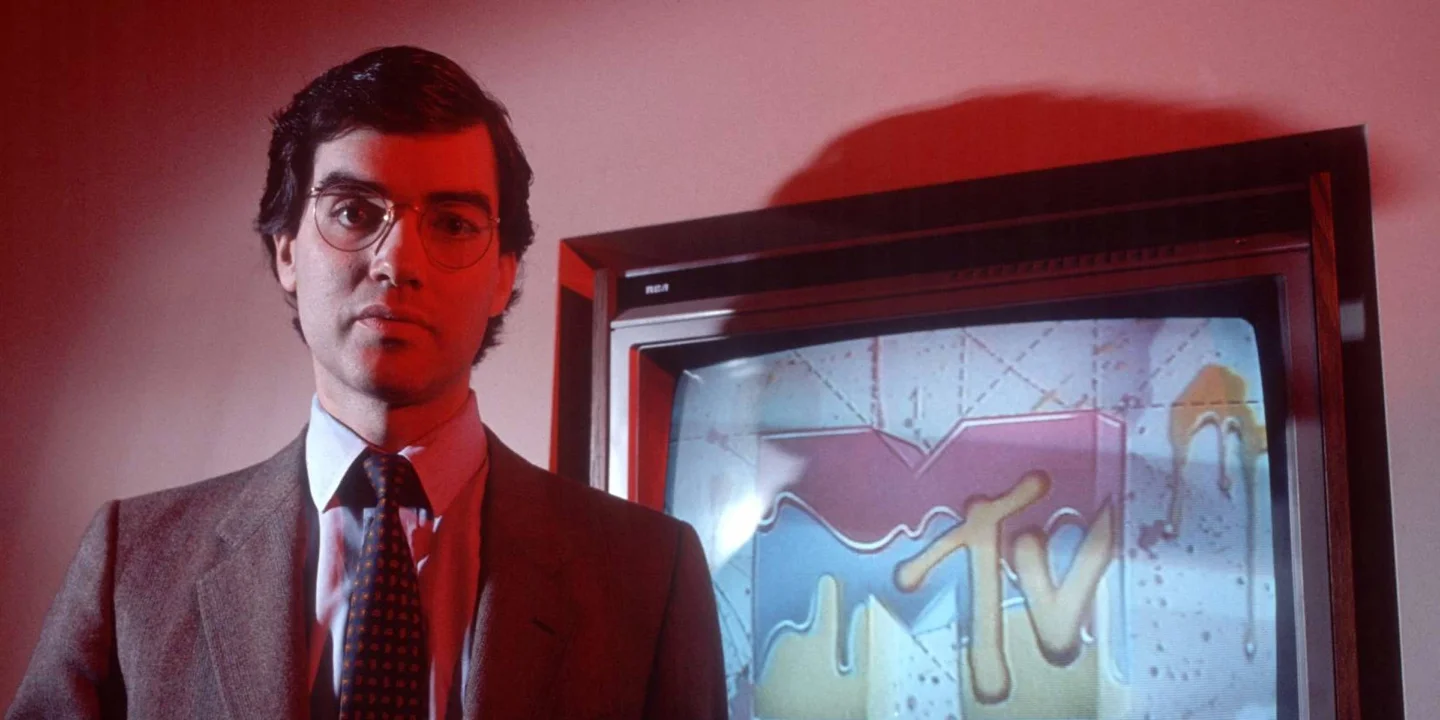
At midnight on August 1, 1981, MTV began broadcasting with the Buggles' "Video Killed the Radio Star." The channel was initially available only to households in parts of New Jersey, and its early programming consisted of music videos introduced by video jockeys. The videos were supplied free by record companies. Those details come from History's launch account, which also describes the channel's later shift into broader youth and pop-culture programming.
The first business model was therefore unusually dependent on two sides accepting an incomplete proposition. Cable operators had to carry a new channel with limited reach. Record companies had to provide expensive promotional material before the audience and the commercial value were proven. The channel became stronger when the supplier side began investing more heavily: as the record industry recognized MTV as a promotional vehicle, it put money into more ambitious videos. Britannica's history of MTV describes the later effect clearly: exposure on MTV could propel artists to stardom, and visual presentation became an important part of selling recordings.
That is a different kind of launch than simply releasing a product. MTV changed the economics around the product. It did not need to own the music to become important to music sales; it needed to become a scarce route to attention. Once that happened, labels had a reason to shape their own output for the channel. The result was a feedback loop: better videos made the channel more useful, and a more useful channel justified better videos. The company later broadened beyond music videos, including the reality series The Real World in 1992, which is another reminder that a channel's first format is not always its durable business.
Decision mirror: For a platform, marketplace, or distribution product, participation is a weak early signal. The stronger signal is whether the other side changes its own investment to fit the channel. Are suppliers making new assets, changing packaging, reserving capacity, or redirecting budgets because your route to the customer matters? If not, you may have an audience experiment rather than a distribution advantage. The practical test is to measure the behavior your channel causes outside the channel, not just the activity taking place inside it.
1997: WebTV gives Microsoft an option with an expiry date
On August 1, 1997, Microsoft completed its acquisition of WebTV Networks for approximately $425 million in cash and stock. The official Microsoft announcement said WebTV would operate as a Microsoft subsidiary, retain its Palo Alto staff, and be combined with Windows CE-based technologies in future versions. Microsoft framed the deal as a way to compete in Internet-enabled television, where consumers would have several hardware and technology choices.
The timing explains why the bet was reasonable without making it automatically right. The U.S. Department of Justice closed its investigation on the same day and said it would not challenge the transaction because other computer and consumer-electronics companies had entered, or would soon enter, with competing products and alternative technologies. The DOJ statement is useful because it shows the market was open, but also crowded. Microsoft was buying an entry point into an emerging category, not a protected monopoly.
The outcome is more instructive than the acquisition announcement. WebTV was later rebranded MSN TV. In July 2013, Microsoft said the service would close on September 30; Kara Swisher's contemporaneous report records Microsoft's explanation that the web had evolved and that there were now many other ways to access the Internet. The report also notes that some WebTV technology reached Xbox, so the product line's shutdown does not mean every capability or employee investment disappeared. It does mean the original consumer interface and service did not become a durable center of Microsoft's strategy.
This is the hard part of adjacency acquisitions. The buyer can be right about the direction of the market and still be wrong about which product, interface, or distribution layer will capture the value. A deal can produce learning and reusable technology while failing as the standalone business that justified the purchase.
Decision mirror: Every acquisition thesis needs two clocks. The first is the market clock: when will the category become important? The second is the product clock: how long does this particular asset have to earn a durable role? Define the evidence that would move the acquired business into the core, the evidence that would justify preserving it as a component, and the point at which the original interface should be retired. An option without an expiry test becomes an operating obligation by default.
The managerial test
These three August 1 events describe three different ways a first move creates follow-on work. Six Flags converted a land option into a permanent service business. MTV turned a narrow distribution footprint into a new investment rule for suppliers. Microsoft bought a position in a promising adjacency, then had to separate reusable technology from a product whose original form had expired.
Before approving today's launch, expansion, or acquisition, write down the second commitment in one sentence. What must customers, suppliers, partners, or employees do differently for the first move to compound? Then write the disconfirming signal: what would show that the move is producing attention, revenue, or strategic learning without earning the right to consume more capital?
History is most useful here as a mirror, not a verdict. The first move can be smart. The next obligation is where the quality of the decision becomes visible.
Related content
- Sign in to comment.
More from this channel
- August 2 in business history: What the first proof made unavoidable
- July 31 in business history: Launch signals need a second system
- July 30 in business history: The next phase is part of the decision
- July 29 in business history: The launch is only the first dependency
- July 28 in business history: Capital buys time, not certainty