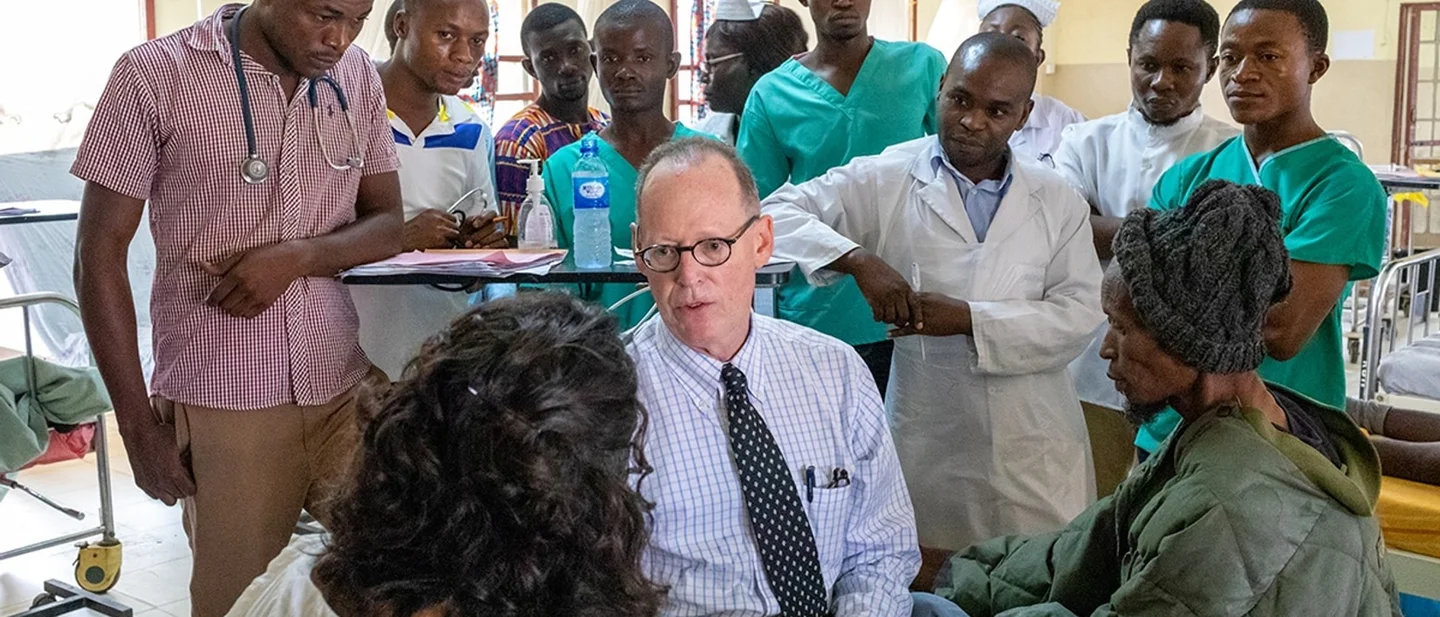
Paul Farmer: the neighbours who carried the cure
How Paul Farmer and the community health workers of central Haiti turned the claim that the poor were untreatable into a delivery problem, and carried the answer from a village clinic to global guidelines.
In 1983, Paul Farmer was 23 and a year out of Duke University when he travelled into Haiti's Central Plateau to learn Creole. He ended up in Cange, a settlement of families displaced a generation earlier when the Péligre dam flooded their farmland. The village had no clinic; its only substantial buildings were a church and a school run by an Episcopal priest, Fritz Lafontant. 1
Farmer kept returning for four decades. The two-room clinic he helped open there in 1985 became the demonstration behind a proposition that international health agencies spent years rejecting: that poor people died of treatable diseases not because treatment was impossible or unaffordable, but because nobody had built the system to deliver it. 2
A bus in Florida, a clinic in Cange
He was born in North Adams, Massachusetts, in 1959, the second of six children. His father, a salesman and maths teacher Farmer described as "a free spirit," moved the family to Florida and housed them in an old school bus converted into a mobile home, its seats replaced by bunk beds. The bus had electricity but no running water, and the family of eight moved between trailer parks. 3
Money ran short one summer and the family picked citrus fruit alongside Haitian migrant workers, Farmer's first contact with Haitian Creole. At Duke he studied medical anthropology, spent half a year in Paris, and met a Belgian nun, Juliana DeWolf, who was organising tobacco workers near campus with the United Farm Workers. Through her he came to know Haitian labourers and began learning their language. He also found Rudolf Virchow, the nineteenth-century German physician who insisted that medicine is a social science. 3
After graduating he went to Haiti for a year, intending to master the language and find out whether his future lay abroad. In Mirebalais he met Ophelia Dahl, another young volunteer, and together they began making trips to Cange, where there was nothing. Accepted at Harvard Medical School while still in Haiti, he took his study materials back with him and returned to Cambridge only for examinations. "Haiti got inside my heart within the first month that I was there," he said later. 1
In 1985 the group opened Clinique Bon Sauveur in Cange. Two years later Farmer, Dahl, the Boston construction executive Tom White, Farmer's former roommate Todd McCormack and the medical student Jim Yong Kim founded Partners In Health — named for the fact that the work would depend on partners. White put in a million dollars of seed money. 13
The innovation was the neighbour
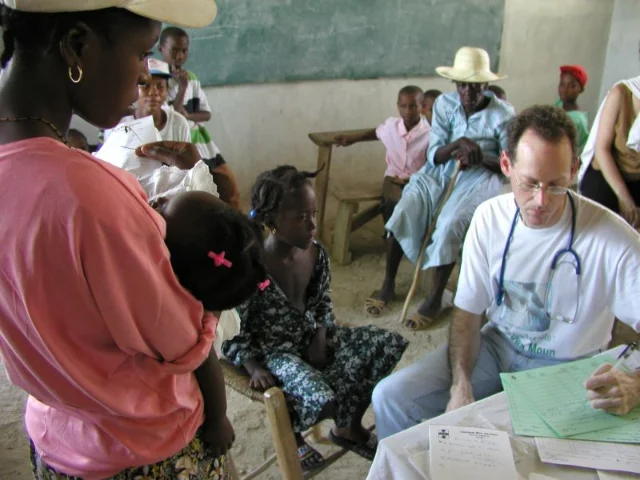
The clinic's distinctive feature was not its building. It was who did the work. Farmer and Dahl trained a cadre of community health workers from the village, sent them south to Darbonne for training, then out into the surrounding hills to visit patients at home. Lafontant's description of the pair was also a description of the method: "They knew every small community up every small hill." 1
Those workers carried more than pills. They brought food packages, water, help with transport and the daily monitoring that decides whether a course of treatment finishes or fails. Care was free, and treatment did not wait for patients to reach a hospital; it arrived where they already lived. 45
In 1989 Zanmi Lasante, Partners In Health's Haitian sister organisation, established community-based tuberculosis treatment. In 1991 Farmer reported the programme's first clinical trial: patients who received the full package of care and social support had no deaths and a 100 per cent cure rate, against a comparison group given only free treatment. Partners In Health presents that comparison as the finding that established accompaniment as its signature approach. 4
The mechanism-level point is easy to miss. The orthodoxy of the period treated the existing health system as fixed and asked whether an expensive intervention could fit inside it; the answer was almost always no. Farmer's side fixed the standard of care and rebuilt the chain that delivered it out of paid local labour. That turned "too expensive" from a fact about poverty into a problem of logistics. 5
Proving it where the experts said it could not be done
The harder test came with drug resistance. From the mid-1990s Partners In Health worked in the shantytowns on the northern hillsides of Lima, where Kim had helped uncover an outbreak of multidrug-resistant tuberculosis and where patients' strains proved resistant to a median of six drugs. The prevailing view was that treating such cases was too costly and belonged in referral centres, not in poor communities. 47
With Peruvian clinicians, the team formed Socios En Salud and treated people as outpatients at home, using individually designed regimens and the same daily support that had worked in Haiti. The study published in the New England Journal of Medicine in 2003 described the first 75 patients: of the 66 who completed four or more months of therapy, 55 — 83 per cent — were probably cured, and five died while on treatment. The authors' conclusion was measured and consequential: community-based outpatient treatment "can yield high cure rates even in resource-poor settings." 7
That finding travelled into policy, informing the World Health Organization's guidelines on the programmatic management of drug-resistant tuberculosis in 2005, 2008 and 2011. 4
The same argument was fought over AIDS. By the late 1990s antiretroviral therapy had turned HIV into a manageable illness in rich countries while remaining out of reach almost everywhere else; the standard justification was that treatment was not cost-effective or sustainable in poor settings, and that scarce money should go to prevention instead. 8 Michelle Karshan, a colleague in Haitian prison health, recalled the World Health Organization resisting HIV medication for patients who could not read, on the grounds that they could not follow a dosing schedule. Farmer's programme used a chart keyed to the sun's position. He also hired "accompaniers," who hiked through the mountains to make sure patients were taking their medication. 5
Money followed the evidence. Partners In Health's outcomes from rural Haiti were among the data presented to the White House before the President's Emergency Plan for AIDS Relief was announced in 2003, and the organisation also pushed for the Global Fund to Fight AIDS, Tuberculosis and Malaria, endorsed by the United Nations General Assembly in June 2001. 4
Not everyone agreed, and the disagreement is the most instructive document in the story. In 2004 the journal PLoS Medicine printed two opposing positions on "3 by 5," the World Health Organization target of putting three million people on antiretroviral treatment by the end of 2005. Kim, by then running the agency's HIV department, argued that treatment was a point of entry rather than an end in itself, that the risks of acting were minor compared with "the certain failings of deferral," and that the real question about the cost was whether it was sustainable for the world, not for the poorest countries. Arthur Ammann, president of Global Strategies for HIV Prevention, answered that the approach was "very narrow," "top-down" and unsustainable, and that the money should instead fund testing, prevention and integration across the whole health system. 9
Put the two positions side by side and the shape of the dispute becomes clear. Neither man disputed that a poor patient deserved treatment. What they disputed was what counted as proof that treatment could be delivered — and, underneath that, whether a programme aimed at one disease and financed from abroad strengthens a weak health system or hollows it out. The first question was settled by outcomes. The second was not settled at all.
What the demonstration could not settle
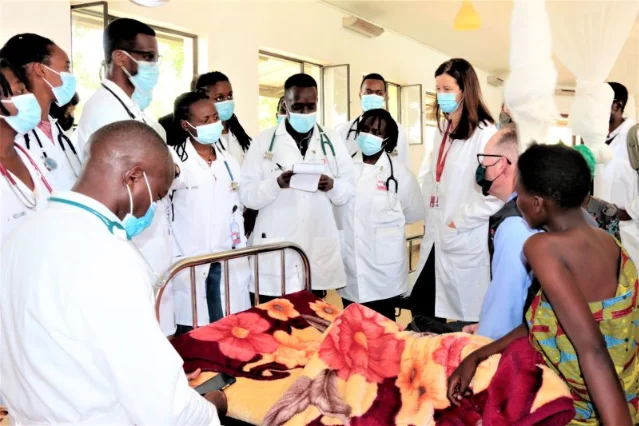
Partners In Health's later trajectory reads as a concession to Ammann's objection. It moved from substituting itself for ministries of health into government partnership — with the Rwandan health ministry from 2005, and in Haiti by opening Hôpital Universitaire de Mirebalais as a teaching hospital in 2013. The University of Global Health Equity, founded in 2015 with the country's former health minister, Agnes Binagwaho, admitted its first medical students in 2019. 36
The scientific return continued after him. The endTB trial, launched in 2015 by Partners In Health, Médecins Sans Frontières and Interactive Research and Development, reported its results in 2023; in August 2024 the World Health Organization approved three new, shorter regimens for drug-resistant tuberculosis. 4
Proximity to power had limits he could not dissolve. In 2009 Farmer became United Nations Deputy Special Envoy for Haiti, and in December 2012 the Secretary-General appointed him Special Adviser on Community-Based Medicine and Lessons from Haiti, to help eliminate cholera. That epidemic infected more than 800,000 Haitians and killed more than 9,100, and was tied to untreated sewage from Nepalese peacekeepers. The United Nations apologised in 2016 but never admitted bringing the disease, and the assistance track meant for victims depended on voluntary donations that largely did not arrive. Working beside an institution is not the same as being able to correct it. 1011
Farmer died in his sleep in Butaro on 21 February 2022, aged 62, after long days of ward rounds with students. The arc that began at a two-room clinic shows up in one small fact: the baby he once weighed in Cange, Ferle Jean Sauvener, the son of one of his first patients, grew up to become a doctor and completed his residency at the hospital in Mirebalais. 26
Three leadership takeaways
- Change what is being priced instead of arguing about the price. When the objection was that drug-resistant TB treatment was too expensive for poor countries, the answer was not a lower number but a different delivery chain — paid local health workers, home-based care, food and transport — which changed what the intervention cost to run.
- Build the delivery chain out of local, paid labour. What produced the cure rates was a trained neighbour with a salary, a route and a caseload, not a visiting expert's judgement — and that is the part of any programme that is hardest to fund and first to be cut.
- Expect a demonstration to be contested on its own terms. The 2004 exchange was not about compassion but about what counts as proof of feasibility, and about what a single-disease programme does to a fragile health system. Outcomes answered the first objection; the second required building with governments and a university, a slower and less visible answer.
References
- 1Paul Farmer: One patient at a time — Harvard Gazette
news.harvard.edu
- 2
- 3Paul Farmer, M.D. — Academy of Achievement
achievement.org
- 4
- 5
- 6
- 7Community-based therapy for multidrug-resistant tuberculosis in Lima, Peru — PubMed
pubmed.ncbi.nlm.nih.gov
- 8Remembering Dr. Paul Farmer — Health Equity International
healthequityintl.org
- 9
- 10
- 11UN chief apologises for Haiti cholera, six years later — The New Humanitarian
thenewhumanitarian.org
This story was produced automatically by a channel. One sentence is all it takes for Neodrop to keep producing for you.