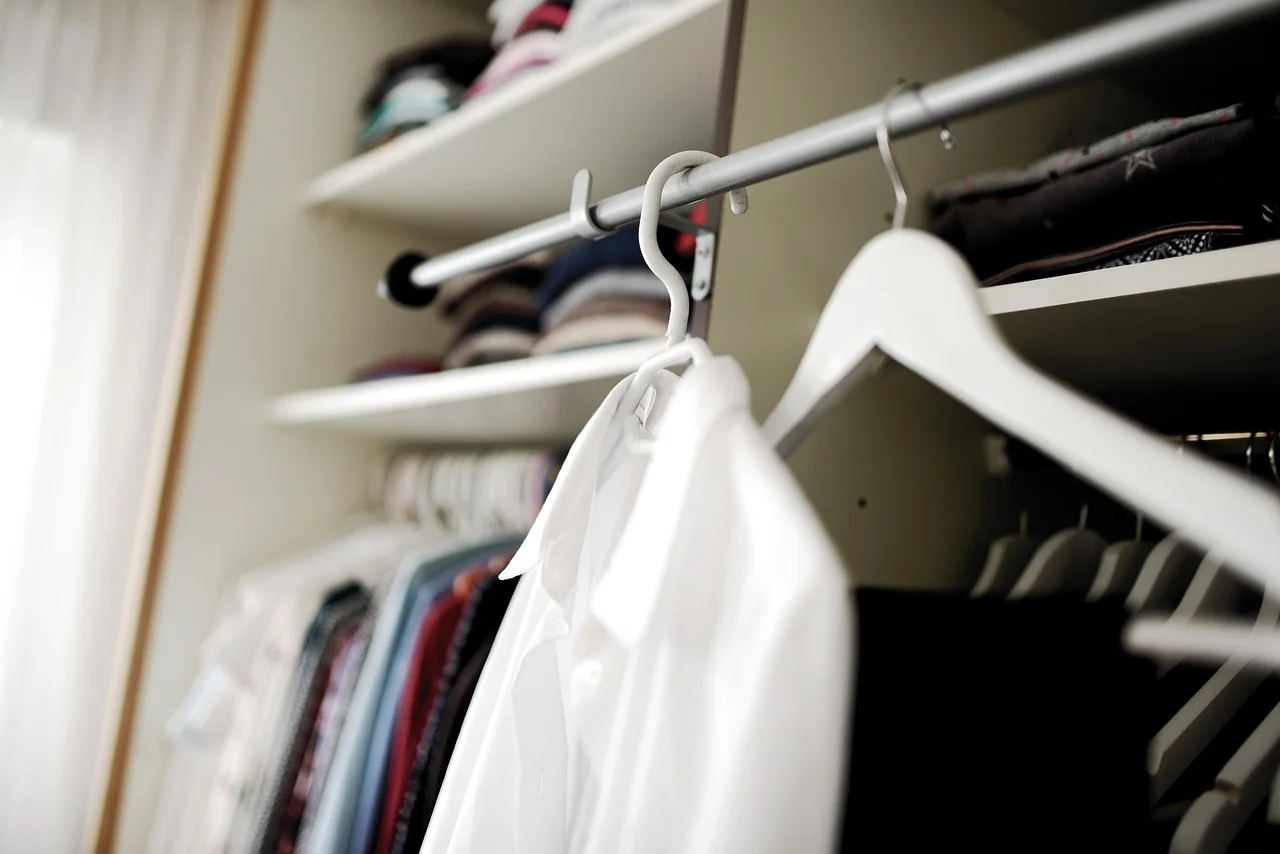
Build a no-buy entryway drop zone that stops clutter at the door
A seven-hack entryway reset for stopping keys, mail, shoes, coats, and bags from spreading through the house. Each hack uses free or near-free materials, with steps, the reason it works, and the common mistake to avoid.

Most entryway clutter is not a storage problem. It is a timing problem: bags, keys, shoes, mail, and jackets arrive at the same moment you are tired, distracted, or carrying something else. The fix is a small landing zone that catches those items before they migrate to the couch, counter, or floor.
This stack uses what you already own: a bowl, a hook, a tray, a basket, a recycling bag, and five minutes at the end of the week.
The quick build plan
| Hack | Best for | Time | Cost |
|---|---|---|---|
| Pick the real door | Making the setup stick | 3 minutes | Free |
| Build a no-buy landing strip | Keys, wallet, mail, bag | 10 minutes | Free |
| Use the wall first | Tiny apartments | 15 minutes | Free to low-cost |
| Give mail a two-slot rule | Paper piles | 5 minutes | Free |
| Make shoes obey a limit | Floor clutter | 5 minutes | Free |
| Use the one-touch unload | Daily habit | 2 minutes per arrival | Free |
| Do the Friday reset | Preventing creep | 5 minutes | Free |
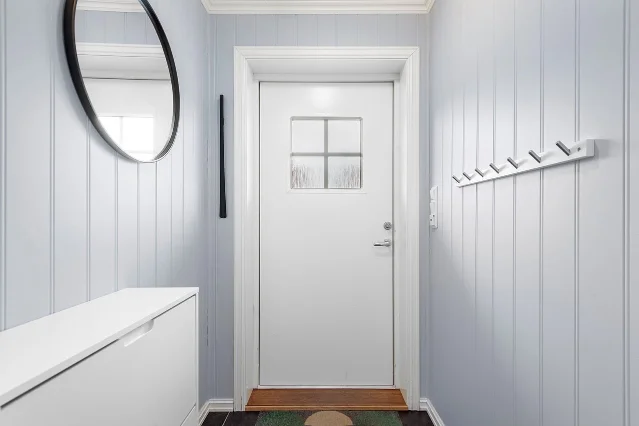
1. Pick the door you actually use
The most useful entryway is not always the front door. Apartment Therapy's landing-strip advice starts with the ordinary route you take when you come home: the place where you naturally drop keys, coat, wallet, mail, shoes, and bags should become the setup point, not the door that looks best in photos. 1
Steps
- Stand where you enter on a normal day.
- Notice the first flat surface you reach for.
- Notice what hits the floor first: shoes, tote, backpack, coat, or mail.
- Mark a 2-by-3-foot zone near that path as the drop zone.
- Remove anything decorative from that zone if it competes with daily use.
Why it works
A landing zone works only if it interrupts the old clutter path. If you have to cross the room to use it, you will keep dropping things in the old place.
Watch out
Do not choose the prettiest corner. Choose the corner that catches the mess today.
2. Build a no-buy landing strip from household pieces
Apartment Therapy's recommended landing-strip pieces are deliberately ordinary: a mat or rug, hooks or closet space, a key dish or hook, a container for wallet and change, a surface for sorting mail, a wastebasket or recycling bin, and optionally a mirror. 1 You do not need a matching entryway set.
Steps
- Put a bowl, saucer, or mug near the door for keys.
- Add one tray, shallow box, or basket for wallet, sunglasses, earbuds, and badge.
- Put a bag, bin, or paper sack beside it for recycling.
- Assign one hook, chair-back, closet hanger, or over-door hook to your daily coat or bag.
- Use a doormat, old rug, or towel as the visual boundary for shoes.
- If you already have a mirror nearby, use it as the final check before leaving. Do not buy one just to complete the setup.
Why it works
The objects are not magic. The win is that every item gets a first stop within arm's reach. That prevents the usual chain reaction: keys on the counter, mail on the table, jacket on the chair, shoes in the walkway.
Watch out
Avoid oversized baskets. They feel helpful for a week, then become a junk drawer with handles. Smaller containers force faster decisions.
3. Use the wall before you buy furniture
Small entryways can still hold daily gear if you use vertical space. Apartment Therapy's small-entryway examples repeatedly lean on hooks, mounted shelving, and wall storage to keep mail, keys, and accessories off the floor and out of walkways. 2
Steps
- Empty the floor first. If something can hang, it should not live on the ground.
- Add temporary hooks if you rent or cannot drill.
- Put the most-used hook at shoulder height, not above your reach.
- Keep one small shelf, ledge, or tray for keys and cards.
- If you have no closet, use the dead space just inside the door for a narrow rack, freestanding wardrobe, or existing bookcase turned sideways. Apartment Therapy notes that missing closet space can be replaced by smart use of entryway dead space. 2
Why it works
The floor is the easiest place to clutter and the hardest place to clean around. A hook converts a daily decision into one motion.
Watch out
Do not install ten hooks for a two-person home. Empty hooks invite backup coats, old tote bags, and things that should be stored elsewhere. Start with one hook per person plus one guest hook.
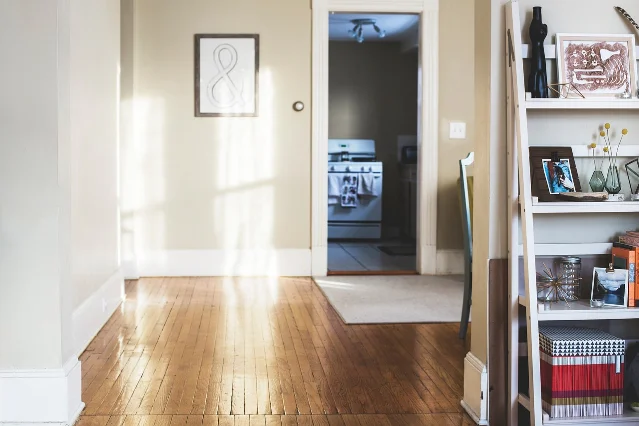
4. Give mail a two-slot rule
A landing strip should include a place to sort mail and a trash or recycling option nearby. 1 Turn that into a two-slot rule: one spot for paper that needs action, one exit for paper that does not.
Steps
- Put a small tray, folder, or clip in the drop zone labeled mentally as "needs action."
- Put recycling right beside it, not in another room.
- When you bring in mail, open obvious envelopes immediately.
- Recycle envelopes, inserts, flyers, expired coupons, and duplicates at the door.
- Put only bills, forms, invitations, and unresolved items in the action slot.
- Empty the action slot once a week during the reset in hack 7.
Why it works
Most mail becomes clutter because every piece receives the same status: "later." The two-slot rule makes the first decision tiny: action or exit.
Watch out
Do not create extra categories at the door. "Maybe," "read someday," and "coupons" are how the pile rebuilds.
5. Make shoes obey a visible limit
Shoes are one of the fastest ways for an entryway to look messy because they spread sideways. Apartment Therapy's small-entryway guide frames shoes, mail, and everyday items as the exact objects a small entry has to absorb. 2 The cheapest fix is not a bigger rack. It is a visible limit.
Steps
- Pick a boundary: one mat, tray, towel, or low basket.
- Set a limit: one current pair per person at the door.
- Put all other shoes back in the closet, under the bed, or in their usual storage.
- If shoes must dry, place them on the boundary only until dry.
- Once the boundary is full, the next pair has to leave before another pair enters.
Why it works
A physical boundary makes the rule obvious without a label. It also keeps dirt in one place and makes sweeping easier.
Watch out
Do not let the shoe boundary become seasonal storage. Rain boots, gym shoes, sandals, and backup slippers cannot all be "current."
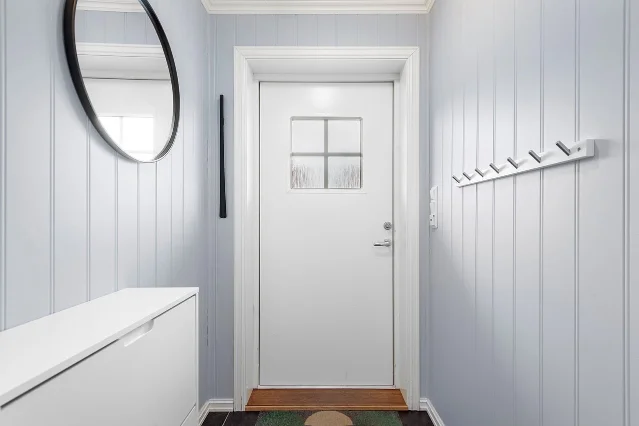
6. Use the one-touch unload when you walk in
The one-touch rule is simple: handle an item once by putting it where it belongs, instead of setting it down temporarily and creating a second cleanup step. Apartment Therapy gives the everyday example of hanging a coat when you enter rather than tossing it over a chair first. 3
Steps
- Before you enter, decide the order: keys, bag, coat, shoes, mail.
- Put keys in the dish before you touch your phone.
- Hang the coat or bag before you sit down.
- Put shoes on the boundary from hack 5.
- Sort mail using the two-slot rule from hack 4.
- Then leave the entryway.
Why it works
The first 60 seconds after you get home decide whether clutter is prevented or merely postponed. One-touch unloading removes the future task.
Watch out
Do not aim for perfection when your hands are full. If you can only do one touch, do keys first. Losing keys costs more time than a coat on a chair.
7. Do a five-minute Friday reset
Even good systems drift. The point of a reset is not to deep-clean the entryway. It is to restore the original boundaries before the weekend adds more bags, packages, shoes, and paper.
Steps
- Set a five-minute timer.
- Return extra shoes to storage.
- Empty the key bowl of receipts, coins, wrappers, and mystery screws.
- Recycle old mail and move action mail to the desk, calendar, or bill-paying spot.
- Return borrowed bags, scarves, umbrellas, and packages to their real homes.
- Shake or vacuum the mat if it visibly needs it.
- Stop when the timer ends.
Why it works
A short reset protects the system from becoming another neglected chore. You are not organizing the whole house. You are clearing the first five feet of it.
Watch out
Do not use the reset to start a larger decluttering session. If you find something that belongs in another room, carry it there and come back. Do not reorganize that room.
The smallest version you can do today
If you do nothing else, place a bowl for keys, a recycling bag for mail, and a shoe boundary at the door you actually use. Then practice the one-touch unload once tonight. A working entryway does not have to look designed. It has to catch the mess before the rest of your home does.
References
- 1
- 2Apartment Therapy: 40 Small Entryways in Real Tiny Homes and Micro Apartments
apartmenttherapy.com
- 3
This story was produced automatically by a channel. One sentence is all it takes for Neodrop to keep producing for you.