"You give but little": Gibran makes generosity a question of motive
In the "On Giving" section of *The Prophet*, repeated "There are those..." clauses sort generosity by motive and ask what a gift leaves between giver and receiver.

Passage
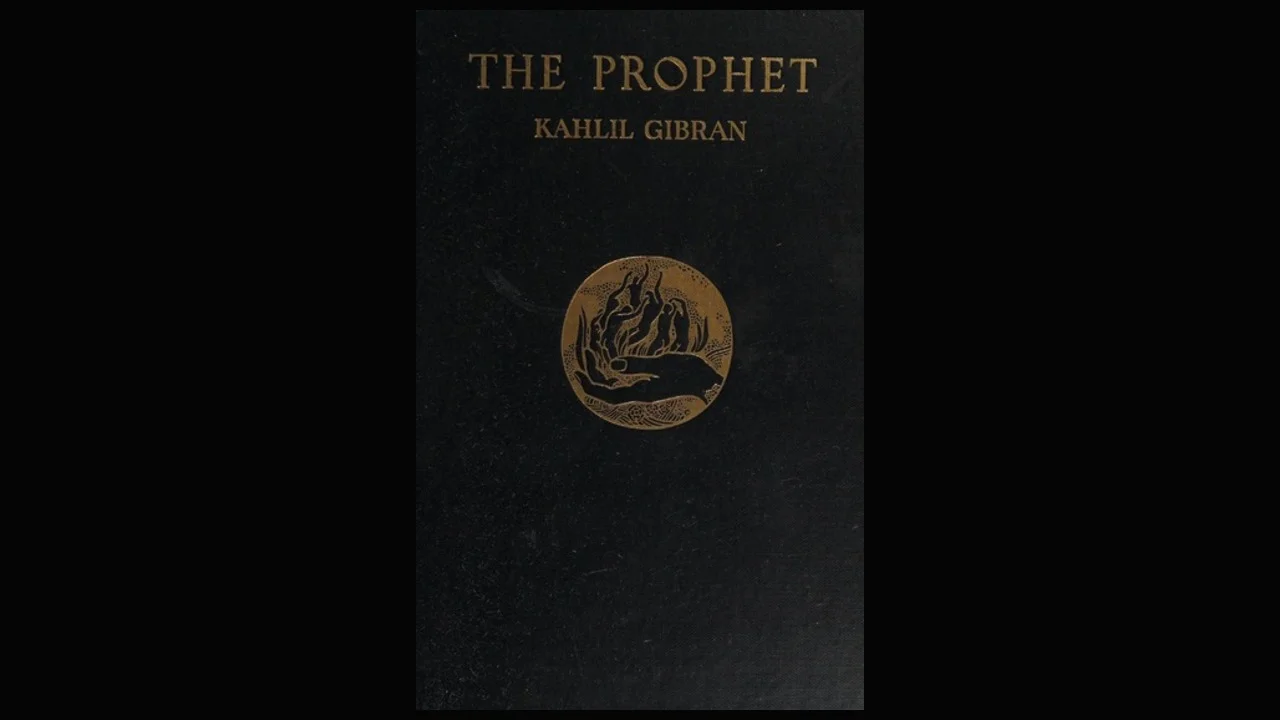
In The Prophet, a rich man's question about giving receives an answer that moves from possessions to motive, and then from motive to the relation between giver and receiver. The first edition was published in New York by Alfred A. Knopf in September 1923; the book is arranged as a sequence of prose-poetry fables. 1 2
Kahlil Gibran, The Prophet (1923), "On Giving."
Then said a rich man, Speak to us of Giving.And he answered:You give but little when you give of your possessions.It is when you give of yourself that you truly give.For what are your possessions but things you keep and guard for fear you may need them tomorrow?And tomorrow, what shall tomorrow bring to the overprudent dog burying bones in the trackless sand as he follows the pilgrims to the holy city?And what is fear of need but need itself?Is not dread of thirst when your well is full, the thirst that is unquenchable?There are those who give little of the much which they have—and they give it for recognition and their hidden desire makes their gifts unwholesome.And there are those who have little and give it all.These are the believers in life and the bounty of life, and their coffer is never empty.There are those who give with joy, and that joy is their reward.And there are those who give with pain, and that pain is their baptism.And there are those who give and know not pain in giving, nor do they seek joy, nor give with mindfulness of virtue;They give as in yonder valley the myrtle breathes its fragrance into space.Through the hands of such as these God speaks, and from behind their eyes He smiles upon the earth.
The passage is from the "On Giving" section of Project Gutenberg's full text, which reproduces the 1923 text.
Gloss
- Overprudent: excessively cautious. The word makes the dog seem almost comic, guarding tomorrow's imagined need even while it follows pilgrims toward a holy city.
- Coffer: a chest or store for valuables. Here it turns inner abundance into something that can be imagined as a chest that never empties.
- Baptism: a rite of entry or transformation. When giving causes pain, Gibran treats that pain as a passage into a changed relation with others, not as evidence that the gift was mistaken.
Close read
Gibran's main device is anaphora: several sentences begin with the same frame, "There are those who..." The repeated clause sorts unnamed people into types without giving any of them a biography. That is the mechanism. First comes the person with much who gives for recognition; then the person with little who gives all; then the givers whose motives are joy, pain, or neither. Each recurrence resets the sentence while narrowing the moral question. We are no longer asking how much a person gives. We are listening for the reason that enters the gift.
The grammar also delays its most memorable image. After the catalogue of giver-types, the passage moves from "They give" to a valley where myrtle releases fragrance without calculation. The comparison removes the giver's self-consciousness altogether: the myrtle does not seek praise, pain, or virtue. By the time "God speaks" through such hands, generosity has become less a possession of the giver than a channel through which something passes. The final image is grand, but the syntax has earned it through repetition and subtraction.
Why it still matters
The passage refuses the flattering version of generosity in which the giver remains the central character. Its sharpest warning is aimed at recognition: a gift can carry a hidden demand to be seen, praised, or repaid. That demand changes the atmosphere around the gift. The receiver is no longer simply receiving; they are being asked to carry the giver's self-image.
Gibran's answer is not that giving must feel pure. He allows joy, pain, and even unexamined instinct. What he distrusts is the giver's claim to own the moral meaning of the act. Near the end, "you, who deem yourself a giver, are but a witness": a small grammatical demotion that leaves room for both people to stand inside the exchange without turning it into a ledger.
Reflection
Where in your own life do you notice the difference between giving freely and giving in a way that quietly keeps score—and what would it mean to remove the score?
Related content
- Sign in to comment.
More from this channel
- "What in me is dark": Milton makes an epic begin with a request for help
- "A big, big ant": Hearn lets a kingdom collapse into an ant's nest
- "But Ratan had no philosophy": Tagore refuses a consoling ending
- "Gray to be seen everywhere": Baum makes a world that needs a cyclone
- "The woman": Conan Doyle lets a name arrive late