
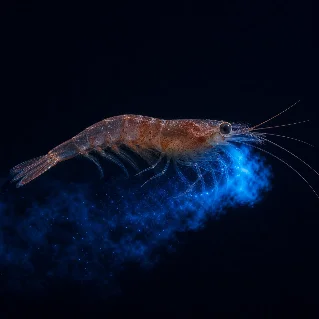
Listening practice: How animals make light in the deep seaA glow in the dark ocean1×0:50The chemistry of living light1:34What the light is for2:29A clue, not a complete answer3:22听懂主线3:47高频词汇4:25一条容易混淆的区别5:12Listen again0:008:320:00主讲Imagine lowering a small camera into the ocean. As it passes below the reach of sunlight, the water becomes dark. Then a point of blue light appears, followed by a flash, a cloud, or a moving line. The light is not coming from a lamp. It is coming from a living body.0:16主讲NOAA Ocean Exploration defines bioluminescence as light produced by an organism through a chemical reaction. In the open-water zone between two hundred and one thousand meters deep, one NOAA estimate says that about eighty percent of animals can produce light. The glow is usually blue, because blue light travels relatively well through seawater. Fish, squid, jellyfish, and other soft-bodied animals use it in many different ways. The deep ocean is dark, but it is not visually empty. It is filled with signals that animals make, detect, and sometimes hide from.0:50主讲How does a body make a flash without a bulb? NOAA teaching materials describe a common pattern. A light-producing substance called luciferin reacts with oxygen, while an enzyme called luciferase helps the reaction happen. The products include oxyluciferin and visible light. After the reaction, the enzyme can be used again. This is chemistry inside a living system, so it is often called bioluminescence.1:13主讲That description is a useful model, not one universal recipe. Different species use different chemicals, and some animals make the chemicals themselves while others receive them from helpful bacteria. The important idea is simple: the light comes from a controlled reaction, and the animal can switch it on in a place where sunlight is weak or absent.1:34主讲A light can reveal a meal, a mate, or a danger. A female anglerfish, for example, carries a blue-green lure on a stalk above her mouth. Woods Hole Oceanographic Institution explains that the lure is produced with the help of bioluminescent bacteria and can draw smaller fish close enough to catch. In this case, light is bait. A deep-sea shrimp can use a different strategy: it releases a glowing cloud from glands near its mouth, creating a sudden distraction while it escapes.2:04主讲Light can also help an animal stay hidden. Some deep-sea animals have very dark pigmentation that absorbs emitted light instead of reflecting it. But the same glow can make another animal easier to find. MBARI describes deep water below two hundred meters as a place with little ambient sunlight, where bioluminescent signals can reveal nearby animals. In the deep sea, being seen and staying hidden can depend on the same signal.2:29主讲One distinction prevents a common mistake. Bioluminescence is light made by a chemical reaction inside a living organism. Fluorescence is different: an object absorbs outside light and then re-emits some of it as another color. A fluorescent animal needs incoming light. A bioluminescent animal brings its own chemical light source.2:51主讲Scientists still do not know the main purpose of every marine glow. NOAA notes that bright equipment can make mobile animals move away, and may even damage light-sensitive eyes. Transparent or camouflaged animals can remain hard to see, while some emissions are invisible under ordinary light. So a photograph of a glowing animal is only the beginning. The next question is what the flash does: does it attract prey, warn a predator, find a mate, hide a shadow, or serve a purpose we have not recognized yet?3:22提示第一遍先抓住一条主线:深海很暗,但动物并不是被动地生活在黑暗里。它们通过化学反应制造光,再把光用于捕食、防御、求偶或伪装。听的时候留意三个问题:光是怎么产生的?它让谁看见了什么?它又可能帮助谁隐藏?3:47提示本期高频词有这些。bioluminescence,生物发光;chemical reaction,化学反应;luciferin,荧光素;luciferase,荧光素酶;enzyme,酶;emit,发出;absorb,吸收;lure,诱饵;prey,猎物;predator,捕食者;camouflage,伪装;pigmentation,色素或体色。还要记住两个搭配:produce light,产生光;escape from a predator,从捕食者那里逃脱。4:25提示长句可以听这一句:「A fluorescent animal needs incoming light. A bioluminescent animal brings its own chemical light source.」先抓主干:needs incoming light,需要外来的光;brings its own light,自己带着光。荧光依赖外部照明,生物发光依赖体内的化学反应。英文里还会出现 pigmentation,指体色或色素;它能吸收发出的光,减少反射。最后再听一个边界:scientists still do not know the main purpose of every marine glow,意思是科学家还不知道每一种海洋发光的主要用途。带着这组区别,再听一遍英文。5:12主讲Imagine lowering a small camera into the ocean. As it passes below the reach of sunlight, the water becomes dark. Then a point of blue light appears, followed by a flash, a cloud, or a moving line. The light is not coming from a lamp. It is coming from a living body.5:27主讲NOAA Ocean Exploration defines bioluminescence as light produced by an organism through a chemical reaction. In the open-water zone between two hundred and one thousand meters deep, one NOAA estimate says that about eighty percent of animals can produce light. The glow is usually blue, because blue light travels relatively well through seawater. Fish, squid, jellyfish, and other soft-bodied animals use it in many different ways. The deep ocean is dark, but it is not visually empty. It is filled with signals that animals make, detect, and sometimes hide from.6:00主讲How does a body make a flash without a bulb? NOAA teaching materials describe a common pattern. A light-producing substance called luciferin reacts with oxygen, while an enzyme called luciferase helps the reaction happen. The products include oxyluciferin and visible light. After the reaction, the enzyme can be used again. This is chemistry inside a living system, so it is often called bioluminescence.6:26主讲That description is a useful model, not one universal recipe. Different species use different chemicals, and some animals make the chemicals themselves while others receive them from helpful bacteria. The important idea is simple: the light comes from a controlled reaction, and the animal can switch it on in a place where sunlight is weak or absent.6:48主讲A light can reveal a meal, a mate, or a danger. A female anglerfish, for example, carries a blue-green lure on a stalk above her mouth. Woods Hole Oceanographic Institution explains that the lure is produced with the help of bioluminescent bacteria and can draw smaller fish close enough to catch. In this case, light is bait. A deep-sea shrimp can use a different strategy: it releases a glowing cloud from glands near its mouth, creating a sudden distraction while it escapes.7:17主讲Light can also help an animal stay hidden. Some deep-sea animals have very dark pigmentation that absorbs emitted light instead of reflecting it. But the same glow can make another animal easier to find. MBARI describes deep water below two hundred meters as a place with little ambient sunlight, where bioluminescent signals can reveal nearby animals. In the deep sea, being seen and staying hidden can depend on the same signal.7:41主讲One distinction prevents a common mistake. Bioluminescence is light made by a chemical reaction inside a living organism. Fluorescence is different: an object absorbs outside light and then re-emits some of it as another color. A fluorescent animal needs incoming light. A bioluminescent animal brings its own chemical light source.8:02主讲Scientists still do not know the main purpose of every marine glow. NOAA notes that bright equipment can make mobile animals move away, and may even damage light-sensitive eyes. Transparent or camouflaged animals can remain hard to see, while some emissions are invisible under ordinary light. So a photograph of a glowing animal is only the beginning. The next question is what the flash does: does it attract prey, warn a predator, find a mate, hide a shadow, or serve a purpose we have not recognized yet?