
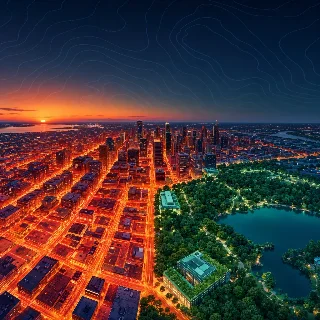
Listening practice: The city that stays hot after sunset
At sunset, a city can look cooler before it actually feels cooler. The sunlight fades, but roads, roofs, walls, and parking lots are still holding the day’s heat. In many cities, the air above these hard surfaces stays warmer than the air over nearby fields or parks. This is called the urban heat island effect. A simple way to picture it is to compare a dark shirt with a white shirt on a sunny afternoon. The dark shirt takes in more sunlight. Many roofs and roads do something similar, although their materials and shapes make the full process more complicated. Once the Sun goes down, the stored heat does not disappear. It moves from the surfaces into the air, and the city remains warm while a greener place begins to cool.
0:00 / 7:05