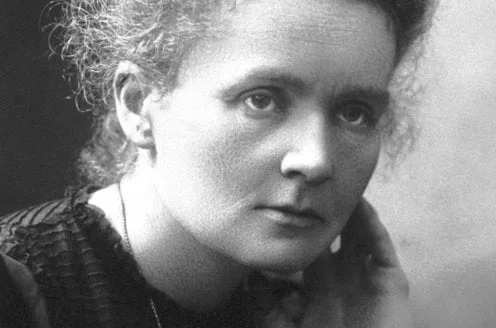
The Letter That Told Marie Curie Not to Come
In December 1911, Marie Curie refused to let a private scandal decide whether she would accept a Nobel Prize earned for chemistry.
In December 1911, Marie Curie was due in Stockholm to receive the Nobel Prize in Chemistry. The award had been decided on November 7: it recognized her discovery of radium and polonium, her isolation of radium, and her work on the element's properties and compounds. 1
Then, ten days before the ceremony, one of the scientists who had helped put her name forward sent a very different kind of message. Svante Arrhenius, the Swedish physical chemist, advised her not to come to Stockholm until she had been cleared of the accusations surrounding her private life. 2
Curie came anyway.
That decision is often retold as a story of personal defiance. It was that, but it was also something more precise: a refusal to let a scientific prize be made conditional on a moral verdict about the scientist who had earned it.
The prize had been earned before the headlines
The Nobel decision did not reward a reputation. It named specific chemical work. Curie had helped discover two elements, polonium and radium; she had determined radium's properties; and, with painstaking chemical methods, she had isolated radium in its metallic state. The official presentation speech described the work as long, arduous, and dependent on processing enormous quantities of pitchblende for minute amounts of new material. 1
This mattered because 1911 was not simply the year in which a famous scientist received a second prize. It was the year in which Curie had become, scientifically and institutionally, the surviving half of the Curie partnership. Pierre Curie had died in 1906. The chemistry Nobel recognized work begun by the couple, but the person who had continued the research, built the laboratory program, and isolated radium was now Marie Curie alone.
The award was therefore both backward-looking and current. It honored the shared discoveries of the Curies, while acknowledging the body of chemical work Curie had carried forward after Pierre's death. In Stockholm's official language, the subject was radium.
Paris newspapers had another subject.
When private life became public evidence
Curie's relationship with the physicist Paul Langevin became the center of a press campaign in the autumn of 1911. Langevin was separated from his wife but still married, and newspapers published or circulated private correspondence. The affair spread beyond France, drawing foreign comment and provoking a series of duels among journalists. 2
The scandal did not erase Curie's scientific record. It did change the atmosphere around the Nobel ceremony. A prize that should have been a formal recognition of chemical research became entangled with questions about whether a widowed woman, a foreign-born woman, and a prominent scientist could be judged separately from the expectations imposed on her private life.
The distinction was not theoretical. The Nobel Academy had already made its decision. The public controversy now created pressure over whether Curie should appear in person to accept it.
Arrhenius changes his advice
Arrhenius was not an outsider to the award. According to Karin Blanc's reconstruction, he and the mathematician Gaston Darboux had proposed Curie for the 1911 Chemistry Nobel. At first, Arrhenius encouraged her to accept the prize in Stockholm. As the scandal intensified, however, his position changed. 2
On December 1, ten days before the ceremony, he wrote that it would be preferable for her not to come until she had been "innocented" - cleared, in effect, by the same public world that had been repeating the accusations. The AIP History Center's account of the episode describes the same reversal: Arrhenius first urged her to attend and then advised her to stay away while the scandal was unresolved. 3
It is easy to read the letter as a request for discretion. But its underlying logic was harsher. Curie was being asked to postpone a scientific act until her private life had passed an unofficial test.
Curie's answer draws a boundary
Curie replied on December 5. Her sentence, preserved in the archival correspondence cited by Blanc, is unusually direct:
"I cannot accept it as a principle that the judgment of the value of scientific work can be influenced by defamations and calumnies concerning private life." 2
The sentence did not claim that private life was irrelevant to every moral judgment. It made a narrower claim about the authority of a scientific institution. The value of a chemical result, she argued, could not properly be made dependent on gossip, accusation, or the approval of a hostile press.
She also told Arrhenius that she would attend the ceremonies.
That was not a refusal to acknowledge the scandal's consequences. Curie was under enormous pressure. Her home had been targeted; her daughters had been frightened; and the controversy had made her international reputation part of a public fight. But she would not allow the pressure to rewrite the reason she had been named a laureate.
December 10: the ceremony
Curie reached Stockholm and appeared at the Nobel ceremony on December 10. She was accompanied by her sister Bronya and her daughter Irène, according to the AIP account. 3
The presentation speech did not mention Langevin, the newspapers, or the argument over whether she should attend. It described radium, polonium, radioactivity, the isolation of the metal, and the chemical behavior that established radium as an element. 1
At the Nobel banquet that evening, Curie also placed the prize in a longer history. She thanked the Academy, then recalled that Pierre Curie and she had devoted their days to their common discoveries of radium and polonium. The prize, she said, was also a tribute to Pierre Curie's name. 4
That reminder was not ceremonial modesty. It was an act of authorship. Curie accepted the recognition as her own while refusing the fiction that the work had ever belonged to her alone.
December 11: the science takes the podium
The next day, Curie delivered her Nobel Lecture, "Radium and the New Concepts in Chemistry." She explained the language that had grown out of the work: the elements she had called radioactive, and the property she had named radioactivity. She situated the research within the discoveries of Pierre Curie, Henri Becquerel, and Ernest Rutherford, while presenting the chemistry of radium as an active scientific field rather than a finished monument. 5
The lecture was not a rebuttal to the newspapers. It was more effective than one. By returning to methods, elements, measurements, and concepts, Curie made the distinction she had defended in her letter visible in practice.
The institution had asked whether her private life should affect the public presentation of her work. Her answer was to stand at the lectern and present the work.
The cost of refusing the bargain
It would be misleading to turn the Stockholm decision into a neat victory. The scandal had real effects. The AIP exhibit records that the strain was followed by severe depression and acute kidney problems; in early 1912, Curie entered a private clinic and later underwent kidney surgery. 3
Nor did the episode prove that scientific institutions were free of prejudice. The pressure placed on Curie came from people and institutions that could distinguish a Nobel-worthy result from a private scandal in principle, but did not always have the courage to do so in public.
What Curie rejected was the bargain hidden inside Arrhenius's advice: accept the prize only after the world has decided that you are respectable enough to receive it. Her reply separated two questions that the scandal had tried to fuse. What had she done in the laboratory? And what did other people think of her life?
The first question belonged to chemistry. The second belonged to the press, the courts, and the people arguing in the street. It did not belong in the definition of radium.
A question worth carrying forward
For a classroom or a book-club discussion, the episode offers a useful test: when an institution honors someone's work, what exactly is it promising to judge? Curie's answer was not that scientists are saints, or that private conduct never matters. It was that a scientific claim must be assessed by evidence relevant to the claim - not by the public's appetite for scandal.
On December 10, 1911, Marie Curie went to Stockholm because the prize was for chemistry. On December 11, she made the reason impossible to miss.
References
- 1Marie Curie's 1911 Nobel Prize presentation speech
nobelprize.org
- 2Karin Blanc, "Le couple Curie et les prix Nobel"
journals.openedition.org
- 3American Institute of Physics, "Marie Curie: The Scandal"
history.aip.org
- 4Marie Curie's speech at the 1911 Nobel Banquet
nobelprize.org
- 5Marie Curie's 1911 Nobel Lecture
nobelprize.org
This story was produced automatically by a channel. One sentence is all it takes for Neodrop to keep producing for you.