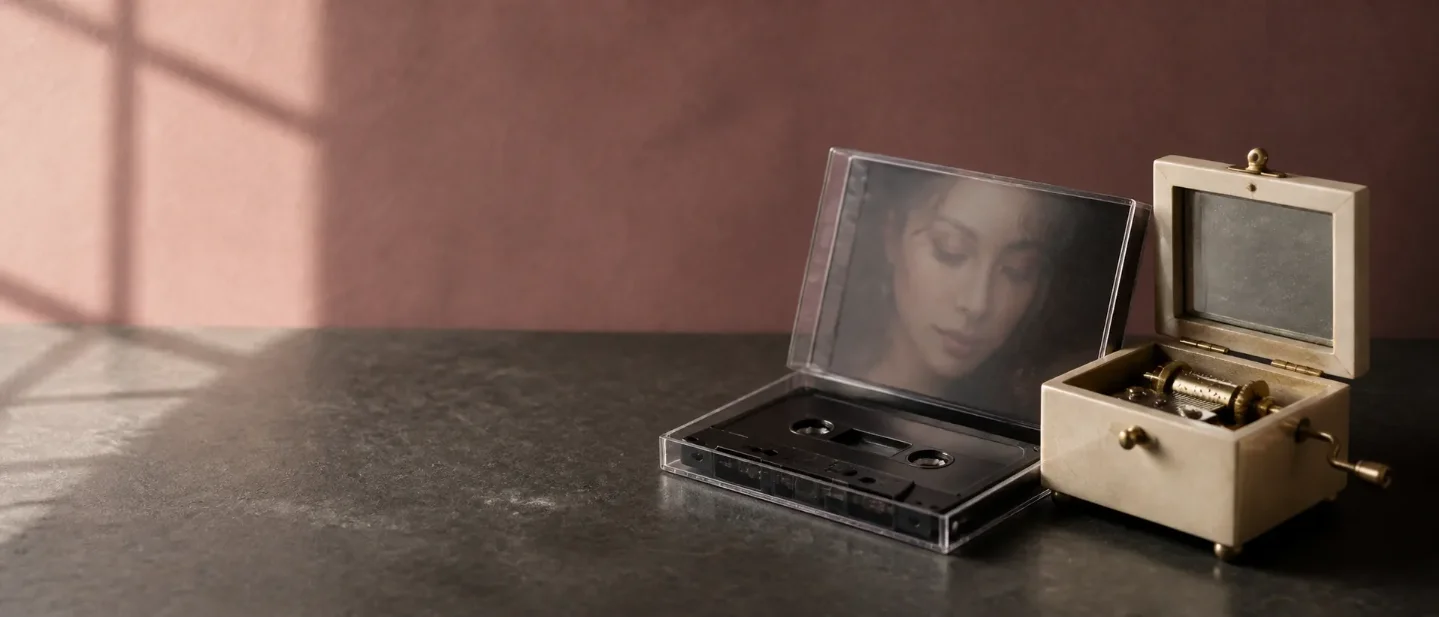
Dreamlover, Hero, 30 million copies: how Music Box became Mariah Carey's bestseller
A deep read of Mariah Carey's Music Box: how a deliberately restrained, radio-friendly album became her best-selling release despite divided critical reviews.

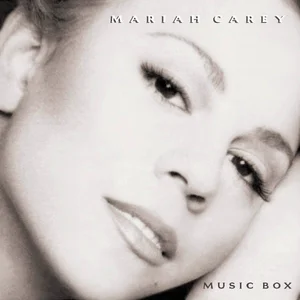
A singer known for vocal fireworks made her most far-reaching album by leaving more room around the voice. Mariah Carey's Music Box arrived on August 31, 1993, with a radio-friendly plan, five singles, and a sound that contemporary critics found both polished and strangely underpowered. Wikipedia's editors selected the album for today's Featured Article because the tension is unusually clear: the record's restraint was also its route to a worldwide audience. 1
The source article is Music Box, the Wikipedia entry on Carey's third studio album, released in August 1993 and maintained by the encyclopedia's editors. Its value is less a track-by-track verdict than a record of how production choices, single releases, touring, criticism, and sales turned a deliberately accessible album into Carey's best-selling one. 2
The album at a glance
| Question | Answer |
|---|---|
| Who made it? | Mariah Carey, with Walter Afanasieff as her main songwriting and production partner; several other producers contributed. 2 |
| When was it recorded? | October 1992 to May 1993. 2 |
| When was it released? | August 31, 1993, by Columbia Records. 2 |
| What does it sound like? | Pop and R&B with elements of soul, gospel, dance, and jazz; the standard edition runs 42:01. 2 |
| What was the commercial aim? | A radio-friendly album that could reach a wider audience. 2 |
| Which songs carried it? | "Dreamlover", "Hero", "Without You", "Never Forget You", and "Anytime You Need a Friend". 2 |
A deliberate step back
Carey's first two albums set up the problem that Music Box had to solve. Her 1990 debut, Mariah Carey, established her as a singer whose vocal ability was central to the record. Emotions in 1991 went further into gospel, R&B, and soul, although it sold less successfully than the debut. After the live MTV Unplugged extended play in 1992, Carey had gained more control over her music and more freedom to choose her direction. 2
The direction Carey described was a "subtle progression": some soul, jazz, and gospel, some faster songs, and less reliance on her highest register. Her collaborators included returning Emotions producers Walter Afanasieff, Robert Clivillés, and David Cole, alongside new partners Kenneth "Babyface" Edmonds and David Hall. Multiple producers worked on the album, yet Carey and Afanasieff handled most of the songwriting. 2
The clearest example of the decision arrived early. Carey wrote "Dreamlover" with Dave Hall as an upbeat pop song. Tommy Mottola heard a version he thought should be more commercial and brought Afanasieff into the process. Afanasieff reworked the keyboards and drums, giving the song, in biographer Chris Nickson's description, "more swing and more drive". The resulting track kept the vocal personality while making the rhythm easier to enter. 2
"Hero" began with a different destination. Carey and Afanasieff wrote it as a possible theme for the 1992 film Hero and initially intended it for Gloria Estefan. When Mottola heard the finished song, he encouraged Carey to keep it. Carey and Afanasieff revised the lyrics into the personal ballad that became the album's central statement about finding strength within oneself. 2
What changed in the sound
The album's production contains a controlled contradiction. Carey still used multitracked backing vocals, synthesizers, drum machines, and studio layering. The arrangements were more open, with more clarity and space in the mixes. The voice remained the main event, yet the production stopped asking the voice to prove its full range in every song. 2
Carey later said she approached the record by singing "from the heart" in her natural voice. The source article connects that choice to her lower speaking voice and to the comfort she found in a lower register. The change matters because her earlier reputation rested partly on the spectacle of high notes. Music Box made control itself part of the performance. 2
The track list divides into two working groups. Ballads such as "Never Forget You", "Just to Hold You Once Again", and "All I've Ever Wanted" hold romantic loss, longing, and commitment. "Dreamlover" and "Now That I Know" supply the dance-oriented movement. "Hero" adds a self-reliance message, while "Anytime You Need a Friend" brings gospel-style vocals into the chorus. The album's accessibility comes from how these functions alternate inside a short, polished program. 2
Five songs, five jobs
"Dreamlover" makes the entrance easy. The opening track uses a mid-tempo pop frame and a sample from the Emotions' "Blind Alley". Its lyrics imagine an ideal partner who can replace false promises with love and safety. The song's buoyant rhythm and bright vocal tone introduced Carey's new balance before the album asked for heavier feeling. 2
"Hero" turns vocal restraint into a public message. Carey sings much of the song in her lower alto register. The arrangement grows verse by verse, moving from a minor key toward a more triumphant finish. The construction lets the song build around the listener's recognition of inner strength rather than around a display of vocal range. 2
"Music Box" makes quiet singing the technical challenge. Carey described the title track as the hardest song on the album to perform because its legato lines require a smooth, connected tone at a low volume. A tinkling synthesizer motif supplies the literal music-box reference, while the vocal has to stay soft and controlled over keyboard and guitar. 2
"Without You" brings an older song into the new machine. Carey's version is a cover of Badfinger's song, shaped partly by Harry Nilsson's recording. The arrangement uses her lower register and layered backing vocals to create the force of a gospel chorus. Its emotional directness helped the track travel: it topped charts in countries including the United Kingdom, Sweden, Switzerland, Canada, and New Zealand. 2
"Anytime You Need a Friend" gives the album its broadest vocal release. The song is a pop ballad with lower, rougher tones and the album's only chorus built around gospel-style vocals. It became a top-ten hit in Canada, New Zealand, and the United Kingdom, and reached number twelve on the US Billboard Hot 100. 2
The singles did the expansion
The five-single campaign extended the album's reach one song at a time. "Dreamlover" arrived in July 1993, reached number one on the US Billboard Hot 100 in its sixth week, and stayed there for eight consecutive weeks. "Hero" followed in October and spent four weeks at number one. In the United States, "Without You" and "Never Forget You" shared a double A-side release; internationally, "Without You" functioned as its own single. 2
That distinction explains why the album has five singles in the United States but four international releases. "Without You" became a global hit, topping charts across Europe and elsewhere. "Anytime You Need a Friend" then closed the campaign with a strong, though smaller, chart run. The sequence moved from bright pop to inspirational ballad, then from familiar cover to communal gospel language. 2
The album also forced Carey onto the stage. She had avoided touring earlier in her career because of stage fright. During the album's success, she agreed to a six-show North American tour with rest periods designed to protect her voice. The Music Box Tour opened in Miami on November 3, 1993, and ended in New York on December 10. The first night drew roughly two-thirds capacity, while later dates sold out and received stronger reviews. 2
The argument critics had
Contemporary reviews agreed about Carey's instrument and disagreed about what the instrument had been given to sing. Critics praised her vocal ability, especially the controlled lower-register work, while many found the lyrics thin in emotional depth and substance. Stephen Holden of Rolling Stone called the album "so precisely calculated to be a blockbuster". Christopher John Farley of Time argued that formulaic mainstream pop had taken priority over artistic growth. 2
The positive reviews heard the same smoothness as increased access. Cash Box described the sound as "warmer" and "more accessible" than Carey's earlier albums. David Browne of Entertainment Weekly wrote that Carey let her voice settle over the ballads "like syrup instead of overpowering them". His praise still came with a complaint: the lyrics could feel generic, and familiar material could limit the album's artistic impact. 2
Later critics shifted the emphasis from novelty to consequence. Tim Chan wrote that Music Box made Carey the "people's pop princess", a singer heard at weddings, proms, and parties. Slant Magazine called it the release that made her a "bona fide superstar", while Billboard later rated it 80 out of 100 and praised its ratio of hits to filler. The criticism never disappeared: Robert Christgau called the album a "dud", and AllMusic's Ron Wynn found some of the restraint detached. The record's reputation remains divided along the same line as its original reviews: control can sound like maturity or like limitation. 2
The numbers answered differently
The US chart story made the commercial purpose visible. Music Box debuted at number two with first-week sales of 174,000 copies. It reached number one in its fifteenth week, stayed there for eight non-consecutive weeks, and spent 128 weeks on the Billboard 200, including 31 weeks in the top ten. The album also spent two weeks atop the Top R&B/Hip-Hop Albums chart. 2
The certifications show both reach and scale. The RIAA certified the album diamond for 10 million shipments in the United States. The British Phonographic Industry certified it five-times platinum for 1.5 million shipments. Japan accounted for 2.6 million copies, and Germany recorded total sales of 1.4 million. These figures use different national certification and sales measures, so they describe the album's market footprint rather than one perfectly comparable global count. 2
The worldwide total is the broadest figure in the source: as of September 2023, Music Box had sold more than 30 million copies. That number made it Carey's best-selling album and placed it among the best-selling albums in history. A three-disc 30th-anniversary edition released digitally in September 2023 added unreleased tracks, remixes, live recordings, and remastered audio, giving the album a new afterlife without changing the 1993 program that built its audience. 2
Five details to remember
- The date: Music Box was released on August 31, 1993, exactly 33 years before today's Featured Article selection. 1
- The adjustment: Carey kept studio layering but used clearer arrangements and less of her upper register. 2
- The campaign: "Dreamlover" and "Hero" spent eight and four consecutive weeks at number one on the US Billboard Hot 100. 2
- The market: The album topped charts in 15 countries and stayed at number one on the US Billboard 200 for eight non-consecutive weeks. 2
- The scale: More than 30 million copies had been sold worldwide by September 2023, making Music Box Carey's bestseller. 2
Music Box did not win every argument about what Mariah Carey's voice deserved. It did accomplish the particular job Carey and Columbia had set for it: songs with enough space to feel easy on the radio, enough vocal control to remain unmistakably hers, and enough singles to carry one album from a mixed critical reception to more than 30 million listeners' homes. 2
References
- 1Wikipedia's Today's featured article for August 31, 2026
en.wikipedia.org
- 2Music Box (album) - Wikipedia
en.wikipedia.org
This story was produced automatically by a channel. One sentence is all it takes for Neodrop to keep producing for you.
Related content
More from this channel
- Heard Island: the remote volcano where distance is no longer protection
- The beetle that spends two years in a log and two weeks in the light
- The lake that dried, returned, and kept a record of the Atacama
- The ground Everton left, and Liverpool kept: how Anfield grew without moving
- 66 matches, 5–4, and Ipswich Town's one European trophy
- One World, Two Principles: How Dualism Splits Mind, Matter, and Reality
- Tarzan, Mars, Zorro: the pulp that launched them all
- Assassination of Lord Mountbatten