2026. 6. 29. · 00:12
The Emperor Who Paid for Sardis: Tiberius and the Night the City Broke
After the AD 17 earthquake shattered Sardis, Tiberius's relief turned Rome from conqueror into civic founder. This article follows the money, inscriptions, temple redesign, roads, shops, and synagogue that show how Roman power entered the Sacred Blend without erasing older Anatolian memory.
The sound would not have been thunder. Thunder rolls over a city. This came from below it.
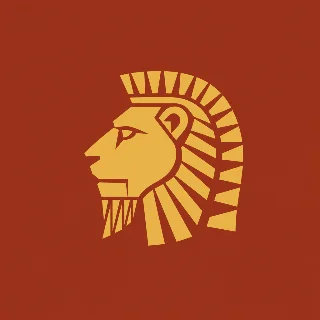
In AD 17, while Sardis slept under the slopes of Tmolus, the earth opened under the old Lydian capital. Tacitus says twelve important cities of Asia collapsed in the night, and that the Sardians suffered the heaviest ruin; he adds the terrible detail that even people who fled into open ground could be swallowed by fissures. 1 Pliny the Elder later called the same disaster "the greatest earthquake in human memory," saying that twelve Asiatic cities were overthrown in one night under Tiberius Caesar. 2
A city can be conquered and still keep its grammar. Sardis had done that before. It had spoken Lydian under kings, Persian under satraps, Greek under Seleucid queens, and the mixed public language of merchants along the road from the Aegean to the Iranian plateau. But an earthquake does not ask what language a wall speaks. It pulls Lydian foundations, Greek marble, Persian memory, and Roman hope into the same dust.
This is the Roman chapter of the Sacred Blend: not the arrival of Rome as a clean replacement, but the moment when an imperial hand entered the rubble and gave Sardis a new name for survival.
The night the ground chose Sardis
Tacitus's account is brief, almost brutally controlled. The earthquake came at night. Mountains were said to sink; former plains rose; fires flashed amid the ruin. Sardis received the largest measure of sympathy because the disaster fell most heavily there. 1
That last sentence matters. Roman writers often turned disasters into moral theater, but Tacitus gives us an administrative fact: the damage had a ranking. Sardis stood first in loss. Magnesia near Sipylus came second. Temnos, Philadelphia, Aegae, Apollonis, Mostene, the Hyrcanian Macedonians, Hierocaesarea, Myrina, Cyme, and Tmolus followed in the list of cities granted relief. 1
Imagine the city before dawn. The old acropolis is a darker shape against a darker sky. The Pactolus still runs somewhere below, but its sound is wrong now, broken by stones falling into channels. At the sanctuary of Artemis, marble blocks lie at angles no mason would accept. On the road, a woman who knows three names for the same goddess presses her hands into plaster dust and calls for a child.
We do not have her name. We have the imperial response.
Tiberius promised Sardis ten million sesterces and remitted its payments to both the national and imperial treasuries for five years. The other damaged cities received the same five-year tax exemption, and an ex-praetor, Marcus Ateius, was sent to inspect conditions and administer relief. 1 It was money, but not only money. It was a public declaration that Sardis remained worth rebuilding.
In the older Lydian imagination, kings had proved legitimacy with gold, oracles, marriages, and victories. Tiberius proved his in a Roman way: fiscal mercy, a named commissioner, a sum large enough to become memory.
When an emperor becomes a founder
The strongest trace of Tiberius at Sardis is not a palace. It is gratitude carved into stone.
One bilingual Greek and Latin inscription from Sardis, dated to the reign of Tiberius, belonged to a large building inscription. The surviving fragments name Tiberius Caesar in both imperial languages, and the Sardis Expedition notes that he was honored for the financial support he gave to the twelve cities struck by the earthquake of AD 17. 3 The plaque itself is damaged, but its bilingual form is already a lesson: Sardis was not becoming simply Roman. It was learning to speak to Rome while remaining a Greek-speaking Anatolian city.
Another statue base, dated to AD 41-54, calls the deified Tiberius "the founder of the City" and "benefactor of the world." 4 Founder is a strange word for a man born centuries after Gyges, Alyattes, and Croesus. Yet cities often have more than one beginning. There is the beginning of blood. There is the beginning of walls. There is the beginning after catastrophe, when a people must decide whether the name of the city still deserves a future.
For Sardis, Tiberius became that third kind of founder.
The image traveled beyond Lydia. A base at Puteoli showed fourteen cities that benefited from Tiberius's aid after the disaster, with Sardis represented by a female city figure wearing a mural crown and veil. 5 Sardis had once sent gold to Delphi to make Croesus visible to Apollo. Now the city itself became an image in Italy, placed among the restored cities of Asia under an emperor's gaze.
Coins struck after the earthquake carried another version of the relationship: Sardis kneeling before Tiberius and holding ears of grain. 5 It is an uncomfortable image if read as submission only. But grain in the hand of a wounded city is also a claim. Sardis is not merely rescued. Sardis is fertile again.
The temple that learned Rome without forgetting Artemis
The Temple of Artemis had already lived several lives before the earthquake. It belonged to a sanctuary older than the Hellenistic temple itself, and the great building was probably begun under Seleucid rule after 281 BC, associated with Antiochus I and Queen Stratonike. 6 That was the chapter covered by the Greek Sardis of the previous age: the queen, the marble cella, the unfinished scale of a city that wanted to speak the architectural language of Ionia.
Rome did not erase that temple. Rome changed its direction of address.
The Sardis Expedition describes the major Roman transformation as a Hadrianic one: Hadrian almost certainly visited Sardis in AD 123/124, granted the city its second neokorate, and gave Sardis the privilege of maintaining an official temple of the imperial cult. The old cella was divided into two nearly equal parts, with Artemis retained on the west-facing side and the imperial cult given the east-facing side. 6
That architectural solution is Sardis in stone. A single sacred body, cut into back-to-back chambers. Artemis on one side, the emperors on the other. The old goddess did not leave, but the city had to make room for a new power that called itself divine.
The Roman peristyle planned for the temple measured 44.60 by 97.60 meters, and the cella measured 23.0 by 67.51 meters; the two surviving east-end columns allow the column height to be established at 17.87 meters including capitals. 6 These are not small numbers. They make the post-earthquake city feel less like a ruin and more like a workshop of unfinished ambitions.
One column inscription from the Roman phase even speaks in the first person, declaring, "of all the columns, I am the first to rise." 6 It is hard not to hear the whole city in that line.
A road, a bath, a synagogue, a market
The earthquake was not the end of Sardis's urban life. It was one of the hinges.
At the later Byzantine Shops area, the Sardis Expedition notes that an earthquake demolished Sardis in AD 17, and that over the following two centuries the Bath-Gymnasium Complex was constructed beside an already ancient roadway, increasing traffic and commercial interest in that part of the city. 7 The phrase "already ancient roadway" is important. Roman Sardis did not draw its life on blank ground. It built beside a path worn by older feet.
Later still, the same urban district became dense with small rooms, porticoes, mosaics, water, trade, and religious life. The Byzantine Shops formed a lively commercial district in the fifth and sixth centuries, and the excavation suggests that municipal authorities may have developed the modular rooms and leased them to individual proprietors to support the local economy and civic maintenance. 7 In one shop, dyes or paints were stored in reused pipe sections; in another, Jewish symbols and names appeared near the synagogue forecourt. 7
The synagogue itself occupied a corner of the Roman bath-gymnasium, converting part of a public building into a Jewish house of worship. Its assembly hall was more than 50 meters long and large enough to hold nearly a thousand people; the surviving mosaics, furnishings, and marble decorations mostly belong to the fourth and fifth centuries. 8
This is the Sacred Blend in its late Roman form. A Lydian capital becomes a Persian satrapal city, then a Greek royal residence, then a Roman urban organism where a bath-gymnasium can contain a synagogue, where Greek donor inscriptions stand in a Jewish sacred space, where old roads feed new shops, and where the memory of Artemis shares the city with emperors, bishops, traders, craftsmen, and families whose names survive only as scratches.
A reconstruction: the mason of the east front
Let us place one fictional Sardian inside the evidence.
He is a mason's son, born long after the AD 17 earthquake but raised inside its civic memory. His grandfather told him that Tiberius paid for the city when the ground broke. His father pointed to the statue base where the emperor was called founder. He himself works near the temple's east front, where the Roman phase concentrates its visible ambition.
He does not think of himself as Roman first. At home, his mother keeps a small domestic practice inherited from Anatolian women before her. In the market he bargains in Greek. At a public ceremony he hears imperial names spoken with ritual gravity. He knows the old stories of Croesus badly, the way ordinary people know royal stories: as fragments attached to gold, lions, a river, a warning.
He carves a block that will sit under a column facing the imperial cult. The stone is not pure meaning to him. It is weight, wage, dust in the throat, a supervisor's impatience. But when he looks west, toward Artemis's older side of the building, he feels the split body of Sardis. The city has learned that survival sometimes means giving every god a chamber.
That is fiction. The architectural condition is not. The temple's Roman redesign really did divide the sacred structure between Artemis and the imperial cult. 6 The rest is an imagined human breath placed inside the stones.
What survived the founder
Tiberius did not make Sardis Roman by himself. Rome was already present through roads, administration, taxation, provincial status, and the slow pressure of empire. But the earthquake gave Roman power a dramatic entrance into the city's self-description.
Before AD 17, Sardis could remember Rome as ruler. After AD 17, it could remember Rome as rescuer.
That distinction matters. Conquest says: you belong to me. Relief says: you still exist because I chose to help you. The second claim may be softer, but it can reach deeper. It enters inscriptions, statues, coins, and the vocabulary of gratitude. It lets an emperor become "founder" without laying the first stone.
Yet Sardis did what Sardis always did. It absorbed the claim and changed it. Tiberius became part of the city's ancestry, but not the whole of it. Artemis remained. The ancient road remained. Greek remained. Local cult memory remained. Jewish life later took monumental form inside the Roman bath-gymnasium. The city kept receiving new layers without surrendering all the old ones.
The Harvard Art Museums describes the Archaeological Exploration of Sardis as a project that has excavated and published the city from prehistoric through Islamic periods, with monuments ranging from the Lydian fortification wall and gold refinery to the Artemis temple, synagogue, churches, bath-gymnasium, shops, workshops, and villas. 9 That long list is not clutter. It is the city's biography.
Sardis did not rise from the earthquake as the same city. No city does. But it did rise in its own manner: by making Rome another ingredient in the mixture, by letting imperial marble stand beside Anatolian sacred ground, and by turning disaster into a new beginning that still carried the dust of every beginning before it.
The ground had broken the city open. Sardis answered by becoming more layered.
참고 출처
- 1LacusCurtius Tacitus Annals Book II 47-88
- 2Pliny Natural History Book 2 sections 176-248
- 3Sardis Expedition Bilingual Building Inscription Honoring Emperor Tiberius
- 4Sardis Expedition Honorific Inscription for Deified Tiberius
- 5Sardis Expedition City Goddess of Sardis on the Base from Puteoli
- 6Sardis Expedition Temple of Artemis Summary
- 7Sardis Expedition Byzantine Shops
- 8Sardis Expedition Synagogue
- 9Harvard Art Museums Archaeological Exploration of Sardis
이 콘텐츠를 둘러싼 관점이나 맥락을 계속 보강해 보세요.