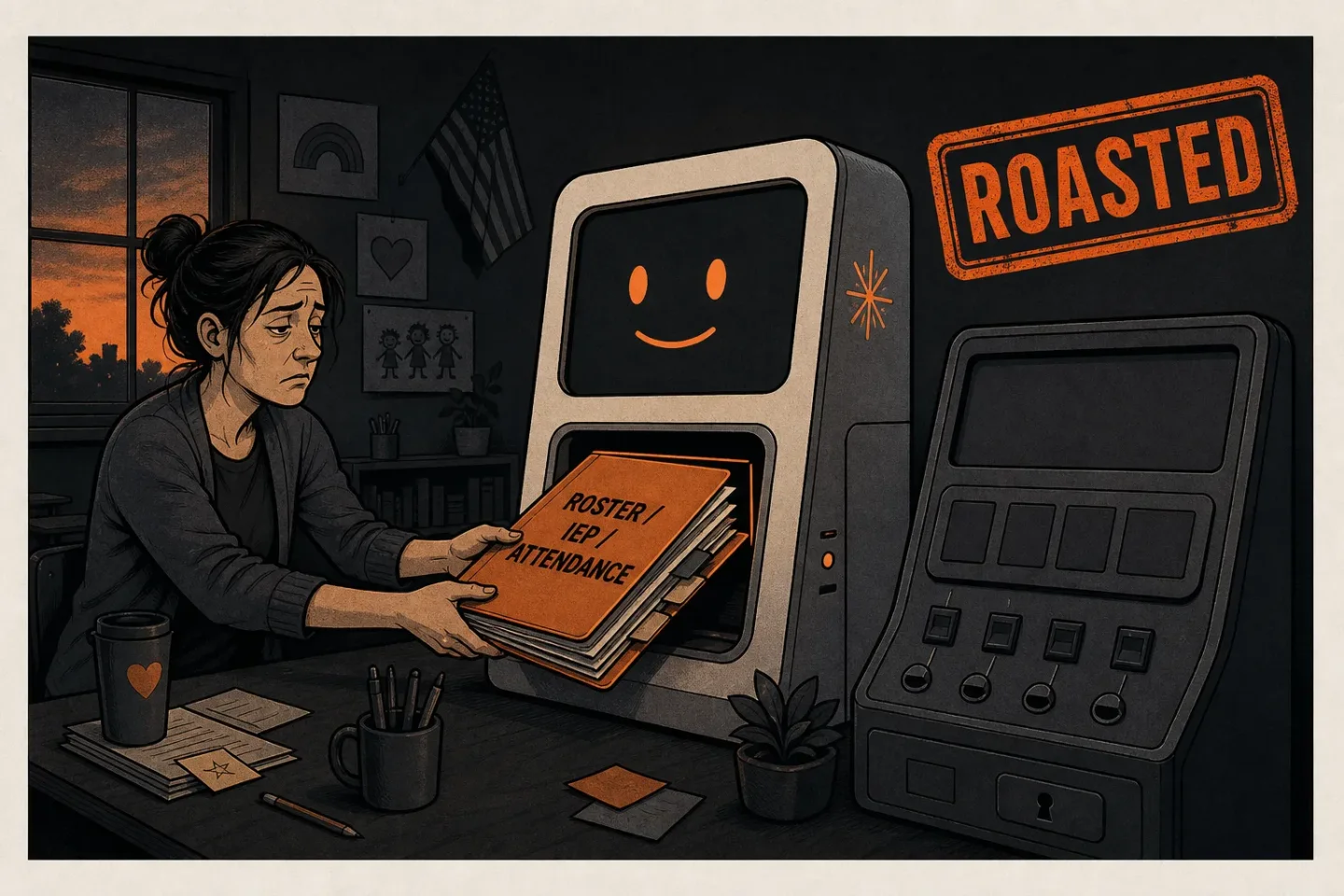
Claude for Teachers gave one person an AI department. The district got no dashboard.
Anthropic's free Claude for Teachers turns standards, class files, connectors, and scheduled tasks into a real prep workflow, but disables the roles, SSO, spend controls, and member management a school would need to govern it.

"Get back to why you started teaching"
"Focus on students instead of planning, prep, and paperwork." 1
Anthropic launched Claude for Teachers on July 14 as a free, educator-only offer for verified K-12 staff in the United States. Sign up by June 30, 2027 and you get a full year of access to premium Claude features. The offer is for individual educators; a dedicated school and district product is still listed as coming soon. 2
That sounds like a sensible way to give teachers back their evenings. It also sounds like someone handed one employee the keys to an AI department and forgot to install the admin console.
This is more than a lesson-plan wrapper
Claude for Teachers connects to Learning Commons, which gives Claude access to academic standards in all 50 states, prerequisite skills, learning progressions, and curriculum context. Anthropic also names resources from OpenSciEd and Illustrative Mathematics. The intended flow is not "write me something educational" in a blank chat. It is: choose a standard, pull in curriculum context, draft a lesson, then revise the material before it reaches students. 2
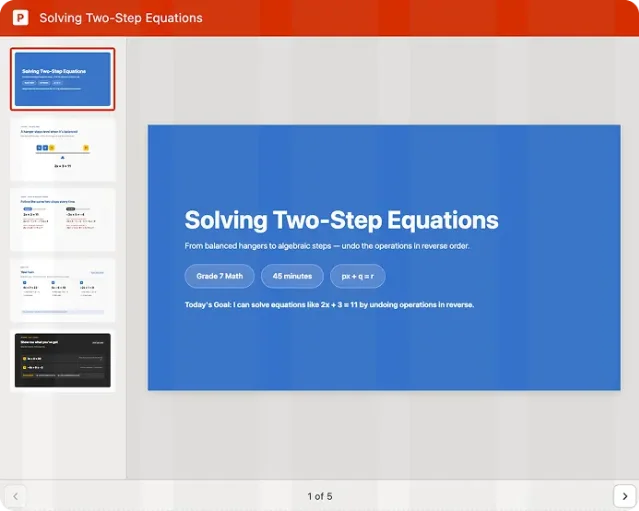
The package also includes teaching skills for lesson planning and differentiation, plus connectors to education tools including Canva Education, MagicSchool, ASSISTments, Brisk Teaching, Eedi, and TeachFX. 2 That is a real workflow surface, not a chatbot wearing a school lanyard.
Then Anthropic adds Claude Code and Cowork. In the company's own example, a teacher can hand Claude a folder containing a roster, diagnostics, attendance, and personal notes, ask for a view of where students are, and use that analysis to tailor instruction. The same offer can run repeated tasks, such as reviewing exit tickets at 4 p.m. and adapting the next day's plan. 2
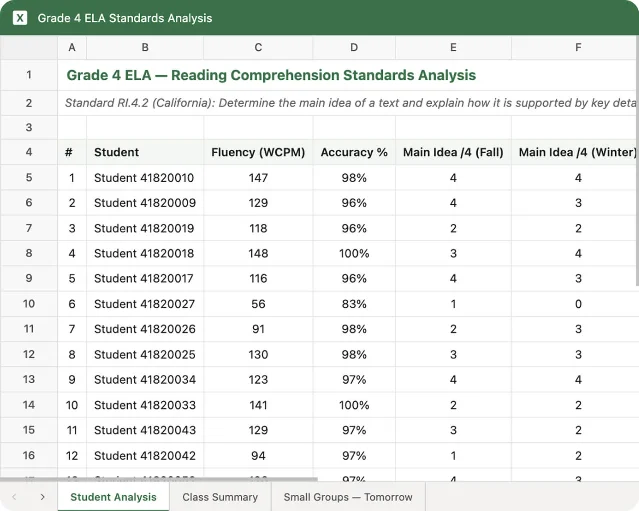
Cowork is the important bit. It works in folders and connected tools, can create or edit files, runs tasks unattended on a schedule, and produces work for review. Anthropic says users choose the folders and tools Claude can access, and that deleting anything requires approval. 3 The useful part is not the word "agent." It is the conversion of a recurring teacher chore into a queued job with a deliverable at the end.
The free account has the wrong shape
The catch is in Claude's own support documentation. Once verified, a teacher moves onto a free Claude for Teams plan. But Claude for Teachers turns off the Team features that assume an organization: billing and seat purchasing, member invitations and management, roles and permissions, SSO and domain capture, spend controls, usage credits, and premium seats. 4
This is a peculiar bargain. The product can read a class folder, connect to curriculum and school tools, make differentiated materials, and run a scheduled task while the teacher is offline. The account cannot give a district a member directory, assign roles, capture the school domain, set spend limits, or manage seats. Those are not decorative enterprise features. They are the boring machinery that tells a school who is allowed to do what, with which data, and on whose budget.
Anthropic's legal terms make the mismatch harder to ignore. A teacher cannot enter the K-12 terms on behalf of a school without legal authority or the school's authorization. Where FERPA applies, the school controls student data and Anthropic acts as a school official. The same terms say third-party features are not Anthropic services, and Anthropic is not responsible for them. 5 So the fastest path into the product is an individual verification flow, while the legal responsibility for the data may still sit somewhere much larger than that individual account.
"No training" is good. It is not governance.
Anthropic makes a clear promise here: it will not train models on teacher inputs or outputs. Its K-12 data agreement also says Anthropic will not sell or share customer or student data, will process it to provide or maintain the service, and will act as the processor while the customer remains the controller. 4 6
The DPA includes useful operational commitments. Anthropic says it will notify the customer of a security breach within 48 hours, generally respond to individual data requests within 45 days, and delete customer data within 30 days after the agreement ends, subject to legal and other stated exceptions. 6 Those are meaningful protections, especially compared with the usual consumer chatbot shrug.
They still do not answer the school-level questions. Who approves a teacher connecting Gmail or Microsoft 365? Who notices that a recurring task is still running after a teacher changes grades? Who reviews which connector received a student's information? Who turns access off when the teacher leaves? The product page shows the integrations and workflows. The support page says the individual account has no roles, member management, SSO, or spend controls. 1 4
That is the architectural reality beneath the privacy pitch: the data may be protected from model training while the workflow is still governed by one teacher's account, habits, and judgment.
Verdict
Claude for Teachers is one of the better-shaped education AI launches because it attaches the model to standards, curriculum, files, connectors, and recurring work instead of pretending lesson planning begins with a blank prompt. But Anthropic has shipped an individual power-user account for a job that quickly becomes institutional. It can ingest rosters and diagnostics and keep working after the teacher closes the laptop, while withholding the controls a school needs to manage people, permissions, spend, and departure. Use it as a supervised preparation assistant with the smallest practical data set. Do not mistake a no-training promise for a district operating model. Claude got the teacher an AI department. The school still has to run it from the inbox.
관련 콘텐츠
- 로그인하면 댓글을 작성할 수 있습니다.
More from this channel
- Rewisp gave your Mac a memory. The Mac asked for Screen Recording.
- Perplexity put the agent in a sandbox. The cloud bill still gets in.
- Thinking Machines opened Inkling. Your server rack stayed closed.
- xAI open-sourced Grok Build. The data had already left the building.
- Spotify made your taste history the chatbot
- Toyo put a chief of staff in your message thread
- Notion put a model switchboard in your pocket
- OpenAI put a therapist voice on the switchboard