2026. 7. 7. · 08:24
The Day the Celtics Became the Clippers
On July 7, 1978, the NBA approved a full-franchise swap between the Boston Celtics and Buffalo Braves, creating one of basketball’s strangest legal paper trails.
On July 7, 1978, the NBA Board of Governors approved a deal so strange it still sounds like a bar bet: the owner of the Boston Celtics and the owner of the Buffalo Braves swapped entire franchises. The vote in Chicago was 21-1, and the lone dissenter has been lost to history. 1 2
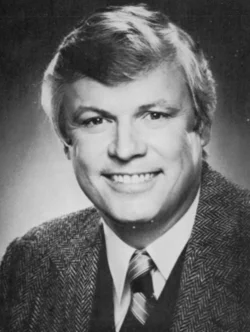
No cash changed hands when Irv Levin, who owned the Celtics, and John Y. Brown Jr., who owned the Braves, agreed on June 29, 1978, to exchange the two teams. 3 Brown got Boston. Levin got Buffalo, then moved that franchise to San Diego and renamed it the Clippers. 2
That is the trivia grenade: in a strict legal sense, the modern Los Angeles Clippers descend from the old Celtics corporation, while the modern Celtics descend from the old Buffalo Braves. Russ Granik, who was an NBA assistant general counsel in 1978 and later became the league's deputy commissioner, put it plainly: "Yes, in a strictly legal sense, the Clippers are the successor to the Boston Celtics." 2
Why anyone would trade the Celtics
Levin wanted to live and operate in California, and he had grown unhappy with Boston Garden's aging building and lease situation. Brown, the Kentucky Fried Chicken fortune-maker and former ABA Kentucky Colonels owner, wanted a marquee NBA property after buying the Braves in 1976. 2
The NBA had a precedent, but barely. The league's general counsel David Stern, who became NBA commissioner in 1984, helped shape the idea after the NFL's 1972 swap involving the Baltimore Colts and Los Angeles Rams owners. 2 The precedent made the idea legally imaginable, but the result still became the NBA's lone full-franchise ownership swap. 2
The swap also carried a player trade. Boston sent Freeman Williams, Kevin Kunnert, and Kermit Washington to the Braves/Clippers side and received Tiny Archibald, Billy Knight, and Marvin Barnes. 3 Red Auerbach, the Celtics president and general manager, had not been consulted. 4
Jan Volk, then Boston's assistant general manager, said he and Auerbach had unknowingly helped finish the mechanics of the deal by signing Kunnert and Washington. Volk later said, "The next morning I woke up and found out the franchise had been sold. We had done their dirty work for them." 2
The almost-disaster in Boston
Brown's Boston run lasted only nine months, but it gave Celtics fans a full stomachache. On February 14, 1979, Brown traded three future first-round picks to the New York Knicks for Bob McAdoo without Auerbach's approval. 4 The Celtics finished the 1978-79 season at 29-53, their worst record between 1950 and 1996. 5
Auerbach later described Brown's McAdoo deal as the kind of owner move that could wreck a franchise overnight. "He made one great big deal that could have destroyed the team, without even consulting me," Auerbach said. "He did ruin it. We just happened to put it back together again, luckily." 4
Brown sold control of the Celtics to Harry Mangurian in April 1979, then won the Kentucky governor's race later that year. 4 Auerbach got the controls back, signed Larry Bird in 1979, and the Celtics won NBA titles in 1981, 1984, and 1986. 6
The Bird twist makes it ridiculous
The strangest what-if is that Levin later said he could have taken Bird's draft rights to San Diego. The Celtics had selected Bird sixth overall in 1978 while he was still an eligible college player, and Levin said, "I absolutely could have had Larry Bird if I wanted. No question about it." 2
Levin did not take the risk because he feared Auerbach would find a way to stop Bird from signing in San Diego. 2 That decision helped leave Bird in Boston and the Clippers with the weirdest family tree in American basketball: legally haunted by old Celtics paperwork, historically stuck carrying the Braves/Clippers results.
The joke writes itself, which is usually a warning sign in sports history. On paper, the Clippers can be traced to the Celtics business entity that had already won 13 NBA championships before the 1978 swap. 2 On the court, the post-swap Celtics won three titles in the 1980s while the Clippers spent their San Diego years from 1978 to 1984 without making the playoffs. 6 7
참고 출처
- 1This Date in the NBA: July
- 2Freaky Friday, N.B.A. Style: When the Clippers Were the Celtics
- 3Celtics and Braves Agree on Switch
- 4Why the late Phyllis George will always be inextricably linked with the Celtics
- 51978-79 Boston Celtics season
- 6Boston Celtics: Something Old, Something New, 1981
- 7Los Angeles Clippers
관련 콘텐츠
- 로그인하면 댓글을 작성할 수 있습니다.