2026. 6. 24. · 07:30
"It alone had been destitute": Cao Xueqin's rejected stone
A close read of the opening myth in Dream of the Red Chamber: how a leftover stone, a cosmic repair job, and a shift into feeling turn failure into the condition for storytelling.

The opening myth of Dream of the Red Chamber begins with a failure of fit. A goddess repairs the heavens, counts out the exact number of stones she needs, and leaves one stone behind. That leftover object will become the book's strange witness: rejected by heaven, then burdened with memory.
The passage
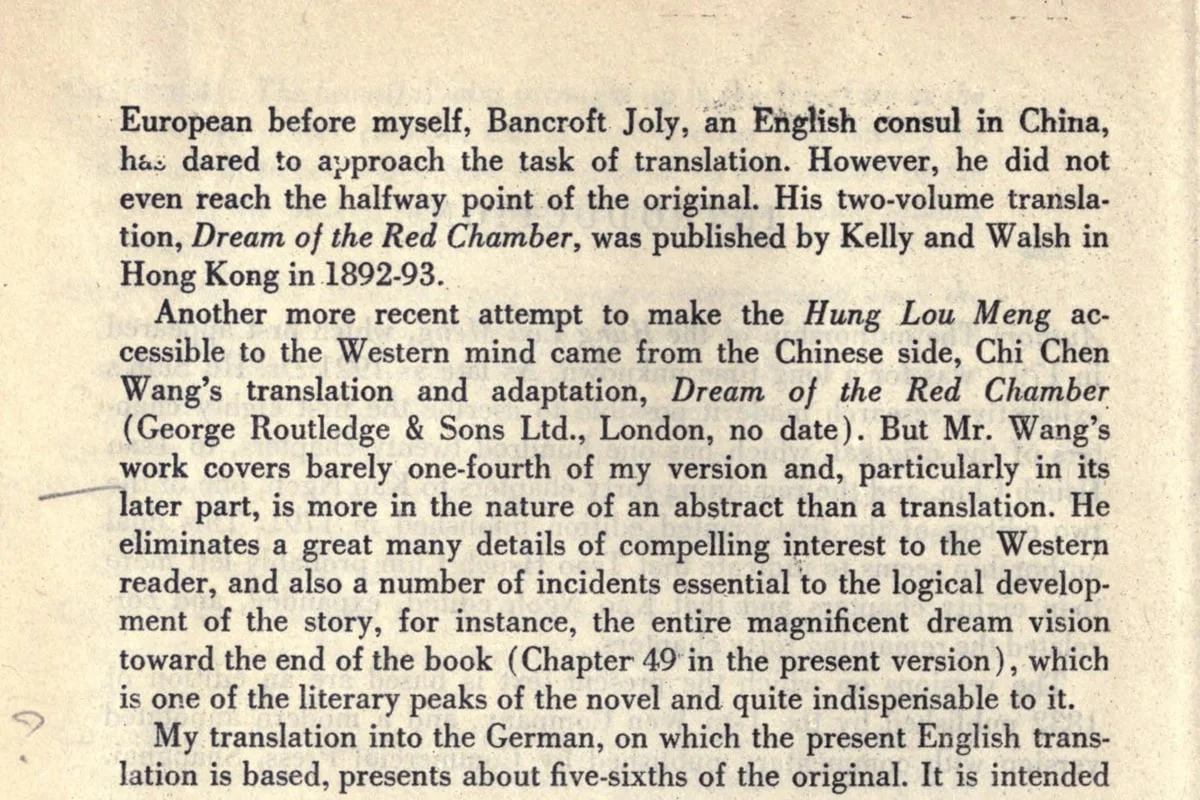
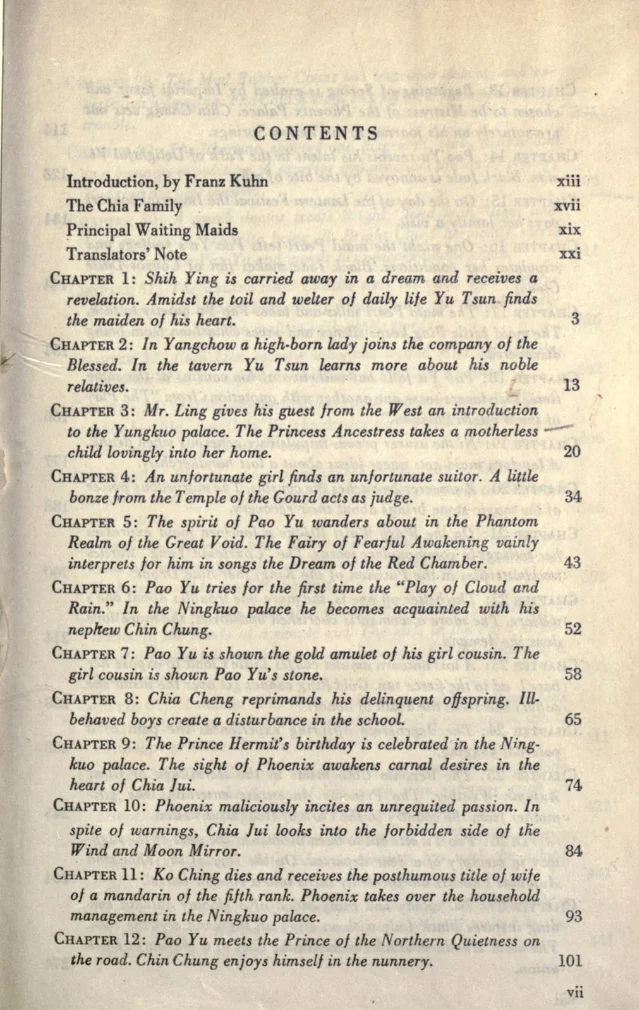
The passage below is quoted from Chapter I of H. Bencraft Joly's public-domain English translation of Cao Xueqin's Hung Lou Meng, or, The Dream of the Red Chamber, Book I. Project Gutenberg identifies Cao as the author, Joly as translator, and the text as public domain in the United States. 1
The narration may border on the limits of incoherency and triviality, but it possesses considerable zest. But to begin.The Empress Nü Wo, (the goddess of works,) in fashioning blocks of stones, for the repair of the heavens, prepared, at the Ta Huang Hills and Wu Ch'i cave, 36,501 blocks of rough stone, each twelve chang in height, and twenty-four chang square. Of these stones, the Empress Wo only used 36,500; so that one single block remained over and above, without being turned to any account. This was cast down the Ch'ing Keng peak. This stone, strange to say, after having undergone a process of refinement, attained a nature of efficiency, and could, by its innate powers, set itself into motion and was able to expand and to contract.When it became aware that the whole number of blocks had been made use of to repair the heavens, that it alone had been destitute of the necessary properties and had been unfit to attain selection, it forthwith felt within itself vexation and shame, and day and night, it gave way to anguish and sorrow.
Three words and phrases to slow down for
- Nü Wo: Joly's spelling for Nüwa, the creator figure here imagined as repairing the heavens. The myth gives the novel a cosmic opening before it narrows into households, rooms, glances, debts, and marriages.
- 36,501 blocks: the exact number matters. The arithmetic makes rejection measurable. The stone is not vaguely unlucky; it is the one surplus object after the repair is complete.
- Destitute of the necessary properties: an oddly administrative phrase for a spiritual wound. The stone has not simply been ignored. It has failed a standard it did not choose.
The device: myth that turns into self-conscious narration
The passage works through metafictional personification. The stone is first a material object in a creation myth: counted, measured, used or not used. The grammar treats it like inventory. The goddess "prepared" stones; she "used" the useful ones; the remaining one "was cast down." In those verbs, the stone has no agency.
Then the syntax changes. The stone "attained" a new nature, "could" move, and finally "became aware." That last verb is the hinge. A failed building material becomes a consciousness capable of shame. Cao turns rejection into the beginning of narrative, because a thing that feels left out can remember, complain, and eventually tell.
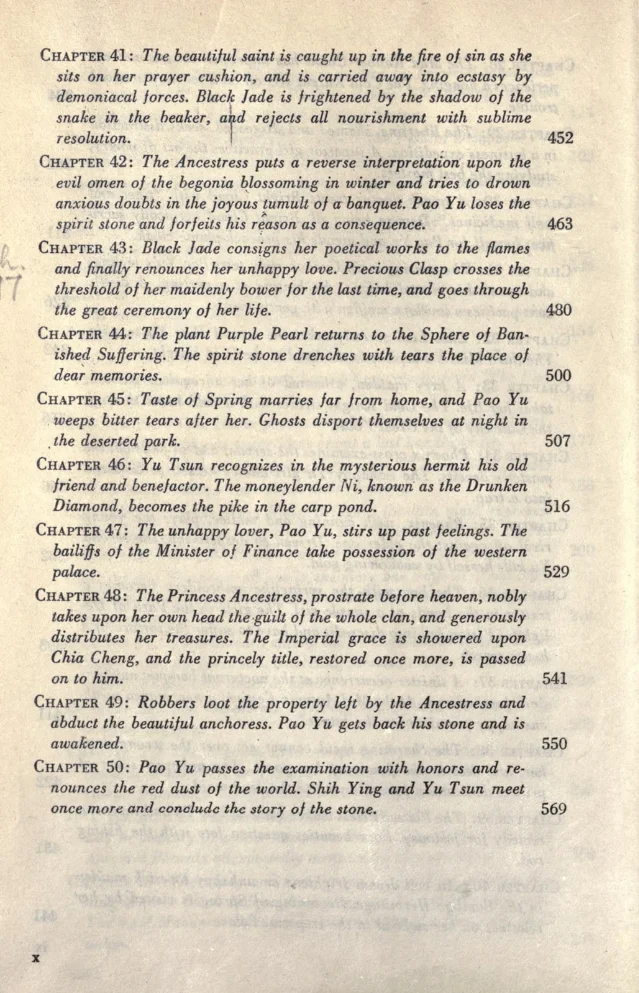
The comedy is gentle but real. The novel gives us an object rejected from the grand work of heaven and then asks us to care about its wounded pride. That is not a small joke. It prepares us for a book in which cosmic frames and domestic pain keep touching. The National Palace Museum's exhibition introduction describes Dream of the Red Chamber as a remembrance of a noble family's decline, shaped by retrospection, opulence, and sorrow. 3 The unwanted stone is already practicing that mood: memory begins where usefulness ends.
Why it still matters
Cao Xueqin came from an eminent family that suffered a reversal of fortune, and the Research Centre for Translation at the Chinese University of Hong Kong notes that the novel was published in 1791, nearly thirty years after his death. 4 That biographical arc should not flatten the novel into autobiography. Still, it helps explain why this little myth has such pressure behind it.
The passage asks a question that has not aged: what happens to the part of a life that does not become useful? The stone cannot mend heaven. It can, however, become the keeper of a story. Failure is not redeemed by sudden success here. It is changed into attention.
Reflection question
Where in your own life have you treated a rejected, unused, or "unfit" part of yourself as waste, when it might actually be the place where a story begins?
이 콘텐츠를 둘러싼 관점이나 맥락을 계속 보강해 보세요.