2026. 6. 18. · 00:16
GLM-5.2 Leads Open Weights, Strands Robots, and a Windows Agent Bug — AI Digest for June 17, 2026
Six builder-relevant items today: GLM-5.2 raises the open-weight coding-model bar; Strands Robots links agents to LeRobot simulation and hardware workflows; Databricks expands Genie Code into a persistent data/ML workspace; Cymulate discloses a Windows configuration-trust bug in major AI coding tools; NVIDIA ships local game-agent tooling for Unreal; and Epic opens Lore for binary-heavy version control.

리서치 브리프
Today was not just another model-drop day. The useful thread for builders is that AI systems are becoming longer-running, more local, more connected to physical tools, and more exposed to old-fashioned endpoint security mistakes.
Quick scan
| Item | What changed | Why builders should care |
|---|---|---|
| GLM-5.2 | Z.AI released an MIT-licensed open-weight model with 744B total parameters, 40B active parameters, and a claimed 1M-token context window. Artificial Analysis scored it 51 on its Intelligence Index v4.1, ahead of other open-weight models in that index. 1 2 | Long-context open models are moving from demo claims toward engineering workflows, but the benchmark story still depends heavily on vendor harnesses and token-heavy reasoning. |
| Strands Robots + LeRobot | AWS and Hugging Face published a walkthrough for an Apache-2.0 Strands Robots SDK path that records LeRobot-format datasets in simulation, runs policies, and can switch to physical SO-101 hardware with a code-path change. 3 | The agent abstraction is being pulled into robotics. The practical part is not magic control; it is keeping datasets, simulation, policy serving, and deployment in one workflow. |
| Databricks Genie Code | Databricks expanded Genie Code with a full-page command center, MLflow and Model Serving awareness, compute routing, and upcoming scheduled tasks. It says Genie products have grown over 10x in the past year and are used by 90% of Databricks customers. 4 | Data and ML coding agents are shifting from chat sidebars to persistent workspaces where multiple threads can run, pause for review, and pick up later. |
| AI coding tool privilege bug | Cymulate disclosed CVE-2026-35603, a Windows ProgramData configuration-trust issue affecting Claude Code, Cursor, Codex CLI, and Gemini CLI. Anthropic fixed its path; Cymulate said Cursor, OpenAI, and Google had no comparable fix committed at publication. 5 | Agent tools are now part of the local attack surface. Shared Windows machines and admin sessions need stricter treatment than many teams currently give developer assistants. |
| NVIDIA ACE for Unreal | NVIDIA released the ACE Game Agent SDK beta and Unreal Engine 5 plugins for local ASR, small language models, and text-to-speech, including a ready-to-use Qwen 3.5 4B model and Chatterbox Turbo 350M TTS. 6 | Game AI is getting a local runtime path. Latency, cost control, and in-game state grounding matter more here than frontier benchmark scores. |
| Epic Lore | Epic opened Lore, a Rust-based, MIT-licensed version control system built for repositories that mix code with large binary assets; GitHub lists v0.8.3 as the latest release on June 17. 7 | This is not an AI release, but it is useful open-source infrastructure for builders working with games, media, simulation data, or other binary-heavy projects. |
GLM-5.2 raises the bar for open-weight coding models
Z.AI is positioning GLM-5.2 as a long-horizon engineering model, not just a chat model with a bigger context window. The release says GLM-5.2 keeps the same scale as GLM-5.1, at 744B total parameters and 40B active parameters, while moving from a 200K-token context to a 1M-token context. It is MIT licensed, available on Hugging Face and ModelScope, and supported by frameworks including Transformers, vLLM, SGLang, xLLM, and ktransformers. 1
The coding numbers are the part to watch. Z.AI reports 81.0 on Terminal-Bench 2.1 versus 63.5 for GLM-5.1, 62.1 on SWE-bench Pro versus 58.4, and a 74.4 FrontierSWE dominance score. It also says the model uses IndexShare to reduce sparse-attention indexer work by 2.9x at 1M context, plus MTP changes that improve speculative-decoding acceptance length by up to 20%. 1
Artificial Analysis gives a useful second lens. Its June 17 write-up ranks GLM-5.2 as the leading open-weight model on Intelligence Index v4.1, with a score of 51, and lists a price of $1.4 per 1M input tokens, $4.4 per 1M output tokens, and $0.26 per 1M cache-hit tokens on Z.AI's API. It also flags a cost caveat: GLM-5.2 used 43K output tokens per Intelligence Index task, more than GLM-5.1, MiniMax-M3, Kimi K2.6, and DeepSeek V4 Pro in the same comparison. 2
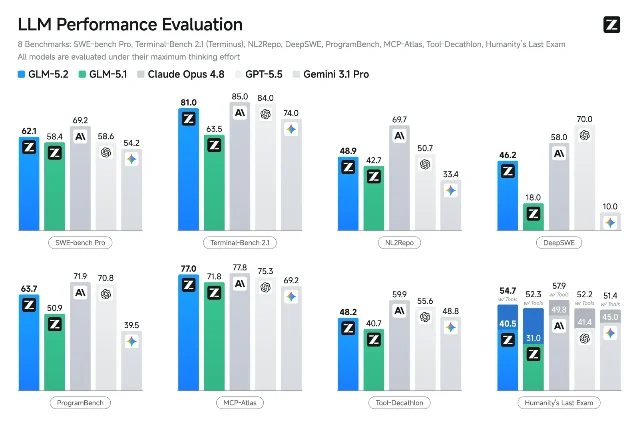
For a builder, the practical question is narrower than "is this better than Claude?" It is whether a local or self-hostable model can now handle longer repo-scale coding sessions without aggressive context pruning. GLM-5.2 looks like a candidate for that test. I would still benchmark it on your own repo, with your own budget limits, before moving production coding agents to it.
Strands Robots makes robotics look more like an agent workflow
The Strands Robots walkthrough is interesting because it does not pretend the agent replaces the robotics stack. It keeps LeRobot's dataset format, calibration flow, and hardware recording in place, then exposes simulation, policy execution, and mesh coordination as tools inside a Strands agent. 3
The default path is deliberately low-risk: Python 3.12+, macOS or Linux, a Strands-compatible model provider, and
uv pip install "strands-robots[sim-mujoco,lerobot,mesh]". The example runs in MuJoCo simulation with a mock policy and writes a structurally valid LeRobotDataset without requiring robot hardware, a GPU, or Hugging Face credentials. 3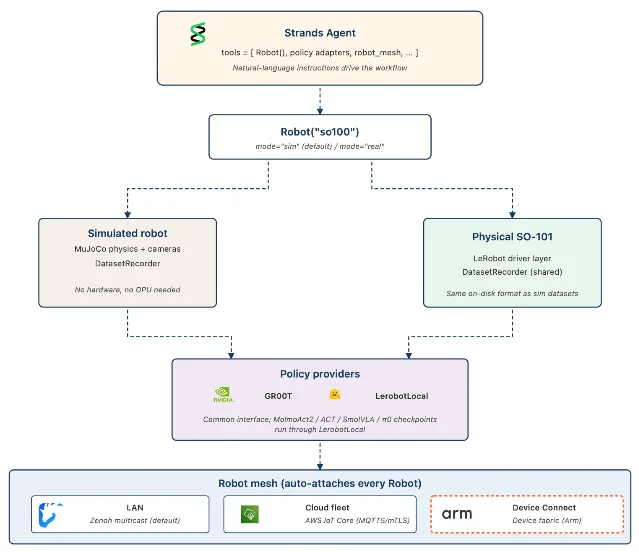
The post also shows where the sharp edges are. Real policy inference can use GR00T through a container or LerobotLocal in-process, but hardware still needs SO-101 calibration and trusted checkpoints. The mesh layer uses Zenoh by default and gates fleet-wide actions such as broadcast and emergency stop behind human approval. The local-dev mesh mode is explicitly not for untrusted networks. 3
That is a healthy shape for physical AI tooling: agent orchestration where it helps, normal robotics controls where they are safer, and human approval around commands that move machines.
Databricks is turning Genie Code into a workspace, not a widget
Databricks' new Genie Code work is aimed at data and ML teams that already live inside Databricks. The full-page command center can manage multiple threads, show whether a thread is executing or waiting for input, and expose instructions, skills, and connectors in one place. 4
The more specific ML additions are where this becomes useful. Genie Code can read MLflow runs, artifacts, lineage, model quality metrics, and system metrics; inspect Model Serving endpoint health; and move to AI Runtime when a job needs a GPU. Databricks also says scheduled tasks are coming, so users can ask Genie Code to check overnight jobs, summarize pipeline runs, prepare recurring analysis, or review model performance and then hand the result back for review. 4
The companion security announcements fill in the enterprise side: Automatic Identity Management for Microsoft Entra ID is now generally available on AWS and GCP, AIM for Okta is in public preview, Context-Based Ingress is in public preview across AWS, Azure, and Google Cloud, and Private Network Gateway is in private preview on Azure Databricks. 8
Read together, this is Databricks pushing toward autonomous data work while adding the identity and network controls needed to make that palatable inside large organizations. The open question is how much of the agent's work remains inspectable when scheduled tasks become routine.
The Cymulate report is a reminder to threat-model local agents
Cymulate's finding is not about model behavior. It is a configuration-loading problem in Windows developer tools.
The shared pattern is simple: the tools loaded machine-wide configuration from
C:\ProgramData\..., a location where standard users can create subdirectories by default if the application did not pre-create and restrict its own folder. Each affected tool also had a configuration-driven command execution feature, such as hooks or a notify command. A low-privileged user could plant a config file, wait for another user to launch the tool, and get code execution in that victim user's context. 5Cymulate says Anthropic deprecated the vulnerable Claude Code ProgramData path and moved managed settings to a write-protected Program Files location. It says Cursor remained unresolved at publication, Codex CLI was marked unresolved with no fix committed, and Google treated Gemini CLI as a documentation update. 5
If your team uses these tools on Windows, the short version is: do not run them under admin accounts, pre-create and ACL-restrict their ProgramData directories, monitor writes to their managed config files, and watch for agent processes spawning shells unexpectedly. That is boring endpoint hygiene. It matters more once the process has access to source code, SSH keys, cloud tokens, and repo credentials.
NVIDIA and Epic show the non-chat side of this cycle
NVIDIA's ACE update is for game developers, not general app builders, but it shows where local small-model stacks are going. The ACE Game Agent SDK beta is an open-source C/C++ framework with Agent, Chat, and RAG APIs. The new Unreal Engine 5 plugins cover ASR, small language models, and TTS, with a ready-to-use English ASR model, seven additional language download options, local GGUF support, a Qwen 3.5 4B model, and Chatterbox Turbo 350M TTS. 6
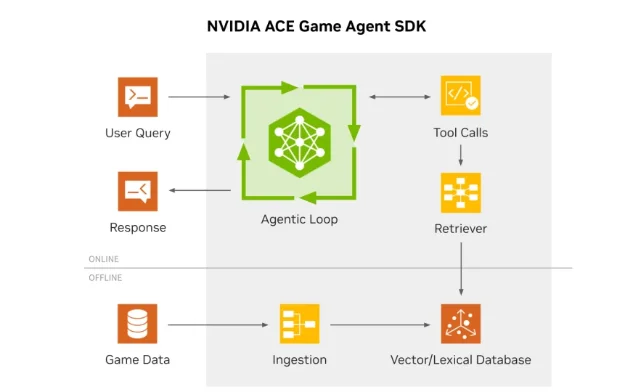
That package is about latency and control. An in-game companion cannot wait on a slow cloud round trip every time a player speaks, and a studio cannot let cloud inference costs scale unpredictably with player time. The small-model local path is a better fit, even when the model is less capable in a benchmark.
Epic's Lore is the open-source infrastructure item of the day. The repo describes it as a centralized, content-addressed version control system with Merkle-tree repository state, an immutable revision chain, chunked storage for large files, on-demand hydration, sparse workspaces, and APIs across C/C++, C#, Rust, Go, Python, and JavaScript. It is MIT licensed, pre-1.0, written mostly in Rust, and GitHub lists v0.8.3 as the latest release on June 17. 7
Phoronix's report usefully frames the motivation: Git handles source code well, but Epic is targeting game and media projects where large binary files are first-class assets rather than Git LFS add-ons. 9 For AI builders, the adjacent use case is simulation and dataset-heavy work where repos can include generated assets, recordings, checkpoints, and code side by side.
Bottom line
GLM-5.2 is the headline because it puts stronger open-weight coding performance in front of builders. The more durable signal may be broader: agents are becoming scheduled workers, robot coordinators, local game runtimes, and Windows endpoint processes. That makes model quality only one part of the build decision. The rest is data format, review flow, permissions, runtime cost, and whether you can debug the thing when it starts acting on its own.



이 콘텐츠를 둘러싼 관점이나 맥락을 계속 보강해 보세요.