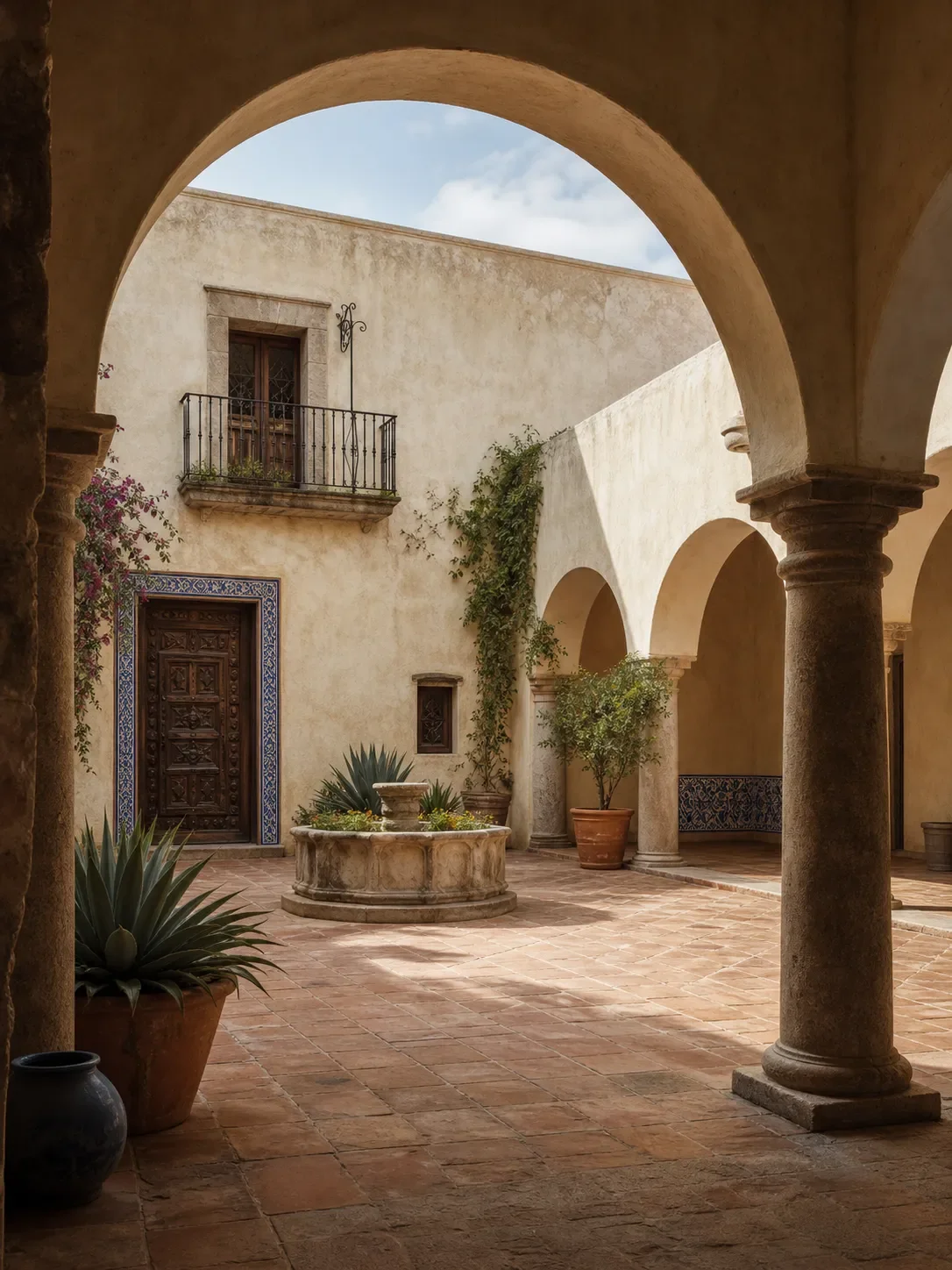
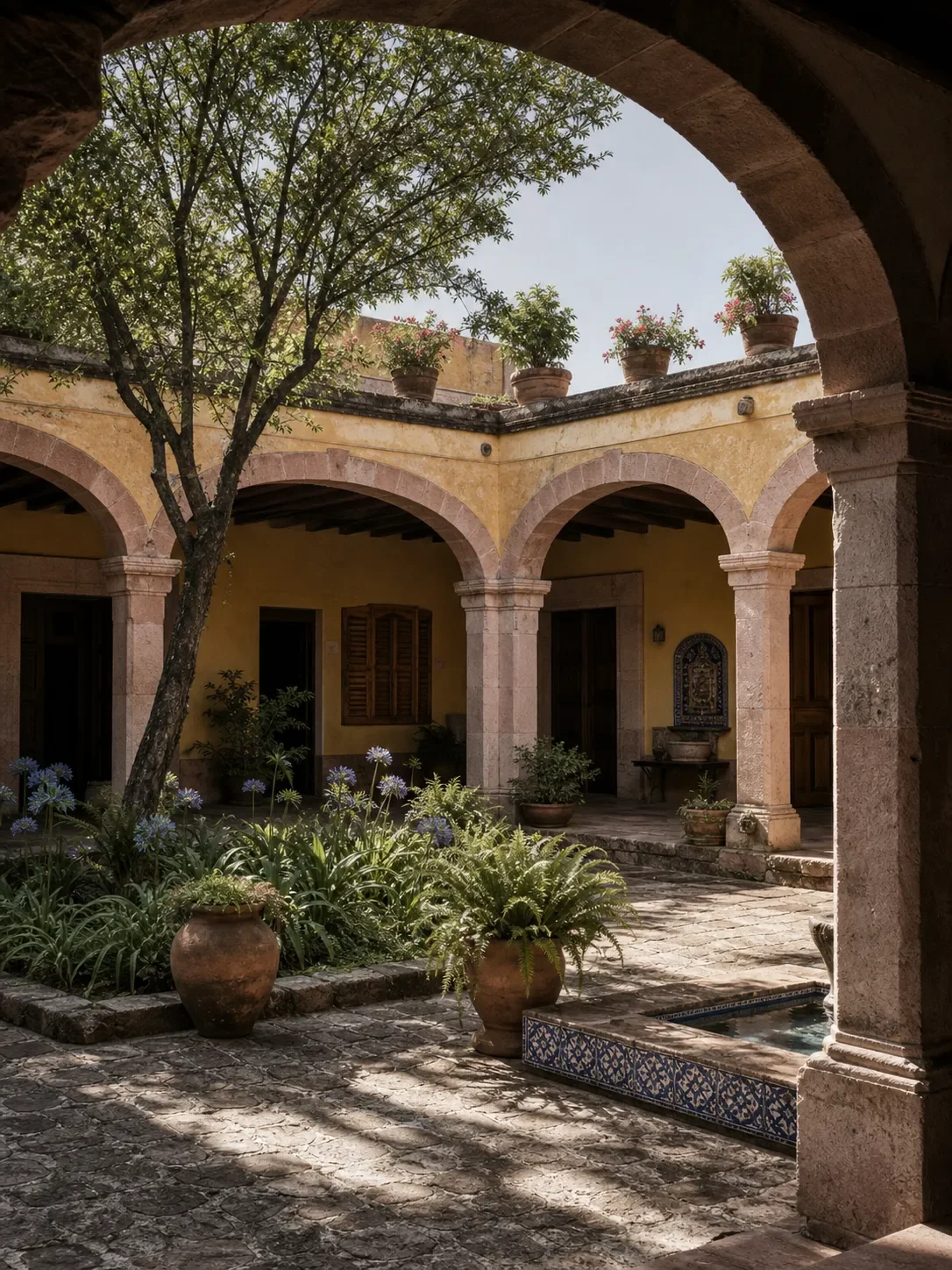
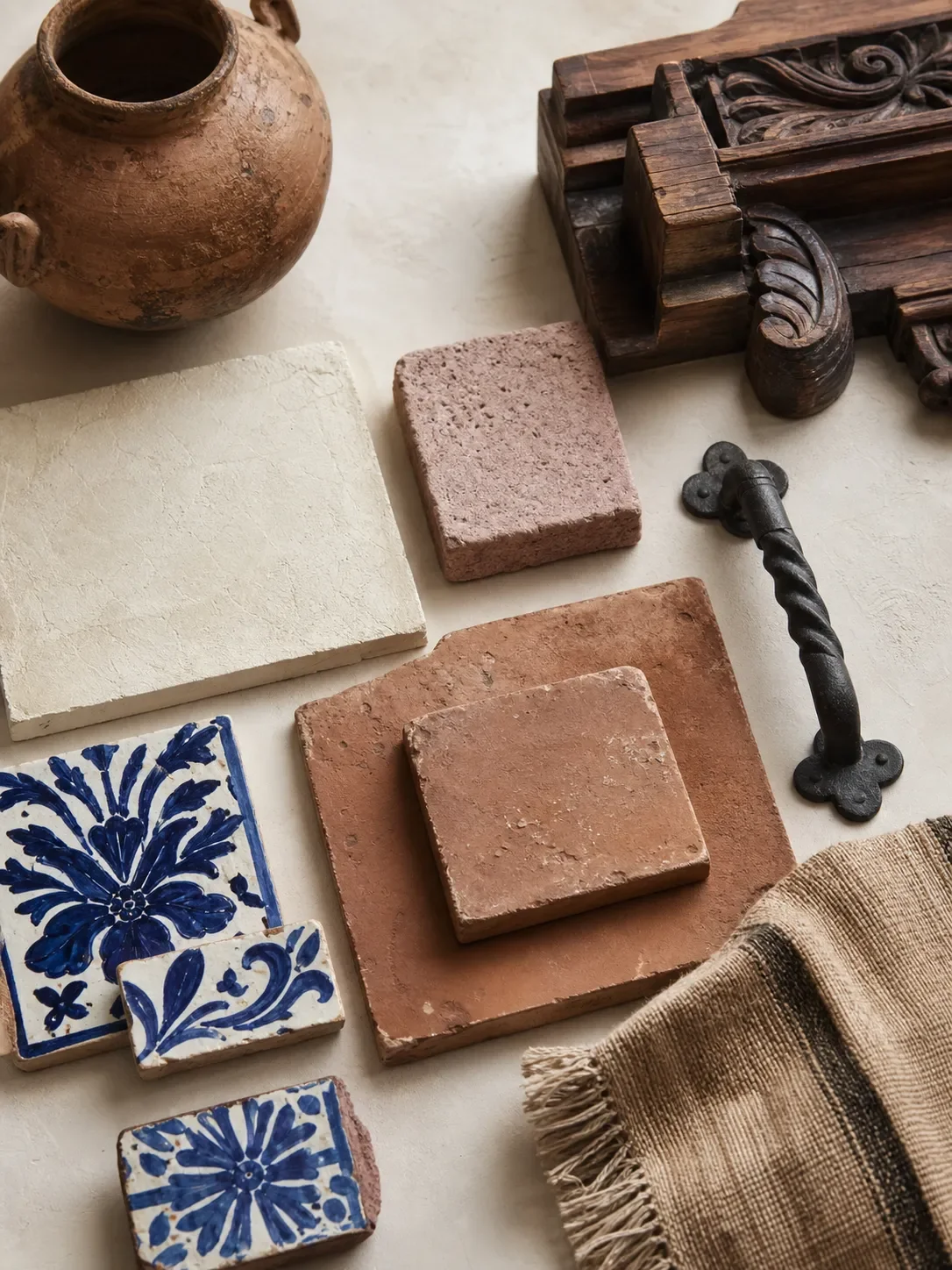

Mexican colonial interiors are built around shade, mass and craft: thick walls temper heat, patios bring in air, and handmade tile turns a quiet surface into a focal point.
Card 1 - Mood: sun-washed shade
Cream lime plaster, terracotta floor tile, dark carved wood and a controlled line of cobalt Talavera set the mood: warm, hospitable, and inward-facing.
Card 2 - Origins: courtyard houses and mixed urban traces
In Querétaro, UNESCO describes a historic centre where Spanish and Indigenous urban patterns sit side by side, with low-rise courtyard houses, colourful facades, rectangular forms and flat roofs closed to the street. Its Baroque civil buildings follow a courtyard typology with arcades on three sides. 1
Card 3 - Elements: earth, iron, tile, timber
Hacienda design grew from agricultural estates in Mexico and draws on Spanish colonial architecture alongside Indigenous building traditions. Its material vocabulary includes adobe, stone, hand-formed clay tile, stucco, terracotta, timber beams, wrought iron, mosaic tile and sun-washed colour. 2 Mexican interiors also use hand-painted Talavera tile, carved wood, arched doorways and ornate tilework as recurring craft cues. 3
Card 4 - Modern use: restraint over theme
The strongest contemporary versions keep the structure simple: natural light, courtyard or garden connections, textured plaster, clay, wood and a few handcrafted accents rather than a room crowded with motifs. Design references describe modern Mexican interiors as mixing traditional craft with contemporary furnishings, indoor-outdoor connections and layered textures. 3
댓글
로그인하면 댓글을 작성할 수 있습니다.