One launch video beat three months of SEO
Eight new side-hustle experiments from July 13-20, 2026, ranked by barrier and self-reported payout, with one launch video clearing $1,500 MRR and two zero-revenue warnings.

The strongest signal from July 13-20 was a distribution test that produced buyers before the product had a mature audience. One motion-design tool reached 54 paying users and more than $1,500 in MRR after one launch video. A $10 macOS utility made four sales in five days. On the other side, a Stripe fee auditor got five Google clicks in three months and an automated note account published 180 articles for zero yen.
All figures below are self-reported and not independently audited. The coverage window is July 13, 2026 09:00 through July 20, 2026 09:00 (UTC-05:00). Ranks put barrier-to-entry first, payout second, and evidence quality third. Where a creator did not disclose a cost, that is stated rather than estimated.
Quick scan
| Rank | Experiment | Reported result | Startup cost / barrier | First move | Read |
|---|---|---|---|---|---|
| 1 | Adobe Podcast noise removal service | JPY 42,150 over 45 days from 21 jobs and 39 hours | Adobe Podcast was free; platform fees were not disclosed. Low-medium barrier if you can sell and check audio. 1 | Built before/after samples, then pitched low-priced jobs on Coconala and CrowdWorks. 1 | Most startable case, but it is one author's report and the detailed article is paywalled. |
| 2 | Orbs macOS utility | 4 sales at a listed $9.99 one-time price, five days after launch | The creator reported no budget, but Apple enrollment, notarization, and merchant-of-record costs were not disclosed. High technical and platform barrier. 2 | Posted daily build videos from July 4, then launched July 14. 2 | Real early demand, but not a weekend beginner project. |
| 3 | LinkedIn automation SaaS | About $1,800 in first-month lifetime deals and about $5,000 revenue over four months | Cash cost was not disclosed. The creator had no engineering background but spent months building, selling, and posting publicly. Medium-high barrier. 3 | Started with a waitlist, 33 signups, public build posts, and lifetime deals before subscriptions. 3 | Distribution was the playbook; "vibe coding" was only the production shortcut. |
| 4 | Motion-design tool | More than $1,500 MRR within one week; 100,000+ views led to 600+ users and 54 payers | No launch budget was reported. Product polish, video production, and software-building ability make the barrier high. 4 | Made one launch video inside the product and used the tool every day. 4 | The buyers were hobbyists and solo founders, not the marketers the creator expected. |
| 5 | Javinfo movie-data API | First $5 credit purchase on July 15; reported infrastructure cost was $0/month | API development and years of elapsed time are the real barrier. The creator first built it as a college project, then revived it in June. 5 | Relisted the API on RapidAPI, added SEO and a dashboard, then monitored costs before the first paid credit. 5 | Useful proof that an abandoned asset can be cheaper to revive than to replace. |
| 6 | X affiliate posting | JPY 0 reward on July 13 despite 211 clicks and two orders worth JPY 3,466 | The report did not disclose exact startup cost. The separate X revenue-sharing route has heavy account thresholds, so platform access is a high barrier. 6 | Recovered an X account and used AI-assisted posting; the orders had not shipped, so no affiliate commission had posted. 6 | Traffic is not income until the merchant and platform actually pay. |
| 7 | Stripe Fee Auditor | $0 revenue after three months, 4,230 Google impressions, 5 clicks, and 2 real users | Tooling costs were not disclosed. Technical build plus distribution is medium-high barrier. 7 | Built with Next.js, Neon, and Polar; Show HN brought more real users in three hours than SEO did in three months. 7 | A channel failure is not the same as a product verdict, but it is still a reason to stop feeding SEO. |
| 8 | Automated note publishing | JPY 0 after six months, 180 posts, 1,248 total views, and 3 paid articles with no buyers | Exact cost was not disclosed; the stack used a VPS, Python, Playwright, cron, and the OpenAI API. Medium technical barrier. 8 | Automated one daily note post around a set of 180 self-reflection prompts. 8 | The system worked. The audience did not arrive. |
The low-cash service still has the shortest path to proof
The Adobe Podcast report is the only entry that looks close to a 9-to-5 test this week. The operator reported JPY 42,150 over 45 days, spread across 21 jobs and 39 hours. The first week produced JPY 2,000 from two jobs; by weeks five and six, seven jobs produced JPY 17,450. The reported total works out to about JPY 1,080 per hour, with the early work much lower. 1
The setup was simple in cash terms. Adobe Podcast's noise-removal tool was free. The operator created a before-and-after sample, listed a service such as "noise removal," and started around JPY 500 for up to five minutes of audio on Coconala and CrowdWorks. The report says most jobs were for podcasts and YouTube audio, with roughly one to two hours a day fitted around a retail job. 1
There are two reasons to keep the rating modest. The source is a single self-reported case, and the detailed continuation sits behind a JPY 498 paywall. The public section does not disclose platform fees or a longer-term monthly run rate. Still, its first step is concrete: make one comparison sample, offer a narrow outcome, and look for the first five reviews. That is a smaller bet than building software before you know where buyers are.
Software got paid when the distribution had a shape
The motion-design tool is the week's biggest result, but its number needs to be read as a launch spike, not a stable business. The creator reported more than $1,500 MRR within a week of posting one video made in the tool itself. The funnel was 100,000-plus views, 600-plus users, and 54 paying customers. The product had no launch budget, audience, or marketing experience behind it, according to the post. 4
The useful surprise was the customer profile. The creator built for marketers making launch videos, but the people who paid were hobbyists and solo founders, with many coming from a React Native community. That changes the next test: make the tool easier for small builders, rather than polishing an enterprise sales pitch that the actual buyers never requested. 4
This is not a $0 beginner play just because the launch video cost nothing. The product had to be built, polished, dogfooded, and demonstrated well enough to earn 100,000 views. A reader should copy the test format, not the revenue expectation: show the product doing the job, then watch who pays.
The LinkedIn automation case shows a slower version of the same mechanism. The creator said the product was built from scratch with Claude, Claude Code, and Vercel despite having no engineering background. The first month of lifetime deals generated about $1,800, and the post title reports about $5,000 in revenue over four months. 3
The first move was not a launch-day feature dump. It was a waitlist, two months of public posts, 33 signups, an MVP release, and a one-month lifetime deal. The creator says roughly 60-70% of signups came from repeated Reddit posts about the build and early revenue. Paid ads had not worked well yet, while the creator's own use of the product generated three to five demo calls a week. 3
That is a useful distinction for office workers with a technical side project. A code-generation tool may shorten the build. It does not create a waitlist, a reason to care, or a customer conversation.
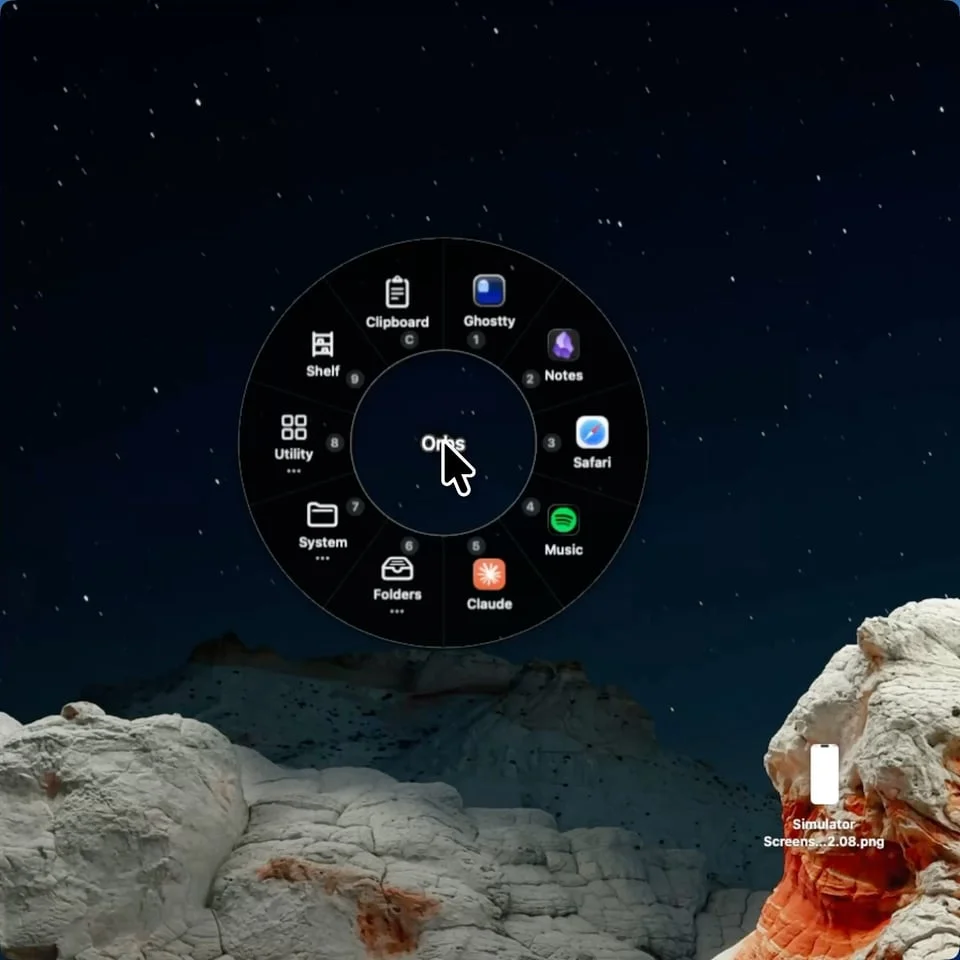
Orbs is the smaller and more honest launch number. A solo developer in Dhaka started posting daily videos on July 4, launched the macOS utility on July 14, and reported four sales at $9.99 each after five days. The creator said the project had no budget and that struggle videos outperformed polished feature demos. 2
The catch is hidden in the infrastructure paragraph. Apple Developer enrollment and notarization took real time, and the creator needed a merchant of record because Stripe did not support their country. Those costs were not disclosed. The product is a low-price utility, but the launch path still requires macOS development, platform compliance, and a buyer audience in the right geography. Four sales are proof of a live funnel, not proof of a repeatable monthly income.
The abandoned asset that finally earned $5
Javinfo began as a movie and people-data API built by a college student in late 2023 or early 2024, then sat mostly untouched while the creator worked. The project was revived on June 29. A dashboard was added on July 7, along with cost monitoring. On July 15, one customer bought $5 worth of API credits. The creator reported current infrastructure cost at $0 per month. 5
The payment is tiny. The setup is the point. The creator already had a working API, a RapidAPI listing, and enough technical skill to keep the endpoint alive cheaply. The first dollar came from relisting and improving an old project, not from inventing a new product after work.
For a reader with abandoned code, templates, or a neglected internal tool, the test is straightforward: restore the smallest useful version, list it where buyers already search, and set a cost ceiling before adding a dashboard. Do not mistake the $5 for a business. Treat it as evidence that one person found the thing useful enough to pay for.
Two flops, two different diagnoses
The Stripe Fee Auditor report is a good example of why a zero does not answer every question. After three months, the project had $0 revenue, 4,230 Google impressions, 5 clicks, and 2 real users. The creator said Show HN produced more real users in three hours than SEO produced in three months. The product was built with Next.js, Neon, and Polar, but the post did not disclose total startup cost. 7
The right conclusion is narrow. SEO did not deliver a meaningful traffic test at five clicks. Show HN did deliver an initial audience. That does not prove that Show HN will scale or that the product will retain users. It does show where the next 50 qualified visits should come from. Pricing is not the next question when almost nobody has used the product.
The automated note experiment failed earlier in the funnel. After six months and 180 daily posts, the creator reported 1,248 total views, 42 likes, and JPY 0 in sales. Three paid posts were listed at JPY 500 each and sold to nobody. The system used Ubuntu on a VPS, Python, Playwright, cron, and the OpenAI API to publish automatically. 8
This is a cleaner flop than a weak launch because the operator did keep publishing. The automation was functional. The failure was that the content had no distribution and, by the operator's own account, read like generic self-help. The lesson is not that automation never works. It is that a production system can make a zero-revenue idea more efficient without making it more wanted.
The X affiliate report sits between traffic proof and revenue proof. On July 13, the operator recorded 211 clicks, two orders worth JPY 3,466, and JPY 0 in affiliate reward because the orders had not shipped. 6 Until a merchant confirms the order and pays the commission, the side hustle has activity but no income. That distinction matters for any affiliate experiment: clicks and cart value are leading indicators, not cash.
What to test this week
If you already have a sellable skill, copy the audio-service shape: one narrow outcome, one before-and-after sample, and a first batch of low-priced jobs. Set a hard ceiling on unpaid work and record hours from the first job. The reported JPY 42,150 is useful because the operator published both jobs and time, not only the final total. 1
If you are building software, publish the distribution artifact before the product is finished. A demo video, a waitlist, or a useful launch post gives you a faster answer than another month of private polishing. The motion-design and LinkedIn cases found buyers through public demonstrations; Stripe Fee Auditor found a channel that produced almost no qualified traffic. 3 4 7
If you have an abandoned asset, give it one cheap revival cycle before starting from zero. Javinfo's $5 purchase is not meaningful income, but it is a real customer event at a reported $0 monthly infrastructure cost. 5
The week’s practical ranking is therefore less about the biggest number. Start with a service if you can sell the work. Show the product before you finish it if you are building. And when the dashboard says zero, check whether you tested demand, distribution, or only your ability to keep the machine running.
Cover image: Orbs product screenshot from the July 18 launch report.
관련 콘텐츠
- 로그인하면 댓글을 작성할 수 있습니다.