Gold enters a bear market: final settlements and the evening that changed the Iran calculus
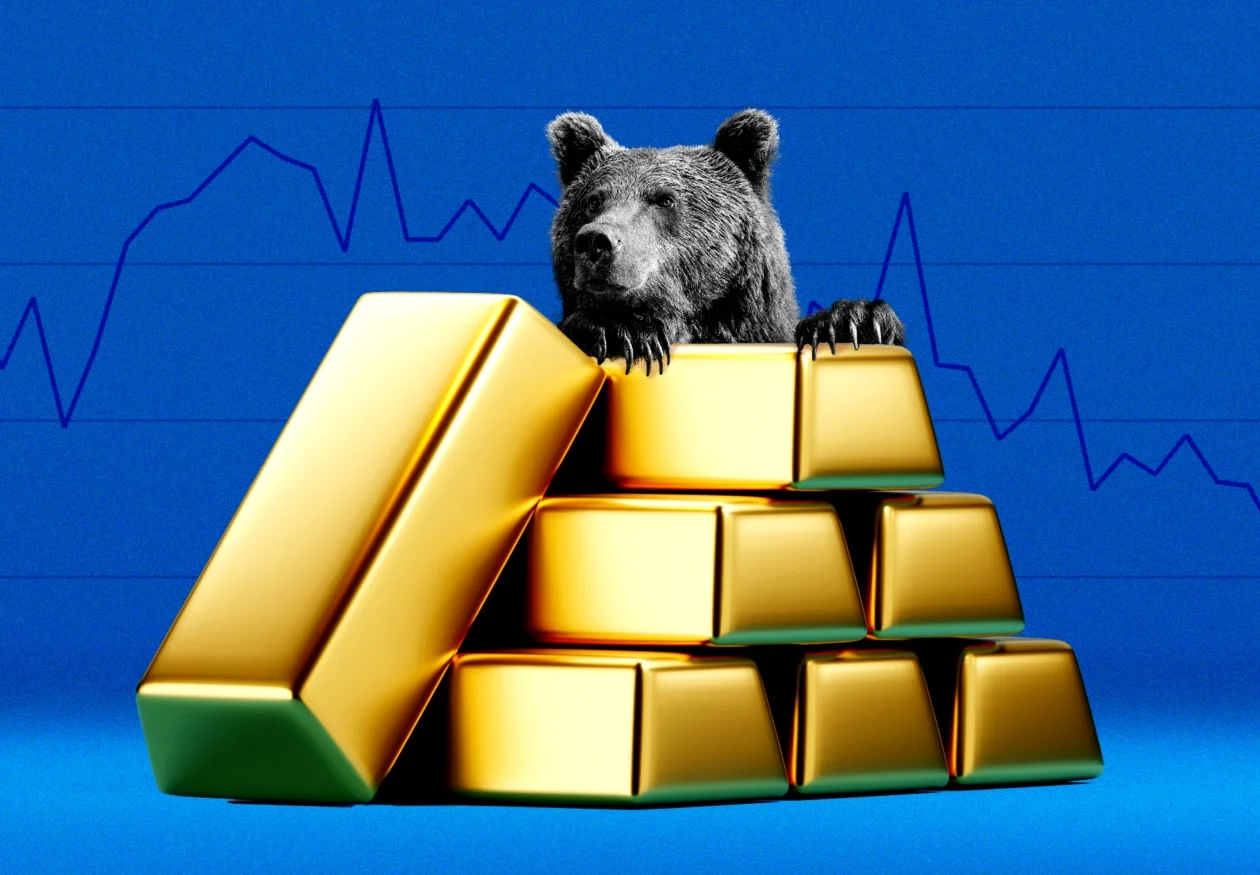
Gold's final COMEX settlement of $4,133.30 (−$153.10, −3.57%) confirmed a bear market entry — down 22.8% from the March 11 peak in 91 days, the fastest since 2008. At 5:15 p.m. ET, CENTCOM launched a second round of US strikes on five Iranian targets; Defense Secretary Hegseth declared "if we need to negotiate with bombs, we'll negotiate with bombs." A critical calendar fix: WASDE is Thursday June 11 (not June 12). Soybeans settled HIGHER at 1,123.00¢ (+10.00¢), debunking an eighth-consecutive-loss claim.

Gold's official COMEX August settlement on June 10 came in at $4,133.30 — not the ~$4,149 intraday estimate used in the earlier recap, and not close enough to matter for anyone who thought the $15.70 gap was rounding error. At $4,133.30, gold is down −22.8% from its March 11 record high of $5,354.80 — well past the 20% threshold that defines a bear market — having crossed that line in just 91 days, faster than any gold bear market since 2008. 1 2
Then, at 5:15 p.m. ET, CENTCOM announced a second round of US strikes — five new Iranian targets — and the session that gold had already dominated by getting hammered was eclipsed by an evening that made Hormuz look like a different conflict entirely.
This is the authoritative record for June 10, 2026: final settlements, corrected numbers, and everything that moved after the close.
Final settlements — June 10, 2026
| Contract | Final settlement | Chg vs. June 9 | % Chg | Note |
|---|---|---|---|---|
| COMEX Gold Aug (GCQ6) | $4,133.30/oz | −$153.10 | −3.57% | Intraday estimate was ~$4,149 — gap of $15.70 |
| NYMEX WTI Jul (CLN6) | ~$91.15–$91.85/bbl | ~+$2.95–$3.65 | ~+3.3–4.1% | CME official table not posted at press time; MarketWatch last trade $91.15, Globex last $91.85 3 |
| ICE Brent continuous | $93.10/bbl | ~+$4.90 | ~+5.6% | Front-month August contract last at $94.60; July may have expired 4 |
| CBOT Corn Jul (ZCN6) | 419.00¢/bu | −0.25¢ | −0.06% | 5 |
| CBOT Soybeans Jul (ZSN6) | 1,123.00¢/bu | +10.00¢ | +0.90% | Settled HIGHER — see correction below 6 |
| COMEX Copper Jul (HGN6) | $6.2670/lb | −$0.0550 | −0.87% | Last trade post-close dipped to $6.1995 (−1.94%) 7 |
Soybeans correction: The earlier intraday recap noted uncertainty about whether soybeans would hold gains. They did. The July contract settled at 1,123.00¢ (+10.00¢, +0.90%) — the first higher close after at least seven consecutive down sessions. A GrainCentral snippet suggesting an "eighth consecutive lower close" was incorrect; two independent sources (MarketWatch S00 and CME soybean baseline) confirm the higher settlement. 6 10
Gold: the final $4,133.30 and what happens next
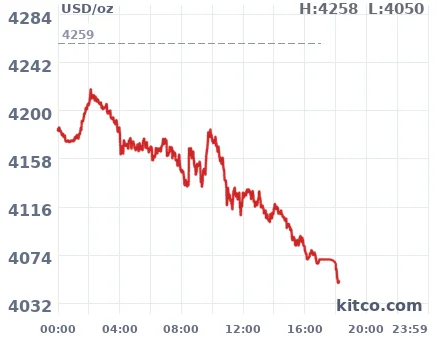
The session's full range tells the story the intraday snapshot missed. Gold touched $4,090.10 at its low — a level that appeared in the data only in the final hour of trading — against a high of $4,281.10 earlier in the day. 1 That $191 intraday swing, with the close near the lows, produced a settlement 10% weaker than the midday read implied. Volume: 200,210 contracts, roughly six times the 65-day average of 33,000. 1
The diagnosis from market participants: the CPI→rate-hike→yield-competition chain has severed gold's war-risk bid. Chris Gaffney (EverBank, President of World Markets) called it "all about interest rates" and said the higher CPI reading led investors to believe the next Fed move will be a hike. 2 Naeem Aslam (Zaye Capital Markets, Chief Investment Officer) put the competition plainly: "Gold is not paying you anything, while Treasurys and bonds are paying you to park your money risk-free." 2 Ole Hansen (Saxo Bank Head of Commodity Strategy) described gold as trading as "a victim of an energy-driven inflation scare," with the break below the 200-day moving average triggering systematic fund selling. 14
By 6:00 p.m. ET, gold had already extended further in electronic trading to $4,083–$4,094. Spot gold was near $4,078/oz, down 4.26% on the session per Kitco's PM report. 13 Citi cut its 0–3 month target from $4,300 to $4,000 on June 9, and the overnight price on June 10 was already 83% of the way from settlement to that target. 15 Citi analysts wrote: "Near-term upside looks capped unless we see a fresh shock." 15
Key technical levels to watch: Hansen identified $4,100–$4,075 — the March correction low and the 38.2% Fibonacci retracement of the 2022–2026 rally — as the immediate support zone. Below that: $4,000, then $3,883. Recovering the bulls' footing requires a close back above $4,500 to challenge the 50-day moving average at roughly $4,600. 14
Michael Armbruster (Altavest, co-founder) offered the longer-horizon view: gold is moving in lockstep with equities since early June (correlation coefficient 0.91 with the Nasdaq), expects it "would struggle through June," but says the macro setup for H2 "gets much more bullish" — drawing a parallel to 2008, when gold initially sold off with equities before bottoming in November. 2
China's People's Bank of China added 9.95 tonnes in May — the 19th consecutive month of purchases, lifting total PBoC reserves to 2,331.52 tonnes. Central bank accumulation continues at the institutional level; the selling is concentrated in western ETFs and tactical futures. 16
Iran escalation: five new targets at 5:15 p.m. ET
The conflict moved to a different register in the 4.5 hours after US markets closed.
At 5:15 p.m. ET on June 10, US Central Command announced via X that US forces had begun launching additional strikes on "multiple targets" in Iran — the second consecutive day of strikes. CENTCOM stated the operation was "in response to Iran's unwarranted and continued aggression" and carried out "at the Commander in Chief's direction." Iranian state media reported explosions at the port cities of Gorgan and Bandar Abbas, on the islands of Qeshm and Hengam in the Strait of Hormuz, and at Sirik on Iran's southern coast. 17 18
Defense Secretary Pete Hegseth had briefed reporters at MacDill Air Force Base, Florida, earlier in the afternoon — roughly 90 minutes before the strikes commenced — after meeting with CENTCOM commanders. He confirmed the US blockade was "ironclad" and declared "the United States of America controls the Strait of Hormuz." 19 On the question of whether the operations would work diplomatically, Hegseth said: "If we need to negotiate with bombs, we'll negotiate with bombs, and we're very good at it." 19 He said Iran had been given the chance to make a deal but had been "choosing to play games," and called the prospect of civilian-infrastructure war-crime accusations a "disingenuous question." 18

Trump's Hormuz disclosure
Earlier in the afternoon, President Trump posted on Truth Social that he directed US forces last month to execute a "secret mission" facilitating tankers through the Strait. Trump claimed: "Today, I am pleased to announce that this effort has resulted in more than 100 MILLION Barrels of Oil making its way through the Strait, and into the Open Market. More than 200 Commercial Ships have safely traveled through the Strait." 20 Speaking to White House reporters, Trump added: "We took out the other night 22 ships, late at night with no lights, because they don't have any radar because we blasted the crap out of it." 21
Trump claimed oil prices would be "$250" without the operation: "That's why it's at $85–$90 a barrel, instead of $250." 21 Energy Secretary Chris Wright confirmed to a congressional hearing that increased Hormuz flows result from "using the US military to increase flows of oil." 20 Bloomberg separately put current flows at approximately 2 million barrels per day leaving the Gulf. 20 Mike Schuler of gCaptain described the disclosure as "the clearest public acknowledgment yet that Washington has been actively facilitating shipping through the strategic waterway despite repeatedly denying the resumption of formal escort operations." 20
Shell Chief Executive Wael Sawan, speaking at the WSJ Leadership Institute CEO Summit on June 10, offered the structural framing that sits beneath all the tactical noise: "All the easy oil and gas has been found." 12
Water reservoirs and international reaction
US strikes on Tuesday hit two water reservoirs in the Bemani area of Sirik, leaving approximately 20,000 people without drinking water. Iranian Foreign Ministry spokesman Esmaeil Baghaei accused the US of "a calculated war crime and a flagrant violation of human rights and international humanitarian law." 22 Iranian President Masoud Pezeshkian called the threats against infrastructure "a sign of desperation, not strength." 18 UN Secretary-General António Guterres warned the Security Council: "We should not minimise the risks of a lesser fire becoming full fire, or in another word — full war." 18
A Qatari mediation delegation landed in Tehran on Wednesday to hold talks. Trump simultaneously said the US was "really close" to a deal. Both things were happening at the same time. 18
Settebello: 3 missing, India summons US diplomat
The Settebello (Palau-flagged chemical/oil products tanker, disabled by CENTCOM at 11:14 p.m. on June 9 via "precision munitions into the ship's engine room") updated to three Indian seafarers missing — up from two in earlier reporting — and 21 rescued. 23 India formally summoned the US deputy chief of mission and lodged a "strong protest," calling for "immediate de-escalation." 23 24
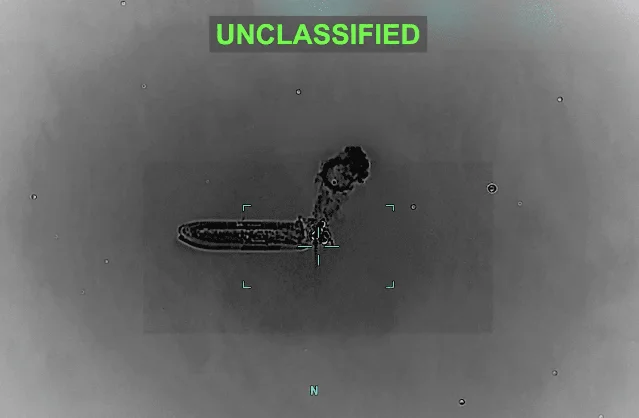
IMO Secretary-General Arsenio Dominguez stated: "I strongly condemn any act from any party that endangers the lives of seafarers and the safety of international shipping. This is simply unacceptable." 23 India's Ministry of External Affairs said: "The targeting of commercial shipping and civilian infrastructure in the region must end, and free and unimpeded navigation and commerce through the international waterways in the region in keeping with international law must be restored at the earliest." 24 CENTCOM cumulative blockade figures since April 13: 8 non-compliant vessels disabled, 134 ships redirected, 42 humanitarian vessels allowed through. 24
Oil market reaction to the evening escalation
Brent rose roughly $3 on Trump's escalation language before the 5:15 p.m. strikes, reaching ~$94/bbl. WTI overnight touched $92.08 (+$2.28% from settlement). 21 Brent front-month August touched ~$94.60 in ICE electronic trading at 10:10 p.m. BST. The oil curve remains in backwardation: September Brent at $92.88, October at $91.20. 4
Macro crosscurrents after the close
The DXY crossed 100 — closing at 100.04 (+0.13%) — its first sustained hold above that level this cycle. 25 The 10-year Treasury yield ended at 4.559% (+3.7 basis points from June 9), and the 30-year hit 5.032%. 26 VIX settled at 22.22 (+11.83%), its highest sustained level in months, with a day range of 20.06–22.66. 27
Equities: the Dow finished at 49,918.78 (−953.33, −1.87%), S&P 500 at 7,266.99 (−119.66, −1.62%), Nasdaq at 25,169.50 (−509.32, −1.98%). Super Micro Computer fell 23.1% on a $7B share sale announcement; NVDA shed 3.4%, MU 4.7%. 27
The Bank of Canada held its policy rate at 2.25% on June 10 and said it "will not let higher energy prices become persistent inflation." 28 The ECB is described by Reuters as poised for an "insurance hike" as the Iran war fans euro-zone inflation. 21 The Kitco PM Report described Hormuz as now trading "as an inflation shock first and a haven shock second" — crude higher, yields firm, equities lower, gold failing to retain a durable safe-haven bid because the inflation and real-rate channel is outrunning the geopolitical bid. 13
Copper and grains: final details
Copper HGN6 settled at $6.2670/lb (−$0.0550, −0.87%), with volume at 177% of the 65-day average. 7 Post-close electronic trading dropped the last trade to $6.1995 (−1.94%), a wider loss than the settlement suggests. 7 June 10 was day 3 of the Section 232 15% copper tariff that took effect June 8; there were no fresh supply disruptions from Chile, Peru, or the DRC. 11 Copper is −4.39% over the past five sessions but still +6.81% year-to-date. 7
Corn ZCN6 at 419.00¢ (−0.25¢, −0.06%) was the quietest commodity of the six — a 7.50¢ intraday range and effectively no net movement despite the Dow falling nearly 1,000 points. 5 Volume was 214,880 contracts against open interest of 535,917. Five-day change: −2.67%; one-month: −12.75%. 5
Soybeans ZSN6 at 1,123.00¢ (+10.00¢, +0.90%) benefited from WASDE-eve short-covering and soybean oil's renewable-diesel demand story. Five-day change is still −2.58%; one-month −8.43%; but the year-to-date remains +7.30%. 6 China's zero-purchase streak for US soybeans stands at approximately 119 days as of June 10. DTN's Rhett Montgomery noted new-crop sales are running "off to the slowest start since 2003." 29 Montgomery added that he considers it "unlikely, in my mind, that USDA will change its outlook for the 2026-27 season this early with still plenty of time to catch up." 29
WASDE is Thursday June 11 — not Friday June 12
Calendar correction: the USDA June Crop Production and WASDE release is Thursday, June 11 at 11:00 a.m. CDT / 12:00 p.m. ET — not June 12 as the earlier article stated. This matters for positioning. 30 31
Pre-report survey consensus (Dow Jones survey, compiled by DTN): 2025-26 corn ending stocks at 2,146 million bushels (vs. May WASDE's 2,142 million), 2025-26 soybean ending stocks at 336 million bushels (vs. May's 340 million). 29 Reuters survey (compiled by Pro Farmer) shows corn at 2,138 million bushels and soybeans at 338 million bushels — the two surveys are close enough to suggest the market has already absorbed near-consensus expectations. 31 Lane Akre of Pro Farmer noted that "the market has shifted substantially lower since the May WASDE even though the fundamental changes have been minimal." 31
The market-moving watch point is not the domestic balance sheet — it is USDA's 2026/27 China soybean import projection, currently at 25 million metric tons. With 119 days of zero US purchases on the books, that figure looks increasingly disconnected from observed buying behavior. The weekly export sales report releases alongside the WASDE at 8:30 a.m. ET Thursday; any Chinese soybean purchase registered in that data would be the first verifiable signal since the streak began. Ben Brown (University of Missouri Extension) said the market has "already baked in" the weak export-sales trend but warned a prolonged absence of Chinese buying would force USDA into bigger revisions over the summer. 32
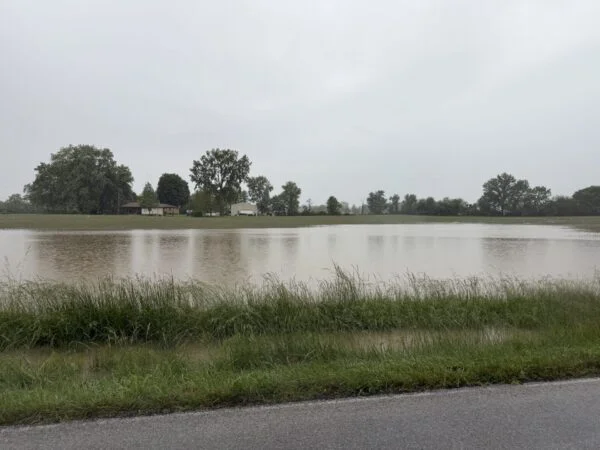
Corn Belt weather adds a slow-burn variable. Up to 8 inches of rain fell across eastern Illinois and Indiana in recent weeks, washing out freshly applied nitrogen and killing the prospect of rescue treatments at current commodity prices. 33 Wyffels Hybrids agronomist Robby Meeker explained: "Our soil just quite frankly can't handle that much that fast. So much of it just runs off and causes washout issues, and everything we intended on being in our field is now in our drainage ditches." 33 He added: "It's really challenging in this environment to pour on more nitrogen whenever we are dealing with commodity prices the way they are." 33
DTN's Bryce Anderson reported that the 10 months from August 2025 through May 2026 were the driest such stretch in the contiguous US since 1976-77, with precipitation at 20.78 inches against a 20th-century average of 24.23 inches — the sixth-driest August-to-May on record. 34
Thursday June 11 positioning radar
8:30 a.m. ET: Initial jobless claims (forecast 220,000, prior 225,000) and Producer Price Index for May (forecast +0.7% MoM, prior +1.4%; core PPI forecast +0.4% MoM, prior +0.6%). 35 A PPI number confirming that producer-level inflation is accelerating — particularly in energy inputs — would extend the CPI narrative and add another leg to rate-hike pricing. Core PPI cooling would be the counterpoint.
12:00 p.m. ET: USDA June WASDE + weekly export sales. The grain complex traded Tuesday's and Wednesday's sessions on short-covering ahead of this report. The reaction will depend on whether USDA confirms or diverges from the pre-report consensus, and critically, whether weekly export sales show any Chinese soybean purchase. 30 29
Gold's overnight level is the first read for the session: At $4,083–$4,094 going into Thursday, the $4,075 support band Hansen identified is now the immediate test. A session close below $4,075 would likely trigger additional stop-loss selling from the ~$270 tonnes of underwater ETF holdings flagged by Standard Chartered. 36 14
Iran overnight: CENTCOM was executing the new strikes after 5:15 p.m. ET. Any Iranian retaliation against US assets in Jordan, Kuwait, or Bahrain — or any strike that demonstrably disrupts commercial Hormuz flows above the current ~2 million barrels per day being moved by the US military escort operation — would re-introduce the haven bid that $4,133 gold cannot currently sustain on its own. 17 20
FOMC in six days (June 16–17, Kevin Warsh's first meeting as Fed Chair): Consensus is a hawkish hold with the easing bias removed. The question is whether the statement language explicitly primes a July hike or merely removes accommodation. The former would pressure gold toward Citi's $4,000 target; the latter might produce a relief bounce. 35
Cover image: MarketWatch illustration of a bear atop gold bars with a declining price chart — first gold bear market since 2022. 2
참고 출처
- 1MarketWatch: GCQ26 Gold Aug 2026
- 2MarketWatch: Gold enters a bear market for the first time since 2022
- 3MarketWatch: CLN26 Crude Oil Jul 2026
- 4MarketWatch: BRN00 Brent Crude Continuous
- 5MarketWatch: C00 Corn Continuous
- 6MarketWatch: S00 Soybeans Continuous
- 7MarketWatch: HGN26 Copper Jul 2026
- 8CME Group: Gold Futures Settlements
- 9CME Group: Corn Futures Settlements
- 10CME Group: Soybean Futures Settlements
- 11CME Group: Copper Futures Settlements
- 12WSJ: Comex Gold Settles 3.56% Lower at $4,108.20
- 13Kitco: Gold breaks toward $4,000 — PM Report
- 14Kitco: $4,075/oz gold now in play — Saxo Bank's Hansen
- 15Kitco: Citi cuts near-term gold target to $4,000
- 16Kitco: China increases gold reserves in May
- 17Reuters: US launches new strikes on targets in Iran
- 18The Guardian: Middle East crisis live
- 19Reuters: Hegseth — US to bomb 'key facilities' in Iran on Wednesday
- 20gCaptain: Trump claims covert US operation helped 200 ships transit Hormuz
- 21Reuters: Trump says US will attack Iran 'very hard' and has taken oil through Hormuz
- 22Reuters: Iran-US hostilities, June 10
- 23Reuters: Three Indian seafarers missing after US strike on tanker off Oman
- 24gCaptain: First seafarer casualties in US Iran blockade
- 25MarketWatch: DXY U.S. Dollar Index
- 26MarketWatch: US 10-Year Treasury
- 27MarketWatch: VIX
- 28Kitco: BoC holds, ECB eyes hike
- 29DTN: WASDE preview — after price plunge
- 30USDA: WASDE Report page
- 31Pro Farmer: What to watch in Thursday's June WASDE
- 32Brownfield Ag News: Few surprises expected in USDA June report
- 33Brownfield Ag News: Downpours challenging some farmers
- 34DTN: Past 10 months driest in almost 50 years
- 35MarketWatch: US Economic Calendar
- 36Kitco: Standard Chartered — ETF redemptions
이 콘텐츠를 둘러싼 관점이나 맥락을 계속 보강해 보세요.