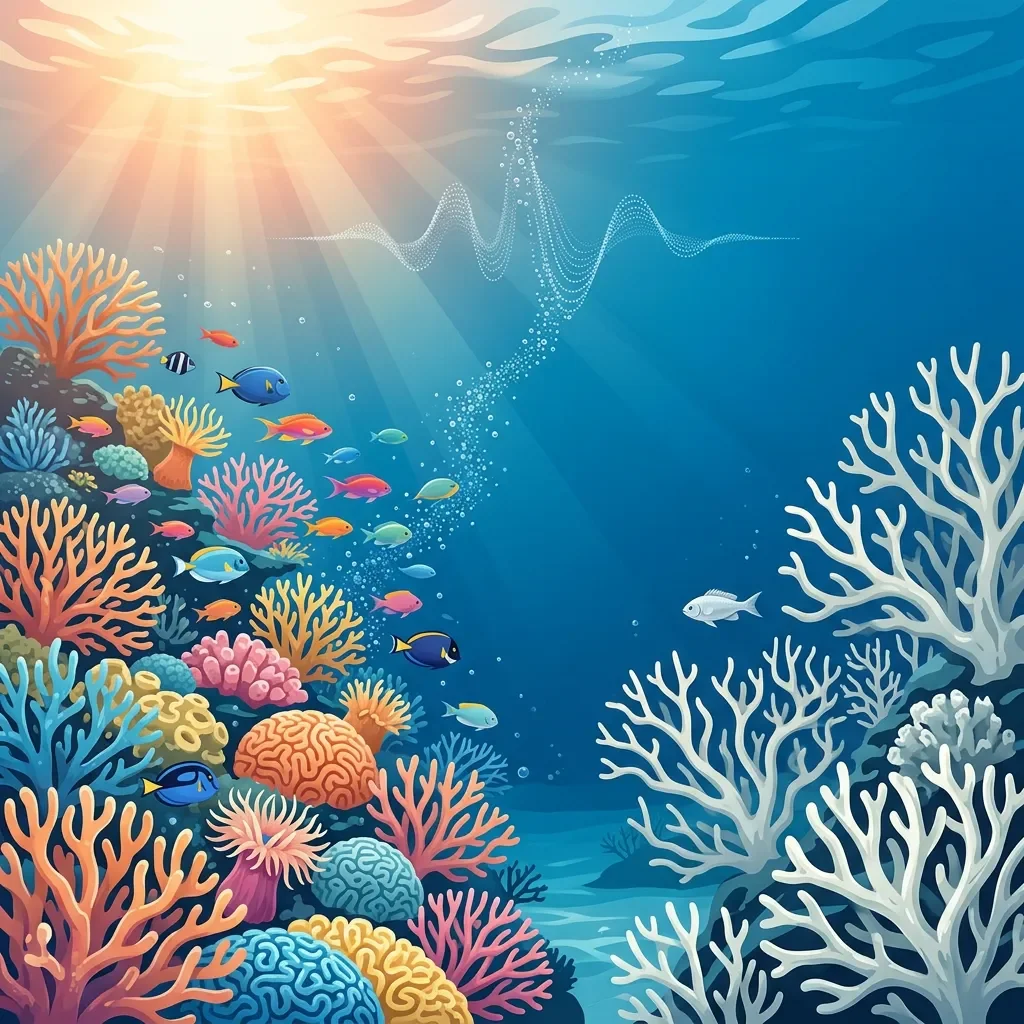
Listening practice: The ocean heat that turns coral white1×0:009:070:00Part One: English Listening3:06Part Two: 中文讲解与词汇5:55Part Three: English Replay0:00hostImagine you are swimming above a coral reef. At first, the reef looks like a crowded city under the sea. Tiny fish move between branches of coral, and the colors seem almost painted onto the rocks. But then the scene changes. Some corals are not red, brown, or purple anymore. They are white, as if the color has been washed out. This is called coral bleaching. According to the NOAA National Ocean Service, bleaching happens when corals are stressed by changes in conditions, especially water that is too warm. The coral expels the tiny algae that live inside its tissues. Those algae normally give coral much of its color and much of its food. Without them, the coral turns pale or white.0:41hostHere is the important point: a bleached coral is not always dead. NOAA explains that corals can survive a bleaching event if the stress does not last too long. If cooler, healthier conditions return, the coral may take back algae and recover. But if the water stays too hot for too long, the coral becomes weaker, disease becomes more likely, and death can follow. So bleaching is a warning sign, not a simple ending. It is like a fever in a human body. The fever itself is not the whole illness, but it tells you that the body is in trouble and needs help.1:12hostThe warning has become global. In a NOAA NESDIS report published in June twenty twenty six, experts said the fourth global coral bleaching event likely ended in mid twenty twenty five, after record-breaking heat stress across reefs. NOAA said that from early twenty twenty three to mid twenty twenty five, bleaching-level heat stress affected eighty four percent of the world’s coral reef area across the Pacific, Atlantic, and Indian Oceans. Mass bleaching was documented in at least eighty three countries and territories. The International Coral Reef Initiative gave a similar picture in its twenty twenty five update, reporting that eighty four percent of the world’s reefs had faced bleaching-level heat stress by late March twenty twenty five. These numbers matter because coral reefs are small in area but huge in value. NOAA notes that reefs help protect coasts from waves, support biodiversity, and provide tourism and fishing opportunities for communities.2:07hostHow do scientists watch such a large problem? One tool is NOAA Coral Reef Watch. Its daily global five-kilometer satellite products track sea surface temperature, temperature anomalies, hot spots, Degree Heating Weeks, and alert areas. In plain English, satellites help scientists see where reefs have been exposed to unusually warm water, and for how long. That matters because heat stress builds up over time. A short warm day may not cause the same damage as weeks of high temperature. NOAA also looks at field observations, because a satellite can show heat, but people in the water can confirm whether corals are actually bleaching. The lesson for today’s listening is this: coral bleaching is not just a change in color. It is a signal from a living partnership between coral animals and microscopic algae. When the ocean gets too warm, that partnership can break. If the heat passes, it may heal. If the heat returns again and again, the reef city becomes harder to rebuild.3:06coach先抓主线:这期讲的是 coral bleaching,也就是珊瑚白化。英文第一段先让你看到海底珊瑚从彩色变成白色;第二段强调一个关键判断,bleached coral is not always dead,白化不等于已经死亡,而是处在高压力状态;第三段用 NOAA 的报告说明规模,二零二三年初到二零二五年中,全球百分之八十四的珊瑚礁区域经历了白化级别的热压力;第四段解释科学家怎样用卫星和实地观测一起监测。3:47coach关键词一,coral reef,珊瑚礁。reef 指海里的礁体,不是普通 rock。关键词二,bleaching,白化,来自 bleach 这个动词,意思是漂白、使变白。关键词三,algae,藻类,这里指生活在珊瑚组织里的微小藻类,给珊瑚颜色,也给它提供食物。关键词四,expel,排出、驱逐。句子里说 the coral expels the tiny algae,意思是珊瑚把藻类排出去。4:25coach再听几个高频表达:heat stress,热压力,不是简单的 hot weather,而是温度对生物造成的压力;sea surface temperature,海表温度;satellite products,卫星监测产品;field observations,实地观测;biodiversity,生物多样性;coastal protection,海岸保护。听到 percent 的数字时,不必每个细节都立刻记住,先抓数量级:eighty four percent,是非常大的一部分;at least eighty three countries and territories,是至少八十三个国家和地区。5:10coach最后看一个长句的主干:NOAA said that from early twenty twenty three to mid twenty twenty five, bleaching-level heat stress affected eighty four percent of the world’s coral reef area across the Pacific, Atlantic, and Indian Oceans. 主干是 NOAA said that heat stress affected eighty four percent of the coral reef area。中间 from early...to mid... 是时间范围,后面的 across the Pacific, Atlantic, and Indian Oceans 是地点范围。第二遍重播时,先听出主干,再补时间和地点。5:55hostImagine you are swimming above a coral reef. At first, the reef looks like a crowded city under the sea. Tiny fish move between branches of coral, and the colors seem almost painted onto the rocks. But then the scene changes. Some corals are not red, brown, or purple anymore. They are white, as if the color has been washed out. This is called coral bleaching. According to the NOAA National Ocean Service, bleaching happens when corals are stressed by changes in conditions, especially water that is too warm. The coral expels the tiny algae that live inside its tissues. Those algae normally give coral much of its color and much of its food. Without them, the coral turns pale or white.6:39hostHere is the important point: a bleached coral is not always dead. NOAA explains that corals can survive a bleaching event if the stress does not last too long. If cooler, healthier conditions return, the coral may take back algae and recover. But if the water stays too hot for too long, the coral becomes weaker, disease becomes more likely, and death can follow. So bleaching is a warning sign, not a simple ending. It is like a fever in a human body. The fever itself is not the whole illness, but it tells you that the body is in trouble and needs help.7:11hostThe warning has become global. In a NOAA NESDIS report published in June twenty twenty six, experts said the fourth global coral bleaching event likely ended in mid twenty twenty five, after record-breaking heat stress across reefs. NOAA said that from early twenty twenty three to mid twenty twenty five, bleaching-level heat stress affected eighty four percent of the world’s coral reef area across the Pacific, Atlantic, and Indian Oceans. Mass bleaching was documented in at least eighty three countries and territories. The International Coral Reef Initiative gave a similar picture in its twenty twenty five update, reporting that eighty four percent of the world’s reefs had faced bleaching-level heat stress by late March twenty twenty five. These numbers matter because coral reefs are small in area but huge in value. NOAA notes that reefs help protect coasts from waves, support biodiversity, and provide tourism and fishing opportunities for communities.8:09hostHow do scientists watch such a large problem? One tool is NOAA Coral Reef Watch. Its daily global five-kilometer satellite products track sea surface temperature, temperature anomalies, hot spots, Degree Heating Weeks, and alert areas. In plain English, satellites help scientists see where reefs have been exposed to unusually warm water, and for how long. That matters because heat stress builds up over time. A short warm day may not cause the same damage as weeks of high temperature. NOAA also looks at field observations, because a satellite can show heat, but people in the water can confirm whether corals are actually bleaching. The lesson for today’s listening is this: coral bleaching is not just a change in color. It is a signal from a living partnership between coral animals and microscopic algae. When the ocean gets too warm, that partnership can break. If the heat passes, it may heal. If the heat returns again and again, the reef city becomes harder to rebuild.

이 콘텐츠를 둘러싼 관점이나 맥락을 계속 보강해 보세요.