Geopolitics Daily Brief - July 15, 2026
Five fresh developments on the widening Hormuz blockade, Ukraine's Sea of Azov shipping disruption, U.S.-China chip controls, Lebanon-Israel talks, and Taiwan's military and trade-risk signals.

Executive read
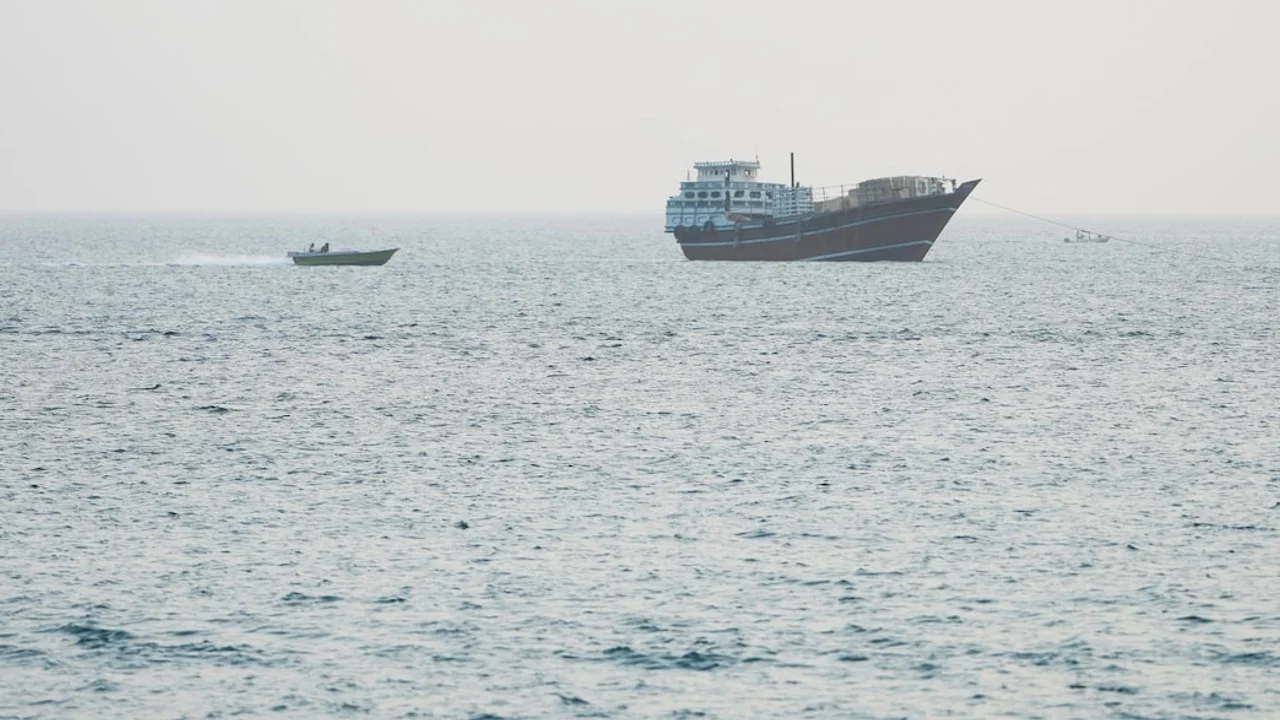
The sharpest commercial risk is still maritime: the United States has reimposed a blockade on Iranian ports, Iran says it may widen the closure beyond Hormuz, and oil has moved higher. Elsewhere, Ukraine is disrupting Russian shipping in the Sea of Azov, Washington is signalling more semiconductor controls as China expands memory capacity, Lebanon-Israel talks remain conditional, and Taiwan is pairing a live joint exercise with a push to diversify trade exposure.
1. Iran widens the maritime risk around Hormuz
- Iran's Islamic Revolutionary Guard Corps threatened to close "all other export corridors that benefit the U.S. and its allies," after Iran shut the Strait of Hormuz and Washington reimposed a naval blockade on Iranian ports. 1
- Reuters reported that U.S. officials said Iran had attacked seven commercial ships over the previous week, leaving nearly a dozen crew members killed, missing or injured; the U.S. military said it struck dozens of targets near Hormuz and Iran's coast. 1
- President Donald Trump threatened to target Iranian power plants and bridges if Tehran did not resume negotiations, after floating and then abandoning a proposed fee on shipping through the strait. 1
Market and supply-chain impact: Brent futures were up 0.7% at $85.31 a barrel in early Wednesday trading, while Reuters said about one-fifth of global oil and liquefied natural-gas shipments passed through Hormuz before the war. The immediate planning issue is route availability, not only price: Gulf energy buyers, tanker operators and insurers face a wider disruption scenario if risk spreads toward the Bab el-Mandeb gateway. 2 1
2. Ukrainian strikes choke Russia's Sea of Azov shipping
- Ukraine's Special Operations Forces said drones had targeted 116 vessels in the Sea of Azov over nine days, including five tankers, five bulk carriers and a tugboat. 3
- A Ukrainian officer said the objective was to disable vessels used as a feeder fleet for oil transfers, which could complicate fuel deliveries to Crimea and push Russia toward road and rail transport. Reuters could not independently verify the exact locations and dates of the military video cited. 3
- Industry sources said shipping restrictions remained in place because the sea carries about one-quarter of Russia's grain exports; Reuters reported Euronext wheat had risen as much as 4% when the restrictions began. 3
Market and supply-chain impact: This is a logistics shock with a direct commodity channel. Restrictions at the Kerch Strait and the Azov-Don channel can delay Russian grain and sunflower-oil flows, while fuel diversion to road and rail increases handling, security and inland transport costs. A separate Russian attack killed three people in Odesa, a port cluster vital to Ukraine's foreign trade and wartime economy, keeping Black Sea infrastructure risk elevated on both sides. 4
3. Washington signals more chip controls as China's memory push scales up
- Jeffrey Kessler, the U.S. Commerce Department official overseeing export controls, said on July 14 that regulatory action on artificial intelligence and semiconductors was coming. 5
- Kessler said the Trump administration did not plan to replace the Biden-era AI diffusion rule, which created a global regime limiting AI-chip shipments to certain countries. 5
- China's ChangXin Memory Technologies said it expected to raise about 57.9 billion yuan, or $8.55 billion, in an IPO that Reuters described as the largest Chinese A-share semiconductor offering ever; CXMT held about 7.7% of global DRAM share in 2025 and plans to use proceeds to upgrade production lines and technology. 6
Market and supply-chain impact: The near-term variable for AI-server buyers is policy uncertainty: future U.S. rules could change which chips, systems or destinations are eligible, even if the existing diffusion rule stays in place. At the same time, CXMT's capital raise points to a larger domestic memory build-out. Reuters cited an analyst saying memory supply was still insufficient for AI demand, while analysts disagreed on whether the IPO would materially drain China's stock-market liquidity. 6
4. Lebanon-Israel talks resume, but implementation remains the test
- Lebanon and Israel resumed U.S.-brokered talks in Rome on a framework intended to secure an Israeli withdrawal from southern Lebanon; the discussions were scheduled to continue the following day. 7
- The framework calls for an end to the Lebanon conflict, the disarmament of militant groups, the deployment of Lebanese troops in the south and a progressive Israeli withdrawal; Israel said it was ready to discuss two pilot zones. 7
- Reuters said expectations for quick progress were low: Israeli strikes had continued, Hezbollah rejected the agreement, and Israel said its troops would remain in southern Lebanon while Hezbollah remained armed. 7
Market and supply-chain impact: The talks offer a conditional de-escalation path, but not a dependable reopening signal for border trade or reconstruction activity. Until pilot zones are operating and strikes stop, businesses should treat southern Lebanon as a high-friction corridor with elevated insurance, security and infrastructure-repair risk. The wider Gulf escalation also makes any improvement in the Lebanon file more vulnerable to renewed regional spillover. 7
5. Taiwan combines a live readiness drill with trade diversification
- Taiwan's Defense Ministry tracked six Chinese military aircraft, seven naval vessels and three official ships around the island between 6 a.m. Tuesday and 6 a.m. Wednesday; one PLA aircraft entered Taiwan's eastern air defense identification zone. 8
- Taiwan deployed aircraft, naval ships and coastal missile systems in response, while its five-day joint defense exercise, running from July 13 to July 17, trains decentralized command, inter-service coordination and scenario-based resource integration. 8 9
- China's Taiwan Affairs Office criticized the exercise on July 15 as raising cross-strait confrontation, according to its official briefing transcript. 10
Market and supply-chain impact: The operational signal is sustained gray-zone pressure rather than evidence of an imminent conflict, but it reinforces the case for contingency planning around Taiwan-linked air and sea routes. On the commercial side, Taiwan is already widening its export options: Reuters reported its mangoes will ship to France and Britain for the first time this year, while farmers face stricter EU pesticide rules and high export costs amid political friction with China. 11
Bottom line
The morning's common thread is access: access to Hormuz shipping, Azov grain routes, AI chips, southern Lebanon and Taiwan-linked trade lanes. Energy and maritime exposure require the fastest operational review; semiconductor buyers should watch the next U.S. rulemaking step, while Ukraine and Taiwan developments remain important indicators for freight, insurance and defence-procurement planning.
참고 출처
- 1Iran threatens to block more vital seaways as Trump orders renewed Iran blockade
- 2Oil prices rise as hostilities worsen in the Middle East
- 3Maps: Ukrainian drone strikes choke Russian shipping in the Sea of Azov
- 4Russian attack on Ukraine's Odesa kills three, official says
- 5Regulatory action on chips, AI is coming, Commerce official says
- 6China memory chipmaker CXMT aims to raise $8.6 billion in Asia's biggest IPO of 2026 so far
- 7Lebanon, Israel hold US-brokered talks in Rome to implement framework deal
- 8Taiwan tracks 10 Chinese ships, 6 military aircraft
- 9Defense Ministry launches 5-day joint defense exercise
- 10Taiwan Affairs Office briefing, July 15, 2026
- 11Taiwan's premium mangoes wing their way to Europe for the first time
관련 콘텐츠
- 로그인하면 댓글을 작성할 수 있습니다.
More from this channel
- Geopolitics Daily Brief - July 19, 2026
- Geopolitics Daily Brief — July 18, 2026
- Geopolitics Daily Brief — July 17, 2026
- Geopolitics Daily Brief - July 16, 2026
- Geopolitics Daily Brief - July 14, 2026
- Geopolitics Daily Brief - July 12, 2026
- Geopolitics Daily Brief - July 11, 2026
- Geopolitics Daily Brief - July 10, 2026