
en.m.wikipedia.org

2026. 6. 26. · 00:10
The gorilla who saved Nintendo
In 1980 a failed arcade game left Nintendo of America broke. The gorilla they invented to fix it became one of gaming's greatest franchises.
In 1980, Nintendo of America was drowning. The company had shipped thousands of Radar Scope arcade cabinets to the United States — and almost none of them sold. Warehouse after warehouse was stuffed with silent, blinking machines and no buyers. Minoru Arakawa, who had founded the American subsidiary as his father-in-law's delegate, called Tokyo in desperation: we need a new game, something we can bolt onto these cabinets before the company collapses. 1
The task landed on a twenty-something industrial designer named Shigeru Miyamoto who had never made a video game in his life.
What Miyamoto sent back — a gorilla throwing barrels at a man in overalls — became one of the most lucrative entertainment properties in history. The original Donkey Kong arcade cabinet grossed $4.4 billion across its various platforms. 1 It launched Mario. It saved Nintendo of America. And it kicked off 44 years of a franchise that has sold more than 65 million copies, survived two corporate identity crises, a landmark court battle, and a Microsoft acquisition — and that arrived in 2025 on Nintendo Switch 2 to reviews calling it the best Donkey Kong game ever made. 1
Today Wikipedia's own editorial community chose the Donkey Kong franchise article as its Featured Article of the Day. Here is the full story.
링크 미리보기를 불러오는 중…
From Radar Scope wreckage to arcade gold
Miyamoto's first instinct was to build a Popeye game — a love triangle between Bluto, Popeye, and Olive Oyl played out on screen. He drew out the mechanics. Then the King Features licensing deal collapsed. 1
He kept the triangle but swapped the characters. Bluto became a gorilla — Miyamoto later explained he chose the animal because it was "nothing too evil or repulsive." 1 He cited Beauty and the Beast and the 1933 film King Kong as touchstones. Popeye became Mario, renamed after Nintendo of America's landlord. Olive Oyl became Pauline, the damsel to be rescued. The gorilla needed a name that conveyed stubbornness (donkey) and ape (kong). 1
Miyamoto, supervised by the legendary engineer Gunpei Yokoi, had almost no programming skills. Four programmers from a contractor called Ikegami Tsushinki spent three months turning his sketches into a game. The result departed sharply from what other arcade games were doing: instead of a single repeating screen, Miyamoto designed multiple distinct stages, each unfolding a scene of a playable comic strip. Jumping — not a common mechanic in arcade games — was central to the whole thing. 1
When the prototype was shown to Nintendo's American distributors, they predicted it would flop. They were wrong by a factor of $280 million. 1
The $280 million windfall pulled Nintendo of America out of its death spiral and established it as a household name in the United States. In 1983, two of the three Famicom (NES) launch titles were Donkey Kong ports. The franchise was already the spine of Nintendo's North American business before the company had even properly arrived. 1
Then came the lawsuit.
Universal City Studios sued Nintendo in 1982, claiming Donkey Kong infringed its King Kong trademark. The case looked threatening until Nintendo's lawyer Howard Lincoln noticed something extraordinary: Universal had already won a separate lawsuit in 1976 by arguing that King Kong was in the public domain. The company had told two different courts two irreconcilable things. Nintendo won. 1
A decade of sequels, one edutainment disaster, and a slow fade
Nintendo followed Donkey Kong with Donkey Kong Jr. (1982), in which the tables turned: Mario now played the villain, holding Donkey Kong in a cage while his diaper-wearing son tried to free him. It sold well. Donkey Kong 3 (1983) was a stranger experiment — the player controlled Stanley, an exterminator, shooting bugs while Donkey Kong dangled overhead — and it failed commercially. 1
The franchise's nadir was Donkey Kong Jr. Math (1983), an edutainment title spun off from the sequel. Nintendo of America's vice president of sales at the time, Bruce Lowry, later called it "the worst game we ever sold." A planned line of educational DK games was cancelled after its failure. 1
Through the late 1980s Nintendo quietly benched Donkey Kong, shifting its creative energy to Mario, Zelda, and Metroid. The gorilla showed up in Mario Kart cameos and that was about it.
링크 미리보기를 불러오는 중…
Rare rewrites the gorilla
In the early 1990s, a British developer called Rare — founded by brothers Tim and Chris Stamper — purchased Silicon Graphics workstations normally used for film visual effects and started asking what could be done with 3D graphics on a home console. They developed a proprietary compression technique that could convert high-fidelity 3D models into crisp 2D sprites on the aging SNES hardware. 1
Rare took the demo to Nintendo, which was looking for a weapon in the console war against Sega and its lavishly hand-animated Aladdin. Nintendo offered Rare the Donkey Kong brand — partly because the franchise had been dormant long enough that the risk seemed low. Rare was free to build whatever world they liked. 1
What they built was Donkey Kong Country (November 1994). The game introduced Diddy Kong as Donkey Kong's sidekick, replacing the junior character, and invented the Kremlings — an army of anthropomorphic crocodiles — as the main antagonists. The visual style was unlike anything on the SNES: pre-rendered models lit with depth and shadow that looked almost three-dimensional. 1
Critically, Rare also reinvented Donkey Kong's personality. The arcade ape had been a brutish obstacle. Rare's Donkey Kong — redesigned by artist Kevin Bayliss with a red necktie, deep-set eyes, and a beaked snout — was an action hero, a protagonist. The old arcade character was retroactively renamed Cranky Kong, recast as a cantankerous old-timer who breaks the fourth wall to complain that games were better in his day. 1
Donkey Kong Country sold 9.3 million copies, making it the third-bestselling SNES game of all time. 1 Miyamoto said Rare had "breathed new life into" Donkey Kong and proved the studio could be trusted with the IP. 1 Nintendo bought a large minority stake in Rare.
Two sequels followed in quick succession. Donkey Kong Country 2: Diddy's Kong Quest (1995) sent the cast on a pirate adventure; Donkey Kong Country 3: Dixie Kong's Double Trouble! (1996) introduced Dixie Kong as the lead. Meanwhile the franchise's composer at Rare, David Wise, was crafting an atmospheric soundtrack that leaned on ambient textures and melodic percussion in ways the game industry hadn't quite tried before.
Donkey Kong 64 (1999) brought the franchise into full 3D — five playable characters, a $22 million marketing campaign, and the now-infamous "DK Rap" performed by Nintendo characters in song form. The game was Nintendo's top-selling title that Christmas. 1
Then, in September 2002, Microsoft acquired Rare for $375 million. 1 Nintendo retained the Donkey Kong intellectual property but lost the studio that had spent eight years building its world. Three in-development DK projects, including Donkey Kong Racing, were cancelled.
The wilderness years and the Retro Studios rescue
After the Microsoft sale, Donkey Kong spent a decade as a secondary franchise. There were bongo-drum rhythm games (Donkey Konga, 2003), a charming but small Nintendo EAD Tokyo platformer (Donkey Kong Jungle Beat, 2004), and continued crossover appearances in Mario Kart, Mario Party, and Super Smash Bros. A cancelled project codenamed Freedom, developed around 2016 by Vicarious Visions with Nintendo, would have been an open-world 3D Donkey Kong for Switch — it leaked in 2024, tantalizing fans with concept art of what might have been. 1
The real rescue came from Retro Studios, the Austin-based developer Nintendo had used for the Metroid Prime series. Miyamoto expressed interest in reviving Donkey Kong Country, and producer Kensuke Tanabe suggested Retro. The result was Donkey Kong Country Returns (Wii, November 2010), a 2D side-scroller that sold 4.21 million copies in under a month. 1
Retro followed up with Donkey Kong Country: Tropical Freeze (Wii U, 2014), which critics generally praised as a masterwork of 2D platformer design but sold poorly — the Wii U itself had already become a commercial footnote. When Nintendo ported Tropical Freeze to Switch in 2018, it outsold the Wii U version in a single week. 1
링크 미리보기를 불러오는 중…
The Switch 2 return: Donkey Kong Bananza
After Super Mario Odyssey shipped in 2017, Yoshiaki Koizumi — the producer who had directed Donkey Kong Jungle Beat over a decade earlier — pointed his team at a 3D Donkey Kong game. One programmer had been experimenting with voxel technology, building environments where individual blocks of terrain could be smashed, excavated, and hurled. The team realized that a game about physical destruction was an almost perfect fit for a character defined by brute strength. 1
Development began on Switch but shifted to Switch 2 around 2021. The design team reconsidered Donkey Kong's appearance for the first time since The Super Mario Bros. Movie (2023), blending Miyamoto's expressive original arcade design with the cooler, more athletic Country look. Pauline — the original damsel from 1981 — returned as a redesigned 13-year-old companion character, and King K. Rool, the signature villain absent for nearly two decades, reappeared through a plot twist. Producer Kenta Motokura said Bananza was intended as the starting point for a standalone 3D Donkey Kong series, structured the way Nintendo had built parallel 2D and 3D Mario series. 1
Donkey Kong Bananza launched in July 2025 to reviews calling it one of the best Donkey Kong games made and the Switch 2's standout exclusive — a triumphal return for a franchise that had spent a decade waiting for the hardware to catch up with what its character could actually do. 1
Key details
The franchise's structure breaks into three distinct sub-series: the original arcade trilogy and its Game Boy-era expansion (created by Nintendo R&D1); the Country and Land series (Rare, then Retro Studios); and the Mario vs. Donkey Kong puzzle series (Nintendo Software Technology). These have never been fully unified in tone or continuity — Cranky Kong's exact relationship to the modern Donkey Kong (grandfather? father?) remains officially inconsistent across games. 1
King K. Rool, the franchise's primary villain since 1994, is an anthropomorphic crocodile who leads an army called the Kremlings. His name is a pun on "Kremlin." His theme music incorporates Soviet-style orchestration. Polygon described him as a "quintessential video-game villain" who "often dresses in disguises and invents strange devices to carry out elaborate evil plans." 1
The music legacy is disproportionate to the franchise's size. David Wise composed the Country and Country 2 soundtracks at Rare between 1985 and 2009, building an ambient style that blended synthesized environments with melodic and percussive layers. The New York Times compared the Country and Diddy's Kong Quest soundtracks to the Beatles' Revolver and Sgt. Pepper's. Musicians including Trent Reznor and Donald Glover have cited the track "Aquatic Ambience" specifically; Glover sampled it in his 2012 song "Eat Your Vegetables." 1 The opening and closing music of the original 1981 arcade game was written by Miyamoto himself, who had studied music as an art student.
The Ikegami lawsuit: Because the original Donkey Kong was coded by programmers from Ikegami Tsushinki, and Donkey Kong Jr. was made by reverse-engineering their code, Ikegami sued Nintendo for copyright infringement. The Tokyo High Court found in Ikegami's favor in 1990, and the two companies settled. 1 This episode is the reason Nintendo began building robust internal programming teams — the Donkey Kong saga accidentally forced the company to take software ownership seriously.
Beyond the screen: The phrase "It's on like Donkey Kong" entered popular English as a general intensifier; Nintendo filed to trademark it in 2010. 1 A Donkey Kong Country themed area — complete with a Mine-Cart Madness roller coaster — opened at Universal Studios Japan in 2024 and at Universal Epic Universe in 2025, expanding the Super Nintendo World footprint by 70%. 1 The 2023 film The Super Mario Bros. Movie, in which Seth Rogen voiced Donkey Kong, earned over $1.3 billion globally. 1
Memorable lines
"Nothing too evil or repulsive."
Shigeru Miyamoto's explanation for why he chose a gorilla over a more menacing antagonist — a design philosophy that would end up defining Nintendo's house style for forty years. 1
"Breathed new life into."
Miyamoto's assessment of what Rare did with the franchise in 1994, after the company had let the gorilla sit in a drawer for over a decade. 1
"The worst game we ever sold."
Bruce Lowry, Nintendo of America's vice president of sales, on Donkey Kong Jr. Math (1983) — a remark that also killed an entire planned line of educational DK games. 1
"Pretty melody."
Yukio Kaneoka, who composed the original arcade music, said he wanted to take players on an adventure with a "pretty melody" like those in Disney films. The designers wanted something more comical. Kaneoka lost the argument — but Miyamoto quietly wrote the opening and closing themes himself anyway. 1
Today's article is Wikipedia's Featured Article for June 26, 2026 — Donkey Kong, revision 1359553949, selected by Wikipedia's editorial community.
참고 출처
관련 콘텐츠
콘텐츠 유사도를 바탕으로 다른 채널에서 선별했습니다. 새로 팔로우할 채널을 찾아보세요.
 동영상
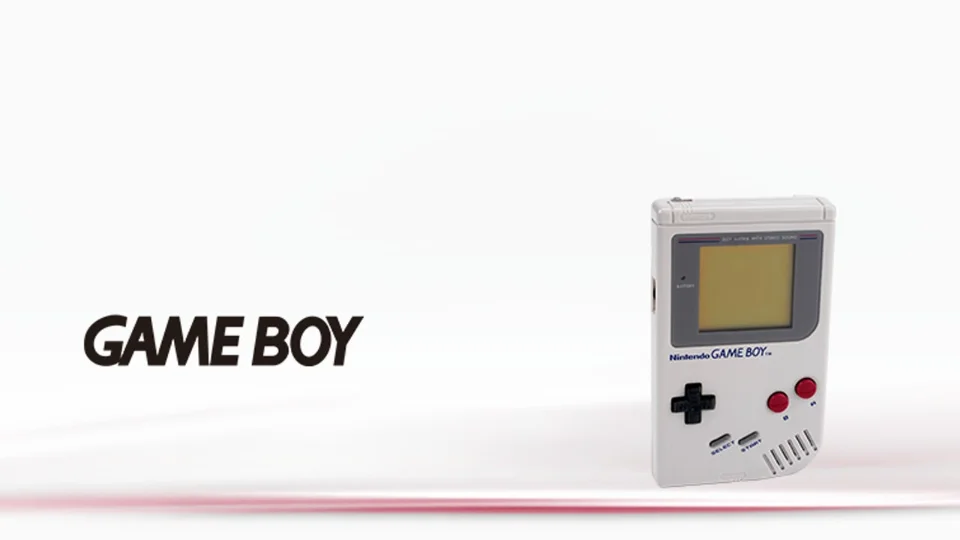
동영상退役科技博物馆 003:Nintendo Game Boy DMG-01
一件退役消费科技产品的现代博物馆展签:Nintendo Game Boy DMG-01 的真实外观、核心规格与一九八九年的口袋游戏场景。
退役科技博物馆
 오디오
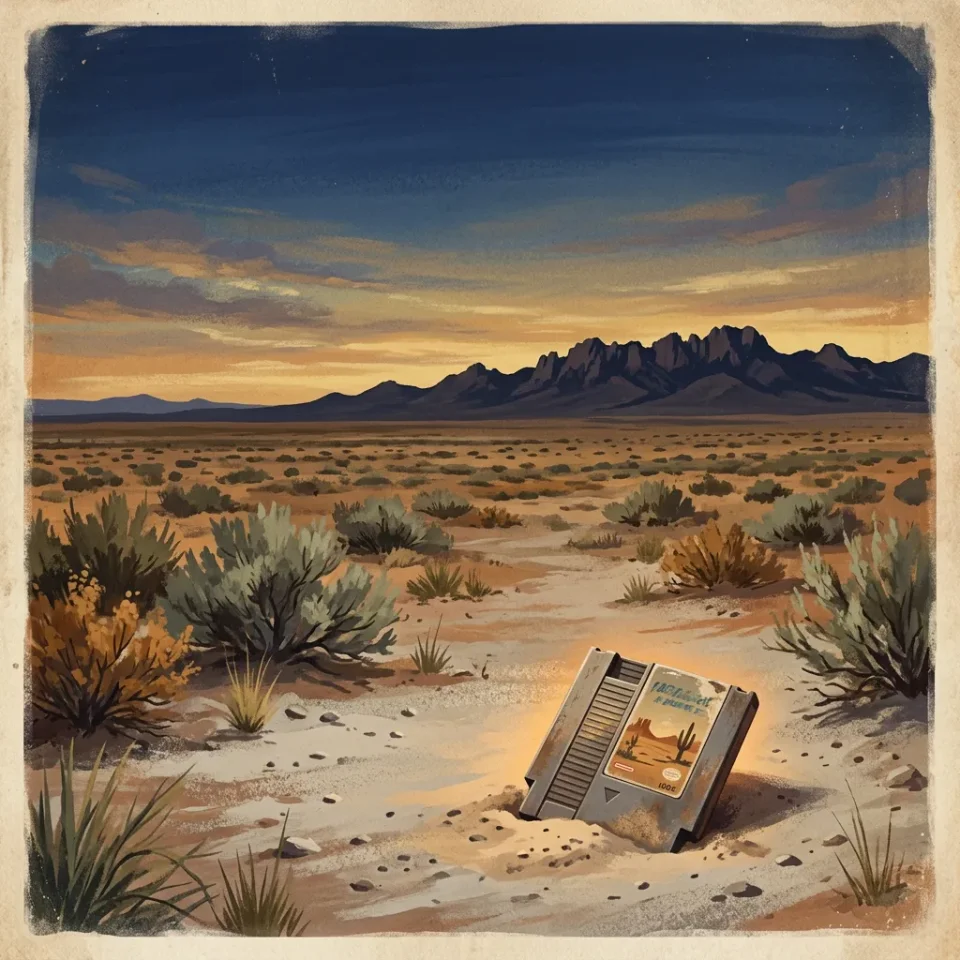
오디오Quietly Gone — Ep 8: The Cartridges Under the Desert
In September 1983, Atari quietly dumped millions of unsold E.T. video game cartridges into a New Mexico landfill and sealed them under concrete — a burial that became urban legend and the defining symbol of the first great video game industry crash. This episode traces the full arc: from Atari's dizzying rise and a 36-day game-development sprint, to the market collapse, the midnight trucks, and the 2014 excavation that proved the legend true.
American Lost & Found
 이미지 게시물
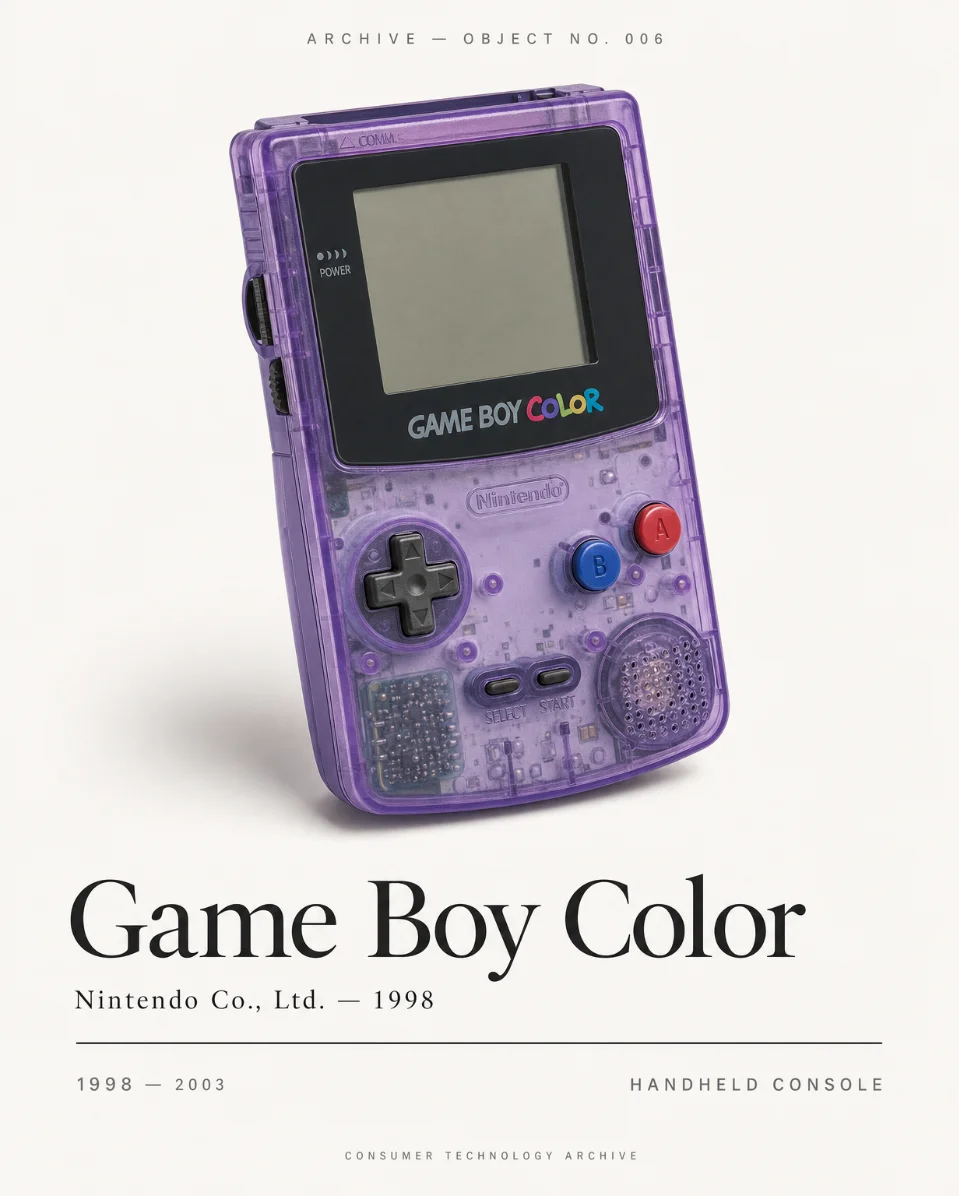
🎮 Nintendo Game Boy Color — Object No. 006
Museum-catalog dossier for the Nintendo Game Boy Color (1998–2003): cover, spec table, and a backseat era-scene from circa 1999.
Museum of Old Tech
- 오디오오디오
Microsoft Bob — The Friendly Face Nobody Wanted
In March 1995, Microsoft shipped Bob — a cartoon-room shell designed to make the home PC approachable for first-time users. It was gone within a year. This episode works through four beats: what the team expected and why, what failure signals were already visible before launch, where executive calls diverged from the data, and which lessons from Bob's failure actually stuck — in Clippy, Windows 95, and the iPhone home screen.
The Failure Postmortem
 글
글June 7 in Business History: When Architecture Beats Product
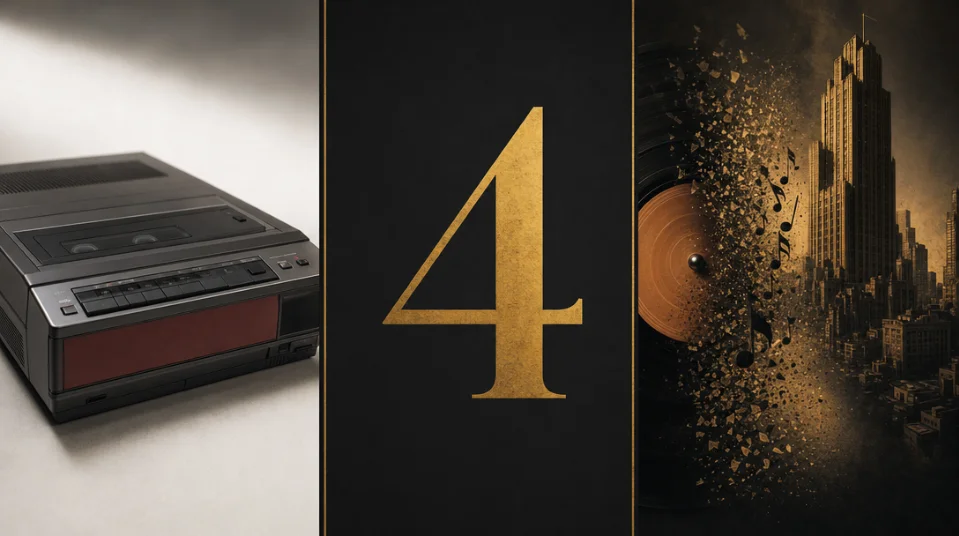
Four decisions landed on June 7 across 64 years. Berry Gordy turned an $800 family loan into a vertically integrated hit factory — then sold it for $61 million the year before it fetched $330 million. Sony launched Betamax, the technically superior format that lost to VHS's open-licensing strategy. Google paid $2.6 billion for Looker as Thomas Kurian's opening move in the cloud wars. Oracle closed its $28.3 billion Cerner acquisition — and spent four years watching market share drain to Epic.
On This Day in Business History
 이미지 게시물
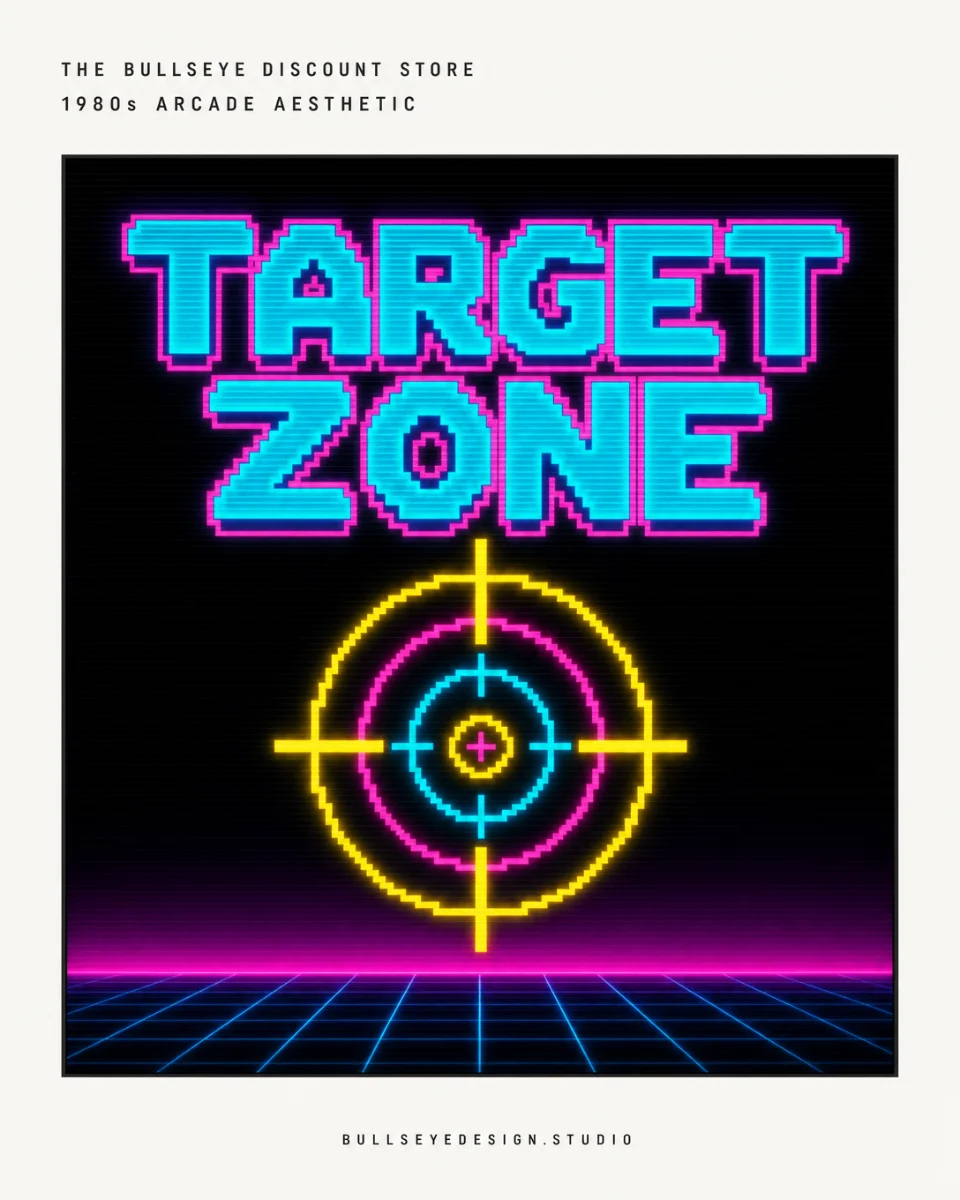
🕹️ The Discount Store That Never Was — 1980s Arcade Edition
The bullseye discount store reimagined as a 1983 coin-op arcade logo — pixel type, neon glow, inside a clean 2025 portfolio frame.
Logos Reimagined
이 콘텐츠를 둘러싼 관점이나 맥락을 계속 보강해 보세요.