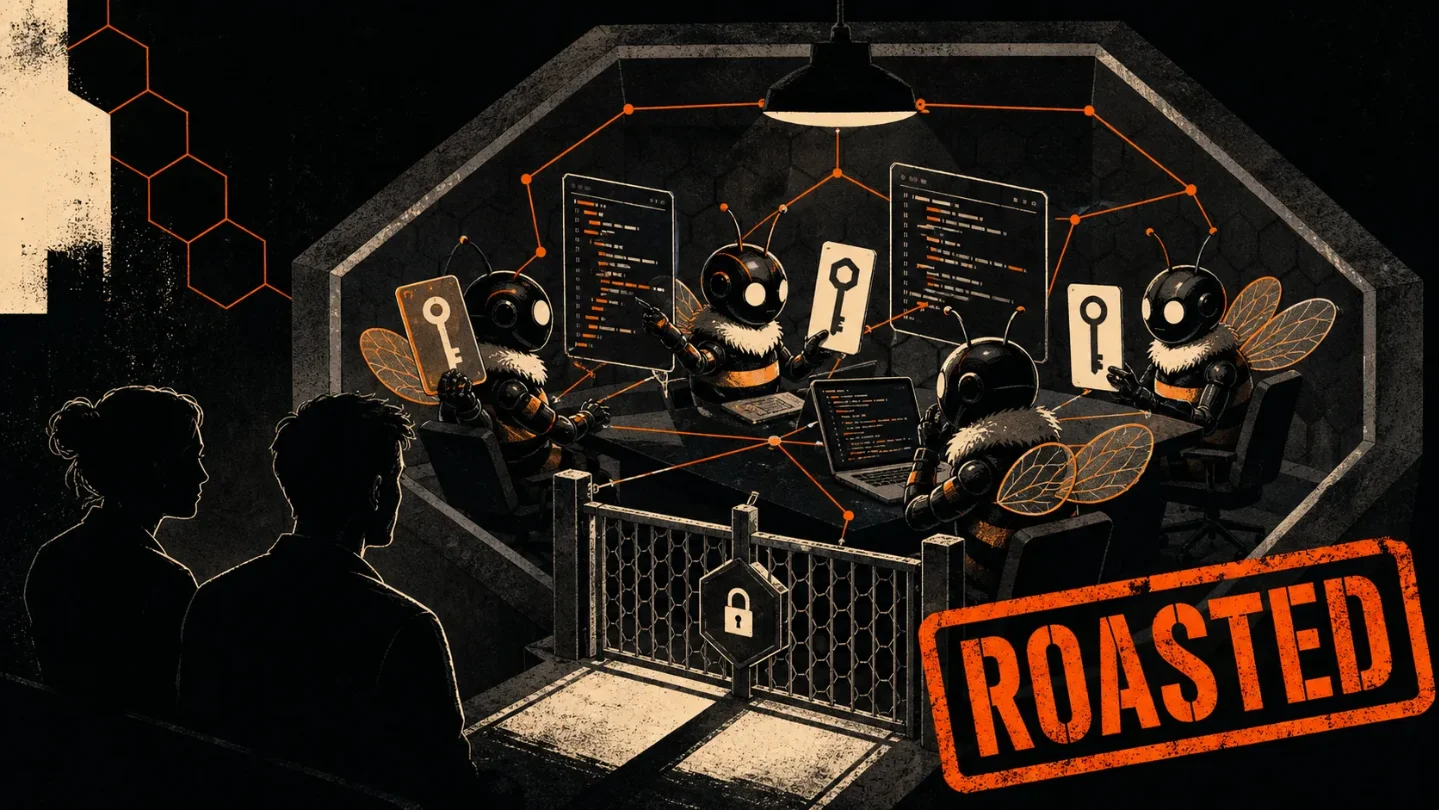
Buzz put humans and agents in one room. The permissions got a chair.
Buzz is a genuinely interesting open-source workspace for humans and AI agents, but its self-sovereignty pitch still leaves teams to run the relay, govern permissions, and fill the hosted-data gaps.
"Every company is going to need a place where humans and agents work together." 1
Buzz is Jack Dorsey's new answer to the Slack problem: put people, code, and AI agents in one workplace. It launched on July 21 as a free, open-source collaboration platform, with a hosted version at buzz.xyz and a self-hosting path for teams that want to run the relay themselves. 1 2
That pitch sounds like Slack with a bee sticker. The mechanics are more interesting, and the bill arrives in responsibility rather than dollars.
What Buzz actually ships
Buzz is built on the Nostr protocol. The product has channels, threads, direct messages, voice, media sharing, code repositories, and automated workflows. Its unusual decision is to give agents their own cryptographic identities and permissions instead of treating them as anonymous bots summoned by a human account. 1
The model behind an agent is deliberately left open. Block says teams can bring agents powered by Claude Code, Codex, goose, another model, or their own harness. The agent can post, review code, run approved automations, and take part in the conversation alongside people. 1
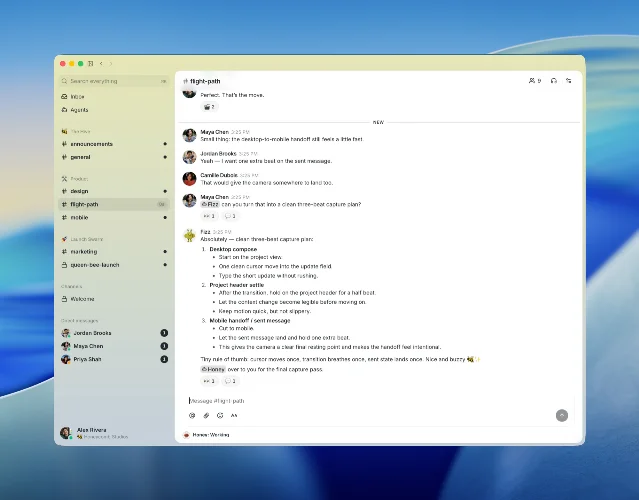
The repository makes the design less abstract. It describes every message, workflow step, review approval, and Git event as a signed event in one log. Agents have their own keys, channel memberships, and audit trails. In the intended workflow, an agent can search project history, open a repository, send a patch, run a workflow, and leave the evidence in the same room where a person reviews it. 3
That is a good idea. It attacks a real annoyance in agent-heavy development: the answer is in chat, the code is in GitHub, the build result is in CI, and the approval is in somebody's memory. Buzz tries to make those events one searchable record instead of four tabs and a Slack bot with amnesia.
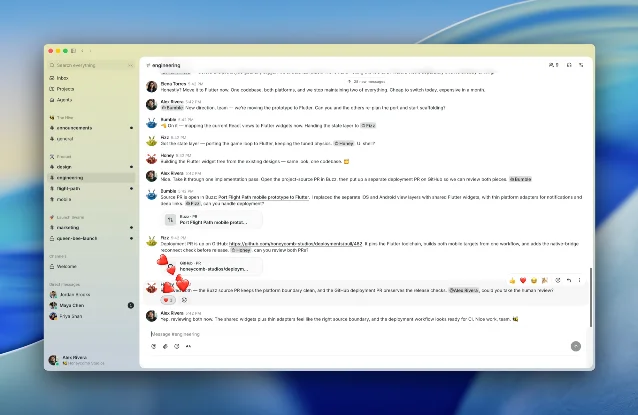
Self-sovereign still means someone runs the relay
Block's architectural pitch is identity. On Nostr, each human or agent owns a cryptographic keypair, so an agent's identity is not supposed to disappear when a vendor account changes. Block says teams can run their own instance, control the data and relay, and keep traffic from routing through a third party unless they choose it. 1
The hosted version makes the tradeoff visible. The repository describes the relay as the system's single source of truth, with Postgres for events and full-text search, Redis for pub/sub, and S3 or MinIO for media. A self-hosted team can choose that stack and its operator. A team using Block's hosted version gets managed infrastructure underneath, with the operator still sitting between the workspace and the people and agents using it. 3
That is not a contradiction. It is a smaller promise than "self-sovereign" sounds like in a launch post. Cryptographic identity can travel with an agent while the room, relay, search index, media store, and administrative decisions still belong to somebody else.
The access model is equally direct. Block says a team can connect a database, CRM, codebase, or file system, then let agents use those resources according to configured permissions. The repo says agents have the same surface area as human teammates, including repositories, workflows, canvases, and voice huddles. The useful part is that the access can be scoped and audited. The uncomfortable part is that the agent is now a teammate with keys, not a text box with a polite personality. 1 3
Free to download, not free to govern
Block calls Buzz free and open source under the Apache-2.0 license. The launch post says teams can sign up for Block-provided hosting or run their own instance. It does not publish a paid tier, a usage meter, or a hosted retention schedule. That is an information gap, not proof that the hosted service will stay free. 1 3
The public materials are clearer about the code than the hosted-service bargain. Buzz's landing page asks people to test the product in its "early stages." The repository says, bluntly, "Not finished," and tells readers not to plan a compliance program around the features still marked as pending. 4 3
Block's general privacy notice does not close that gap. It applies to Block.xyz and says it does not cover other Block products or services, while the public Buzz launch post does not spell out product-specific retention, sharing, or model-training rules for the hosted version. 5 1
So the likely audience is not every team currently paying for Slack. Buzz makes the most sense for a small engineering group that wants an open protocol, can operate infrastructure or accept an unfinished hosted product, and is willing to treat agent permissions as part of its job. The rest of the market gets a familiar chat layout with a new compliance homework assignment.
Verdict
Buzz is a credible developer workspace with a genuinely useful idea: make agents persistent, identifiable members of the project instead of disposable chat sessions, then keep their work beside the human approval that matters. It is not yet a Slack replacement, because its sharpest promises still hand the hard work to the customer: run or trust the relay, configure the connected data, audit agent actions, tolerate the early-stage product, and accept that the hosted data policy is still underspecified. Try it on a contained engineering project if you want agent-native history and can own the operational risk. Do not call it sovereign collaboration until the hosted rules and the approval machinery are as finished as the bee branding.
관련 콘텐츠
- 로그인하면 댓글을 작성할 수 있습니다.
More from this channel
- Meta gave AI your calendar. The to-do list got a new owner.
- Runway put a baggage sorter in the media model aisle
- OpenAI Presence put a deployment crew between you and the agent
- Claude got the login. 1Password kept the password.
- Rewisp gave your Mac a memory. The Mac asked for Screen Recording.
- Perplexity put the agent in a sandbox. The cloud bill still gets in.
- Thinking Machines opened Inkling. Your server rack stayed closed.