2026. 7. 2. · 00:13
The air force warehouse that outlasted aircraft
Wikipedia's July 2 Featured Article follows No. 1 Aircraft Depot RAAF, the maintenance unit that kept Australian air power moving from surplus World War I aircraft to jets, helicopters, radar systems, and outsourced logistics.

Wikipedia's Featured Article for July 2, 2026 is No. 1 Aircraft Depot RAAF, a deep institutional history of the Royal Australian Air Force's first great maintenance depot. The subject sounds plain at first: a workshop, a storehouse, a repair unit. The article becomes much more interesting when the depot is read as the place where Australian air power kept changing shape. 1
No. 1 Aircraft Depot, usually shortened to No. 1 AD, was active from 1921 to 1994. It began at RAAF Point Cook in Victoria, moved to nearby RAAF Laverton in 1926, and spent more than seven decades receiving, assembling, testing, repairing, modifying, and eventually handing off the equipment that made the air force usable. 2
The article's quiet surprise is that maintenance is not background. In this story, maintenance is the plot. No. 1 AD handled leftover First World War aircraft, interwar survey machines, wartime fighters and bombers, the first jets in RAAF service, early helicopters, VIP transports, radar systems, and ground communications equipment. Follow the depot, and the RAAF's twentieth century comes into view through its hangars.
The full story in one read
The Royal Australian Air Force was established on March 31, 1921, initially as the Australian Air Force. No. 1 AD was one of its first units, formally established at RAAF Point Cook on July 1, 1921. Before that, its pieces were split between Spotswood, which handled the Imperial Gift of 128 surplus British aircraft and spare parts, and North Fitzroy, which handled motor-vehicle repair. 2
Point Cook was a poor long-term home for aircraft maintenance. The article gives two practical reasons: the seaside atmosphere was corrosive, and the base lacked railway infrastructure for moving large aircraft parts. The government had already bought land at Laverton in September 1921, and No. 1 AD relocated there on March 1, 1926. The new base included a large hangar, an administration block, living quarters, and other buildings that cost £300,000. 2
That move gives the article one of its best phrases. Laverton was built for No. 1 AD as the "warehouse of the Air Force." The phrase is exact and a little misleading in a useful way. This was a warehouse only if a warehouse can assemble aircraft, train technicians, support survey flights, and turn field problems into engineering fixes. 2
The interwar years show how broad that job became. In July 1927, No. 1 AD was the departure point for the Northern Survey Flight, which used a de Havilland DH.50 and two Airco DH.9 aircraft to examine air routes and landing grounds in northern and central Australia. In August 1927, the depot formed the Papuan Survey Flight, using two Supermarine Seagull III amphibious biplanes to photograph the Papuan and New Guinean coasts as far north as Aitape. 2
By the mid-1930s, No. 1 AD had about 350 staff, while the whole RAAF had fewer than 2,000 people. It serviced aircraft including Westland Wapitis, Bristol Bulldogs, Hawker Demons, de Havilland Dragon Rapides, Avro Cadets, Avro Ansons, and North American NA-16s. In 1935, the depot also began formal training courses for aircraft fitters and riggers, a function that later fed into No. 1 School of Technical Training. 2
One pre-war episode gives the article a burst of adventure. In December 1935, No. 1 AD's workshops modified a Wapiti and a de Havilland Gipsy Moth for Antarctic conditions. The aircraft were meant to support an air force team searching for explorer Lincoln Ellsworth, who was believed lost during a crossing of Antarctica. 2
World War II changed the depot's scale. After hostilities began in September 1939, No. 1 AD expanded to handle training and combat aircraft, including Wirraways, Tiger Moths, Lockheed Hudsons, Hawker Hurricanes, Curtiss P-40 Kittyhawks, and battle-damaged American B-17 Flying Fortresses. The unit assembled and tested new aircraft, ferried them to operational areas such as northern Australia and New Guinea, and maintained engines, instruments, and armament. 2
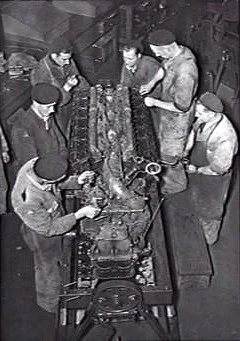
The wartime section is strongest when it shows the depot as a testing ground. No. 1 AD worked on research and development for aircraft such as the Supermarine Spitfire, CAC Boomerang, and Wackett Woomera. It also ran comparative performance studies involving Spitfires, Boomerangs, Kittyhawks, Brewster Buffalos, and Mitsubishi Zeros. 2
The CAC Boomerang gets a particularly concrete treatment. Between July 1942 and June 1943, 105 CA-12 Boomerangs were delivered to No. 1 AD for testing. The depot's handling and armament trials found problems including guns freezing at high altitude and unusual carbon monoxide levels in the cockpit. Those are the kinds of details that make the article feel physical: the war appears through cold guns, cockpit air, and mechanics' decisions. 2
The article also gives No. 1 AD a human wartime face through Wing Commander John Lerew, who commanded the depot from December 1942 to November 1943. After investigating the crash of a Vultee Vengeance, Lerew designed a clip to prevent the accidental release of a pilot's safety harness. The clip was later adopted for all such harnesses. 2
By January 1945, No. 1 AD had reached its wartime peak of 2,339 staff. That number matters because it reverses the usual romance of air history. The glamorous objects are fighters and bombers, but the depot's scale shows how much labour sat behind every sortie, test flight, repair, and delivery. 2
After the war, No. 1 AD became a doorway into the jet age. A Gloster Meteor made its first flight in Australia from Laverton in 1946. By May 1947, No. 1 AD had assembled Australia's first de Havilland Vampire jet for its maiden flight. In October 1947, the first helicopter in RAAF service, a Sikorsky S-51, arrived at the depot. 2
The depot's postwar work was not all sleek technology. In October 1947, No. 1 AD completed a Douglas Dakota fitted with an office, a lounge suite, and a kitchenette for use as the governor-general's VIP transport. In 1950, it received the only CAC CA-15 high-performance piston fighter ever built, but the aircraft had been sent to be "converted to components," meaning scrapped. 2
In July 1953, No. 1 AD received the first Australian-built English Electric Canberra jet bomber. Soon after, it modified three Canberras of No. 1 Long Range Flight for the 1953 London-to-Christchurch air race. The depot's story keeps crossing between routine service and headline moments: one day a repair facility, another day part of an international aviation race. 2
Then the centre of gravity moved. By 1961, No. 1 AD had serviced 42 aircraft types, but all airframe maintenance at Laverton was transferred to No. 2 and No. 3 Aircraft Depots. The unit continued engine work for a while, then closed its aircraft engine repair facilities in 1968. 2
From that point, No. 1 AD became less about aircraft bodies and more about the systems that made bases function. It manufactured, installed, serviced, and provided training for navigation, air-traffic control, telecommunications, motor-transport, radar, and other ground equipment. The radar work supported systems at RAAF bases including Williamtown, Amberley, Townsville, Darwin, and Pearce. 2
The final decades are a story of honour and erosion. Governor-General Sir Zelman Cowen presented the Queen's Colour to No. 1 AD on November 6, 1981. By September 1982, the depot's strength had fallen to 235 staff, though it was still supporting new technologies including fibre optics and electronics. From 1986, restructuring and outsourcing began to weigh heavily on RAAF technical services. 2
No. 1 AD moved under Logistics Command in February 1990. By then, most of its functions had been taken over by other units and private contractors. The depot was disbanded on December 2, 1994. At that point, Wikipedia says it was the oldest RAAF unit in continuous operation; the article also attributes to the RAAF Historical Section the stronger claim that it was the oldest continuously operating maintenance depot of any air force. 2
Details that make the article stick
The first memorable detail is the motto: Providemus, translated as "We foresee." For a maintenance depot, the motto is almost too apt. No. 1 AD's work was often about seeing needs before aircraft failed, before new machines entered service, or before ground systems became the next technical frontier. 2
The second is the range of machines. A single unit links the Imperial Gift after World War I, amphibious survey aircraft in the Pacific, Spitfire and Boomerang trials, B-17 repairs, Meteors and Vampires, a Sikorsky helicopter, a VIP Dakota, Canberras, Sabres, F-111 components, and F/A-18 Hornet components. The article never needs to say that aviation changed dramatically across the century; the inventory says it. 2
The third is the way small fixes become history. Lerew's safety-harness clip is only one sentence in the Wikipedia article, but it is exactly the kind of sentence that justifies a featured article. A crash investigation led to a design change; the design change spread to all such harnesses. No. 1 AD mattered because it converted experience into safer equipment. 2
The fourth is the slow disappearance of the original mission. No. 1 AD did not end because aircraft stopped needing maintenance. It ended after maintenance became more specialised, more distributed, and more open to private contractors. The article is therefore also a short history of institutional unbundling: the work survived, but the old depot did not. 2
The line worth keeping
Wikipedia's Today's Featured Article blurb chooses the cleanest summary of the depot's long life:
"At the time of its disbandment, it was the oldest RAAF unit in continuous operation." 1
That sentence works because it has no ornament. No. 1 AD was not a squadron famous for a battle or an aircraft famous for speed. Its achievement was continuity: keeping the machinery of an air force ready across biplanes, bombers, jets, helicopters, radar, and communications systems.
What to remember
The No. 1 Aircraft Depot RAAF article is worth reading because it makes logistics visible. It shows how an air force depends on places where equipment is received, tested, repaired, modified, stored, retired, and replaced. The hangar can be as historically revealing as the cockpit.
For a general reader, the best way into the article is to watch the depot's centre of attention move: first surplus aircraft and spare parts, then survey flights and technician training, then wartime assembly and research, then jets and helicopters, then ground systems and outsourcing. The subject stays in one place for most of its life, but the work around it keeps changing.
That is the daily pleasure of a strong Wikipedia Featured Article. A maintenance depot with a bureaucratic name turns into a seventy-three-year tour of Australian aviation, told through the unglamorous work that kept aircraft flying.
Today's article is Wikipedia's Featured Article for July 2, 2026: No. 1 Aircraft Depot RAAF, revision 1362102602, selected by Wikipedia's editorial community.
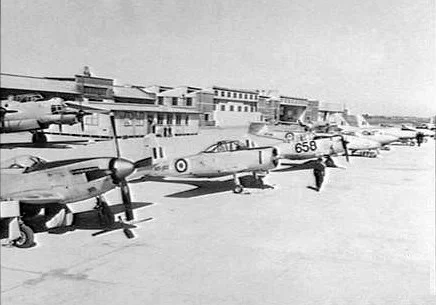
Cover image: aircraft on display at No. 1 Aircraft Depot in September 1955, from Wikipedia's No. 1 Aircraft Depot RAAF article.
관련 콘텐츠
- 로그인하면 댓글을 작성할 수 있습니다.