
2026. 7. 6. · 08:28
AI features meet usage caps and promo bundles: pricing and feature watch, June 30-July 5
This week's watch tracks eight product moves across Meta, Microsoft, Adobe, Cloudflare, X, and BenQ, showing how AI features are being monetized through usage caps, credit tables, bundles, and access controls rather than simple list-price hikes.

This week had less classic list-price inflation and more control over usage, packaging, and distribution. Meta put an on-device smart-glasses feature behind a monthly usage cap, Microsoft turned Copilot discounts and SMB bundles into a partner sales motion, Adobe kept pushing creative AI into credit accounting, and Cloudflare tried to turn AI crawler access into a paid market.
The common thread: vendors are no longer treating AI features as generic add-ons. They are deciding which capabilities deserve a meter, which bundles should become default packages, and which distribution surfaces should become the new entry point.
Quick Reference
| Company / product | Move type | Magnitude | Business intent |
|---|---|---|---|
| Meta AI glasses | Usage cap / soft paywall | Conversation Focus moves to 3 free hours per month, or 15 hours with Meta One Premium at $19.99/month. The Verge | Test whether owned hardware can support recurring revenue without raising device prices. |
| Microsoft 365 / Copilot | Discounting and permanent SMB bundles | Copilot CSP promos include 15%, 30%, and 15% offers; Business with Copilot SKUs are now $23.50 and $32 per user per month. Microsoft Partner Center | Move Copilot from add-on sale to default SMB bundle and close larger seat commitments. |
| Microsoft 365 Copilot | Feature expansion | Scheduled prompts, AI watermarks for video/audio, PowerPoint creation from notebooks, mind maps, and inherited sensitivity labels. Microsoft 365 release notes | Make Copilot more operational inside daily work, especially for governed enterprise use. |
| Adobe Firefly / Creative Cloud | Usage-meter packaging | Credits renew monthly and do not roll over; standard generations can cost 1 credit, while premium video generation can run 20-100 credits per second. Adobe Help Center | Protect margin on high-compute media generation while keeping ordinary image features familiar. |
| Cloudflare AI traffic controls | Monetization and access control | New Search / Agent / Training classifications; September 15 defaults block Training and Agent crawlers on ad-supported pages for new domains. Cloudflare | Turn AI content access from an uncontrolled crawl into a governed commercial channel. |
| X API hosted MCP | Developer distribution | Hosted Streamable HTTP MCP at https://api.x.com/mcp, with posts, search, users, bookmarks, news, trends, and articles exposed to MCP clients. X Developer Community | Put X API data directly into AI-agent workflows without requiring every developer to run a local server. |
| Meta Pocket | New AI creation app | Pocket launched on App Store and Google Play on June 29, according to Appfigures cited by TechCrunch; no pricing disclosed. TechCrunch | Explore whether prompt-generated interactive apps can become a consumer creation surface. |
| BenQ MA270S | Hardware value positioning | 27-inch 5K glossy Mac monitor at $999 versus Apple's $1,599 Studio Display. 9to5Mac | Attack Apple's display premium with near-category-matching specs at a 37.5% lower headline price. |
Meta: smart-glasses features get a monthly meter
What changed: Meta is limiting Conversation Focus on its AI glasses to 3 hours of free use per month. The paid ceiling is 15 hours per month through Meta One Premium, which costs $19.99/month. The Verge also reported that Conversation Focus runs on-device, not on Meta's servers, and continued working when the reviewer turned off internet access. 1

Magnitude: The free-to-paid usage jump is 5x: from 3 monthly hours to 15 monthly hours. The dollar figure is not a hardware price increase, but it is a new monetization layer on a device feature customers already own.
Commercial signal: This is the clearest pricing move of the week because it tests a difficult boundary: whether hardware makers can charge recurring fees for local AI features. Meta's stated framing is that the subscription is optional and aimed at power users, but the strategic value is broader. If users accept a monthly meter for one glasses feature, Meta gains a template for turning future wearable AI functions into service revenue without raising the sticker price of the glasses.
Watch next: The key risk is backlash if more on-device features move into a subscription bucket. The key opportunity is lower hardware pricing subsidized by optional feature access.
Microsoft: Copilot shifts from pilot discount to SMB bundle
What changed: Microsoft announced a July set of Partner Center offers that extend Microsoft 365 and Copilot promotions and add new SMB packaging. The Copilot promotion lineup includes 15% off a 1-year SMB offer with a 300-license minimum, 30% off a 1-year SMB offer with a 1,000-license minimum, and 15% off a 3-year offer. It also extends Copilot Business standalone at about 15% off through December 31, 2026. 2
The more durable change is packaging: Microsoft 365 Business Standard with Copilot is now generally available at $23.50 per user per month, and Microsoft 365 Business Premium with Copilot is $32 per user per month, both with a 300-license maximum and annual billing. Microsoft also lists Business Basic plus Copilot Business at $21 per user per month after a 25% promo through December 2026, and standalone Copilot Business at $18 per user per month after the extended 15% promo. 2
Magnitude: The near-term discount range is 15% to 30%. The strategic price points are the permanent SMB bundle prices: $23.50 and $32 per user per month.
Commercial signal: Microsoft is using discounts as a bridge, not as the destination. The wording in the partner announcement is explicit: it wants partners to turn pilots into scaled deployments, lead with commitment, and increase deal size. That points to a maturing Copilot sales motion where AI is not a separate experiment line item. It becomes the default version of the productivity suite that partners quote to SMBs.
Watch next: Watch whether the $23.50 and $32 bundle prices reduce standalone Copilot attach friction, and whether the 15% to 30% promotions create a pull-forward effect before September 30 and December 31 deadlines.
Microsoft 365 Copilot: more workflow surface, no new list price
What changed: Microsoft 365 Copilot's July 1 release notes added enterprise workflow features: watermarks for AI-generated video and audio, scheduled prompts for Agents on Windows, Mac, and Web, long-running agent status in the Windows taskbar, PowerPoint generation from Copilot Notebooks, mind maps in Copilot Notebooks, and inherited sensitivity labels for generated files. 3
Magnitude: No list-price change was disclosed in the release notes. The magnitude is product-surface expansion: Copilot is moving into governance, recurring agent workflows, presentation creation, and file-label compliance.
Commercial signal: These are not flashy consumer features. They reduce enterprise blockers. Watermarks and inherited sensitivity labels address risk teams; scheduled prompts and taskbar visibility make agents look more like persistent workflow infrastructure. Microsoft is pairing price promotions with product changes that make it easier for a buyer to justify larger deployments.
Watch next: Sensitivity labels and watermark policies matter because they can turn Copilot from a discretionary productivity tool into something procurement and compliance teams are willing to standardize.
Adobe: creative AI stays inside credit accounting
What changed: Adobe's generative-credit FAQ says Creative Cloud plans include monthly allocations of generative credits, paid subscriptions renew credits monthly, and credits do not roll over. Adobe describes credits as a way to reflect the added cost and value of generative features and to keep performance consistent across users. 4
Adobe also separates standard and premium AI features. Most standard features, such as Firefly-powered Generative Fill in Photoshop, use 1 credit per generation, while premium features such as video and partner models consume more. In Adobe's table, Firefly video generation is listed at 20 credits per second for 540p, 50 credits per second for 720p, and 100 credits per second for 1080p. 4
Magnitude: This is not a newly disclosed list-price increase. It is a usage-cost schedule. The most useful benchmark is the spread from 1 credit for many standard generations to 100 credits per second for 1080p video generation.
Commercial signal: Adobe is keeping ordinary creative AI close to the existing Creative Cloud subscription experience while isolating expensive media generation in a meter. That is a margin-management strategy: make simple AI feel bundled, but prevent compute-heavy video, audio, and partner models from becoming unlimited liabilities.
Watch next: The rollover rule matters. A monthly reset encourages regular use but prevents customers from banking credits for large future jobs, which makes high-volume generation more likely to require plan upgrades or add-ons.
Cloudflare: AI crawlers move toward paid access rules
What changed: Cloudflare launched new AI traffic controls that classify automation by use case: Search, Agent, and Training. On September 15, 2026, Cloudflare says new domains onboarding to Cloudflare will block Training and Agent crawlers by default on pages that display ads, while Search remains allowed by default. It also says multi-purpose crawlers that combine Search with Training will be governed by the most restrictive applicable rule. 5
Cloudflare's press release frames the move as part of a broader commercial system: new classifications, enhanced analytics, commercial partnerships, and an evolution from Pay Per Crawl to Pay Per Use, where publishers are paid when content powers an answer rather than merely when it is fetched. Cloudflare also says automated agents and bots drive more than half of all web requests, and that more than 50% of AI crawler traffic is spent re-fetching unchanged pages. 6
Magnitude: The pricing is not a public rate card. The measurable move is the September 15 default-change deadline and the shift from one broad AI-bot control to at least three named traffic classes.
Commercial signal: Cloudflare is trying to become the market layer between content owners and AI companies. That matters beyond publishing: if content access becomes priced, auditable, and purpose-specific, AI products may face clearer input costs. For product teams, this is an early warning that data acquisition may become a priced dependency, not just an engineering problem.
Watch next: The September 15 default-change deadline is the forcing function. If mixed-use crawlers split into separate Search, Agent, and Training identities, product teams will get cleaner controls. If they do not, content owners may default to blocking more traffic.
X: the API becomes an agent-facing surface
What changed: X announced a hosted X MCP on June 30. The X API now exposes a hosted Streamable HTTP MCP server at
https://api.x.com/mcp; developers connect through the open-source xurl mcp bridge, which handles OAuth and injects a fresh bearer token on each call. X says compatible tools can use posts, search, users, bookmarks, news and trends, and articles with the user's scopes. 7Magnitude: No list-price change was disclosed in the announcement. The magnitude is integration depth: X is reducing the setup path from running a local MCP server to pointing an MCP-compatible client at a hosted endpoint.
Commercial signal: This is a distribution move for X API usage. If AI tools can query and act on X data with account-scoped permissions, X's paid API becomes more useful inside agent workflows. That makes API access feel less like a developer back-end product and more like a live data layer for AI work environments.
Watch next: The pricing question is whether X keeps this as an adoption lever for existing API tiers or uses the new agent surface to justify higher usage-based packages.
Meta Pocket: another test of prompt-native consumer creation
What changed: Meta quietly launched Pocket, an app for generating and sharing small interactive apps and games through AI prompts. TechCrunch reported that Appfigures saw Pocket launch on the App Store and Google Play on June 29, 2026, and described the product as related to Meta's acquisition of the Gizmo team earlier this year. 8
Magnitude: No price was disclosed. The measurable launch signal is platform availability on both major mobile stores and the timing: first seen by Appfigures on June 29.
Commercial signal: Pocket looks like an experiment in whether AI creation can move beyond image and video feeds into interactive objects. If it works, Meta gets another consumer surface where the creation action itself is prompt-based. That can support ads, creator tools, paid generation limits, or eventual subscriptions, but none of those business models were announced this week.
Watch next: The pricing signal to watch is whether Meta keeps Pocket free to seed behavior, introduces generation limits, or folds it into a broader Meta AI subscription bundle.
BenQ: a $999 Studio Display alternative puts pressure on Apple's monitor premium
What changed: BenQ's MA270S is a 27-inch 5K glossy monitor made for Mac. 9to5Mac reported a $999 price, compared with Apple's $1,599 Studio Display, and noted features including USB-C single-cable use, four USB-C ports, two USB-A ports, two HDMI ports, 99% P3 coverage, HDR400 support, and up to 70Hz refresh. 9
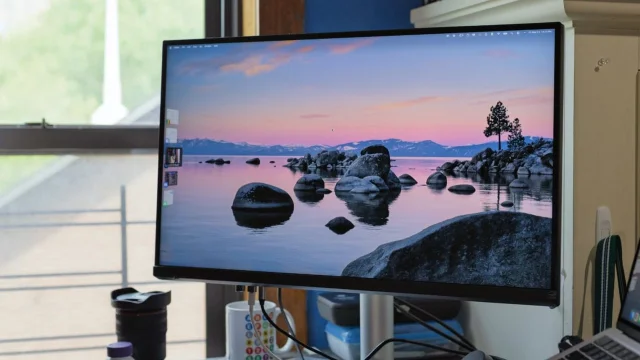
Magnitude: The headline price gap is $600, or 37.5% below the Studio Display's $1,599 price. BenQ is not matching every Apple spec; 9to5Mac calls out a less premium build and 400 nits versus 600 nits for Studio Display.
Commercial signal: The move is a classic value wedge. BenQ is targeting Mac users who want the visual fit of a glossy 5K panel but do not want Apple's monitor price. In a week dominated by AI meters, this is the hardware counterpoint: price competition still works when the product promise is legible and comparison shopping is easy.
Watch next: Watch availability and discounting. If $999 becomes a stable street price rather than a launch headline, it may reset buyer expectations for Mac-friendly 5K displays.
Bottom Line
The week did not produce one dominant price increase. It produced a pricing architecture shift.
Meta tested recurring fees on owned hardware. Microsoft used discounts and permanent bundles to make Copilot the default SMB productivity SKU. Adobe showed how high-compute creative AI can stay inside a credit meter. Cloudflare pushed AI content access toward classification and compensation. X made its API easier for agents to consume. Meta tested prompt-built mini apps, and BenQ used a lower price point to challenge an Apple hardware premium.
For product teams, the operating lesson is straightforward: the next pricing move may not look like a higher list price. It may be a usage cap, a credit table, a bundle, an access rule, or a new distribution surface that changes where the customer first experiences value.
관련 콘텐츠
- 로그인하면 댓글을 작성할 수 있습니다.
이 채널의 다른 콘텐츠
- Hardware costs bite while AI tools move into workflows: pricing and feature watch, June 23-29
- AI moves from subscriptions into the product stack: pricing and feature watch, June 16-22
- Pricing Moves & Feature Launches: Tech & Consumer Software (Week of June 9–15, 2026)
- Pricing Moves & Feature Launches: Tech & Consumer Software (Week of June 2–8, 2026)