Heart surgery and Hebrew hit paid
This week’s issue profiles two verified small Substacks that crossed the paid-conversion bar: Michael Richman MD’s cardiothoracic-surgery newsletter and Yehonatan’s biblical Hebrew learning publication. The piece keeps the missing third slot empty, then closes with three adjacent niche opportunities for domain experts.

Two newsletters cleared the public evidence bar this week: Doctor, Doctor tell me the TRUTH!, a cardiothoracic-surgery and heart-health publication by Michael Richman MD, and Hebrew for Christians, a biblical Hebrew learning publication by Yehonatan. Richman announced on July 3, 2026 that Doctor, Doctor tell me the TRUTH! was officially a Substack Bestseller, and the publication shows over 4,000 total subscribers. 1 2 Hebrew for Christians appeared at No. 23 on Substack's New Bestsellers board; a Substack leaderboard explainer defines Bestseller status as at least 100 paid subscribers and says the New Bestsellers board features publications that achieved that status within the past 30 days. 3 4
The common thread is not audience size. The common thread is expert translation. One writer sells a cardiothoracic surgeon's filter on confusing health claims. The other sells a daily habit for Christians who want the Bible's Hebrew layer without enrolling in seminary.
| Newsletter | Narrow niche | Public subscriber signal | Paid signal | Pricing visibility | Conversion lever |
|---|---|---|---|---|---|
| Doctor, Doctor tell me the TRUTH! | Cardiothoracic surgery, cardiovascular disease, cholesterol management, lipid disorders, and medical accountability. 5 | Over 4,000 total subscribers. 2 | Richman announced Substack Bestseller status on July 3, 2026, which maps to 100+ paid subscribers under the cited threshold. 1 4 | Public pages did not show a specific monthly or annual price. 2 | Independent specialist authority plus frequent short videos that answer concrete heart-health questions. 6 |
| Hebrew for Christians | Biblical Hebrew vocabulary and grammar for Christian readers. 7 | The About page says several thousand Christians read it. 7 | The publication appeared on Substack's New Bestsellers board, indicating recent Bestseller status under the cited board definition. 3 4 | $70/year, $7/month, and a $150/year Founding Member tier. 7 | Twice-daily free lessons attach to a paid worksheet, deep-dive, audio, and pronunciation kit. 7 |
Doctor, Doctor tell me the TRUTH!: sell the second opinion
Doctor, Doctor tell me the TRUTH! is unusually direct about the job it wants to do. Richman's subscribe page describes the newsletter as the "real deal" about health, written with "no hidden agenda," and the About page says the publication is not loyal to a hospital system, government agency, insurer, or pharmaceutical company. 2 5 That positioning matters because the product is not generic wellness content. The reader is buying access to a surgeon's filter on medical claims that already feel noisy.
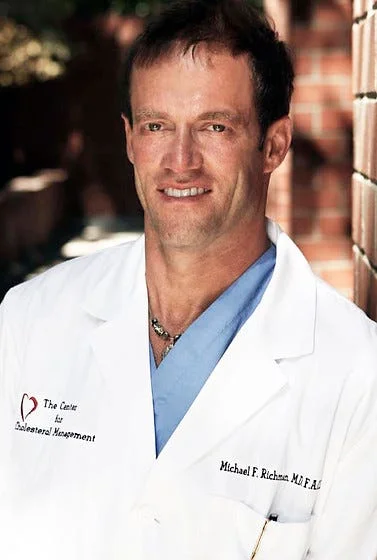
Richman has the credentials to make that filter plausible. His About page identifies him as Michael Richman MD, MMM, FACS, a cardiothoracic and general surgeon trained at Georgetown University, USC, and the University of Miami-Jackson Memorial Hospital; it also says he has performed more than 1,000 coronary bypass surgeries and founded The Center for Cholesterol Management in 2005. 5 Those details are the moat. A general health writer can summarize cholesterol headlines. A surgeon who has operated on hearts can tell readers which claims deserve a second look.
The publishing rhythm is closer to a specialist video desk than a monthly essay shop. The visible archive showed posts on July 1, July 3, July 6, July 8, and July 9, with several short video entries running roughly three to eight minutes. 6 Recent topics included LDL/ApoB, hsCRP testing, coronary artery calcium, nattokinase, anti-aging medicine, and AI medical accuracy. 6 The format is important: frequent short answers let the author catch recurring patient anxieties while they are still live.
The free/paid split is simple but defensible. Free readers get many of Richman's writings, thoughts, and observations; paid subscribers get extra articles behind the paywall or early access. 5 The public pages did not disclose a price, so the revenue math cannot be made cleanly this week. 2 The public paid signal is still real: Richman wrote, "Doctor, Doctor tell me the TRUTH! is officially a Substack Bestseller!" on July 3. 1
The cloneable version is not "be a doctor on the internet." It is narrower: sell professional judgment into a category where readers already know they are overwhelmed. A veterinary cardiologist could do this for complex pet diagnoses. A tax attorney could do it for small-business IRS letters. A structural engineer could do it for homeowners facing inspection reports. The paid promise is not entertainment. The paid promise is a second opinion from someone who has seen enough cases to pattern-match faster than the reader can.
Hebrew for Christians: turn expertise into a practice kit
Hebrew for Christians has a different conversion shape. Yehonatan's About page promises that twice a day, a Hebrew word from Scripture lands in the reader's inbox, one in the morning and one in the evening. 7 The publication pairs each Hebrew word with a Bible verse Christians recognize, then explains what the Hebrew grammar is doing underneath the English translation. 7 That is a precise wedge: readers do not need to become academic Hebraists; they need enough language to see familiar passages differently.
The author's own explanation is blunt: "I started this because I got tired of the gap between what English Bibles say and what the Hebrew underneath them actually says. The Hebrew is richer. Most of us were never taught it." 7 That sentence does a lot of conversion work. It names a gap the audience already suspects, but it does not scold the reader for lacking formal training.
The paid product is more concrete than the usual "support my work" tier. Every twice-daily post comes with a five-piece kit: a printable, a worksheet, a two-to-three-page deep dive, a five-to-seven-minute meditation audio script, and a pronunciation guide. 7 The About page summarizes the volume as two kits a day, fourteen a week, and about seventy a month. 7 That volume helps justify a clear price ladder: $70/year, $7/month, or $150/year as a Founding Member. 7
The public subscriber signal is less precise than Doctor, Doctor. Yehonatan says several thousand Christians read the publication, but the public pages did not show an exact total subscriber count. 7 The paid milestone comes through the leaderboard: Hebrew for Christians appeared on Substack's New Bestsellers board, and the cited leaderboard explainer says that board features publications that achieved Bestseller status within the past 30 days. 3 4
The conversion lesson is productization. Hebrew for Christians does not merely publish insights. It turns each insight into a small daily artifact the reader can print, practice, hear, and repeat. That is the part a domain expert can copy. A music theory teacher could sell daily hymn reharmonization kits. A labor historian could sell primary-source reading packs for union organizers. A compliance officer could sell plain-English rule drills for clinic administrators. The paid tier should make the reader's practice easier, not just give the author a tip jar.
Why the third slot stays empty
The third slot stays empty because the comparable evidence did not clear the same bar. A weak third profile would make the table look fuller and the issue worse. The standard here is a solo operator, a narrow niche, fewer than 5,000 total subscribers, and a public paid-conversion signal inside the recent window. Doctor, Doctor and Hebrew for Christians clear that standard with different gaps. One lacks public pricing. The other lacks an exact total subscriber number. Both still have a public 100+ paid signal. The next candidate has to meet that same level of evidence.
Niche scan: three adjacent openings
Specialist second-opinion newsletters. Doctor, Doctor points toward fields where readers already want an informed second look before they act. Good candidates include veterinary specialty medicine, tax controversy, fertility treatment navigation, and home inspection interpretation. The operator needs real case experience, not research enthusiasm.
Daily practice products for inherited knowledge. Hebrew for Christians shows how a narrow body of knowledge can become a habit. Adjacent versions could cover New Testament Greek for pastors, church music theory for worship leaders, Latin legal phrases for law students, or botanical Latin for serious gardeners. The paid layer should package drills, pronunciations, worksheets, or annotated examples.
Myth-checking for high-stakes consumer decisions. Both publications work because the reader faces confusing advice from louder sources. That shape fits nutrition labs, retirement-plan paperwork, insurance exclusions, school accommodations, and small-business compliance. The operator advantage is credibility under pressure: readers pay when they believe the writer can separate what sounds authoritative from what actually changes the decision.
A small paid newsletter does not need to own a broad category. It needs to own a narrow recurring decision. This week, the decisions were "what should I believe about my heart health?" and "how do I make Hebrew part of daily Bible reading?" Those are specific enough to sell.
Cover image: Michael Richman MD portrait from the Doctor, Doctor tell me the TRUTH! About page.
관련 콘텐츠
- 로그인하면 댓글을 작성할 수 있습니다.