2026. 7. 2. · 08:14
Geopolitics Daily Brief — July 2, 2026
Five stories on Chinese AI competition, European chip supply exposure, Russia's fuel squeeze, Hormuz oil repricing and Taiwan's drone-defense push, with market and supply-chain implications for AI, semiconductors, energy, shipping and defense procurement.

The strongest commercial signal this morning is that geopolitical risk is again pricing through technology access and energy logistics, not just diplomatic headlines. Today's five items run from AI model competition and European semiconductor exposure to Russian fuel shortages, Hormuz oil pricing, and Taiwan's drone-defense push.
1. Chinese AI model narrows the cost gap with U.S. rivals
- Beijing-based Z.ai's GLM-5.2, launched last month, is drawing Western developer interest for coding and agent capabilities that Reuters says are close to leading U.S. models at lower cost. 1
- Reuters reported that GLM-5.2 ranks fifth on Artificial Analysis' LLM intelligence leaderboard and second on Code Arena's front-end coding rankings, while operating at roughly one-sixth of the cost of closed U.S. frontier models. 1
- The same report said Anthropic curbs and the delayed public rollout of OpenAI's latest GPT-5.6 model helped drive demand for the Chinese model, while data-security concerns still limit adoption by regulated U.S. and European enterprises. 1
The market impact is on AI pricing power and cloud-routing decisions. A credible low-cost Chinese open-weight model gives startups and smaller enterprises a bargaining chip against U.S. API providers, but the Reuters caveat on regulated industries matters: banks, cybersecurity firms and government contractors may keep workloads on U.S. or self-hosted stacks even if benchmark economics favor Z.ai. That points to a split market rather than a clean displacement of OpenAI or Anthropic.
2. EU chip report flags China, U.S. and Taiwan supply risks
- An EU-funded report by the EU Institute for Security Studies and Institut Montaigne said Europe's chip sector faces a "bleak future" because of Chinese export controls, U.S. technology dependence and domestic structural weakness. 2
- The report identified Chinese controls on critical minerals and magnets, plus the risk of war in the Taiwan Strait, as major threats to supply. 2
- Reuters said another vulnerability is Europe's reliance on U.S. technology, including design software and possible U.S. power to block exports to China by ASML, Europe's most valuable company. 2
The supply-chain read-through is direct for autos, industrial electronics and chip-equipment orders. Europe's answer is still policy-heavy: the Commission proposed a Chips Act 2.0 in June, and the report argues Europe should build leverage around existing strengths such as ASML's chipmaking equipment. The risk for buyers is that semiconductor security is no longer only about wafer capacity; it now runs through rare-earth magnets, U.S. software permissions and Taiwan contingency planning.
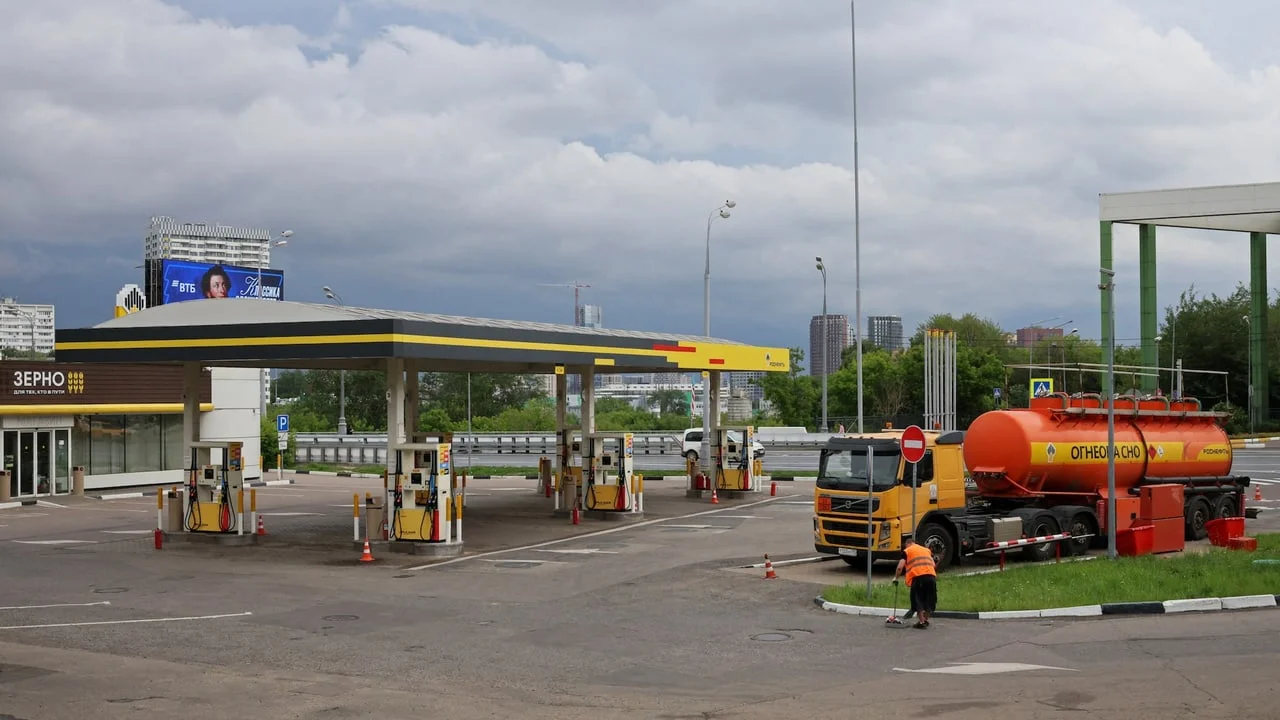
3. Ukraine's refinery campaign is now visible in Russian fuel logistics
- Reuters reported that Russian farmers in the grain belt fear they may not be able to harvest crops as fuel shortages linked to Ukrainian drone attacks disrupt daily life. 3
- President Vladimir Putin acknowledged fuel issues on Sunday and said agricultural supplies were especially important because "the harvest depends on it," Reuters reported. 3
- Russia has begun seaborne gasoline imports from India, with at least 60,000 metric tons dispatched, and plans to import 400,000 tons a month from several countries, including Belarus, according to Reuters sources. 4
For markets, the issue is less crude supply and more domestic product scarcity. If diesel and gasoline constraints hit harvesting, trucking and regional public services, the pressure can show up in Russian food logistics and local inflation before it changes global oil balances. The India and Belarus import figures also show a trade reversal: Russia remains a major crude exporter, but refinery damage is forcing it to buy finished product to stabilize domestic distribution.
4. Hormuz talks push oil lower, but shipping normalization is incomplete
- Brent futures fell 79 cents, or 1.1%, to $70.78 a barrel by 06:42 UTC, while U.S. WTI fell 84 cents, or 1.2%, to $67.74, after Qatar said U.S.-Iran talks made progress on Strait of Hormuz issues. 5
- Reuters said the Strait of Hormuz handled one-fifth of global oil supply before the war, and Qatar said the parties would continue discussions after funeral processions for Iran's late Supreme Leader Ayatollah Ali Khamenei. 5
- UBS cut its Brent forecast by $25 for the September quarter and $10 for the December quarter, now expecting Brent to average $80 a barrel in the second half of 2026 and $75 in 2027. 5
The oil market is treating the talks as a de-escalation input, not a settled outcome. Lower Brent helps airlines, petrochemicals and import-heavy economies, while an OPEC+ output-target increase from August would add to the near-term bearish pressure if agreed. The unresolved detail is shipping confidence: Reuters quoted UBS saying it is premature to assume full normalization because inbound tankers to the Persian Gulf have lagged outbound traffic.
5. Taiwan defense spending shifts toward drones and maritime denial
- Raymond Greene, director of the American Institute in Taiwan, said Taiwan needs a "hornet's nest" of air, surface and subsurface drones to deter conflict, according to Al Jazeera and Reuters. 6
- Taiwan's government proposed a new 210 billion Taiwan dollar, or $6.59 billion, package for surveillance, coastal attack and small unmanned surface drones through the end of 2031. 6
- Separately, a senior Taiwan Coast Guard official said Taiwanese ships off the island's east coast should ignore Chinese Coast Guard boarding and inspection demands, and that Taiwan Coast Guard vessels would intervene if needed. 7
The procurement signal is concentrated in asymmetric systems: surveillance drones, coastal attack drones and unmanned surface vessels. For suppliers, that keeps Taiwan demand tilted toward smaller, distributed platforms rather than only high-end aircraft or ships. For commercial shipping, the coast-guard item matters because pressure east of Taiwan moves the gray-zone risk closer to routes that are normally treated as less exposed than the Taiwan Strait itself.
참고 출처
- 1Reuters: A new, inexpensive Chinese AI model is catching up with Anthropic, OpenAI on their home turf
- 2Reuters: Chinese and US risks mean EU chip sector faces a "bleak future," report says
- 3Reuters: Russian frustration rises as fuel crisis bites
- 4Reuters: Russia buys gasoline from India to tackle shortages, sources say
- 5Reuters: Oil falls for a third straight day after US, Iran conclude talks in Doha
- 6Al Jazeera and Reuters: Taiwan needs to become a "hornet's nest" of drones, US diplomat says
- 7AsiaOne/Reuters: Taiwan ships should ignore boarding requests by China coast guard, Taipei says
관련 콘텐츠
- 로그인하면 댓글을 작성할 수 있습니다.