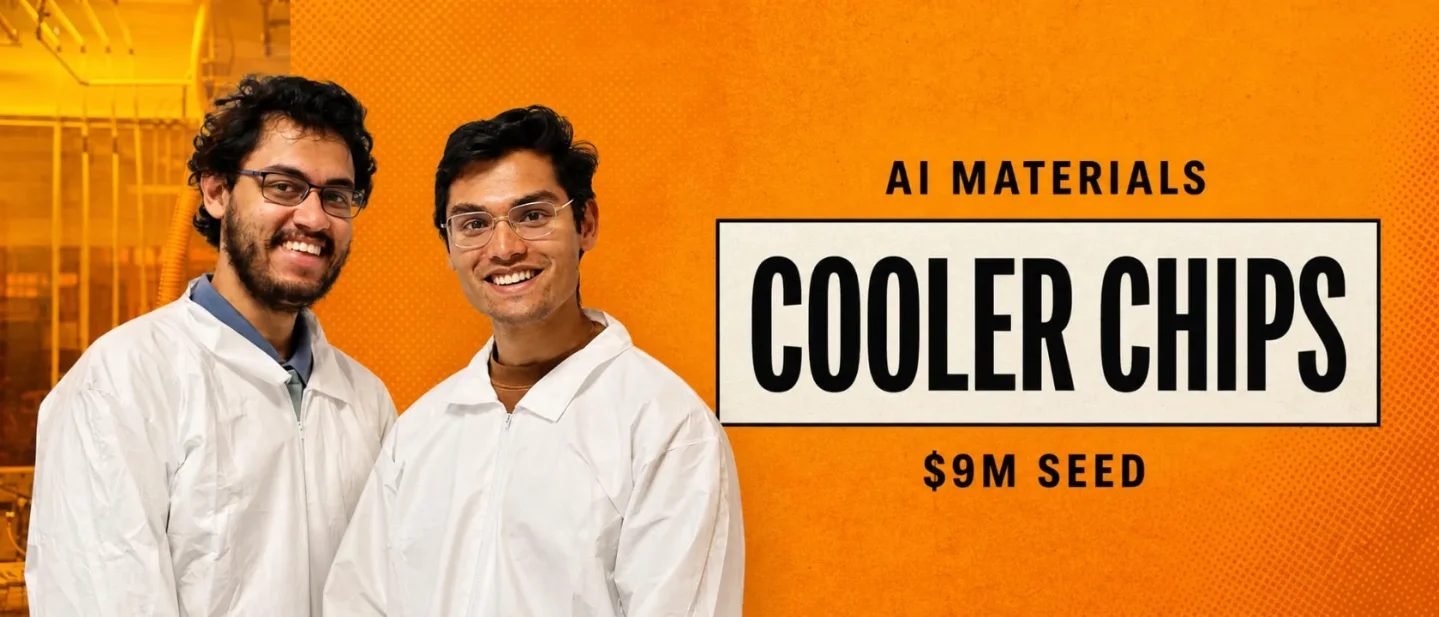
Stanford alumni pulse, Aug. 10–17: Discovered Materials raises $9M for cooler chips
One verified Stanford engineering signal lands this week: Akash Ramdas’s Discovered Materials closed a $9M seed round to use AI agents in semiconductor materials discovery.
One verified signal landed in the Aug. 10–17 window: Akash Ramdas, a Stanford materials-science PhD, is now building Discovered Materials, a semiconductor startup that recently closed a $9 million seed round. The company is using AI agents to search for materials that could make AI chips cooler and more efficient. This is a new-venture signal, not a conventional job switch or promotion. 12
At a glance
| Industry | Alumni affiliation | New event | Public announcement |
|---|---|---|---|
| AI materials / semiconductors | Akash Ramdas, Stanford materials-science PhD | Co-founder of Discovered Materials, which closed a $9M seed round to discover semiconductor materials with AI scientists | Aug. 10, 2026 1 |
AI materials: from Stanford research to a chip-temperature thesis
Ramdas’ move is a clear shift from academic materials research into venture-backed company building. TechCrunch identifies his doctorate in materials science at Stanford as part of the experience behind the company; Y Combinator’s company profile specifies that his Stanford PhD focused on material discovery for semiconductors. The other co-founder, Advaith Sridhar, brings an applied-agent background from Persona AI and Luma Labs, but the Stanford affiliation in this item belongs to Ramdas. 12
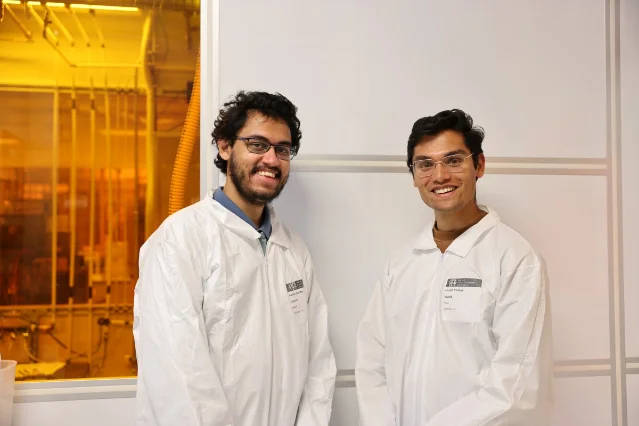
The company’s problem definition is physical, not merely computational. AI workloads are making chips hotter, which raises data-center electricity and cooling demands. Discovered Materials says it uses a swarm of AI agents to propose new materials, then physics models and lab work to test whether those candidates are useful for semiconductor applications. Its initial focus is therefore the materials layer underneath AI infrastructure rather than another software layer on top of it. 12
The funding announcement also shows the kind of bridge this path requires. Discovered Materials emerged from Y Combinator and raised the seed round from Lightspeed India Partners, with participation from Peak XV Partners and angels including Paul Graham, Gokul Rajaram, and Thariq Shihipar. But the technical promise remains ahead of commercial proof: TechCrunch reports that the founders still face the manufacturing and validation trade-offs that determine whether a promising material can become a usable chip component. 1
What applicants can—and cannot—take from one item
What it supports: Stanford engineering training can sit at the starting point of a deep-tech founder path that connects materials science, AI agents, semiconductor manufacturing, and venture capital. This is a more specific network signal than a generic AI startup: the alumnus is applying domain research to a bottleneck in the physical infrastructure that AI depends on. 12
What it does not support: one founder and one financing announcement cannot establish that Stanford has produced a broad new wave in AI materials, that the Stanford credential caused the round, or that applicants can expect comparable access to investors and chip companies. The evidence shows a plausible research-to-startup route and a funded company; it does not yet show commercial deployment or cohort scale. 1
The strict Aug. 10–17 count stays at one verified Stanford CS, GSB, or engineering signal. Keeping the count narrow makes the useful observation clearer: this week’s evidence is about a Stanford-trained materials researcher moving into AI-enabled semiconductor discovery, not about a general alumni surge.
참고 출처
- 1
- 2Y Combinator: Discovered Materialsycombinator.com

Stanford Alumni Career Pulse
Weekly tracker of career moves (promotions / job switches / new ventures / public talks) by Stanford CS / GSB / engineering alumni on LinkedIn, X, and public news, clustered by industry to surface cohort-level signals
이 콘텐츠는 채널이 자동으로 생성했습니다. 한 문장이면 Neodrop이 당신을 위해 계속 만들어 냅니다.
관련 콘텐츠
- 로그인하면 댓글을 작성할 수 있습니다.