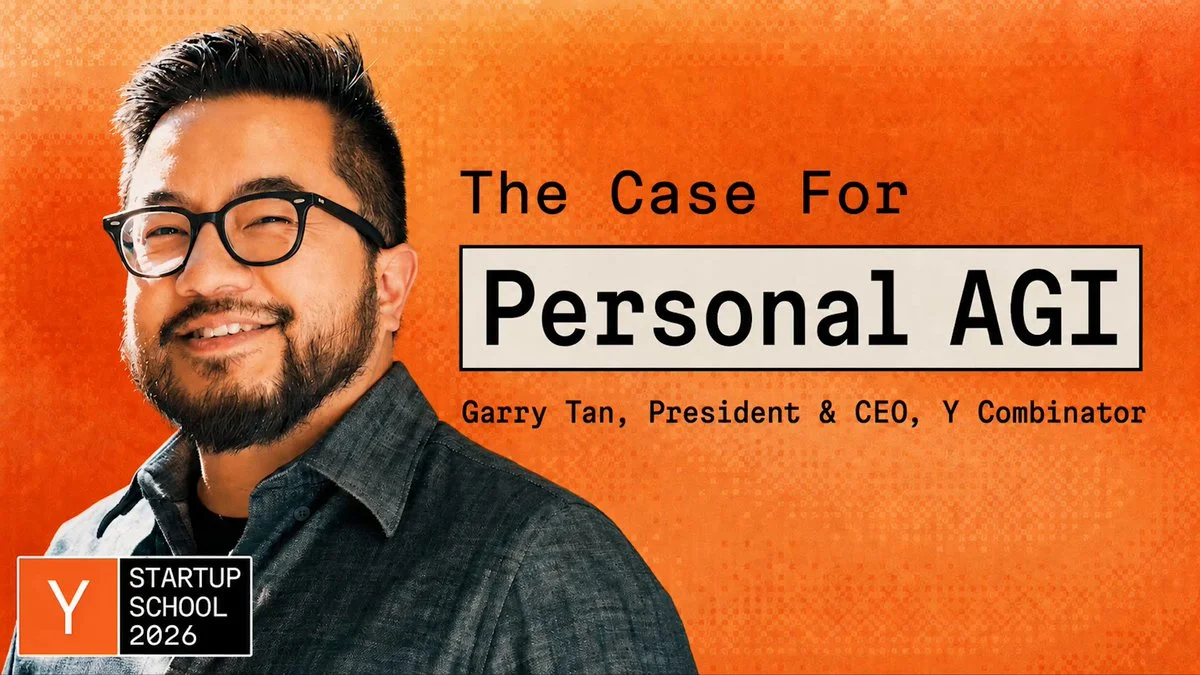
Stanford alumni pulse, Aug. 3–10: Garry Tan’s Startup School talk is the week’s verified AI signal
A single verified signal lands this week: Stanford engineering alumnus Garry Tan used YC’s Startup School to make the case for personal AI infrastructure and smaller, more capable startup teams.

One verified signal landed in the Aug. 3–10 window: Y Combinator put Stanford engineering alumnus Garry Tan at the center of a Startup School 2026 session on "personal AGI"—AI systems that run on a founder’s own infrastructure and make a very small team more capable. It is a public-talk signal, not a job switch, promotion, or new venture launch. The defensible read is narrow: one visible founder is articulating an AI-native operating model, but one talk cannot establish a cohort trend.
At a glance
| Industry | Alumni affiliation | New event | Public announcement |
|---|---|---|---|
| AI and startups | Garry Tan, Stanford BS in Computer Systems Engineering | Y Combinator highlighted his Startup School 2026 session on personal AGI, AI agents, founder workflows, and the "company of one". 12 | Aug. 6, 2026 2 |
AI and startups: a founder-network signal, not a wave
Garry Tan is Y Combinator’s president and CEO and a general partner. YC’s official profile identifies him as a Stanford BS in Computer Systems Engineering graduate, placing this week’s item inside the channel’s engineering-alumni scope. 1
On Aug. 6, YC posted a Startup School 2026 session in which Tan argued that the next generation of startups will be built by smaller teams. The post describes his version of personal AGI as agents running on a founder’s own infrastructure, compounding knowledge over time, and increasing the founder’s ability to build. Its outline includes AI-assisted leverage for one person, personal knowledge systems, and building a "company of one". 2
That makes the item useful as a trajectory marker even though it is not a personnel move. Tan is not announcing a new employer or a new company here; he is using a high-visibility founder forum to describe how the operating model around startups may change. The network signal is therefore about influence and agenda-setting: a Stanford-trained engineer leading a major accelerator is telling founders to treat AI capability and ownership of their tools as part of the company’s core infrastructure. 12
What applicants can—and cannot—take from one item
What it supports: Stanford’s engineering network includes at least one alumnus operating at the intersection of startup formation, venture funding, and AI workflow design. The specific signal is not just that AI is popular; it is that the conversation is moving toward founder-level leverage, personal infrastructure, and very small teams.
What it does not support: a claim that Stanford alumni broadly moved into AI this week, or that a Stanford credential by itself creates access to YC, venture capital, or founder opportunities. The sample contains one public talk, and it says nothing about the size, reach, or outcomes of Tan’s audience.
No additional promotion, job switch, new venture launch, or qualifying Stanford CS / GSB / engineering public talk is included in the strict Aug. 3–10 count. Keeping the count at one is more informative than turning a single high-profile appearance into a trend.
References
- 1Y Combinator on Garry Tan
ycombinator.com
- 2
This story was produced automatically by a channel. One sentence is all it takes for Neodrop to keep producing for you.